Hot yoga for anxiety can help some people, but it is not a treatment and it can backfire. Small studies link heated classes with lower anxiety and better mood. Yet the heat can also feel like panic at first. Start slowly, drink water, and check with your doctor if your anxiety is severe.

Most guides stop at the good news. This one doesn’t. Below you’ll find what the research says about hot yoga for anxiety, five reasons a hot room may settle a busy mind, three ways it goes wrong, and a safe plan for your first week.
Is Hot Yoga Good for Anxiety? The Honest Short Answer
For many people, hot yoga for anxiety does help, with conditions. It works because a 90-minute class demands your full attention, and that is hard to give while you are also running a worry loop. Many students leave calmer than they arrived. But the same room can make a racing heart feel scary if you are not ready for it.
So the real question is not whether hot yoga for anxiety works. It is whether it works for you, right now, at this dose. Here is how we think about it:
- It may help when your anxiety is steady, mild to moderate, and your doctor has no concerns about heat.
- It can backfire when you are in a panic spiral, dehydrated, short on sleep, or using class instead of care.
- It is not treatment. Talk with a doctor or therapist if anxiety disrupts your work, sleep, or relationships.
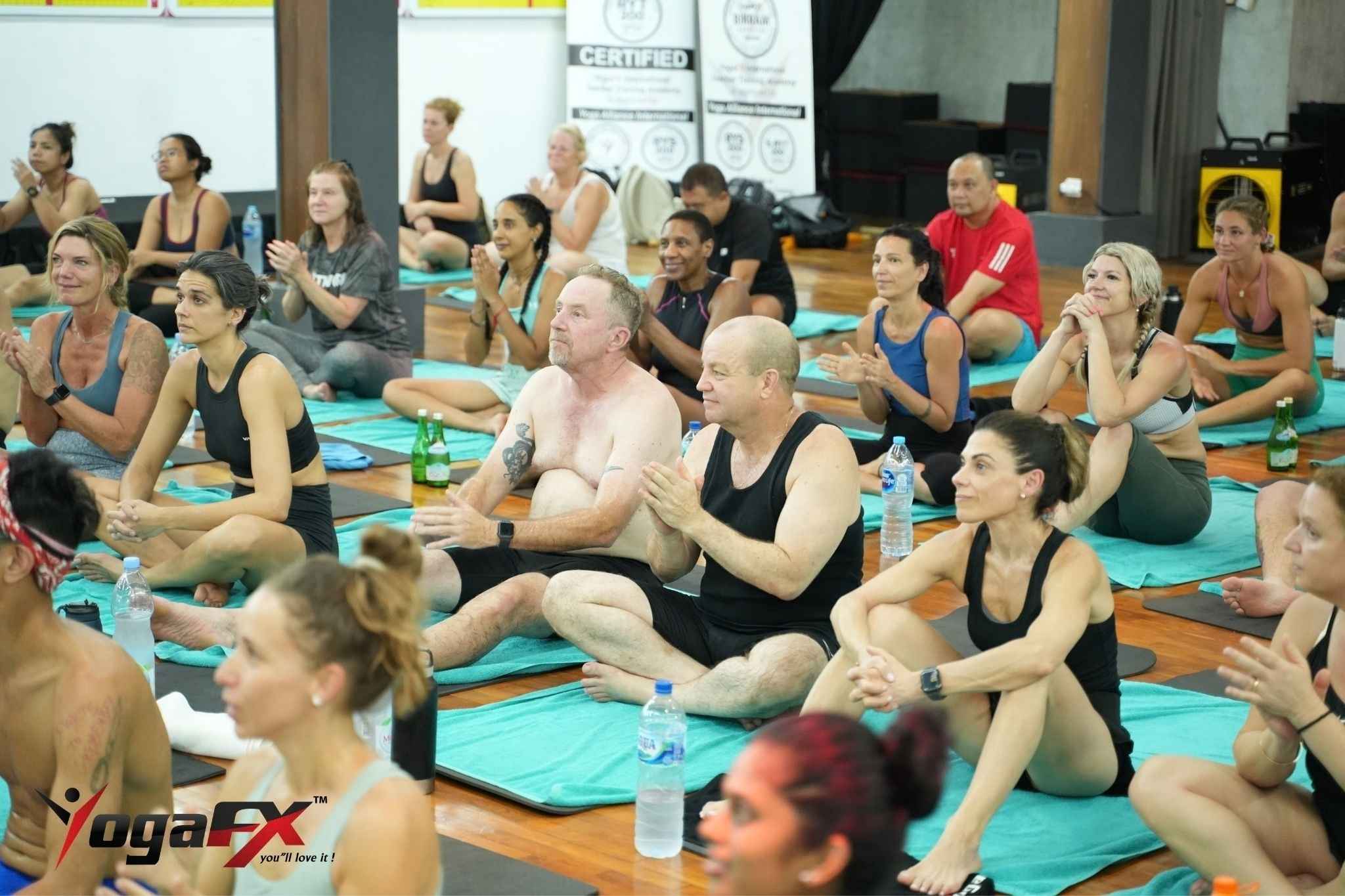
We teach every day at our Seminyak and Canggu studios, so we see both outcomes. Some students tell us the room is the only place their mind goes quiet. Others find the first class overwhelming. Both reactions are normal, and both teach you something useful.
What Research Says About Hot Yoga for Anxiety
Let’s be clear about the evidence first. Does hot yoga for anxiety actually help? Possibly. It has real studies behind it, but most are small, and few measure anxiety directly. The research on hot yoga for anxiety is still young.
A 2022 six-week hot yoga study by Hui and colleagues found that hot yoga reduced state anxiety, the in-the-moment kind. That matches what many students describe after class: the loop quiets down, at least for a while.
The strongest numbers come from depression, not anxiety. In an eight-week Massachusetts General Hospital trial of heated yoga, 59% of the yoga group cut their depression symptoms by half or more. In the waitlist group, only 6% did. Anxiety and depression often occur together, so this matters. It is still not proof for anxiety on its own.
What the numbers can and cannot tell you
| Source | What it looked at | What it means for you |
|---|---|---|
| Hui et al., 2022 | Six-week hot yoga study measuring state anxiety | Hot yoga reduced in-the-moment anxiety. Good sign, but one study. |
| Nyer et al., 2023 (Massachusetts General Hospital) | Eight-week heated yoga trial in adults with depression | 59% of the yoga group improved by 50% or more, versus 6% on the waitlist. It is about depression, not anxiety. |
| Willmott et al., 2025 | Systematic review of Bikram-style studies: 43 studies, 942 people | Reports well-being benefits. That is about 22 people per study, so most trials are small. |
| Johns Hopkins Medicine | Overview of yoga and health | Notes that regular yoga can reduce stress and inflammation. |
The 2025 systematic review of Bikram yoga research is a good reality check. It pulls together 43 studies and 942 participants. Divide one by the other and you get roughly 22 people per study. That is enough to spot a pattern. However, it is not enough to make a promise.
The honest takeaway on hot yoga for anxiety: the signals are promising, not proven. If someone guarantees you a result, they are selling something. For a deeper look at the science, our sister site breaks down the research on Bikram yoga for anxiety.
This short video from YogaFX covers the Harvard-linked research on depression, which sits right next to the anxiety findings above.
5 Ways Hot Yoga May Calm an Anxious Mind
None of these reasons to try hot yoga for anxiety is a guarantee. They are the reasons students give most often for turning to the heated room, and they match what researchers think may be going on.
1. It pulls your attention into the room
A hot room is hard to ignore. Between the temperature, the posture, and the instruction, there is little spare attention for rumination. In our classes the teacher speaks a fixed script from start to finish, with no demonstration and no music. So there is nothing to compare, judge, or plan. You just listen and do.
2. It trains slow breathing under pressure
Class opens with deep standing breathing. Then it asks you to keep breathing steadily as the effort builds. Hot yoga for anxiety builds a skill you can carry into a tense meeting or a sleepless night. For a closer look, see our guide to Bikram yoga breathing exercises.
3. It lets you practise staying calm with a fast heart rate
Anxiety often shows up as a pounding heart, a tight chest, and sweat. Heat produces the same signs, but in a safe setting with a clear end time. Over several classes, some students learn that these sensations pass if they stay with the breath. This idea about hot yoga for anxiety is a theory, not a proven mechanism. So treat it as a practice, not a promise.
4. It gives you a predictable routine
The same 26 postures and two breathing exercises run in the same order every class, for 90 minutes. When your head is full of what-ifs, a structure that never changes can feel like solid ground. Because the order is fixed, hot yoga for anxiety gives you a class where you always know what comes next.
5. It gives you somewhere to be
Our studios open from 06:00 to 22:00 every day. For example, an early class can anchor a morning that tends to start badly. A late class can close a day that won’t switch off. With hot yoga for anxiety, showing up at the same time each week often matters more than how well you do the postures.
Beyond the room itself, Johns Hopkins Medicine notes that regular yoga can reduce stress and inflammation. Stress and anxiety are not the same thing, but they feed each other. Some people also add lighter practices such as online laughter yoga to their week.
3 Ways Hot Yoga for Anxiety Can Backfire
Search any forum and you’ll find students who say hot yoga made their anxiety worse. They are not wrong. Hot yoga for anxiety goes wrong in a few predictable ways, and each one is avoidable.
1. Heat symptoms feel like panic
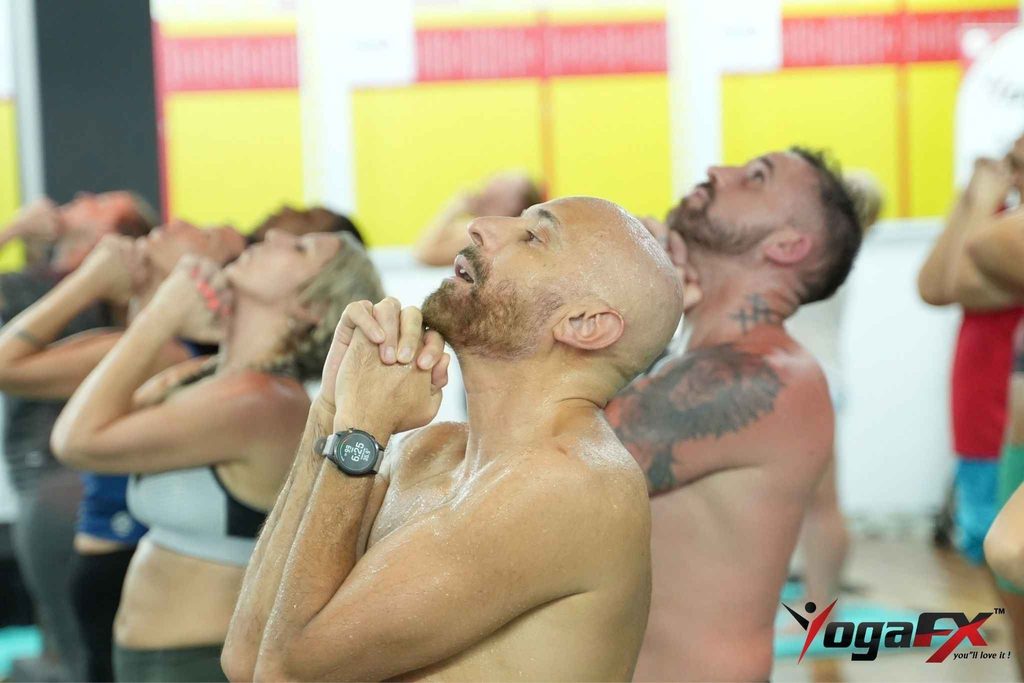
A hot room raises your heart rate, makes you sweat, and can leave you light-headed. Those are also the first signs of a panic attack. If you don’t expect them, your mind can read a normal heat response as danger. A University of Wisconsin study of a 90-minute class measured heart rates near 80% of maximum. That is a real workout, not a gentle stretch.
The fix is simple. Tell yourself before class that your heart will race and your face will flush. Then sit down whenever you need to. Resting is part of hot yoga for anxiety, not a failure.
2. Too much, too soon, on too little
Showing up hungry, dehydrated, or short on sleep makes every sensation louder. So does diving into daily classes in week one. Dizziness from low fluids feels exactly like anxiety. It’s easy to blame your mind when the cause is your body.
- Eat lightly about two hours before class.
- Drink water through the whole day, not only in the room.
- Sleep first. A bad night makes a hot room harder.
- Pace yourself. Two or three classes in week one is plenty.
3. Using class instead of care
Hot yoga for anxiety can sit beside therapy and medication. It should not replace them. Heat may also be unsuitable if you take certain medicines, are pregnant, or have a heart or blood pressure condition. Check with your doctor first, and read our guide on whether Bikram yoga is safe.
Leave the room and tell a teacher straight away if you feel faint, nauseous, tingly, or have chest pain. Chest pain or fainting needs medical help, not willpower.
This article is general information, not medical advice. Consult a healthcare professional before starting hot yoga, especially if anxiety affects your daily life, you have a medical condition, or you take medication.
How to Start Hot Yoga for Anxiety Safely
A good first week is boring on purpose. Follow these steps to ease into hot yoga for anxiety.
- Pick a quieter class. Mid-morning or early afternoon is calmer than the after-work rush. Ask the front desk.
- Tell your teacher. A simple “I get anxious in heat” lets them keep an eye on you.
- Choose a spot you can leave easily. Knowing you can step out lowers the pressure.
- Hydrate early. Start in the morning, not at the studio door.
- Wear light, breathable clothing. Cotton and loose layers beat heavy synthetic gear.
- Set one goal: stay in the room. Not the full pose. Resting inside the room still counts.
- Build slowly. Two or three classes in week one, then adjust to how you feel.
Think of your first week of hot yoga for anxiety as a trial run, not a test. You are collecting information about how your body and mind handle the heat.
What a first class feels like when you are anxious
Knowing the shape of the class takes away a lot of fear. Here is the rough map.
- First 10 minutes: deep standing breathing. You are warming up, and the heat feels strongest now.
- Next half: standing postures. Your heart rate climbs and your attention narrows.
- Second half: floor postures, with short rests lying on your back between them. This is where many students feel their mind slow down.
- Final minutes: a last breathing exercise, then rest.
The first third is usually the hardest. If your thoughts speed up, return to counting your breath. If you feel unwell, sit or lie down. Nobody will mind, and teachers see it every day.
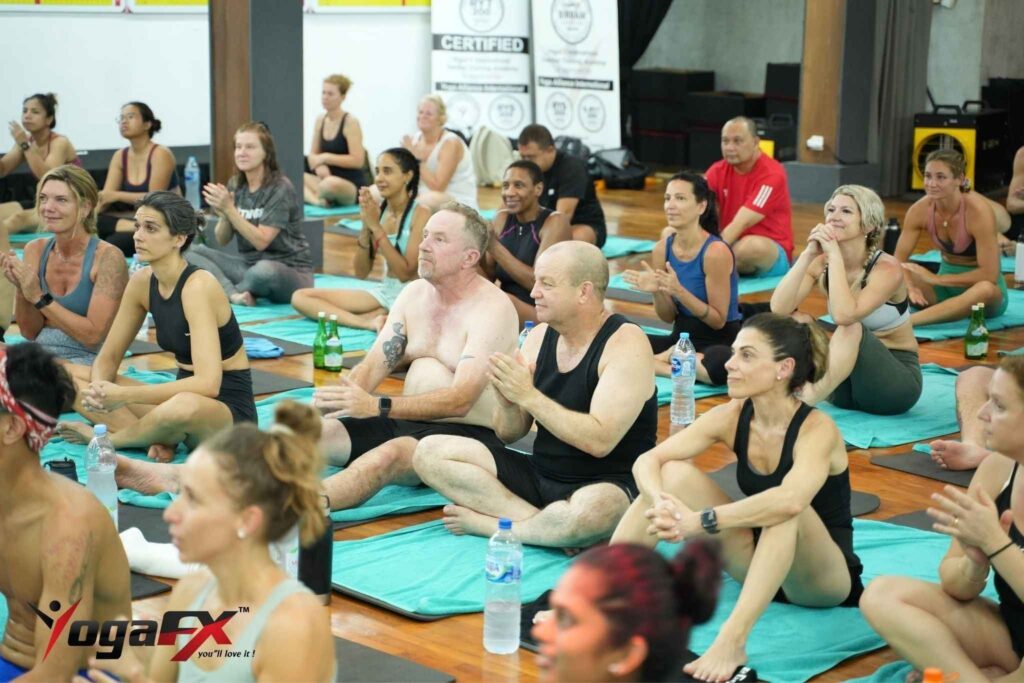
If the first class goes badly, don’t write off hot yoga for anxiety. Rest, drink water, eat something, and sleep. Then ask yourself what was different from a day when you felt fine. The answer is usually food, water, sleep, or pace, and all four are fixable.
Hot Yoga vs Other Styles for Anxiety
Hot yoga for anxiety is not the only option, and it is not the best fit for everyone. Match the style to how you feel today.
| Style | Pace and heat | What it asks of an anxious mind |
|---|---|---|
| Hot 26&2 (Bikram) | Fixed sequence, 90 minutes, 40°C | Steady focus and heat tolerance. The same routine every class. |
| Heated vinyasa | Flowing, pace varies by teacher | Constant transitions and choices. Can feel busy. |
| Hatha | Slower, usually unheated | Gentle pace. An easy place to start. |
| Yin | Long holds, usually unheated | Stillness. Thoughts can surface. |
| Restorative | Supported and passive | Rest first. The lowest effort. |
If heat worries you, begin with hatha or restorative for a few weeks. Come to hot yoga for anxiety when you want a stronger challenge. The best style is the one you will keep doing.
Stress, Burnout and Anxiety in Bali
Bali looks like a stress-free place, but many people here are tired. Remote workers hold two time zones in their head. Meanwhile, expats juggle visas and small businesses. Travellers arrive hoping a beach week will undo a year of strain.
Hot yoga for stress relief in Bali has one advantage: the climate. Our classes use natural tropical heat, not electric heaters, at 40°C and 40% humidity. So the room can feel closer to the weather outside than a shock to the system.
- Remote workers. A fixed 90-minute block with a clear finish, away from the screen.
- Long-stay expats. A weekly habit that gives your days a shape.
- Short-stay travellers. A drop-in with no long commitment. You can try it with a Free Guest Pass.
If you are dealing with deeper burnout, our wellness retreat guide for burnout and mental health explains what to check before you book anything.
Hot Yoga for Anxiety at YogaFX Bali
YogaFX teaches the Original Hot 26&2 method. Mr. Ian Terry, E-RYT 500, leads the teaching team. He has 12,000+ teaching hours and trained from 2014 to 2019 with the founder of the Bikram Hot 26&2 method. He is also a Master Trainer of the Republic of Indonesia Yogasana Sports Federation (confirmed June 2026). More than 1,500 graduates from 80+ countries have trained with YogaFX.
Here is what that means if you are trying hot yoga for anxiety for the first time:
- Two studios. Seminyak and Canggu, open every day from 06:00 to 22:00.
- A predictable class. 90 minutes, 40°C, 40% humidity, scripted dialogue, no demonstration, no music.
- Natural tropical heat. No electric heaters.
- Track record. More than 550 reviews and video testimonials across Google (150), Yoga Alliance (50), and YouTube (357).
Not sure you’ll cope with the heat? Try it at no cost. Claim your Free Guest Pass and tell the front desk it’s your first time.
Whether you choose hot yoga for anxiety or a slower style, the goal is the same: a practice you can keep up. Start small, stay honest about how you feel, and let the results build over weeks, not days.
FAQ: Hot Yoga for Anxiety
Is hot yoga good for anxiety?
It can be, for some people. Small studies link hot yoga with lower state anxiety and better mood, and many students feel calmer after class. It is not a treatment, though. If anxiety affects your daily life, speak with a doctor or therapist first, then add hot yoga gradually.
Can hot yoga cause anxiety?
It can feel that way. Heat raises your heart rate and causes sweating and light-headedness, which mimic panic symptoms. Dehydration, hunger, and too many classes in a row make it worse. Go slowly, drink water through the day, rest whenever you need to, and tell your teacher how you feel.
Does hot yoga increase cortisol?
Possibly during class. A hot, demanding workout is a physical stressor, and stress hormones can rise while you practise. Research on longer-term effects is limited, so no one can promise a drop in cortisol. If stress is your main concern, build up slowly and protect your sleep, water intake, and rest days.
Is hot yoga good for panic attacks?
Be careful. Heat can mimic early panic symptoms, so a hot room may trigger fear if you are prone to attacks. Some people do well with a slow build-up, a spot they can leave easily, and a teacher who knows. Speak to your doctor first, and consider an unheated class to start.
What type of yoga is best for anxiety?
There is no single best type. Slower styles such as hatha or restorative suit many beginners, while others prefer the fixed routine and strong focus of hot 26&2. Choose the style you will keep doing, and match it to your energy that day. Check with your doctor if you are unsure.
Still have questions? Message Mr. Ian and the YogaFX team through our contact page, and we will answer them personally.