Yoga for stress relief works best when it calms your nervous system, and the hot version does this in its own way. Bikram yoga uses a fixed sequence of 26 postures and 2 breathing exercises in a room held near 40°C with about 40% humidity. Hot yoga is the wider category, usually 29°C to 41°C.

This guide explains how each one may ease stress, what the research really shows, and how to start safely. It’s general education, not medical advice. If stress is affecting your health, consult a healthcare professional before you change your routine.
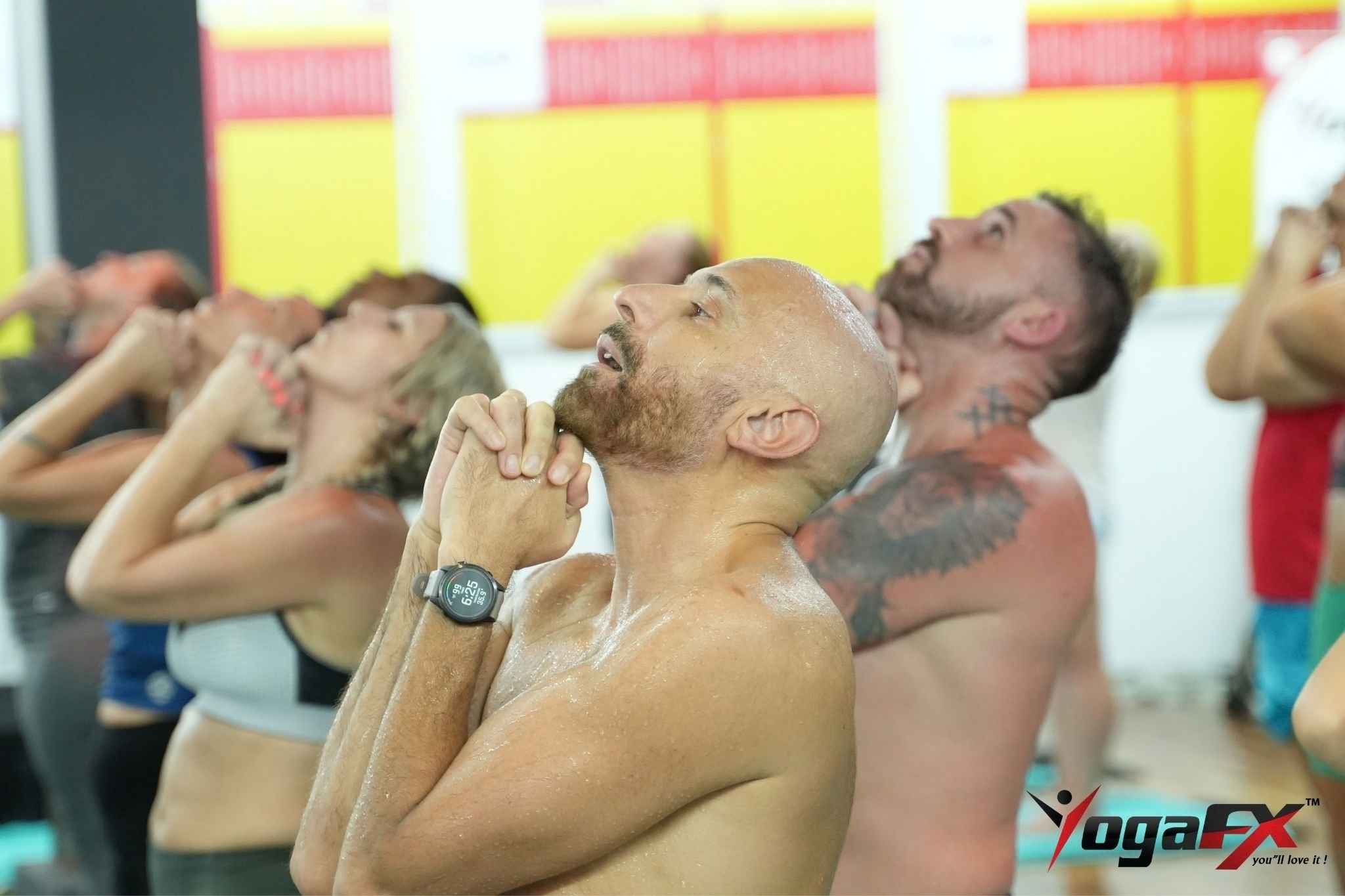
Bikram Yoga for Stress Relief: How It Helps
Picture a student who lands in Bali after a year of late nights and back-to-back calls. She wants to switch off, but her mind won’t stop. That’s the person most of our classes are built for.
At YogaFX, every instructor trains under founder Mr. Ian Terry, E-RYT 500, who has taught more than 12,000 hours of the Hot 26&2 method. From that teaching, we see Bikram yoga for stress relief working through four connected routes. Each one is explained below, with an honest note on how strong the evidence is.
1. A Calmer Cortisol Response
Cortisol is your main stress hormone. It rises when something feels threatening, then should settle again. Chronic stress keeps that alarm ringing for too long.
A 2016 randomised trial in the Journal of Consulting and Clinical Psychology tested this directly. Researchers assigned 52 women to eight weeks of Bikram classes in a room heated to 104°F (40°C), or to a waitlist.
Women whose cortisol spiked hardest in a lab stress test at the start showed a bigger drop in that spike after eight weeks. Women with a milder starting response showed no clear difference.
So the finding isn’t “hot yoga lowers cortisol” across the board. It’s narrower, and more useful for anyone trying yoga for stress relief: regular practice may help a highly reactive body react less sharply. You can read the full heated hatha yoga cortisol study for the details.
2. A 90-Minute Moving Meditation
A Bikram class has no music and no teacher demonstrating at the front. Instead, the teacher guides you with a spoken dialogue, and your phone stays outside. That leaves one job: the posture in front of you.
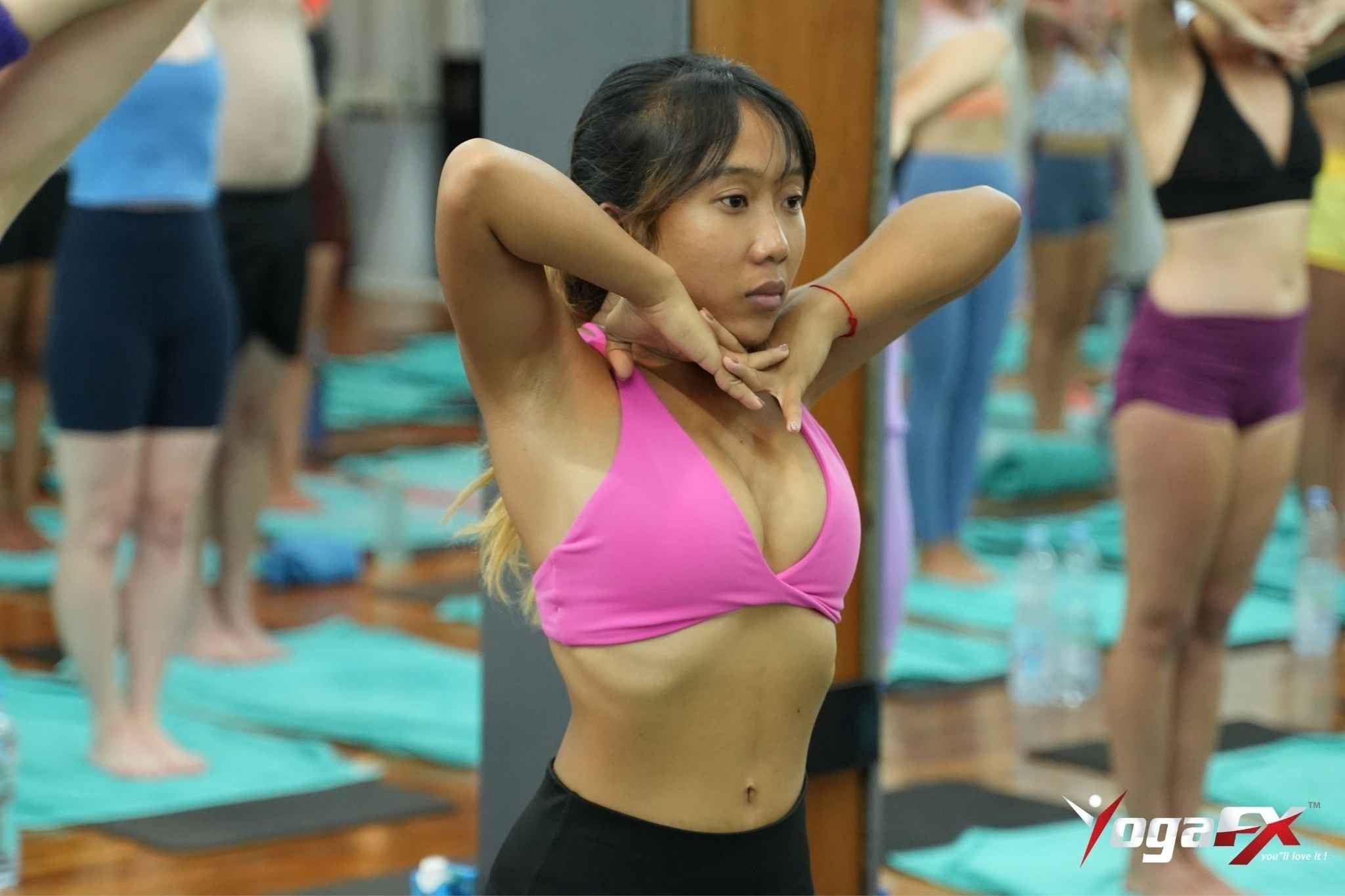
The heat makes this easier, not harder. It’s very difficult to rehearse tomorrow’s meeting while you balance on one leg in Standing Head to Knee at 40°C. Your attention gets pulled back to the body again and again, which is the same skill a seated meditation trains. That steady focus is the quiet engine of yoga for stress relief.
Graduates and regulars often describe this in similar terms. One long-time student told us the room stripped away the limits she’d been putting on herself. Another said the practice changed how she saw the rest of her life, not just her body.
3. Two Breathing Exercises That Bookend the Class
Every 26&2 class opens and closes with breathwork. The two exercises do opposite jobs, and that contrast is part of the point.
- Standing Deep Breathing (Pranayama). Slow, full inhales and long exhales, done standing, before any posture. It sets a calm rhythm for the whole class.
- Blowing in Firm (Kapalbhati). Short, sharp exhales from the belly at the very end. It clears the head and marks the shift into rest.
- Savasana between floor postures. Short rests lying on your back, so the heart rate can come down again and again.
Slow breathing with long exhales is linked with the body’s “rest and digest” state, the opposite of fight-or-flight. Our guide to the two Bikram yoga breathing exercises walks through each one step by step.
4. Better Sleep, Often Reported
Many students say they sleep more deeply on class days, especially after an evening session. Physical tiredness, released muscle tension and a quieter mind all play a part.
We’ll be honest, though. Research that measures sleep after hot yoga is still thin, so treat this as a common experience rather than a proven effect. If poor sleep is your main problem, talk to a doctor as well.
Bikram vs Hot Yoga for Stress Relief: What’s Different
“Hot yoga” covers almost any class in a heated room, from flowing vinyasa to heated pilates. Bikram, also called Original Hot 26&2, is one fixed method inside that group. That matters for yoga for stress relief, because the structure changes how your mind behaves in class.
| Feature | Bikram / Hot 26&2 | General hot yoga |
|---|---|---|
| Room temperature | About 40°C, 40% humidity | Usually 29°C to 41°C, varies by studio |
| Class length | 90 minutes (some studios also run 60) | Often 45 to 90 minutes |
| Sequence | Same 26 postures, same order, every class | Changes with the teacher or the day |
| Breathing | Standing Deep Breathing and Blowing in Firm | Often ujjayi breath during flow |
| Music | None | Often played |
| Instruction | Scripted dialogue, no demonstration | Freestyle cues, teacher often demonstrates |
For a stressed mind, the fixed sequence is a quiet advantage. You don’t have to guess what comes next, so there are fewer decisions to make. After a few classes, the order becomes familiar, and that predictability can feel calming in itself.
A flowing hot class suits people who enjoy variety and music instead. Neither is “better” for everyone. If you want the full side-by-side, see our guide to Bikram yoga vs hot yoga.
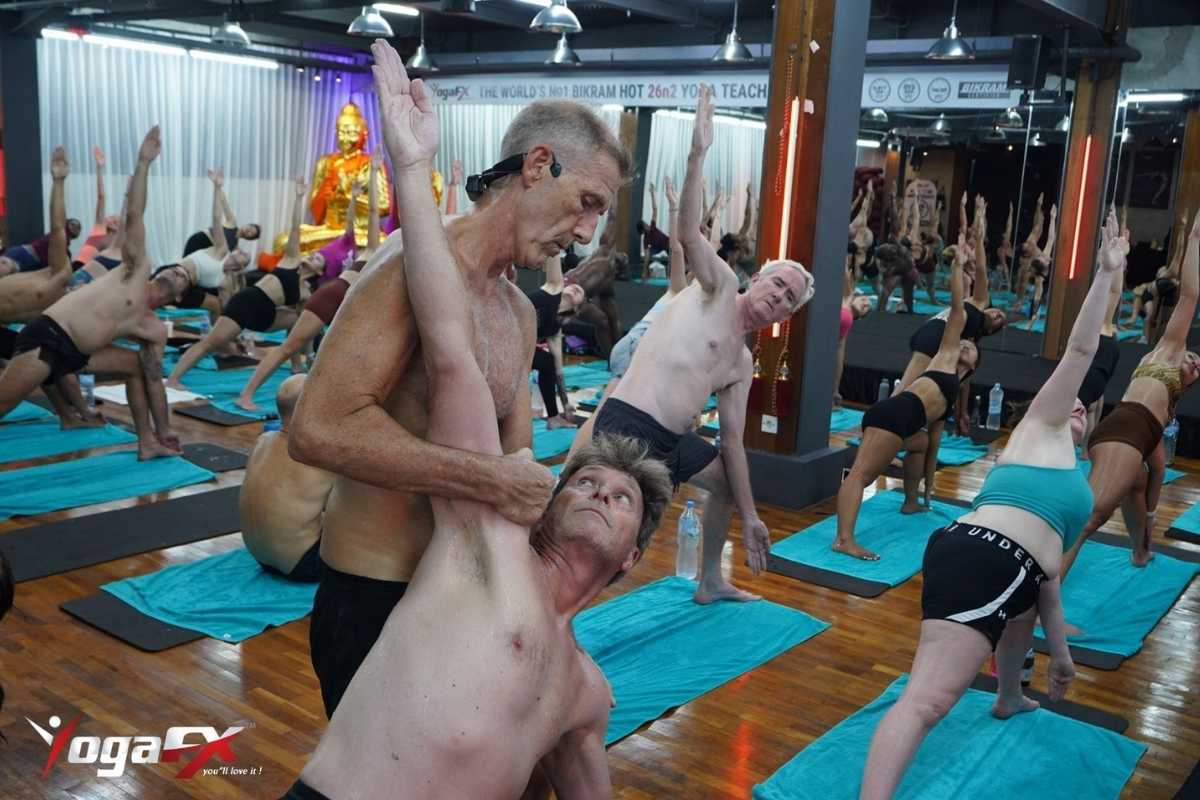
What the Research Actually Shows
Several trials have tested hot yoga for stress relief and mood. They’re small, but they point in the same direction. Here’s what they found, in plain terms.
- Perceived stress fell. In a 16-week trial, 63 stressed, inactive adults were randomly assigned to Bikram classes (three to five a week) or no treatment. The yoga group improved significantly in perceived stress, self-efficacy and quality of life. People who attended more classes saw bigger drops in stress.
- Stress reactivity eased. The eight-week cortisol trial above found a calmer stress response in women who reacted most strongly at the start.
- State anxiety dropped. A 2022 study by Hui and colleagues reported that hot yoga reduced state anxiety, meaning how anxious people felt in the moment.
- Mood improved. In a Massachusetts General Hospital trial, 59% of people in the heated yoga group cut their depression symptoms by half or more over eight weeks, against 6% on the waitlist.
You can read the 16-week Bikram yoga perceived stress trial on PubMed. A 2025 systematic review of 43 studies and 942 participants also linked Bikram practice with better well-being, alongside flexibility and other physical gains (Willmott et al. review).
What the Research Doesn’t Show (Yet)
Popular articles often go further than the data. So here’s the other side, because it changes what you should expect.
- Blood pressure. The same 16-week research program found little to no effect on heart rate variability or heart disease risk factors. Don’t use hot yoga to manage blood pressure without your doctor.
- Brain chemicals. Claims about serotonin boosts come from general exercise research. These hot yoga trials didn’t measure them.
- Sleep. Better sleep is a frequent report, but few studies have tested it in heated classes.
- Study size. Most trials had fewer than 100 people and compared yoga with a waitlist, not with another exercise.
The fair summary on Bikram yoga for stress relief: regular practice may reduce how stressed you feel and how hard your body reacts to stress. It isn’t a treatment, and it works best as part of a wider plan.
Can the Heat Make Stress Worse?
Sometimes, yes, especially at first, so it’s worth knowing before you try hot yoga for stress relief. A hot class is hard exercise, and hard exercise is a short-term stressor for the body. In a University of Wisconsin study, heart rates during a 90-minute Bikram class reached around 80% of maximum.
That means cortisol and heart rate can rise during class. The calming effect usually shows up afterwards, in the closing Savasana and the hours that follow. Over weeks, the research above suggests the body adapts and reacts less sharply.
For some people, the first class feels a lot like panic. A racing heart, heavy breathing and a hot face are normal signs of heat, but they can feel alarming. If that sounds familiar, our article on hot yoga for anxiety covers how to handle it.
Check with a doctor before your first class if any of these apply to you:
- You’re pregnant or trying to conceive.
- You have a heart condition, high or low blood pressure, or a history of fainting.
- You take medication that affects heat tolerance, heart rate or fluid balance.
- You have a condition that makes heat risky, such as some neurological conditions.
Our guide to whether hot yoga is safe explains these risks in more detail.
The Most Calming Postures in the 26&2 Sequence
Every posture in the sequence asks for focus. However, a few do most of the work in yoga for stress relief. They slow the breath and turn your attention inward.
- Standing Deep Breathing (Pranayama). The first thing you do. It sets a slow breathing rhythm before the heat builds.
- Wind-Removing Pose (Pavanamuktasana). Lying on your back, hugging your knees. It’s often the moment students feel the floor series begin to settle them.
- Half Tortoise (Ardha Kurmasana). Kneeling, arms stretched forward, forehead near the floor. Many students find it the most restful posture in class.
- Rabbit (Sasangasana). A rounded spine with the chin tucked to the chest. It follows Camel, so the body moves from a deep backbend into a gentle forward curl.
- Final Savasana. Lying still after Blowing in Firm. For many people, it’s where yoga for stress relief really lands.
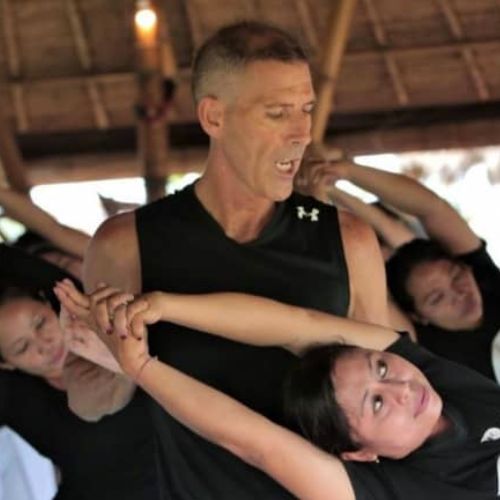
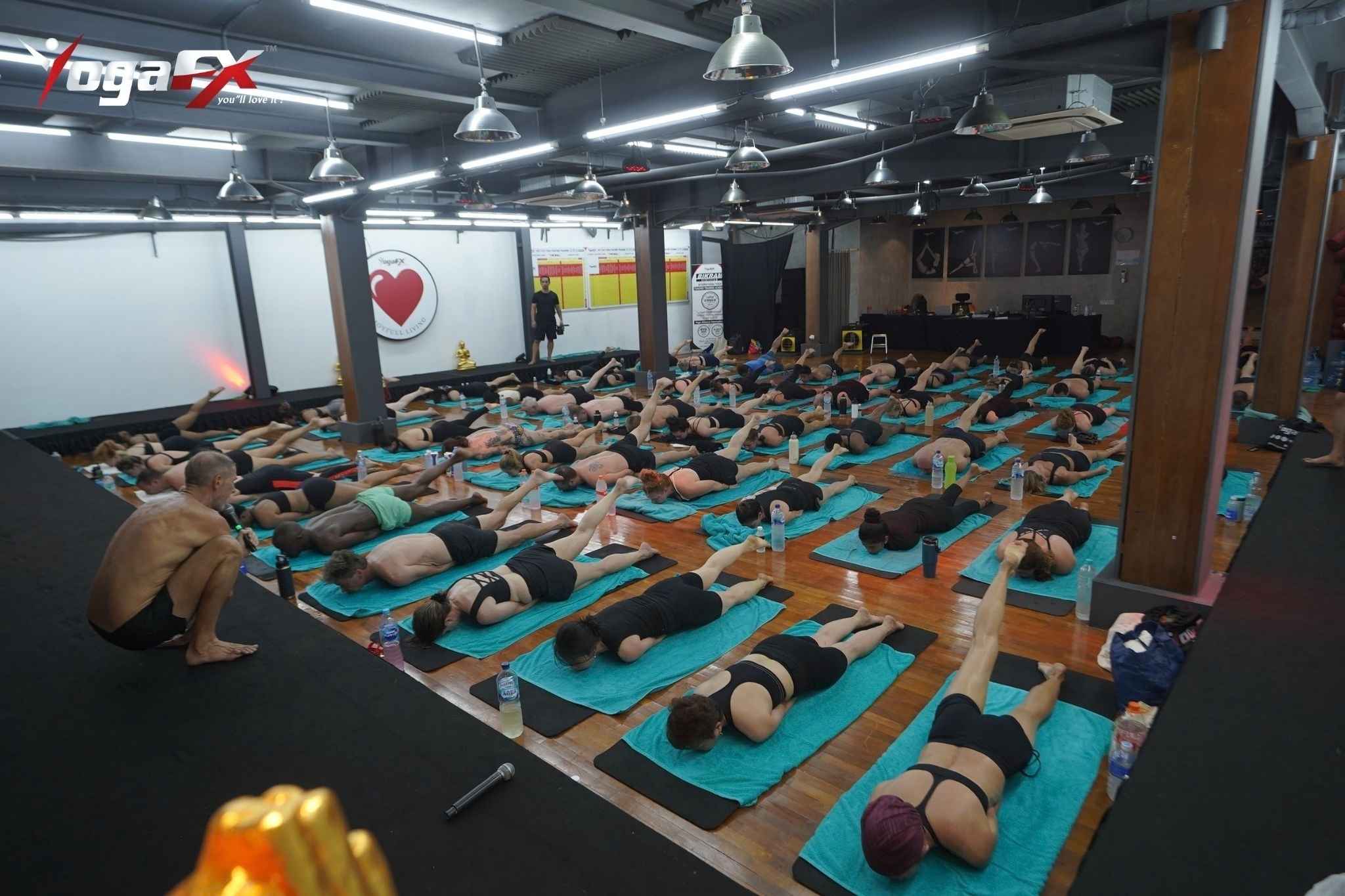
You don’t need to master any of these to benefit. Staying in the room and breathing through each one matters more than how deep you go. The video below shows a full class at our Bali studio, so you can see the pace before you try it.
What to Expect in Your First Class
If you’re trying hot yoga for stress relief for the first time, knowing what’s coming takes away a lot of the nerves. Here’s what a first class at our studios looks like.
- Temperature. About 40°C with 40% humidity, from Bali’s natural tropical heat rather than electric heaters. It feels humid and enveloping, not dry.
- Duration. The full class runs 90 minutes. We also run 60-minute classes if you’d like a shorter start.
- Focus. The goal is to stay with your breath and respect your limits in the heat. Nobody expects the full posture on day one.
- The teacher. You’ll hear clear spoken cues the whole way through, so you can follow along even if you’ve never seen the postures.
Most beginners say the second class feels noticeably easier than the first. That’s normal heat adaptation, and it’s a good reason to book two classes close together rather than judging the practice on one.
Tips for Getting Started Safely
A few simple habits make yoga for stress relief in the heat feel calmer and safer. These are the same tips our teachers give new students at the front desk.
- Hydrate well. Drink water through the day before class, sip during it, and keep drinking after. Electrolytes help if you sweat a lot.
- Take breaks. You don’t have to do every posture. If you feel dizzy or overheated, lie down in Savasana or sit on your towel, and stay in the room.
- Start slow. Two or three classes a week is a sensible start. The 16-week stress trial used three to five, so build up if it feels good.
- Eat light. Have a small meal a couple of hours before, so digestion isn’t competing with the heat.
- Tell your teacher. Mention any injury, medical condition or pregnancy before class starts.
When you use yoga for stress relief, consistency matters more than intensity. In the trials, people who came more often got more benefit, so a steady habit beats one heroic week. Our guide on how often to do Bikram yoga sets out a weekly plan by goal.
Hot Yoga for Stress Relief in Bali at YogaFX
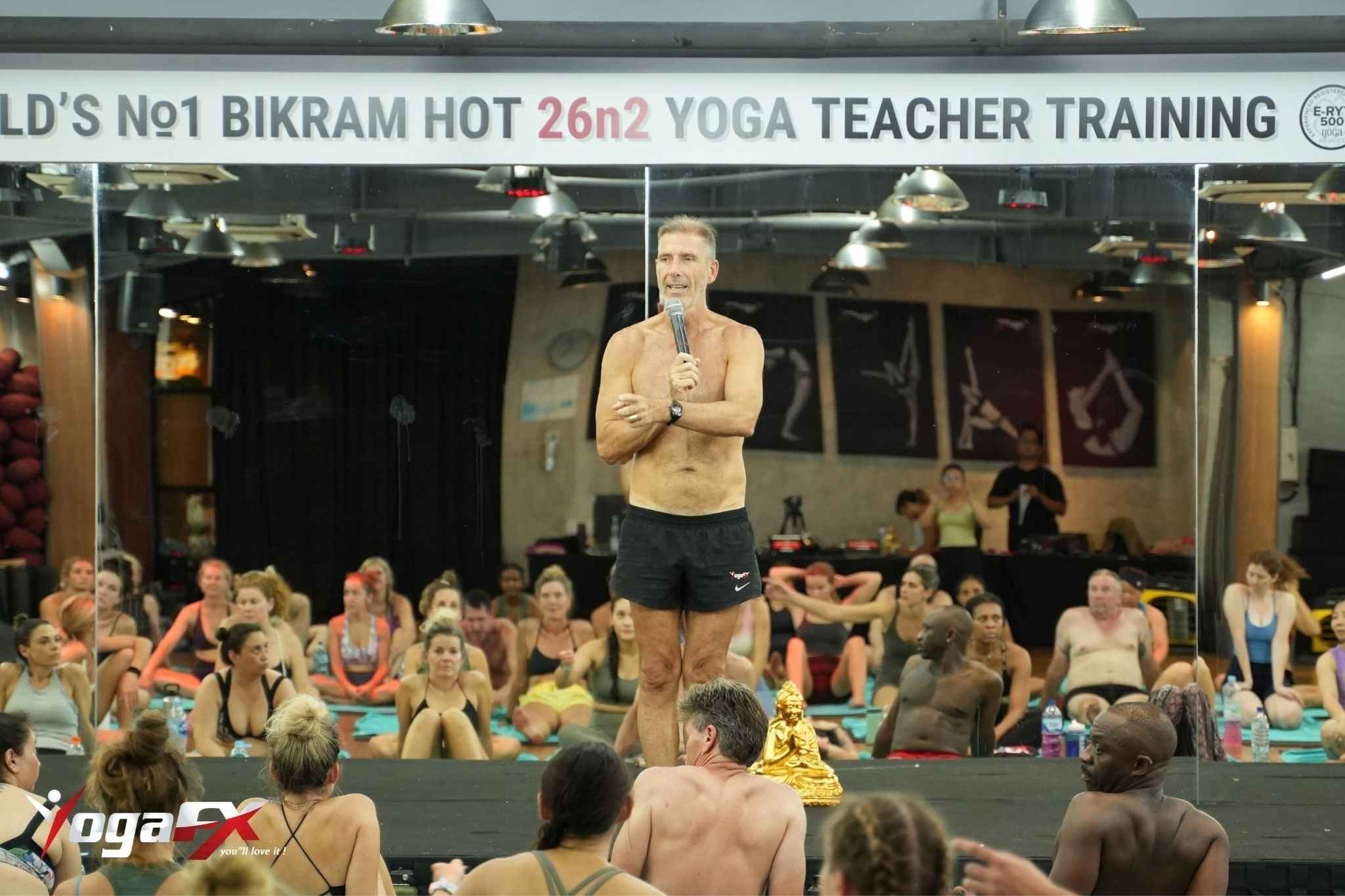
YogaFX runs daily hot yoga at two studios, in Seminyak and Canggu. Classes run every day from 06:00 to 22:00, so you can fit one in before work or wind down after a long day. That makes regular yoga for stress relief realistic, even on a busy trip.
Our rooms use Bali’s natural tropical heat, not electric heaters. Every teacher trained under Mr. Ian Terry, who spent five years, from 2014 to 2019, training with the founder of the Bikram Hot 26&2 method. He is also Master Trainer of the Republic of Indonesia Yogasana Sports Federation.
Yoga for stress relief in Bali can be as simple as one class on a quiet morning. First-time visitors can try a class free with the Free Guest Pass at either studio. Send us your dates on WhatsApp to claim your Free Guest Pass, and we’ll suggest a good first class.
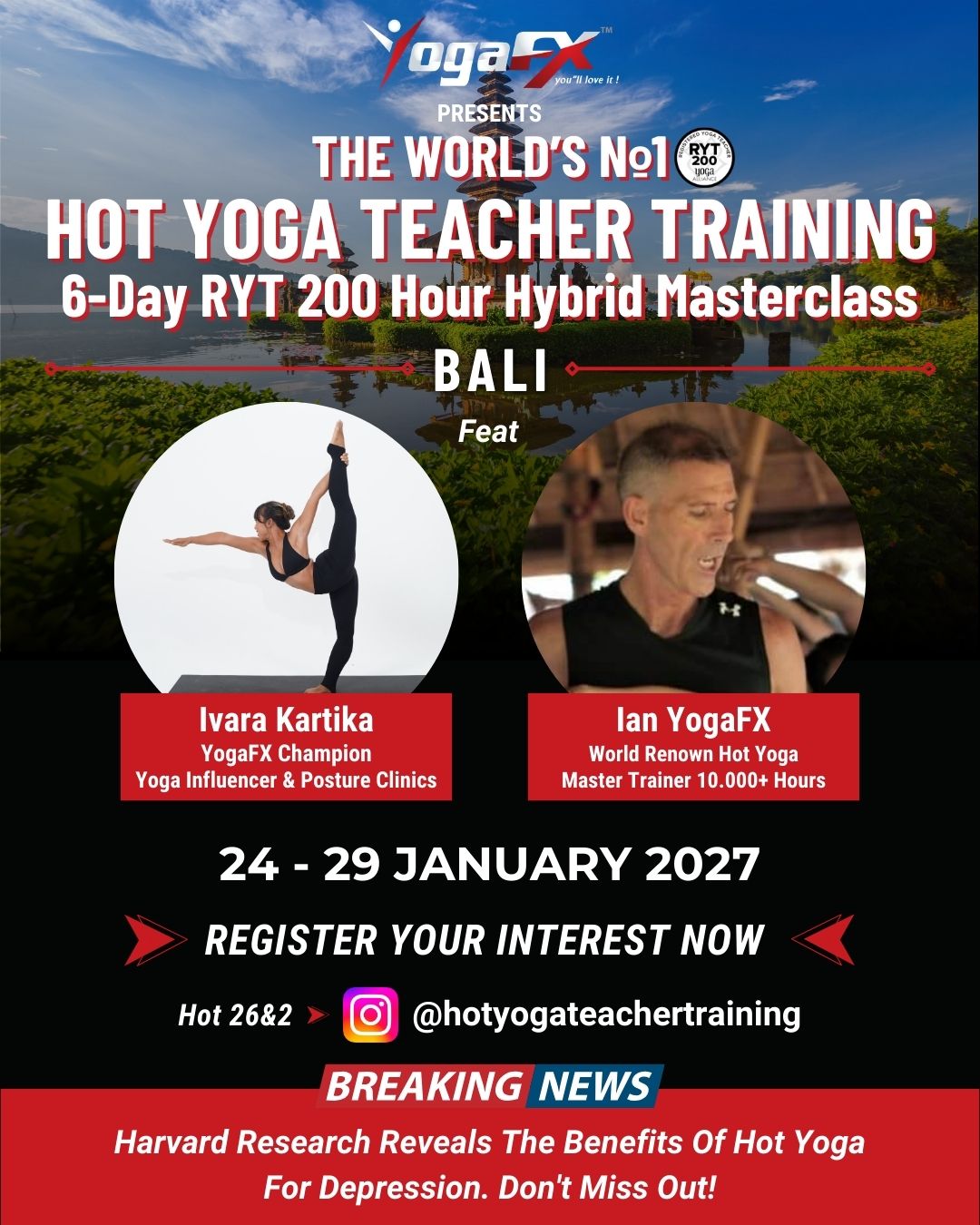
If the practice becomes part of your life, you can go deeper. YogaFX also runs a six-day hybrid teacher training in Seminyak, with Yoga Alliance RYT 200 and Bikram Hot 26&2 certification. You’ll find the details at yogafxteachertraining.com.
FAQ: Yoga for Stress Relief
Does hot yoga increase cortisol?
During class, yes, it can. Hot yoga is hard exercise, and hard exercise briefly raises cortisol and heart rate. Over weeks, the picture changes. An eight-week Bikram trial found that women with the strongest stress response at the start reacted less sharply afterwards. The short rise is normal, while the longer trend may be calmer.
Which yoga is best for stress: Bikram or regular yoga?
It depends on you. Gentle yoga suits people who want slow, quiet movement. Bikram suits people whose minds race in a calm room, because the heat and fixed sequence demand full attention. Bikram also has randomised trial evidence for lower perceived stress. Try both, then notice which one leaves you calmer the next day.
Can hot yoga help stress headaches?
It may help tension that builds in the neck and shoulders, and slow breathing can ease stress. However, heat and dehydration can also trigger headaches, especially in early classes. Drink plenty of water and rest when you need to. If you get frequent or severe headaches, consult a healthcare professional before you start.
How long does it take for yoga to reduce stress?
Many people feel calmer after a single class, often during the final Savasana. Lasting change takes longer. The main Bikram stress trials ran for eight and 16 weeks, and people who attended more classes saw bigger drops in stress. Aim for two or three classes a week for at least a couple of months.
Does Bikram yoga help you sleep?
Many students say they sleep more deeply after class, especially after an evening session. Physical tiredness and a quieter mind both help. That said, few studies have measured sleep after hot yoga, so treat it as a common experience rather than a proven effect. If poor sleep persists, speak with a doctor.
Still have questions? Message Mr. Ian and the YogaFX team on WhatsApp and we will answer them personally. First-time visitors can also claim a Free Guest Pass for the Seminyak or Canggu studio.
This article is for general educational purposes and is not medical advice. Hot yoga is not a treatment for stress, anxiety or any medical condition. Anyone who is pregnant, has a heart condition or blood pressure concerns, or takes regular medication should consult a healthcare professional before practising in a heated room.