
The hot yoga depression study from Massachusetts General Hospital found that 59.3% of adults who took heated yoga for eight weeks cut their depression symptoms by half or more, against 6.3% on a waitlist. It is early evidence, not proof of a treatment. Here is what it means for a class in Bali.

The Hot Yoga Depression Study in Plain Words
Researchers at Massachusetts General Hospital, a Harvard Medical School teaching hospital, ran the trial. Nyer and 25 colleagues published it in the Journal of Clinical Psychiatry in October 2023. Their paper is titled “A Randomized Controlled Trial of Community-Delivered Heated Hatha Yoga for Moderate-to-Severe Depression.” You can read the abstract on Europe PMC.
The team wanted to know three things: could people stick with heated yoga, did they like it, and did it look like it helped? That’s why the authors call it a test of feasibility, acceptability and preliminary efficacy.
In other words, the hot yoga depression study is a first step, not a final verdict. Newspapers often call it the Harvard hot yoga study or the MGH hot yoga trial. Both names point to this same paper.
How the trial was built
Here is how the trial was built, straight from the published abstract:
- Design. An 8-week randomised controlled trial of heated yoga versus a waitlist, run from March 2017 to August 2019.
- Sample. 80 adults with moderate-to-severe depression were randomised, and 65 were included in the analysis (33 in the yoga group, 32 on the waitlist).
- Who they were. The average age was 32.7 years, and 81.5% of the analysed group were female.
- Main measure. A clinician-rated depression scale called the IDS-CR, compared at baseline and at week 8.
- Setting. Two community heated yoga studios, not a laboratory.
What the 59% Figure Does and Does Not Tell You
Response is not remission
Start with the word response. In this trial it meant a drop of at least 50% on the IDS-CR. That is a real change. However, it does not mean the depression went away.
Next, look at the size of the groups. Sixteen people in the yoga group met the mark, against two on the waitlist. With numbers this small, every person moves the percentage a lot. So, because of that, the 59.3% from the hot yoga depression study is a promising signal and not a guarantee.
The hot yoga depression study reported a large effect size, with a Cohen’s d of 1.04. For this reason, large effects in small early trials often shrink when bigger studies test them. The authors say so too, because their results in the hot yoga depression study “warrant further research using active control conditions.”
If you want the trial’s methods in more detail, our teacher-training site breaks the whole study down section by section.
The waitlist problem
Then there is the waitlist. People on the waitlist knew they were not getting yoga yet. That shows heated yoga beat waiting. It does not show heated yoga beat a walk, a gym session or an unheated yoga class.
One more point matters for anyone reading this in Bali. The trial compared heated yoga against nothing. It never split the effect of the heat from the effect of the yoga. Nobody can say from this hot yoga depression study whether the warm room added anything.
How Much Yoga Did Participants Actually Do?
The average was 10.3 classes over 8 weeks. That works out to roughly one class a week. The authors concluded that about one heated session a week went with a significantly larger drop in symptoms than waiting.
That is a useful number from the hot yoga depression study for ordinary life. You don’t need a daily habit to join the conversation. Our guide on how often to do hot yoga by goal covers weekly rhythms in more detail.
Two cautions apply. First, the attendance figure is an average, and the spread was wide (the standard deviation was 7.1 classes). Second, the study is not a prescription. The hot yoga depression study tells us what a group of volunteers did, not what you should do.
Heated Room vs Natural Heat: How a Bali Class Compares
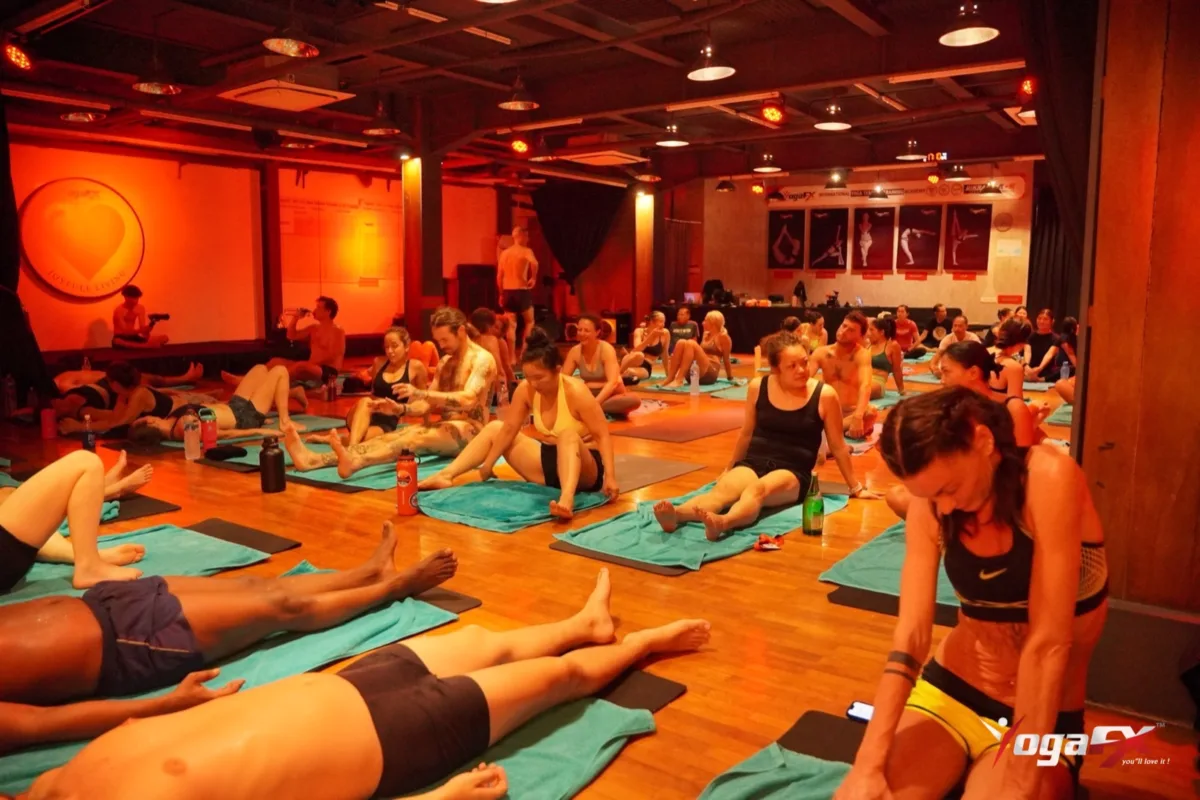
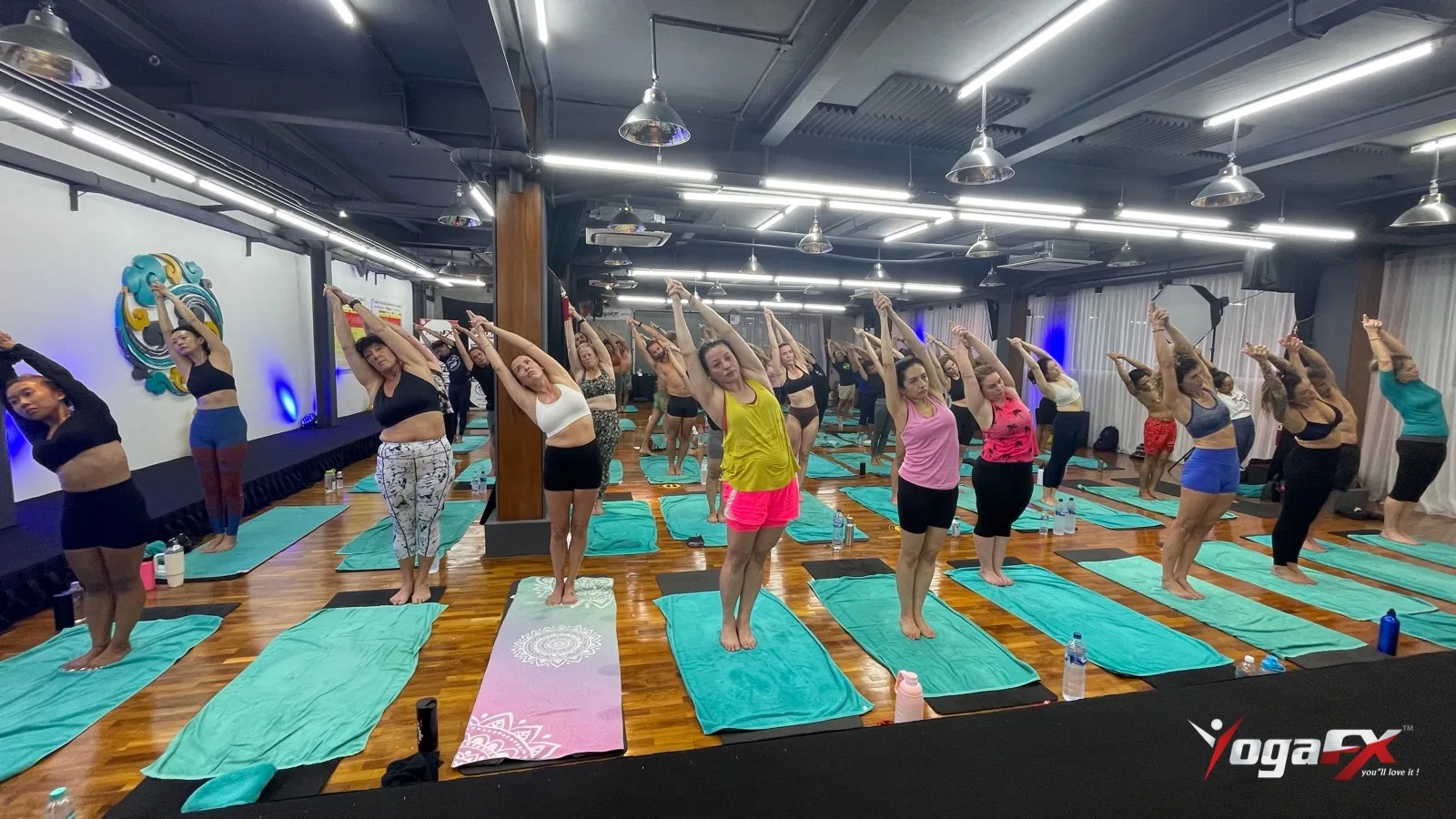
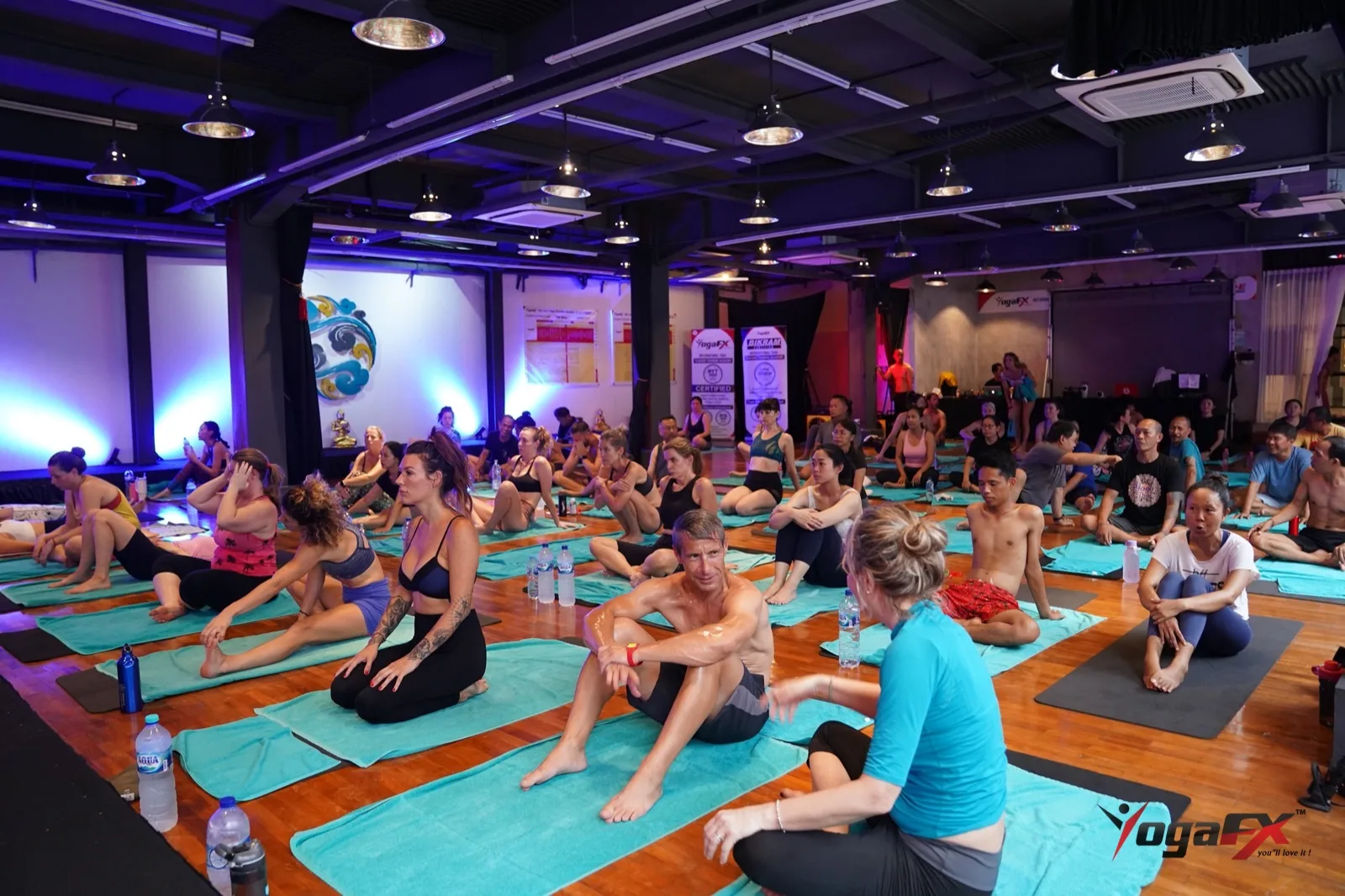
A YogaFX class is not a laboratory room. We teach the Original Hot 26&2 sequence in natural tropical heat, not with electric heaters. The room sits around 40 degrees C with about 40% humidity, and the class runs 90 minutes. Our page on practising in natural Bali heat explains how that feels.
Trial and class side by side
The table below sets the hot yoga depression study next to a typical YogaFX class. Where the abstract is silent, the table says so.
| Feature | MGH trial (Nyer et al., 2023) | YogaFX class in Bali |
|---|---|---|
| Style | Heated hatha yoga, community studios | Original Hot 26&2, a fixed 26-posture sequence |
| Heat source | Heated room (temperature not given in the abstract) | Natural tropical heat, about 40°C and 40% humidity |
| Class length | Not stated in the abstract | 90 minutes |
| Dose | Average of 10.3 classes over 8 weeks | Your choice: drop-in or membership |
| Comparison | Waitlist control group | None, because a class is not a trial |
| Who took part | 65 analysed, mean age 32.7, 81.5% female | Healthy adults of any gender and age |
| Outcome tracked | Clinician-rated IDS-CR score | None, we do not measure symptoms |
The table shows why we stay careful. The two settings overlap because both involve a warm room and a guided class. They also differ in ways nobody has tested. As a result, we do not claim that a Bali class gives the same result as the trial.
Heat also carries risk, and the hot yoga depression study does not remove it. The US National Center for Complementary and Integrative Health warns that “hot yoga has special risks related to overheating and dehydration.” You can read that on the NCCIH yoga safety page. Our guide to whether hot yoga is safe lists who should skip it.
How to Read Any Heated Yoga Depression Study
News stories about a hot yoga depression study tend to quote one percentage and stop. You can do better with a few quick questions. They work on this trial and on the next one that appears.
- Who was studied? Here the average age was 32.7 and most people were women. If you are a 55-year-old man, the match is looser.
- Who was the comparison? A waitlist is a weak control. A stronger test would compare heated yoga with unheated yoga or with another form of exercise.
- How big was the study? Sixty-five analysed people is small. Results from small groups can swing in either direction when repeated.
- What was measured? A clinician scored the IDS-CR, which is better than a quick online quiz. It still captures symptoms, not a whole life, so don’t read it as a verdict on anyone’s wellbeing.
- What do the authors say? They call for active control conditions. That is a researcher’s polite way of saying the question is still open.
Asking these questions does not make the study less interesting. Instead, it keeps your expectations in proportion. Therefore, a good result in 65 people is a reason for more research, and it is a fair reason to try a class if your doctor agrees.
Where Yoga Fits Beside Real Depression Treatment
The same NCCIH page says yoga “can be a helpful addition to treatment for depression.” It cites a 2020 review of 7 studies and 260 participants that found yoga “may have small additional benefits for depression symptoms when used along with other forms of treatment.” The key words are along with.
The NHS agrees that treatment is layered. Its guidance says treatment “usually involves a combination of self-help, talking therapies and medicines.” It adds that antidepressants “have to be prescribed by a doctor.” See the NHS treatment page for depression in adults for the full picture.
So here is the sensible reading of the hot yoga depression study:
- Do not stop treatment. The NCCIH describes yoga as an addition to treatment, not a replacement for it.
- Talk to a professional first. A doctor or therapist can tell you whether a hot room suits your health.
- Treat yoga as one tool. It may sit beside therapy, medication, sleep, movement and company.
This article is general information and not medical advice. Please consult a healthcare professional about depression. If you are thinking about harming yourself, contact local emergency services or a crisis line right now.
Why Bali Visitors Keep Asking About the Hot Yoga Depression Study
People arrive in Bali for many reasons. Some are on a long break, some have moved here for work, and some are simply looking for a steadier routine. Many of them have seen a headline about the hot yoga depression study and want to know if a studio class is worth trying.
A routine you can keep
The trial’s most practical lesson is about attendance. People who showed up about once a week still did better than those who waited. A class that runs at fixed times, in a room you already know, makes that rhythm easier. Our studios open from 06:00 to 22:00, so you can pick a slot that fits your day.
A room full of other people
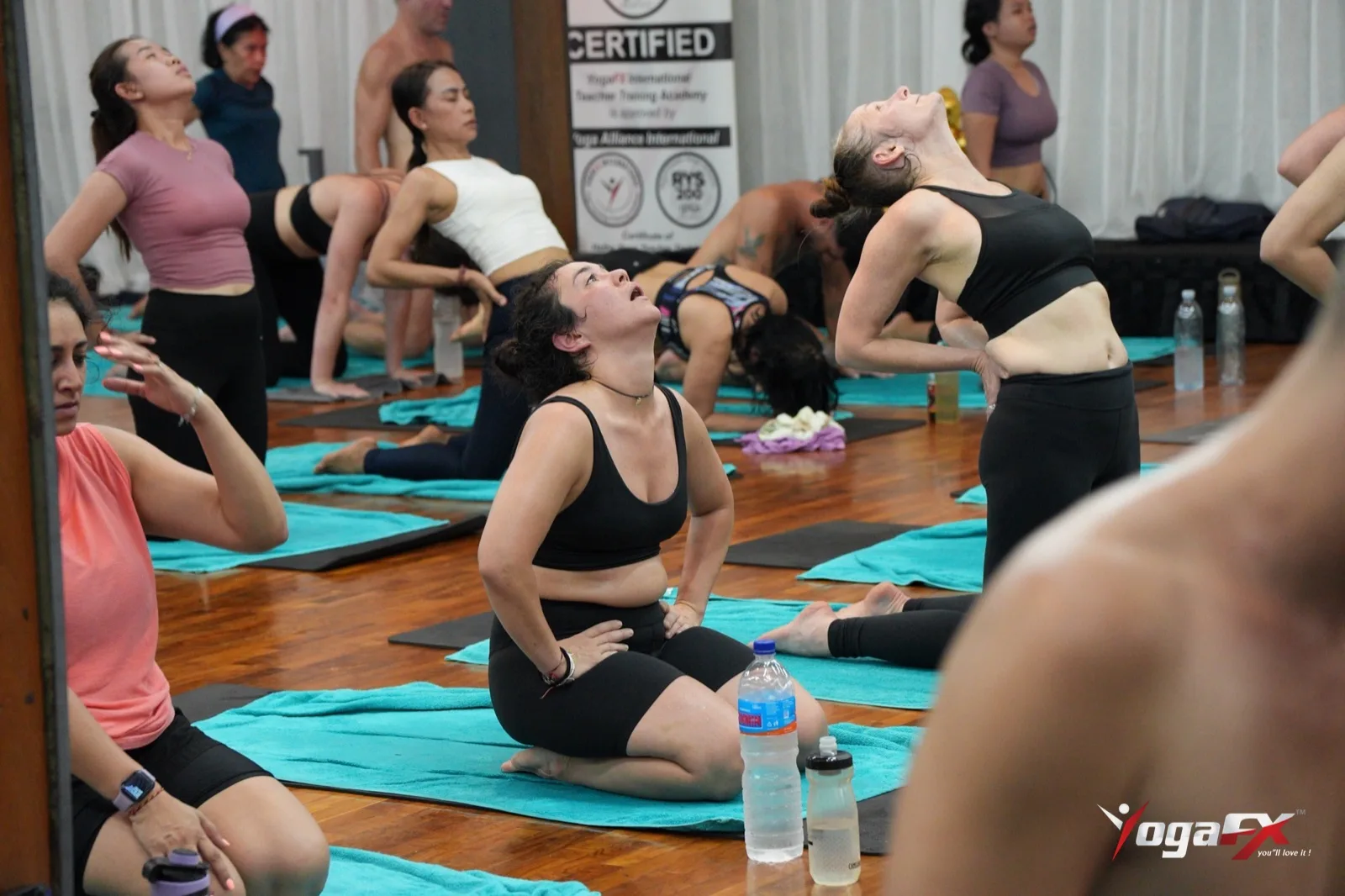
Because group classes put you in a room with others who are also working hard, you share the effort. You don’t have to talk to anyone. For example, many students tell us that simply sharing the space makes it easier to turn up on a low day.
What the trial could not test
- Tourists and expats. The paper describes adults treated through community studios, so visitors and expats were not the focus.
- Natural heat. The classes used heated rooms, so Bali’s own warmth sits outside the evidence.
- Long-term effects. Likewise, the abstract covers eight weeks. It says nothing about month six or year two.
- Prevention. The study enrolled people who already had moderate-to-severe depression, so it can’t speak to staying well.
Keeping those gaps in view is the honest way to use the hot yoga depression study. Instead, treat it as a good reason to be curious, and not as a promise that a class will change how you feel.
A Gentle Way to Try Heated Yoga If Your Doctor Agrees
Suppose you have read the hot yoga depression study and want to try a class. Here’s how we suggest approaching it. None of this comes from the trial, and none of it is a protocol. It’s what we see work for newcomers in our own studios.
Start small
Begin with one class a week for a few weeks. That matches the rough dose in the trial, and it gives your body time to adjust. Bali’s climate helps because you arrive already used to warmth. Even so, a 90-minute class feels different from a walk on the beach.
Before, during and after class
Arrive early, drink water before class and bring a towel. Eat lightly, at least two hours before you start, because a full stomach makes the standing series harder. During class, you can sit or lie down at any time, and nobody will think less of you. Many first-timers rest during the floor series, so that is completely normal.
After class, rehydrate and then notice how you feel over the next day. Mood, sleep and energy all change for many reasons, so treat your own notes as personal observations. They are not evidence. If a class leaves you dizzy, nauseous or unusually low, tell your teacher and speak to a healthcare professional before you return.
What Students Say About the Room
None of these reviews is a clinical result. We are not measuring anyone’s mood. They just show what the room feels like to the people who practise and train in it.
Enjoy the class with professional coach, enjoy the vibes. Very recommended.
Dayu, Google review, 2020
This has been life-changing… you are really my yoga family.
Helen, YouTube review of her teacher training, 2024
The entire experience is exceptional.
Ajay, Google review, 2024
Notice the theme, which no hot yoga depression study can score. Students talk about the coach, the vibe and a sense of belonging. Those are the parts of a studio that a trial cannot score, but they often decide whether someone keeps coming back.
Try a Class at YogaFX in Seminyak or Canggu
Mr. Ian Terry, our founder, is an E-RYT 500 teacher with more than 12,000 teaching hours. Under his direction both studios teach the same scripted 26&2 class. A teacher speaks every instruction, so you can follow along without watching anyone else. There is no music and no demonstration.
If you are curious after reading the hot yoga depression study, a first class is simple to arrange:
- Pick a studio. We have one in Seminyak and one in Canggu, and both open from 06:00 to 22:00 every day.
- Start with a guest pass. The Free Guest Pass lets you try one class before you commit to anything.
- Take it slowly. Rest whenever you need to, drink water and leave the room if you feel unwell.
- Tell the teacher. Mention any health condition before class so they can guide you.
Ready for more reading? Our guide to hot yoga for anxiety and stress covers five benefits and three honest risks. To plan visits, see drop-in hot yoga classes in Bali for schedule and pricing.
FAQ
Does hot yoga help with depression?
One 8-week trial found 59.3% of the heated yoga group cut symptoms by half or more, against 6.3% on a waitlist. That is promising but early. Yoga works best alongside treatment from a doctor or therapist, so please do not replace care with classes.
How often should you do hot yoga for mental health?
Trial participants attended an average of 10.3 classes over eight weeks, roughly one a week. Nobody has set an ideal frequency. Start with one or two classes a week, listen to your body and ask a healthcare professional if you have any health concerns.
Does the heat matter in the hot yoga depression study?
The study compared heated yoga with a waitlist, so it cannot separate the heat from the yoga. The authors call for future trials with active control groups. For now, the honest answer is that nobody knows how much the warm room adds.
Is natural Bali heat the same as a heated studio?
Not necessarily. The trial used heated studios and did not report the temperature in its abstract. Our classes use natural tropical heat of about 40 degrees C and 40% humidity. We cannot say the results match, so we describe the practice and leave the claims to research.
Can hot yoga replace antidepressants or therapy?
No. The NHS says depression treatment usually combines self-help, talking therapies and medicines, and antidepressants must be prescribed by a doctor. Yoga may be a helpful addition. Speak with your doctor before changing any treatment, and tell your teacher about your health.
Still have questions? Message Mr. Ian and the YogaFX team on WhatsApp and we will answer them personally.
 Mr. Ian Terry