
Original hot yoga is the fixed 26 and 2 class: 26 postures and 2 breathing exercises, in the same order, for 90 minutes at about 40°C. At YogaFX in Seminyak and Canggu, Bali, we teach it in natural tropical heat, so the label on the door matches what really happens on the mat.

Maybe you’ve seen “original hot yoga”, “Hot 26” and “Bikram” on three different timetables. That’s confusing, and it’s fair to ask what the name actually promises. This guide explains the label from inside a real Bali class, shows how it links to Bikram yoga, and tells you what to check before your first session.
What Original Hot Yoga Means in a Bali Class
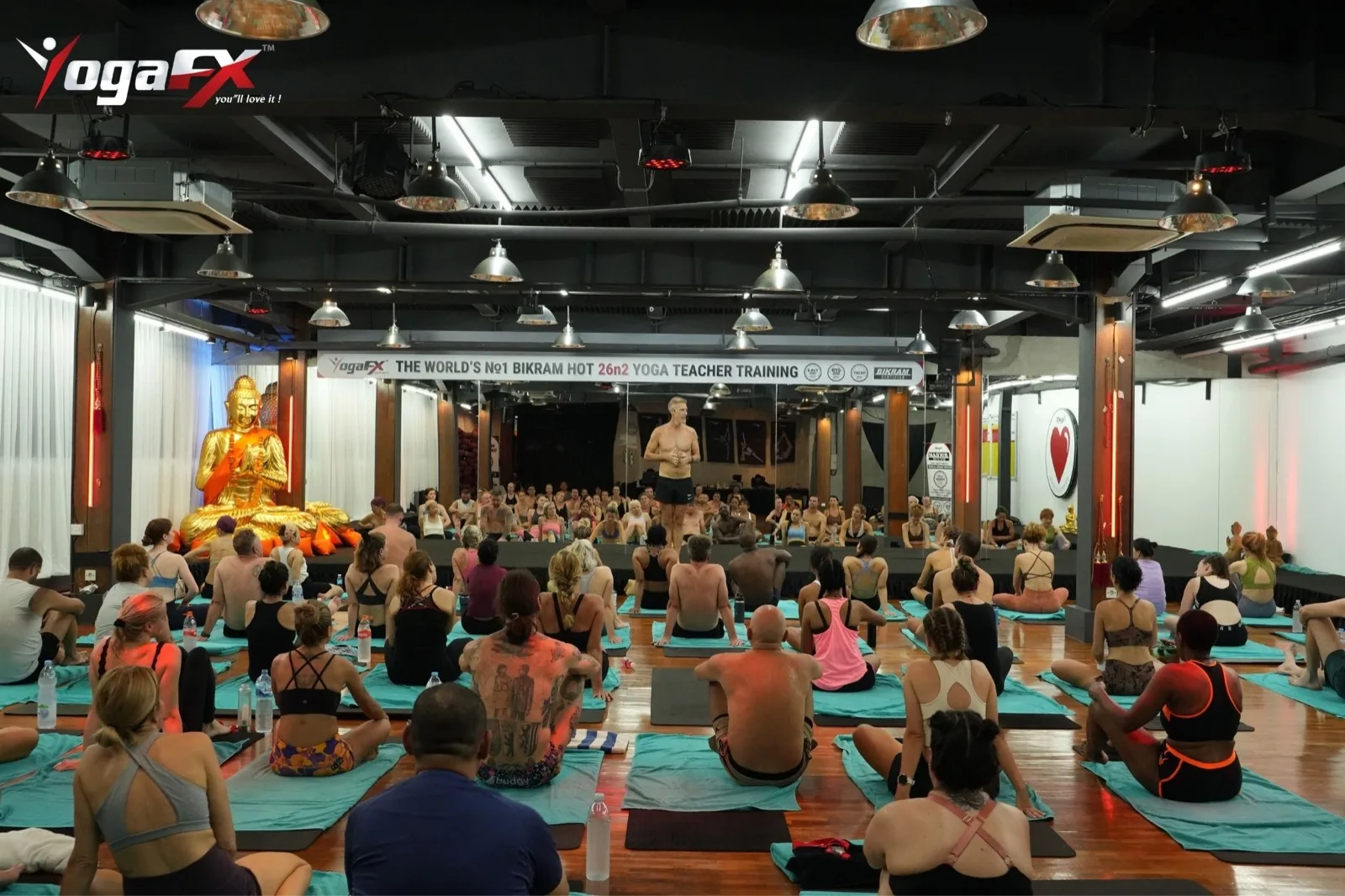
The word original is a promise about structure. Nothing is added, cut or reordered. A class that keeps the promise has five fixed parts: the full 26 postures, the same order every time, the full 90 minutes, a warm room, and a spoken dialogue with no music.
In Bali, that promise feels very concrete. The room is held around 40°C with about 40% humidity, and the warmth comes from the tropical climate instead of electric heaters. You walk in already warm, so your body opens up a little earlier than it would in a cold-climate studio. For a deeper look at why that matters, read our guide to Bali natural heat yoga.
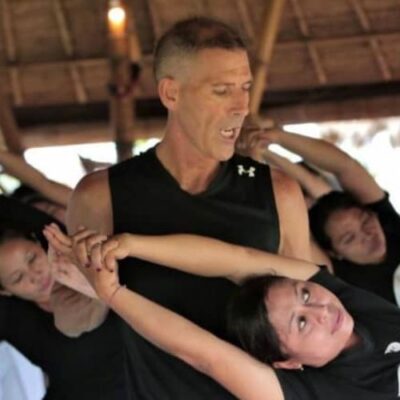
Mr Ian Terry, E-RYT 500, built the YogaFX class standard on this idea. He has taught more than 12,000 hours, and he puts it this way: “there can be no greater investment than the one that you make in your health, because without it, nothing else matters.” That line explains why we protect the sequence instead of remixing it.
Original Hot Yoga vs Bikram: How the Names Connect
Here’s the short version. Original hot yoga and Bikram yoga describe the same fixed class. Bikram Choudhury created the 26 and 2 and made the heated class famous after he moved to the United States in the early 1970s, according to the hot yoga overview on Wikipedia. The same source describes a fixed sequence of 26 postures and 2 breathing exercises, taught in a room near 41°C for 90 minutes.
Why did the name change, then? In 2015, a US appeals court ruled in Bikram’s Yoga College of India v. Evolation Yoga that nobody can copyright the sequence. As a result, any qualified teacher can teach it, and many studios moved to a neutral label. If you want the full UK view of that shift, this UK guide to original hot yoga walks through it.
We take a Bali view instead. When a student asks us what to call the class, we say it plainly: the name on the timetable can change, but the work on the mat does not. If you want the side-by-side comparison with flow classes, our article on Bikram yoga vs hot yoga covers it, and our complete guide to the 26 and 2 sequence in Bali lists the postures in order.
What the label does not tell you
- It does not guarantee a good teacher. Ask who trained them and how many hours they teach.
- It does not guarantee the full 90 minutes. Some express classes borrow the name but trim the holds.
- It does not tell you the room temperature. Ask what the room actually reads on a normal day.
So treat the label as a starting point. Then check the class yourself, ideally with a free trial.
Your 90 Minutes in Seminyak and Canggu, Stage by Stage
Walking into class for the first time is easier when you know the shape of it. Every class at both YogaFX studios follows the same arc, which means you can predict what comes next, and that is oddly calming.
| Stage | What you do | What most students feel |
|---|---|---|
| Opening breath | Standing deep breathing (Pranayama) to start the class | Calm focus; the heat is noticeable but gentle |
| Standing series | Postures such as Awkward pose, Eagle and Triangle, held with the teacher’s dialogue | Legs working hard; sweat starts and the mind goes quiet |
| Floor series | Back, hip and spine postures, with a short Savasana between them | The hardest part for focus; breathing slows down |
| Closing breath | Kapalbhati (blowing in firm pose) to finish | Light, clear and often surprisingly proud |
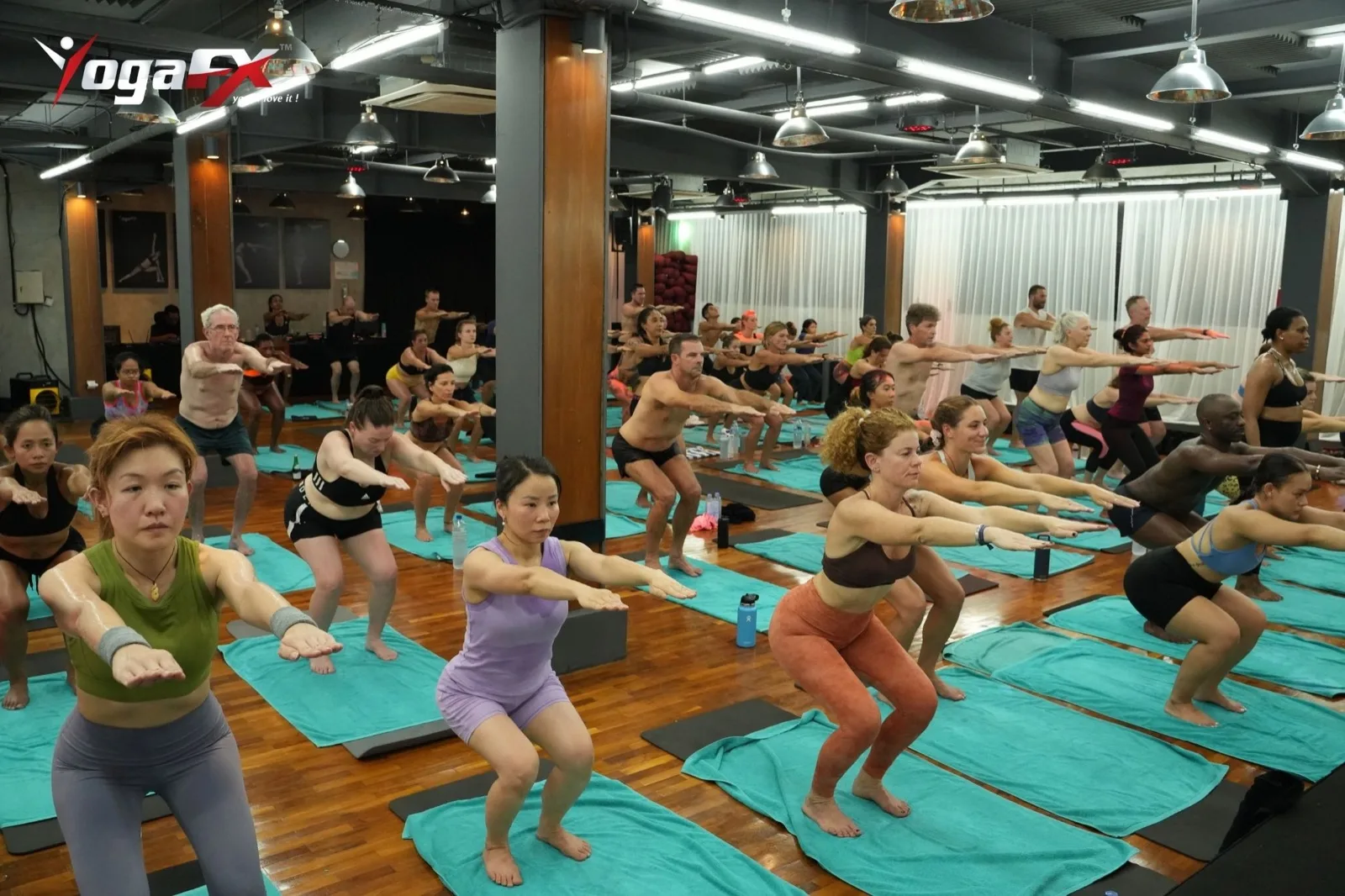
Notice that the teacher does not demonstrate. Instead, a scripted dialogue guides you into each posture, one instruction at a time. That feels strange for about five minutes, but you’ll get used to it. After that, it becomes easier to stop watching others and start feeling your own body.
Why the dialogue matters
The spoken script is the quiet engine of the class. It gives every posture the same wording, the same pace and the same order, so you always know where you are in the 90 minutes. Because the teacher is not demonstrating, nobody competes with a perfect-looking example at the front of the room.
It also keeps your attention in one place. When your mind drifts to the heat or to the clock, the next instruction pulls it back to your breath and your standing leg. For many students, that is a rare hour of thinking about one thing at a time.
Studio hours and places
- Seminyak. Our flagship studio, in the middle of Bali’s wellness hub.
- Canggu. The same class and the same dialogue, a short scooter ride from the beach.
- Hours. Classes run from 06:00 to 22:00 every day, so you can practise before work or after sunset.
Not sure how to start? Our guide to the 90-minute class in Bali answers the common first-timer questions.
Original Hot Yoga at a Glance in Bali
How Natural Tropical Heat Changes the Class
The sequence is identical in a heated studio in a cold city and in Bali. What changes is the air. Our studios use the island’s own warmth, so the room feels humid and alive instead of dry and blown in by a heater. That is a real difference, and it shapes how the class feels.
- You start warm. Bali’s climate means your muscles are not cold when the standing series begins.
- The humidity is part of the work. It slows your cooling, so you sweat early and need to pace your breath.
- No heater noise. The room stays quiet enough for the dialogue to carry clearly.
- Hydration matters more. Because you sweat from the first posture, small sips before class beat a big drink at the door.
As a result, the first week can feel like an adjustment. If you are new to heat, take the first class slowly. Stay near the back, rest whenever you need to, and let the third or fourth class be the one where you push a little.
Who Original Hot Yoga Suits, and Who Should Wait
The fixed format suits people who like a clear, repeatable test. Because the class never changes, you can see your own progress from week to week. A long-term expat, a visitor with two weeks in Seminyak and a returning practitioner can all use it for different reasons.
- Beginners. You can start with no experience, as long as you rest when you need to and listen to the teacher.
- Regular exercisers. Runners, surfers and gym-goers often use the class to build mobility and breath control.
- Returning students. If you practised Bikram yoga years ago, the original hot yoga class will feel instantly familiar.
- People to check with a doctor first. Pregnancy, heart conditions, high blood pressure and heat sensitivity all call for medical advice before your first class.
None of this replaces a conversation with your own healthcare professional. If in doubt, ask first, then come and try a class.
What Research Says About the Original Hot Yoga Class
A fixed sequence is easy to study, because every trial uses the same class. Here is what a few published studies found. Please read them as research, not as promises.
- Mood. In an 8-week trial at Massachusetts General Hospital (Nyer et al., 2023), about 59% of adults in the heated yoga group halved their depression symptoms, against about 6% on the waitlist.
- Fitness. A University of Wisconsin study (Porcari et al., 2014) measured roughly 333 calories per 90-minute class for women and 460 for men.
- Big picture. A 2025 systematic review (Willmott et al.) covered 43 studies and 942 participants. It reported gains in flexibility, balance and bone density, and it warned that hot yoga is not proven to beat unheated yoga.
- Anxiety. A 2022 trial (Hui et al.) found that hot yoga reduced state anxiety in healthy adults.
That means the evidence is encouraging, but it is not a treatment plan. Ninety minutes in a hot room puts real load on your heart and your fluid balance. Please consult a healthcare professional before you start if you are pregnant, have a heart condition or high blood pressure, or struggle in hot weather. Our teaching team will also watch you and suggest rests.
What Our Students Say About the Class
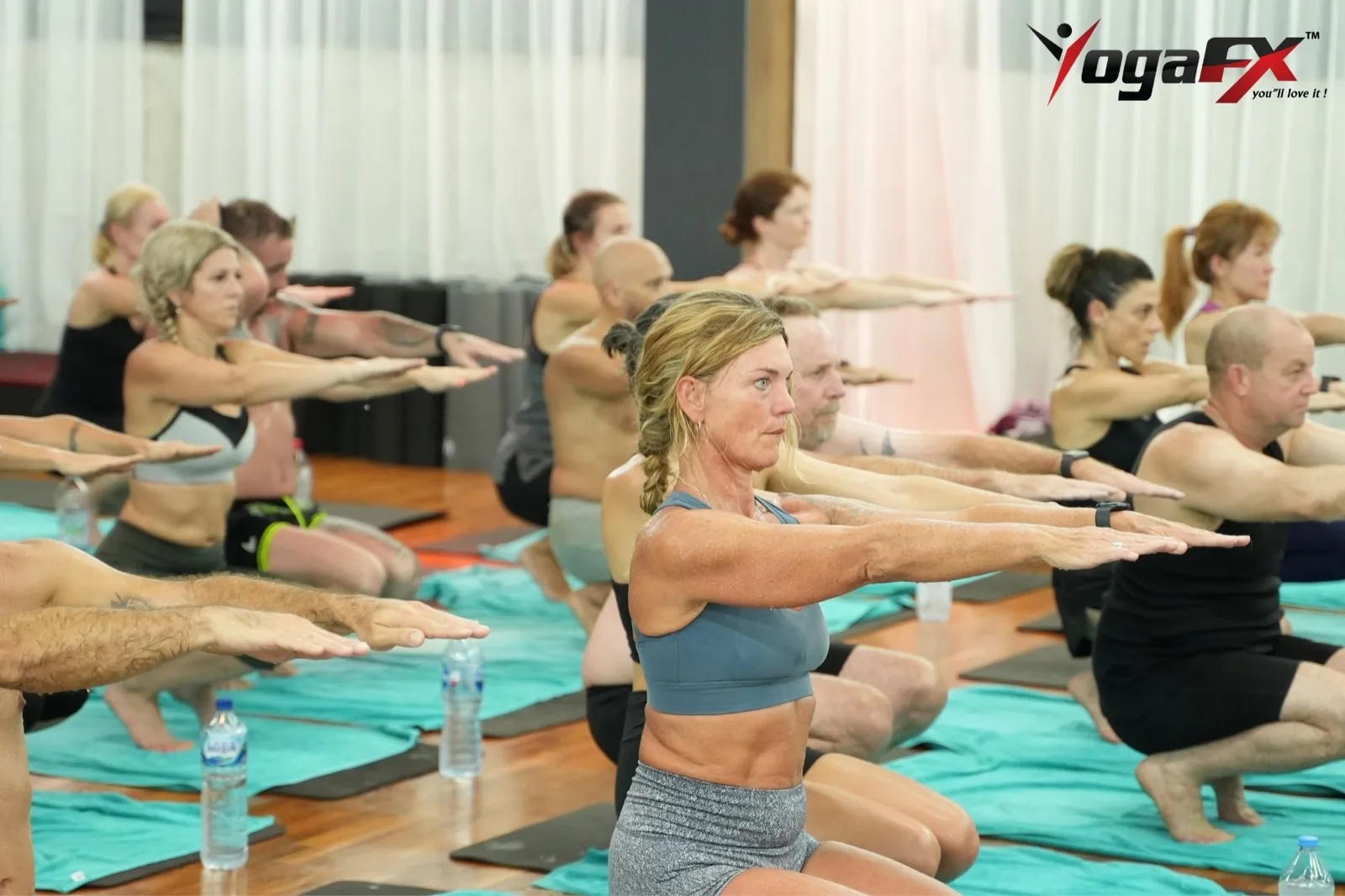
Numbers help, but people tell it better. Here is what three YogaFX students wrote or said.
The class is friendly. I met new people and feel a part of their community.
Trizz, Google review, 2020
I feel so motivated by MR. Ian the way he teaching us making me fall in love more to Yoga.
Febri, Google review, 2020
Someone has given me an opportunity to actually have something with my name on it and have a certificate and believe in me more than I can even believe in myself.
Michelle, a trainee in our YouTube review, 2025
You can watch Michelle share her story in her own words below.
Before Your First Original Hot Yoga Class
A little preparation makes the first class much kinder. Use this short checklist:
- Water. Drink steadily through the day, not all at once before class.
- Food. Eat lightly about two hours before you arrive.
- Kit. Bring a large towel, a water bottle and light clothes.
- Position. Choose a spot near the back or the door on your first day.
- Pace. Sit down whenever you need to. Resting is part of the class.
Most of all, tell the teacher it’s your first time. We’d much rather know, because then we can look out for you. Rest is always allowed, and nobody is judging your first class.
From One Class to a Weekly Habit at YogaFX
A single class shows you the shape of it. A weekly habit shows you what it does. That is why we invite newcomers to begin with a Free Guest Pass, so you can feel the room, the heat and the dialogue before you commit to anything.
If you like it, we offer studio classes and memberships for both Seminyak and Canggu. Ask the team at the desk which option fits how often you plan to come. Whether you live in Bali or you are visiting for a few weeks, the sequence stays the same, so your progress carries across both studios.
FAQ
What is the original hot yoga temperature in Bali?
At YogaFX in Seminyak and Canggu, the room sits at about 40°C with 40% humidity. The heat comes from Bali’s tropical climate, not electric heaters. So the number matches the original format, but the air feels different, because natural humidity is part of it.
Why is it called original hot yoga?
Studios use the word original to say the class is unchanged. It keeps all 26 postures and 2 breathing exercises in the same order for the full 90 minutes. The name describes the sequence, not a company. Many teachers also use it because it is the class once sold as Bikram yoga.
How long does it take to get used to hot yoga?
There is no fixed number. Many students say the first classes feel hardest, then the breathing settles and the heat feels familiar. Come two or three times in your first weeks, rest whenever you need, and never push through dizziness. Your body decides the pace, not the clock, and the teacher will support you.
How do I prepare for my first original hot yoga class?
Drink water through the day and eat a light meal about two hours before class. Bring a towel, a water bottle and light clothes. Arrive early so you can choose a spot near the back or the door. Tell the teacher it’s your first time, and rest whenever you need to.
What is the original hot yoga series?
The series is a fixed order of 26 postures and 2 breathing exercises. A standing series comes first, then a floor series, with a short rest between floor postures. The teacher follows a scripted spoken dialogue, with no music and no demonstration, so every class tests you against the same set, which makes progress easy to see.
Ready to feel the difference? Book your Free Guest Pass and try an original hot yoga class at our Seminyak or Canggu studio. Message the YogaFX team and we will help you pick a time.
 Mr. Ian Terry