
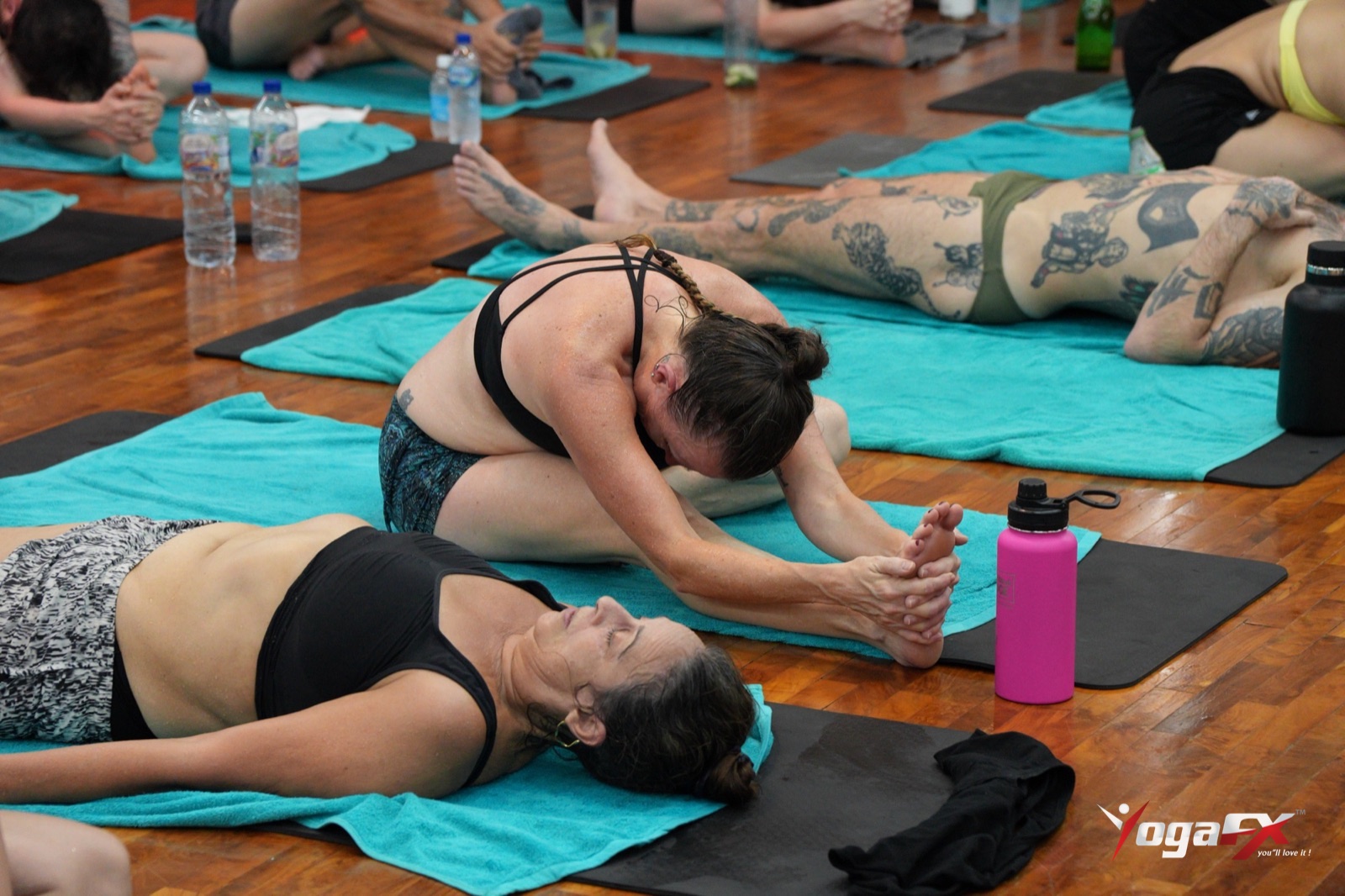
Hot yoga for runners works best as a once-or-twice-a-week session on an easy day, ideally after the run rather than before it. In Bali, that means a beach run in Canggu or Seminyak, then a 90-minute 26&2 class to loosen the hamstrings, calves and hips that sand and heat leave tight.

Most advice on hot yoga for runners comes from cold-climate cities. Here the weather changes the maths. You already run in warm, humid air, so the class adds a second dose of heat to a body that is already working. This guide shows how to pair the two sensibly, using the way runners actually train on this coast.
It draws on the teaching experience of Mr. Ian Terry, E-RYT 500, who has taught more than 12,000 hours and founded YogaFX in 2017. His rule for runners is blunt: the class must support your miles, never compete with them.
Hot Yoga for Runners in Bali: The Short Answer
Think of a heated class as a moderate session, not a rest day. You stand, balance and fold for 90 minutes in about 40°C of natural tropical heat, so your heart rate stays up the whole time. Because of that, the best hot yoga for runners plan keeps your hard runs hard and your easy days easy.
Three pairings cover most runners we meet at the studio:
- Run, then class, hours apart. A morning beach run, then a class in the evening once you have eaten and rehydrated.
- Class on the rest day. No run at all, just a class to move the hips and calves you ignored all week.
- Class the day after the long run. A gentle session, kept at your own pace, to unwind the legs before the next block starts.
What you should avoid is simple. Do not take a class right before a key workout, and do not stack it directly after a hard run in the heat of the day. Everything below explains why, and how to adjust for your own training.
What Beach Running Does to Your Legs
Running in Canggu and Seminyak is not the same as running on a track. Soft sand makes your calves and feet work harder. Packed sand near the waterline slopes sideways, so one leg takes more load than the other. Pavement along the roads is hard, hot and broken in places. Each surface leaves a different pattern of tightness, and that is where hot yoga for runners earns its place.
| Where you run | What tends to tighten | Posture to lean on | Why it helps |
|---|---|---|---|
| Soft sand, Canggu or Seminyak | Calves, Achilles, arches | Awkward Pose | Builds ankle and thigh endurance while you hold still |
| Packed sand at the waterline | One hip, one side of the trunk | Half Moon | Lengthens both sides of the body equally |
| Road or path to the beach | Hamstrings, lower back | Triangle | Stretches the back of each leg with the trunk upright |
| Long weekend run | Hip flexors, front of the thigh | Camel | Opens the front of the body after hours of leaning forward |
| Hill or stairs training | Quads, glutes | Standing Head to Knee | Trains single-leg balance, which you use on every stride |
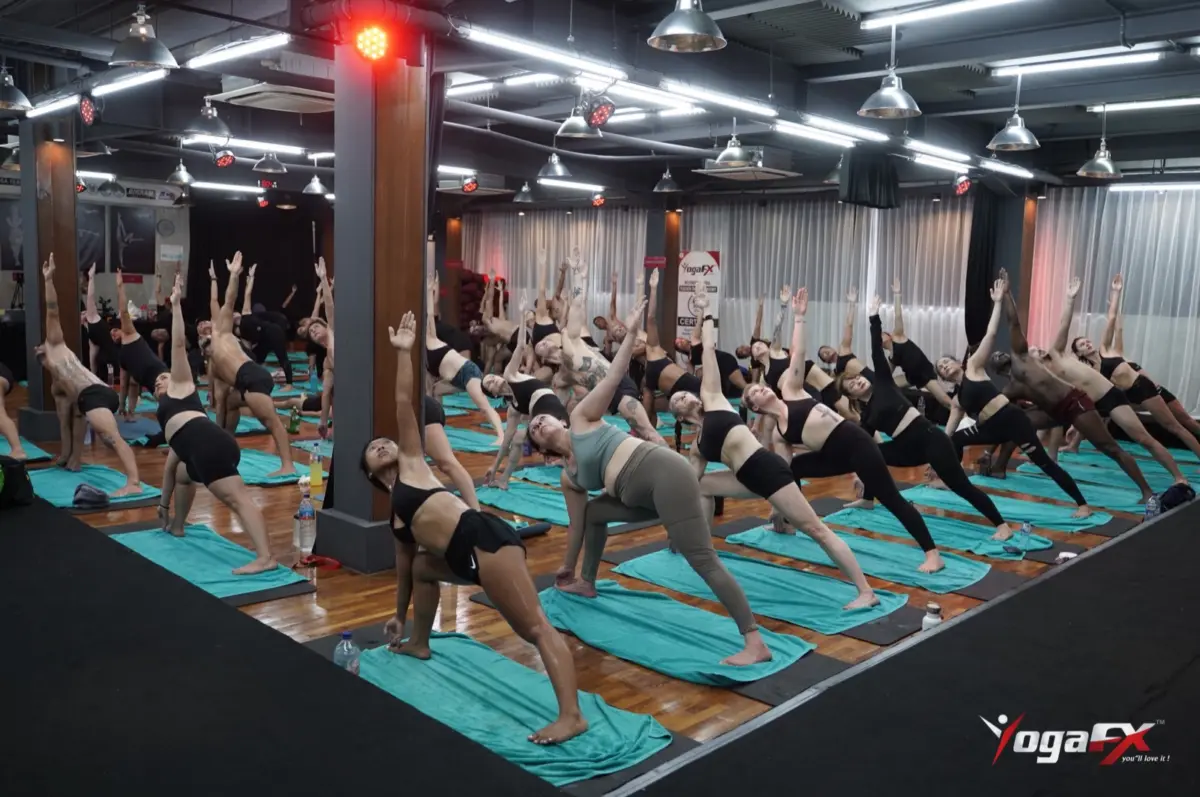
Notice that the table does not promise a fix. A posture gives you a chance to feel where you are tight, and the same 26 postures repeat in the same order every class. That repetition lets you compare one week with the next, which is useful when your mileage changes.
What the Research Says About Hot Yoga for Runners
Research on hot yoga for runners specifically is thin, so we lean on what the studies of Bikram-style classes and of stretching do tell us. Here are three findings worth knowing.
- It is real exercise. A 2014 University of Wisconsin-La Crosse study (Porcari et al.) measured 90-minute Bikram classes. Average heart rate sat near 80% of maximum, and students burned about 333 calories (women) and 460 calories (men). That puts a class in your moderate column, not your recovery column.
- Flexibility and strength can improve. A 2013 study by Tracy and Hart followed healthy adults who practised Bikram yoga and reported gains in flexibility and strength. It was not a study of runners, so treat it as a sign, not a promise.
- Timing matters for stretching. The Mayo Clinic advises against stretching cold muscles and suggests stretching after a workout when the muscles are warm (Mayo Clinic on stretching). Its sports medicine team also notes that static stretches just before running or jumping can cause a small drop in performance (Mayo Clinic Q and A).
The last point shapes the whole plan. Because a class holds deep stretches, you should not put it right before a run or a race. After a run, your muscles are already warm, so the same stretches land better. That is also why the Mayo advice to hold a stretch for about 30 seconds fits the way a class holds each posture.
How to Pair Beach Runs With Classes
Timing decides whether hot yoga for runners helps or hurts, so plan the day before you book. Our guide to morning vs evening hot yoga in Bali covers the clock in detail. Here’s how it works for a runner.
Early run, evening class
Most Bali runners start at sunrise to beat the heat, which suits hot yoga for runners well. That leaves the evening free for a class, at least four or five hours later. Eat a proper meal after the run, drink steadily through the afternoon, and arrive with a settled stomach. This is the safest pairing for most people.
Rest-day class
If you run four or five days a week, the rest day is the natural home for a class. You are not adding load on top of load. Start with one class a week and give your body three or four weeks before you try a second. Our guide on how often to do Bikram yoga helps you pick a rhythm.
Easy-day recovery class
The day after a long run, a class can feel wonderful or awful. Go slowly. Sit or lie down whenever you need to, because resting on your mat is part of the class, not a failure. If your legs feel heavy, skip the deepest folds and ask the teacher for a gentler option.
Whichever pairing you choose, jot down how the next run felt. A month of those notes tells you more about your body than any plan we could write.
Heat and Hydration Rules for Hot Yoga for Runners
Runners are used to sweating, and that is exactly why heat catches them off guard. You can lose a lot of fluid on a sunny beach run, then walk into a second hot room still half-empty. These rules keep a good session from turning into a bad week.
- Drink before you need to. Sip across the whole day, not a litre in the last hour. Add a pinch of salt or an electrolyte drink after a long run.
- Eat early and light. Finish a real meal two to three hours before class. Our guide on what to eat before hot yoga has easy options.
- Never run hard the same morning as a hot class. Even a short easy jog adds to the heat load, so keep it gentle.
- Watch your morning pulse. If it is clearly higher the next day, treat that day as rest.
- Step out early when something feels wrong. Faintness, confusion, nausea or sudden chills mean it is time to sit by the door and tell the teacher.
If you have a heart condition, low blood pressure or have ever had heat illness, check with your doctor before your first class. Our guide to whether hot yoga is safe lists who should take extra care. This article is general education, not medical advice.
Postures Runners Ask About Most
You don’t need to master the full sequence to benefit from it. These are the postures runners mention most, and what to watch for in each.
Awkward Pose
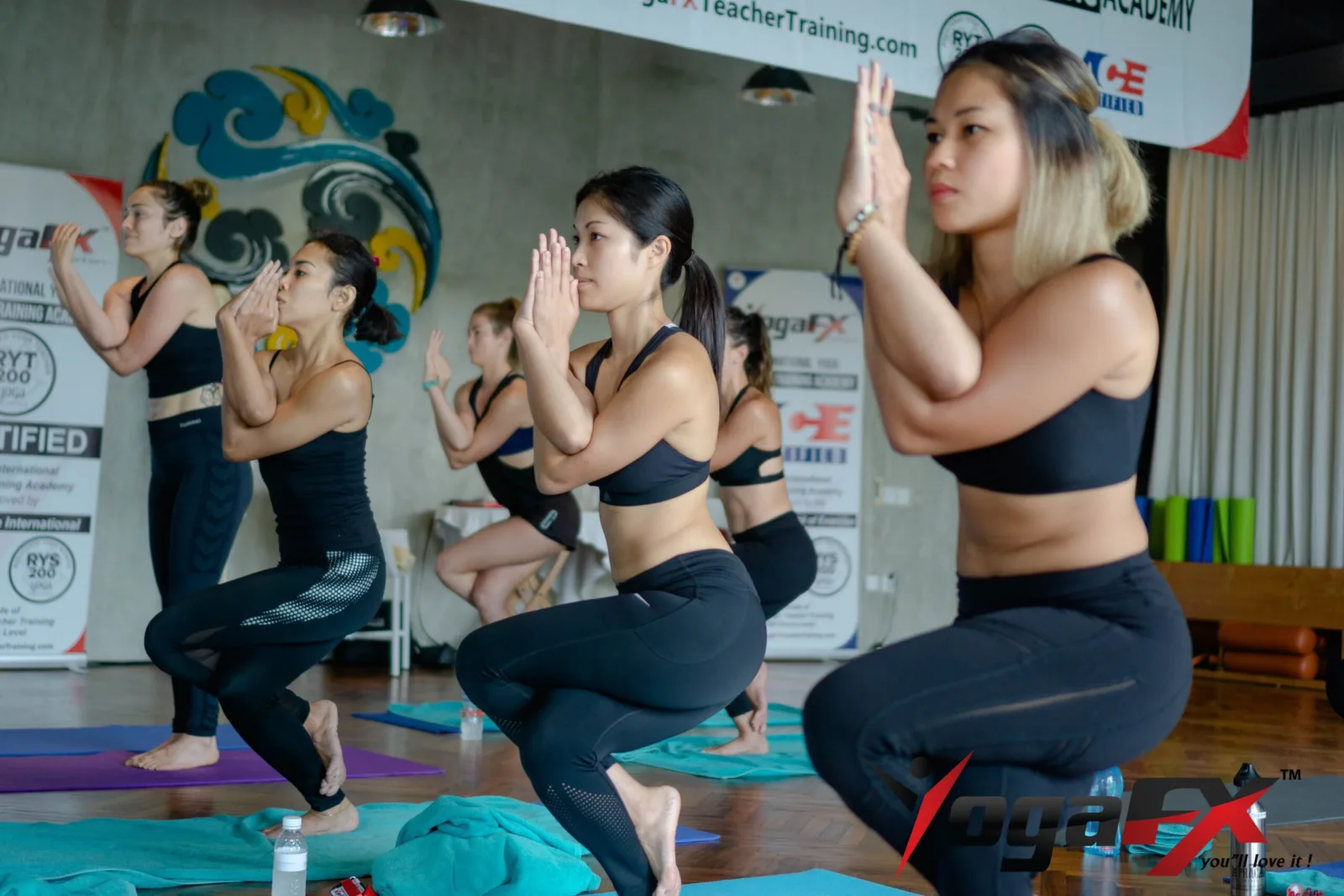
You sit back as if into a chair and hold the position. Thighs, calves and ankles burn, and that is the same endurance you lean on mile after mile. Keep your knees comfortable, and come up early if they complain. The pose has a Sanskrit name, Utkatasana, but we simply call it Awkward Pose.
Triangle and the forward folds
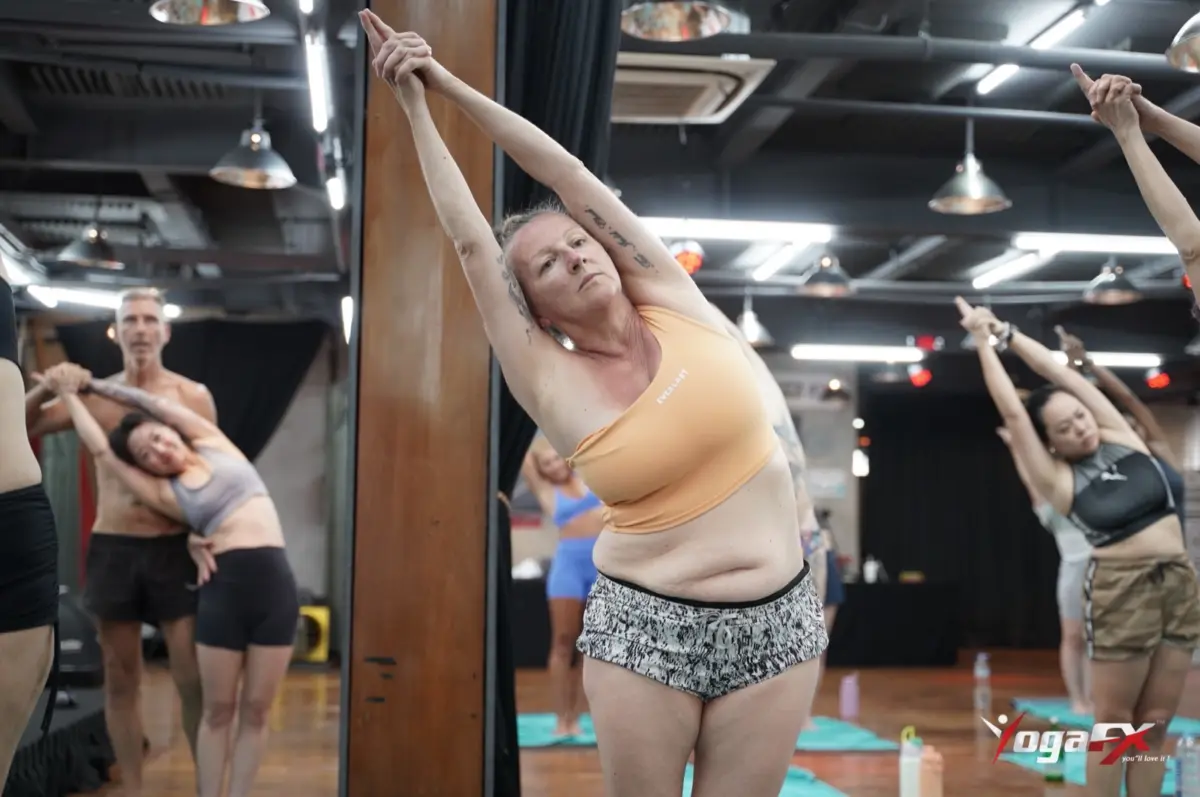
Triangle and the floor-series folds reach the hamstrings from different angles. If your hamstrings are tight after road work, you will feel it quickly. Go to your own range and let the teacher’s voice set the pace, rather than the person on the next mat.
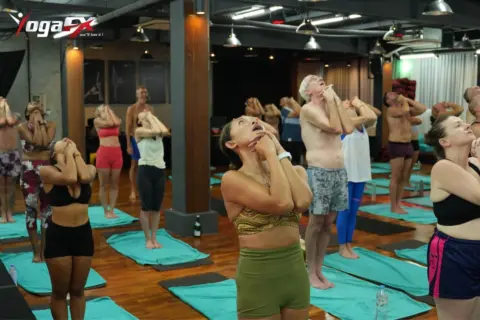
Standing Deep Breathing
Each class begins with Standing Deep Breathing, the first breathing exercise. You inhale and exhale in a set rhythm before any posture starts. For a runner it is a rehearsal for steady lungs, and the same calm counting helps on a long climb or a hard final lap.
Common Mistakes Runners Make in the Hot Room
After years of teaching, Mr. Ian sees the same errors from runners again and again. Most are easy to fix once you spot them.
- Treating the class as another workout to win. Runners love a target, but hot yoga for runners works best when you back off. Go to your own range, not the next mat’s.
- Skipping the rest breaks. Sitting or lying down is allowed at any time. A runner who rests early often finishes stronger.
- Arriving dehydrated after a long run. The room won’t forgive a body that started empty. Drink steadily before you arrive.
- Pushing a sore spot. If a posture pinches a knee, hip or Achilles, ease out and tell the teacher. Pain is not progress.
- Judging the class after one visit. The first class is a shock for everyone. Give it three or four visits before you decide.
Most of these come down to the same habit: runners push through discomfort because racing taught them to. In the hot room, the smarter move is often to slow down. That’s the mindset hot yoga for runners is really training.
Hot Yoga for Runners, Cyclists and Surfers Sharing One Coast
Runners are not the only athletes on this coast. Cyclists ride the back roads, and surfers paddle at dawn. The same logic applies to all of them. Hot yoga for cyclists, for example, leans on the hip flexors and lower back, which sit folded on a bike for hours. Surfers need the shoulders and the front of the hips.
What you share with them is a pattern: train hard, then give the tight areas a slow, structured stretch on a lighter day. Many of our regulars mix sports, so you will often find a runner on one side of the room and a surfer on the other. Ask the teacher which posture fits your sport, and keep your questions specific, such as where your hamstrings pull or which hip feels stuck.
What Runners and Students Say About the Hard Parts
Anyone who tries hot yoga for runners learns that the hardest part isn’t the legs, it’s the head. Here is what three YogaFX students told us.
- Cinzia, Google review, 2022: “I was able, day by day, to see significant improvements on my strength and flexibility and I got also the opportunity to get connected with amazing people.”
- Weslyn, YouTube review, 2025 (paraphrased): She arrived expecting to learn the dialogue and leave with a certificate, but found the class changed her own internal dialogue more than anything. Watch Weslyn’s video review.
- Carol, YouTube review, 2025 (paraphrased): She had always loved Bikram yoga, found it hard to pick the right course, and said she felt inspired and glad to share yoga with others for years to come. Watch Carol’s video review.
None of them is a runner’s story in the strict sense. Still, they describe the same skill you need at kilometre 30: staying calm and steady when things get uncomfortable.
Hot Yoga for Runners Beyond Bali
If you are planning a training block away from the island, or you simply want the wider guide, our sister site covers the topic from another angle. Its full guide to fitting hot yoga into a running week includes a home option for runners who live far from a hot room.
Try It at YogaFX Seminyak and Canggu
YogaFX teaches the Original Hot 26&2 sequence in Seminyak and Canggu, with natural tropical heat and no electric heaters. Studios are open every day from 06:00 to 22:00, so you can fit a class around a sunrise run or a late finish. Every teacher delivers the same scripted dialogue Mr. Ian teaches, and he has trained more than 1,500 graduates from 80+ countries.
First-timers can try a class on the Free Guest Pass. Our guide to drop-in hot yoga classes in Bali explains how booking works. Tell the teacher you run, and mention any niggle before class starts.
FAQ
Is hot yoga good for runners?
Hot yoga can help runners when it is used as a moderate session on an easy or rest day. It works the hips, hamstrings and calves, and it trains slow breathing. It is not a replacement for running, and a heated class should never sit right before a hard workout or a race.
Can I run and do hot yoga on the same day?
You can, but keep the gap long. Run first, eat and rehydrate, then take the class several hours later, ideally in the evening. Avoid a hard run in the morning followed by a hot class at lunch. If you feel flat, dizzy or headachy, skip the class and rest.
Is Bikram yoga good for runners?
Bikram and Original Hot 26&2 classes use the same 26 postures in the same order, so runners can track how their hips and hamstrings change from week to week. That repetition is useful. Start with one class weekly, add a second after a month, and speak to a doctor first if you have health concerns.
How often should runners do hot yoga?
Once a week is a sensible start, then twice a week if your legs feel better the next morning. Put classes on easy or rest days, never before a long run, track session or race. If your morning pulse is clearly higher the day after, treat that day as rest.
Does hot yoga help running recovery?
Many runners find a gentle class helps tight legs feel looser, and Mayo Clinic suggests stretching when muscles are warm. Research on hot yoga and recovery specifically is limited, so see how your own next run feels. Go slowly after a long run, and rest whenever you need to.
Still have questions? Message Mr. Ian and the YogaFX team on WhatsApp and we will answer them personally.
Ready to try a class around your running week? Message us on WhatsApp, tell us your training days, and we will help you pick a slot. Claim your Free Guest Pass on WhatsApp.
This article is for general education and is not medical advice. Anyone with a heart condition, high blood pressure, a history of heat illness, or a current injury should consult a healthcare professional before practising in a heated room.
 Mr. Ian Terry