
The Original Hot Yoga Association is a small US trade association that approves teacher trainings in the Original Hot 26&2 method. For a student choosing a class in Bali, its label tells you which format a studio follows. It does not tell you how safe or well taught the class is, so check the room, the teacher and the heat before you book.

Students ask Mr. Ian Terry about the Original Hot Yoga Association all the time. He is an E-RYT 500 with more than 12,000 teaching hours, and he trained for five years (2014-2019) alongside the founder of the method.
His answer is always the same: read the label, then go and feel the room. This guide shows you how to do both. It builds on our earlier piece on what the original hot yoga name means for your Bali class.
What the Original Hot Yoga Association Label Tells a Student in Bali
Start with the plain answer. A studio that mentions the Original Hot Yoga Association is saying that it teaches the Original Hot 26&2 class: 26 postures and 2 breathing exercises, in the same order, led by a scripted dialogue. That is useful, because it tells you what kind of class to expect before you walk in.
Still, a label is a claim about format. It isn’t an inspection. We found no published audit or site visit in the association’s approval process, so the label cannot promise that a room is well ventilated or that a teacher spots a struggling beginner. Those things you can only judge in person, and that’s the point of a trial class.
Here is what the Original Hot Yoga Association label can and cannot do for a Bali class:
- It can signal the format. You learn whether the studio follows the original sequence and dialogue.
- It can point you to a directory. The association lists member studios, which helps if you travel a lot.
- It cannot prove safety. No label sets the temperature in a room or watches the student at the back.
- It cannot replace a trial class. One class tells you more than any badge on a website.
The Original Hot Yoga Association in Numbers: Who It Is and How Big It Is
The Original Hot Yoga Association is a non-profit trade association based in Pasadena, California. The US tax authority lists it as a 501(c)(6), the same category Yoga Alliance uses, so the legal form is ordinary. It says it formed in 2016 and became a non-profit in 2018. Its stated aim is to set standards for the teaching method and to approve teacher trainings.
We counted what the association publishes about itself on 14 October 2026, for the YogaFX R1a research report. The public directory lists 120 member studios in 13 countries, and 105 of those are in the US. The Original Hot Yoga Association standards ask a training to run at least 240 contact hours with 100% Original Hot 26&2 content. Anyone can read the full breakdown in our report on the association’s standards, fees and levels.
Why does that matter to someone who only wants a class? Because it shows the scale. This is a small group of studio owners agreeing on a shared standard for their own method. That’s a fair thing to do.
But it’s a long way from a government regulator. As far as we could find, no outside organisation recognises the Original Hot Yoga Association seal, and no US state licenses yoga teachers at all.
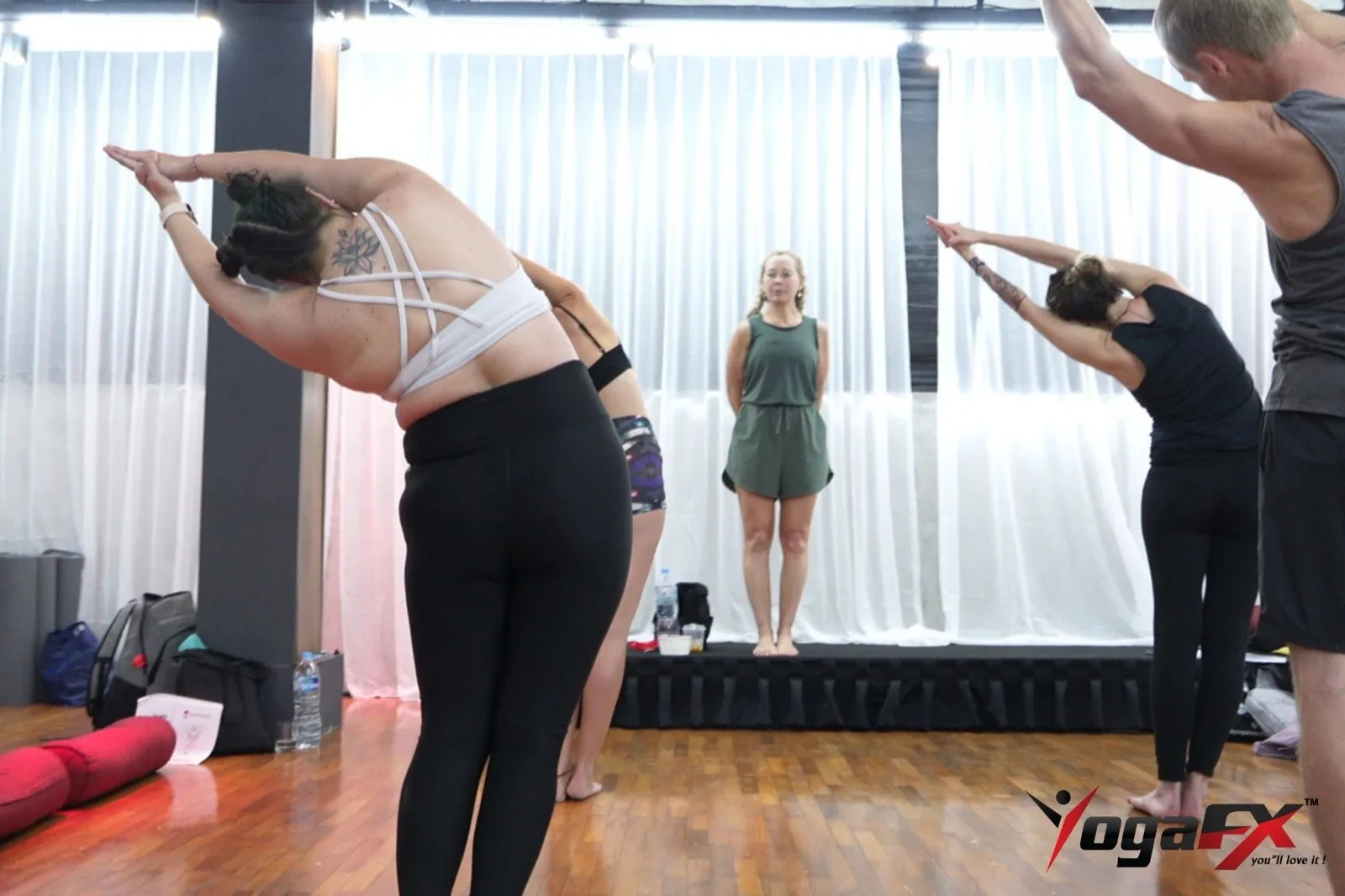
Original Hot Yoga Association Label vs What You Can Check in the Room
Use this table as a short checklist for the Original Hot Yoga Association label. Each row is a question a student really asks, with what a label can answer and what only a visit can answer.
| Question a student asks | What the label can tell you | What only the room tells you | How to check in Bali |
|---|---|---|---|
| Is it the original method? | The studio says it follows the Original Hot 26&2 format | Whether the dialogue is delivered as written, without music or demonstration | Take one class and listen to how the teacher guides each posture |
| Is the heat safe? | Nothing | Real temperature, humidity and air flow in the room | Ask for the numbers; our class runs at about 40°C and 40% humidity |
| Is the teacher good? | A trainer level inside the association, in some cases | Clear pacing, kindness to beginners, quick eyes for someone in trouble | Watch how the teacher treats the newest student |
| Can a beginner rest? | Nothing | Whether sitting or lying down is welcome, not frowned on | Tell the front desk it is your first class and see the response |
| Is the title recognised outside? | As of October 2026 we found no outside body that recognises the seal | Nothing: recognition comes from employers and other bodies | Ask who recognises it, and where that is written down |
Original Hot Yoga Association vs Yoga Alliance: Two Different Jobs
Students often mix up the Original Hot Yoga Association and Yoga Alliance, so it helps to separate them. One is a trade body for a single method. The other is a registry for teachers and schools of every style. Neither one inspects the class you are about to join.
- The Original Hot Yoga Association approves teacher trainings that teach only Original Hot 26&2. It matters most if you want to teach at member studios.
- Yoga Alliance registers teachers and schools across all styles. Studios worldwide often ask for it when they hire.
- Your own judgment decides which class suits you. A badge from either body is a hint, not a verdict.
Many teachers hold more than one credential. YogaFX graduates, for example, receive Yoga Alliance RYT 200 and the Bikram Hot 26&2 200-Hour International Yoga Certification. But a student who just wants a good Tuesday class does not need to follow any of this. Look at the class first, and treat the credentials as background.
OHYA Yoga, OHYA Teacher Training and OHYA Certification: Reading the Terms
You will see three phrases around the Original Hot Yoga Association, and they don’t mean the same thing. Reading them apart saves you from paying for the wrong promise.
- OHYA yoga is shorthand for a class at a studio that belongs to the Original Hot Yoga Association and teaches the Original Hot 26&2 sequence.
- OHYA teacher training is a course the Original Hot Yoga Association has signed off, for example one that meets its 240-hour minimum.
- OHYA certification is a teacher’s rank inside the Original Hot Yoga Association. It is a private credential and not a licence.
For a student, only the first meaning matters on a normal Tuesday. If you only want a class, ask how the room feels, not which level the owner holds. If you are thinking about OHYA teacher training, ask for the real timeline, because the classroom weeks and the internship that follows are separate things. Our report on the Original Hot Yoga Association explains that ladder step by step.
Either way, the Original Hot Yoga Association gives you a hint, and you still have to do the checking yourself. The next section shows how.
5 Real Checks Before You Book a Bali Class
Whatever the Original Hot Yoga Association or any other label says, these five checks work. They take one visit and a few questions, and they protect you from a bad first impression of hot yoga.
1. Ask what kind of heat you are walking into
Heat is the biggest variable in any hot class. Some rooms use electric heaters, and some rely on the climate. Ours uses Bali’s own tropical air, which is why the room sits at about 40°C and 40% humidity. If you want to understand that difference, read our guide to natural heat yoga in Bali.
2. Listen for the dialogue
In an original class, the teacher speaks a scripted dialogue and no one demonstrates the postures. The class opens with a standing pranayama breathing exercise and ends with stillness in Savasana. There is no music either. As a result, the room feels quiet and focused. If a class sounds more like a playlist with cues, it may be a different style, and that is fine as long as it says so.
3. Watch how beginners are treated
A good teacher tells newcomers they may sit, lie down and sip water whenever they need to. Because the first class is the hardest, this one sentence tells you a lot. A teacher who pushes everyone to stay upright is a warning sign.
4. Check who is teaching and how long they have taught
Ask the front desk about the teacher’s training and years of teaching. At YogaFX, choosing an authentic studio starts with that question, and we are happy to answer it. A confident studio never minds being asked.
5. Try one class before you commit
No label can replace a trial. At YogaFX you can book a free guest pass and try one class at Seminyak or Canggu before you spend anything. Our drop-in class page lists the schedule.
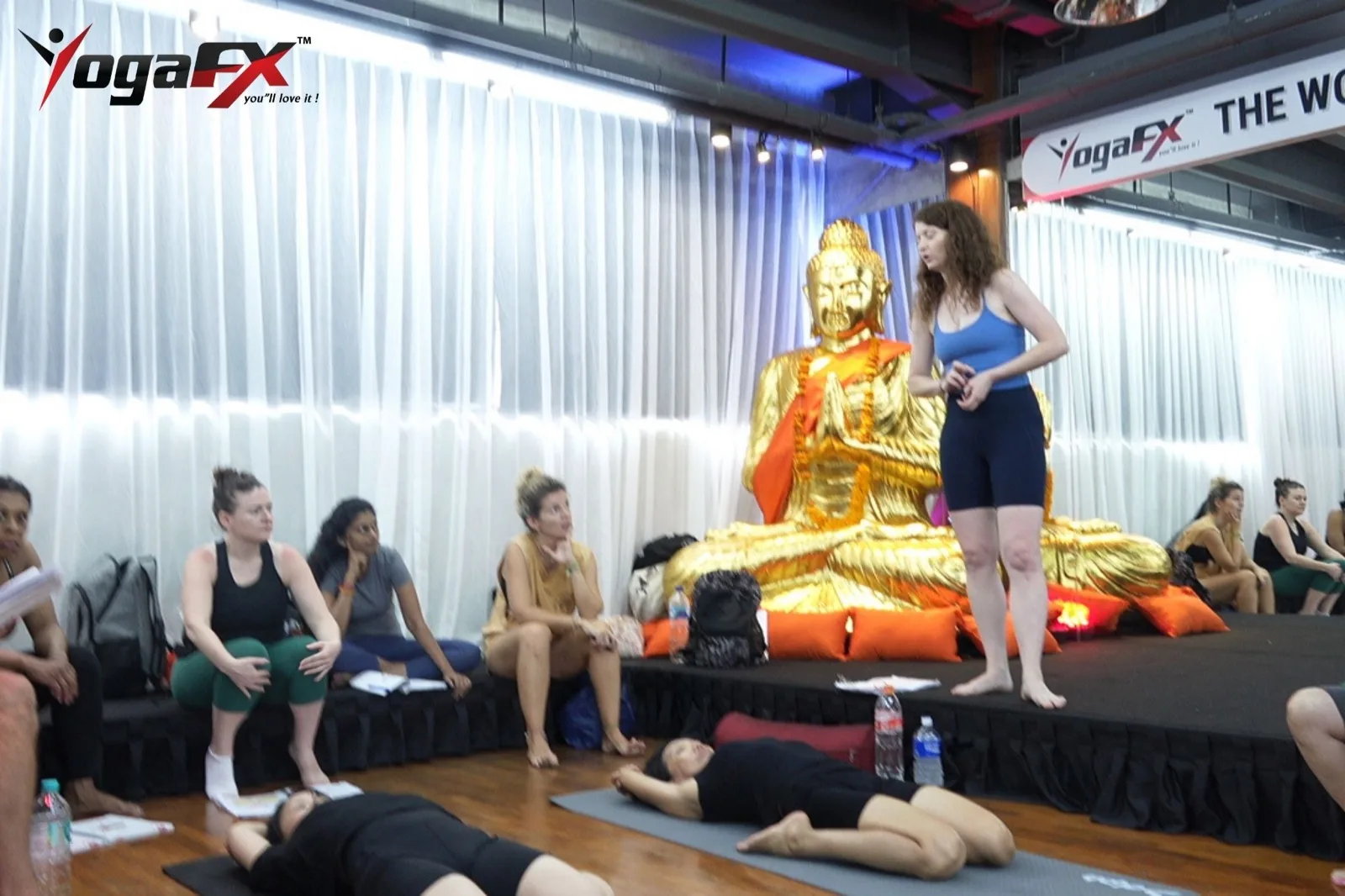
What the Research Says About the Heat in the Room
A label cannot tell you how your body will react to a hot room, but research can. Start with the workload. A 2014 University of Wisconsin study led by Porcari measured a 90-minute Bikram class. Women burned about 333 calories and men about 460, with heart rates near 80% of maximum. So this is real exercise, not a gentle stretch.
The mind-side evidence is promising too. In 2023, a Massachusetts General Hospital trial (Nyer and colleagues, Journal of Clinical Psychiatry) gave adults with moderate to severe depression 8 weeks of heated yoga. About 59% cut their symptoms by half or more, against about 6% on a waitlist. The groups were small, and research suggests rather than proves, so treat it as a hopeful signal.
Safety deserves equal space, especially for first-timers in the tropics. The Mayo Clinic Care Network page on hot yoga says to drink plenty of water before, during and after class. It also advises, “Stop if you feel dizzy, lightheaded or sick in any way.” And it suggests skipping hot yoga with heart disease, dehydration problems, heat intolerance or a past heat-related illness.
The American Council on Exercise adds a practical tip for newcomers. In its guide to getting acclimated to hot yoga classes, it suggests 17 to 20 ounces of water at least two hours before class. It also says most healthy people need 10 to 14 days to fully acclimate to hot environments. That is why a rough first class is normal.
This article is general information, not medical advice. Please consult a healthcare professional before you practise in heat, especially if you are pregnant or have a medical condition.
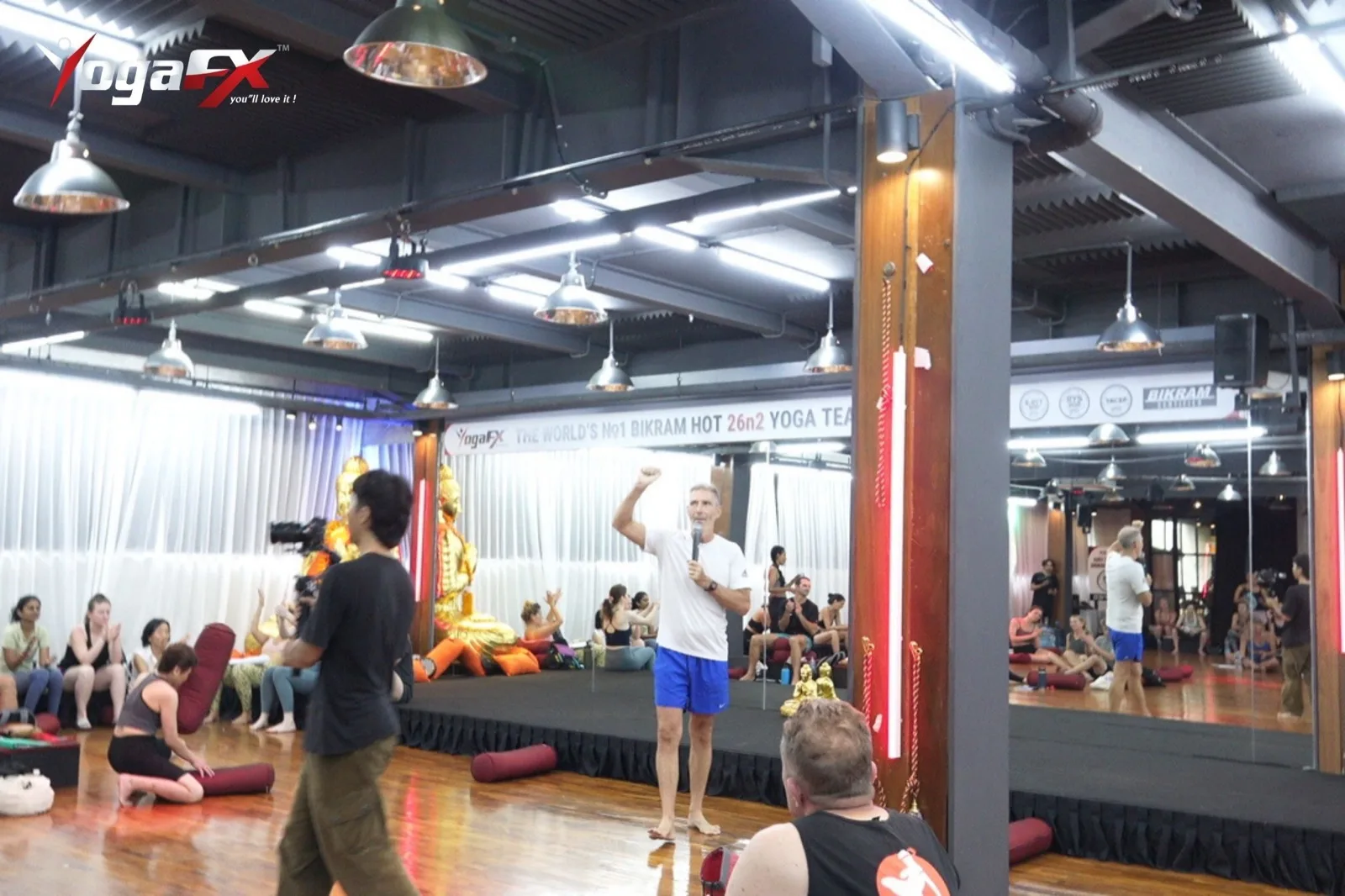
What Students Say After Practising With Mr. Ian and the Team
Labels are claims, but students can speak for themselves. These two voices come from YogaFX trainees, so they describe the training room more than a drop-in class. Even so, they show how people describe the teaching once the nerves are gone. Across platforms we count 150 Google reviews, 50 Yoga Alliance reviews and 357 YouTube testimonials.
“I didn’t come here just for the training. I got more than just, you know, the postures.”
Mayuri, YouTube review, 2026
“I’m so happy to be in Yoga Teacher Training 200 hours with Mr. Ian… all the friends in this class are so amazing, the energy is so amazing.” (translated)
Yanti, YouTube review, 2019
Mayuri’s full video review is below. She talks about the support and encouragement that carried her class through each day.
How YogaFX Fits Next to the Original Hot Yoga Association
YogaFX is independent of the Original Hot Yoga Association. We have no link to its directors or studios, so you can judge our classes on their own. What we offer is simple: the Original Hot 26&2 class, taught by teachers who follow the dialogue, in natural tropical heat at both Seminyak and Canggu.
Some students who start with one class end up wondering whether they could teach. That path is real. YogaFX has trained 1,500+ teachers from 80+ countries since 2017, and the six-day hybrid MasterClass leads to Yoga Alliance RYT 200 plus the Bikram Hot 26&2 certification. For the comparison with other routes, see the teacher training report on the association.
Ready to feel the difference yourself? Contact us to claim your free guest pass, or message us on WhatsApp. Tell the teacher it is your first class, and take it one posture at a time.
FAQ: Original Hot Yoga Association Questions
What is the Original Hot Yoga Association (OHYA)?
The Original Hot Yoga Association is a small US non-profit trade association for studios and teachers of the Original Hot 26&2 method. It publishes teacher training standards, keeps a directory of member studios and approves trainings. It is not a government regulator, and it does not inspect individual classes.
Do I need an OHYA label to take a hot yoga class in Bali?
No. Nothing requires a studio to carry the label, and no US state licenses yoga teachers at all. A better test is to try one class. Check the heat, the dialogue and how the teacher treats beginners. Then decide whether the room suits you.
Is a studio with the OHYA label safer for beginners?
Not necessarily. The label describes the class format and the teacher training standards, not room conditions. Safety depends on heat, hydration and a teacher who lets beginners rest. Ask about temperature and humidity, and tell the front desk it is your first class.
Is YogaFX part of the Original Hot Yoga Association?
No. YogaFX is independent of the association and has no link to its directors or studios. Our Bali studios teach the Original Hot 26&2 class with the scripted dialogue, and our teacher training graduates receive Yoga Alliance RYT 200 plus the Bikram Hot 26&2 certification.
Who should not do hot yoga?
The Mayo Clinic Care Network says hot yoga is not for everyone. It suggests skipping it with heart disease, dehydration problems, heat intolerance or a past heat-related illness. Stop if you feel dizzy or sick. Please consult a healthcare professional before you start.
Still have questions? Message Mr. Ian and the YogaFX team on WhatsApp and we will answer them personally. This article is general information, not medical advice, so please consult a healthcare professional first if you have a medical condition.
 Mr. Ian Terry