
Bikram yoga vs hot yoga in Bali comes down to one choice: the same 90-minute class every time, or a new flow each session. Bikram, also called Hot 26&2, is a fixed series of 26 postures and 2 breathing exercises at about 40°C (105°F) and 40% humidity. Hot yoga is any class taught in a heated room.

Mr. Ian Terry, E-RYT 500, teaches the fixed class at our YogaFX studio in Seminyak. After more than 12,000 teaching hours, he has watched thousands of students walk into both kinds of room. This guide sets the two side by side, then adds what we see on the mat in Bali’s natural heat.
You don’t need any experience to follow this bikram yoga vs hot yoga guide. We cover temperature, sequence, teaching style, what students notice, and how to pick the class that fits your body and your week.
Bikram Yoga vs Hot Yoga at a Glance
The fastest way to see bikram yoga vs hot yoga is a side-by-side table. It compares a fixed Hot 26&2 class with the free-form heated flows you will find on most timetables. Studios set their own numbers, so the right-hand column shows typical settings, not a measurement from any one studio.
| Feature | Fixed 26&2 (Bikram) | Free-form hot yoga |
|---|---|---|
| Room temperature | About 40°C (105°F) | Often 32 to 38°C (about 90 to 100°F) |
| Humidity | Around 40%, damp heat | Set by the studio; electric heat is often drier |
| Sequence | 26 postures and 2 breathing exercises, same order | Changes from teacher to teacher and class to class |
| Class length | 90 minutes | Often 45, 60 or 75 minutes |
| Teaching style | Scripted spoken dialogue, no demonstration | Demonstration and freer cueing are common |
| Music | None | Common |
| Heat source in Bali | Natural tropical climate, no electric heaters | Depends on the studio |
In short, every Bikram class is hot yoga, but most hot yoga classes are not Bikram. So when a timetable only says “hot yoga”, ask four questions before you book:
- How hot is the room? The original standard is about 40°C.
- How humid is it? Bikram aims for around 40%.
- How long is the class? A Bikram class is 90 minutes, every time.
- Is the sequence fixed? Bikram never changes the order of its 26 postures.
How Hot Is Bikram Yoga? Temperature and Humidity
A Bikram room is kept near 40°C (105°F) with humidity around 40%. Many other heated classes run cooler, and plenty never mention humidity at all. That is why a studio that quotes only a temperature is telling you half the story.
The two numbers work together. In damp air, sweat evaporates slowly, so your body keeps more of the heat. Dry air at the same temperature feels sharper on the skin, yet it is easier to breathe.
Mayo Clinic makes the same point about heat illness, which matters in any bikram yoga vs hot yoga comparison. It explains that when the humidity is high, sweat cannot evaporate as easily, so the body has more trouble cooling itself. Its symptom list for heat exhaustion includes dizziness, nausea, headache, muscle cramps, a weak and rapid pulse, and cool, moist skin with goose bumps.
A humid room is not automatically unsafe. It does mean you should respect it. If you feel any of those signs, sit down, sip water and tell the teacher. You may rest on your mat at any point.
For the full story on the number, read our guide to how hot Bikram yoga actually is.
Fixed 26 and 2 or Free-Form Class: What You Feel on the Mat
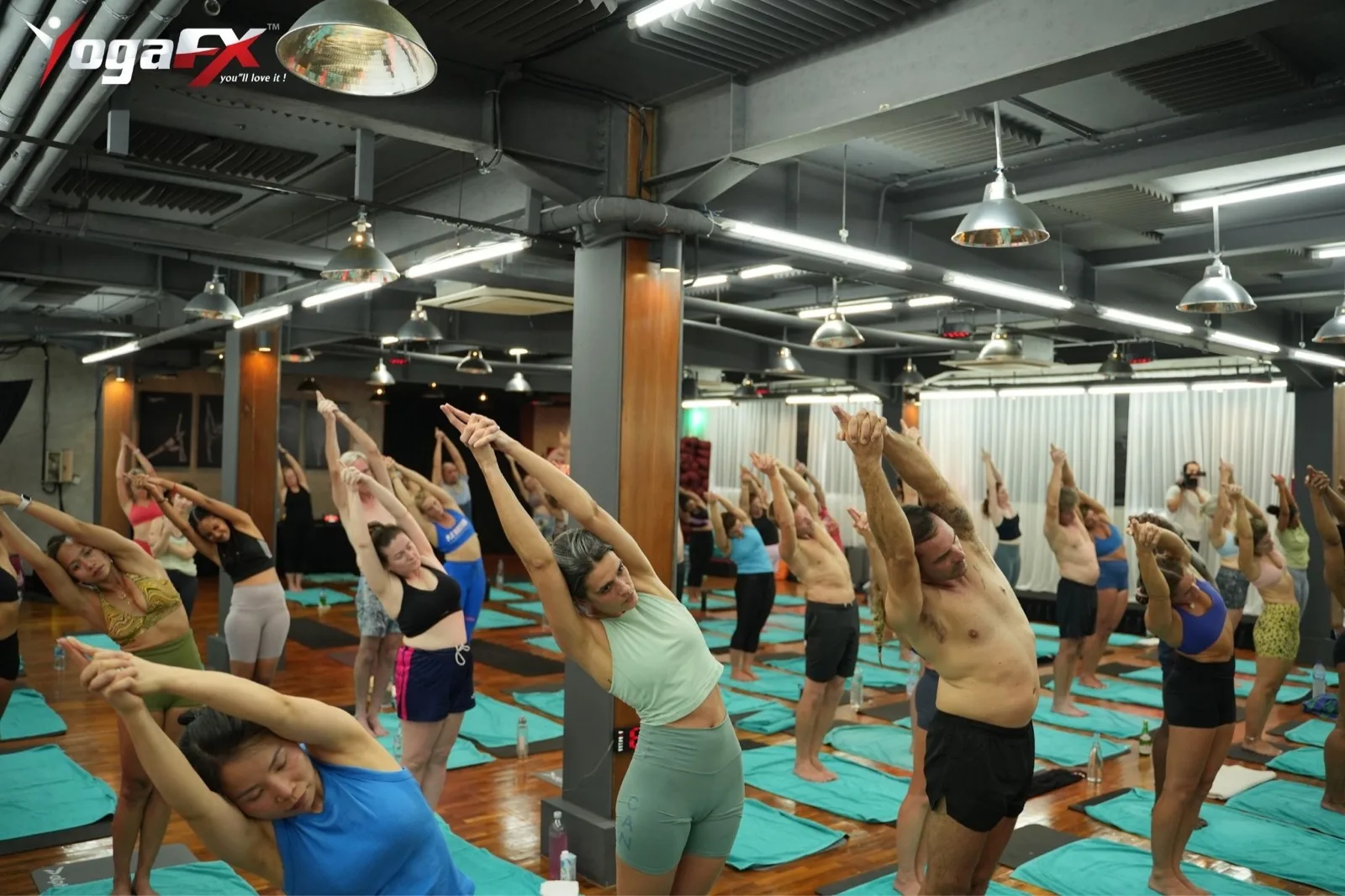
The biggest practical difference in bikram yoga vs hot yoga is not the thermometer. It is what your mind does for 90 minutes. In a free-form class, you follow a teacher through a flow you have never seen, so part of your attention goes to working out what comes next.
In a fixed class, you already know what comes next. The teacher speaks the same dialogue, gives no demonstration, and plays no music. As a result, your attention drops from “what is this?” to “how is my body doing in this posture today?”
What Students Notice in a Fixed Class
New students in our Seminyak room tend to report the same handful of things within their first few weeks:
- A yardstick. Because the class never changes, you can compare this week with last week. Last month your standing balance wobbled halfway through; this month it holds.
- Less guessing. You stop watching the room for cues and start feeling your own breath.
- A steady pace. The series moves from standing postures to floor postures in one set order, so the effort rises and falls in a predictable shape.
- Honest feedback. A teacher who sees the same posture in every class spots your habits quickly.
What Students Notice in a Free-Form Class
Free-form heated classes bring something different, and that is a fair reason to choose them. Variety keeps some people motivated. A new sequence each time can feel playful, and music helps others settle into effort. The trade-off is that the room is harder to compare from one week to the next.
If you want to see how a flowing hot class compares, our guide to Bikram vs Vinyasa in Bali goes deeper.
A Practical Tip for Your First Fixed Class
Arrive early so you can settle your mat and your breathing before the heat builds. Bring a large towel and a full water bottle, and wear light clothes you can move in. Because the class is fixed, you can also rest during any posture without losing your place in the series.
Many first-timers do half of each posture and that is perfectly fine. Because the sequence repeats, you will meet the same posture again next class, and your range will grow gradually. That steady repetition is why many regulars stay with the fixed class for years.
Natural Heat in Seminyak: A Different Room
Most articles on bikram yoga vs hot yoga focus on sequence and branding. Few mention how the heat is made. Outside the tropics there is usually one option: electric panel heaters or infrared systems.
Those raise a room to 40°C, but they make dry heat. Warming air without adding moisture lowers its relative humidity. A studio can therefore hit the right temperature and still feel very different from the original method.
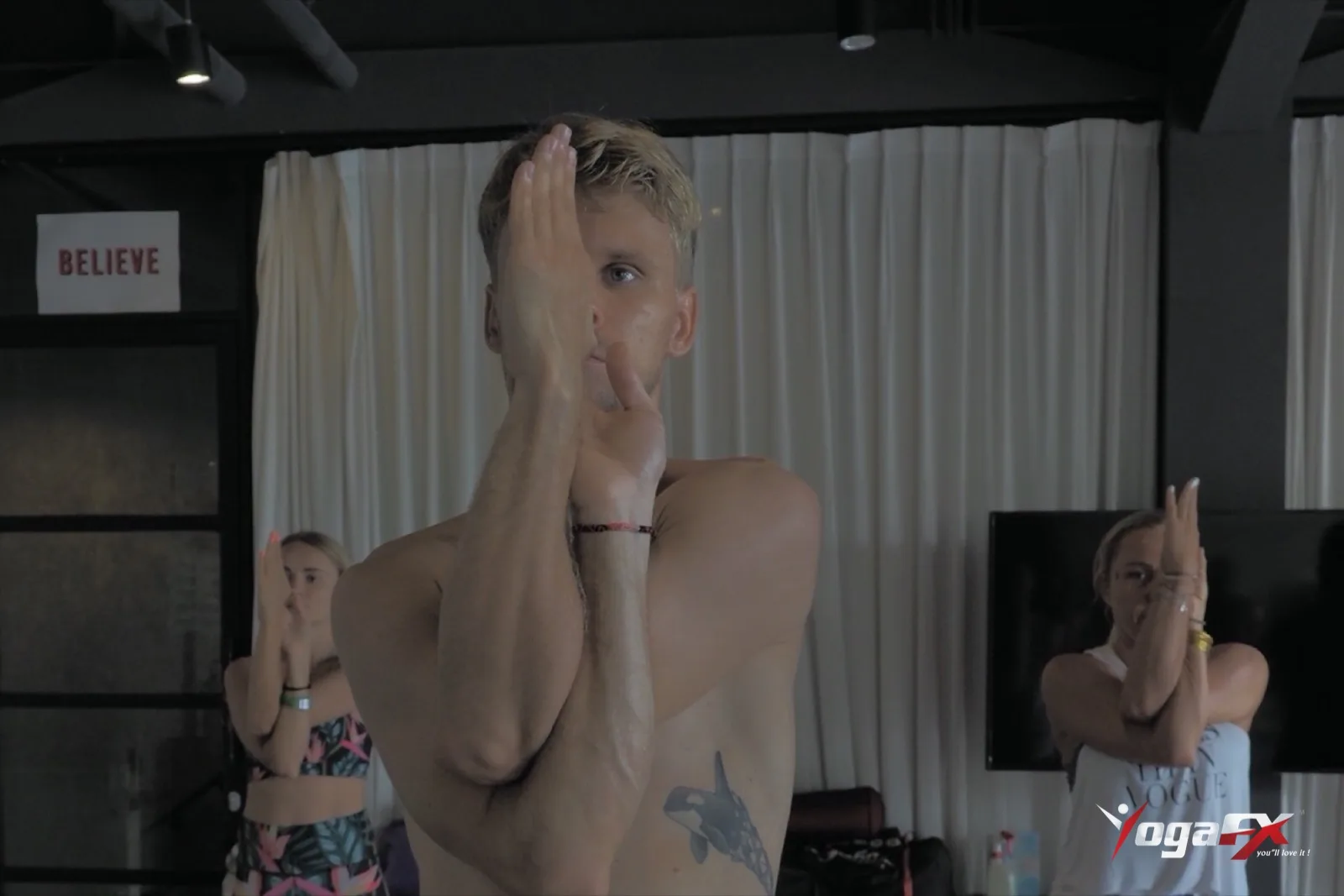
At YogaFX there are no electric heaters. The heat is Bali’s own tropical climate, which brings the damp conditions the method was designed around. Students who arrive from heated city studios often say the same class feels different here, because the room itself is different. The postures have not changed. The environment now matches what the series was built for.
What a fixed Seminyak class holds constant
26 + 2
Postures and breathing
The same order in every class
90 min
Class length
No shorter or longer version
40°C
Target room heat
About 105°F, from the Bali climate
40%
Target humidity
Damp heat, not dry heat
0
Heaters, music or demonstrations
The teacher talks you through it
Want the physiology behind this? Read why practising without electric heaters feels different.
What Is Bikram Yoga Called Now?
Many people search for the difference between Bikram and hot yoga, and for bikram yoga vs hot yoga answers, because the name changed. Today you will see the same class called Original Hot Yoga, Hot 26&2, 26&2 or simply the 26 and 2. The method behind the names is the same: 26 postures and 2 breathing exercises over 90 minutes in a heated room.
For much of the 1990s and 2000s, “Bikram yoga” and “hot yoga” were used almost interchangeably, because Bikram studios were the largest heated yoga option. Then the picture split. Independent studios began teaching the same series under other names, while hot Vinyasa and hot Pilates grew as looser alternatives.
The law added to the blur. A 2015 US Ninth Circuit ruling in Bikram’s Yoga College of India v. Evolation Yoga addressed whether the sequence can be copyrighted, and since then many studios teach it under their own names.
So today “hot yoga” can mean a faithful 26&2 class or a 45-minute heated flow with no fixed order at all. At YogaFX we call our class Original Hot 26&2 Yoga, so you know exactly what you are getting.
What the Research Actually Measured
A fixed sequence is easy to repeat in a lab, which is why heated yoga research often uses the Bikram format. That makes the findings useful, but only for that format.
One example is a 2014 San Diego State University study of 24 adults (5 men and 19 women) in an environmental chamber, published in Alternative Therapies in Health and Medicine. Each person took a standardised 90-minute Bikram class. The results were:
- Heart rate: novices averaged 72.3% of predicted maximum, and experienced practitioners averaged 86.4%.
- Energy use: the mean was 286 kcal, ranging from 179 to 478 kcal.
- Sweat rate: about 0.6 kg per hour for novices and 1.1 kg per hour for experienced practitioners.
- Conclusion: the authors classed the class as light-to-moderate intensity exercise.
Notice what that study cannot tell you about bikram yoga vs hot yoga. It was small, and it tested one format. A 2025 systematic review of Bikram yoga research (Willmott et al.) pooled 43 studies with 942 participants, which shows how much of the evidence sits on this one class.
So when someone says “hot yoga burns X calories”, ask which class they mean. A 45-minute heated flow at 33°C is not the same stimulus as a 90-minute Bikram class at 40°C. Research suggests heated yoga may support fitness and mood, but results vary between people.
This article is general education, not medical advice. Anyone with a heart condition, blood pressure problems, pregnancy or another health concern should consult a healthcare professional before practising in a heated room.
What Students Say About the Fixed Class
Our teacher training students describe the fixed series in their own words. Karen, who trained with Mr. Ian, left this Google review in 2025:
“By the end of the 5th day EVERYONE was teaching the series with confidence.”
Karen, Google review, 2025
Kate, in a YouTube review recorded at the end of her course, talked about what the fixed class asked of her. You can watch it below.
“…maybe your journey here is to drop to the mat and just let go and be okay with not being perfect.”
Kate, YouTube review, 2025
Bikram Yoga vs Hot Yoga: Which Should You Choose?
In the bikram yoga vs hot yoga choice, a structured, predictable practice you can measure over months is the main selling point of Bikram. If you want variety and a new flow every session, a free-form heated class will usually suit you better. Neither is wrong.
| Your goal | Fixed 26&2 class | Free-form hot flow |
|---|---|---|
| Track progress over months | Strong fit: same class, easy to compare | Harder: the class changes |
| Variety and playfulness | Low: the order never changes | Strong fit: new flow each time |
| Switch off from planning | Strong fit: no choices to make | Depends on the teacher |
| A gentler first taste of heat | Demanding at 40°C | Often cooler, easier start |
| Learn to teach later | Strong fit: dialogue is the basis of teacher training | Varies by programme |
Think about your week as well as your body when weighing bikram yoga vs hot yoga. A fixed class suits someone who wants a reliable routine, such as a long-stay visitor or a local who trains three or four mornings a week. A free-form class suits someone who gets bored with repetition and wants each session to feel new. Be honest about which kind of person you are.
A common worry is that Bikram is too rigid. Honestly, the rigidity is the point. The same 26 postures let you compare this week with last week, and let teachers coach the same posture class after class. Anyone who finds a changing sequence more motivating will probably prefer a flow class, and that is a fair preference.
Want the posture-by-posture view first? See all 26 postures in order, explained, or start with our Bikram Yoga 101 guide. For the wider category, read what hot yoga is and the styles it covers.
Try the Class at Our Seminyak Studio
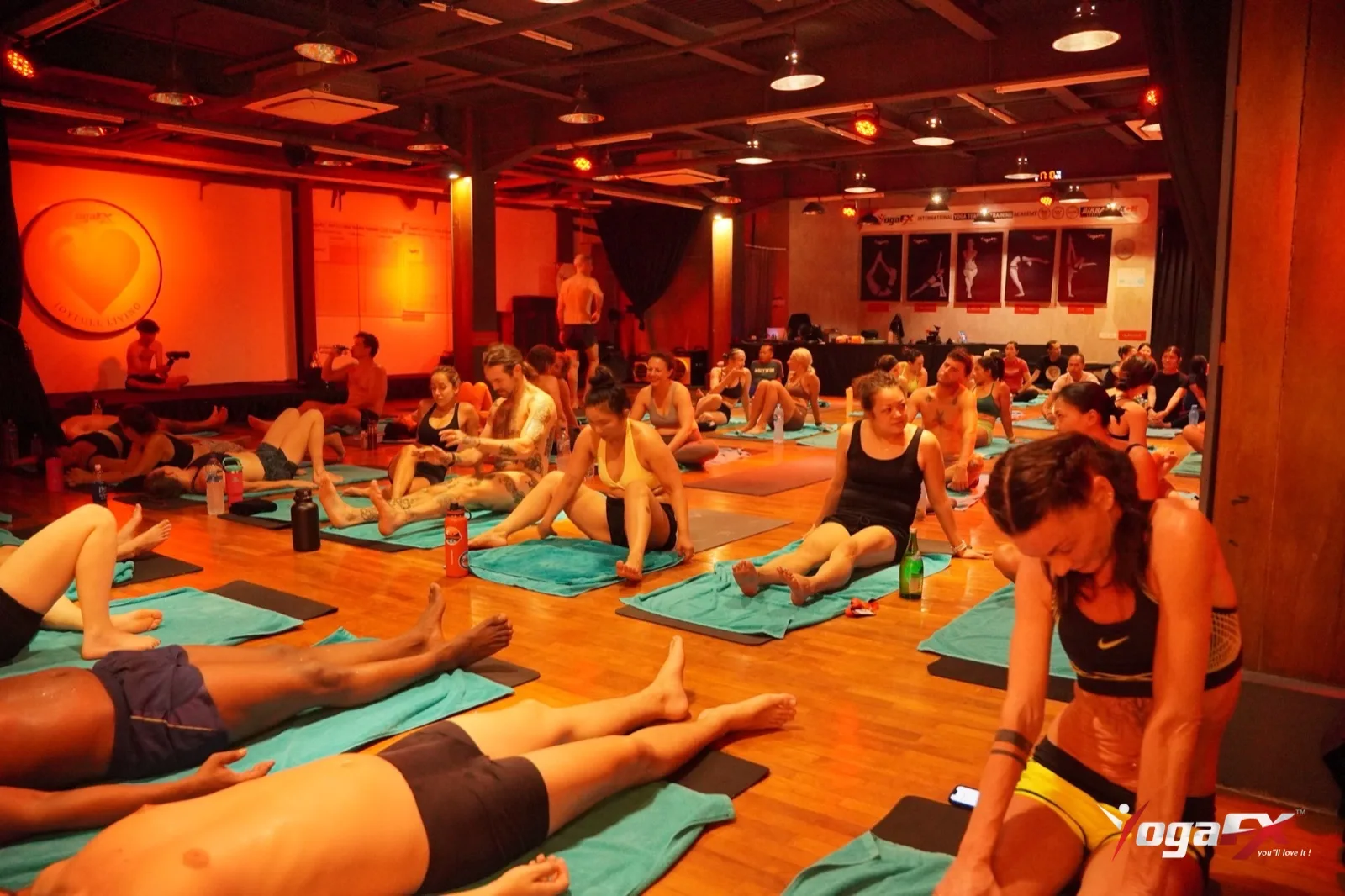
YogaFX classes run from 06:30 to 08:00 at our Seminyak studio, booking only. Mr. Ian trained for five years, from 2014 to 2019, with the founder of the Bikram Hot 26&2 method, and he leads every part of our teaching. If you are curious, the easiest way to settle bikram yoga vs hot yoga is to feel it in the room.
First-time visitors can try a class with a free 1-day guest pass. Ask on WhatsApp and we will book you in. See times and what to bring in our drop-in class guide.
FAQ
How hot is Bikram yoga?
Bikram yoga is practised at about 40°C, roughly 105°F, with humidity around 40%. Most other hot yoga classes are cooler, often 32 to 38°C (about 90 to 100°F). At our Seminyak studio there are no electric heaters, so Bali’s natural tropical heat and humidity warm the room.
Are Bikram yoga and hot yoga the same thing?
Not exactly. Bikram yoga is a fixed sequence of 26 postures and 2 breathing exercises taught over 90 minutes in a 40°C room. Hot yoga is the broader category that includes Bikram along with heated Vinyasa, hot Pilates and other formats that vary in postures, temperature and structure.
What is the difference between Bikram and hot yoga for a beginner?
For a beginner, the main difference is predictability. Bikram repeats the same sequence, so you always know what comes next and can track progress. Hot yoga classes vary, which brings variety but less repetition. Neither is better for everyone, so choose the one you will attend regularly.
What is Bikram yoga called now?
Many studios now call the class Original Hot Yoga, Hot 26&2, 26&2 or simply the 26 and 2. The method is the same: 26 postures and 2 breathing exercises over 90 minutes in a heated room. YogaFX teaches it as independent training, not official Bikram Choudhury teacher training.
Is Bikram yoga always hotter than other hot yoga classes?
Usually, yes. Bikram keeps a fixed target of about 40°C, while many heated Vinyasa and hot Pilates classes run cooler, often between 32°C and 38°C. Each studio chooses its own temperature and humidity for free-form classes, so it is worth asking before you book.
Does hot yoga research apply to every heated class?
No. Much heated yoga research used the Bikram format because a fixed sequence is easy to study. Applying those findings to a shorter or cooler flow class is not fully accurate, since the physical demand differs. Results also vary from person to person, so speak to a healthcare professional first.
Still have questions? Message Mr. Ian and the YogaFX team on WhatsApp and we will answer them personally.
Try the original 26&2 in natural Bali heat with a free 1-day guest pass, 06:30 to 08:00 at our Seminyak studio, booking only.
 Mr. Ian Terry