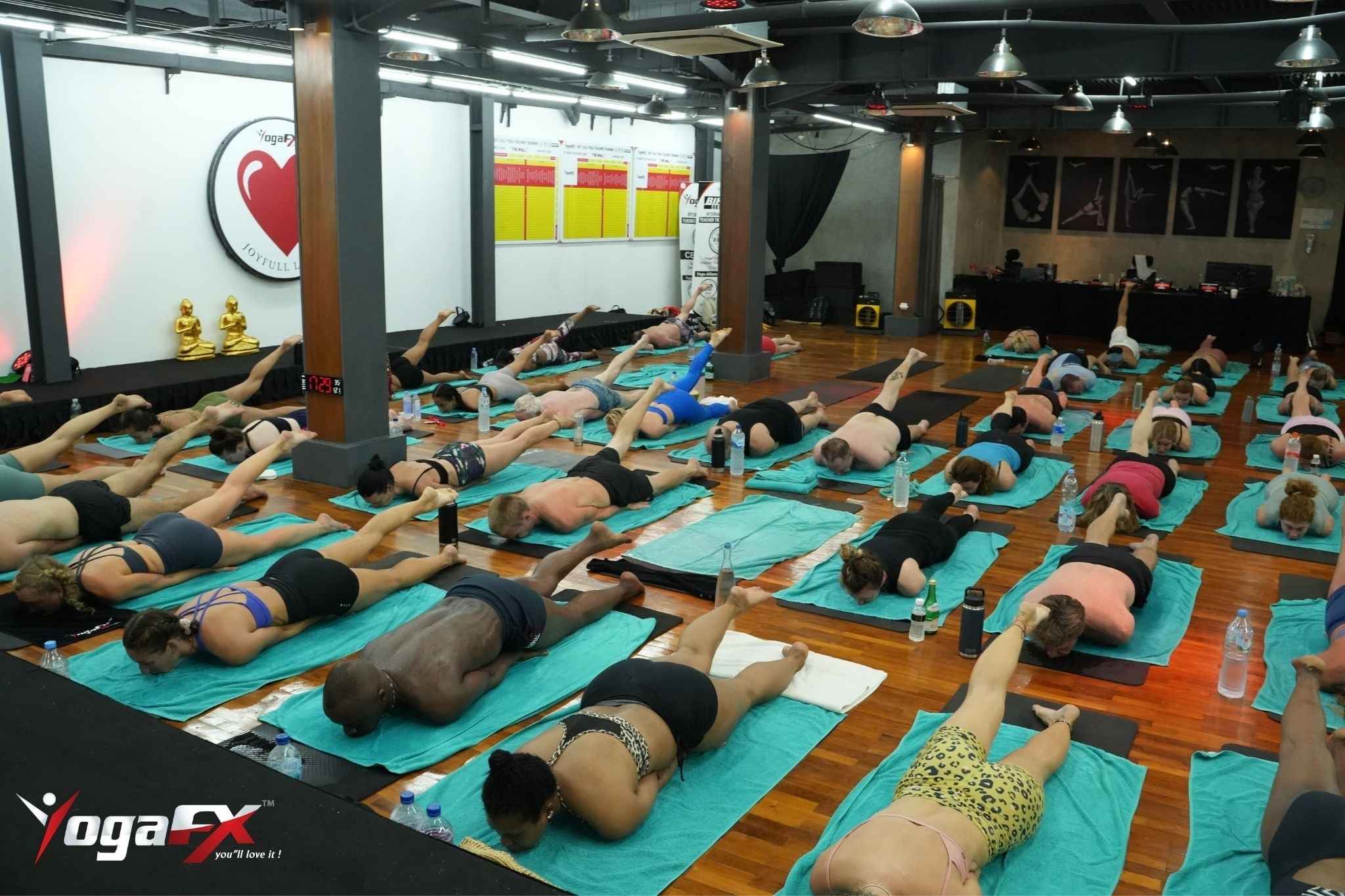
Search “hot yoga for beginners” and most guides assume the same starting point: a local studio near your home, a gradual ramp-up over several weeks, and your own bed to recover in afterward.

None of that applies if your first hot yoga class is also happening on a Bali holiday, jet-lagged, with no gradual build-up and no home routine to fall back on. That’s a genuinely different situation, and it deserves an honest guide of its own. If you would rather try a few classes closer to home in Jakarta first, start with our guide to choosing a beginner-friendly hot yoga studio in Jakarta.
What to Expect in Your First Hot Yoga Class
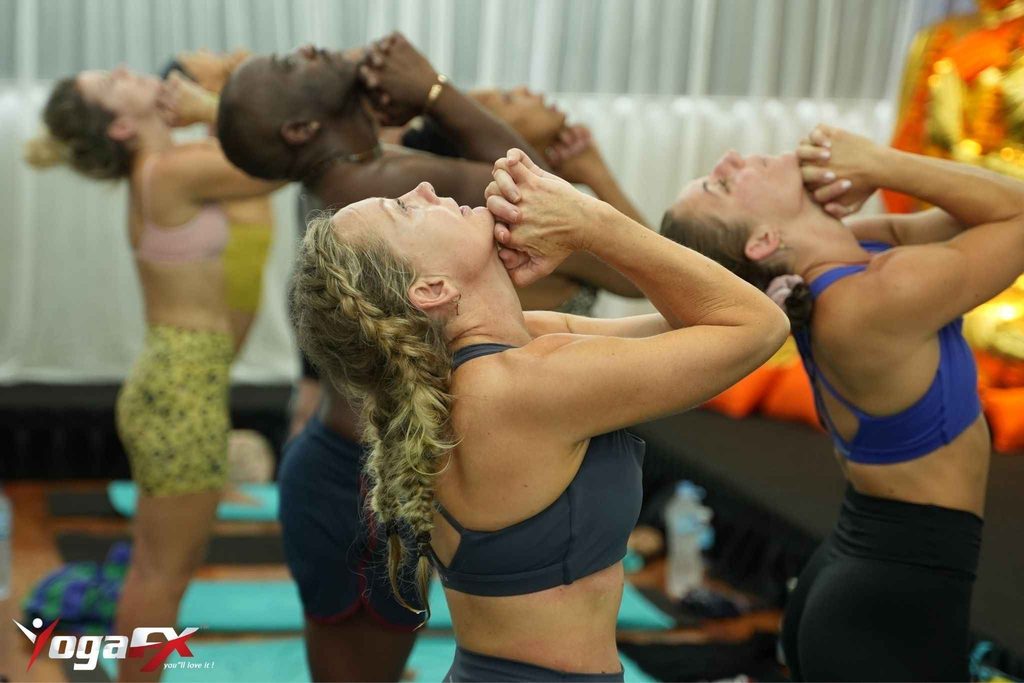
A hot yoga class for beginners in Bali runs on the same core structure whether you’ve practiced yoga for years or never stepped on a mat before. Here’s what actually happens once the door closes behind you.
- Natural Heat. Studios like YogaFX Academy in Seminyak and Canggu use Bali’s own tropical humidity and warmth to heat the room to around 40°C, rather than relying on electric heaters. That natural heat softens muscles and connective tissue quickly, which is part of why postures that would feel stiff in a cold room start to open up within the first fifteen minutes.
- The Routine. A standard hot class follows a fixed 90-minute 26&2 Bikram-style sequence, 26 postures and two breathing exercises, performed in the same order every single class. Nothing is improvised, which means once you’ve done it once, you already know exactly what’s coming next time.
- Verbal Guidance. Instructors talk the class through every posture using scripted verbal dialogue rather than physical adjustments or background music. You’ll hear clear, repeated cues instead of watching a teacher demonstrate from the front, so listening closely matters more than watching.
- Resting. You’re allowed to lie down on your mat and rest whenever you feel overwhelmed, as long as you stay inside the room. Sitting or lying down mid-class is normal and expected for beginners, not a sign you’re doing something wrong.
What Actually Happens During Your First Class
A full Bikram yoga class lasts 90 minutes. For a first-timer, the honest sequence of events usually looks something like this: the first 10-15 minutes feel manageable, then the heat compounds as your body works harder to cool itself, and somewhere in the middle third of class most beginners hit a point where lying down on the mat for a moment feels tempting. Knowing what comes next helps, so skim the 26 Bikram postures in order before your first class.
That’s normal, not a sign you’re doing it wrong.
One practitioner, a decade into a general yoga practice before trying this style, described dreading the walk in and half-expecting he might not survive it, only to come out the other side feeling remarkably clear-headed. That reaction is common enough among first-timers that it’s worth expecting rather than being surprised by.
What the Research Says About Hot Yoga for Beginners
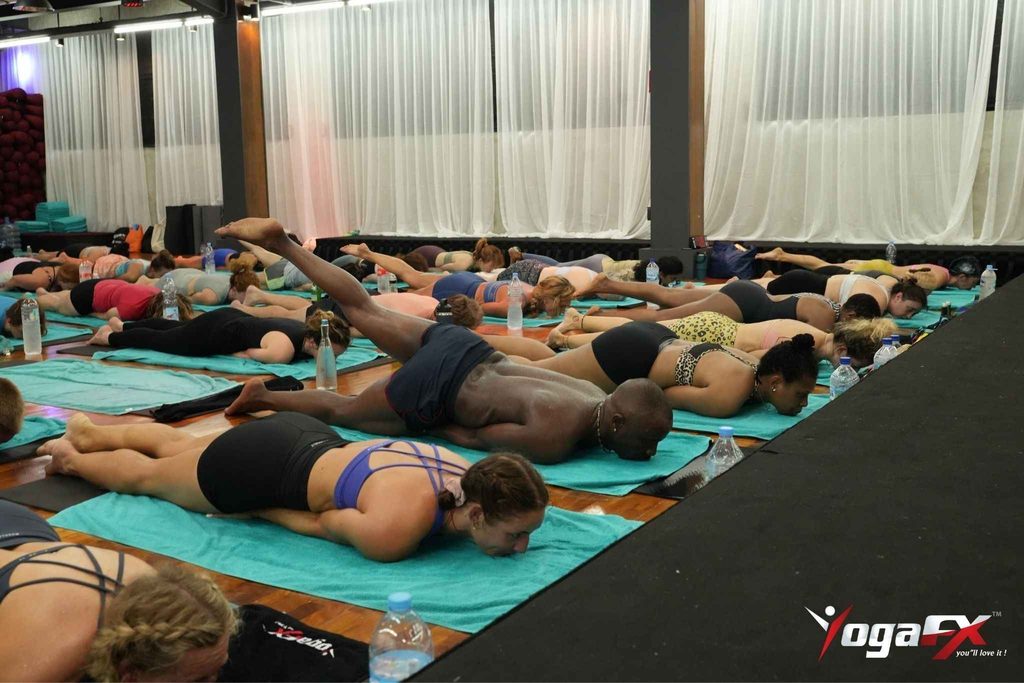
A 2014 University of Wisconsin study led by Porcari measured average energy expenditure of 333 kilocalories for women and 460 for men across a single 90-minute class, with heart rates reaching roughly 80 percent of maximum for sustained periods, comparable to a moderate cardio session.
That’s a large part of why a first class feels so demanding even though none of the postures themselves are inherently advanced.
A 2025 systematic review by Willmott and colleagues, covering 43 studies and 942 participants, found consistent evidence of improved flexibility and general well-being among regular practitioners, though those benefits build over repeated sessions, not a single class.
It’s worth being direct here too: sweating heavily does not detoxify the body, that’s a common but physiologically inaccurate claim.
What the heat does do is raise heart rate and cardiovascular demand, which is genuinely useful information for pacing yourself sensibly through a first class rather than trying to match someone who’s been practicing for years.
This is general information, not medical advice, and anyone managing a heart condition, a chronic illness, or pregnancy should consult a doctor before attempting a heated class.
Essential Tips for Beginners
A little preparation changes a first hot yoga class from something you survive into something you actually get through in reasonably good shape.
- Hydrate Early. Drink plenty of water throughout the day before your class starts, rather than trying to catch up right beforehand, and bring at least one liter into the hot room.
- Arrive Early. Get to the studio 10 to 15 minutes before class because late entries aren’t allowed once the room has heated up and the class has started.
- Bring a Towel. While mats are usually provided by studios, bringing an extra personal towel for the heavy sweat is essential, especially combined with Bali’s own humidity outside the room.
- Disconnect. Leave your phone outside or powered off in a locker, as silence is strictly observed in the practice room.
- Eat Light, and Early. A heavy meal within 2-3 hours of class makes the heat significantly harder to manage, so aim for something small and easy to digest instead.
- Skip Alcohol the Night Before. Combined with heat and dehydration, it makes the class noticeably harder than it needs to be.
First Class at Home vs. First Class on a Bali Trip
Most “hot yoga for beginners” advice online is written for the hometown version of this experience. Here’s how a first class on a short Bali trip actually differs.
| Hometown Beginner Track | First Class on a Bali Trip | |
|---|---|---|
| Build-up | Usually one class a week for a month or more | Often just one or two sessions total |
| Heat exposure | Only the studio heat itself | Studio heat plus Bali’s own tropical humidity outside |
| Body state | Rested, on a normal sleep schedule | Frequently jet-lagged, adjusting to a new time zone |
| Class options | Structured beginner track, separate from advanced classes | Drop-in schedule, same class for every level |
| Recovery | Home routine, familiar food and rest | Travel schedule, unfamiliar food, less predictable rest |
What Happens After Your First Class
Rehydration matters more after a hot yoga class than most first-timers expect. Replace fluids steadily over the following few hours rather than all at once, and a light, easily digestible meal usually sits better than a heavy one right after class. Beyond the physical side, some beginners notice a mental clarity that lasts well past the shower.
Hui and colleagues (2022) found measurable reductions in state-anxiety following hot yoga sessions specifically, which lines up with what a lot of first-timers describe: walking in dreading it and walking out feeling unexpectedly calm.
That said, one class won’t resolve an ongoing mental health condition, and anyone managing anxiety or depression as a diagnosed condition should treat this as a supplement to, not a replacement for, professional care.
Trying Hot Yoga for Beginners at YogaFX in Seminyak or Canggu
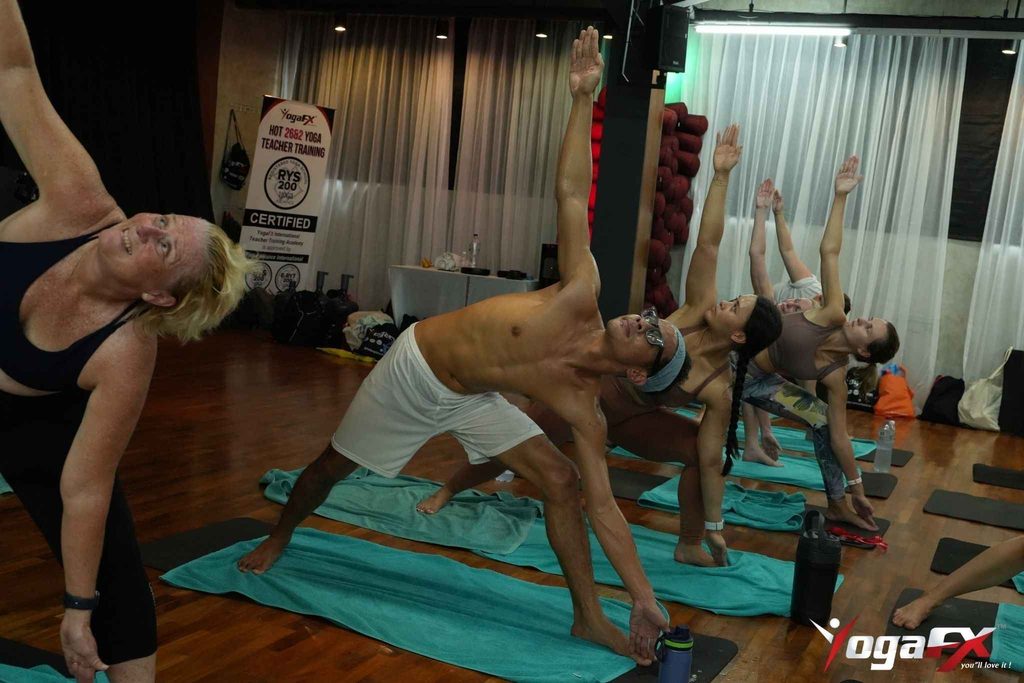
Both studios are open daily from 06:00 to 22:00, backed by 150 Google reviews, 50 Yoga Alliance reviews and 357 student video testimonials on YouTube, and drop-in classes don’t require any prior experience or commitment beyond the single session. Our drop-in class schedule and pricing covers exact times at each location.
The programme is led by Mr. Ian Terry, an E-RYT 500 instructor who trained for five years, from 2014 to 2019, directly with Bikram Choudhury, the founder of the Bikram Hot 26&2 method, and has taught more than 12,000 hours since founding the studio in 2017.
If you want the fuller picture before you show up, our Bikram Yoga for Beginners survival guide walks through the entire 90-minute sequence posture by posture.
It also helps to sort out what to eat before hot yoga and what to wear to hot yoga in Bali ahead of time, since both of those decisions affect how your first class actually feels far more than most beginners expect.
If one class leaves you wanting more intensity rather than less, our Yoga Retreat Bali guide covers what a multi-day intensive stay actually involves.
And if your first class turns into genuine interest in the practice, or even the idea of eventually teaching it, full programme details are available through the YogaFX Teacher Training programme page.
FAQ
Is hot yoga hard for beginners?
Yes, genuinely, especially the first few classes. The heat makes even simple postures feel far more demanding than they would in an unheated room. That difficulty is normal and expected, not a sign you’re unsuited to the practice.
What should I bring to my first hot yoga class in Bali?
Bring at least one liter of water, a towel for sweat, and light, breathable clothing. Mats are usually provided by the studio. Skip a heavy meal in the hours beforehand and leave your phone in a locker. For a full packing rundown, see our what to wear guide, and if you need to buy gear locally, our yoga clothing shopping guide covers where to go in Seminyak, Canggu, and Ubud.
How do I prepare for my first hot yoga class?
Hydrate well the day before rather than right beforehand, eat a light meal at least 2-3 hours ahead, bring a towel and water, and skip alcohol the night before. Give yourself permission to rest mid-class if you need to.
How long does it take to get used to hot yoga?
Most practitioners notice a real shift in heat tolerance somewhere between their second and fourth class. A single class on a short Bali trip will feel demanding regardless, since heat adaptation builds with repeated exposure, not one session.
Is it normal to feel dizzy or sit down during a hot yoga class?
Mild lightheadedness or needing to rest briefly is common for first-timers and generally not a cause for concern. If dizziness is severe, or you feel unwell beyond typical fatigue, stop, sit down, and tell the instructor. Anyone with a heart condition or other health concern should consult a doctor before attempting a heated class.