
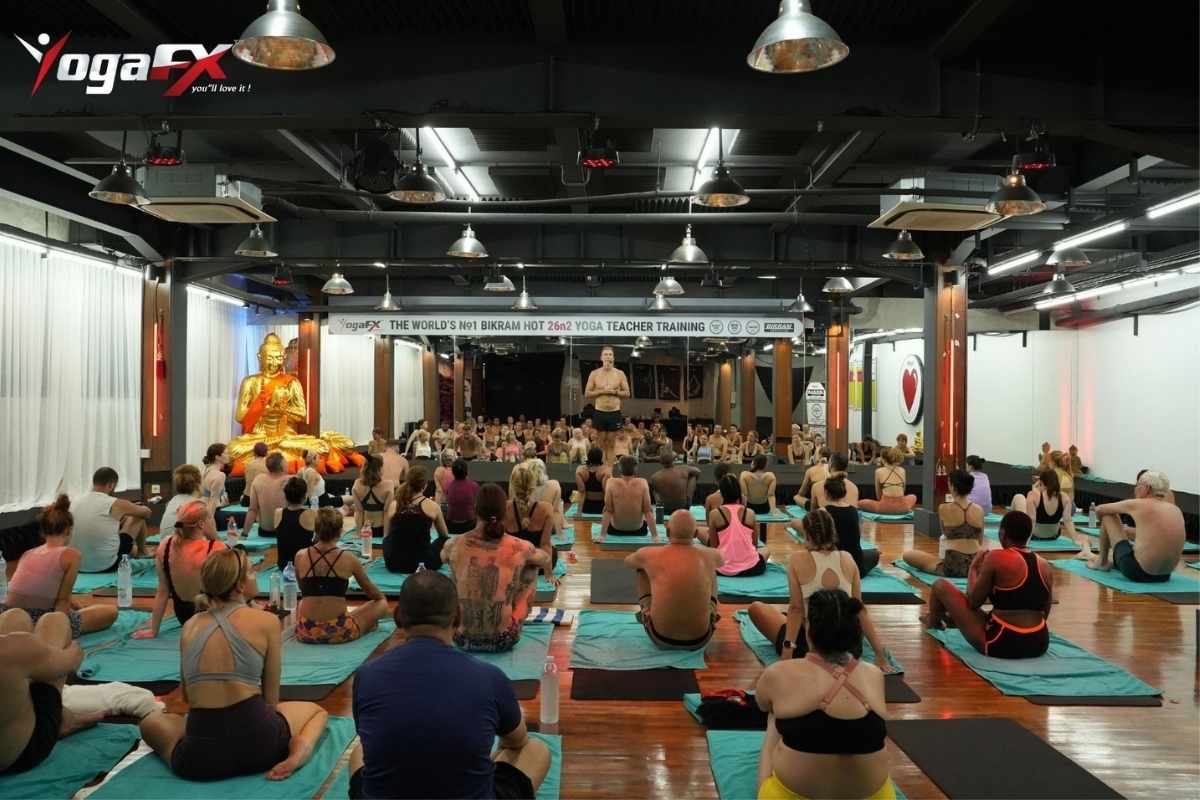
Short answer: Vinyasa is the style most people picture when they think of a modern yoga class: flowing, breath-linked movement set to music, with sequences that vary from teacher to teacher and class to class. Bikram is close to its opposite: a fixed sequence, no music, and a room heated to 40 degrees Celsius.

Both are practiced widely in Bali, and the honest comparison is not about which one is objectively better. It is about which one actually fits what you are looking for.
Bikram and Vinyasa differ in nearly every structural respect. Bikram 26 and 2 uses a fixed sequence of postures in natural 40 degree Celsius heat, with no music and no variation class to class. Vinyasa uses a flowing, breath-linked sequence that changes with each teacher and class, typically at room temperature, often with music.
Bali’s natural heat gives Bikram a genuine advantage for practitioners specifically seeking that method, since the climate provides the exact conditions the practice was designed for. Vinyasa is practiced at room temperature regardless of location, and Bali’s studio scene offers extensive Vinyasa options, particularly in Canggu and Ubud.
Origins and Philosophy
Bikram Yoga: A Fixed Method from Calcutta
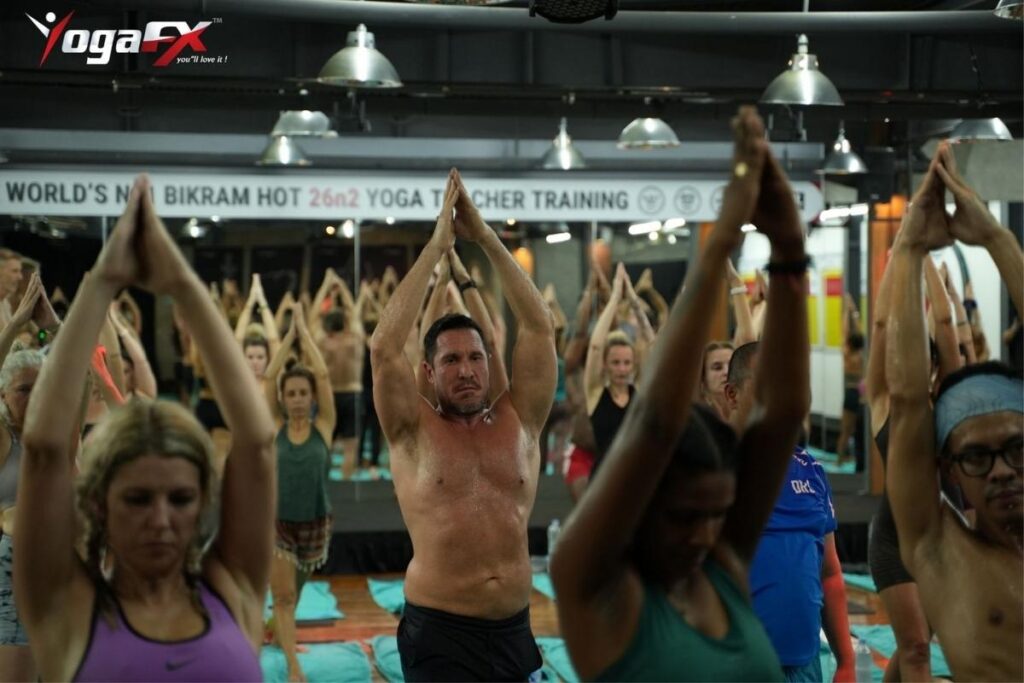
Bikram yoga was developed by Bikram Choudhury in the 1970s from 26 traditional Hatha postures selected for systematic physiological coverage of the whole body.
The method is designed to be practiced in heat, taught through a fixed verbal script rather than demonstration, and delivered identically class after class.
The underlying philosophy is functional rather than exploratory: the sequence works because of its specific order and repetition, not because of variation.
Vinyasa Yoga: Flow from Breath
Vinyasa traces back to the teachings of Tirumalai Krishnamacharya in the early 20th century and developed into the modern flow style through students like Pattabhi Jois and later teachers who moved away from fixed sequencing toward creative, breath-synchronised sequences.
The core principle is movement linked to breath, with one movement per inhale or exhale, building a continuous flow rather than a series of held, static postures. No two Vinyasa classes need to be the same, and much of the style’s popularity comes from that variety and the creative freedom it gives teachers.
Bikram vs Vinyasa: Key Differences in Structure and Format
| Dimension | Bikram 26&2 | Vinyasa |
|---|---|---|
| Sequence | Fixed, identical every class | Varies by teacher and class, no fixed order |
| Heat requirement | 40°C with humidity, essential | Room temperature, no heat required (unless labelled “hot vinyasa”) |
| Class format | Instructor verbal dialogue, no demonstration | Instructor demonstrates and cues movement, often with music |
| Session length | 90 minutes, fixed | 45 to 90 minutes, varies by studio and teacher |
| Breath integration | Natural breath, instructor-guided | One breath per movement, central to the practice |
| Beginner access | High, same class for all levels | Variable, depends heavily on teacher and studio pacing |
| Progress measurement | Same sequence, visible improvement class to class | Harder to measure directly since sequences vary |
| Predictability | Completely predictable | Different every time, by design |
Physical Outcomes: What Each Delivers
Bikram 26 and 2 Physical Outcomes
The 2014 San Diego State University study (Pate and Buono) measured Bikram yoga producing average heart rates of about 72 to 86 percent of predicted maximum through a 90-minute session, light-to-moderate intensity exercise, with calorie burn averaging about 286 kcal per session (179 to 478 kcal).
The Tracy and Hart (2013) study documented a 20 percent increase in strength and a 9 percent improvement in balance after 8 weeks of consistent practice.
The heat itself accelerates flexibility gains, since connective tissue extends further at 40 degrees Celsius than at room temperature.
Bikram 26&2: what the studies measured
Sources: Pate and Buono (2014); Tracy and Hart (2013).
Vinyasa Physical Outcomes
Vinyasa’s continuous movement produces genuine cardiovascular conditioning, particularly in faster-paced or power-vinyasa formats, along with functional full-body strength from repeated transitions through plank, chaturanga, and standing postures. Because sequences vary, Vinyasa also builds a broader range of movement patterns and adaptability than a fixed-sequence practice, which some practitioners value specifically because it keeps the body responding to new stimulus rather than the same repeated pattern.
The Key Difference in Outcomes
Bikram’s fixed sequence and heat combine to produce faster, more measurable early results, since the same postures repeated in heat give a clear before-and-after within a handful of classes.
Vinyasa’s variability makes it harder to track progress in the same direct way, but it builds broader movement literacy and keeps the practice from ever feeling repetitive.
Neither outcome is objectively superior. They are simply different training stimuli aimed at different goals.
The Mental Experience: Predictability vs Novelty
Beyond the physical differences, Bikram and Vinyasa create genuinely different mental experiences during a class, and this is often what actually decides which one a practitioner sticks with long term.
Bikram’s fixed sequence removes decision-making almost entirely. You know exactly what posture comes next, in what order, for the full 90 minutes, every single class. For many practitioners this is a relief rather than a limitation, since it frees mental energy to focus purely on depth, breath, and the sensation of the posture itself rather than anticipating what comes next.
The dialogue, delivered the same way every time, becomes a kind of meditative anchor once it becomes familiar. Some practitioners describe the predictability as almost hypnotic after a few weeks of regular practice, since the mind stops narrating the class and simply moves with it.
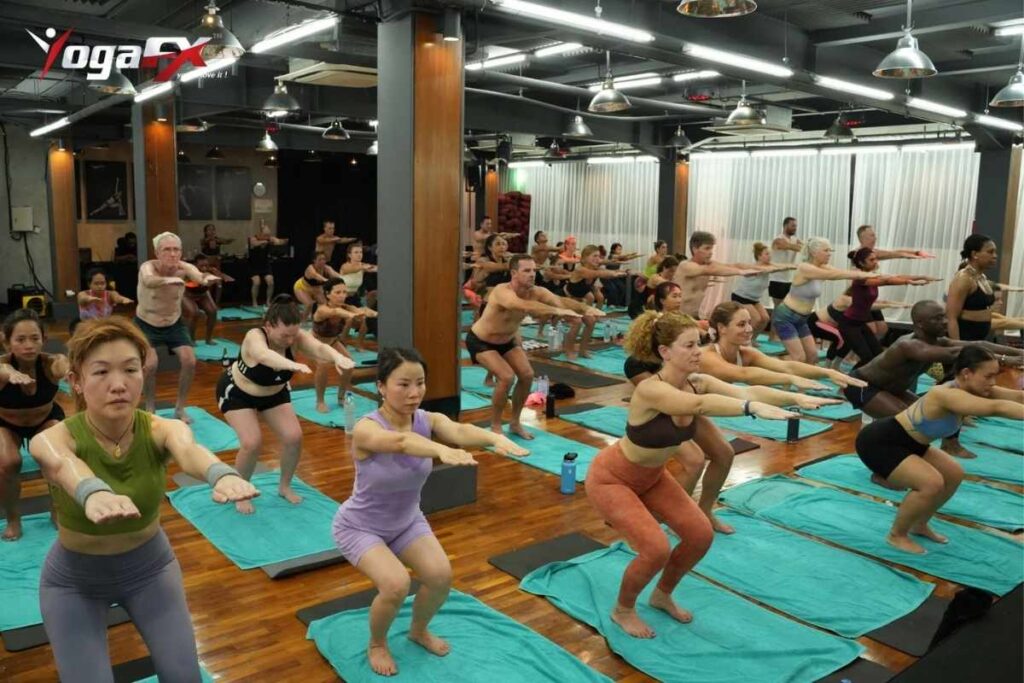
Vinyasa creates the opposite mental state by design. Because the sequence changes, the mind stays actively engaged in following new cues, which many practitioners find energising and creative rather than a burden.
A well-taught Vinyasa class can feel closer to a choreographed dance than a fixed workout, and the novelty itself is part of what keeps some practitioners coming back class after class without ever feeling like they are repeating themselves.
Neither mental mode is superior. Some people find repetition calming and others find it dull, just as some people find novelty stimulating and others find it mentally tiring. Trying both for a genuine stretch of practice, rather than a single class each, is the only reliable way to know which mode actually works for how your own mind settles into a physical practice.
The mental experience, side by side
| Aspect | Bikram 26&2 | Vinyasa |
|---|---|---|
| What comes next | Always known, same order every class | Changes by design |
| Where your attention goes | Depth, breath and sensation | Following new cues |
| How it tends to feel | A meditative anchor once familiar | Energising and creative |
| Suits people who | Find repetition calming | Find novelty stimulating |
Practical Differences: Price, Schedule, and Availability
Beyond the philosophical and physical comparison, a few practical factors often decide the choice for visitors with limited time in Bali.
Vinyasa studios are considerably more numerous across Bali, particularly in Canggu, which means more schedule flexibility if you want a class at a specific time of day or want to sample different teachers during a longer stay.
Bikram and other genuine hot yoga specialists are a smaller category, concentrated mainly in Seminyak and Canggu, which means fewer studios but a more consistent, predictable experience once you find one that suits you, since the method itself does not vary by teacher the way Vinyasa does.
Drop-in pricing across both styles in Bali tends to sit in a similar range, though this varies by studio reputation and location.
What differs more is what you are paying for: a Vinyasa drop-in buys access to that particular teacher’s individual style and sequencing choices for the day, while a Bikram drop-in buys access to the same verified method and sequence regardless of which instructor happens to be teaching that session, since the dialogue and postures do not change.
Bali’s Natural Heat: Why Location Changes the Comparison
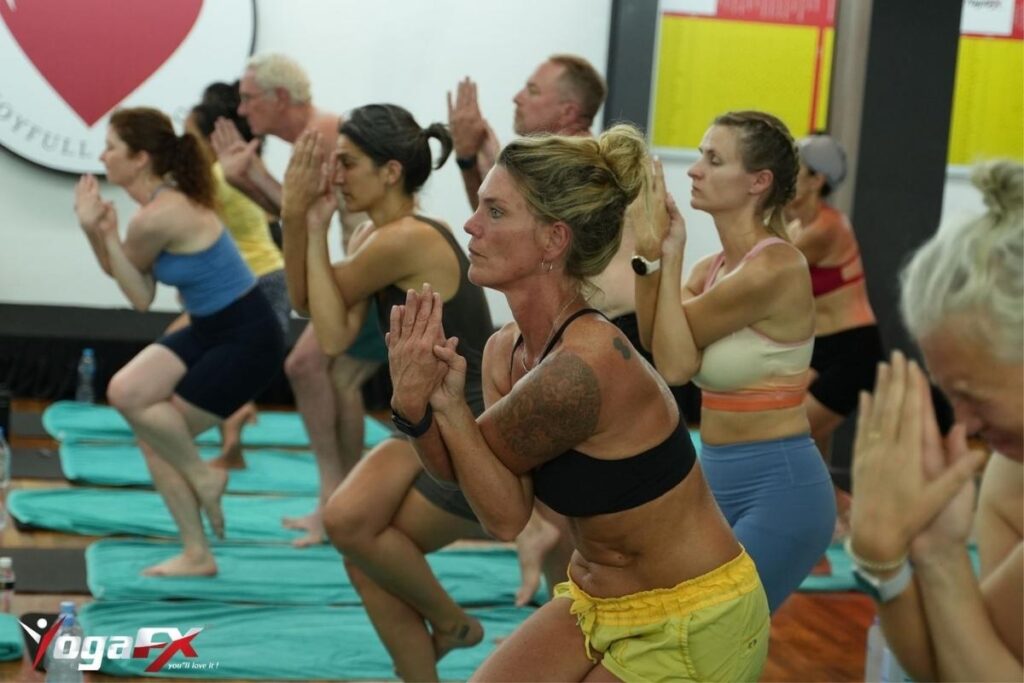
Outside Bali, a Bikram class almost always means an electrically heated room with dry heat, since most climates cannot produce the required temperature and humidity naturally. In Bali, that variable disappears entirely. At Bikram YogaFX Bali, the Seminyak studio uses no electric heaters. The heat is Bali’s own natural tropical climate, which is the exact condition the method was originally designed for. For how hot vinyasa and hot power compare with the original class, see our sister site’s 26 and 2 vs vinyasa vs power yoga guide.
Vinyasa is practiced at room temperature regardless of location, so Bali’s climate does not change the Vinyasa experience the way it changes Bikram. What Bali does offer for Vinyasa specifically is volume and variety: Canggu alone has a dense concentration of Vinyasa studios, and Ubud’s open-air shalas are widely associated with the style.
If your priority is trying many different Vinyasa teachers and studios, Bali gives you more range than most places in the world. If your priority is authentic Bikram in the conditions it was designed for, Bali is one of the only places where the climate does the work for you.
Which Should You Choose in Bali?
Choose Bikram 26 and 2 at YogaFX If:
- You want significant calorie burn and cardiovascular conditioning in every single session
- You want measurable, trackable progress from class to class rather than a different workout each time
- You are a first-timer or have limited time in Bali, since the fixed sequence is immediately accessible with no prior yoga experience
- You want to experience the practice in the natural heat environment it was actually designed for
- You find variety distracting rather than motivating, and prefer knowing exactly what a class will involve
Choose Vinyasa If:
- You enjoy variety and want a different sequence and experience every class
- You prefer room-temperature practice without a heat requirement
- You want music and a more creative, expressive class atmosphere
- You want to sample many different teachers and studios during your time in Bali
- You are already comfortable with basic yoga movement and want to build broader flexibility in your practice
Do Both If:
Combining both during a Bali stay works well for many practitioners. A common pattern is Bikram at YogaFX 3 to 4 mornings a week for the heat conditioning, calorie burn, and trackable progress, with Vinyasa on the remaining days for variety and a lighter, room-temperature session.
The two styles complement rather than compete with each other, since they train genuinely different qualities. For a third comparison point, Bikram vs Ashtanga covers how a more structured, progressive practice stacks up against both, and Bikram vs Hot Pilates compares the fixed sequence against Bali’s growing reformer and hot pilates scene. And if a gentler, room-temperature style is also on your list, our Bikram vs Hatha yoga comparison covers how that pairing works too.
This article is part of our Bikram Yoga 101 guide, where every related article is grouped in one place.
FAQ
Is Bikram yoga harder than Vinyasa?
Different rather than harder. Bikram’s difficulty comes primarily from the heat, since the body manages thermoregulation and unfamiliar postures at the same time in a first class. Vinyasa’s difficulty depends heavily on pace and teacher, ranging from gentle to genuinely demanding power-vinyasa formats. Neither is uniformly harder than the other.
Can I do Bikram and Vinyasa in the same week in Bali?
Yes. Many practitioners combine both, Bikram at YogaFX for heat conditioning and measurable progress, Vinyasa elsewhere for variety and room-temperature movement. Rest days between Bikram sessions are advisable in the first one to two weeks until heat adaptation develops.
Which burns more calories, Bikram or Vinyasa?
Bikram yoga burns about 286 kcal per 90-minute session on average (179 to 478 kcal) according to a 2014 San Diego State University study, compared to roughly 250 to 450 kcal for a typical Vinyasa class, with faster power-vinyasa formats closing part of that gap. The additional burn in Bikram comes from thermoregulation, the body’s energy expenditure to manage core temperature in the heated room.
Which is better for complete beginners, Bikram or Vinyasa?
Bikram at YogaFX tends to be more immediately accessible for absolute beginners, since the fixed sequence is identical for everyone and taught entirely through verbal instruction with modifications built in for every posture. Vinyasa’s accessibility for beginners varies significantly by teacher and studio, since faster-paced classes can move through transitions before a first-timer has learned proper alignment.
Is Bikram better than Vinyasa?
Neither is better; they suit different goals. Bikram (Hot 26&2) is the same sequence every class, held in the heat, which makes it easy to learn and to track your progress. Vinyasa flows from posture to posture with the breath and changes every class, which offers more variety and builds more upper-body strength. Choose Bikram if you want structure and measurable progress, and Vinyasa if you want variety.
 Mr. Ian Terry