
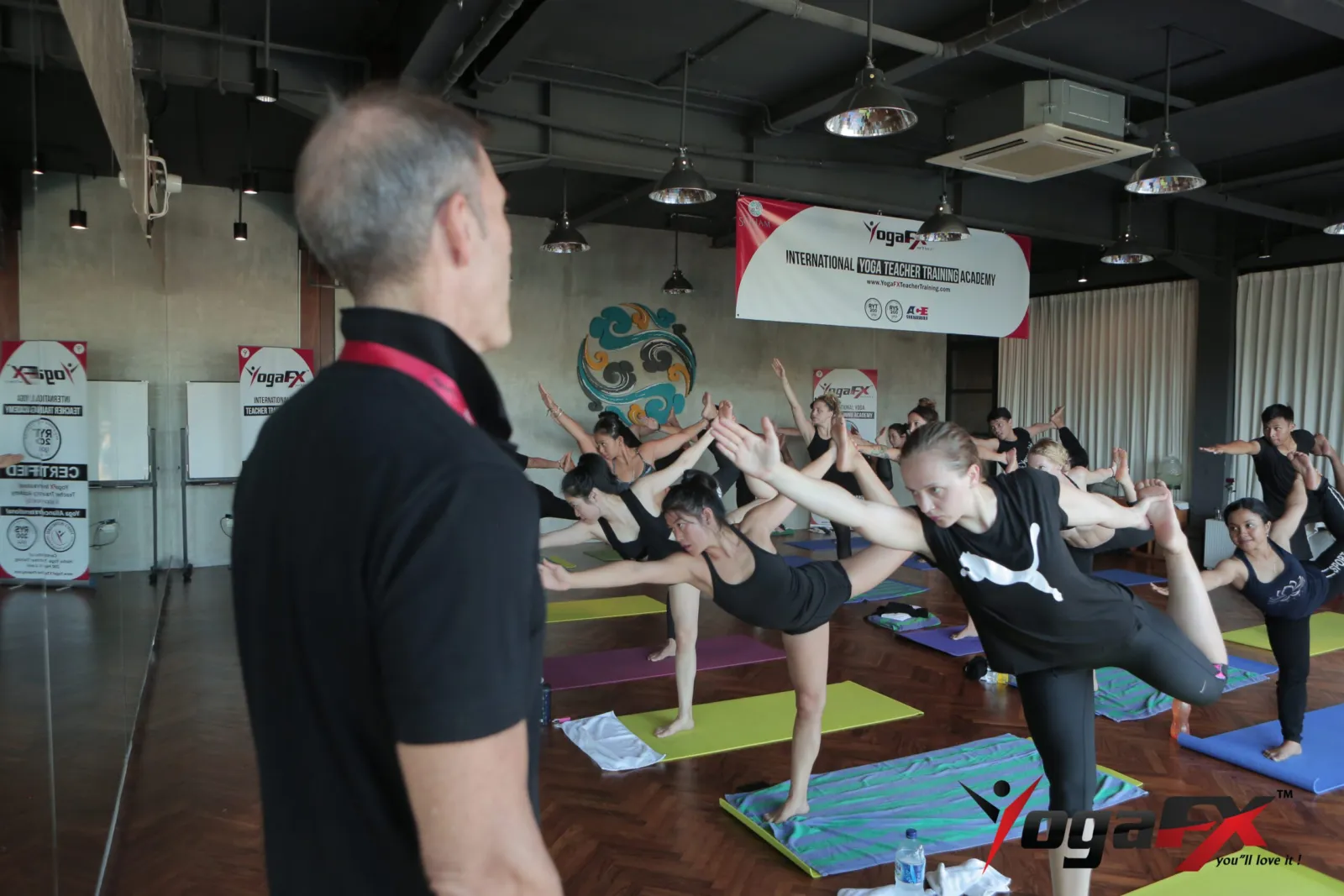
Short answer: In the Bikram yoga vs Ashtanga choice, hot yoga (Bikram 26&2) is a fixed 90-minute class in heat with quick, trackable progress. Ashtanga is a breath-led series at room temperature that builds strength over years. Neither wins outright. In Bali you can try both, so pick by your goal and your time.

We teach the hot side at YogaFX in Seminyak. Mr. Ian Terry, an E-RYT 500 with 12,000+ teaching hours, leads the original Bikram Hot 26&2 method in Bali’s natural heat. That makes us biased, so this guide to Bikram yoga vs Ashtanga sticks to what research measured and tells you plainly where Ashtanga is the better pick.
Below you’ll find a 7-point comparison, what the studies actually show, a heat-safety note, two trainee voices and a simple way to choose. If you searched for ashtanga yoga vs hot yoga, you are in the right place, because Bikram 26&2 is the hot yoga we compare.
Ashtanga Yoga vs Hot Yoga: The Quick Verdict
Hot yoga is an umbrella term for any class taught in a heated room. Bikram 26&2 is the best-known hot yoga style, so it is the one we compare here.
Ashtanga is a separate lineage with its own six-series system, which is why Bikram yoga vs Ashtanga is a real choice and not a matter of temperature alone. The real question behind ashtanga yoga vs hot yoga is therefore Bikram yoga vs Ashtanga: one fixed class in heat, or a progressive path at room temperature.
- Choose hot yoga if you want a first class tomorrow, steady cardio and progress you can see from week to week.
- Choose Ashtanga if you want upper-body strength, a long learning path and a strong breathing practice.
- Choose both if you are in Bali for a few weeks and want heat conditioning plus strength work.
Origins and Philosophy

Bikram Yoga: Structure from Calcutta
Bikram yoga was developed by Bikram Choudhury in the 1970s from 26 traditional Hatha yoga postures. The method was built for tropical heat and humidity. It is taught from a fixed verbal script, so anyone can follow it, whatever their experience.
The philosophy is functional. The sequence works because of its order, the heat works because of its conditions, and results come from repeating the same class. At YogaFX we call this approach Original Hot 26&2 Yoga.
Ashtanga Yoga: Progression from Mysore
Ashtanga yoga was developed by K. Pattabhi Jois in Mysore, India, from a text called the Yoga Korunta. It uses six progressive series, linked by ujjayi breathing, bandhas (energy locks) and drishti (gazing points).
In the traditional Mysore style, each student practises at their own pace. The teacher adds postures one at a time as you master each one. The philosophy is progressive, so the sequence becomes a lifelong curriculum rather than a single class.
Structure and Format: 7 Differences Side by Side
This table covers the points people ask about most in any Bikram yoga vs Ashtanga comparison.
| Difference | Bikram 26&2 (hot yoga) | Ashtanga |
|---|---|---|
| 1. Heat | 40°C with humidity, essential to the method | Room temperature, no heat required |
| 2. Sequence | 26 postures and 2 breathing exercises, same order every class | Fixed series (Primary, Intermediate, Advanced), added step by step |
| 3. Class format | Teacher leads with a scripted dialogue | Mysore: self-paced. Led: teacher calls each posture |
| 4. Session length | 90 minutes, fixed | 60 to 90+ minutes, depends on your series |
| 5. Breath | Natural breath, guided by the teacher | Ujjayi pranayama, a specific breathing technique |
| 6. Beginner access | High: one class for all levels | Moderate: Mysore needs guidance to start |
| 7. Spiritual side | Minimal at YogaFX, results-focused | Significant: breath, bandha and drishti system |
In Bikram yoga vs Ashtanga, both styles are fixed and repeatable. The difference is how you grow inside them. In hot yoga, the class stays the same and you get better at it. In Ashtanga, the class itself grows as you add postures.
Bikram Yoga vs Ashtanga: Physical Outcomes
What the Research Measured in Hot Yoga
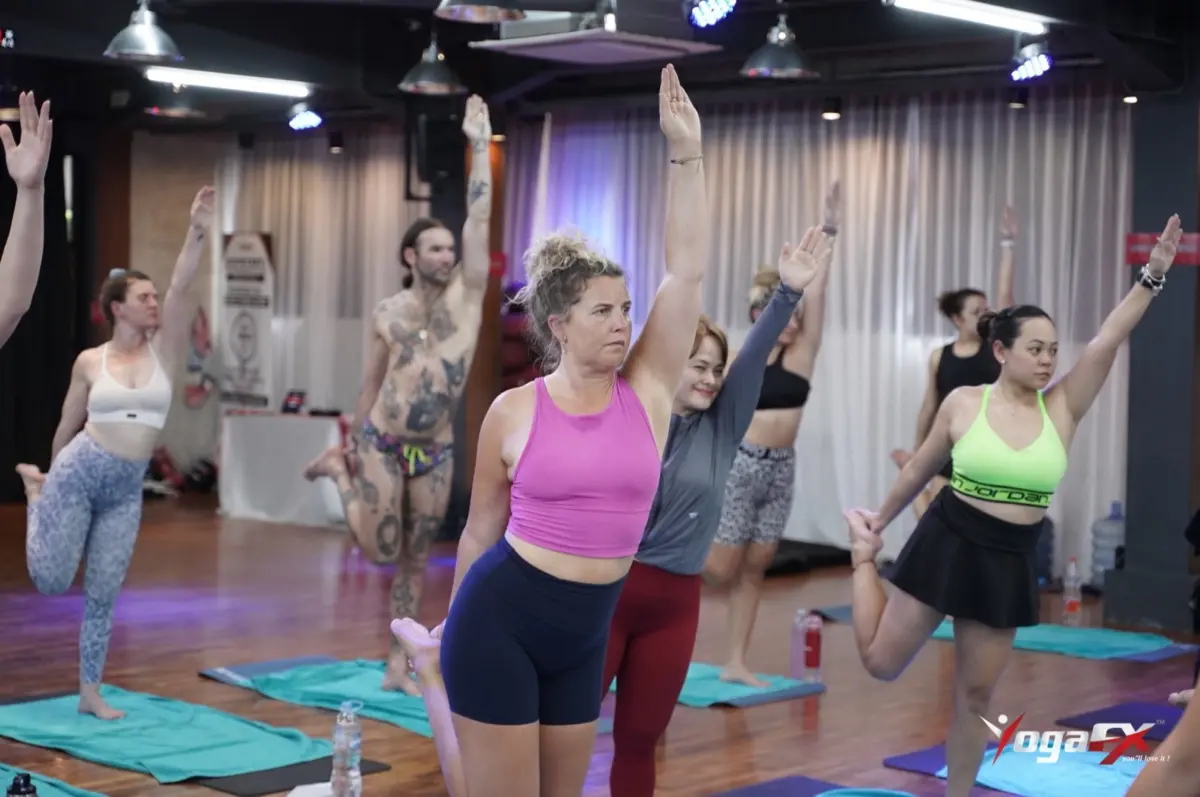
A 2014 San Diego State University study followed 24 people through a standard 90-minute Bikram class. Mean heart rate reached 72.3% of predicted maximum in novices and 86.4% in experienced practitioners. Average energy use was 286 kcal, ranging from 179 to 478. The authors classed all postures as light-to-moderate intensity.
That’s a useful reality check. A hot yoga class is a solid workout, but it is not a marathon. Your weight, effort and experience change the numbers far more than the label on the class.
What Research Says About Yoga More Broadly
In a small group of sedentary adults, Harvard Health reports that eight weeks of yoga, at least twice a week for 180 minutes in total, brought greater muscle strength and endurance, flexibility and cardio-respiratory fitness. That study did not test hot yoga or Ashtanga specifically, so treat it as general support for regular practice.
The NHS adds a simple rule of thumb: to benefit your health, you need to move quickly enough to raise your heart rate, breathe faster and feel warmer. Heat and effort both help you reach that point, which is why a steady hot class works well for many beginners.
What We See in Ashtanga
Ashtanga builds strength, hip and hamstring flexibility, and breath control. The jump-back transitions, with their low push-up movement (chaturanga), load the shoulders and arms more than the standing series in hot yoga does. Dedicated Ashtanga research is thinner than for Bikram, so we do not quote Ashtanga calorie or strength numbers here.
The Key Difference in Bikram Yoga vs Ashtanga Outcomes
Many students find the heat lets them move deeper into postures sooner. Ashtanga tends to build more upper-body strength. Both reward consistency.
The timeline differs most in Bikram yoga vs Ashtanga. In our classes, most people notice changes in how they feel within their first 5 to 10 classes. Ashtanga’s deeper outcomes develop over months and years, and the Primary Series alone usually takes one to two years to learn in full.
What each method builds, and how fast
| Outcome | Bikram 26&2 | Ashtanga |
|---|---|---|
| Early flexibility | Often faster, helped by the heat | Steady, deep hip and hamstring work |
| Upper body strength | Moderate | Greater, from chaturanga transitions |
| Measured intensity | Light-to-moderate, 72% to 86% of predicted max heart rate | Less research available |
| First visible progress | Often within 5 to 10 classes | Months to years |
| Full sequence | Same 90-minute class from day one | Primary Series takes 1 to 2 years |
Bali’s Natural Heat: Why Location Changes the Bikram vs Ashtanga Yoga Comparison
In many countries, hot yoga means an electric heater and dry air. Some students find that harder to enjoy than a room-temperature class. In Bali, that variable disappears.
At YogaFX, the heat comes from Bali’s own humid tropical climate, so there are no electric heaters. Class runs 90 minutes at about 40°C and 40% humidity, which is the setting the Bikram method was designed for. Classes run from 06:30 to 08:00 at our Seminyak studio, booking only.
Ashtanga is practised at room temperature wherever you are. In Bali, a morning room often sits around 27 to 30°C, so it is warm but not hot yoga conditions. That’s comfortable for Ashtanga and works well. It simply doesn’t add the heat load that a 40°C class does.
Staying Safe in the Heat: Hot Yoga vs Ashtanga
Heat adds stress, so respect it. Drink water before and after class, eat lightly beforehand and rest when you need to. Sit out a posture whenever you feel dizzy, because stopping is part of the practice.
- Start slowly: take rest days between classes in your first one to two weeks.
- Tell the teacher: mention injuries, pregnancy or medical conditions before class.
- Check with a doctor: if you have heart, blood pressure or heat-sensitivity concerns, speak to a healthcare professional before you try hot yoga.
This article is general information, not medical advice. Please consult a healthcare professional if you are unsure whether hot yoga suits you.
What Trainees Say About Learning From Mr. Ian
Mr. Ian Terry teaches both the daily classes and our teacher training. Whichever side of Bikram yoga vs Ashtanga you lean toward, coaching matters. These two trainee comments, from our YouTube reviews, show the coaching style behind the class. We have 357 YouTube testimonials and 150 Google reviews, and you can read more on our graduate stories page.
A trainee in his 2023 video review said he began the challenge doubting he was strong enough, but that Mr. Ian gave him small support every day and he finished proud of himself.
A trainee in our YouTube review, 2023 (close paraphrase of the video captions). Watch the video.
A trainee who had completed many teacher trainings before called the YogaFX one “an actual transformation” that changed her life inside and out.
A trainee in our YouTube review, 2023 (close paraphrase of the video captions). Watch the video.
Bikram Yoga vs Ashtanga: A Sample Week in Bali
Reading about Bikram yoga vs Ashtanga only goes so far. A trial week answers the question faster than any article. Here is a simple plan for a visitor who wants to compare both styles without burning out.
| Day | Hot yoga (Bikram 26&2) | Ashtanga |
|---|---|---|
| Monday | 90-minute class, first time: go gently, rest when you need to | Rest day |
| Tuesday | Rest day | Mysore intake, learn the first postures |
| Wednesday | 90-minute class, aim to stay in the room | Rest day |
| Thursday | Rest day | Short Mysore practice, 45 to 60 minutes |
| Friday | 90-minute class, notice what feels easier | Rest day |
| Saturday | Rest day | Led or Mysore class, build on the basics |
After one week, ask yourself three questions. Which class did you look forward to? Which one left you feeling better the next morning? And which one do you want to keep working at? Your honest answers will point to your style.
Remember that you don’t have to pick forever. Many of our students start with hot yoga for the routine, then add Ashtanga later for strength. Others do the reverse.
Which Should You Choose in Bali?
Choose Hot Yoga (Bikram 26&2) at YogaFX If:
- You want a solid cardio-style workout in every session
- You want progress you can track from class to class
- You are a first-timer or short on time, because the fixed class is easy to join
- You want to practise in the natural heat the method was designed for
- You prefer a results-focused class without spiritual pressure
- You already practise Ashtanga and want a different physical stimulus
Choose Ashtanga If:
- You are committed to a long, progressive practice over months or years
- You want a spiritual and philosophical framework alongside the physical work
- You are drawn to upper-body strength and the chaturanga transitions
- You want a Mysore-style practice with personal teacher guidance
- You prefer early-morning practice, since most Mysore classes start between 6 and 8am
Do Both If:
Practising both during a Bali stay is realistic. For example, take hot yoga at YogaFX three or four mornings a week and Ashtanga at a local Mysore room on the other mornings. That mix covers heat conditioning, upper-body strength and breath work. It is also the easiest way to judge Bikram yoga vs Ashtanga for yourself.
If Vinyasa is also on your list, the Bikram vs Vinyasa comparison shows how it stacks up. If you prefer a slower, room-temperature pace, read the Bikram vs Hatha comparison. New to all of this? Our Bikram Yoga 101 guide gathers the basics in one place.
The simplest test is to try one class of each in your first week. Your body will tell you which one to keep.
Bottom line on Bikram yoga vs Ashtanga: hot yoga gives you a repeatable class, steady cardio and quick feedback, while Ashtanga gives you a long road with strength and breath at its centre. If you’re unsure, start with the one that gets you on the mat sooner, because consistent practice matters more than the style you pick.
Key takeaways
- Fit matters, not a winner. Both are rigorous, lineage-based practices.
- Hot yoga suits quick, trackable progress. Fixed 26 postures, 90 minutes, natural Bali heat.
- Ashtanga suits a long-term path. Progressive series, ujjayi breath, room temperature.
- Beginners start easier in hot yoga. No intake session is needed before your first class.
- You can do both. Hot yoga three or four mornings a week, Ashtanga on the others.
FAQ
Is Ashtanga yoga hot yoga?
No. Ashtanga is traditionally practised at room temperature, so it is not hot yoga. Hot yoga means a heated room, and Bikram 26&2 is the best-known example. In Bali the air is already warm, but an Ashtanga room is still not set to 40°C with humidity. Check each class description before you book.
Is Bikram yoga harder than Ashtanga?
They are hard in different ways. Hot yoga feels tough in the first class because your body copes with heat while learning the postures. Ashtanga feels easy at first, then gets harder as the series adds postures and arm balances. Neither is easier overall, so choose by the kind of challenge you want.
Which is better for beginners: hot yoga or Ashtanga?
Hot yoga at YogaFX is easier to start. The Bikram 26&2 class is the same for everyone, and the teacher talks you through every posture, so you can walk in and follow along. Ashtanga Mysore classes usually begin with a short intake, where a teacher introduces the first postures before you join.
Which burns more calories: ashtanga yoga vs hot yoga?
A 2014 San Diego State University study found an average of 286 kcal in a 90-minute Bikram class, ranging from 179 to 478 kcal. We found no verified Ashtanga figure from a comparable study, so we do not quote one. Your weight, effort and experience change the number far more than the style.
Can I do both Bikram and Ashtanga in the same week in Bali?
Yes, many visitors do. A common split is hot yoga three or four mornings a week and Ashtanga on the other days. Take rest days in your first one to two weeks while your body adapts to the heat. Drink water through the day and listen to how you feel.
Still have questions? Message Mr. Ian and the YogaFX team on WhatsApp and we will answer your questions personally. You can also contact us to book a free guest pass and try a hot class yourself, so you can compare it with Ashtanga before you commit to either.
 Mr. Ian Terry