
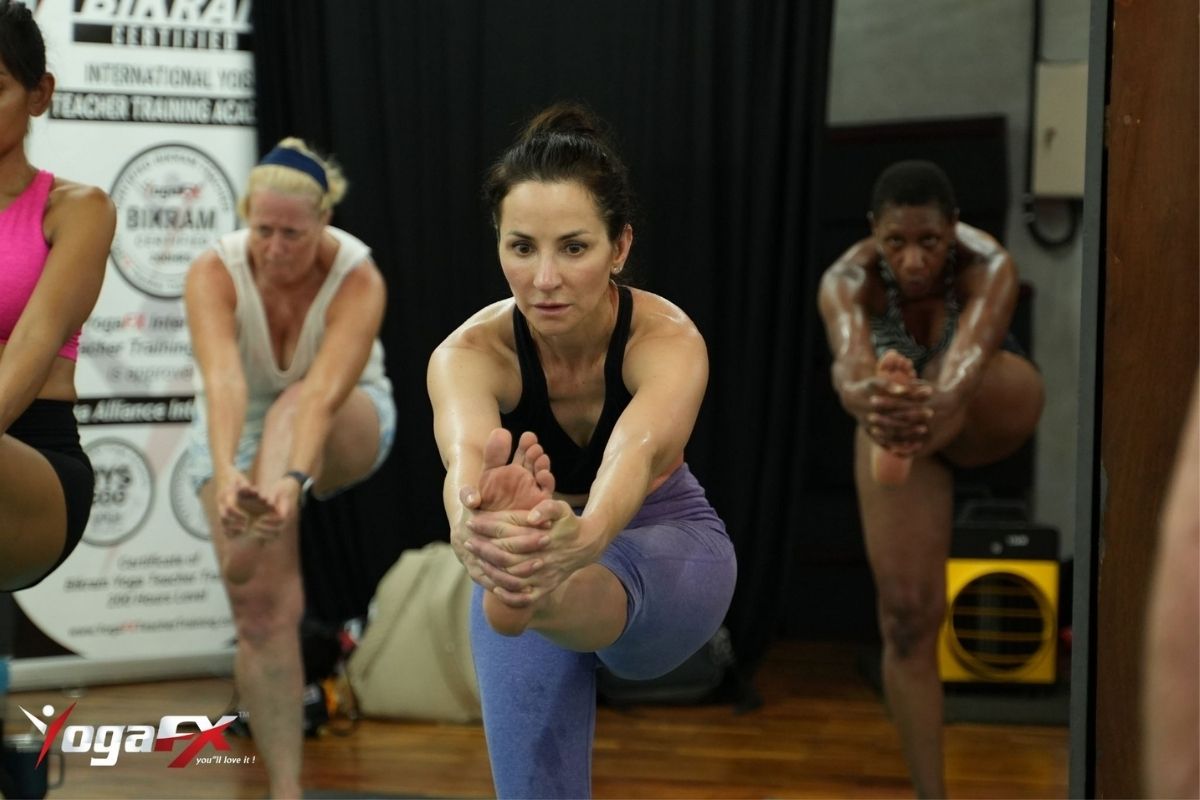
Hatha yoga and Bikram Hot 26&2 both trace back to the same broad yoga family, but they are not versions of each other. Hatha is a slow, gentle style typically practised at room temperature.

Bikram Hot 26&2 is a fixed 90-minute sequence of 26 postures and 2 breathing exercises, practised in a room heated to roughly 40 degrees Celsius. Here is what actually separates them, and which one fits what you are looking for in Bali.
Under the guidance of Mr. Ian Terry, E-RYT 500, who founded YogaFX in 2017 and trained for five years, from 2014 to 2019, directly with Bikram Choudhury, this comparison draws on more than 12,000 teaching hours across both hatha-informed foundations and the specific 26&2 method taught daily in Seminyak and Canggu.
Is Hatha Yoga the Same as Bikram Yoga?
No, and this confusion comes up constantly because Bikram yoga is technically a style built on hatha principles, the same way a sonnet is technically a poem.
Hatha is the umbrella term for any yoga practice built around physical postures and breath control, which covers a huge range of styles from restorative classes to power yoga.
Bikram is one very specific, heavily structured method within that umbrella: the same 26 postures, the same 2 breathing exercises, the same scripted dialogue, every single class, in a heated room.
The naming confusion has a real history behind it. Hatha yoga as a broad tradition dates back centuries, referenced in classical texts long before anyone attached heat or a fixed sequence to it.
Bikram Choudhury built his specific 26&2 method in the 1970s, drawing on hatha postures but locking them into a single repeatable order and pairing that order with artificial or, in Bali’s case, natural ambient heat.
So when someone asks whether hatha and Bikram are the same thing, the more useful question is usually which specific class format they actually experienced, since “hatha” on a studio schedule could mean almost anything.
When someone books a “hatha yoga class” they could be walking into almost anything depending on the teacher and studio. When someone books a Bikram Hot 26&2 class, they know exactly what sequence they are getting before they walk in the door.
The Core Differences, Side by Side
| Factor | Hatha Yoga | Bikram Hot 26&2 |
|---|---|---|
| Sequence | Varies by teacher and studio | Fixed: 26 postures, 2 breathing exercises, every class |
| Room temperature | Room temperature, no heat | Roughly 40°C, 40% humidity |
| Pace | Slow, with held poses and rest | Continuous, 90 minutes with brief rest between postures |
| Instruction style | Teacher demonstrates and cues freely | Scripted verbal dialogue, no demonstration, no music |
| Best suited for | Beginners easing in, restorative or therapeutic goals | Practitioners wanting a consistent, intense, repeatable structure |
The pace difference surprises people most. A hatha class typically holds each pose for several breaths with rest built in, which makes it approachable for a first-timer or someone recovering from injury.
A Bikram Hot 26&2 class moves through all 26 postures twice each in a fixed 90-minute arc, with the heat doing as much work as the sequence itself.
What the Heat Actually Changes
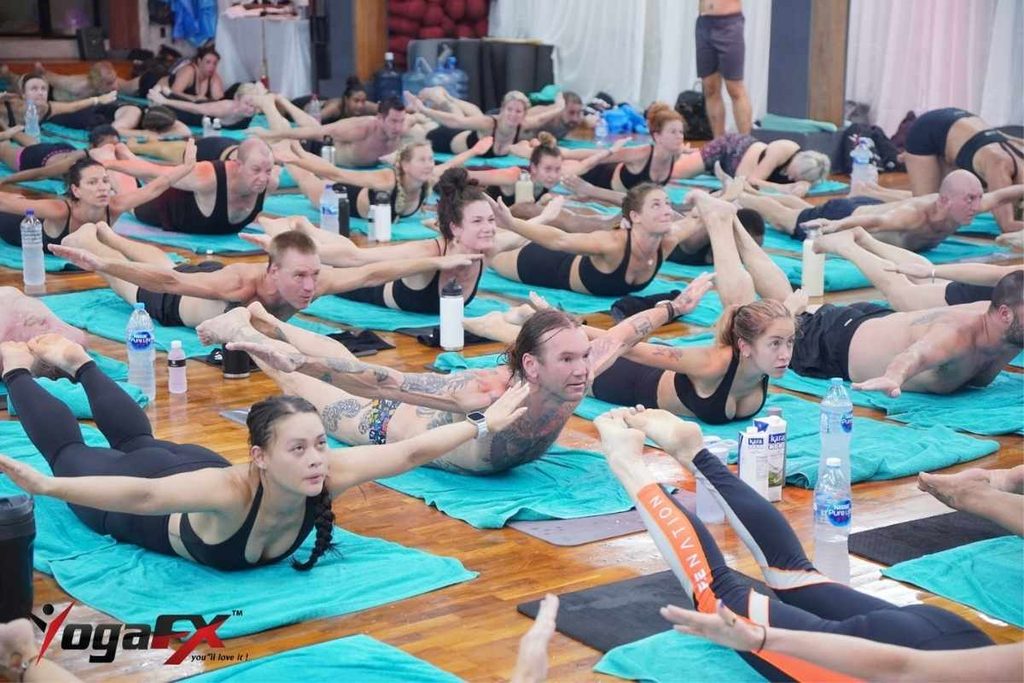
Heat is the single biggest variable between the two styles, and it is not just about sweating more.
A study measuring energy expenditure during a 90-minute Bikram-style class in heated conditions found participants burned an average of 333 kilocalories for women and 460 for men, with heart rates reaching roughly 80 percent of maximum, comparable to a moderate-intensity cardio session (Porcari et al., 2014).
A room-temperature hatha class does not produce that same cardiovascular load, since the body is not also working to regulate core temperature throughout the practice.
Heat also changes how the body handles flexibility work. Warmed muscle tissue tolerates a deeper stretch with less resistance, which is part of why Bikram-style practitioners can often move further into a posture than they could cold.
That is a genuine advantage for flexibility gains, but it also means the risk of overstretching is real if a practitioner ignores the body’s signals, which is why the scripted dialogue repeatedly cues alignment rather than leaving depth entirely to the student’s judgement.
Bali’s climate is what makes this comparison different here than almost anywhere else. YogaFX‘s Seminyak and Canggu studios run the full 40°C, 40% humidity heat using natural tropical ambient temperature, not electric heaters, which is the same environment the original 26&2 sequence was designed around rather than an approximation of it.
For more detail on exactly how that heat and humidity are managed day to day, see our full breakdown of how hot Bikram yoga actually gets.
What a Class Actually Feels Like
A typical hatha class opens with seated breath work, moves through a moderate number of standing and seated postures held for several breaths each, and closes with a longer relaxation period.
The room stays at normal temperature throughout, the teacher usually demonstrates each pose before the class attempts it, and there is room for the instructor to adjust the sequence on the fly based on who showed up that day.
A Bikram Hot 26&2 class runs differently from the first minute. You walk into a room already at full heat.
The teacher delivers the entire class through spoken dialogue rather than demonstration, and the 26 postures and 2 breathing exercises run in the exact same order every time, each one twice, for 90 minutes without music. There is no easing in.
The heat is already present when class starts, and the fixed structure means a practitioner who has done the sequence before knows precisely what comes next, which is part of why long-term Bikram-style practitioners describe the practice as meditative rather than merely physical once the sequence becomes familiar.
That predictability is a feature, not a limitation. Because the sequence never changes, progress is genuinely measurable. A practitioner can tell precisely whether their standing bow pulling pose is deeper this month than last month, in a way that is much harder to track in a hatha class where the sequence itself shifts week to week.
The breathing exercises bookend the class the same way every time too, which matters more than it sounds.
The standing deep breathing exercise opens the class, priming the cardiovascular system before any posture work begins, and the kapalbhati breathing exercise closes it, meant to settle the nervous system after 90 minutes of heat and exertion.
A hatha class typically integrates breath work throughout the sequence rather than bookending it this way, which produces a different overall rhythm even when individual postures overlap between the two styles.
If You’re Comparing Bikram Against Other Styles Too
Hatha is far from the only style people weigh against Bikram Hot 26&2 before choosing a studio in Bali.
If a flowing, breath-linked sequence sounds more appealing than a fixed script, our Bikram yoga vs Vinyasa yoga comparison covers that trade-off in detail. If you are weighing Bikram against a more athletic, faster-paced traditional practice, see our Bikram yoga vs Ashtanga yoga comparison.
And if low-impact strength work is more your priority than deep stretching, our Bikram yoga vs hot Pilates comparison walks through that difference as well.
Which One Should You Actually Choose?
The honest answer depends on what you are solving for, not which style is objectively “better.”
- Choose hatha if: you are brand new to yoga, recovering from an injury, pregnant, or specifically want a slower, more meditative pace without heat exposure.
- Choose Bikram Hot 26&2 if: you want a consistent, repeatable structure you can measure progress against, a genuine cardiovascular challenge, and you are comfortable working in heat.
- Do both if: plenty of practitioners use hatha as a lighter complement to a regular hot yoga practice, particularly on rest days or when travelling.
A 2025 systematic review covering 43 studies and 942 participants found consistent benefits from hot yoga practice specifically across flexibility, bone density, and general well-being outcomes (Willmott et al., 2025), findings that do not automatically transfer to room-temperature hatha practice since the heat itself is doing measurable physiological work in the Bikram-style results.
Common Questions People Have Before Switching Styles
A few concerns come up repeatedly from hatha practitioners considering their first Bikram Hot 26&2 class, and they are worth addressing directly rather than glossing over.
“Will the heat be too much for me?” Most first-timers find the first ten to fifteen minutes the hardest part, before the body adjusts to sweating and the breathing rhythm settles. Staying low to the ground during any dizziness, hydrating well beforehand, and sitting out a posture rather than pushing through are all normal and expected, not signs of failure.
“I’m not flexible enough for a fixed sequence.” The scripted dialogue exists precisely so that every posture has a stated modification for beginners. Nobody in a first class is expected to match what a five-year practitioner can do; the instructor is trained to cue the same posture differently depending on what they see in the room.
“Is switching from hatha going to undo my progress?” No. The strength, balance, and body awareness built through hatha practice transfers directly into a heated, fixed-sequence class. What changes is the environment and the structure, not the underlying skills a practitioner brings with them.
What First-Timers at YogaFX Bali Usually Notice
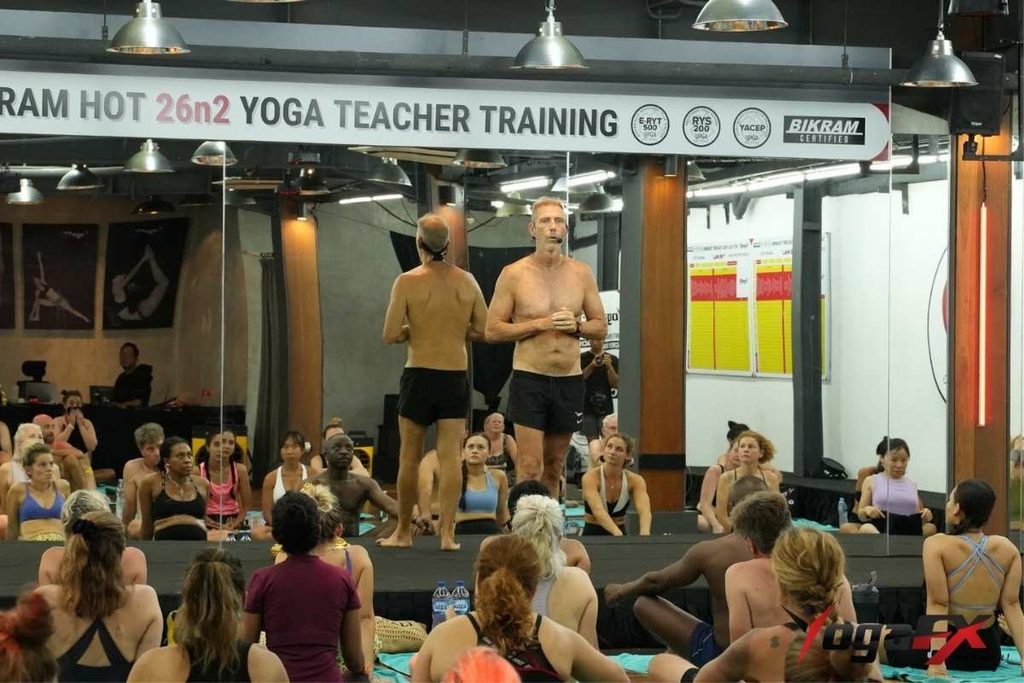
Practitioners who come from a hatha background and try their first Bikram Hot 26&2 class at either studio almost always mention the same two things afterward: how much faster the class moves compared to what they expected, and how much more capable their body feels once it has warmed through.
One practitioner who dreaded the idea going in described feeling like she might not make it through, then leaving feeling genuinely strong rather than depleted, a reaction that comes up often enough from first-timers that the studio’s instructors expect it as part of the normal adjustment curve rather than a sign something went wrong.
That adjustment period is normal and typically settles within three or four classes as the body acclimatises to the heat. If you are curious which style actually suits you, trying both back to back is a more reliable answer than reading comparisons like this one.
A Free Guest Pass lets you try a full 90-minute Bikram Hot 26&2 class at either the Seminyak or Canggu studio, so you can feel the difference for yourself rather than deciding from a table.
Hot yoga involves sustained heat exposure and physical exertion. Consult a healthcare professional before starting an intensive practice, particularly if you are pregnant, have a cardiovascular condition, or are new to exercise in heat.
FAQ
Is hatha yoga the same as Bikram yoga?
No. Hatha is a broad umbrella term for postures-and-breath yoga practised at any pace or temperature, while Bikram is one specific method within that umbrella: a fixed 26-posture, 2-breathing-exercise sequence taught in a heated room with scripted dialogue. Every Bikram class is technically a hatha-based practice, but not every hatha class is Bikram.
What is the difference between hatha and Bikram yoga?
Hatha is typically slower, practised at room temperature, and varies by teacher. Bikram is a fixed sequence practised in roughly 40°C heat with scripted verbal instruction and no demonstration. Hatha suits beginners and restorative goals; Bikram suits practitioners wanting a consistent, intense, repeatable structure with a genuine cardiovascular component.
Which is better for beginners, hatha or Bikram yoga?
Hatha is generally gentler for a complete first-timer since there is no heat to adjust to and the pace is slower. That said, plenty of people start directly with Bikram Hot 26&2 and adapt within their first three or four classes. The right starting point depends more on comfort with heat than on yoga experience level.
Can you do hatha and Bikram yoga together?
Yes. Many practitioners use hatha as a lighter, room-temperature complement to a regular hot yoga practice, particularly on recovery days or while travelling without access to a heated studio. The two styles do not conflict; they simply serve different goals within the same broader practice, and plenty of long-term YogaFX students keep both in rotation.