
Hot yoga for flexibility works because warm connective tissue stretches more easily, so you reach a little further each class. In our Seminyak studio, Bali’s natural heat does the warming without electric heaters. Expect gradual gains over weeks, not a split in a month, and never force depth just because the room feels loose.

If you are planning a Bali stay and wondering whether a heated class will finally loosen your hamstrings, this guide is for you. It is written from the floor of our studio, where Mr. Ian Terry, E-RYT 500, Founder and Lead Instructor of YogaFX, and his team watch stiff beginners meet the same 26 postures every day.
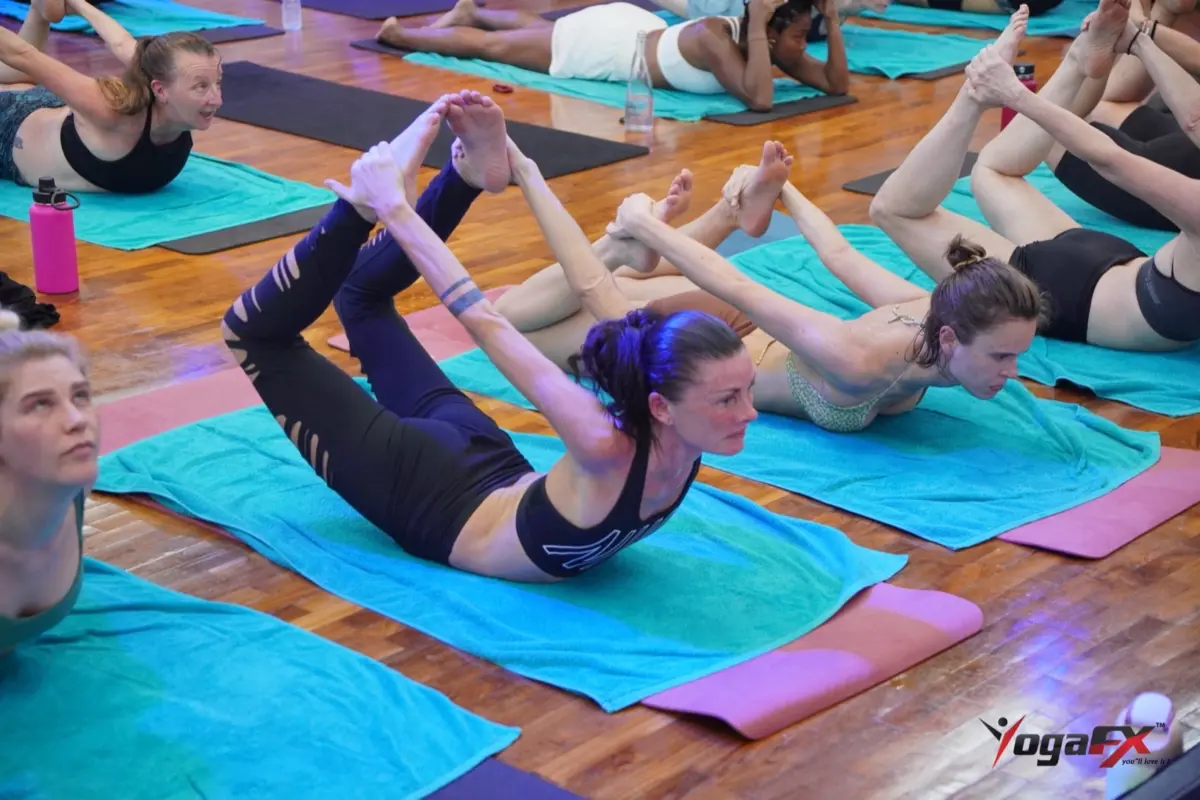
What Natural Bali Heat Adds to Hot Yoga for Flexibility
A cold muscle resists. A warm one gives. That’s the whole idea behind hot yoga for flexibility. It is also why nobody sensible tries to touch their toes first thing after a night on a plane seat.
Our room runs on Bali’s own climate rather than heating elements. A class lasts 90 minutes. The room sits around 40 degrees Celsius with about 40 percent humidity. The sequence is the same 26 postures and 2 breathing exercises every time. Because the postures never change, hot yoga for flexibility is easy to measure. You can feel your own range moving from one visit to the next. That’s a rare thing in yoga, and it is the main reason the fixed sequence suits people who want to track flexibility.
Two things the heat does not do are worth saying early. It does not make you permanently longer after one class, and it does not make a deep stretch safe. Warm tissue is more forgiving, not indestructible.
Why Warm Tissue Stretches Further: What the Research Says
Harvard Health makes a plain point about order: stretching muscles before they are warmed up can actually hurt them. Light activity first brings blood flow to the area and makes the tissue more pliable. The same article says it takes weeks to months to become more flexible, and that the gains need to be kept up.
A 2018 review in Sports Medicine looked at what warm-up stretching does to joint range of motion. It found substantial evidence of better range of motion and linked it to reduced stiffness of the muscle-tendon unit, along with temperature-related mechanisms. The authors also noted that results varied with stretch duration, amplitude and velocity. In other words, how you stretch matters as much as how warm you are.
For yoga itself, a 2025 systematic review of Bikram yoga research (Willmott et al., 43 studies, 942 participants) reported flexibility among the outcomes studied. A 2013 study by Tracy and Hart reported flexibility, strength and body-composition changes in practitioners.
The publishers’ pages would not open for us during checking, so we name both without linking them and without quoting figures. Treat them as a sign that the effect is studied, not as a promise for your own body.
- Warmth helps. Tissue that is warm and moving is more pliable than tissue that is cold.
- Technique counts. Controlled movement beats bouncing, and hold time and amplitude change the result.
- Time is the real ingredient. Gains build over weeks to months and fade if you stop.
This article is general information, not medical advice. If you have a joint, back or heart condition, or you are pregnant, consult a healthcare professional before your first heated class.
The Class in Four Numbers
90 min
One continuous class
Long enough for the body to warm, settle and go deeper by the floor series.
40°C
Natural tropical heat
Bali’s climate warms the room, with no electric heaters.
40%
Humidity
Heavy, even air, so sweat cools you slowly. Hydrate before you come.
26 + 2
Same sequence every class
26 postures and 2 breathing exercises, so progress is easy to see.
Which Postures Do the Flexibility Work
Not every posture in a hot yoga for flexibility plan is a stretch. Some build strength or balance and only borrow flexibility along the way. The table below shows where beginners feel the stretch. It also shows what holds them back and the depth cue a teacher gives.
| Posture | Where you feel the stretch | What usually limits you | Safe depth cue |
|---|---|---|---|
| Hands to Feet | Back of the legs and lower back | Short hamstrings pulling the pelvis under | Bend the knees, fold from the hip |
| Standing Head to Knee | Hamstring of the raised leg | Balance and a standing knee that unlocks | Lock the standing knee first |
| Triangle | Inner thighs, hips and sides | Tight hip rotators and calves | Keep the front knee bent and tracking |
| Camel | Front of hips, chest and shoulders | Stiff hip flexors and upper back | Hands on the lower back first, no neck drop |
| Bow | Shoulders, chest and thighs | Tight quads and shoulders | Kick and lift, do not yank the ankles |
| Stretching Pose | Hamstrings and calves | Rounded spine and locked feet | Reach for the feet you can hold, not the floor |
If you want one posture explained step by step, our Triangle Pose guide goes through the cues in full.
Tight Hamstrings: Three Things We See in Seminyak
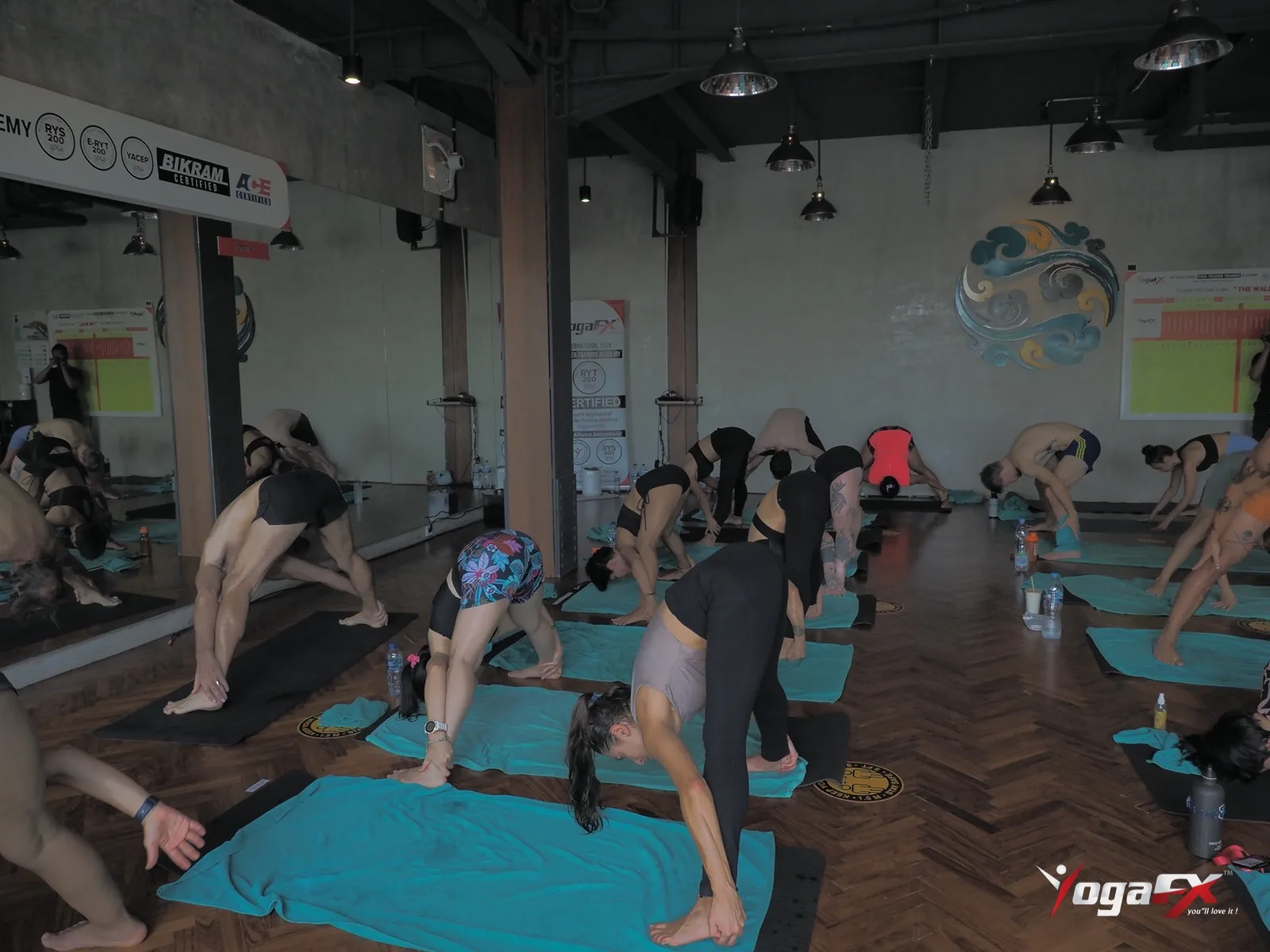
When people ask about hot yoga for flexibility, tight hamstrings are the most common reason people call themselves “not flexible”. From the front of the room, three patterns show up again and again in stiff newcomers.
- The knee locks and the back rounds. A student chases the floor, the pelvis tucks under, and the spine does the bending the hamstrings cannot. The fix is a soft knee and a long back.
- The breath turns shallow. Holding the breath tightens the whole chain. A slow exhale into the fold often buys more range than extra effort.
- The second set gets skipped. The sequence repeats most postures twice. The second attempt is usually deeper, because the first one already warmed the area.
Men often arrive with shorter hamstrings and hips. Our piece on why hot yoga can be harder for men covers that in more detail.
Joint Rotation and Safe Depth in a Warm Room
Heat blurs the warning signal, which is the main risk of hot yoga for flexibility. When the room feels loose, your hips, knees and shoulders rotate further than usual. The body’s “that is enough” message arrives late. That is why strains can happen not in the stiff places but in the joints that suddenly feel free.
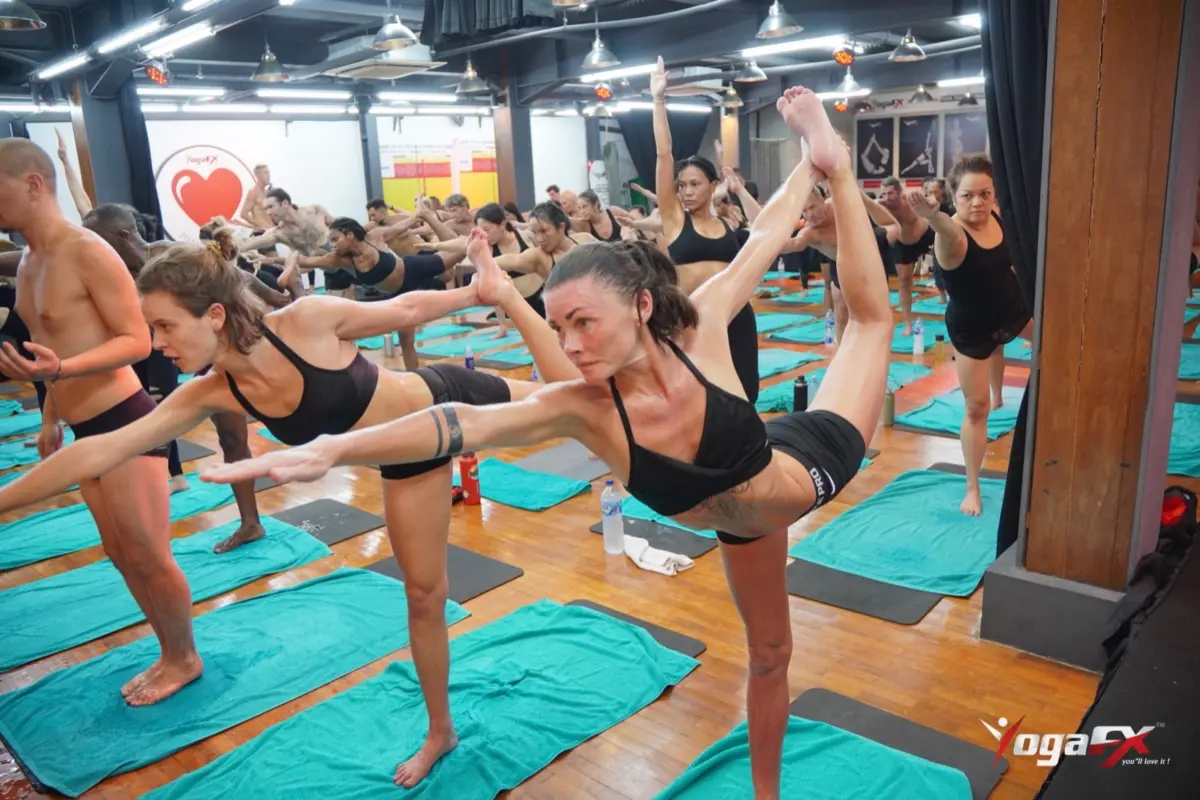
- Stretch until you feel pulling, never pinching. A pinch in the front of the hip, a sharp line in the knee or a twinge in the lower back means back off.
- Keep the knees safe in rotation. In hip-opening shapes, turn from the hip, not from the knee.
- Do not bounce. Harvard Health warns against it, because bouncing can cause injury.
- Use your hold time. About 30 seconds per stretch is the figure Harvard Health gives for a held stretch.
The teacher’s job is to slow you down as often as to push you. If a posture hurts, take the shallower version. Nobody in the room is grading depth.
Hot Yoga for Flexibility vs a Cold Stretch Session
Plenty of visitors ask whether they could just stretch on the villa terrace. You can, and a good warm-up plus a held stretch works. The difference is time and consistency. A class gives you 90 minutes of guided movement and a teacher who corrects you. The room keeps you warm the whole way through. At home it’s easy to stop after five minutes, or to stretch cold because you’re short of time.
The Harvard Health guidance is the same in both settings. Warm up first, hold each stretch for about 30 seconds, don’t bounce, and come back often. What a studio adds is structure, and structure is what most people lack when they try to get flexible alone.
Four Mistakes That Slow Your Progress
- Going deeper than the body allows. The room feels loose, so you push. A strained hamstring costs you weeks, which is the opposite of what you came for.
- Skipping water. You’ll sweat a lot in a humid room. Arrive hydrated and keep sipping, because a dry, tired body tightens up.
- Comparing yourself to the next mat. Someone beside you folds flat. They have a different build and a different history. Your own range last week is the only comparison that matters.
- Coming once and judging the result. One class tells you about the heat. Several weeks tell you about flexibility.
Avoid these and the practice does most of the work for you. Hot yoga for flexibility rewards patience far more than effort.
What Students Say After a Week in the Heat
These are short clips from our YouTube student reviews, recorded at the end of a teacher training week in Bali. They are not about flexibility alone, but they show what pushing through the heat feels like from the inside.
“This week is the hardest week in my life… I keep going.”
Ian, YouTube review, 2025
“Thank you for this amazing opportunity and eye opening experience.”
Joanne, YouTube review, 2025
“I have had a very good time.”
Angela, YouTube review, 2025
How Long Before You Notice the Difference
The first change from hot yoga for flexibility is not length. It is comfort. Most newcomers find the heat stops being the main event after a few classes. Only then can they pay attention to what the hamstrings and hips are doing.
Real range changes follow the timeline Harvard Health describes: weeks to months, with regular practice. Here is a realistic way to think about a Bali stay.
- One week. You learn the sequence, get used to the heat and find your safe depth. You’ll feel looser during and just after class.
- Two to four weeks. If you come regularly, you may notice one or two postures changing, such as a fold that finally reaches the shins.
- Two months or more. This is where a steady practice starts to change how your body feels outside class too. Keep going to keep it.
If you are brand new to heated classes, start with our beginner guide to your first class in Bali. If you have just landed from a cooler climate, read our three-week acclimatisation guide first, and drink plenty of water beforehand.
Planning Your Flexibility Plan Around a Bali Stay
Your hot yoga for flexibility plan depends on how long you are here. The studio is open 06:00 to 22:00 every day, so an early class or an evening class after the beach both work.
If you are here for a week or two
Don’t aim to change your hamstrings on this trip. Aim to learn the sequence, get comfortable in the heat and leave knowing what your safe range is. Take a rest day early on and avoid booking your first class straight after a long flight.
If you are staying for a month or more
Now flexibility becomes the thing worth tracking. Pick a rhythm you can keep. Note the same posture each week, for example how far your hands reach in Hands to Feet. Because the sequence never changes, the comparison is honest.
You can read how heat compares with heated rooms elsewhere in our natural heat versus heaters guide.
Try a Class in Seminyak
The easiest way to find out what natural heat does for your own range is to take a class. Hot yoga for flexibility is personal, so test it yourself. YogaFX teaches at Jl. Pangkungsari Gg Jepun No.888, Kuta Utara, Seminyak, Badung, Bali 80361. Mr. Ian Terry has more than 12,000 teaching hours behind the academy, and the team will keep an eye on you through the standing series.
Claim your free 1-Day Guest Pass and take your first class on us. Tell the teacher you are new and that you want to work on flexibility. Get in touch to claim your guest pass.
FAQ
Does hot yoga help with flexibility?
It can. Warm tissue is more pliable, so you can move through a larger range with less resistance. Lasting gains still depend on regular practice over weeks to months, and on moving with control rather than forcing depth. The heat makes stretching easier, but it does not replace time.
Is hot yoga better for flexibility than regular yoga?
Not necessarily better, but different. The warm room lets many people stretch further early in class. Regular yoga in a cool room can build flexibility too, with a longer warm-up. What matters most is how often you practise and whether you stay within a safe, comfortable range.
How long does it take to become more flexible?
Harvard Health says it takes weeks to months to become more flexible, and that you need to keep working to maintain it. In a heated class, most people feel looser within a week, while changes in specific postures usually take several weeks of regular attendance.
Is Bikram yoga good for flexibility?
Many students find the Original Hot 26&2 sequence, often called Bikram yoga, helpful. The 26 postures and 2 breathing exercises repeat every class, so progress is easy to compare. Several postures stretch the hamstrings, hips, shoulders and spine. As with any style, results depend on consistency and on respecting your limits.
Can the heat make me overstretch?
Yes. Heat can make joints feel looser than they are, so the warning signal arrives late. Stretch to a mild pull, never a pinch or sharp pain, avoid bouncing, and take the shallower version of any posture. If you have joint or back concerns, speak to a doctor first.
Still have questions about stretching safely in Bali? Message Mr. Ian and the YogaFX team on WhatsApp. We will answer them personally, whether you are visiting for a week or planning to stay longer.
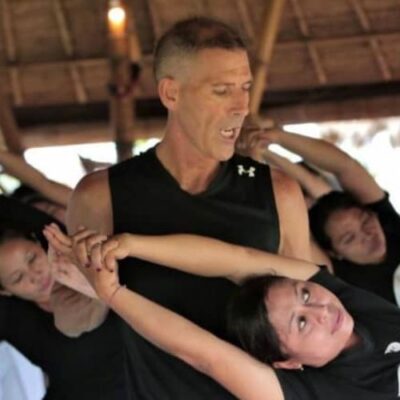 Mr. Ian Terry