
Hot yoga for beginners is easier than most people expect, once you know what the room will feel like. A class lasts 90 minutes in a room heated to about 40°C (104°F) with around 40% humidity. The heat comes from the Bali climate, not from an electric heater.

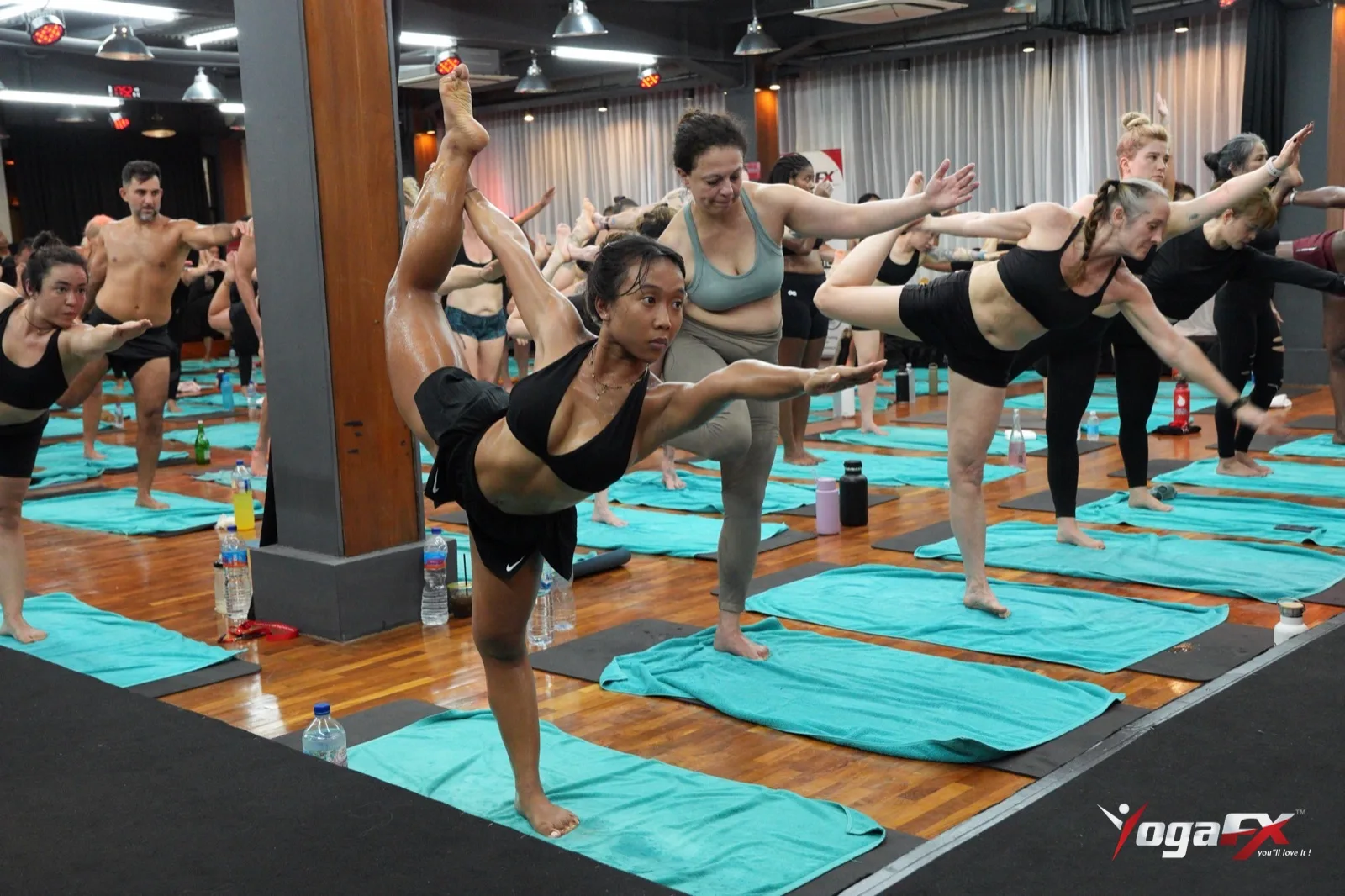
If you have never stood in a hot room, the first class can feel like a test. It isn’t a test. Our teachers see beginners every week. The class is built to be followed step by step, whatever your fitness level. The advice in this guide on hot yoga for beginners comes from Mr. Ian Terry, the founder of YogaFX, who holds an E-RYT 500 credential and has taught more than 12,000 hours.
Hot Yoga for Beginners: What Your First Class Looks Like
Every class follows the same fixed sequence of postures, and the order never changes. A teacher reads a scripted dialogue from start to finish, so you always know what comes next. There is no music and no demonstration from the front of the room.
You learn by listening and by watching what your own body does. Many beginners find that calmer than a class with a loud playlist.
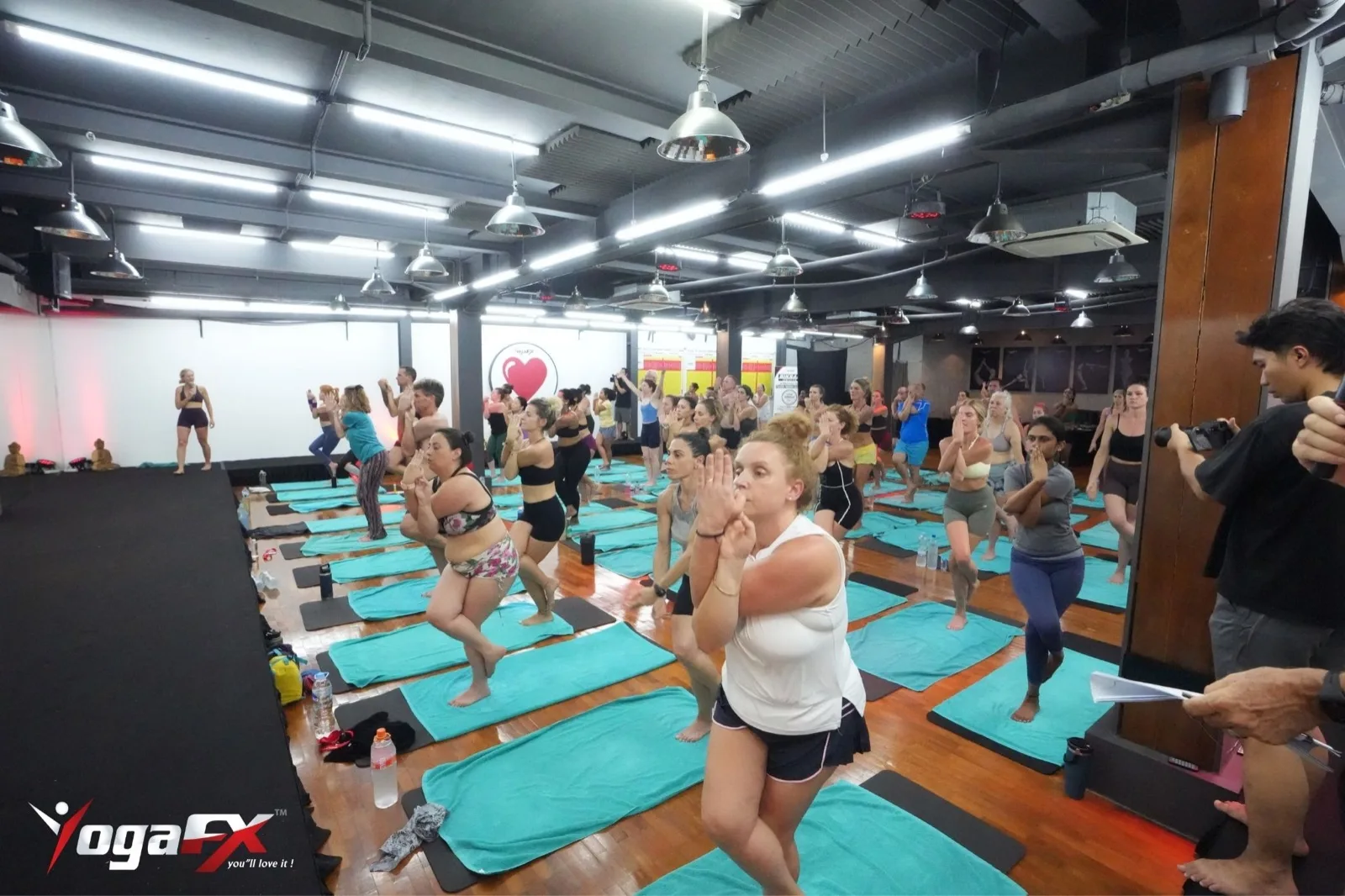
The room is warm from the first minute. We keep the studio at about 40°C (104°F) with 40% humidity, so the air feels thick and heavy. It isn’t the dry, electric heat you may know from other studios. You’ll notice the difference on your first visit.
Staying Steady in the Heat
Hot yoga for beginners is not about perfect postures. It is about staying in the room and working at a pace your body can keep up with. Most first-timers worry about keeping up with everyone else, but you don’t need to.
Take each posture as far as you can. Rest in child’s pose when you need it, and come back to the posture when you’re ready. Teachers walk the room and offer small corrections. If your body needs a simpler version, ask. Teachers would rather you stay with a gentler version than leave because a posture looked too hard.
Here’s what to expect in hot yoga, stage by stage, in a typical first class:
- Arrival. Sign in, roll out your mat, and place your towel where you can see the teacher and the clock.
- Settling. The class opens with pranayama, the breathing exercises, so your heart rate settles while the room warms around you.
- The standing postures. The early standing postures are the ones most beginners find easiest to follow, and they give you time to find your balance in the heat.
- The floor and the floor-to-standing postures. These take more strength and focus, so this is where rest in child’s pose becomes useful.
- The final relaxation. You lie still for a few minutes at the end. Many students say this is the part they remember most.
Sizing Up the Heat Before You Walk In
Knowing the numbers before you arrive removes most of the surprise. The table below sets out what each detail means for a first-timer. The figures come from our class format at our Seminyak studio.
| Detail | What it means for you | Why it matters |
|---|---|---|
| Class length: 90 minutes | Plan on about two hours door to door, with time to arrive and change | The sequence only works if you stay for the whole class |
| Room temperature: about 40°C (104°F) | Expect a warm room from the first minute | The heat is natural tropical heat, not an electric heater |
| Humidity: about 40% | The air feels heavy and sweat doesn’t evaporate as fast | Humid air means your body cools more slowly, so pace yourself |
| Music and demonstration: none | You follow the spoken dialogue and your own body | Fewer distractions and more attention on alignment |
| Class time: 06:30 to 08:00, booking only | Book ahead to save your mat | Arriving with a few minutes to spare keeps you calm |
| Studio: Seminyak, Canggu coming soon | The same Hot 26&2 sequence every class | Allow time for traffic if you stay outside Seminyak |
Humid heat catches people out more than they expect. A room at 40°C feels different from a sauna at the same number. The air carries moisture, and your body has less help cooling down. That’s why we ask beginners to drink water before class, not only during it. Treat the first class as a learning session, not a fitness test.
What to Bring and Wear
Packing for hot yoga is simple, and nearly everything you need is easy to find in Bali. These hot yoga tips for beginners start with the basics, and for hot yoga for beginners the towel matters most:
- A large towel. Lay it over your mat, because you’ll sweat through the postures and the mat alone won’t keep you steady.
- A full water bottle. Drink before class and keep the bottle close during the session.
- Fitted, breathable clothing. Loose layers hold heat and can slip during standing postures, so choose shorts or leggings and a top you won’t need to adjust.
- A small face towel. It’s useful between postures and during the final relaxation.
- Your own mat, if you have one. This is optional for a first class.
Food matters too. Eat a light meal two to three hours before class, because a heavy meal sits badly in a hot room. A banana or a small bowl of rice with a little protein is enough for most people. Skip large meals, coffee on an empty stomach, and alcohol on the day of your class.
Arrive about ten minutes early. That gives you time to sign in, find your spot, and let your breathing slow down before the first posture begins. Arriving rushed is one of the most common reasons first-timers feel overwhelmed in the opening minutes.
How to Pace Your First Week
Pacing is the core skill of hot yoga for beginners. Students who settle in well usually take a steady route. They don’t try to attend every class in the first few days. They come once, rest the next day, and notice how the body responds before deciding on the next class.
- Class one. Focus on breathing and on staying in the room. Take child’s pose or stand with your feet apart whenever you need to, and don’t measure yourself against the person next to you.
- Classes two and three. Notice which postures feel stable and which ones need adjusting. Ask the teacher about one posture at a time, so the advice stays manageable.
- Week two onward. Your body begins to adapt to the heat. Our heat acclimatization guide describes how that adaptation tends to look over several weeks of practice in Bali.
Most students find that the second and third classes feel noticeably different from the first. The room is the same, but the body knows more about what is coming. Give yourself that time before you judge the practice.
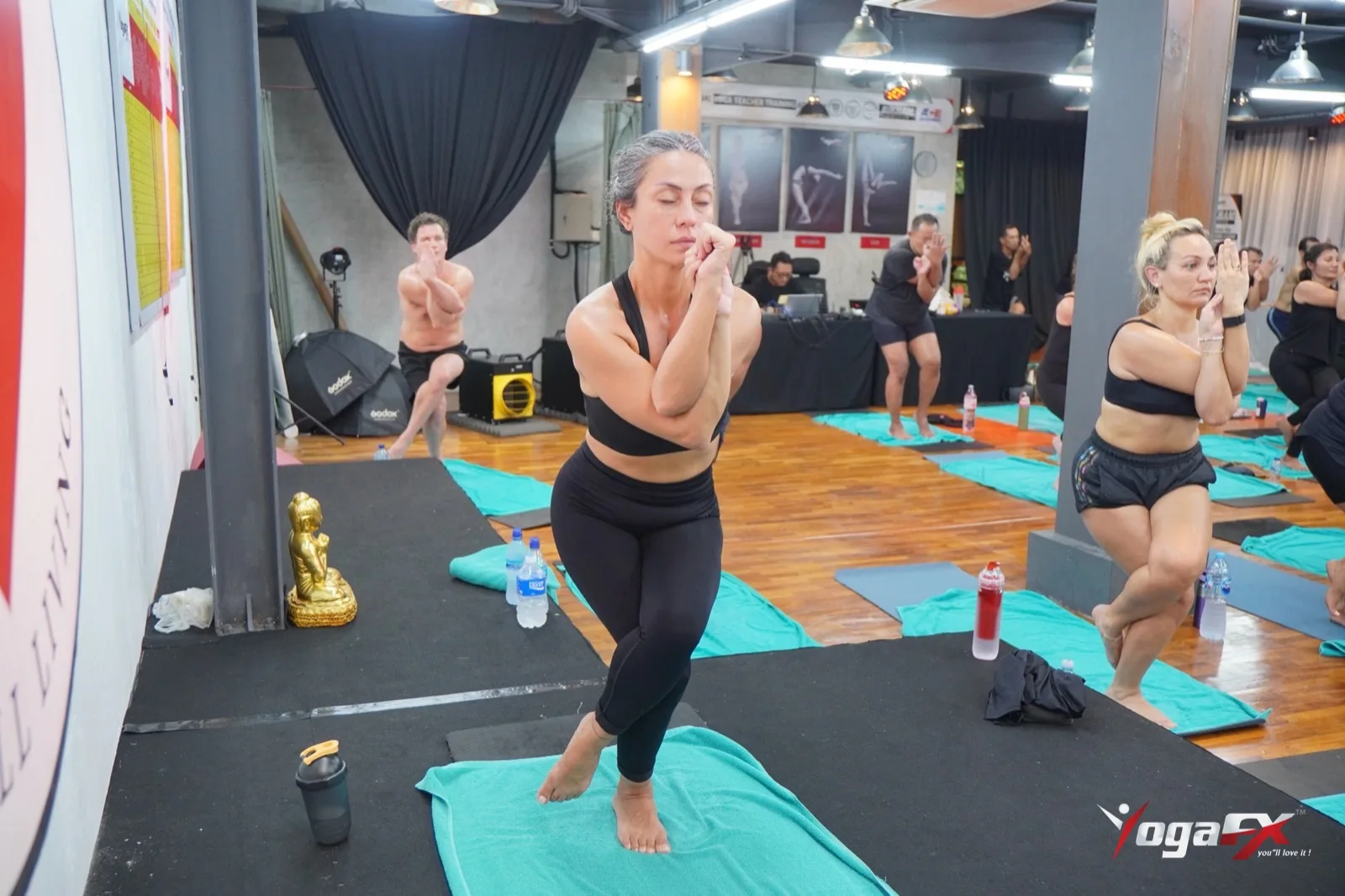
Some beginners ask whether they should book the same time each week. For hot yoga for beginners, consistency helps.
A regular slot, such as the same weekday morning, gives your body a rhythm to adapt to. It also makes changes easier to notice. Keep a short note after each class covering how you felt, which postures were hard, and how much water you drank. Those notes make your conversations with a teacher more useful. You can point to specifics instead of saying the class was hard.
The Research on Heated Yoga
Research on hot yoga for beginners specifically is thin. Heated yoga has been studied more in recent years, and the findings are encouraging. The clearest recent example came from Massachusetts General Hospital. Investigators randomized 80 participants into two groups over eight weeks, one doing heated yoga and one on a waitlist.
In the yoga group, 59% of participants had a 50% or greater decrease in depression symptoms, compared with 6.3% of the waitlist group. That comes from the Harvard Gazette report on the trial. The study was led by investigators at Massachusetts General Hospital and published in the Journal of Clinical Psychiatry.
The trial used Bikram yoga, the Original Hot 26&2 Yoga sequence, in a room heated to 105°F, which is about 40.6°C. That’s close to the temperature we keep in our studios.
The study was small, though. It can’t tell us how every beginner will respond, and it doesn’t prove that heated yoga treats depression. Research suggests heated yoga may help mood for some people. That’s a reason to try a class, not a reason to stop any treatment you already receive.
When to Slow Down or Stop
For hot yoga for beginners, heat is the main safety factor, so know the warning signs before the first class. The NHS lists these as symptoms of heat exhaustion: tiredness, dizziness, headache, feeling sick, heavy sweating with pale and clammy skin, muscle cramps, a high temperature, strong thirst and irritability. Its guide to heat exhaustion and heatstroke sets them out in full.
Any of these signs means you should stop the posture and tell the teacher. Sit or lie down in a cool spot and sip water. Don’t push through the rest of the posture to finish the sequence, because our teachers would rather you rest than tough it out.
The Mayo Clinic advice on heat-related illness says that if you can’t avoid strenuous activity in hot weather, you should drink fluids. It also advises resting frequently in a cool spot. It also lists exertion in hot weather as a situation that can lead to heatstroke. Hot yoga for beginners carries the same basic heat risks as any hard workout in a warm room.
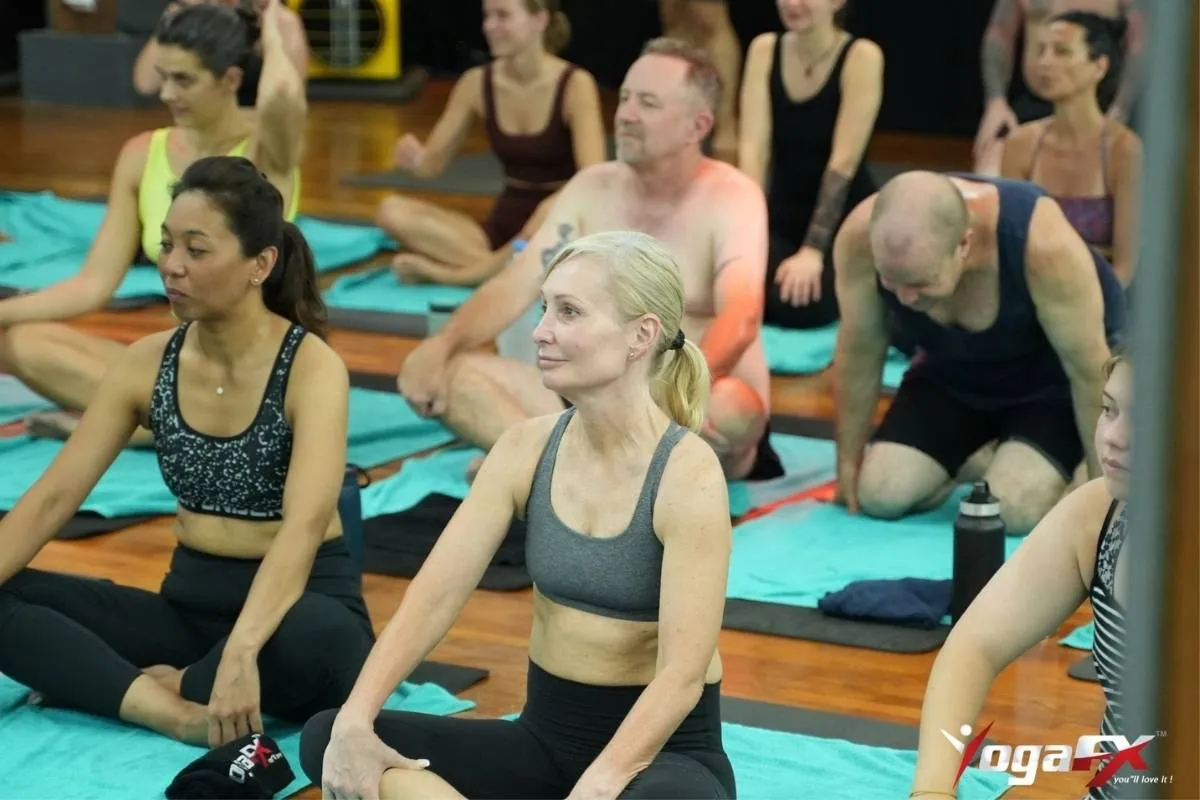
Heat exhaustion can be managed with rest, water and cooling, but heatstroke is a medical emergency. Get help straight away if someone becomes confused, faints, or stops responding normally in the heat. Don’t wait to see whether the symptoms pass.
Some people should speak to a doctor before their first hot yoga class. That includes anyone with a heart condition, anyone who is pregnant, and anyone taking medication that affects heat tolerance or fluid balance. This guide doesn’t replace advice from a healthcare professional. For more on the health side of hot yoga, see our guide to hot yoga benefits, safety and research.
Student Voices From Our Classes
Hot yoga for beginners often starts with nerves, and students who arrive as beginners tend to describe the same two things. The first class was harder than they expected, and the feeling afterwards was better than they expected. Three students shared their experience in video reviews. The quotes below are taken from the video transcripts.
Erica, YouTube review, 2025. She talked about being pulled out of her comfort zone on her first visit. In her words, “pull me out from my comfort zone.” She had almost gone home after the first session. Then the people around her made her want to come back.
Febri, YouTube review, 2024. Febri described being a beginner on the first day and finding the second day easier. Febri said, “I feel my body broken but today easy for me.” That gap between day one and day two is the pattern most new students report.
Atika, YouTube review, 2019. Atika came to a class with a clear purpose and left with more than planned. Atika said, “I never thought that I would receive more than what I expected.” Many first-timers find the same thing. It tends to happen once they stop expecting a perfect class.
What Mr. Ian Terry Teaches Beginners
Mr. Ian Terry founded YogaFX in 2017. He holds an E-RYT 500 credential and has taught more than 12,000 hours. He has trained more than 1,500 teachers from over 80 countries. His advice on hot yoga for beginners is consistent. Arrive early, stay in the room, and make the posture smaller than your ambition on the day.
Scripted dialogue is part of why the advice works. Every student hears the same instructions, whether they’re on their first day or their hundredth. Beginners can follow the words, copy the shape, and rest without losing their place in the sequence. That structure lets a new student feel steady in a room that is hot and unfamiliar at the same time.
Students who want to understand the method first can read our Bikram Yoga 101 guide. It explains the 26 postures and the two breathing exercises in plain language. Read it once, then try the class with fewer expectations.
Book Your Free Guest Pass
The simplest first step for hot yoga for beginners is the Free Guest Pass. Your first class is free with the Free 1-Day Guest Pass. It lets you feel the heat, hear the dialogue and decide how the practice fits your life. There’s no pressure to buy a package on the day. You can compare a drop-in, a package or a membership once you’ve been in the room.
Before you come, read What Is Hot Yoga? Styles, Temperature and What a Class Feels Like for a wider picture.
Then read Hot Yoga Etiquette: Studio Manners in Our Seminyak Class for what to do when you walk in. Choose whichever studio is easier to reach from where you’re staying. The best class is the one you actually attend. When you’re ready, book your free class through our contact page and tell the team which studio and which day suit you.
FAQ
Is hot yoga good for beginners?
Yes, hot yoga for beginners is generally fine for most healthy adults, as long as you pace yourself and ask for simpler versions. Research on heated yoga is encouraging but still limited. Check with a doctor first if you have a heart condition, are pregnant, or take medication that affects heat tolerance.
What should I bring to my first hot yoga class?
For hot yoga for beginners, bring a large towel, a full water bottle, a small face towel and fitted, breathable clothing. Your own mat is optional. Eat a light meal two to three hours before class and drink water before you arrive. Aim to reach the studio about ten minutes early so you can settle in.
What should I wear to a first hot yoga class?
Choose fitted, breathable clothing that stays in place during standing postures, such as leggings or shorts with a fitted top. Avoid loose layers, because they hold heat and can slip during balancing postures. Wear a supportive top you won’t need to adjust. Keep your hair tied back so it stays out of your face.
What should I expect in my first hot yoga class?
Expect a 90-minute class in a room heated to about 40°C (104°F) with around 40% humidity. There is no music and no demonstration. A scripted dialogue guides every posture, and teachers offer simpler versions when you need them. Rest whenever you need to, and don’t compare yourself with the people around you.
How do I know if I am overheating in hot yoga?
Dizziness, headache, nausea, strong muscle cramps, unusual tiredness or feeling confused are warning signs. Stop the posture, sit or lie down in a cool spot, sip water and tell the teacher. Any sign of confusion or fainting needs urgent medical help, because heatstroke is an emergency.
Still have questions? Message Mr. Ian and the YogaFX team on WhatsApp and we will answer them personally.
 Mr. Ian Terry