
Pranayama breathing in a hot yoga class means two exercises: Standing Deep Breathing to open the class and Kapalbhati to close it. At YogaFX in Seminyak, you breathe in through your nose, follow the teacher’s spoken count and keep the pace slow, even when the Bali room sits at about 40°C.

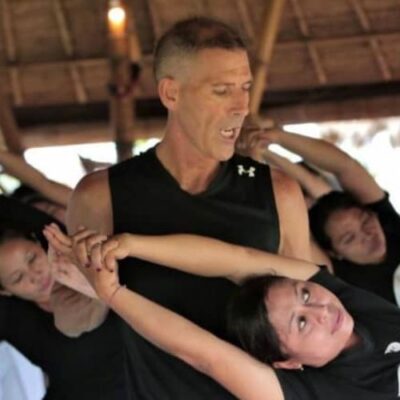
This guide is for visitors planning a Bali stay. It comes from the teaching room of Mr. Ian Terry, E-RYT 500, who has more than 12,000 hours of teaching behind him. He often tells new students that the opening breath is the first posture of the day, not a warm-up.
Below you will find both exercises, the reason we breathe through the nose in tropical heat, what the research says, and a simple plan for your first week.
This article is general information, not medical advice. If you have a heart, lung or blood pressure condition, or you are pregnant, please speak to a doctor before you practise in a hot room.
Pranayama Breathing in a Bali Hot Room: The Short Answer
The word pranayama comes from Sanskrit and refers to breath control. Here it names Standing Deep Breathing, which starts the class before any posture. Kapalbhati, called Blowing in Firm, ends it. Those two are the 2 breathing exercises that give 26&2 its 2, and the class around them never changes.
So what does pranayama breathing ask of you here? Three things:
- Inhale through the nose. Keep it slow and even, with the teacher’s voice as your metronome.
- Follow the voice. The count says when to breathe in and out, so your mind has only one task.
- Keep it calm when the heat rises. The same habit you build in the first minutes is the one you reach for in the hard postures.
Because the class never changes, you also know what is coming. That helps new visitors a lot. If you want a full picture of the room before you book, read what hot yoga is and how hot the room really is.
Exercise One: Standing Deep Breathing, Step by Step
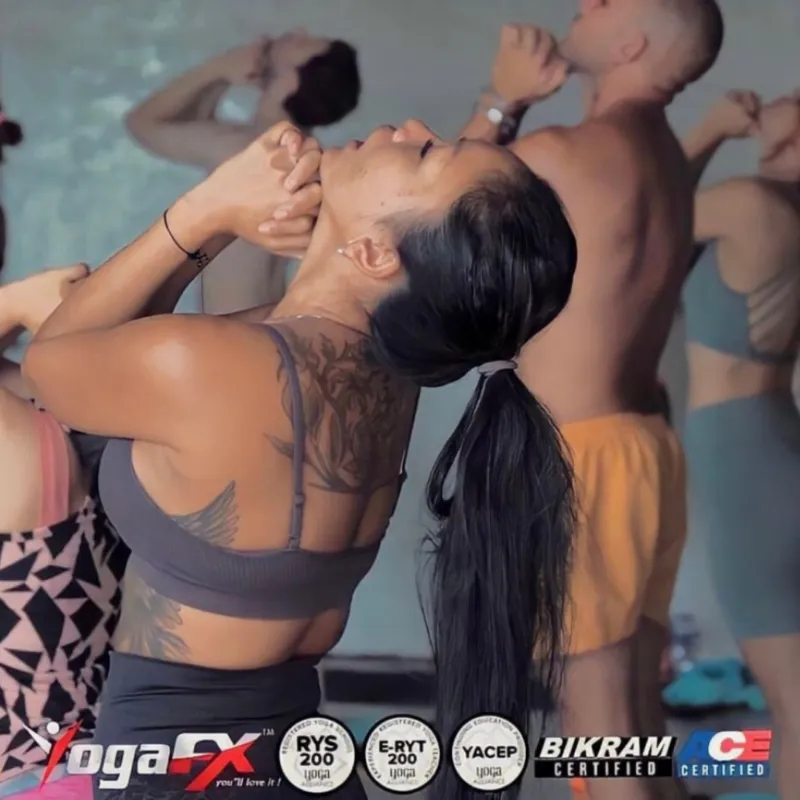
Standing Deep Breathing is the first thing you do after the room settles. You stand tall, you lift your elbows, and you breathe. The exact words belong to the dialogue, so treat the steps below as a plain map of what you will feel, not a script to copy.
- Stand tall. Feet together, weight balanced, gaze steady. Let the room go quiet around you.
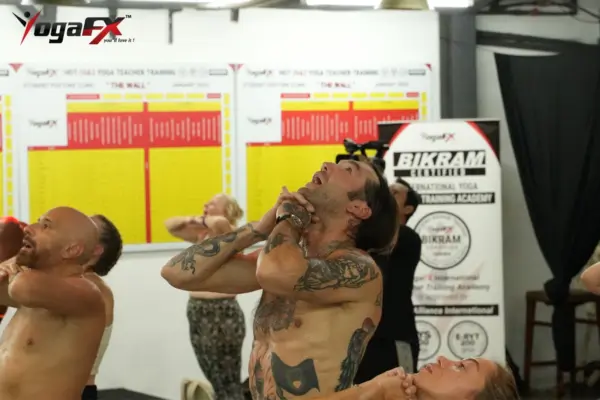
- Take the position. Lock your fingers beneath the chin and raise the elbows. The chest opens and the ribs lift.
- Breathe in through the nose. Take the whole count to fill up, and let the shoulders stay low.
- Let the breath go. Think of the exhale as letting go, not pushing out.
- Repeat with everyone else. The voice carries you through each set. Then your arms come down and the first posture starts.
There is nothing to balance here and nothing to stretch toward. That is deliberate. On your first day in a hot, unfamiliar room, you get one small task, and you can finish it.
The common slip: breathing too fast
The usual trouble is speed. Warm air lifts the heart rate, and the mind follows it. The remedy is dull but reliable: let the voice lead, even when it feels slower than you would like. Mr. Ian teaches that a slow nasal breath helps calm the heart, which keeps the whole class manageable.
- Shoulders creeping toward the ears shorten the breath, so check them every few seconds.
- Pushing the air out wastes energy you will want later in the class.
- Pausing between breaths makes effort feel bigger, so keep the air moving.
Exercise Two: Kapalbhati, the Closing Breath
Kapalbhati finishes the class. We call it Blowing in Firm, and it feels nothing like the first exercise. You sit on your heels and push short, sharp exhales out from the lower belly. The inhale between pulses is passive: the belly releases and the air comes back on its own.
The contrast with the opening exercise is useful. You meet it after a long, hot class, so the quick exhales give the body one last wake-up before rest. Because you arrive there tired, it is the exercise that calls for the most judgment.
The National Center for Complementary and Integrative Health gives sensible advice here. Its guidance for beginners is to avoid extreme practices, and it lists forceful breathing among them. It also notes that hot yoga carries special risks of overheating and dehydration. So we treat Kapalbhati as something you grow into.
- Start small. Your neighbour’s pace is not your pace.
- Pause when your head feels light. Return to easy breathing until it clears.
- Say you’re a beginner. The teacher can offer a softer version and point you to a good spot.
Why the Nose Matters: Your Inner Thermostat in Tropical Heat
Why breathe in through the nose? The Cleveland Clinic explains that the passages in your nose are designed to humidify the air you breathe, and that they warm it on its way to your lungs. It also says that mouth breathing is fine when you need to get more air to your lungs quickly. So the nose is the default, not a strict rule.
Our Seminyak room runs near 40°C and 40% humidity, and the warmth comes from the Bali climate, not from electric heaters. Your body spends the whole class trying to cool down, and breathing is part of that job. We call it your inner thermostat. That is a teaching image, not a research result, so here is what we mean.
As the heart rate climbs, many people begin to gulp air through the mouth. Breaths turn quick and shallow, the chest feels tight, and the class seems harder than it is. In our teaching experience, students who slow their pranayama breathing and keep the inhale nasal settle sooner. As a result, they are often still smiling in the last posture.
We should be honest about the limits of pranayama breathing in heat. As far as we know, no trial has measured nasal breathing in a room this hot, so we can’t promise a result. We can describe what we see on the mat, and what the wider research on slow breathing suggests.
What Research Says About Slow Pranayama Breathing
Zaccaro and colleagues published a systematic review of slow breathing in Frontiers in Human Neuroscience in 2018, and we opened it before citing it. The team screened 2,461 abstracts and kept just 15 articles. For this review, slow breathing means a rate under 10 breaths a minute.
According to the authors, slow breathing shifts the autonomic nervous system and raises heart rate variability. It was also linked with feeling more comfortable, relaxed, vigorous and alert, and with fewer signs of arousal and anxiety. Read that with care, though. The body of work is small, and none of it tested a heated room.
What this means for a visitor
- Slow is the common thread. The review looked at fewer than 10 breaths a minute, which fits the unhurried pace of Standing Deep Breathing.
- Healthy adults, modest claims. Expect a calmer start to class, not a treatment for any condition.
- Heat adds its own load. Nothing we opened shows that the hot room makes breathing practice work better, so choose the class for the method.
To be clear, we make no claim that breathwork fixes a medical problem, and the sources above don’t say so. If you live with anxiety, low mood or a breathing condition, treat class as an addition to care, never a replacement.
Reading Your Breath in a 40°C Room: What to Do
Your pranayama breathing tells you a lot in the heat, if you listen. The table below is our own teaching checklist for a Seminyak class. It is not a medical tool, but it gives new students a clear next step when something feels off.
| What you notice | Likely reason | What to do in the room |
|---|---|---|
| Breath fast and shallow | Heart rate is up and the mind is hurrying | Slow down, breathe in through the nose and follow the count |
| Gasping through the mouth | The pace is too fast for your fitness today | Stand or sit still, soften the shoulders and let the breath settle |
| Light-headed after Kapalbhati | The sharp exhales were too strong or too quick | Stop the exercise, breathe normally and rest |
| Dizzy, nauseous or very weak | Possible overheating or dehydration | Sit or lie down, sip water and tell the teacher |
| Calm, even breath | Your pace matches the count | Keep going and stay with the voice |
The US Centers for Disease Control and Prevention names these warning signs of overheating on About Heat and Your Health: muscle cramps, very heavy sweating, shortness of breath, dizziness, headaches, weakness and nausea. Its message is plain: a body that gets too hot can make you ill.
If any of those signs appear, stop the exercise. Sit or lie down, take a few sips of water and cool off. Calm pranayama breathing is a skill, never a reason to push through a warning sign. For the full steps, read what to do if you feel dizzy in the room, and drink water before you walk in.
A Simple Pranayama Breathing Plan for Your Bali Stay
You can’t copy the dialogue at home, and you don’t need to. The skill in pranayama breathing is a slow, steady breath you can find on purpose. A public health exercise trains the same thing, so start there before you fly.
Before you arrive
The NHS breathing exercise for stress works well as practice. It suggests breathing in through your nose and out through your mouth, and it says to let the breath sink into your belly without forcing it.
- Settle into a comfortable position, standing or sitting, with loose shoulders.
- Inhale through your nose while counting from 1 to 5, if counting helps.
- Release the breath softly and count 1 to 5 again.
- Keep going for five minutes or more, once a day, at a regular time.
A count of 5 in and 5 out comes to about 6 breaths a minute. That sits inside the slow range the review describes. Then, when the teacher’s count arrives in class, it feels familiar.
Your first week in Seminyak
- Class 1. Arrive early, tell the teacher you’re new, and focus on the opening pranayama breathing only. Our first class in Bali explains what to expect.
- Class 2 or 3. Notice where your breath speeds up and slow it with the count. Keep Kapalbhati gentle.
- Later in the week. Compare how the heat feels to your first day. Your body usually adapts, and calmer pranayama breathing is part of that.
What Students Say About Learning to Breathe Here
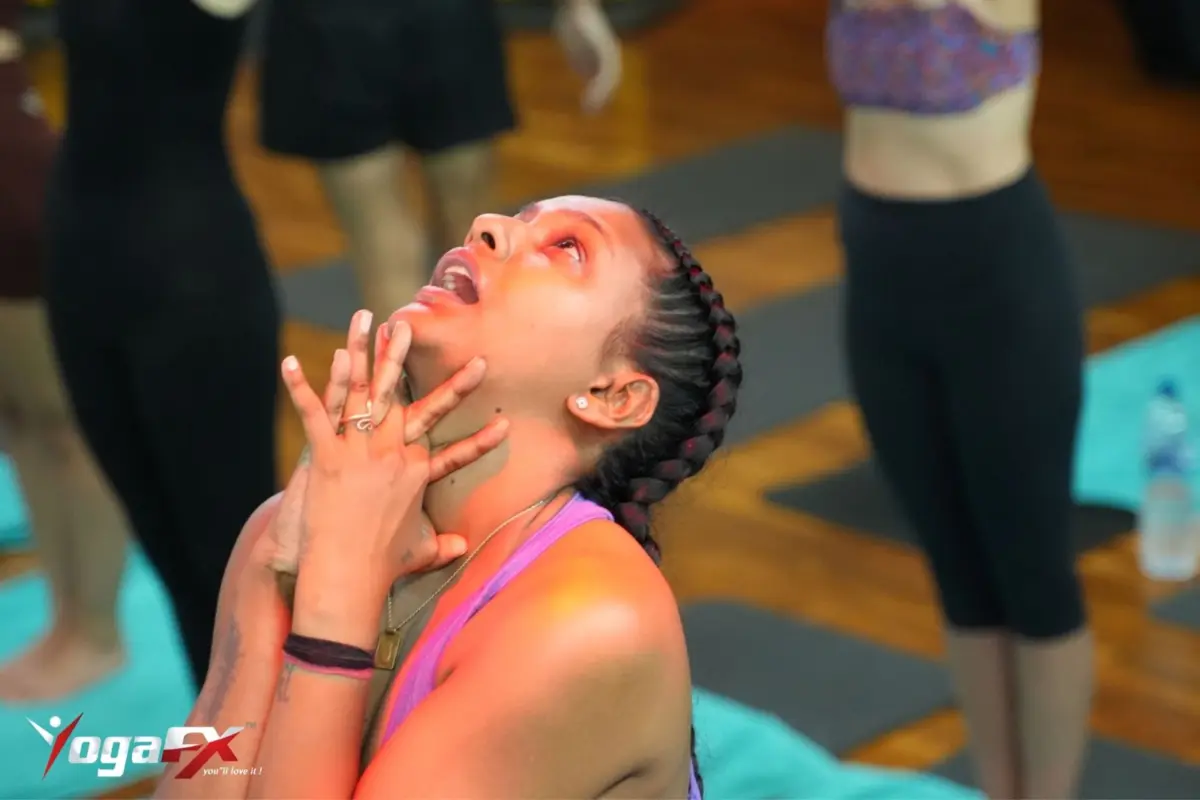
These reviews are not about breathing alone, so we don’t offer them as medical proof. They simply show how it feels from the inside to spend a few classes listening and breathing with a room.
“Amazing hot bikram yoga experience! Extraordinary guru Mr Ian and YogaFx team.”
Jamasb, Google review, 2026
“Bikram yoga makes the body healthier, more supple, and loosens stiff muscles.” (translated)
Made, Google review, 2024
Eva recorded her review on video. She said that hearing another student’s story helped her, because it was good to know she was not the only quiet one in the room. She also thanked all the teachers. You can watch it below.
Who Should Take Extra Care With Pranayama Breathing
Pranayama breathing sounds harmless, but a hot room changes the picture, so read this section. The National Center for Complementary and Integrative Health says you should avoid hot yoga while pregnant because it can cause overheating. It adds that people who are pregnant should be evaluated by their health care provider first.
- Check with your doctor first if you live with heart disease, high blood pressure or a lung problem, or take medication that changes how you cope with heat.
- Sit out days when you feel unwell, are short of fluids or have barely slept.
- Lie down or leave the room if you feel faint, dizzy or breathless. Teachers expect it.
- Mention it before class if you’re new, anxious or pregnant, so you get a well-placed mat.
Try Pranayama Breathing at Our Seminyak Studio
Nothing explains pranayama breathing like hearing the count in a real room, and you’ll find it easier than you expect. The YogaFX studio runs the full Hot 26&2 class in the original scripted format, with no music and no demonstrations. You will find us at Jl. Pangkungsari Gg Jepun No.888, Kuta Utara, Seminyak, Badung, Bali 80361, and we are open daily from 06:00 to 22:00.
Your first class is free. Book the Free 1-Day Guest Pass and you can hear both exercises in a real class, with nothing to commit to. Plan on 90 minutes in the room.
Want to teach the method one day? Mr. Ian Terry, E-RYT 500, leads the teacher training, and the breathing exercises are part of it. Start with our guide to hot yoga certification in Bali.
FAQ
What are the 2 pranayama breathing exercises in a hot yoga class?
A Hot 26&2 class has two. Standing Deep Breathing opens the class, done on your feet with a slow nasal inhale. Kapalbhati closes it, with short, sharp exhales from the lower belly while you sit on your heels. Together they give the class its name: 26 postures and 2 breathing exercises.
Should you breathe through your nose or mouth in hot yoga?
Breathe in through your nose, because the nose warms and humidifies air before it reaches your lungs. Cleveland Clinic notes that mouth breathing is fine when you need air fast. So if the heat makes you gasp, slow down, rest, and let the teacher’s count bring your breath back to a calm rhythm.
How long does pranayama breathing take in a class?
Standing Deep Breathing is a short opening exercise of a few minutes, so it takes only a small slice of the 90-minute class. Kapalbhati sits at the very end and is brief too. Because both are quick, you can learn them in your first class without any earlier breathing experience at all.
Can you practise pranayama breathing at home before a Bali trip?
Yes, in a gentle form. Sit or stand comfortably, breathe in through your nose, then let the breath out slowly, counting 1 to 5 as the NHS suggests. Repeat for at least 5 minutes. Never force it, and stop if you feel dizzy. Save Kapalbhati for a class with a teacher.
Do I need experience to try pranayama breathing at your Seminyak studio?
No. The first class is free with the Free 1-Day Guest Pass, and the teacher’s spoken count guides every breath. Tell the teacher you are new before class starts. They can place your mat well and offer a gentler version if you need one.
Still have questions? Message Mr. Ian and the YogaFX team on WhatsApp and we will answer them personally.
This article is general information, not medical advice. If you have a heart, lung or blood pressure condition, are pregnant, or live with anxiety or low mood, consult a healthcare professional before you practise in a hot room.
 Mr. Ian Terry