
Hot yoga temperature in our Seminyak class is 40°C (104°F) at about 40% humidity, and it comes from Bali’s natural tropical heat, not electric heaters. A class runs 90 minutes, and the heat stays steady from the first posture to the last, so you know exactly what to expect before you book.

That one sentence answers most of what people type into Google. But a number alone doesn’t tell you how a room feels. This guide explains how hot is hot yoga in practice, why humidity matters as much as the hot yoga temperature itself, how natural heat differs from a heater, and when you should slow down. It’s written for visitors passing through Seminyak and for residents who want a regular practice.
Mr. Ian Terry, Founder and Lead Instructor (E-RYT 500) at YogaFX, leads the classes in this room. The figures below are the ones we work with in the studio, and every health statement is tied to a source you can check.
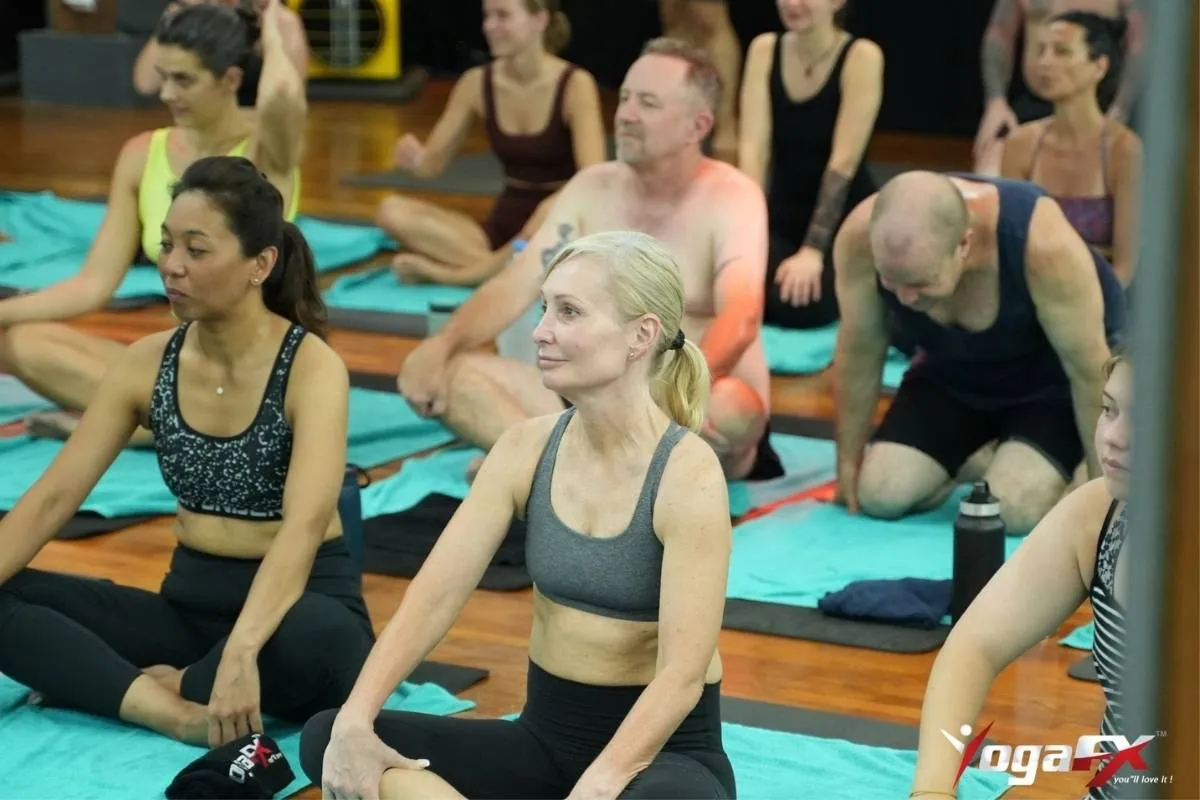
Hot yoga room temperature in our Seminyak class
The words “hot yoga” cover a wide range of rooms. Two studios can both call themselves hot and feel completely different. That’s why the hot yoga room temperature you are quoted matters. Our class is the Bikram Hot 26&2 sequence. It has 26 postures and 2 breathing exercises, taught in a fixed order with a spoken dialogue, no demonstration and no music. The heat is part of that design, and it’s the same every day. This is the Bikram yoga temperature we teach in.
Here’s the short version of the room:
- Temperature. 40°C, which is 104°F.
- Humidity. About 40%.
- Heat source. Bali’s natural tropical heat. We do not use electric heaters.
- Length. 90 minutes, in a studio open 06:00 to 22:00 every day.
Because Bali is already warm and humid before you walk in, most people find the step into the room less abrupt than they expected. It is still a serious amount of heat. Plan for it the way you would plan for a long walk at midday: drink water beforehand, wear something light, and move at your own pace.
The room at a glance
The infographic above is the whole class in four numbers. The steadiness is the useful part, because the hot yoga temperature never changes on you. Your teacher isn’t changing the room mid-class. You can learn how your body responds and adjust your effort.
Natural heat vs heaters: what to ask any studio
We’re often asked whether natural heat feels different from a heated room. The real answer is that it depends on the studio. Every studio sets its own hot yoga temperature, humidity and ventilation. So instead of ranking one over the other, use the table below to compare like with like.
| Question | Our Seminyak class | Ask any hot studio |
|---|---|---|
| Room temperature | 40°C (104°F) | What is the set temperature, in degrees? |
| Humidity | About 40% | Is humidity controlled, or does it vary? |
| Heat source | Natural tropical heat, no electric heaters | Heaters, panels, or none? |
| Class length | 90 minutes | How long, and how are rests handled? |
| Sequence | 26 postures and 2 breathing exercises, spoken dialogue, no demonstrations or music | Is the sequence the same every class? |
If a studio won’t tell you its temperature and humidity, treat that as information. A good teacher is happy to explain the room, because it helps you prepare. If you are new to all of this, our guide to what hot yoga is and how its styles differ covers the basics before you pick a class.

Why humidity matters as much as the number
Most people focus on the degrees and forget the humidity. Ask how hot is hot yoga and you’ll usually hear one number, never two. Your body cools itself mainly by sweating, and sweat only cools you when it evaporates. Mayo Clinic explains that the evaporation of sweat regulates body temperature, and that in high humidity sweat cannot evaporate as easily, so the body is less able to cool itself. You can read the full explanation on the Mayo Clinic heat exhaustion page.
That’s why a muggy room can feel harder than the number suggests. It’s also why we quote both figures. When you compare studios, a hot yoga temperature without a humidity figure is only half the picture.
Practically, three habits help in any humid room:
- Wear light, breathable clothing. Mayo Clinic lists overdressing, especially in clothes that stop sweat evaporating, as a risk factor.
- Bring a towel and a water bottle. Our hot yoga hydration guide for Bali explains what to drink before and after class.
- Rest early, not late. Sitting down for a minute is far better than pushing until you feel faint.
Celsius, Fahrenheit and your own body
Visitors from the US, UK and Australia think in different units. The numbers can be confusing. This table puts the main figures side by side, including two reference points from Mayo Clinic so you can see how room air differs from body temperature.
| Measure | °C | °F | What it means |
|---|---|---|---|
| Average core body temperature | 37 | 98.6 | Average human core body temperature (Mayo Clinic) |
| Our Seminyak class room | 40 | 104 | Air temperature in the room, not your body |
| Heat index to start taking precautions | 33 | 91 | Mayo Clinic advises extra care at this level or above |
| Heatstroke core temperature | 40+ | 104+ | A medical emergency when core body temperature reaches this level (Mayo Clinic) |
Notice that the room air and the heatstroke threshold share the same number. They aren’t the same thing. The room is the temperature of the air around you. The heatstroke figure is the core body temperature, the temperature inside you. Your job in class is to keep that well below it by pacing yourself, drinking water and resting.
What the research says about effort in the heat
Studies of Bikram yoga look at more than the room. A 2025 systematic review (Willmott et al.) pulled together 43 studies with 942 participants and looked at outcomes such as flexibility, well-being and bone density. It’s a useful overview. It covers the practice overall, not the room temperature alone.
On effort, a 2014 University of Wisconsin study (Porcari et al.) measured a 90-minute class at around 80% of maximum heart rate, with about 333 kcal burned by women and 460 kcal by men. The heat and the postures together make a real workout, which is why pacing matters.
Research suggests these classes can support fitness and well-being, and this article does not claim they treat any condition. If you have a medical question, speak to a healthcare professional.

Myths about hot yoga temperature
A few ideas about the room come up again and again, so here are three worth clearing up.
- “Hotter is always better.” A higher number doesn’t make a better class. A steady, well-explained room you can manage beats an extreme one you have to survive.
- “Sweating more means working harder.” How much you sweat depends on your body, the humidity and how used you are to the heat. Use effort and breathing as your guide, not the towel.
- “The heat is the whole point.” The heat supports the practice, but the fixed sequence, the dialogue and the breathing do the real work. The room is the setting, not the lesson.
The bottom line is simple. Ask for the numbers, know the warning signs, and pace yourself.
Your first weeks: how the heat feels as you adapt
Most people find the first class the hardest, because their body hasn’t learned the room yet. Expect to sweat heavily, feel your heart rate climb, and want more water than usual. Over several classes the same room usually feels more manageable. That’s why we suggest a steady schedule rather than one big push.
Our 3-week guide to heat acclimatization in Bali walks through that adjustment week by week.
Signs the heat is too much, and what to do
Knowing the warning signs is the most useful thing you can take from this article. MedlinePlus, from the US National Library of Medicine, describes muscle cramps as the first stage of heat illness, alongside fatigue, thirst and very heavy sweating. Later signs of heat exhaustion include dizziness, nausea, headache and a rapid, weak pulse. You can read the full list on the MedlinePlus heat emergencies page.
If you notice any of these in class, do this:
- Stop and sit or lie down. MedlinePlus advises lying down in a cool place.
- Tell your teacher. We’d always rather you speak up than push through.
- Sip cool water. Small sips, not a rush of water.
- Leave the room if you need to. Rest somewhere cooler until you feel steady.
Severe confusion, fainting or a very high body temperature is an emergency and needs medical help straight away. This article is general information and not medical advice, so please consult a healthcare professional about your own situation.
What students say about the 90 minutes
We can describe the room, but students describe the experience better. These are three reviews from our YouTube channel. They’re about the practice and the community, not the temperature itself.
- Siobhan, YouTube review, 2025. She said the practice taught her about herself, praised the kindness and the community she found here, and thanked the team for helping her believe she was able to do it. Watch Siobhan’s review.
- Olga, YouTube review, 2025. She called the six-day journey very challenging and deeply rewarding, said everyone became stronger physically, mentally and spiritually, and described coming as a good decision. Watch Olga’s review.
- Jennifer, YouTube review, 2025. She described a release that led to a big breakthrough in herself, and said watching everyone’s growth was the best part of her time here. Watch Jennifer’s review.
Who should check first
Heat is a stress on the body, so a few groups should speak to a healthcare professional before a first class. That includes anyone with heart or blood pressure concerns, anyone who is pregnant, and anyone who gets dizzy in heat easily. Our guide to hot yoga and blood pressure lists what to check before a Bali class.
Then tell your teacher on the day. We’d much rather adjust the plan with you than have you guess in the room.

Visitors and residents: planning around the heat
If you are visiting Bali for a week or two, treat your first class as the baseline. Come on a day with no big plans straight afterwards, and keep the evening easy. Many visitors are also adjusting to the tropical climate, jet lag and new food at the same time, so give your body room.
If you live here, you already know how the weather feels, but a 90-minute class at 40°C is still a different kind of heat. Residents who settle into a steady rhythm usually find the room easier to read, because they learn their own signals: when to sip, when to sit, and when to push a little harder.
Either way, the hot yoga temperature stays fixed, so your own preparation is the thing you can change. Sleep well, drink water through the day, and keep caffeine and alcohol light before class.
How to prepare for the room
- Hydrate the day before. Arriving thirsty makes the heat harder.
- Eat lightly. Give yourself a couple of hours after a big meal.
- Bring a towel and a water bottle. You will use both.
- Arrive early. Settle in, sit down and let your body meet the room.
- Plan to rest. Resting is part of the class, not a failure.
Visitors usually fit one class around a trip, while residents tend to build a weekly pattern. Either way, the room stays the same, which makes it easy to compare how you feel from one class to the next.
Try the room with a Free 1-Day Guest Pass
The best way to answer the hot yoga temperature question is to stand in the room. The Free 1-Day Guest Pass gives you your first class at YogaFX Seminyak at no cost. We are at Jl. Pangkungsari Gg Jepun No.888, Kuta Utara, Seminyak, Badung, Bali 80361, and the studio is open 06:00 to 22:00 every day. Contact the team to claim your guest pass and choose a class time that suits your stay.
FAQ: hot yoga temperature questions
What is the hot yoga temperature in our Seminyak class?
Our Seminyak class runs at 40°C (104°F) with about 40% humidity. The heat comes from Bali’s natural tropical climate, not from electric heaters. The room stays at that level for the full 90 minutes, so the hot yoga temperature you feel at the start is the one you practise in at the end.
How hot is Bikram yoga in Bali compared with a heated studio?
At our studio the Bikram Hot 26&2 class is 40°C (104°F) and about 40% humidity, made by natural tropical heat. A studio with electric heaters sets its own number, so the temperature and humidity can differ. If you are comparing, ask each studio for both figures and the heat source before you book.
What humidity should a hot yoga room have?
There is no single right figure for every studio, so check what each one states. Our room sits at about 40% humidity. Humidity matters because sweat cools you only when it can evaporate, and Mayo Clinic notes that high humidity makes that harder, so a muggy room feels hotter than the number suggests.
Is 40°C too hot for a beginner in a hot yoga class?
It is hot, and it is meant to be, but you control your effort. Beginners are encouraged to rest, sip water and sit out a posture whenever they need to. If you have heart, blood pressure or pregnancy concerns, speak to a healthcare professional before your first class and tell your teacher.
Can I try a class before committing to a membership?
Yes. The Free 1-Day Guest Pass gives you your first class at our Seminyak studio at no cost, so you can feel the heat and humidity yourself. Studio hours are 06:00 to 22:00 every day, and the team can help you pick a class time that suits your visit.
Still unsure about the room? Message the YogaFX team and we will help you choose a class time and answer any hot yoga temperature question before you arrive.
 Mr. Ian Terry