
The main nitric oxide benefits come from one job. This gas relaxes the muscle in your blood vessel walls. Vessels widen, and blood moves more easily. Heat can nudge that process, which is why a warm class leaves you flushed. The research is still early, and it does not prove that yoga or supplements work.

If you are planning a stay in Bali and wondering whether a hot class fits, this guide keeps things calm and practical. We explain the nitric oxide benefits that are documented and describe vasodilation in plain words. We show what the studies actually found. We also describe a real 90-minute class at the YogaFX studio in Seminyak. We do not make supplement claims, and nothing here replaces advice from your doctor.
For the wider picture on heat and health, our guide Is Hot Yoga Good for You? What the Research Actually Shows is a good companion read.
Nitric Oxide Benefits Start With Vasodilation
Nitric oxide is a small gas molecule that your body makes by itself. The cells lining your blood vessels, called the endothelium, produce it from an amino acid named l-arginine. According to the 2018 review by Ahmad and colleagues in the International Journal of Molecular Sciences, nitric oxide is a potent vasodilator. It works by relaxing smooth muscle through the cGMP pathway.
In plain words, the vessel lining sends a small signal, the muscle around the vessel loosens, and the tube gets wider. Vasodilation is the name for that widening. A wider vessel lets blood pass with less resistance, so more blood can reach the skin, the muscles and the organs.
The same review notes that the nitric oxide system plays a critical role in blood pressure regulation. People with essential hypertension tend to show lower nitric oxide levels and weaker vessel dilation. That is why doctors take the topic seriously, and also why you should speak to one before changing anything.
Three plain-language points
- It is made inside you. The endothelium produces nitric oxide from l-arginine, so it is not something you must add from outside.
- It works locally and fast. The gas relaxes the muscle right next to the cell that made it, then it is gone.
- It is one factor among many. Sleep, movement, age, food and medication all affect how your vessels behave.
Because nitric oxide benefits are so popular online, many pages jump from this physiology to big promises about energy, gym results or skin. We stay with what is documented. If a source does not show it, we do not claim it.
Why Heat Matters for Nitric Oxide Benefits
Heat widens blood vessels in your skin so your body can lose warmth. Nitric oxide benefits sit behind part of that response. The 2019 review by Cheng and MacDonald in the Journal of Applied Physiology looked at studies of heat stress in humans. It reported beneficial effects of heating on microvascular function, endothelial function and arterial stiffness. It also noted that findings are not unanimous, because protocols and measurements vary.
The most useful study for our topic is the one by Brunt and colleagues in 2016, also in the Journal of Applied Physiology. Young, sedentary adults used a 40.5 degrees Celsius hot tub, 4 to 5 sessions a week for 8 weeks. A comparison group sat in a 36 degrees Celsius tub. After the heat programme, nitric oxide-dependent dilation in the skin rose from about 26 percent to 38 percent of maximum. The comparison group showed no change.
What that study does not tell you
- It was not yoga. People sat in a hot tub. Nobody tested a hot yoga class for this outcome.
- It was small. Only 18 people were analysed, 9 in each group, and the groups were matched by the researchers instead of being randomised.
- It measured skin vessels. The result describes blood flow in the skin of the forearm, not your heart or your fitness.
So the honest reading of the nitric oxide benefits is this. Regular heat exposure may improve how small vessels respond. Nitric oxide appears to be part of the mechanism. A hot class might plausibly do something similar, but nobody has shown it. We would rather say that clearly than oversell a lovely feeling.
Nitric Oxide Benefits: Claims vs Evidence in One Table
| Common nitric oxide benefits claim | What the research shows | How sure we are |
|---|---|---|
| Nitric oxide benefits include widening blood vessels | Well described in physiology reviews (Ahmad et al. 2018) | Strong |
| Nitric oxide supports blood pressure regulation | Described as a critical role, with lower levels in essential hypertension | Strong |
| Regular heat exposure improves small-vessel dilation | Small study of young sedentary adults in a hot tub (Brunt et al. 2016); wider review is mixed (Cheng and MacDonald 2019) | Early |
| Hot yoga delivers extra nitric oxide benefits | Not tested for this outcome in the studies we opened | Unproven |
| Supplements give the same benefit | Outside the scope of this article, so we make no claim | Not covered |
Inside a 90-Minute Seminyak Class
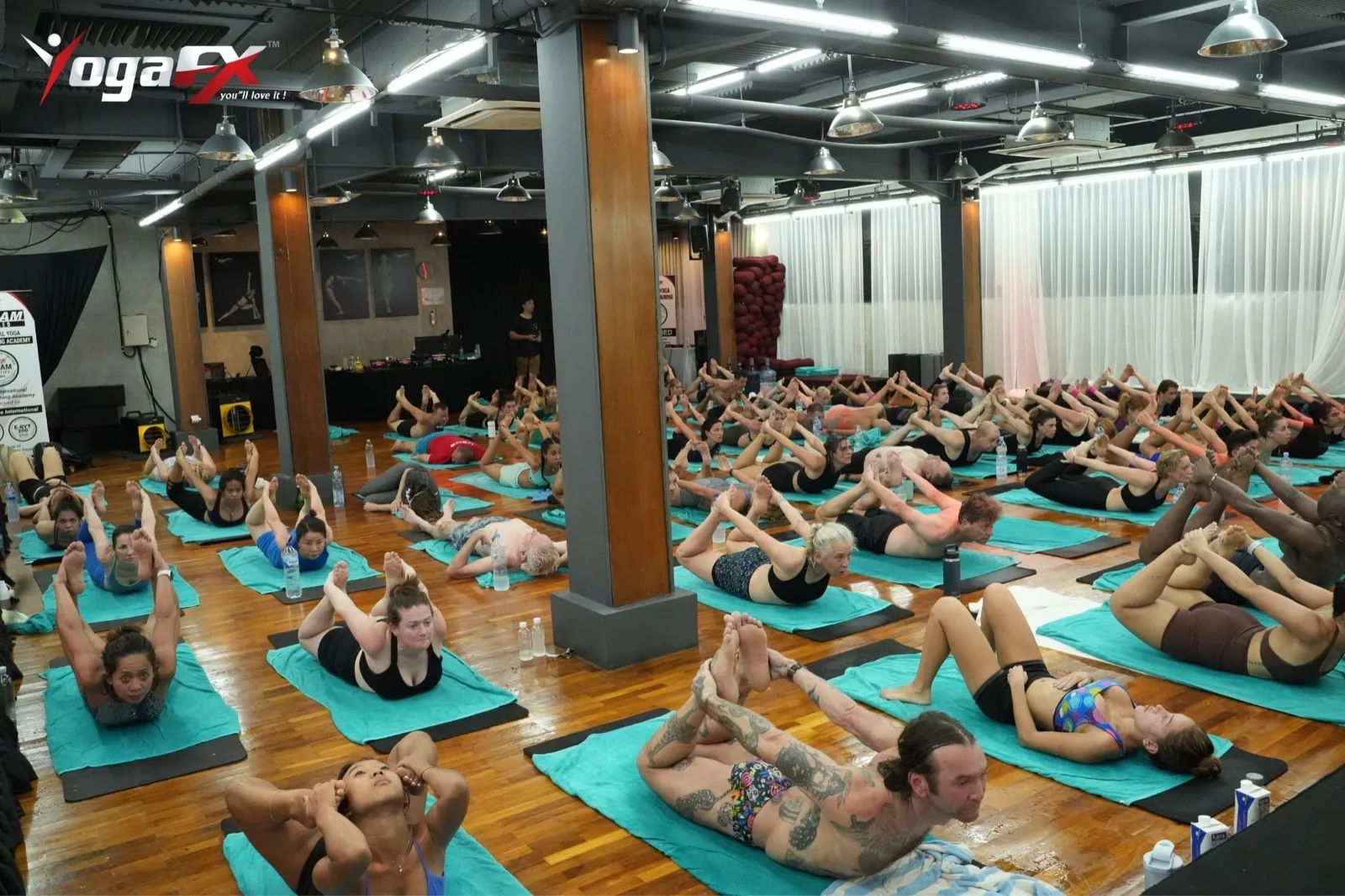
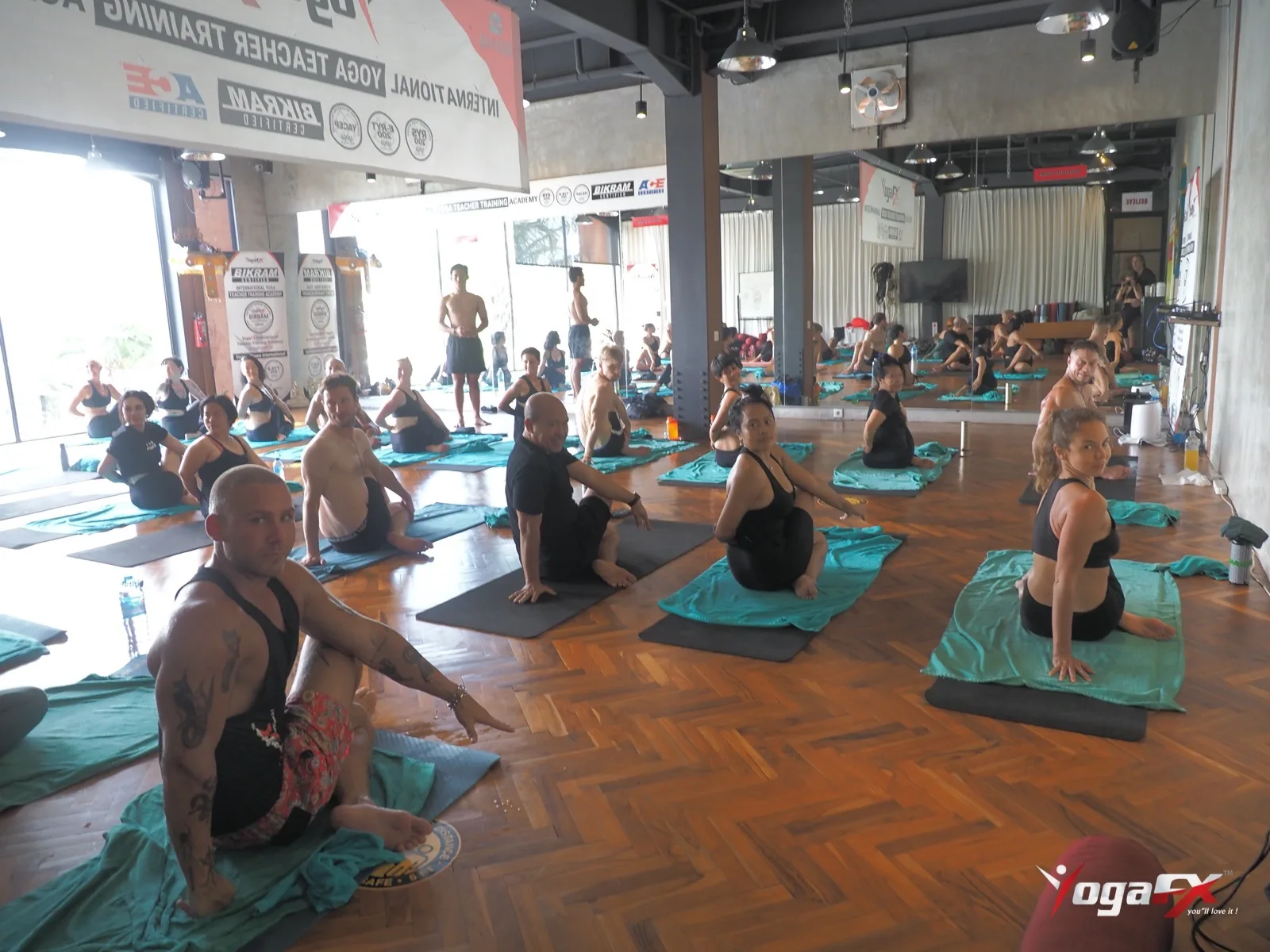
Whatever the nitric oxide benefits turn out to be, here is what a visitor actually steps into at the YogaFX studio. The class lasts 90 minutes. The room sits at about 40 degrees Celsius and 40 percent humidity, with the natural tropical heat of Bali doing much of the work. The teacher follows a scripted dialogue, so there is no demonstration and no music. You simply listen and follow.
One continuous class, so your body has time to warm up, work and cool down.
Warm enough to open the skin vessels, which is the heat effect the studies describe.
Tropical air that you can feel on your skin from the first posture.
Early or late sessions let you avoid the hottest part of a Bali day.
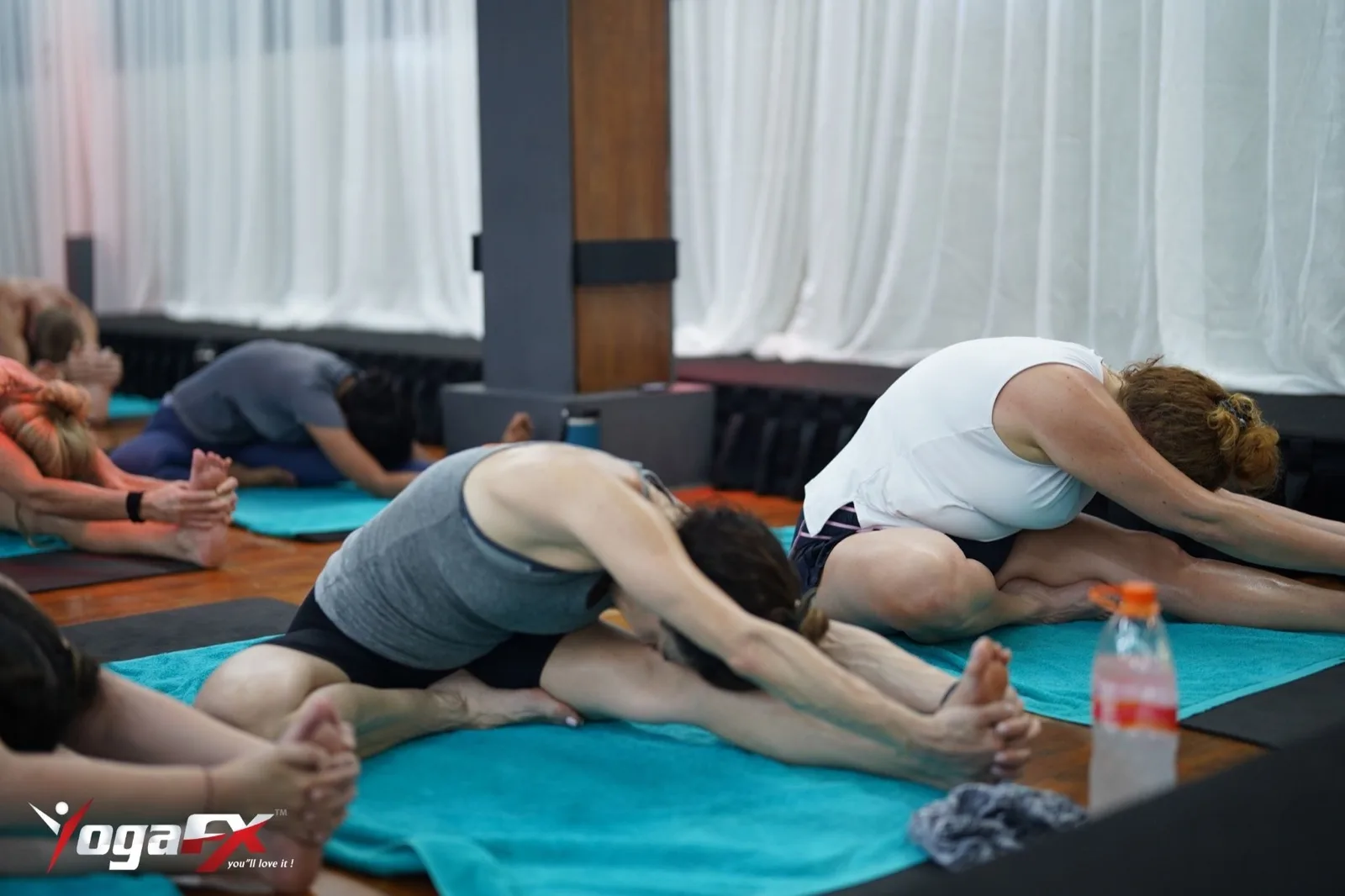
Your heart rate rises, your skin flushes and you sweat. Those are normal heat responses, and they are what the research on passive heat looks at when it studies nitric oxide benefits. What they do not tell us is how much nitric oxide changes, because nobody has measured that in a class like this.
Where breath fits in
The class opens with a standing deep breathing exercise. It is a calm start that slows your pace before the postures begin. We do not claim that this breathing raises nitric oxide, since we did not find a source that shows it. We simply find it helps newcomers settle into the heat.
A realistic first-visit rhythm
- Arrive early. Give yourself 15 minutes to sign in, place your towel and let your body adjust to the room.
- Rest when you need to. Sitting out a posture is normal, and teachers would rather you rest than push through dizziness.
- Sip, do not gulp. Small sips between postures work better than a large amount at once. Our hot yoga hydration guide covers water and electrolytes.
- Build up slowly. If the heat is new to you, give your body a few weeks to adapt before you commit to daily classes.
Heat, Movement and Your Blood Vessels: Separating the Two
A hot class combines two things at once: a warm room and physical effort. Both ask your circulation to adapt, so it is hard to say which one deserves the credit for how you feel afterwards. The hot tub study removed movement on purpose, which is exactly why it is useful. It isolates the heat.
The Cheng and MacDonald review frames heat as a promising option for older and at-risk groups. It also names people who cannot exercise or are advised not to. That is an interesting idea, but it describes a research direction, not a prescription. A yoga class is not a substitute for medical care or a hot bath protocol.
On nitric oxide benefits, what we can say from the classroom side is simple. Students sweat, their skin flushes and their breathing changes. Those signs show that the body is responding to heat. They do not show how much nitric oxide changed, so we avoid turning a feeling into a number.
How to read health news about nitric oxide benefits
- Check who was studied. A result in young sedentary adults may not apply to you if you are older or have a health condition.
- Check what was measured. Skin blood flow is not the same as heart health or fitness.
- Check the size. Small studies are a starting point, and larger trials usually follow before anyone should change their habits.
What Students Say About the Room
We cannot show you a nitric oxide reading, but we can share what students wrote after their classes. These are real reviews, shown with first names only.
“Highly knowledgeable and competent teachers will change yourself for the better.”
Thibaut, Google review, 2018
“Ian the main man is an all-round nice human! He is a great communicator and has been extremely supportive of my commitment to becoming an amazing yoga teacher.”
Jade, Google review, 2021
“It’s lifechanging experience.”
Septa, YouTube review, 2024
The teaching style described in those reviews comes from the top. Mr. Ian Terry, Founder and Lead Instructor of YogaFX (E-RYT 500, with more than 12,000 teaching hours), leads the teaching at the studio.
Safety First: Who Should Check With a Doctor
Heat is a real physical load, and nitric oxide benefits do not cancel that out. Because nitric oxide and heat both widen blood vessels, a hot class can lower your blood pressure for a while. For many healthy adults that is fine. For some people it is not.
- You take blood pressure medication. Ask your doctor whether heat and medication are safe together.
- You have a heart or circulation condition. Get medical clearance before your first class.
- You feel faint easily, are pregnant or are unwell. Speak with your doctor first and tell the teacher.
- You are new to Bali heat. Your body needs a few days to adjust, even before you step into a heated room.
Our guide Hot Yoga and Blood Pressure: What to Check Before a Bali Class goes deeper on this. This article is general information, not medical advice. Please consult a healthcare professional before starting any new exercise, and stop if you feel dizzy, nauseous or unwell.

Planning Your First Class in Seminyak
The YogaFX studio is at Jl. Pangkungsari Gg Jepun No.888, Kuta Utara, Seminyak, Badung, Bali 80361, and it is open from 06:00 to 22:00 every day. Your first class is free with the Free 1-Day Guest Pass, so you can feel the room before deciding anything.
Bring water and a towel, wear light clothes and eat lightly beforehand. If you are brand new to heated classes, start with our first-class guide for beginners. For a broader look at heat, safety and the research, the studio health guide is a good next step.
If your goal is simply a calm, practical way to move during your stay, that is reason enough to try a class. You do not need nitric oxide benefits to enjoy it.
Myths to Skip Before You Book
Search results on nitric oxide benefits are crowded with big promises. A few simple ground rules keep your expectations realistic when you plan a class during your stay.
- Hotter is not always better. The goal is a room you can manage, not a test of endurance. Resting is part of the practice.
- A flushed face is not a score. Skin colour changes with heat, hydration and your own physiology, so it says little about your health.
- One class will not change your vessels. The hot tub study ran for 8 weeks with 4 to 5 sessions a week. Any change in the body takes regular practice, if it happens at all.
- Online lists are not medical advice. If a page promises a dramatic result, look for the study behind it and check who it tested.
If you only remember one thing, remember this. Curiosity about the science is welcome, but your own comfort in the room matters more than any single number.
A Sample Bali Day Around a Class
Bali heat is already a workload for your body before you roll out a towel. A little planning makes a class feel better and keeps your visit relaxed.
- Choose your time. The studio runs from 06:00 to 22:00, so early morning and evening classes help you avoid the hottest hours of the day.
- Drink steadily. Start sipping water in the morning, not ten minutes before class.
- Eat lightly. A heavy meal just before a heated class tends to sit badly, so leave a gap.
- Cool down properly. After class, sit in the shade, rehydrate and let your skin settle before you ride a scooter or hit the beach.
- Keep the rest of the day easy. A short walk or a swim is plenty. Your body has already done its work.
If you are staying a week or more, a few classes spaced across the days work better than a daily push. Your body adapts to heat gradually, and that adjustment is part of the experience.
FAQ
What are the main nitric oxide benefits?
Nitric oxide relaxes the smooth muscle in blood vessel walls, so vessels widen and blood flows more easily. That role links it to healthy blood pressure regulation. Most of what is known comes from physiology research, not from yoga trials. Treat it as background and ask your doctor about your own health.
Does hot yoga increase nitric oxide benefits?
Nobody has shown that yet. Studies on passive heat, such as warm-water immersion, report better nitric oxide-dependent blood vessel dilation in small groups. Hot yoga itself has not been tested for this outcome, so we describe the link as plausible and early, never as proven. Check with your doctor first.
Can you increase nitric oxide naturally?
Your body makes nitric oxide in the lining of your blood vessels on its own. Research on heat exposure suggests blood vessel responses can change with regular warmth. We make no promises for yoga, and we do not cover supplements here. Speak with a doctor before changing diet, exercise or medication.
Is hot yoga safe if I have high blood pressure?
It depends on you. Heat widens blood vessels, which can matter if you take blood pressure medication or feel dizzy easily. Get your doctor’s view before your first class, tell the teacher at the front desk, rest whenever you need to, and drink water. Our blood pressure guide explains what to check.
Still have questions? Message the YogaFX team on WhatsApp and we will answer them personally. Tell us your plans in Bali and any health questions you have. The team will explain how classes work and how to start gently.
 Mr. Ian Terry