
Heat shock proteins are stress-response proteins that help cells cope with damage. One small 2021 trial found that a type called HSP70 rose in the blood cells of people after four weeks of hot yoga. What nobody has shown is a lasting health benefit. This guide separates the two.

Mr. Ian Terry, E-RYT 500, has taught more than 12,000 hours and leads the YogaFX teaching team in Seminyak. People who read about saunas and biohacking often ask whether hot yoga does the same thing. The careful answer is interesting science, early evidence, so keep your expectations modest.
Below you will find what these proteins do, what the hot yoga research really measured, and what it did not. You will also see how Bali’s natural heat fits in, and where the evidence stops. Nothing here is medical advice.
What heat shock proteins are, in plain words
Cells make heat shock proteins (HSPs) when they are under strain. Scientists first noticed them after heat exposure, which explains the name. Yet a later review by Pockley and Henderson, 2017 points out that cells also make them in response to a range of stressors other than heat.
Think of them as the repair crew of the cell. A 2009 review calls them molecular chaperones, because they help other proteins fold correctly, keep them stable and assist repair after injury. That is the textbook picture: 2009 review in Sports Medicine describes the same maintenance role.
The family has many members, named by their weight. HSP70 is the one most people mean when they search for hsp70 or heat shock protein exercise. It is also the one measured in the hot yoga study below.
- They are normal. Your cells make some HSPs all the time, even at rest.
- They rise under stress. Heat, exercise and other strain can push levels up for a while.
- They are not a supplement or a switch. You cannot take them in a pill and expect the same effect as your own cells making them.
How researchers measure them
You cannot feel heat shock proteins, so scientists have to measure them. In the hot yoga trial, the team took blood samples before and after the four weeks. They separated out white blood cells and tested the amount of HSP70 inside them with a lab assay.
That detail matters. A blood-cell marker tells us the immune cells responded. It does not tell us what happened in your muscles, your heart or your brain. So when an article says heat shock proteins “rebuild” your body, ask what was actually measured, where, and in whom. It’s a fair question, and most online claims can’t answer it.
So far this is settled biology. The open question is whether raising them through hot yoga does anything useful for a healthy adult. That is where the evidence gets thin.
What the hot yoga study actually found
The most direct study we can find is by Bourbeau and colleagues, 2021, published in the International Journal of Yoga. The team recruited 22 healthy adults with no yoga experience. They were split into two groups of 11, one doing yoga in a heated chamber and one doing the same kind of yoga at normal room temperature.
Everyone did 12 sessions over four weeks, three a week, following a standardised 75-minute video. The paper gives the hot room as 41°C and 40% humidity in the abstract, and 37 to 40°C in the methods, so treat it as roughly 40°C. That is close to the room temperature of a 26&2 class.
Here is what changed, and what did not:
- HSP70 rose in the hot group only. It was measured in white blood cells (peripheral blood mononuclear cells). The normal-temperature group showed no significant rise.
- Aerobic fitness improved in the hot group. VO2 max went from 3.22 to 3.46 litres per minute. The paper did not report a difference between the two groups, though.
- No classic heat acclimation. The rise in core temperature during a heat tolerance test did not differ between groups.
- Stress markers stayed flat. Perceived stress and the hormone ACTH did not change in either group.
The authors read the HSP70 result as cellular thermotolerance, meaning cells were better prepared for heat stress. They did not claim the whole body had adapted. For a practical view of that second question, read our heat acclimatization guide.
22 adults
Healthy beginners, 11 in a hot group and 11 at normal temperature.
12 sessions
Three a week for four weeks, in a heated chamber of about 40°C.
HSP70 up
Higher in blood cells of the hot group only, which the authors call cellular thermotolerance.
No full acclimation
Core temperature response did not differ between the two groups.
What is shown, and what is not
A single small study is a starting point, not a verdict. The honest way to read it is to sort each claim by how much evidence stands behind it. The table does that for the claims you will see online about heat shock proteins and hot yoga.
| Claim you may read | What the evidence shows | Status |
|---|---|---|
| Hot yoga raises HSP70 | Rose in blood cells of 11 hot yoga beginners over 4 weeks, not in the 11 at normal temperature | Shown in one small trial |
| Hot yoga improves fitness | VO2 max rose in the hot group, but no difference between groups was reported | Suggestive only |
| Hot yoga makes your body heat-adapted | Core temperature response did not differ, so no classic acclimation after 12 sessions | Not shown |
| Heat shock proteins protect your brain or extend life | Human data on lasting benefit are early, and extracellular HSP levels are linked to many diseases too | Not proven |
| Sauna results apply to hot yoga | Different heat, different movement, different studies | Not tested directly |
| Bali natural heat gives more HSPs than a heated room | No study compares the two | Unknown |
How to read the table
Notice the pattern. The strongest row is the first, and it describes a lab marker. Every row about health outcomes sits in the weaker half of the table. That is the gap between a measurement and a benefit.
The Pockley and Henderson, 2017 review adds a useful warning. Heat shock proteins also circulate outside cells, where they act as immune signals, and higher levels have been linked to several diseases. Whether a rise is good, bad or neutral depends on context, so a higher number is not automatically a better one.
Why exercise muddies the picture
Here’s a catch. Movement alone can raise heat shock proteins. The 2009 review in Sports Medicine reports that skeletal muscle makes more of them after endurance and resistance exercise, and that human data are less clear than the animal data.
The same review notes that, after non-damaging endurance exercise, the rise seems to come from chemical signalling inside the muscle, as opposed to a rise in muscle temperature itself. In other words, you may get part of the effect from the workout, not the warmth.
That makes the design of the 2021 study valuable. Both groups did yoga, so the difference between them points to heat. Even so, 22 beginners is a very small sample, and the trial only lasted four weeks.
Because of this, it is hard to say how much of any change in a regular hot class comes from heat and how much from effort. If someone promises you a specific protein boost from a single session, they are claiming more than the research can support.
Bali natural heat versus a heated room
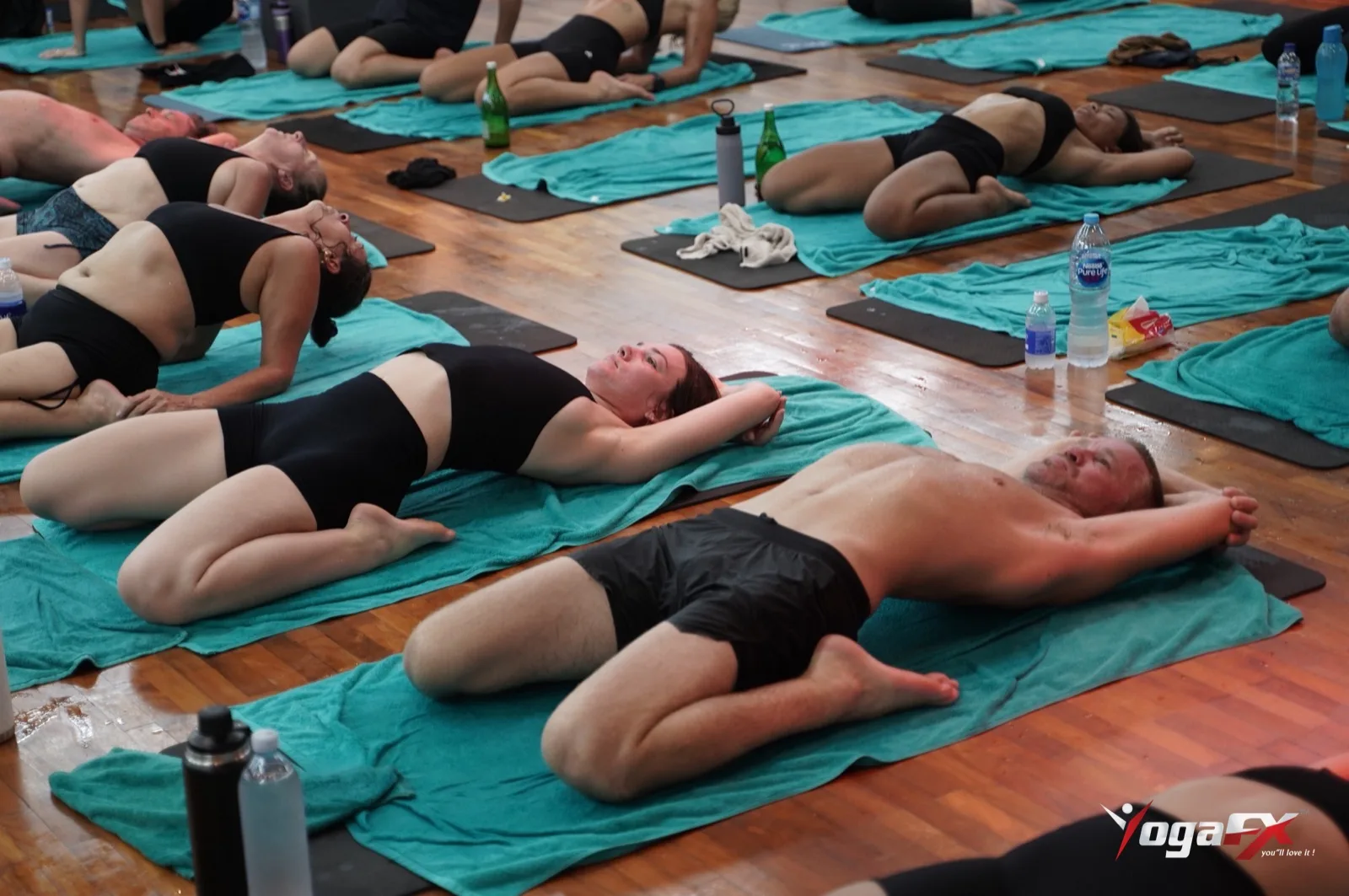
At YogaFX in Seminyak the heat comes from the tropical climate, not from electric heaters. A class runs about 90 minutes at around 40°C and 40% humidity. If you want the full picture of the room, read about the 90-minute class format in our studio guides.
Does that change the heat shock protein question? Possibly, but nobody has measured it. The 2021 study used a chamber. No trial we know of has put students in a naturally heated Bali room and tested blood markers. So anything we say about a difference stays a hypothesis.
| Factor | Electrically heated studio | Bali natural heat | What is known |
|---|---|---|---|
| Room temperature | Set by a thermostat, often around 40°C | Follows the weather, near 40°C in class | Both reach the range used in the study |
| Air outside the room | Often cool, so you step out of the heat | Warm and humid all day | Whole-day heat load differs, effect untested |
| Heat shock protein data | One small chamber study | None | No head-to-head comparison |
| Pacing risk | Cold-climate students new to heat | Visitors new to tropical heat | Pace the first weeks either way |
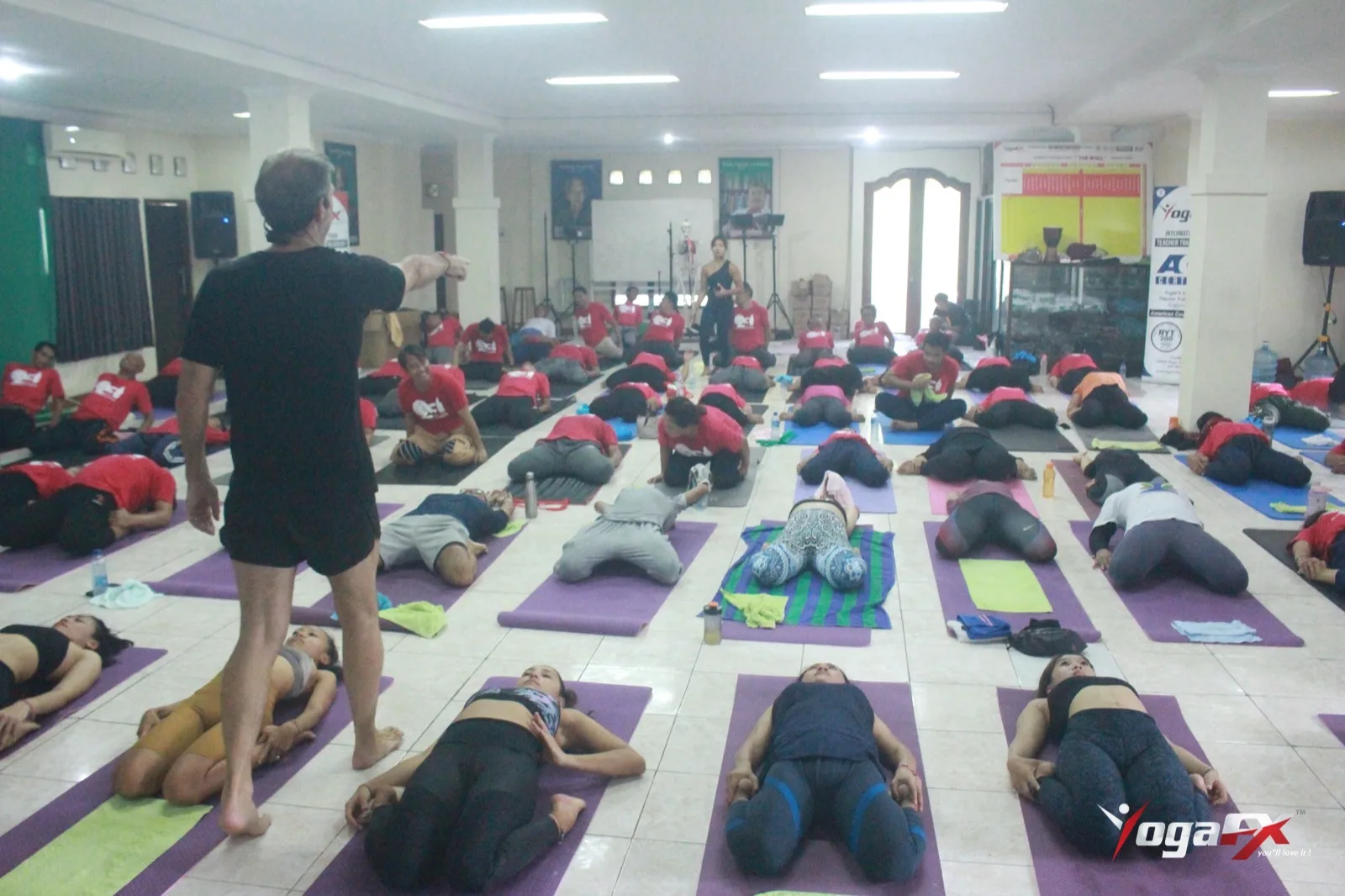
What we do see is practical. Visitors from cool countries often feel the heat all day, not just in class. That is why we ask new students to build up slowly. Our hot yoga in Bali guide explains the studio, and the pacing plan linked earlier shows how to build up week by week.
What this means for your practice
You don’t need to track heat shock proteins to benefit from hot yoga, and you can’t feel them either. What you can control is simple. A sensible plan beats any biochemical target:
- Practise regularly, not heroically. The study used three sessions a week, not daily marathons.
- Drink before, during and after class. Sweat loss is real, and dehydration undermines the whole session.
- Rest when your body asks. Dizziness, a pounding headache or nausea means sit down, not push on.
- Be patient. Fitness gains in the study took four weeks, and full heat adaptation was not shown at all.
- Ask a teacher. Instructors can adjust postures, but they cannot diagnose a condition.
If you are curious about wider results from practice, our research update on hot yoga benefits covers what research does and does not support. It sits alongside this article, but this one stays strictly on the protein question.
There is also a fair point in the other direction. Absence of proof is not proof of absence, and hot yoga may well do useful things we haven’t measured yet. Larger and longer trials, with older and less fit adults, would tell us far more about heat shock proteins than one pilot study can. Until then, the careful position is the right one: interesting, plausible, unproven.
At YogaFX we treat the room as a tool, not a trophy. Reaching a number in a lab was never the point of the 26&2 class. Feeling steadier, calmer and stronger over months is what keeps people coming back.
What students say
None of the students below talk about heat shock proteins, and we would not expect them to. Their words show what practice feels like from the inside. Each quote comes from a graduation video on our YouTube channel, shared with first names only.
Stacey, YouTube review, 2024, said the group felt “like family” and that the people around her inspired her “to do more and better”.
Catherine, YouTube review, 2024, thanked the group for their support over two weeks of training and invited everyone to carry on together at the beach.
Ajay, YouTube review, 2024, called the team “fantastic” and said he was thankful for the support. You can watch it on YouTube.
These are teacher training graduates, so their experience covers a six-day hybrid programme, not a drop-in class. Even so, they describe the support around the heat, which is what helps people stay with the practice long enough for any adaptation to occur.

Safety: who should be careful
Heat raises the heart rate and body temperature, so some people need extra care. Please speak to a doctor first if any of these apply:
- You have a heart condition, high blood pressure or a history of heat illness.
- You are pregnant or trying to conceive. Heat can also affect sperm production, so ask your doctor about that too.
- You take medication that affects fluid balance, heart rate or temperature control.
- You feel unwell, have a fever or are recovering from illness.
Stop and rest if you feel faint, confused, nauseous, or if you stop sweating while very hot. That last sign needs urgent medical help. This article is general information, not medical advice, so please consult a healthcare professional before you start hot yoga.
FAQ: heat shock proteins and hot yoga
What are heat shock proteins?
Heat shock proteins are stress-response proteins that cells make to protect and repair other proteins. They act as molecular chaperones, helping proteins fold correctly. They were first noticed after heat exposure, but cells also make them after exercise and other stressors. Your body produces some of them all the time, even at rest.
Does hot yoga increase heat shock proteins?
In one small 2021 trial, 22 adults did 12 sessions over four weeks. HSP70 rose in the blood cells of the hot yoga group but not in the group practising at normal temperature. That is only one study with healthy beginners, so it is early evidence, not proof of a health benefit.
What is HSP70 and what does it do?
HSP70 is one member of the heat shock protein family. It helps other proteins keep their shape and supports repair when cells are stressed. It is the protein measured in the 2021 hot yoga study. Researchers describe a rise as cellular thermotolerance, meaning cells may cope better with heat stress, not a guaranteed health gain.
Are heat shock proteins good for you?
It depends on context. They help cells survive stress, which sounds helpful. Yet researchers also find them outside cells, where they act as immune signals, and higher levels are linked to several diseases. A 2017 review says their clinical value is not yet established, so a higher level is not automatically better for you.
Is Bali natural heat different from a heated studio?
Nobody knows yet. The hot yoga study used a heated chamber, and no trial compares it with a naturally heated Bali room. What we do see is that visitors feel tropical heat all day, so we advise pacing the first weeks and drinking plenty of water.
Still have questions? Send them through our contact page and the YogaFX team will answer personally. To feel the heat yourself, claim the Free 1-Day Guest Pass at our Seminyak studio, where your first class is free.
 Mr. Ian Terry