
Camel pose (Ustrasana) is a kneeling backbend: you push your hips forward, lean back and reach for your heels. In Bali’s natural heat the muscles feel looser, so the safe way in is hips first, head last, and only as deep as your breath stays calm. Here is how we cue it at our studios.

This guide is for visitors planning a Bali stay and for residents who practise with us in Seminyak. It covers a seven-step entry, the mistakes teachers see most, a four-level depth ladder, what the research says, and how tropical heat changes the pose.
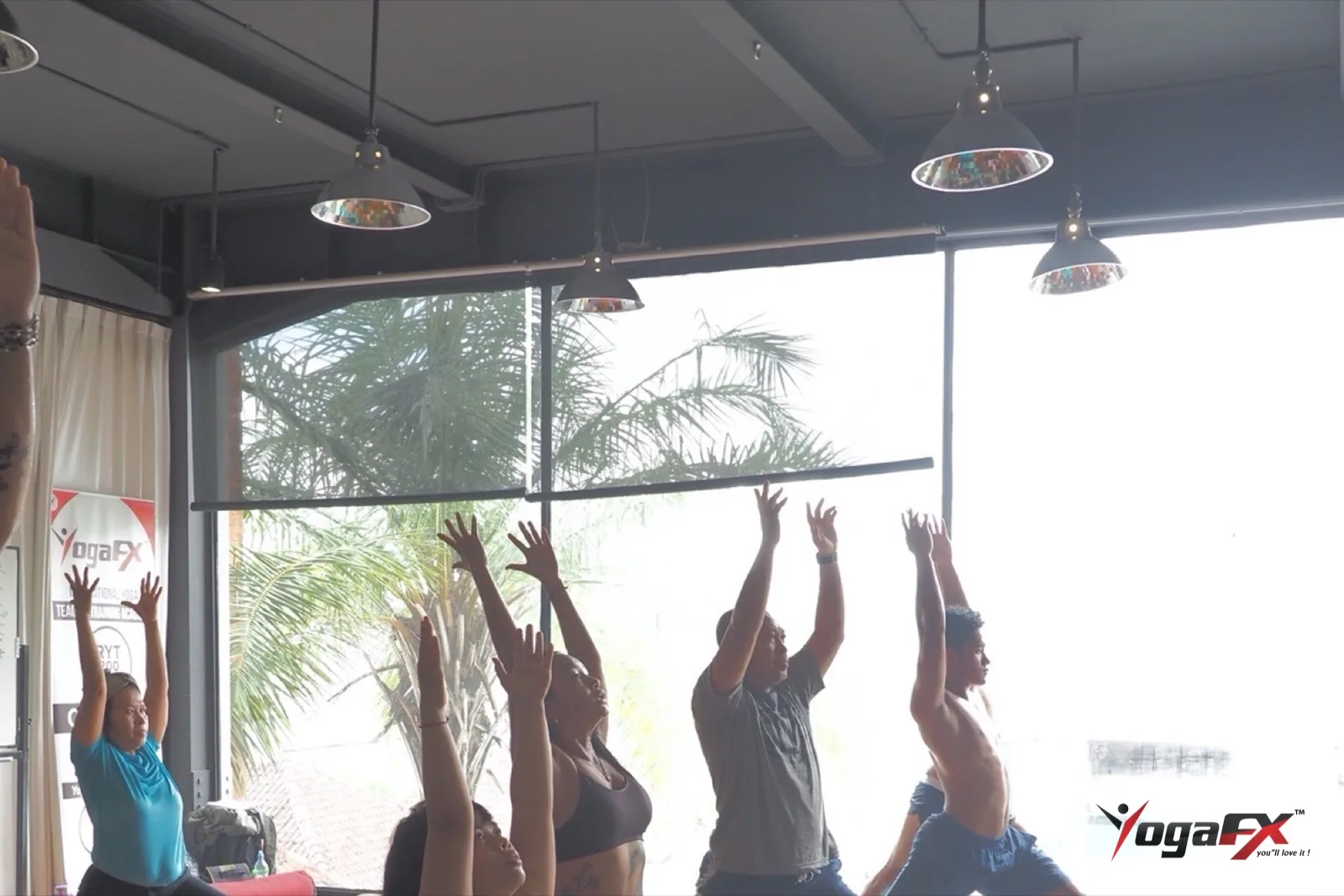
Camel Pose Step by Step: The Seven-Step Entry
Camel is posture 22 of the 26 in the Hot 26&2 class. It comes straight after Half Tortoise, so you are already kneeling and warm when the teacher calls it. Mr. Ian Terry, E-RYT 500, teaches the entry as seven small steps, because most trouble in camel pose comes from rushing the lean.
- Kneel tall. Place your knees about hip-width apart, with thighs upright and hips stacked over the knees.
- Hands to the lower back. Fingers point down, and your elbows draw toward each other behind you.
- Lift your ribs. Think up before back. Lengthen the spine and open the chest so the bend spreads along the whole back instead of pinching at the waist.
- Push the hips forward. They travel forward over the knees as the chest lifts. This is the cue we repeat more than any other.
- Lean back slowly. Let the head follow last, and only when your neck feels easy. If your lower back or neck pinches, stay with your hands on your back.
- Reach for the heels. Take one heel at a time, and only if your hips stay forward. If they drift back, return your hands to your lower back.
- Come up chest first. Press the hips forward, lift the chest and bring the head up last. Then sit on your heels and breathe before the next posture.
Why the Head Comes Last
The head is heavy. When it drops first, the neck takes the load and the hips slide backward, which squeezes the lower back. Letting the chest and hips lead keeps the spine long and the neck calm. So if you only remember one rule, make it this one: hips first, head last.
If you would like to see where the posture sits in the wider class, our guide to all 26 postures in order shows what comes before and after it.
Camel pose in a Bali class at a glance
How Seminyak Teachers Cue a Safe Entry
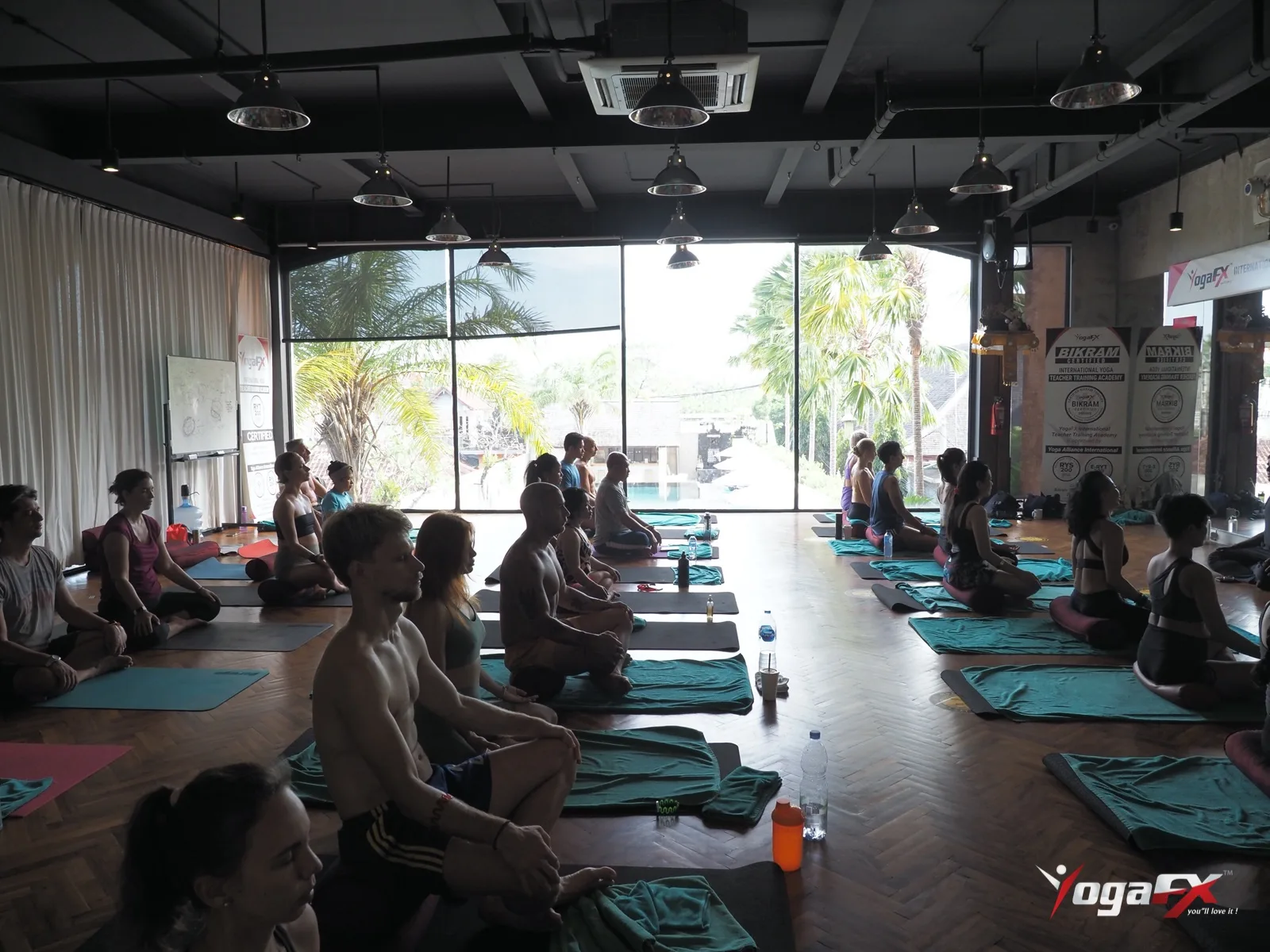
In our rooms the teacher does not demonstrate and there is no music. Instead, the teacher speaks a scripted dialogue, the same words in the same order every class, while walking the room and correcting. That helps in camel pose, because you can keep your eyes steady and your attention inside your own body instead of watching the person next to you.
The cues are short on purpose. Each one protects a specific part of your body, and each one has a feeling you can check for yourself.
| Cue you will hear | What it protects | What you should feel |
|---|---|---|
| Hips forward | The lower back | A stretch along the front of the thighs and hips |
| Chest up before back | The spine | Length through the ribs, not a pinch at the waist |
| Head last | The neck and your balance | A steady head and no spinning |
| Hands on the lower back | Your entry depth | Light support under the ribs |
| Come up chest first | Your balance as you rise | A clear head when you sit on your heels |
Mr. Ian often says that a posture is only as deep as the breath allows. We pass that idea on in every class. Our class runs early, from 06:30 to 08:00, so arrive with time to settle and you will feel less rushed, which matters more in a backbend than in most postures.
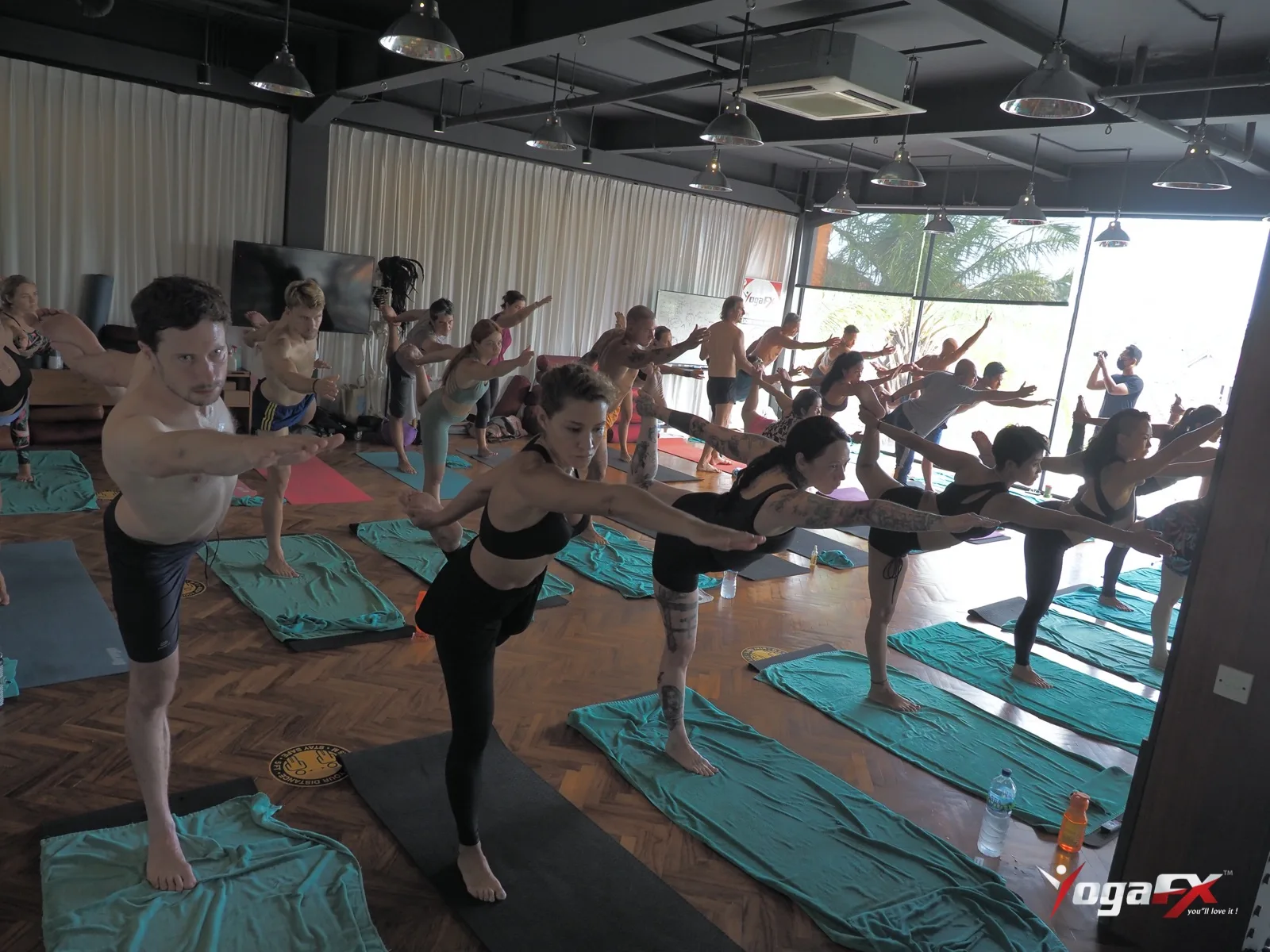
Natural Bali Heat and Camel Pose: What Changes
Our class runs for 90 minutes at about 40°C and 40% humidity. The heat comes from the tropical climate, not from electric heaters. That setting changes camel pose in three ways.
- Muscles feel looser. Many students find the hips and thighs open more easily in the warm room. That is helpful, but it can tempt you past your safe depth, so stay with a mild pull.
- Hands and heels get slippery. Sweat makes the reach for the heels harder. Dry your hands on your towel first, or keep your hands on your lower back.
- Rising can make you light-headed. Your head is back, your chest is open and your breathing is working hard. Coming up too fast is the usual trigger for a dizzy moment.
There is a physical reason for that last point. The Mayo Clinic describes orthostatic hypotension as light-headedness or dizziness when you stand after sitting or lying down, because gravity pulls blood toward the legs and belly. It lists heat exposure and dehydration among the triggers, and says the symptoms usually last less than a few minutes. Fainting, even for a few seconds, needs a health provider.
A busy hot room can also bring on heat illness. The CDC’s occupational health arm (NIOSH) lists symptoms of heat exhaustion as headache, nausea, dizziness, weakness, thirst and heavy sweating. For fainting or dizziness on standing, it advises sitting or lying down in a cool place. In class, that simply means: stop, rest on your mat and tell your teacher.
This is why we cue “come up chest first” and why we do not chase depth in week one. If you are new to the climate, give yourself time to adapt. Our guide to heat acclimatization for hot yoga walks through three honest weeks, and the hot yoga hydration guide explains what to drink before and after class.
Safe Depth: A Four-Level Ladder for Camel Pose
You do not need to reach your heels to get value from the pose. Use this ladder, and move up only when the level below feels calm for several classes in a row.
- Level 1, hands on hips. Lift the chest and push the hips forward. Lean back only a few degrees, and keep your head level.
- Level 2, hands on the lower back. Lift the ribs, press the hips forward and keep the head neutral. Look slightly up, not all the way back.
- Level 3, toes tucked, one hand at a time. Tuck your toes to lift the heels closer. Reach for one heel while the other hand stays on your back.
- Level 4, both hands on the heels. Hips stay forward over the knees, the chest is lifted and the head follows last, only if your neck is comfortable.
Stop and come up if you feel sharp pain, pinching in the lower back or neck, numbness, nausea or dizziness. A good stretch feels like a pull across the front of your body. It should never feel like a sting.
Common Camel Pose Mistakes and Fixes
After watching many first-timers in the room, the same handful of errors turn up again and again. The table pairs each one with its usual cause and a simple fix.
| Mistake | Why it happens | Fix |
|---|---|---|
| Hips stay behind the knees | Fear of falling backward | Push the hips forward first and keep the thighs upright |
| Head drops first | Rushing to look back | Lift the chest first, and let the head follow last |
| Lower back pinches | Bending only at the waist | Lift the ribs, push the hips forward and keep your hands on your back |
| Hands slip off the heels | Sweat in the tropical humidity | Dry your hands first, or stay at level 2 for now |
| Breath stops | Effort and nerves | Slow your exhale, and come up if the breath will not return |
| Standing up too fast | Wanting relief from the pose | Rise chest first, sit on your heels and wait for your head to clear |
Most Fixes Start at the Hips
Notice how many of these fixes begin with the hips and the breath, not with the reach for the heels. Students often think the pose is about touching their feet. In fact, the hips decide how safe the bend is, and the breath tells you when to stop.
Camel Pose Modifications and When to Ask a Doctor First
Everyone’s body is different, so tell your teacher before class if you have a neck, back, shoulder or knee concern. The teacher can give you a lighter version, such as hands on the back with a small lift, or let you rest on your heels instead.
Please speak to a doctor before you try camel pose if you have neck or lower-back problems, high or low blood pressure, a history of fainting, a recent injury or surgery, or if you are pregnant. This guide is not medical advice, and a healthcare professional knows your situation better than we do.
What the Research Says About Stretching and Camel Pose
We like to be careful about what research does and does not show. On flexibility, a 2016 systematic review and meta-analysis in Physiotherapy Theory and Practice pooled 19 studies of healthy young adults. It found that static stretching was effective in increasing hamstring flexibility, with the results favouring stretching in all three tests the authors compared.
That review looked at the back of the leg, not the front of the body that camel pose opens, and it did not study yoga. So it supports the general idea that steady stretching can raise range of motion in healthy young adults. It does not prove anything about this posture in particular.
A 2025 systematic review of Bikram yoga research (Willmott et al., 43 studies and 942 participants) also covers flexibility and well-being among its topics. We are naming it rather than linking it, so search for it by name if you would like to read the detail.
As far as we found, there is no study that measures camel pose on its own. Researchers describe findings like these as encouraging, not final. Please talk to a healthcare professional if you have heart, blood pressure, neck or back concerns before you start a hot yoga routine.
What Students Say About Being Pushed Past “I Can’t”
Backbends bring out the voice that says “I can’t”. These people trained as teachers with us, and they describe how Mr. Ian and the team handled that voice. Their reviews are public.
“Really grateful I had the opportunity to learn from the master Mr. Ian.”
Nadya, Google review, 2026
“I loved every moment. Super supportive and nurturing Training.”
Bronte, Yoga Alliance review, 2025
Samantha thanked Mr. Ian and said she was in tears on the first Sunday night. He told her, “you will graduate”, so she came back on Monday afternoon and kept going.
Samantha, a trainee in our YouTube review, 2025
We are proud of these because they match what we see in the room. The teacher does not demonstrate. The dialogue guides you, the teacher watches, and you decide how deep to go.
Fitting Camel Pose Into a Bali Stay
Progress rarely runs in a straight line, so treat this as a typical pattern, not a promise. If you are visiting for a week or two, steady attendance beats speed.
- First classes. Arrive hydrated, stay at level 1 or 2, and focus on the hips-first cue. New to hot classes? Our first-class guide for beginners explains what the room feels like.
- Second week. Once the heat feels familiar, try level 3 on a day you slept well and drank plenty of water.
- Longer stays. Keep a two-line note after each class: where you felt strong, and where your back or neck spoke up. Those notes show progress you would otherwise forget.
Practising Camel Pose at YogaFX Bali
We run classes at our Seminyak studio from 06:30 to 08:00, booking only, with Canggu coming soon. Every class is 90 minutes in natural tropical heat, taught from a scripted dialogue without demonstration or music.
The team is led by Mr. Ian Terry, an E-RYT 500 teacher with more than 12,000 teaching hours. He trained for five years, from 2014 to 2019, with the founder of the Bikram Hot 26&2 method. That experience shapes how we cue a posture like this one: hips first, head last, and never deeper than the breath allows.
Ready to try it? Book a class with our Free Guest Pass and drop-in options, tell the teacher it is your first time, and ask to be shown the modified version of camel pose.
FAQ
What is camel pose?
Camel pose, or Ustrasana, is a kneeling backbend. You kneel with your knees hip-width apart, push your hips forward, lean back and reach for your heels. It stretches the front of the thighs, hips, abdomen and chest. In a Hot 26&2 class it is posture 22 of 26, so you meet it already warm.
What does Ustrasana mean?
Ustrasana is the Sanskrit name for camel pose. Ustra means camel and asana means pose or posture, so the English name is a direct translation. Teachers use both names, and students in a studio class often hear Ustrasana first, then learn the English name as they practise the posture week by week.
Why does camel pose make me dizzy?
Dizziness usually comes from dropping the head back too fast, holding your breath or rising quickly. Heat and low fluids can add to it. Come up chest first, then sit on your heels and breathe until your head clears. If dizziness, nausea or a headache stays, rest and tell your teacher. This is not medical advice.
How do you make camel pose easier?
Keep your hands on your lower back instead of reaching for the heels. Push your hips forward, lift your ribs and keep your head neutral. You can also tuck your toes under to bring the heels closer. Add depth only when your breath stays calm and your neck and back feel comfortable throughout the pose.
What is the counter pose for camel pose?
In the Hot 26&2 class, Rabbit pose follows camel as its counterpose. You sit on your heels, hold them, tuck your chin and curl forward, which rounds the spine after the deep backbend. If you practise camel on its own, finish with a gentle forward fold such as child’s pose and breathe slowly.
Still have questions? Message Mr. Ian and the YogaFX team on WhatsApp and we will answer them personally.
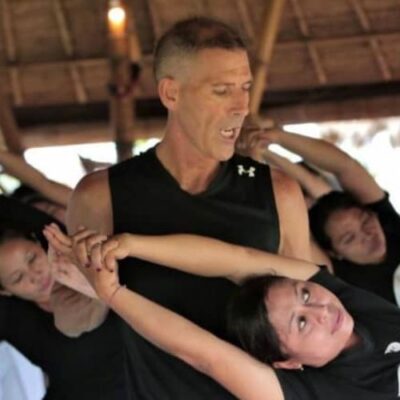 Mr. Ian Terry