
Standing head to knee pose is a one-legged balance and hamstring stretch. You lock the standing knee, kick the other leg out straight, hold the foot with both hands, and fold your forehead toward the shin. In a Bali hot yoga class you do it on both sides, and the heat makes it easier and trickier at once.

This guide is for people who already have a mat in Bali, whether you’re a visitor on a week-long stay or a resident who practises at our Seminyak studio. It covers the steps, the usual mistakes, easy modifications, what the research says, and how natural tropical heat changes the pose.
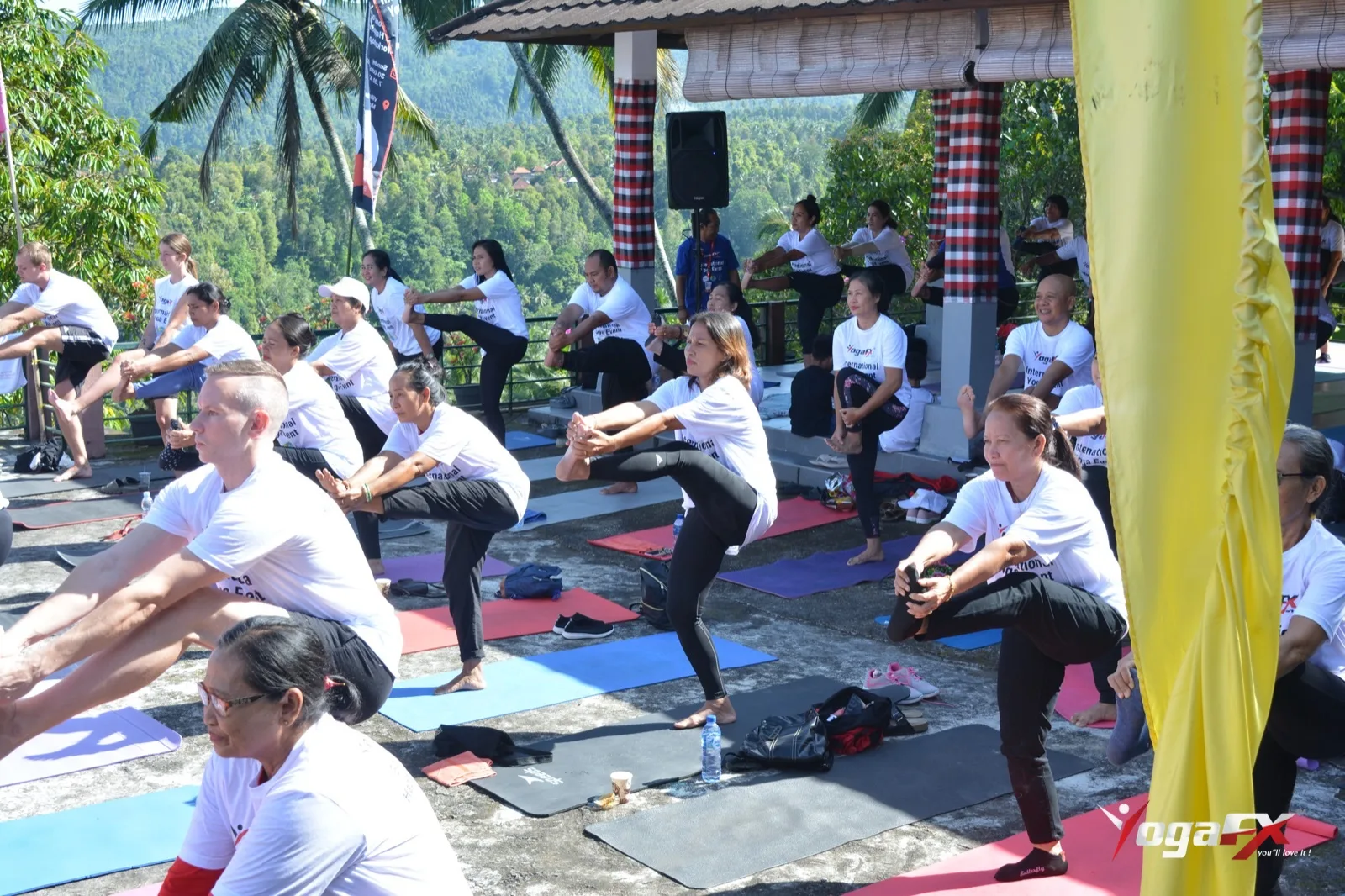
Standing Head to Knee Pose, Step by Step
Here’s the pose as we teach it in the Hot 26&2 class at YogaFX Seminyak. It sits in the standing series, right after Eagle Pose, when your legs are warm and your focus is sharp. Work through the six steps in order.
- Root the standing leg. Shift your weight onto one foot and pull the kneecap up, so the leg stays straight and strong.
- Lift the other knee. Bring the raised knee toward your chest and keep your hips level, facing forward.
- Take hold of the foot. Wrap both hands around the raised foot, with your fingers interlaced under the ball of the foot if you can reach.
- Kick the leg out. Press the heel forward until the raised leg straightens, then pull the toes back toward your face.
- Fold forward. Lower your elbows, tuck your chin, and bring your forehead toward the shin while you look at the knee.
- Release and switch. Let the foot go, stand tall on both feet for a breath, then repeat on the other side.
Why Each Step Has One Job
Each step has one job. The standing leg gives you a base. The raised leg gives you the stretch. Your eyes give you balance. So if one of those three slips, the whole pose wobbles.
Take your time on step four, because most students rush the kick and end up with a bent raised knee, which turns a hamstring stretch into a squeeze at the front of the hip. Straighten the leg a little less, hold it steady, and build up over weeks.
Standing head to knee pose in a Bali class
What Standing Head to Knee Pose Works in Your Body
Four areas do most of the work, and they explain why teachers keep this pose in the middle of the standing series.
- Standing-leg strength. The thigh and glute muscles of the standing leg carry your whole weight for the length of the hold.
- Hamstring length. The raised leg stretches the back of the thigh, the calf and the lower back at the same time.
- Balance. You have one foot on the floor, no wall to lean on and a gaze that has to stay still. Your ankle, hip and core make small, fast corrections.
- Focus. You can’t run through tomorrow’s to-do list while you balance. The pose rewards a steady eye and a quiet mind.
None of this needs a flexible body on day one. Instead, it needs patience. Many students can’t straighten the raised leg for their first few weeks, and they still get the balance and focus work from a bent-knee version.
It also helps to know where the pose sits in the wider class. If you’d like the full order of the 26 postures, our guide to all 26 postures in order shows what comes before and after.
Common Mistakes in Standing Head to Knee Pose, and Fixes
After watching many first-timers in the room, the same handful of errors turn up again and again. The table below pairs each one with its usual cause and a simple fix.
| Mistake | Why it happens | Fix |
|---|---|---|
| Standing knee bends | The leg tires, or the kick pulls you forward | Pull the kneecap up before you lift, and shorten the kick instead of loosening the standing leg |
| Raised knee drifts out to the side | The hip opens to make the reach easier | Point the raised knee forward and hold the foot closer to your body |
| Raised leg stays bent | Tight hamstrings, or rushing the kick | Keep the bend, hold the shin, and straighten a little more each class |
| Upper back rounds early | Chasing the forehead-to-knee finish | Straighten the leg first, then fold slowly from the hips |
| Eyes dart around the room | Looking at neighbours or the mirror | Pick one spot on the floor or your own knee and stay with it |
| Hands slip off the foot | Sweat in the tropical humidity | Dry your hands on your towel first, or hold the ankle or shin |
Why the Base Decides Everything
Notice how many of these are about the standing leg and the eyes, not the stretch. That’s normal, because students often think the pose is about reaching the head to the knee, but the base decides everything else.
At our studios the teacher repeats the same scripted dialogue in the same order every class, with no demonstration and no music. That repetition helps here, because the cues for the standing leg come first and you hear them again each time you practise.
Modifications for Tight Hamstrings and a Wobbly Balance
You don’t have to straighten the leg to get value from the pose, so use this ladder and move up only when the step below feels calm for several classes in a row.
- Level 1, hold the shin. Keep the raised knee bent and hold below the knee. Stand tall and look at one spot.
- Level 2, hold the ankle. Take the ankle in both hands and straighten the leg only until you feel a mild pull.
- Level 3, interlace under the foot. Lace your fingers under the ball of the foot, with the leg straight or nearly straight and the elbows soft.
- Level 4, fold in. Lower the elbows and bring the forehead toward the shin while the standing leg stays strong.
On a sweaty day, loop your mat towel around the foot and hold both ends. It’s a perfectly good tool, so don’t feel you’ve cheated.
Stop and ease out if you feel sharp pain, pinching in the standing knee, or dizziness. A stretch should feel like a pull, never a sting. If you have a knee, hip or back condition, or you’re recovering from an injury, please check with a doctor before you try the pose. This guide isn’t medical advice.
Standing Head to Knee vs the Other Head-to-Knee Poses
Three postures share a similar name, which confuses new students. They work different parts of the body, so it’s worth telling them apart before your first class.
| Pose | Position | Main job |
|---|---|---|
| Standing Head to Knee Pose (Dandayamana Janushirasana) | One leg standing, the other leg held out in front | Balance, standing-leg strength and a hamstring stretch |
| Standing Separate Leg Head to Knee Pose (Dandayamana Bibhaktapada Janushirasana) | Both feet apart, folding forward to the knee | Hamstring length and a long spine, with no balance demand |
| Head to Knee Pose (Janushirasana) | Seated on the floor, one leg extended | Hamstring and lower-back stretch, closer to the ground |
If you want one rule of thumb, it’s this. The standing version asks for balance first and flexibility second. The other two ask for flexibility first, because the floor or your own two feet hold you up.
What the Research Says About Stretching and One-Leg Balance
Two bodies of evidence support the main parts of this pose. We like to be careful about what they do and don’t show.
On flexibility, a 2016 systematic review and meta-analysis in Physiotherapy Theory and Practice pooled 19 studies of healthy young adults. Static stretching improved hamstring flexibility, and the results favoured stretching in all three tests the authors compared. The pose is a static hamstring stretch, so the finding fits. It doesn’t say anything about yoga in particular, though.
On balance, a study in the British Journal of Sports Medicine by Araujo and colleagues followed 1,702 people aged 51 to 75. About 20% couldn’t stand on one leg for 10 seconds. Over a median of seven years, those who couldn’t had an adjusted hazard ratio of 1.84 for death from any cause (95% CI 1.23 to 2.78), compared with those who could.
That’s an association, not proof, so practising a one-legged pose won’t change your lifespan on its own. Still, it’s a good reason to treat balance as a skill worth training, and standing head to knee pose gives you a weekly chance to do exactly that.
A 2025 systematic review of Bikram yoga research (Willmott et al., 43 studies and 942 participants) also covers flexibility and well-being among its topics. We’re naming it rather than linking it, so search for it by name if you’d like to read the detail.
Researchers describe these findings as encouraging, not final, so please talk to a healthcare professional if you have heart, blood pressure, knee or back concerns before you start a hot yoga routine.
Why Bali Heat Changes Standing Head to Knee Pose
Our class runs for 90 minutes at about 40 degrees C and 40% humidity, and the heat comes from the tropical climate rather than electric heaters. That setting changes how the pose feels in three ways.
- Muscles feel looser. Many students find the raised leg straightens more easily when the room is warm. That’s helpful, but it can tempt you to overstretch, so stay with a mild pull.
- Hands and feet get slippery. Sweat on the standing foot or the grip makes the pose wobble. Dry your hands before you take hold, and press the standing foot firmly into the mat.
- Fatigue arrives sooner. When you feel hot or dizzy, ease out and rest. The pose will still be there on the next breath.
If you’re new to Bali, give yourself time to adapt. Our guide to heat acclimatization for hot yoga walks through three honest weeks, and the hot yoga hydration guide explains what to drink before and after class.
Runners and surfers often find the pose useful too, because single-leg balance carries over to every stride. Our article on pairing beach runs with 26&2 classes describes the link.
What Students Say About Being Pushed Past “I Can’t”
Balance poses bring out the voice that says “I can’t”. These YogaFX students describe how Mr Ian Terry and the team handled it. Ivara and Justin trained as teachers with us, and their videos are public.
“Thank you so much mr ian namaste.” Christina called him an excellent teacher and said she loved being a yoga student.
Christina, Google review, 2020
Ivara thanked Mr Ian for pushing her every day. When she said “I cannot”, he answered “yes you can”, and she said she respects how hard he works for his students.
Ivara, a trainee in our YouTube review, 2025
“I just want to say thank you for seeing us and we see you.”
Justin, a trainee in our YouTube review, 2025
We’re proud of these because they match what we see in the room. The teacher doesn’t demonstrate. The dialogue guides you, and the teacher watches the room and corrects.
A Four-Week Plan for Standing Head to Knee Pose
Progress rarely runs in a straight line, so treat this as a typical pattern and not a promise. Aim for steady attendance rather than speed, and let your body set the pace.
| Week | Focus | What good looks like |
|---|---|---|
| Week 1 | Balance and breathing | The standing leg stays straight and you hold the shin steadily for a few breaths |
| Week 2 | Reaching the ankle | The raised leg starts to straighten and your hips stay level |
| Week 3 | Kick and lock | The leg is straight or nearly straight, the toes are pulled back and the elbows are soft |
| Week 4 | The fold | Your elbows lower, your forehead moves toward the shin and your eyes stay steady |
Keep a short note after each class. Write down which leg felt stronger and where you wobbled. Two lines are plenty, because they show you progress you’d otherwise forget.
Practising Standing Head to Knee Pose at YogaFX Bali
We run classes at our Seminyak studio from 06:30 to 08:00, booking only, with Canggu coming soon. Every class is 90 minutes in natural tropical heat, taught from a scripted dialogue without demonstration or music.
The team is led by Mr Ian Terry, an E-RYT 500 teacher with more than 12,000 teaching hours. He trained for five years, from 2014 to 2019, with the founder of the Bikram Hot 26&2 method. That experience shapes how we cue a pose like this one, with the standing leg first and the stretch second.
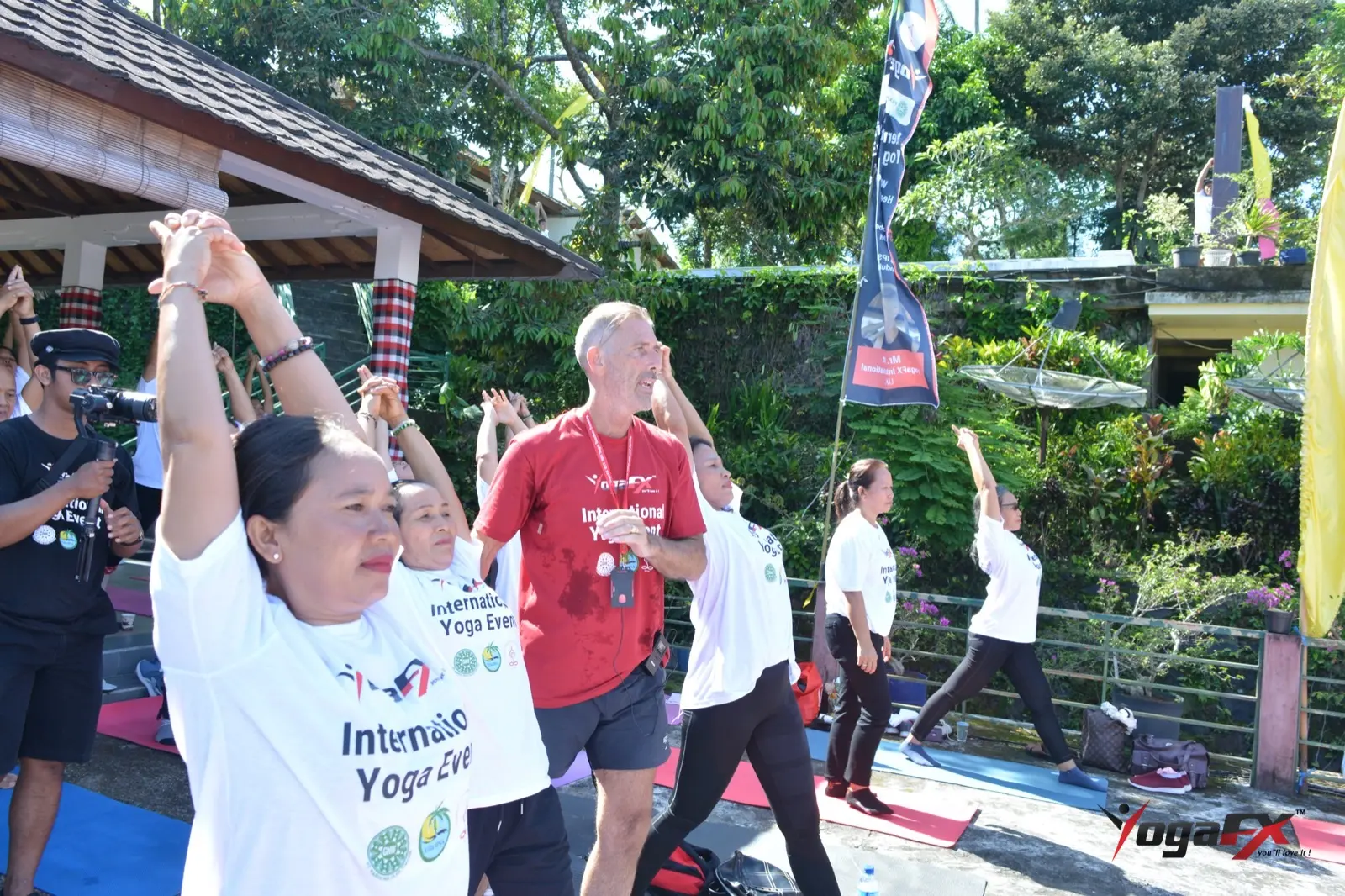
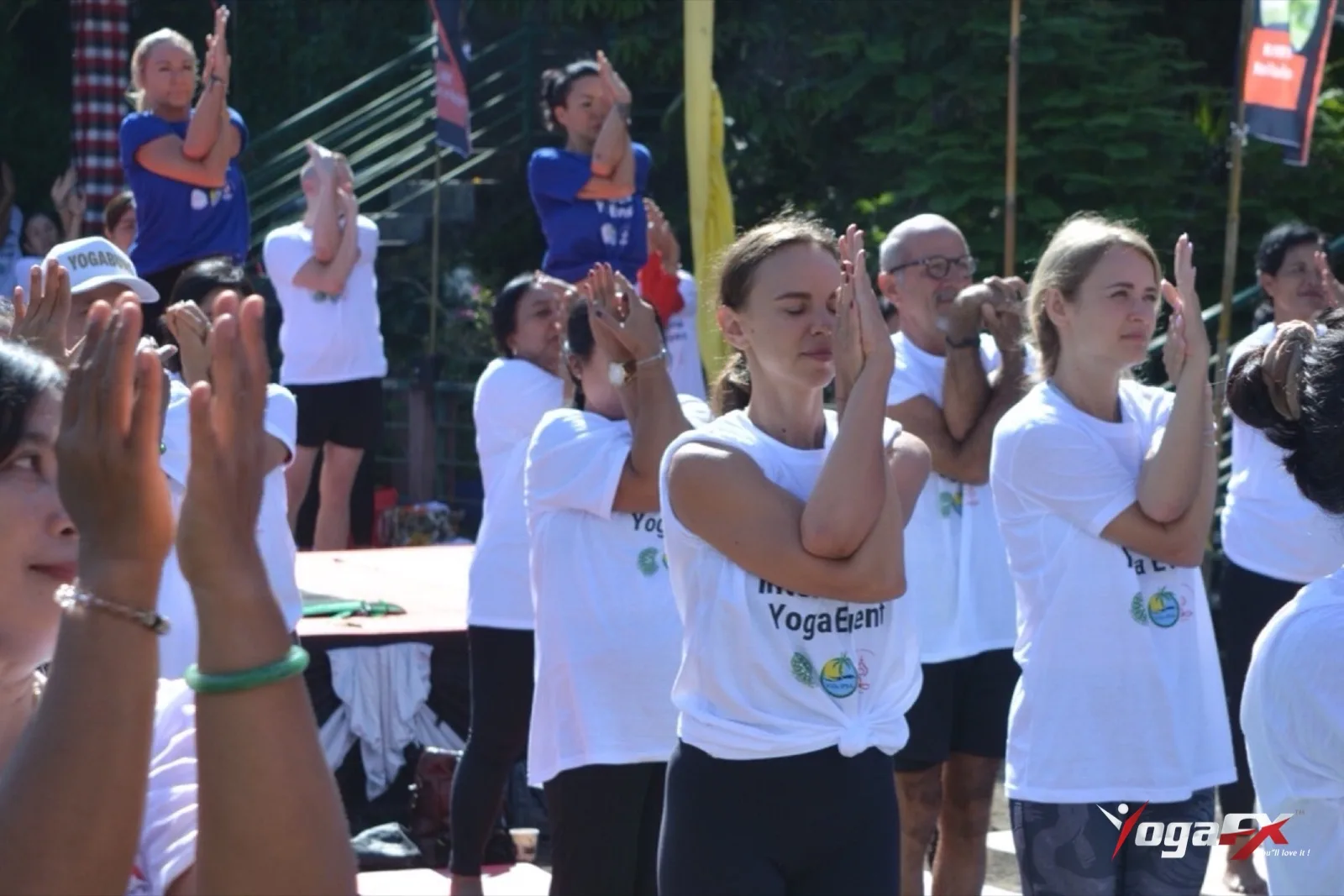
The photos in this guide were taken at an open-air YogaFX yoga event in the Bali hills. Regular classes run at our Seminyak studio, where you can feel the pose in the heat it was designed for.
Ready to try it? Book a class with our Free Guest Pass and drop-in options, tell the teacher it’s your first time, and ask to be shown the modified version.
FAQ
What is standing head to knee pose?
Standing head to knee pose is a one-legged balance posture in hot yoga. You stand on one locked leg, hold the other foot with both hands, kick that leg straight, and fold your forehead toward the shin. It stretches the hamstrings and trains balance and focus.
What is the Sanskrit name for standing head to knee pose?
The Sanskrit name is Dandayamana Janushirasana. Dandayamana means standing, janu means knee and shirsha means head. Students also meet the related Standing Separate Leg Head to Knee Pose, called Dandayamana Bibhaktapada Janushirasana, which is a different posture with both feet on the floor.
How do you modify standing head to knee pose for beginners?
Keep the raised knee bent and hold your shin or ankle instead of the foot. Stand tall, pull the standing kneecap up, and look at one fixed spot. Straighten the raised leg only until you feel a mild pull, then build up over several weeks of regular classes.
Can standing head to knee pose hurt your knees?
It can if the standing knee collapses or the raised leg forces a deep stretch. Keep the standing leg strong and the stretch mild. Sharp pain or pinching means you should ease out and rest. If you have a knee condition, check with a doctor first.
What are the benefits of standing head to knee pose?
The pose builds standing-leg strength, stretches the hamstrings, challenges balance and trains steady focus. Research on static stretching supports hamstring flexibility gains in healthy adults. Results vary between people, and this isn’t medical advice, so speak to a healthcare professional if you have health concerns.
Still have questions? Message Mr. Ian and the YogaFX team on WhatsApp and we will answer them personally.
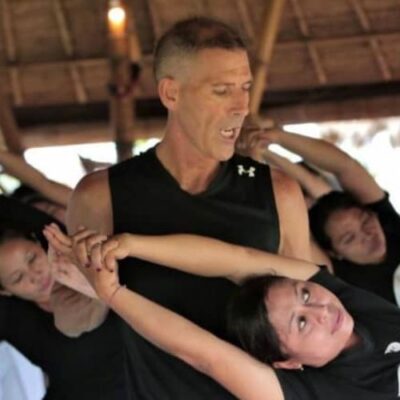 Mr. Ian Terry