
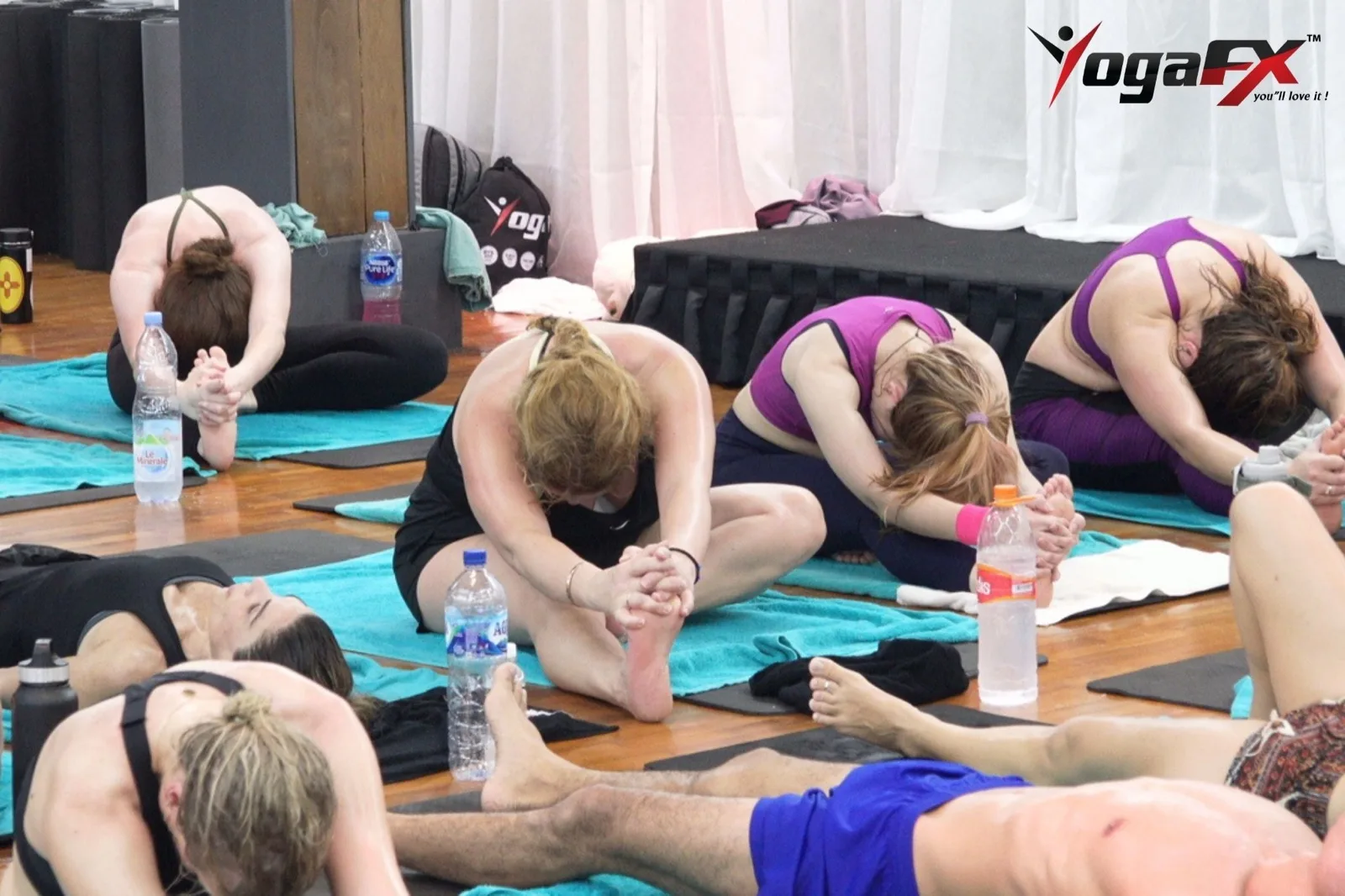
Good hot yoga hydration means drinking steadily through the day, sipping in class, and replacing fluid and salt afterwards. In Bali’s natural heat, a 90-minute class makes you sweat a lot. So start the day already hydrated instead of trying to catch up on the mat, and don’t force down litres at once.

This guide is written for visitors and residents who practise at our Seminyak studio. It covers what to drink, when to drink it, when electrolytes help, and when to stop and rest.
Hot Yoga Hydration in Bali: The Short Version
Most hot yoga hydration problems come from two habits. People arrive under-hydrated, or they gulp a lot of water right before class. Neither works well in a 40 degree room.
Here is our simple hot yoga hydration plan for new students at YogaFX:
- Before: drink water through the morning or afternoon, and finish your last big drink well before class.
- During: take small sips when the class allows it, and keep your bottle within reach.
- After: replace water and salt over the next few hours, and eat a normal meal.
- Always: listen to your body. Dizziness, nausea or a pounding headache mean you stop and lie down.
Our founder, Mr. Ian Terry (E-RYT 500, 12,000+ teaching hours), teaches in this room, and the advice here follows how we run class. It is general information, not medical advice. If you have a heart, kidney or blood pressure condition, or you take medication that affects fluids, check with a healthcare professional before you start.
Why Hot Yoga Hydration Matters: Sweat in a Bali Class
A class at our studios runs 90 minutes at about 40 degrees C and 40% humidity. The heat comes from Bali’s tropical climate, not from electric heaters. Your body cools itself by sweating, and the fluid you lose has to come back from somewhere.
The US National Center for Complementary and Integrative Health says plainly that hot yoga has special risks related to overheating and dehydration. That is not a reason to avoid it. It is a reason to plan your hot yoga hydration.
What research found about hot yoga hydration
A team from Central Washington University and the University of Georgia measured 21 adults in a one-hour hot hatha class at 38.7 degrees C. Their average sweat rate was 0.9 litres per hour. The class was shorter than ours, so a full 90 minutes in Bali heat may well ask more of you. Details are in the 2014 study by Campbell and colleagues.
The surprise was how little people drank. Even with free access to fluids, average intake was only 0.2 litres per hour, and a third of the group drank nothing at all. About half lost at least 1% of their body mass.
Hot Yoga Hydration Timeline: Before, During and After Class
The table below puts your hot yoga hydration plan for the whole day in one place. Use it as a starting point, then adjust to your own sweat and your own body.
| When | What to do | Why it helps | Bali tip |
|---|---|---|---|
| All day before class | Drink water at regular times, not all at once | You start class with fluid already on board | Carry a bottle on your scooter or in the car, as the heat dries you out before you arrive |
| Last hour before class | Small sips only, with a light snack if you need one | A big gulp can leave you sloshing in forward folds | Skip heavy meals, and finish eating well before the floor series |
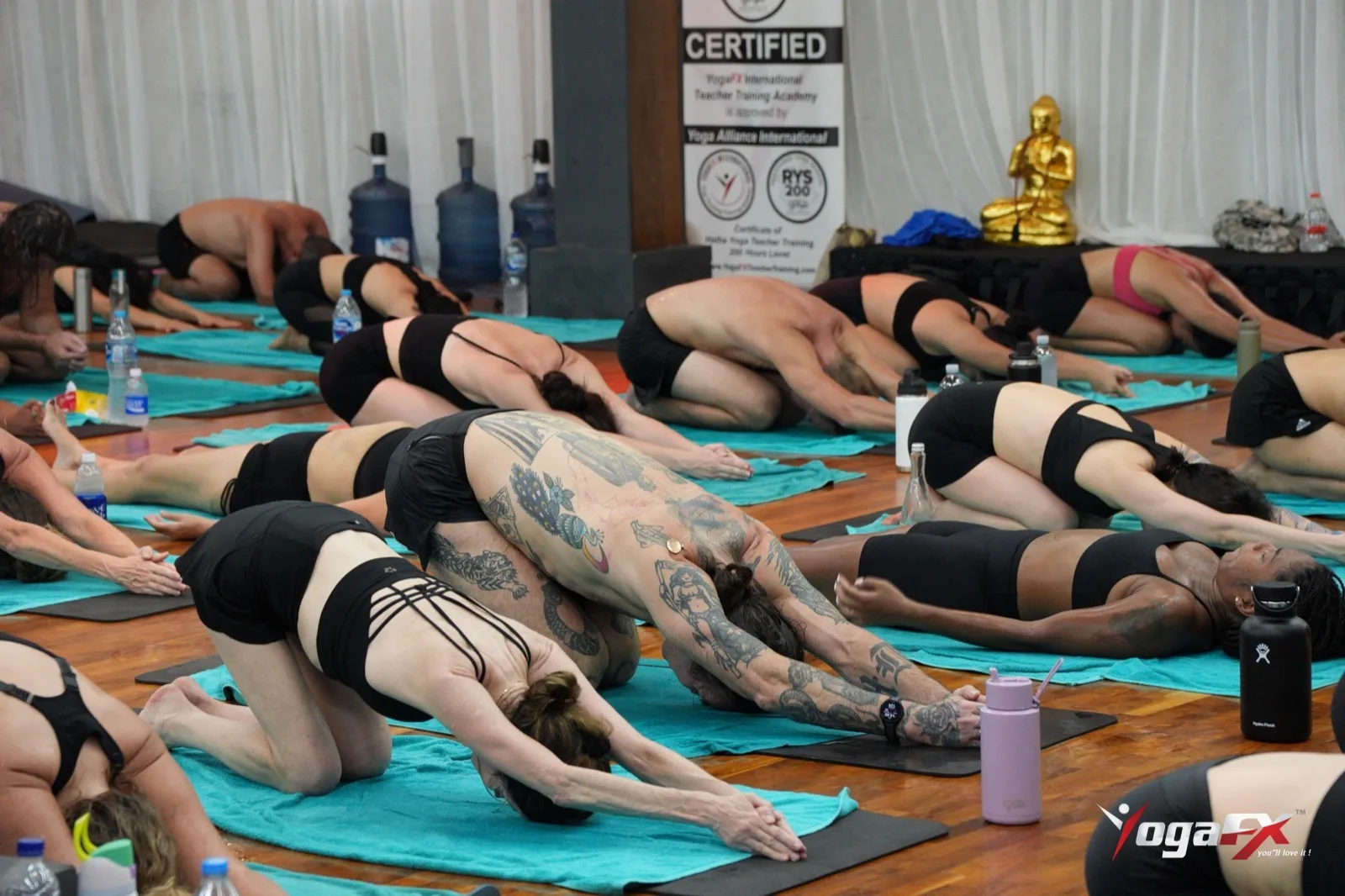
| During class | Sip when the class allows it, and drink when you feel thirsty | Replaces part of the sweat you are losing | Keep the bottle at the top of your towel so it is easy to find |
| First hour after class | Drink water, and add a little salt through food or an electrolyte drink if you sweat heavily | Sweat carries sodium as well as water | Rehydrate before you head back out into the sun |
| Rest of the day | Keep drinking to thirst, and check your urine colour | Dark urine can signal you are behind | Plan a coconut water or a meal with some salt in it |
Before class: start early, finish calm
The best hot yoga hydration starts hours before you roll out your towel. Drink water with your breakfast, again mid-morning, and again over lunch. That way your body isn’t trying to absorb a large amount in the last ten minutes.
The Mayo Clinic says it is important to drink water before, during and after a workout. It also notes that hot or humid weather makes you sweat more than usual, so you need to drink more than usual to replace it. Bali is both hot and humid, so that advice applies to every class here.
During class: small sips, not big gulps
In a fixed 26 and 2 class, the postures run back to back, and the teacher’s dialogue guides every step. There is no music and no demonstration, so you can focus on your breath and your body. When you do drink, take a few swallows, not half a bottle.
If you feel thirsty, you can take a short sip when it is safe to do so. Keep your eyes soft, stay on your towel, and rejoin the posture. Taking a sip is better than pushing through a wave of dizziness.
After class: replace, then eat
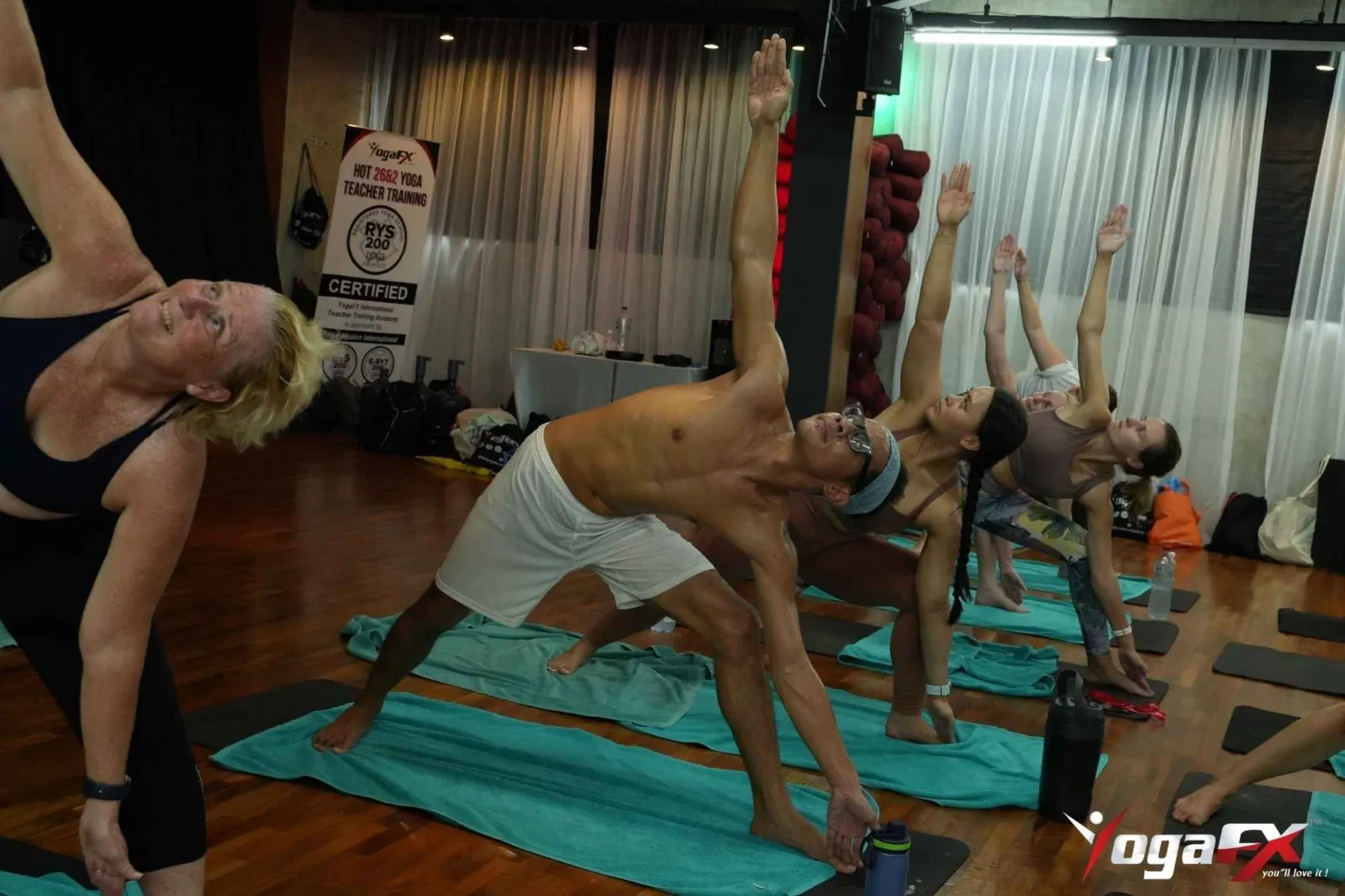
Your sweat does not stop the moment you leave the room. Keep drinking over the next few hours, and eat a normal meal with some salt in it. That is often enough for a casual practitioner who sweats a moderate amount.
A practical hot yoga hydration check is your urine. Dry mouth and dark urine are the classic signs that you need more fluid, according to the Mayo Clinic. Pale yellow suggests you are on track.
Water or Electrolytes? Hot Yoga Hydration Beyond Plain Water
Sweat is not just water. It carries sodium, and the amount varies a lot from person to person. In the 2014 study, sweat sodium averaged 49.1 millimoles per litre, with a wide spread between individuals.
That variation explains why one student feels fine on water alone while another gets a headache and craves salt. Researchers also studied sodium and water balance after a Bikram class, in a 2020 paper in Physiological Reports titled “Salt and water balance after sweat loss: A study of Bikram yoga”. We could not open the full text, so we point to it by name only.
When plain water is enough
- You practise once or twice a week and sweat a moderate amount.
- You eat regular meals with some salt in them.
- You feel fine after class and your urine is pale by evening.
When an electrolyte drink may help
- You sweat heavily and notice white salt marks on your clothes or skin.
- You practise most days, or you also run, surf or cycle in the heat.
- You get headaches, cramps or fatigue after class even though you drank water.
Electrolyte drinks are optional, not magic. The Mayo Clinic cautions that sports drinks can carry a lot of sugar, salt and calories, so read the label. A meal with some salt, a banana, or a glass of coconut water can do much of the same work. This is general guidance, so adjust it with advice from your own doctor.
Can You Drink Too Much During Hot Yoga?
Yes, though it is rare. Drinking far more than you need can dilute the sodium in your blood, a condition called hyponatremia. The Mayo Clinic describes it as potentially life-threatening, and it says some athletes do this when they prepare for a long or intense workout.
A review in Wilderness & Environmental Medicine reached a similar conclusion. It says the main cause is drinking more than your body needs to replace what you lose, and it recommends drinking to perceived need rather than following a rigid rule.
That is why our rule for hot yoga hydration is sip, don’t chug. If you feel bloated, confused, or very nauseous after drinking a lot, stop drinking and tell someone. Seek medical care if it does not settle quickly.
How Much Water Does Hot Yoga Need? Common Hot Yoga Hydration Mistakes
Students often ask how much water hot yoga needs, and the honest answer is that it depends on you. Body size, fitness, sweat rate and the day’s weather all change the number. Instead of chasing a fixed target, use a few simple checks.
- Drinking only in class. By then you are already behind, so spread your water over the day.
- Chugging before class. A full stomach makes forward folds and backbends uncomfortable, so sip instead.
- Skipping salt. Water alone does not replace what sweat takes, so eat normally after class.
- Copying a friend. Another person’s sweat rate is not yours, which is why personal habits matter more than rules.
- Relying on coffee or alcohol the night before. They can leave you starting class on the back foot, so go easy on both.
Good hydration for hot yoga is a habit, not a single drink. Students who track it for a week usually find a pattern: a certain amount in the morning, a certain amount after class, and a certain meal that makes them feel steady. That pattern is yours to keep.
The same goes for electrolytes in hot yoga. Some students never need them, and others feel a clear difference. Try one change at a time, so you know what is working.
Signs You Need More Fluid, and Signs to Stop
Your body gives clear signals if you listen. Learn them before your first class, because the heat can make them arrive quickly.
Signs you are running low
- A dry mouth or a sticky feeling on your tongue.
- Dark urine later in the day.
- A headache that builds during or after class.
- Lightheadedness when you stand up quickly.
Signs to stop and rest
- Dizziness that does not ease, or vision that narrows.
- Nausea, a racing heart, or chills in the heat.
- Confusion or trouble speaking clearly.
If any of these happen, lie down on your towel, breathe slowly, and let your teacher know. Our guide to feeling tired after hot yoga explains what is normal and what is not.
Hot Yoga Hydration for Visitors and Residents in Bali
Visitors and residents face different hot yoga hydration problems. Both groups benefit from a routine, but the routine looks different.
If you are visiting
Your first few days are the hardest. You may be jet-lagged, sunburnt, and drinking less water than at home. Treat your first class as a hot yoga hydration test, and arrive having already drunk water since breakfast. Our page on heat acclimatization in Bali shows how to ease in over three weeks.
If you live here
Residents often forget that Bali heat is a daily load, not just a class load. A morning surf, a scooter ride and a long day outside all add to your sweat. So build hot yoga hydration into your day, not only your practice, and consider electrolytes on the days you train hardest.
If this is your first hot class ever, start with our hot yoga for beginners guide so you know what to expect from the room.
What Our Graduates Say About the Room
These three reviews are not about water. They come from graduates who trained in the same heat, and their words show the team who guides you through it. Names are first names only.
“I feel so happy, so blessed, powerful. Thank you so much everybody. I love you so much.”
Eni, YouTube review, 2024 (translated)
“Thank you so much to Mr Ian and the team. The amount of efforts and love and thoughts and organizations and hard work that they put in, and it shows.”
Selly, YouTube review, 2024
“I don’t think you understand how much of an impact you’ve had on my life.”
Chelsea, YouTube review, 2019
Try a Hydrated Class at Our Seminyak Studio
The easiest way to learn your own hot yoga hydration pattern is to practise it. Class runs from 06:30 to 08:00, booking only, so start hydrating the evening before and sip water when you wake.
Book a class with our Free Guest Pass and bring a bottle. See the drop-in class schedule and what to expect, and read the wider hot yoga health guide for eating, hydration and recovery in one place.
FAQ
Does hot yoga dehydrate you?
It can if you don’t replace what you sweat. Hot yoga makes you lose fluid, and one study found many students drank far less than they lost. Drink steadily before class, sip during it, and rehydrate afterwards. That routine lowers the risk considerably for most healthy adults.
How much water should I drink after hot yoga?
There is no single number, because sweat varies from person to person. Drink until you are no longer thirsty, keep sipping over the next few hours, and check that your urine is pale. Dark urine and a dry mouth mean you still need more fluid.
Do I need electrolytes after hot yoga?
Not always. Light sweaters usually manage with water and a normal meal that contains some salt. Heavy sweaters, daily practitioners and people who get headaches or cramps may find an electrolyte drink useful. Check the sugar content on the label, and speak to a doctor if unsure.
Can hot yoga cause an electrolyte imbalance?
It is possible, though uncommon in healthy people. Heavy sweating loses sodium, and drinking large amounts of plain water can dilute it further. Sip steadily instead of gulping, eat regular meals, and stop and seek care if you feel confused, very nauseous or unwell.
Should I drink electrolytes during hot yoga?
Most casual students do not need to during a 90-minute class, and each sip is brief anyway. Save electrolytes for before or after class unless you sweat very heavily. If you plan to use them during class, test the drink at home first so it sits well.
Still have questions? Message Mr. Ian and the YogaFX team on WhatsApp and we will answer them personally.
This article is general information, not medical advice. Consult a healthcare professional before starting hot yoga, especially if you have a medical condition or take medication.
 Mr. Ian Terry