
Seasonal affective disorder yoga is not a treatment. It is a habit you can add next to proper care. A morning class gives you daylight, movement and a fixed time to be somewhere, three things that tend to slip in a grey northern winter. This note on seasonal affective disorder yoga comes from our Seminyak studio, and it is written for visitors planning a Bali stay.

We’re a hot yoga studio, not a clinic. So we’ll keep the claims small and the sources big. Everything health-related below comes from the NHS, Mayo Clinic, a US government health agency and published research, and we link each one. If you think you have SAD, see a doctor first. Our free class can wait a week.
Seasonal Affective Disorder Yoga: The Short Answer
Can seasonal affective disorder yoga help? The honest answer is “it may help you feel better, and it cannot replace treatment.” The NHS guidance on seasonal affective disorder describes SAD as a type of depression that usually happens in the winter and goes away in the summer. Its self-help list includes getting as much natural daylight as you can and regular exercise.
That list is where seasonal affective disorder yoga fits. A class is exercise. If it is held in a bright room, it also gets you out of bed and out of the house at a set time. For a visitor who has left a dark November behind, that routine is often the part that is hardest to build alone.
Here’s what we don’t claim:
- We do not claim to treat SAD. Hot yoga is not a treatment for SAD or any depression.
- We do not promise a mood change. Some people feel lighter after a few classes, and some do not.
- We do not replace your doctor. Please keep any medication, therapy or light box your doctor has recommended.
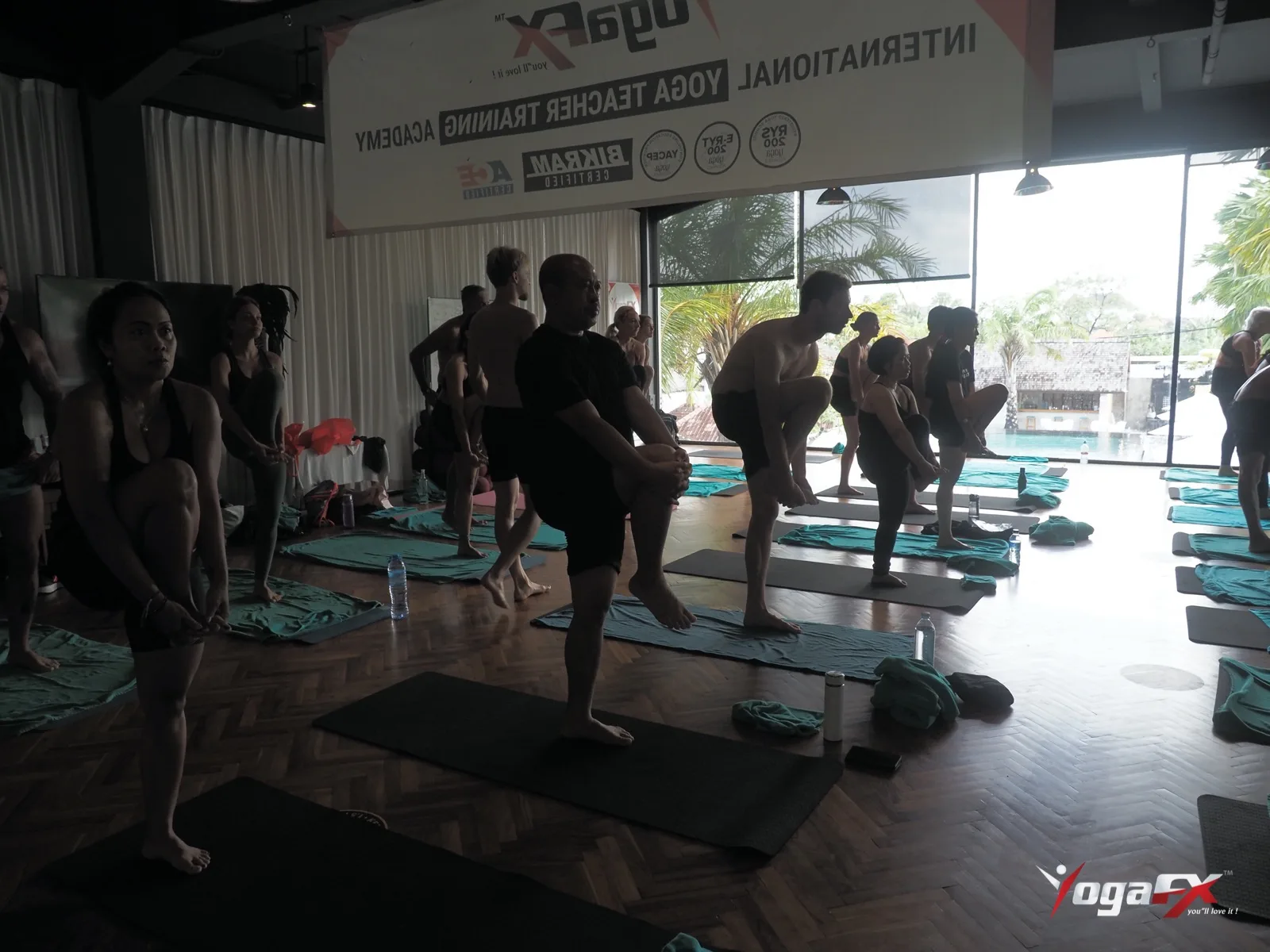
What Seasonal Affective Disorder Actually Is
Mayo Clinic describes seasonal affective disorder as a type of depression related to changes in seasons. It says symptoms usually appear in late fall or early winter and go away during the sunnier days of spring and summer. The pattern repeats at about the same times each year.
The NHS lists low mood and being more tired and sleeping more than usual among the symptoms. Mayo Clinic also mentions feeling listless or down most of the day and carbohydrate cravings. Both say that if you feel low for days at a time and cannot enjoy your usual activities, you should speak to a healthcare professional.
That matters for a travel plan. Many people book Bali in November because they dread the dark months at home. A trip can be a good reset, but a trip is not a diagnosis or a treatment. Treat your holiday as a bonus on top of care, not a swap for it.
What the main health sources list as options
| Approach | What the source says | Source |
|---|---|---|
| Light therapy | Mayo Clinic calls it a first-line treatment for fall-onset SAD. NCCIH describes sitting for 20 to 60 minutes each morning in front of a light box. The NHS says to speak to a GP before trying it. | Mayo Clinic treatment page, National Center for Complementary and Integrative Health (NCCIH), NHS |
| Talking therapy | Mayo Clinic lists psychotherapy as another option. The NHS lists talking therapies such as CBT. | Mayo Clinic, NHS |
| Antidepressants | Mayo Clinic says some people benefit, especially when symptoms are severe. The NHS lists them too. | Mayo Clinic, NHS |
| Daylight and exercise | The NHS suggests natural daylight every day and regular exercise. Mayo Clinic suggests regular activity and getting outside. | NHS, Mayo Clinic |
Notice where seasonal affective disorder yoga sits in that table. It belongs in the last row, as exercise taken in a bright place. It does not appear as a treatment of its own, and we would be wrong to pretend otherwise.
What Research Says About Seasonal Affective Disorder Yoga
There is real research on yoga and depression, though very little seasonal affective disorder yoga research exists.
A 2023 randomized trial from Massachusetts General Hospital (Nyer et al.) tested heated yoga in adults with depression. In the 8-week trial, about 59% of the yoga group had a drop of 50% or more in depressive symptoms, compared with about 6% of the waitlist group. That is a promising result for heated classes, and it came from a hospital research team, not a studio.
We should be careful with it, because the trial studied depression in general, not seasonal affective disorder. It was short, and the comparison group simply waited, so it does not tell us how a visitor on a two-week trip would respond. Please read it as a reason to take movement seriously, not as a promise about seasonal affective disorder yoga.
Light is the other factor researchers have studied for the seasonal pattern. A review and meta-analysis in the American Journal of Psychiatry looked at bright light treatment and dawn simulation for seasonal affective disorder. Opinions differ, though: the NHS says light therapy is not usually available on the NHS because there is not enough evidence to tell whether it is effective. That is why we put daylight at the centre of this article, and why we send you to a doctor before you buy a light box. Our job is to make the morning routine easier, not to compete with a light box.
Our own hot yoga depression study article goes through that trial in more detail for readers who want it.
Why Daylight and Routine Matter for Seasonal Affective Disorder Yoga
If you take one idea from this note, take this one: the habit matters as much as the pose. People who feel flat in winter often stop doing the things that give their day a shape. Meals drift, sleep drifts, and the day starts late.
A morning class pushes against that drift. You set an alarm, you travel to the studio, and you spend 90 minutes with other people. A morning class also leaves the rest of the day in daylight. For a visitor with no job to rush to, that is an easy structure to hold.
The infographic below pulls the main numbers together. Each one comes from a health source or from our own class format.
Late fall
Mayo Clinic: SAD symptoms usually appear in late fall or early winter and ease in spring and summer.
20 to 60 min
NCCIH: the light therapy routine it describes is sitting before a light box each morning.
06:00
Our studio opens every day from 06:00 to 22:00, so early classes are easy to plan around.
90 min
One class lasts 90 minutes in natural tropical heat of about 40°C and 40% humidity.
1 free class
A free 1-Day Guest Pass lets you try the room before you commit to anything.
A Seasonal Affective Disorder Yoga Routine for Northern Winter Escapees
Here is a simple seasonal affective disorder yoga plan for a stay of a week or more. It is a suggestion, not a prescription, and it follows the NHS advice on daylight and exercise. If you are also following a doctor’s plan, such as a light box at home, keep it. Our morning vs evening hot yoga guide explains how the two class times feel in Bali heat.
| Time of day | What to do | Why it helps the routine |
|---|---|---|
| Early morning | Wake at the same hour each day, drink water, go outside for a few minutes. | A fixed wake time and natural daylight, both of which the NHS and Mayo Clinic suggest. |
| Morning class | Take a 90-minute class at the studio, arriving 15 minutes early. | Exercise, a place to be, and other people in the room. |
| After class | Eat a proper meal and sit outside in the shade for a while. | Gives you more daylight and keeps the rest of the day structured. |
| Afternoon | Walk, swim or explore. Avoid a long nap that pushes bedtime late. | Keeps the daytime active so sleep comes at a normal hour. |
| Evening | Dinner at a regular time, screens off early, bed at the same hour. | A steady sleep window, which is easy to lose on holiday. |
Three rules keep the plan realistic:
- Start with two classes a week. Add more only if you feel good and recover well.
- Keep your wake time steady. The time you get up matters more than which class you choose.
- Stop if something feels wrong. Dizziness, chest pain or a racing heart means rest and tell the teacher.
Seasonal Affective Disorder Yoga in Our Seminyak Studio
Our studio runs the Original Hot 26&2 sequence at Jl. Pangkungsari Gg Jepun No.888, Kuta Utara, Seminyak, Badung, Bali 80361. The room is warmed by Bali’s own climate, not electric heaters, and sits at about 40°C and 40% humidity. A class lasts 90 minutes, and the teacher guides you through every posture with a spoken script, so you never have to guess what comes next.
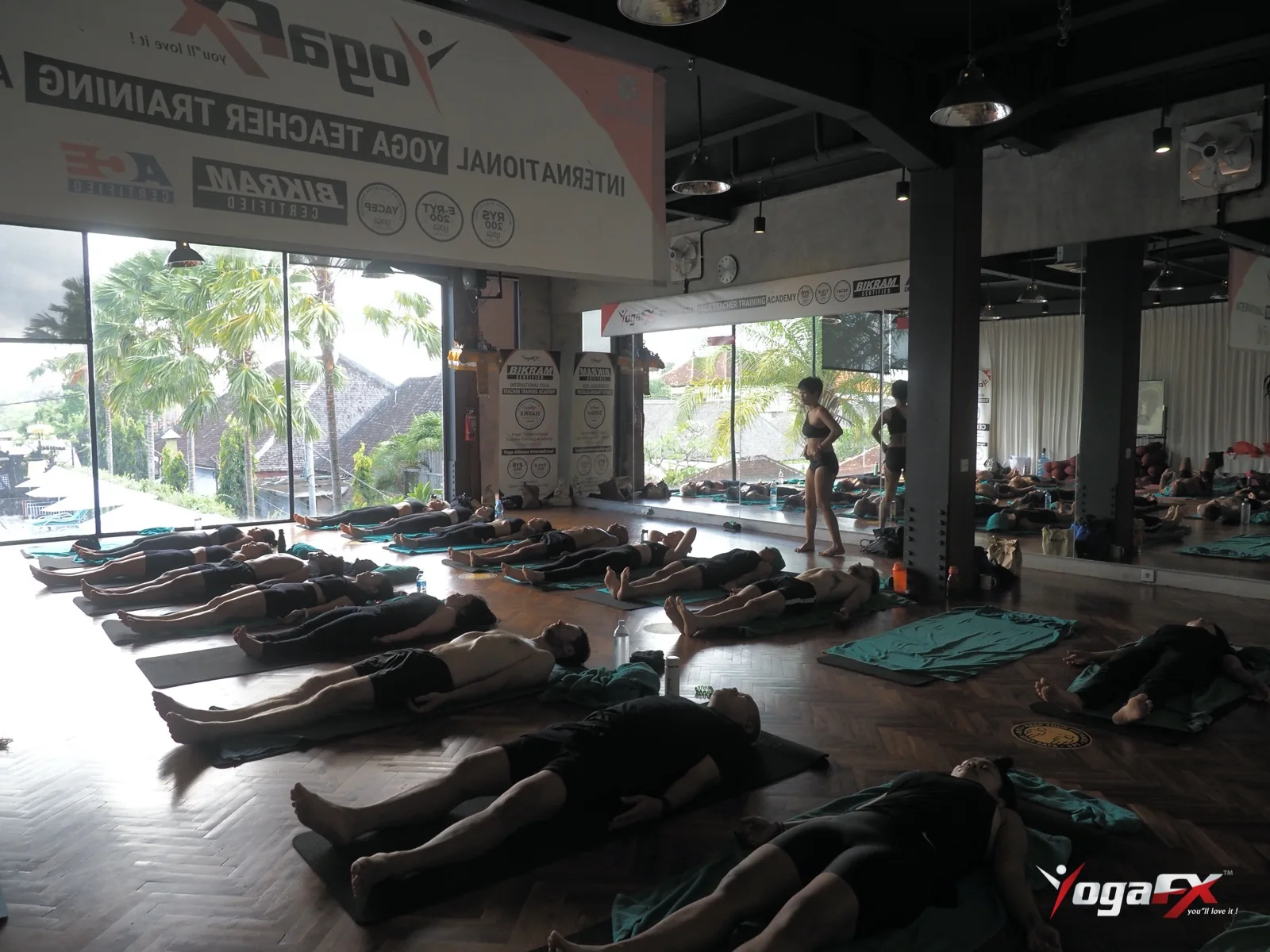
Daylight is part of the room, because the studio sits behind tall windows. On a clear morning you can see the palms from your mat. That isn’t a light box, and we’d never call it one. It does mean you spend a class in a bright place instead of a dim gym. If you are new, read our hot yoga for beginners guide before your first visit.
Heat is the part that needs care. Your body works harder in a warm room, and some people feel dizzy in the first week. Our heat acclimatization guide walks through the first three weeks. Go slowly, drink water, and rest whenever you need to.
Who Should Check With a Professional First
This is the section we would put on the front desk if we could. Please talk to a doctor or mental health professional before you start if any of these apply:
- You have been feeling low for days at a time and cannot enjoy things you normally like. Mayo Clinic and the NHS both say to see a healthcare provider.
- You take medication for mood, blood pressure or the heart, or you have any heart or circulation condition. Heat changes how the body copes.
- You are thinking of stopping treatment because you feel better. Please speak to your doctor before changing anything.
- You are pregnant, unwell or dehydrated. Skip the hot room until you have advice.
If you ever feel unsafe or in crisis, contact local emergency services or a crisis line in your country straight away. A yoga class is not the right place to wait it out.
What Students Say About the Experience
These are graduates of our teacher training, speaking about their time with us in Bali, not about seasonal affective disorder yoga. We are not suggesting otherwise. We include them because they describe how a structured, shared routine felt.
“Mr. Ian’s YogaFX program was the most impactful and unforgettable experience of my life.”
Greta, Yoga Alliance review, 2026
“This was one of the hardest things I’ve ever done physically.”
Britt, YouTube review, 2026 (video transcript)
“I feel happy and energetic.”
A trainee in our YouTube review, 2018 (video transcript)
Greta and Britt both describe effort and meaning, not a quick fix, and we think that is the right expectation. A routine takes weeks to feel natural, so give it time.
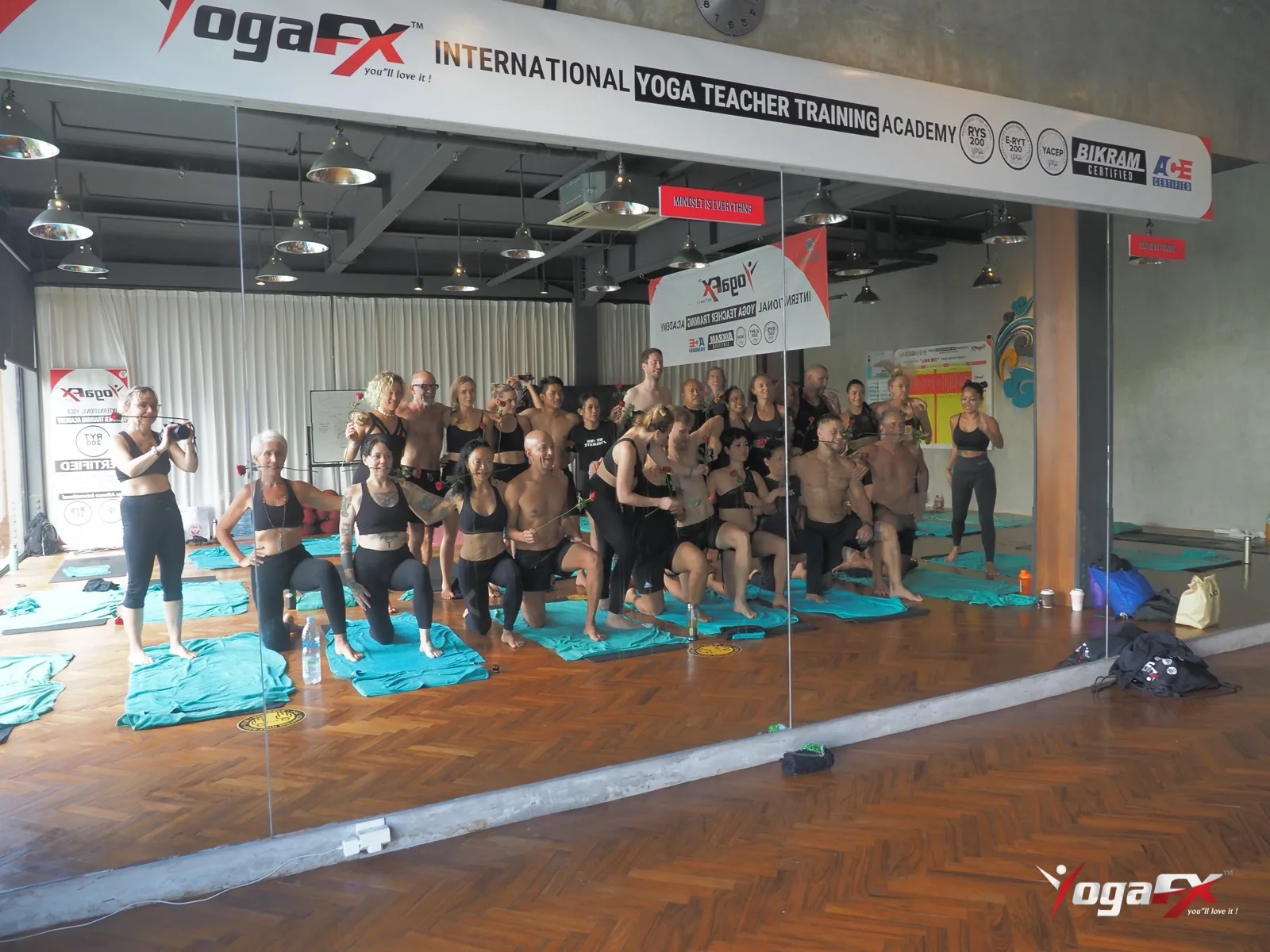
Try a Class at YogaFX Seminyak
Mr. Ian Terry, E-RYT 500, founded YogaFX in 2017. He has 12,000+ teaching hours and has taught more than 1,500 graduates from 80+ countries. He trained for five years, from 2014 to 2019, with the founder of the method. He would tell you the same thing we do: yoga is a good habit, and a good habit sits next to proper care.
If seasonal affective disorder yoga is on your mind for a Bali stay, start with one class. Claim your FREE 1-Day Guest Pass and see how the room feels. Tell the teacher it is your first heated class, and say how you are feeling that week.
FAQ
Does exercise help seasonal affective disorder?
Health services say it can support you. The NHS lists regular exercise and time outdoors in daylight among self-help steps, and Mayo Clinic suggests regular activity too. Exercise is not a replacement for treatment, though. If your mood stays low for days, see a doctor or a mental health professional, because that is the safest route.
Can yoga help seasonal depression?
Seasonal affective disorder yoga may help some people feel calmer and more regular in their week, but the evidence for seasonal depression itself is limited. We treat a class as one healthy habit among several. It does not replace light therapy, talking therapy or medication, so talk to a healthcare professional first.
What is the best treatment for seasonal affective disorder?
There is no single best option for everyone. Mayo Clinic calls light therapy a first-line treatment for fall-onset SAD, and talking therapy and antidepressants are also used. The NHS says to see a GP, and to speak to a GP before trying light therapy.
What helps seasonal affective disorder in daily life?
The NHS suggests getting as much natural daylight as you can, going outside every day and exercising regularly. Mayo Clinic adds sitting outside in the sun. A fixed morning routine can make those habits easier to keep, but it should sit alongside professional care.
Is seasonal affective disorder the same as seasonal depression?
In everyday use, yes. SAD is a type of depression with a seasonal pattern. Mayo Clinic says it begins and ends at about the same times every year, usually starting in late fall or early winter. A doctor, not a website, should decide whether your symptoms fit.
Still have questions? Message Mr. Ian and the YogaFX team and we will answer them personally. Contact us here and claim your free guest pass.
This article is general information, not medical advice. If you think you may have seasonal affective disorder or any other health condition, consult a healthcare professional.
 Mr. Ian Terry