
Short answer: In general, neither time is better for everyone. Morning practice builds a routine, suits a light stomach and leaves your evenings free, while evening practice suits a body already loosened by the day. Research on timing is thin. At YogaFX in Bali, every class runs in the morning, from 06:30 to 08:00, booking only.

Morning vs evening yoga comes down to how your day works, not a magic hour. Morning classes build routine and leave your evenings free. Evening sessions loosen a stiff body and mark the end of work. At YogaFX in Bali, every class runs in the morning, from 06:30 to 08:00, in a room held around 40°C by natural tropical heat.
Most guides treat morning vs evening yoga as a physiology contest. The truth is less dramatic. Research on the best time to do hot yoga is thin, and the real differences show up in food, energy, stiffness, sleep and Bali traffic. This guide walks through each one and explains why our Bali classes run in the morning.
It draws on the experience of Mr. Ian Terry, E-RYT 500, founder of YogaFX. He has taught more than 12,000 hours and has trained over 1,500 graduates from 80+ countries since 2017.
Morning vs Evening Yoga: The Short Answer
In general, both times work. They simply suit different people and different goals, and the comparison still helps if you also practise at home or elsewhere later in the day. This table sums up the main differences before we go deeper.
| Factor | Morning practice | Evening practice |
|---|---|---|
| Body feel | Often stiffer at the start | Often looser after a day of moving |
| Food | Easy to practise on a light stomach | Needs planning around lunch and dinner |
| Energy | Starts the day with focus | Releases the day’s tension |
| Sleep | Little direct effect | Needs a gap before bed |
| Routine | Fewer clashes with plans | Can compete with social plans |
| Traffic | Usually quieter roads | Often busier roads |
These are tendencies, not rules. Your own body, job and sleep habits matter more than any average. Keep that in mind as you read the details.
Five Real Differences Between Morning vs Evening Yoga
When you compare morning vs evening yoga honestly, five differences matter in daily life. Everything else is detail.
1. How stiff your body feels
Most people feel tighter first thing in the morning, after hours of lying still. Core body temperature also tends to rise through the day and peaks in the late afternoon or early evening. For that reason, many people feel looser when they practise in the evening.
In Bali the gap is smaller than elsewhere. Our room is already warm and humid at 06:30, so the first fifteen minutes warm you up quickly. Morning students simply spend a little longer easing into the standing series.
2. What you can eat
Hot yoga works best on a light stomach. Finish any real meal two to three hours before class. In the morning that is easy, because you can practise before breakfast or after a small snack.
Evening practice needs more planning. Lunch has to be early and light, and dinner waits until afterwards. Our guide on what to eat before hot yoga lists easy options for both.
3. Energy and mood
Morning classes give many students a clear head for the rest of the day. You finish early, shower, and start work already moving. Evening sessions work the other way. They give you a clear break between the day’s problems and your night.
Neither effect is guaranteed, so test it yourself. If you are a night owl, a 06:30 start may feel like punishment. If you crash at 17:00, evening exercise may feel too hard. Match the time to your natural rhythm.
4. Sleep
Heat raises your heart rate and body temperature, and both settle again after class. For some people an evening session helps them wind down. For others, a late session leaves them wired for an hour or two.
Because sleep varies so much, a simple rule helps. Leave a few hours between your class and bed, and notice how you sleep for the first week. If your sleep gets worse, practise earlier, which is easy with our 06:30 class.
5. Routine and logistics
This is where most people actually decide. Morning classes sit in the quiet part of the day, before meetings and plans. Evening sessions fit people who cannot leave the office until late.
Bali’s south coast traffic is usually heaviest around midday and in the late afternoon. Early starts tend to be easier on the road, and the YogaFX studio runs classes 06:30 to 08:00, booking only.
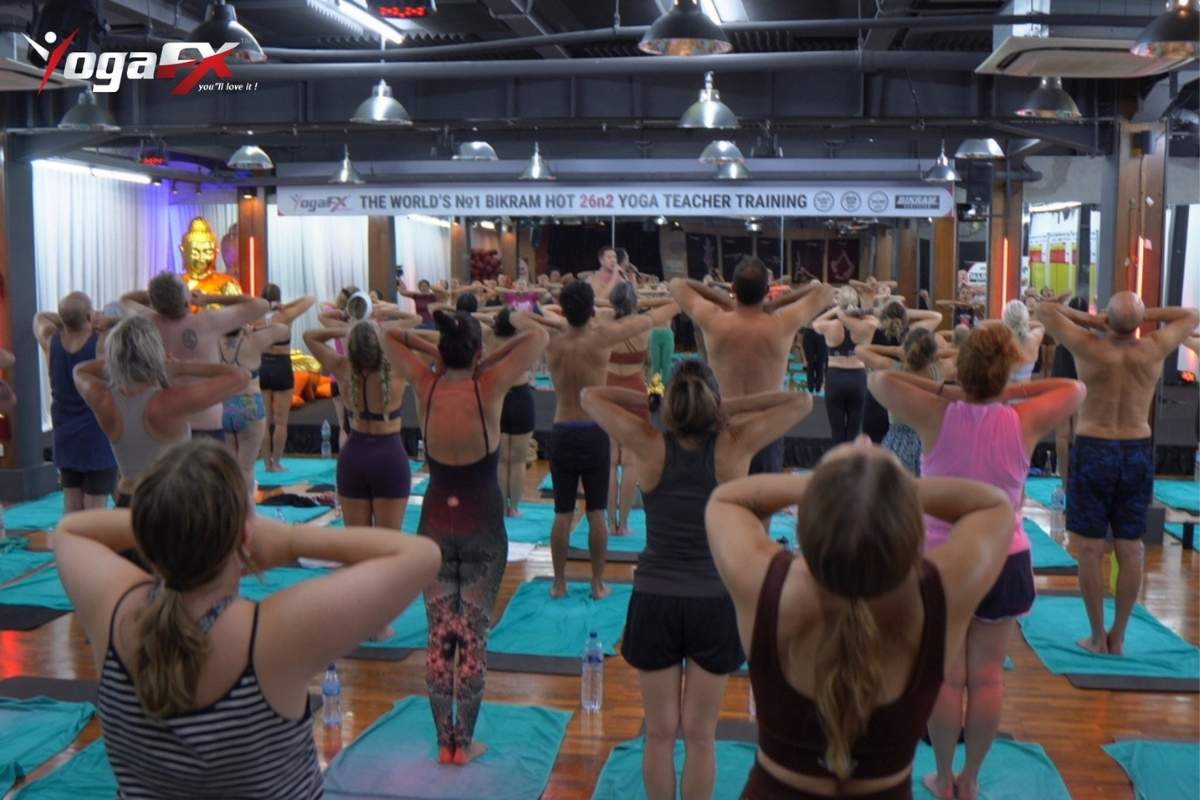
The five differences in brief
- Stiffness. Mornings often feel tighter; Bali’s warm room narrows the gap.
- Food. Mornings make a light stomach easy; evenings need lunch planning.
- Energy. Mornings bring focus; evenings release the day’s tension.
- Sleep. Leave a few hours between any evening session and bed.
- Routine. Early slots clash less with plans and traffic.
Morning Hot Yoga in Bali: Who It Suits
A morning class is a strong choice if you like a fixed routine. You do the hard thing first, and the rest of the day is yours.
- People who want a daily habit. Fewer things can interrupt a 06:30 class than an 18:00 workout.
- Holiday visitors. You finish early and still have the whole day for the beach, temples or a café.
- Early risers. If you already wake at dawn, a morning class costs you nothing.
- Anyone who dislikes a heavy stomach. Practice before breakfast feels lighter.
The trade-off is stiffness. For example, you may feel tight for the first few postures. Arrive early, move gently and give your body time. Resting on your mat is always allowed.
A morning class day at YogaFX
- Night beforeGo easySkip alcohol and a very late night; sip water through the day.
- On wakingKeep it lightPractise before breakfast, or finish any real meal 2 to 3 hours earlier.
- 06:15Arrive 15 minutes earlyCheck in, set up your towel and settle your breathing.
- 06:30 to 08:00The 90-minute classThe same Hot 26&2 sequence, booking only.
- After 08:00Rehydrate, then enjoy the dayReplace water and electrolytes; the rest of the day is yours.
Evening Practice: Who It Suits
Evening practice, at home or at another studio, suits people whose bodies loosen as the day goes on, or whose mornings are already full. We do not run afternoon or evening classes at YogaFX, but the trade-offs are worth knowing.
- Desk workers and remote workers. A session after work breaks the sitting pattern and clears your head.
- Night owls. If mornings are hard, you will perform better later.
- People who feel stiff in the morning. Many people find postures easier after a day of moving.
- Anyone using practice as a day-end ritual. A session marks a clear boundary between work and rest.
The trade-offs are food planning and sleep. Eat lightly at lunch, and leave a few hours before bed. If your evenings fill with dinners and plans, our morning class may survive better.
What the Research Says About Timing (and What It Doesn’t)
Here is the honest position. We are not aware of a study that compares morning vs evening yoga directly, and none of the research we cite does. What the studies do show applies to hot yoga at any hour. Three findings are worth knowing:
- Calorie burn and heart rate. A San Diego State University study (Pate and Buono, 2014) found that a 90-minute Bikram class raised heart rate to about 72 to 86% of predicted maximum. Participants burned an average of about 286 kcal, ranging from 179 to 478 kcal (PubMed 25141359). The study did not test different times of day.
- Strength and flexibility. An 8-week study by Tracy and Hart (2013) reported gains in strength, flexibility and body composition in healthy adults who practised Bikram yoga (PubMed 22592178). The benefit came from showing up, not from the clock.
- Mood. In an 8-week Massachusetts General Hospital trial (Nyer et al., 2023), 59% of people doing heated hatha yoga had their depression symptoms drop by half or more, against 6.3% on the waitlist (PubMed 37883245). That study used heated hatha yoga, not the Bikram sequence specifically.
The takeaway for morning vs evening yoga is simple. Regular practice matters more than the hour you choose. Hot yoga is also not a medical treatment, and it does not suit everyone. Anyone who is pregnant, or who has a heart condition or blood pressure concerns, should consult a healthcare professional before practising in a heated room.
Which Goal Favours Which Time?
Use this morning vs evening yoga table as a starting point, then adjust after a week of testing.
| Your goal | Lean towards | Why |
|---|---|---|
| Build a daily habit | Morning | Fewer clashes with plans |
| Feel looser in the postures | Evening | Body is often warmer after a day of moving |
| Start the day with focus | Morning | You finish before the day’s demands |
| Unwind after work | Evening | A session marks the end of the working day |
| Practise on a light stomach | Morning | Easier to avoid a recent meal |
| Avoid midday and late afternoon traffic | Early morning | Roads are usually quieter |
If two rows point in different directions, for instance, trust the one that protects consistency. A class you attend four times a week beats a “perfect” slot you attend once.
Common Mistakes When Choosing Between Morning vs Evening Yoga
Most people who struggle with their class time make one of the same few errors. Spotting them early saves weeks of frustration.
- Choosing the “ideal” slot instead of the realistic one. A 06:30 class sounds heroic. If you are asleep until 08:00 every other day, you will skip it.
- Judging a slot after one class. Your first hot yoga session is a shock whatever the hour. Wait for three or four visits before you decide.
- Eating a big lunch before evening exercise. That single choice ruins more evening sessions than the heat does.
- Drinking water only just before class. Hydration is a full-day habit, in the morning and the evening alike.
- Ignoring how you sleep. If an evening session leaves you restless, that is useful information, not a failure.
- Changing slots every week. Constant switching makes it hard to build the habit you came for.
Notice that none of these mistakes are about the clock itself, so they are easy to fix. They are about fit. That is why the best time to do hot yoga is the one that matches your life, and why consistency beats timing in almost every case.
Some students ask whether practising in the morning or evening changes the postures themselves. It does not. The Hot 26&2 class is the same 90-minute, 26-posture sequence at any hour, taught by the same scripted dialogue. Only your body and your day are different, and at YogaFX you take it in the morning.
A One-Week Test to Find Your Best Time
Instead of guessing, run a simple experiment. Because our classes run only in the morning, the test is really about whether early practice fits your life. It takes one week and costs nothing extra.
- Book three morning classes. Spread them across the week, with a rest day between.
- Protect the night before. Go to bed at a sensible hour before each class.
- Note three things. Energy during class, how stiff you felt, and how you slept that night.
- Check the fit. If you turned up easily and felt better, lock in your morning routine.
- Give it two more weeks. Heat tolerance improves with repeat visits, so judge the routine again after a few classes.
For a sensible weekly rhythm, see our guide on how often to do Bikram yoga. If you are new to heat, our walkthrough of your first hot yoga class in Bali explains what to expect.
Tips for Morning Classes and Evening Practice
These habits help with our morning classes, and with any evening practice you do elsewhere:
- Arrive 15 minutes early. That gives you time to check in, set up your towel and settle your breathing.
- Hydrate across the whole day. Sip water from the morning instead of drinking a litre just before class. Replace water and electrolytes afterwards.
- Eat light, early. Finish any real meal 2 to 3 hours before class. A small snack is fine closer to the start.
- Go easy the night before a morning class. Alcohol and a very late night make the heat feel much harder.
- Leave a gap before bed after any evening practice. Give your body time to settle.
- Bring a large mat towel, a small hand towel and a full water bottle. A bare mat gets slippery once you sweat.
- Tell the instructor about any health condition before class starts.
Morning vs Evening Yoga for Expats and Longer Stays
If you live in Bali or stay for weeks, the morning vs evening yoga question changes. You are no longer asking what feels best on one day. You are asking which slot will survive a busy month.
Morning slots tend to protect a habit, because work and social plans rarely start before 08:00. That is the slot our classes use, from 06:30 to 08:00. If you also like ending the day with movement, add a gentle stretch or walk in the evening and keep the hot class as your morning anchor.
Our guide to yoga in Bali for expats covers building a practice that lasts. If you live near Canggu, our guide to yoga studios in Canggu helps you compare your options.
Why Try Morning Hot Yoga at YogaFX
So where does the morning vs evening yoga question land in Bali? At YogaFX, the answer is the morning, and three things make the studio a good place to build that habit.
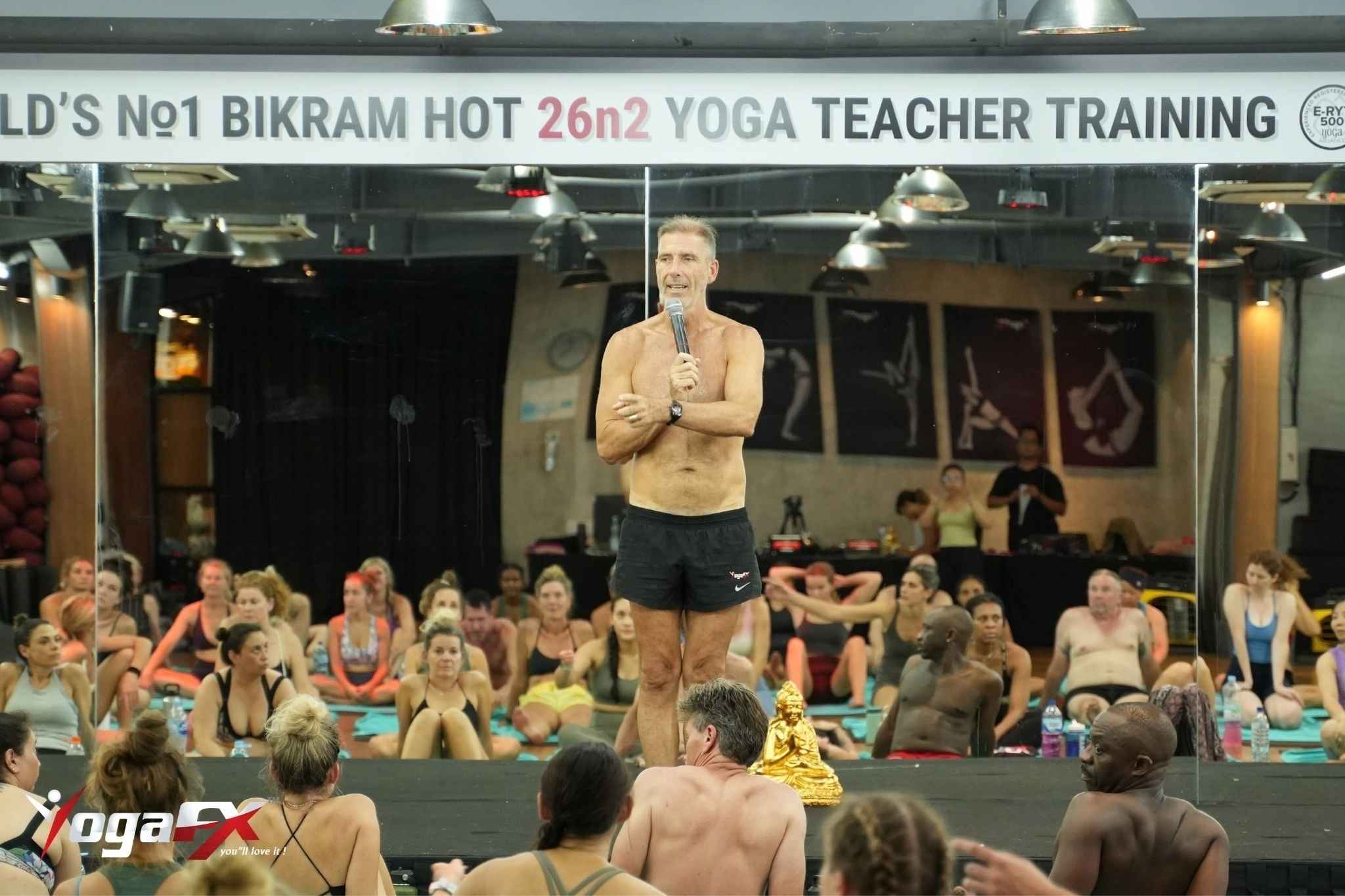
First, the teaching standard. Mr. Ian Terry is E-RYT 500 and has taught more than 12,000 hours. He trained for five years, from 2014 to 2019, with the founder of the Bikram Hot 26&2 method. In June 2026 he was confirmed as Master Trainer of the Republic of Indonesia Yogasana Sports Federation. Every teacher at the studio delivers the same scripted dialogue he teaches.
Second, the reviews. YogaFX has 150 Google reviews. A common thread is that people arrive nervous about the heat and leave surprised by how good they feel. One reviewer admitted he dreaded the class and thought he might not finish, then described feeling incredible afterwards.
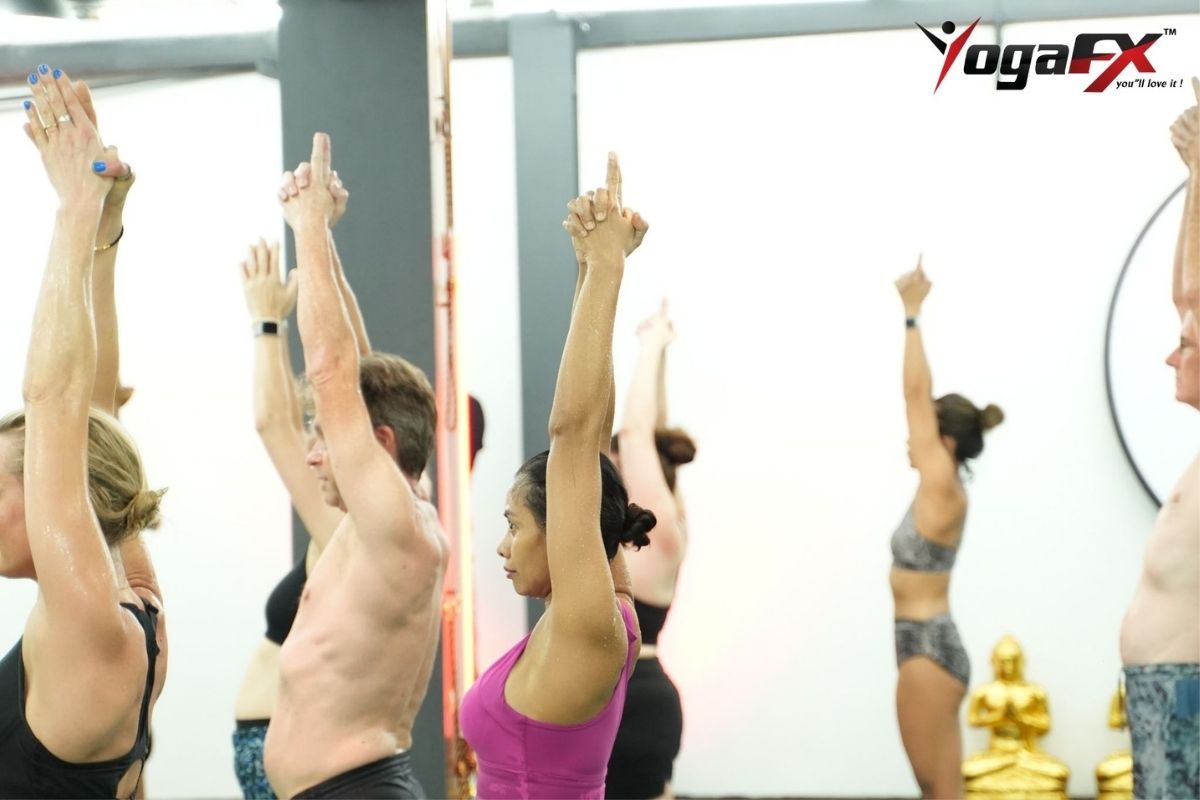
Third, the routine. The studio in Seminyak runs classes 06:30 to 08:00, booking only. Every class is the same 90-minute Hot 26&2 sequence in natural tropical heat, so a morning habit stays simple. Message the team on WhatsApp for the current timetable.
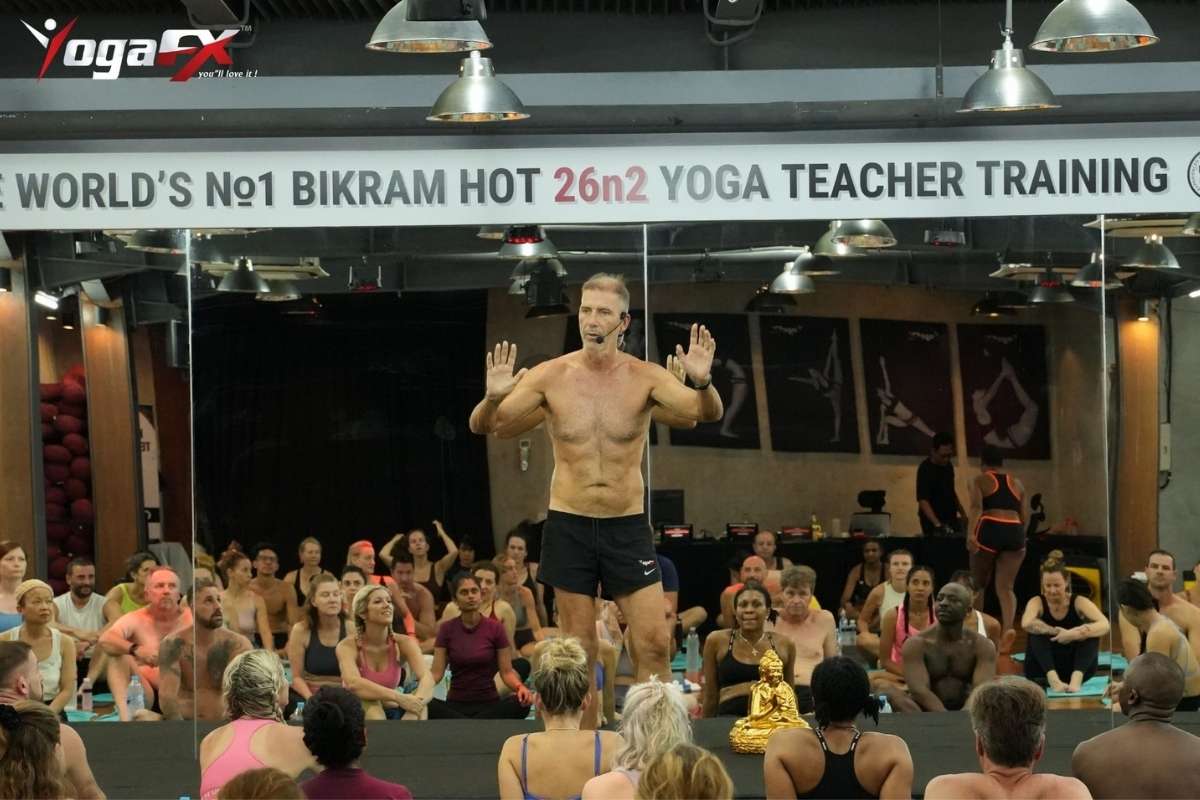
For more on the method, the classes and studio basics, browse our Bikram Yoga 101 guide.
FAQ
Is morning or evening better for hot yoga?
Neither is better for everyone. Morning classes suit routine and a light stomach. Evening practice often suits a stiffer body and a day-end reset. Every class at our Seminyak studio runs in the morning, 06:30 to 08:00, booking only, with the full 90-minute Hot 26&2 sequence.
Should I eat before morning hot yoga?
Eat lightly and early. Finish any real meal two to three hours before class. For a morning slot, that usually means practising before breakfast or after a very small snack. Have a proper breakfast once your body has cooled down, and sip water through the rest of the day.
Does evening hot yoga affect sleep?
It can go either way. Some people sleep well after an evening session, while others feel wired for a while. Leave a few hours between practice and bed, and watch your sleep over the first week. Our Bali classes run 06:30 to 08:00, so they leave the whole day to settle.
How early should I arrive for a morning class?
Arrive about 15 minutes before the start. That gives you time to check in, set up your mat and towel, and settle your breathing. Morning bodies often need a little more time to ease into the heat, so do not rush in at the last minute.
Can I try a class before I commit?
Yes. First-time visitors can try a class free with the YogaFX Free Guest Pass at the Seminyak studio. Message the team on WhatsApp at +628113888330, share your dates, and they will confirm a morning class for you.
Ready for an early start? Message Mr. Ian and the YogaFX team on WhatsApp, tell us your dates, and we will book your first 06:30 class. Claim your Free Guest Pass on WhatsApp.
This article is for general educational purposes and is not medical advice. Anyone with a heart condition, high blood pressure, or other health concerns should consult a healthcare professional before practising in a heated room.
 Mr. Ian Terry