

Bikram yoga is a 90-minute hot yoga practice consisting of 26 postures and 2 breathing exercises performed in a room heated to 40°C (105°F) – conditions designed to mirror the natural tropical climate of Calcutta, where the method was developed. One of the most commonly asked questions about the practice is how many calories it burns.

Bikram yoga burns approximately 333 to 460 calories per 90-minute session on average, depending on body weight, sex, effort level, and room temperature. A 2014 study published in the journal Experimental Physiology – one of the most comprehensive Bikram yoga calorie studies to date – found an average burn of 333 calories for women and 460 calories for men during a standard 90-minute class.
Those numbers are lower than many hot yoga studios advertise – and that’s exactly why this article exists. The fitness industry has a habit of inflating calorie figures to attract customers.
At Bikram YogaFX Bali, we believe the honest answer is more compelling than the exaggerated one: Bikram yoga is a serious, evidence-based practice that burns real calories, builds real strength, and does something no other workout in Bali can offer – it does it all in the island’s own natural heat.
Here is what the science actually says, what affects your calorie burn, and how natural Bali heat changes the equation.
How Many Calories Does Bikram Yoga Actually Burn?
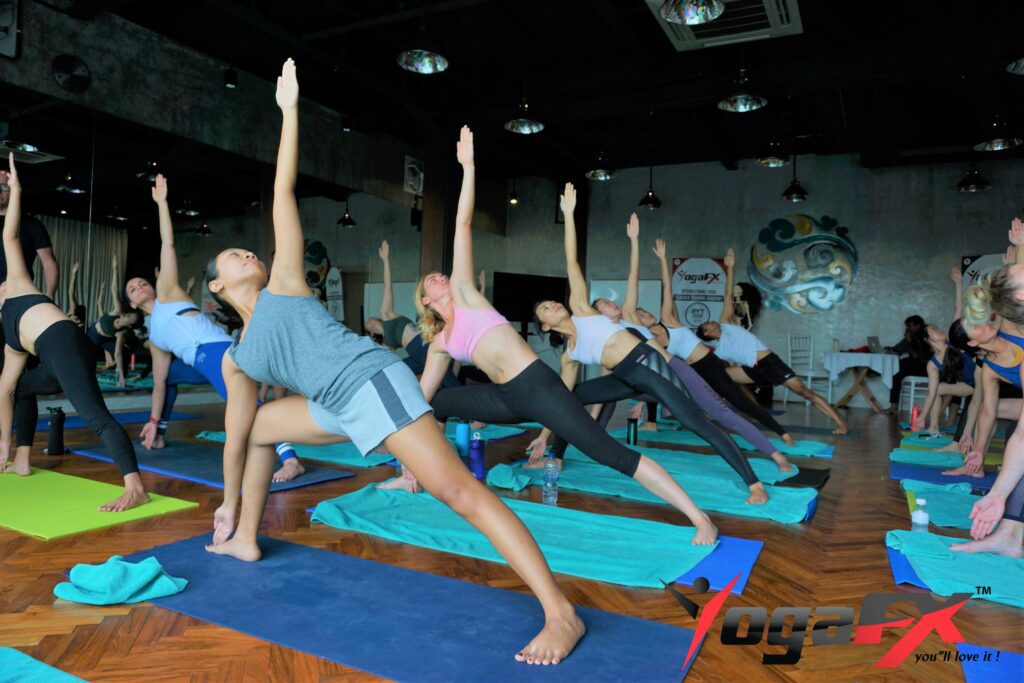
The most rigorous study on Bikram yoga calorie burn was conducted by researchers at the University of Wisconsin, published in 2014. Participants wore heart rate monitors and portable metabolic devices throughout full 90-minute classes. The results:
| Group | Avg. Calories Burned (90 min) | Heart Rate Avg. | VO2 Equivalent |
|---|---|---|---|
| Women (avg. 68 kg) | 333 kcal | ~80% max HR | Brisk walking |
| Men (avg. 82 kg) | 460 kcal | ~80% max HR | Brisk walking–jogging |
The range, about 333 to 460 calories on average, is not vague marketing. It reflects real variables in individual physiology and effort. A 90-minute class creates the physiological conditions for significant calorie expenditure; how much you burn within that range depends on the factors in the next section.
For the 60-minute class format offered at YogaFX, expect approximately 220 to 400 calories – proportional to duration but not linearly so, since the body continues burning at an elevated rate after class (known as excess post-exercise oxygen consumption, or EPOC).
What Affects Your Calorie Burn in Bikram Yoga?
Five primary variables determine where you land on the calorie spectrum:
1. Body Weight
The single largest factor. Heavier bodies require more energy to move through the same sequence of postures. This is consistent with all aerobic exercise: a 90 kg person will burn significantly more than a 55 kg person in the same class.
2. Sex
Men generally burn more calories than women in the same class, primarily due to higher average muscle mass and larger body size. The 2014 study showed men averaging 38% more calories than women – not because the practice is harder, but because the caloric cost of moving a larger body is higher.
3. Effort and Engagement
Bikram yoga has a fixed sequence – 26 postures and 2 breathing exercises – but the depth, hold time, and muscular engagement within each posture varies enormously between a beginner and an advanced practitioner. Pushing into standing bow pulling pose or floor bow takes significantly more energy than a shallow version of the same posture. Beginners often ask about calorie burn before their first class.
4. Heat and Humidity
This is where Bali is different. Bikram yoga was originally designed to be practiced in a room that mirrors the climate of Calcutta: 40°C (105°F) with 40% humidity. Most studios outside of tropical countries use electric heaters to simulate this environment – but the result is dry heat, which is physiologically different from humid tropical heat.
Natural tropical heat – the kind that surrounds every YogaFX class in Seminyak and Canggu – creates a more thermally demanding environment without the respiratory discomfort of artificially heated air. The body works harder to regulate core temperature, which increases cardiovascular demand and, therefore, calorie expenditure.
5. Class Duration
YogaFX offers both 60-minute and 90-minute class formats. The 90-minute class follows the complete traditional sequence and produces the highest total calorie burn. The 60-minute class is modified to cover the full sequence in a compressed format – ideal for practitioners who want a full-body session within a tighter schedule.
Bikram Yoga vs Other Workouts: How Does It Compare?

Calorie burn comparisons are often presented to make yoga look bad. The reality is more nuanced – Bikram yoga competes effectively with other popular fitness activities, particularly when the unique benefits beyond calorie burn are included.
| Activity (60–90 min) | Est. Calories Burned | Strength Benefit | Flexibility Benefit | Mental Health Benefit |
|---|---|---|---|---|
| Bikram Yoga (90 min) | 333–460 kcal | High | Very High | Very High |
| Running (moderate) | 400–600 kcal | Low | Low | Moderate |
| Cycling (moderate) | 350–500 kcal | Moderate | Low | Moderate |
| Vinyasa Yoga (60 min) | 250–400 kcal | Moderate | High | High |
| Swimming (60 min) | 400–550 kcal | Moderate | Moderate | Moderate |
| Weight Training (60 min) | 200–400 kcal | Very High | Low | Moderate |
Bikram yoga’s advantage is not that it burns the most calories – it is that it delivers strength, flexibility, balance, cardiovascular conditioning, and mental focus simultaneously. The Tracy & Hart (2013) study – one of the most frequently cited in hot yoga research – found participants increased deadlift strength by 20% and improved standing balance by 9% after 8 weeks of Bikram yoga. No running programme produces those results.
Natural Heat vs Electric Heat: Does It Change the Burn?
Yes – and this is an important distinction for anyone practicing Bikram yoga outside of a tropical country.
Most hot yoga studios in Europe, Australia, and the USA use electric panel heaters or infrared heaters to bring the room to 40°C. This produces dry heat. The relative humidity in an electrically heated room typically sits between 20–30%, well below the 40% or higher that Bikram yoga was designed for.
Dry heat draws moisture out of the body quickly, which can trigger early fatigue and make the practice feel harder before the muscles are adequately warm. Humid heat – the natural heat of tropical Bali – allows the body to sweat more efficiently, maintain core temperature more gradually, and sustain effort for longer.
In practical terms: a practitioner in a Bali natural-heat studio is likely to maintain higher effort levels for longer than in a dry, electrically heated room. This translates to a higher calorie burn over the full session – and a physiologically more comfortable experience.
At Bikram YogaFX Bali, there are no electric heaters – in either the Seminyak or Canggu studio. Every class is conducted in Bali’s own all-natural, tropical heat. This is not just a USP; it is the environment Bikram yoga was originally designed for.
How to Maximise Your Calorie Burn at YogaFX Bali
If maximising calorie expenditure is your goal, the following practical steps will help:
- Hydrate thoroughly before class – dehydration limits cardiovascular output and reduces total calorie burn. Drink at least 500ml of water in the two hours before class.
- Arrive for the 90-minute class – the complete sequence creates more total muscular demand than the 60-minute format. If your schedule allows, the 90-minute class is the higher-calorie option.
- Engage fully in each posture – partial effort produces partial results. The standing series especially (the first half of class) is where the highest cardiovascular demand occurs.
- Maintain the breath – controlled breathing keeps the body in an aerobic state. Holding the breath (a common beginner response to heat or difficulty) drops cardiovascular demand and reduces calorie burn.
- Build consistency – the body becomes more efficient at the Bikram sequence over time, which is both a benefit (better performance) and a consideration (veteran practitioners may need to push harder to maintain the same calorie burn).
- Don’t eat a heavy meal within 2 hours before class – practicing Bikram yoga with a full stomach reduces comfort and cardiovascular capacity.
Want to see where your own numbers land compared with the 333 and 460 calorie averages? Our Bikram Yoga Calorie Calculator uses this same research to estimate your personal burn by weight, sex, and class length.
Hot Yoga and Mental Health: What the Science Says
Beyond the physical benefits, hot yoga has become the subject of serious clinical research. A 2023 randomized controlled trial led by researchers at Massachusetts General Hospital and Harvard Medical School, published in the Journal of Clinical Psychiatry, found that hot yoga can significantly reduce moderate-to-severe depression.
🔬 Harvard Medical School Study – Key Findings
- 80 adults with moderate-to-severe depression randomised into two groups over 8 weeks
- The yoga group practiced 90-minute Bikram hot yoga sessions at 105°F (40°C)
- 59% of yoga participants cut their depression symptoms by half or more after 8 weeks
- Only 6% in the waitlist group saw comparable improvement
- Benefits observed even with just one session per week
The physiological mechanisms are consistent with what Bikram yoga was designed to do: the 105°F heat increases core body temperature, dilates blood vessels, and triggers thermoregulatory responses shown in whole-body hyperthermia research. Combined with the physical demands of the 26&2 sequence, the practice creates a compound effect on both mood and stress response that room-temperature yoga does not replicate.
At YogaFX Bali, every class is conducted in Bali’s natural tropical heat – the environment Bikram yoga was originally designed for, and the same conditions studied in this research.
FAQ
Is Bikram yoga good for weight loss?
Bikram yoga supports weight loss as part of a consistent practice combined with appropriate nutrition. A single 90-minute session burns about 333 calories for women and 460 for men on average, and builds lean muscle mass, which increases resting metabolic rate. It is not a replacement for dietary awareness, but it is a highly effective complement to a weight-loss programme. For the full research picture on body composition change (not just calories per class), see our Bikram yoga for weight loss research breakdown.
Does hot yoga burn more calories than regular yoga?
Generally yes, though the difference is smaller than most marketing suggests. The additional calorie burn from heat comes primarily from the cardiovascular demand of thermoregulation – the body working to keep itself cool. Research suggests the heat adds approximately 20–30% to calorie burn compared to the same sequence performed at room temperature.
Can I do Bikram yoga if I want to lose weight?
Yes. Bikram yoga is suitable for all fitness levels, including beginners focused on weight loss. The structured 26&2 sequence is the same for everyone – modifications are made based on flexibility and experience, not fitness level. Many YogaFX students have incorporated Bikram yoga into a weight-loss programme with measurable results.
How often should I practice Bikram yoga to see results?
Most practitioners notice physical changes after 10 consecutive classes (a common beginner challenge). For measurable weight and body composition changes, three to four classes per week over a minimum of 8 weeks is supported by research. YogaFX offers flexible class schedules at both Seminyak and Canggu to support regular practice.
Is the 60-minute or 90-minute class better for calorie burn?
The 90-minute class produces higher total calorie burn due to the extended duration and complete standing series. The 60-minute class is effective for practitioners with limited time or as a complement to other training. Both formats are available at YogaFX Bali.