
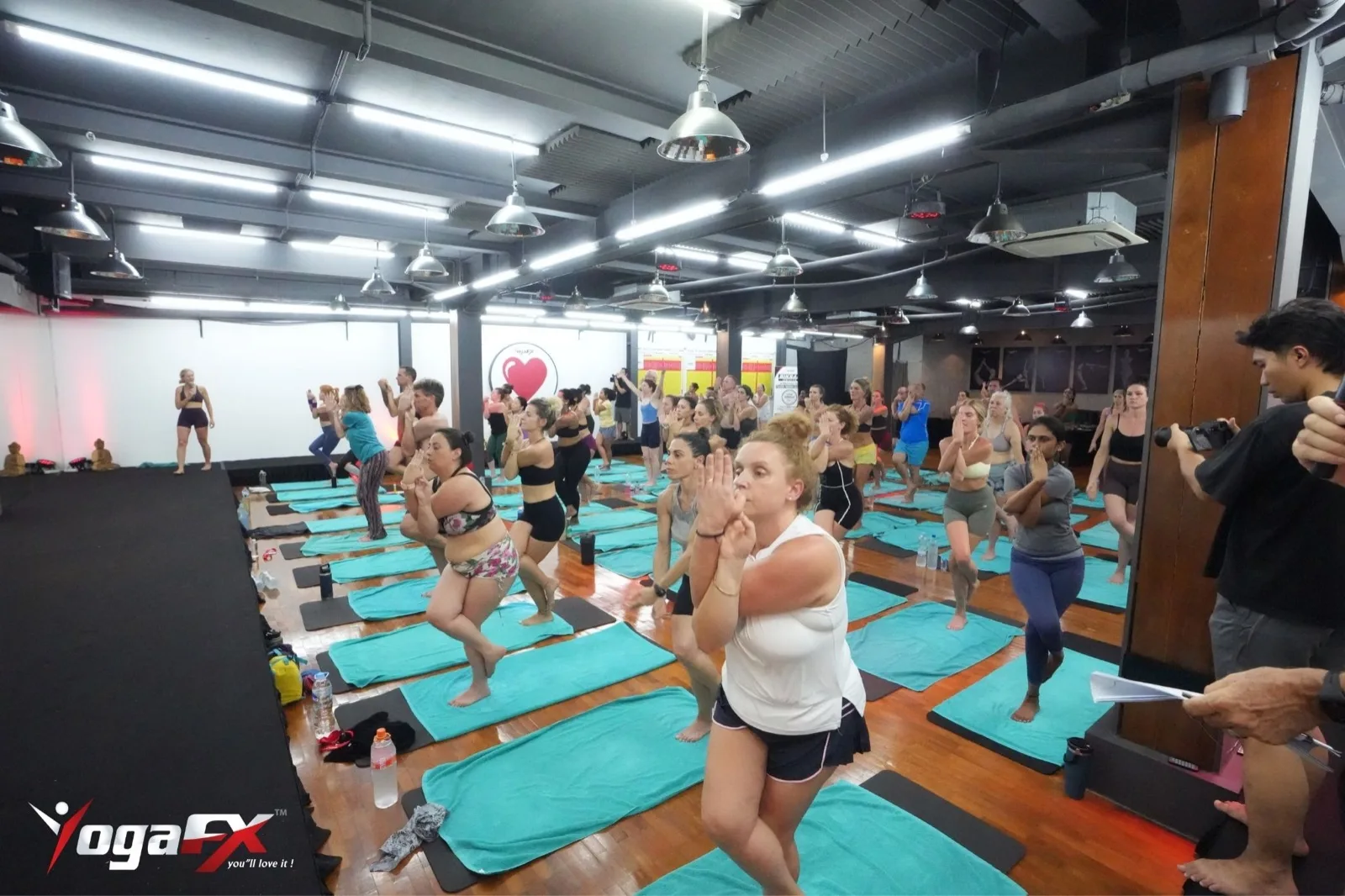
Hot yoga etiquette is the set of habits that keeps a heated room calm, safe and fair for everyone on the mats. At our Seminyak studio, that means arriving early, keeping your own space, staying still during the dialogue and drinking water before you walk in.

The Five Hot Yoga Etiquette Rules We Teach
These are the basics that Mr. Ian Terry, founder of YogaFX and an E-RYT 500 teacher with more than 12,000 teaching hours, asks every student to follow from the front of the room. None of them are about looking the part. Each one protects your focus, your body and the practice of the person beside you.
- Arrive early and settle in. Give yourself time to find your mat, drink some water and sit quietly before the dialogue starts.
- Keep your mat, towel and bottle in your own space. A bag pushed into the aisle becomes a trip hazard for the whole row.
- Stay still during the dialogue. The teacher’s voice is the lesson, and it works best when the room is quiet.
- Stay in the room until the class ends. Leaving in the middle of a posture breaks the line for everyone around you.
- Know when to step out. Dizziness, nausea or a headache are signs to rest in a cooler place, not to push through.
Arrive Early, Because the Room Is Hotter Than You Think
Our classes are 90 minutes long and run in a room held at about 40 degrees Celsius by natural tropical heat, not an electric heater. Humidity sits around 40 percent. That combination is why good hot yoga etiquette starts before the first posture, with time to hydrate, find your spot and let your breathing settle.
90 min
Length of one class, from the first posture to the last.
40 °C
Room temperature, held by natural tropical heat.
40%
Humidity in the room during class.
06:30 to 08:00
Class time at our Seminyak studio, booking only.
Arriving early gives you a chance to read the room. Notice where the heat sits, where the towels are and which spots are already taken by regulars who have held the same line for months. Good etiquette is mostly about noticing these things before the class starts.
Use those minutes to settle, not to scroll. Once the dialogue begins, hot yoga etiquette means your attention belongs to the teacher and to your own breath. A few quiet minutes before class make that switch much easier.
Mats, Towels and Shared Space
A hot room gets crowded faster than a cool one, because students need a clear arm-span and leg-span to hold each posture. The table below covers the situations that come up most often and the simple habit that keeps each one working.
| Situation | What good etiquette looks like | Why it matters |
|---|---|---|
| Laying out your mat | Leave a clear gap on each side and tuck your towel under the mat edge. | You need room to lift a leg or arm without touching a neighbour. |
| Bringing a water bottle | Keep it closed, beside your mat and away from walkways. | Loose bottles roll and get kicked during balance postures. |
| Choosing your spot | Take a place you can hold for the whole class. | Moving mid-class distracts the students you pass. |
| Sweat on the floor | Wipe your mat before you roll it up and rinse your towel after class. | Shared floors get slippery quickly in tropical heat. |
| Phone use | Keep your phone off and stowed for the full class. | The dialogue is the lesson, and a screen pulls you out of it. |
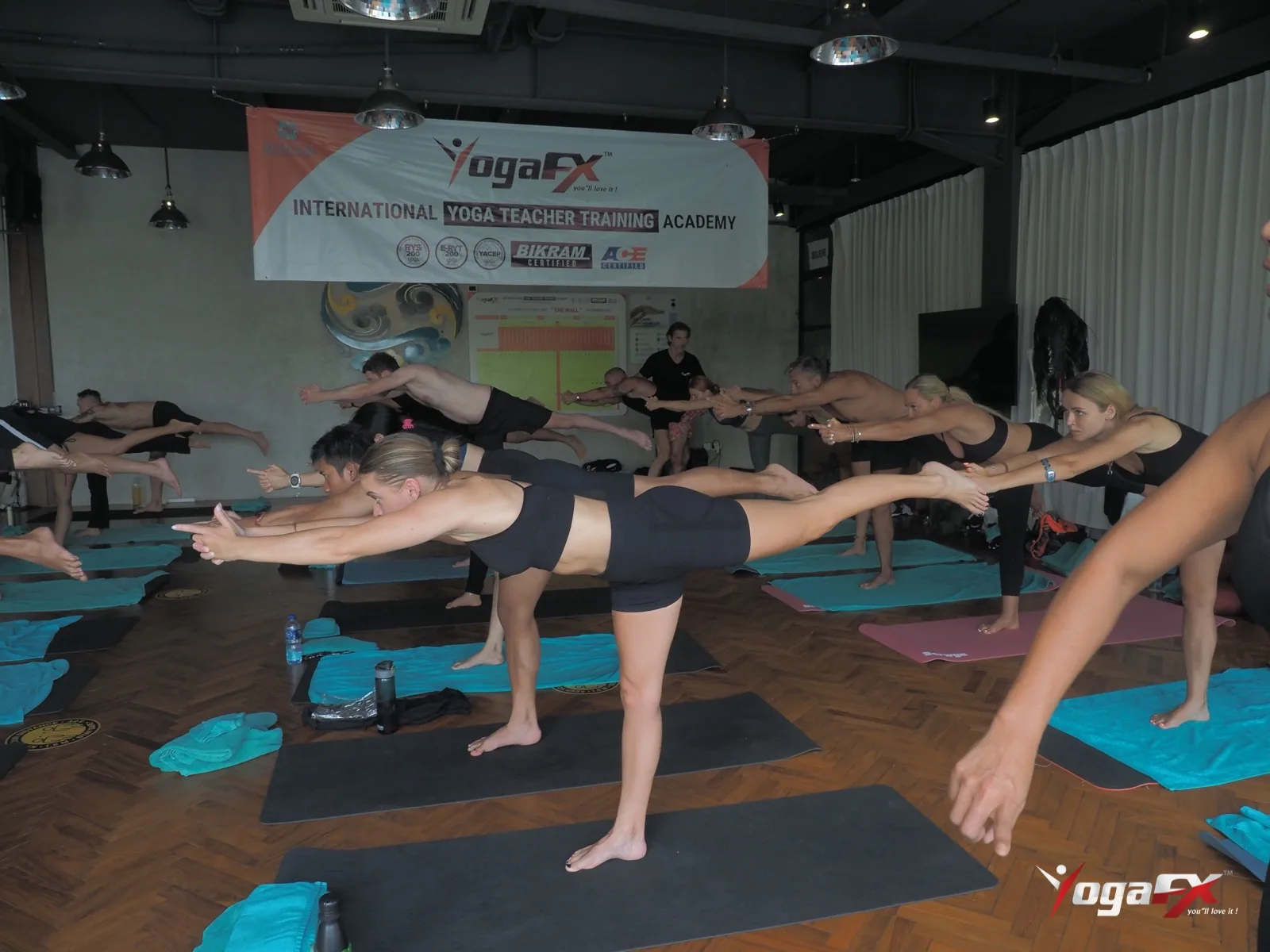
Choosing and Protecting Your Space
If you are unsure where to put your mat, ask the team at the desk or look for a gap near the edge of a row. A clear space toward the back is often the easiest place to start. Good spacing is one of the simplest hot yoga etiquette habits to learn, and it pays off in every class.
Towels deserve the same care. Keep yours under your mat rather than draped over a neighbour’s space, and fold it neatly when you pack up. Small habits like these make the shared floor safer for everyone who walks across it later in the day.
Space also means the tiny things. Your towel should stay on your side of the line, your bottle should not drift into the next student’s mat, and your feet should stay on your own mat when you lie back. These habits sound minor until you are the one trying to hold a balance next to someone else’s water bottle.
What to Wear to Hot Yoga and the Shirt Question
Clothing is part of hot yoga etiquette because it affects both the room and your own comfort. Fitted, breathable clothes let your teacher see your alignment and keep loose fabric out of the mat space. Most students bring a small towel, a closed water bottle and a spare top for afterwards.
A practical packing list for the first class looks like this:
- A small towel for your mat and one for your face
- A closed water bottle, filled before you arrive
- A spare top or dry layer for after class
- Fitted clothing that keeps loose fabric off your mat
For men, the shirt question comes up on almost every first visit. Our separate guide on hot yoga shirts for men, or shirtless explains what the room expects and why most guys end up choosing comfort over either extreme.
Listen During the Dialogue
Our classes use a fixed, scripted dialogue. The teacher speaks the same words in the same order every class, with no demonstration and no music. That is a big part of what makes the class feel the way it does, and it is the part of the etiquette that students most often underestimate.
Listening is not passive. When you stay quiet and follow the cues, you learn the sequence faster and you stop comparing yourself to the student next to you. If you want a clearer picture of how a class moves before your first visit, read what a hot yoga class feels like at our studio.
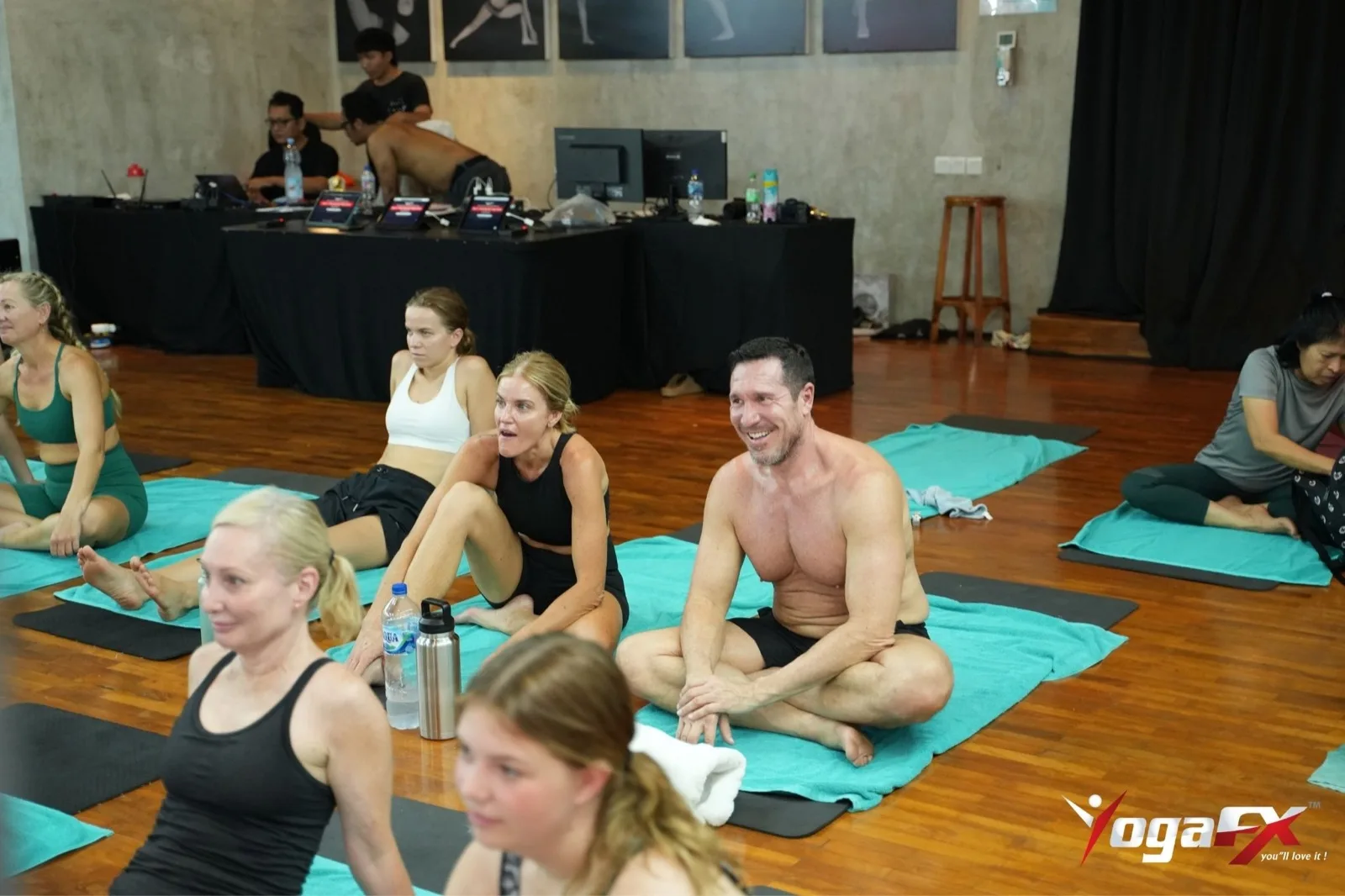
Talking Before and After Class
Questions are welcome, but timing matters. Hot yoga etiquette asks you to save your questions for before the class or after it, when the teacher can answer properly and nobody is trying to hold a balance. If you have an injury, a health condition or a medication that affects heat tolerance, say so before the class starts so the teacher can adapt your practice.
Beginners often feel they should apologise for every wobble. You do not need to. A beginner who arrives early, keeps their space and listens closely already shows the etiquette that experienced students work to keep. Ask one question at a time, and keep your voice low while the room is quiet.
Hot yoga etiquette for beginners is simply hot yoga etiquette for everyone, applied with a little more patience and a little more curiosity about the room.
Before you leave, thank the teacher briefly and wipe your mat. That short exchange is part of hot yoga etiquette, and it tells the team that you respect the room they keep running every day.
Hot Yoga Water and Heat: Knowing When to Step Out
Signs to Watch For
Good etiquette includes looking after yourself, because a heated room is no place to hide symptoms from the teacher or from yourself. The Mayo Clinic’s heat exhaustion guidance lists the signs students should watch for:
- Heavy sweating
- Faintness
- Dizziness
- Fatigue
- Nausea
- Headache
- Muscle cramps
What to Do If Symptoms Start
The same Mayo Clinic page advises that if you think you have heat exhaustion, you should stop all activity and rest, move to a cooler place and drink cool water or sports drinks.
Stepping out quietly, without a fuss, is part of the etiquette too. The teacher and the room are better served by one student who sits down in the shade than by one who pushes through and ends up on the floor.
The MedlinePlus guide to overheating during exercise gives two instructions that match what we ask students to do. It says to drink before, during and after a workout, even if you do not feel thirsty. It also says that at the first signs of heat illness you should get out of the heat or sun right away. Those instructions match the approach we ask of every student: speak up early, rest in the shade and return only when you feel steady.
Water matters just as much before class as in it. Sip through the day rather than gulping a litre at the door, and do not skip fluids because you plan to drink in the room. For more on the research and the safety picture, read our hot yoga health guide.
This is general information, not medical advice. If you have a heart condition, are pregnant or take medication that affects fluid balance or heat tolerance, talk with a healthcare professional before you practise in heat.
Think of hot yoga etiquette as the part of the class you control. The heat and the sequence are fixed, but how you arrive, where you place your mat and how you leave are choices you make every time you walk in.
Stay in the Room Until the Class Ends
Leaving early is the etiquette question students ask us most often, usually from a place of worry about the heat. The honest answer is that you should only leave if your body asks you to, and that you should leave quietly, through the shade, without stopping the class around you.
Walking out in the middle of a balance breaks the line for the students around you. It also tells you nothing about what your body can do. A short, quiet rest in a cooler spot, followed by a return when you feel ready, is the approach that keeps both you and the room safe.
Resting and leaving are different things. Resting means you stay in the room, sit or lie down in a clear space and rejoin when your body feels steady. Leaving means you go, and you should only do that when symptoms such as dizziness or nausea do not settle. Either way, hot yoga etiquette says you leave quietly and without comment.
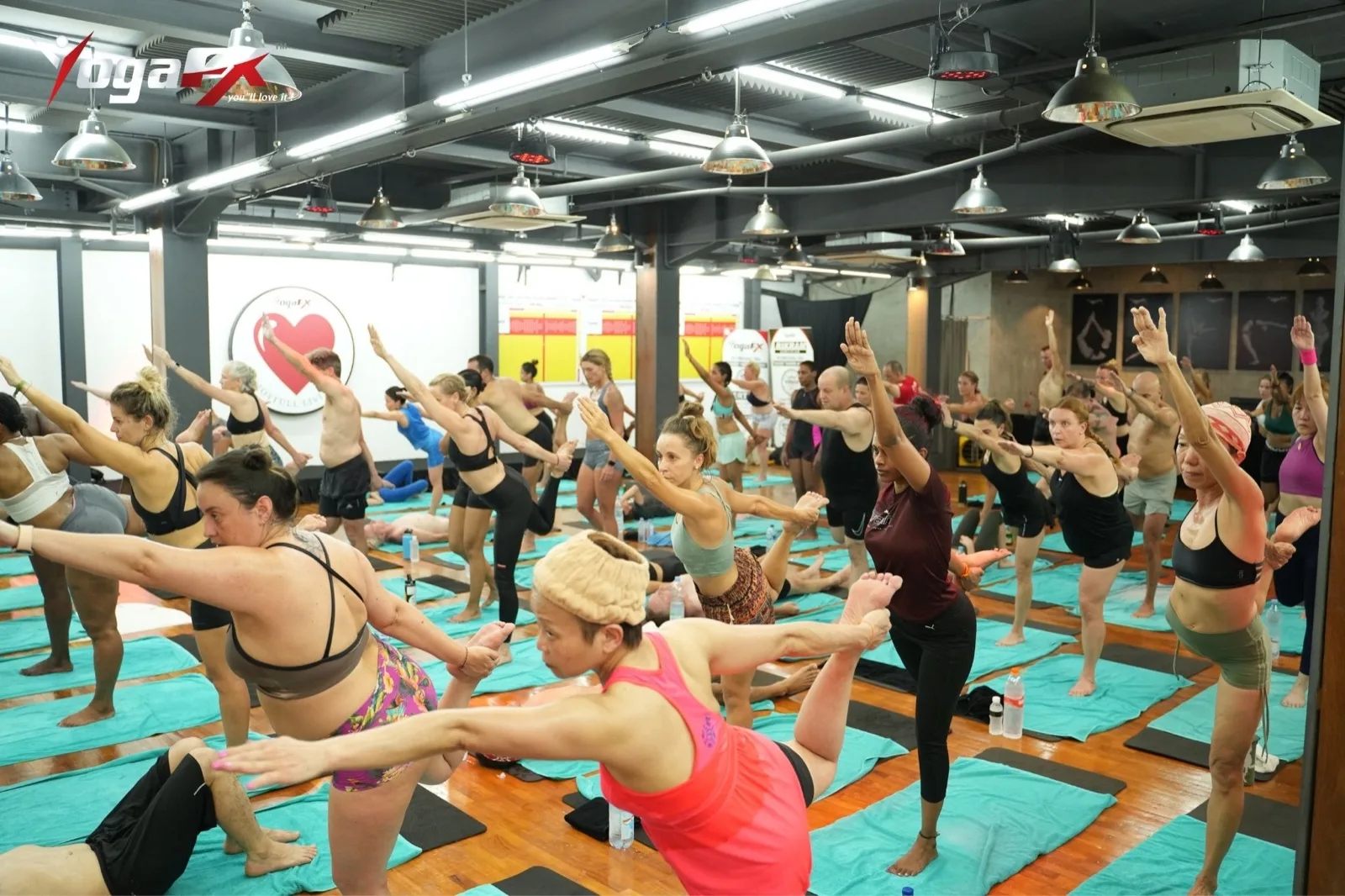
What Students Say About the Room
Students often describe the atmosphere before they describe the postures. One Google reviewer, Suar, wrote about the teaching and the feel of the room:
“Mr Ian such wonderful yoga teacher, the way he’s teaching a truly warm and relax and carring atmosphere.”
Suar, Google review, 2020
A trainee in our YouTube review puts the same point more simply, and their video shows the room they are describing:
“It’s the best class I’ve ever had! I will come back again for sure!”
A trainee in our YouTube review, 2023
Reviews like these show what students notice first: the teacher’s tone, the warmth of the room and the feeling of being looked after. Etiquette is part of that feeling. When everyone respects the space, the calm carries over to the next student and the next class.
Mr. Ian Terry’s Standard for the Room
Mr. Ian Terry founded YogaFX in 2017. He holds the E-RYT 500 credential and has taught more than 12,000 hours, and the school has trained over 1,500 graduates from more than 80 countries. The Original Hot 26&2 Yoga sequence he teaches is the same in every class, which is exactly why the room rules matter so much.
When our Canggu studio opens, the etiquette above will apply there too. The same sequence, the same heat and the same expectations for respect travel with you.
The etiquette is not a special rule for one location. It is the way the room works wherever you practise.
When the sequence never changes, the room becomes the variable. Your attention, your space and your respect for the people around you decide how the class feels for everyone. That is the whole logic behind hot yoga etiquette, and it is the standard we hold every student to from the first class onwards.
Your First Class and the Free Guest Pass
The fastest way to learn hot yoga etiquette is to sit in a class and watch how it works. If you have never practised in heat, you can claim your Free Guest Pass and join a session at our Seminyak studio. Our team can help you plan a first week that fits your body and your schedule.
Ask them to walk you through the basics of hot yoga etiquette before you start, so you know where to stand, what to bring and when to speak.
If you want a sense of how the first week goes, read our guide on heat acclimatization for hot yoga in Bali before you book.
FAQ: Hot Yoga Etiquette Questions, Answered
What should I wear to hot yoga?
Wear light, breathable clothes that fit close to the body so your teacher can see your alignment. Many students choose fitted synthetic tops with shorts or leggings that wick sweat. Bring a small towel, a closed water bottle and a spare top for afterwards. For men, the shirt question has its own guide on this site.
How should I prepare for hot yoga?
Drink water through the day before class, not only in the room, and eat a light meal a few hours before you arrive. Arrive about 15 minutes early to settle your mat. Tell the teacher about any injury or health condition before class. If you feel unwell in the heat, rest in a cooler place and step out quietly.
What should I do after hot yoga?
Rest in a cooler place for a few minutes and keep drinking water or a cool sports drink. Wipe down your mat and rinse your towel so the next student finds a clean space. If dizziness, nausea or a headache lasts more than an hour after you leave the heat, contact a healthcare professional.
Is there hot yoga etiquette for beginners?
Yes. Beginners should arrive early, keep their space, stay quiet during the dialogue and follow the teacher’s cues rather than the students around them. Nobody expects you to know the postures on day one. Ask your questions before or after class, not during the dialogue, and step out quietly if you need a rest in a shaded or cooler spot.
Still have questions? Message Mr. Ian and the YogaFX team on WhatsApp and we will answer them personally.
 Mr. Ian Terry