
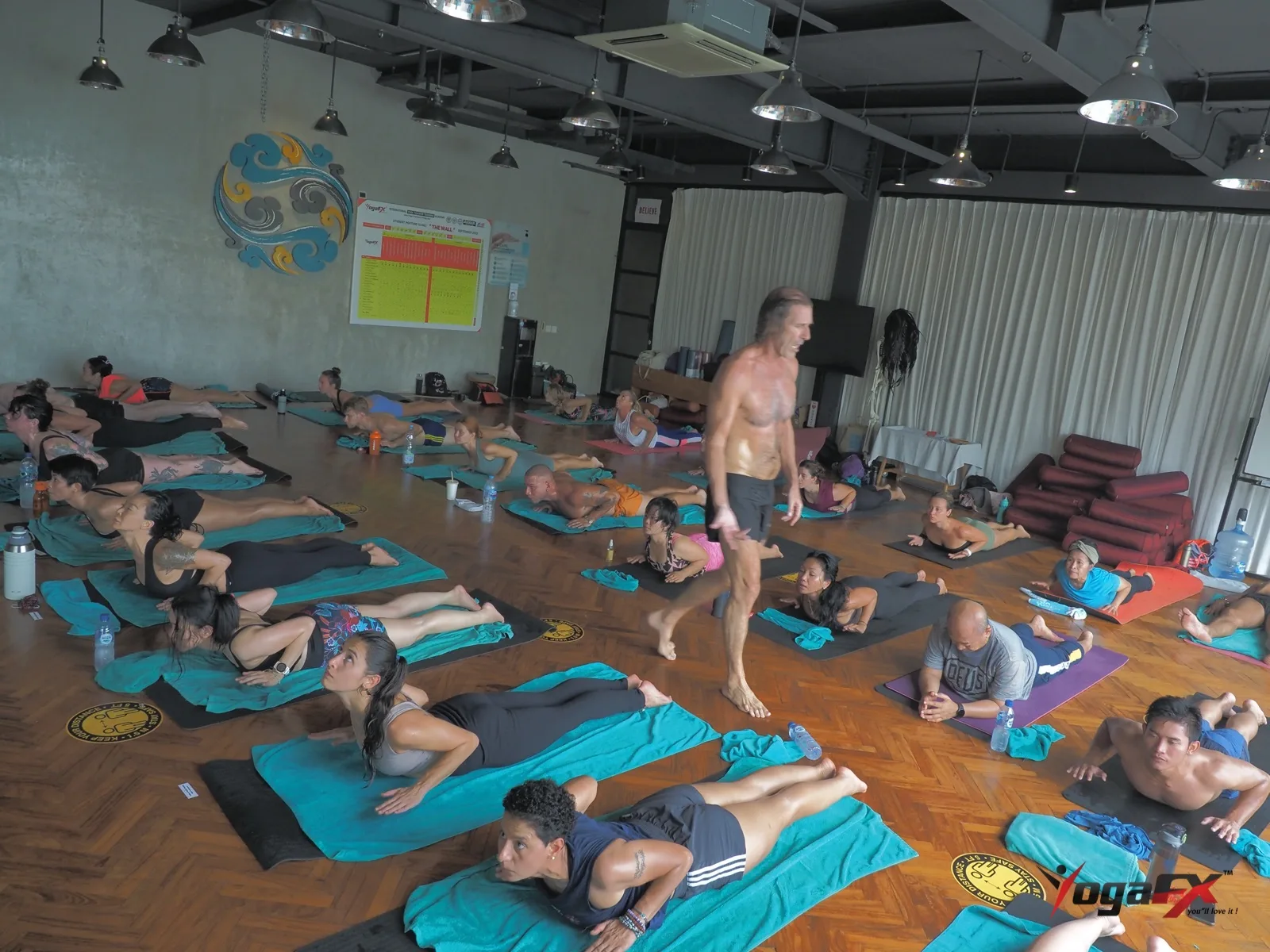
Short answer: Hot yoga at home is possible, but it’s harder to do safely than most people expect. You have to heat a small room evenly, keep fresh air moving and spot early signs of overheating, with nobody watching. For most beginners, a supervised class in a heated studio is the safer place to start.

Since online classes became normal, more people ask us a simple question. Can they turn the heating up, roll out a mat in the spare room and do hot yoga at home? It’s a fair question, because it saves travel, time and money. This guide covers how people heat a hot yoga room at home, the real safety risks, what you lose without a teacher and when home practice works.
Can you do hot yoga at home?
Yes, you can do hot yoga at home. It works best for experienced students who know the sequence, understand how their body reacts to heat and have a safe, well ventilated space. Beginners are better off learning in a supervised studio first. Home sessions can come later, once the basics are solid.
Practising yoga at home at normal room temperature is simple and low risk. Adding heat changes the picture. Heat raises your heart rate and fluid loss. In a studio, a teacher watches for signs of trouble. With hot yoga at home, you practise, time, coach and monitor yourself all at once.
If you’re completely new, the first few classes are the steepest part of the learning curve. That’s exactly when supervision matters most. A good teacher also notices things you can’t feel yourself, such as a locked knee, a held breath or a pale face.
How do people heat a hot yoga room at home?
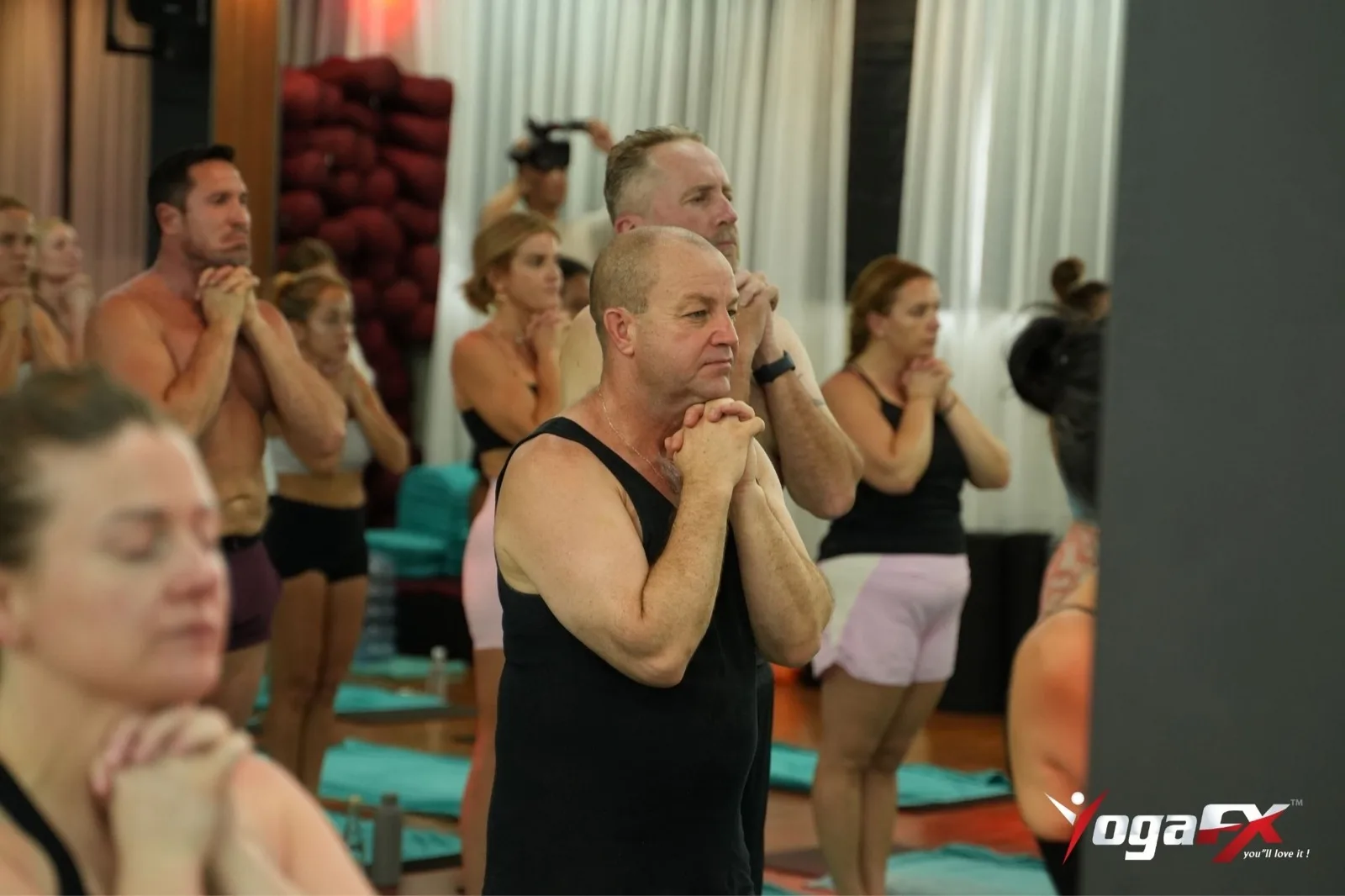
People usually heat a home hot yoga room with portable electric space heaters, infrared heating panels, a humidifier or a steamy bathroom. Some simply practise in a naturally warm climate. Each method warms the air differently, and none easily matches the even 40°C and roughly 40% humidity of a purpose built Bikram studio.
Here is how the common options for hot yoga at home compare:
| Method | How it warms the room | Main drawbacks |
|---|---|---|
| Electric space heater | Heats the air near the unit | Hot and cold spots, fire risk near towels, dries the air |
| Infrared panels | Warms bodies and surfaces directly | Feels different from humid studio heat, cost of installation |
| Humidifier plus heater | Adds moisture to heated air | Damp, mould risk in small rooms, hard to control |
| Bathroom with hot shower | Steam raises heat and humidity | Very small space, slippery floor, poor air flow |
| Warm climate, no heater | Natural outdoor heat and humidity | Depends on season and weather, less consistent |
The hardest part isn’t reaching a high temperature. It’s holding the same temperature and humidity across the whole room for 90 minutes. A single heater in a corner creates a gradient. The mat nearest the unit feels very different from the far wall. Humidity is even harder to manage. A home room can’t remove stale, moist air without a window, and opening one loses the heat you just made.
Never use a gas, paraffin or other fuel burning heater in a closed room for exercise. These can produce carbon monoxide, which you cannot see or smell. If you want to understand how dry infrared heat differs from humid studio heat, our comparison of hot yoga and an infrared sauna explains the difference.
What are the safety risks of hot yoga at home?
The main safety risks of hot yoga at home are overheating with nobody to notice, poor ventilation, uneven heat, fire and electrical hazards near sweat and towels, slipping on wet floors and dehydration. A studio manages most of these. Staff, airflow and the room are designed for it.
- Overheating alone. Heat exhaustion can creep up gradually. The NHS guidance on heat exhaustion and heatstroke lists signs such as dizziness, headache, feeling sick and confusion. Mayo Clinic adds heavy sweating, a weak rapid pulse and cool, clammy skin. Confusion is exactly the symptom that makes it hard to judge your own state.
- Ventilation. A small closed room heats up fast but also fills with stale, humid air. Studios manage air exchange. A spare bedroom usually does not.
- Uneven heat. A heater in one corner can leave you overheating on one side of the mat and cool on the other, which makes it hard to judge effort.
- Equipment hazards. Heaters, cables and extension leads do not mix well with dripping sweat, wet towels and water bottles.
- Slips. Wet laminate or tiles are slippery. Studios use flooring and towels designed for heavy sweating.
- No one to call for help. If you feel faint, you are on your own. At the very least, tell someone at home what you are doing.
What does the medical evidence say about heat and exercise?
Mayo Clinic explains that heat illness is most likely when high temperatures combine with high humidity and strenuous physical activity. It also lists dehydration as a common cause. That describes a hot yoga room well.
Mayo Clinic also notes that your body can take several weeks to adjust to hot weather. It advises you to limit time exercising in heat until you are conditioned to it.
The NHS describes two stages. Heat exhaustion brings dizziness, headache, nausea, heavy sweating and pale, clammy skin. Heatstroke is a medical emergency, with a very high temperature, fast breathing, confusion and sometimes seizures. For heat exhaustion, the NHS says to move somewhere cool, drink water and cool the skin. Call 999 if you’re not better within 30 minutes or if heatstroke signs appear.
Put those two sources together and the problem with hot yoga at home is clear. You’re asking your body to adapt over weeks, in a room you built yourself, while judging your own symptoms. Confusion is on the NHS list of warning signs, and it’s the one symptom you can’t rely on yourself to notice.
This article is for general educational purposes and is not medical advice. Anyone with a heart condition, high or low blood pressure, pregnancy or another health concern should consult a healthcare professional before practising in a heated room. Our article on whether hot yoga is safe covers warning signs in more depth.
What do you lose without a teacher and the dialogue?
Without a teacher, you lose live correction, safety monitoring and the spoken dialogue that guides every posture in a Hot 26&2 class. The dialogue tells you where to place each foot, when to breathe and how long to hold. Without it, most home students rush, hold postures incorrectly and skip the rests between floor postures.
In our Seminyak studio, the teacher speaks the dialogue for the full 90 minutes. They watch the room and adjust cues to the people in front of them. If someone is pale or wobbling, they see it. If someone locks a knee in Standing Head to Knee, they correct it before it becomes a habit.
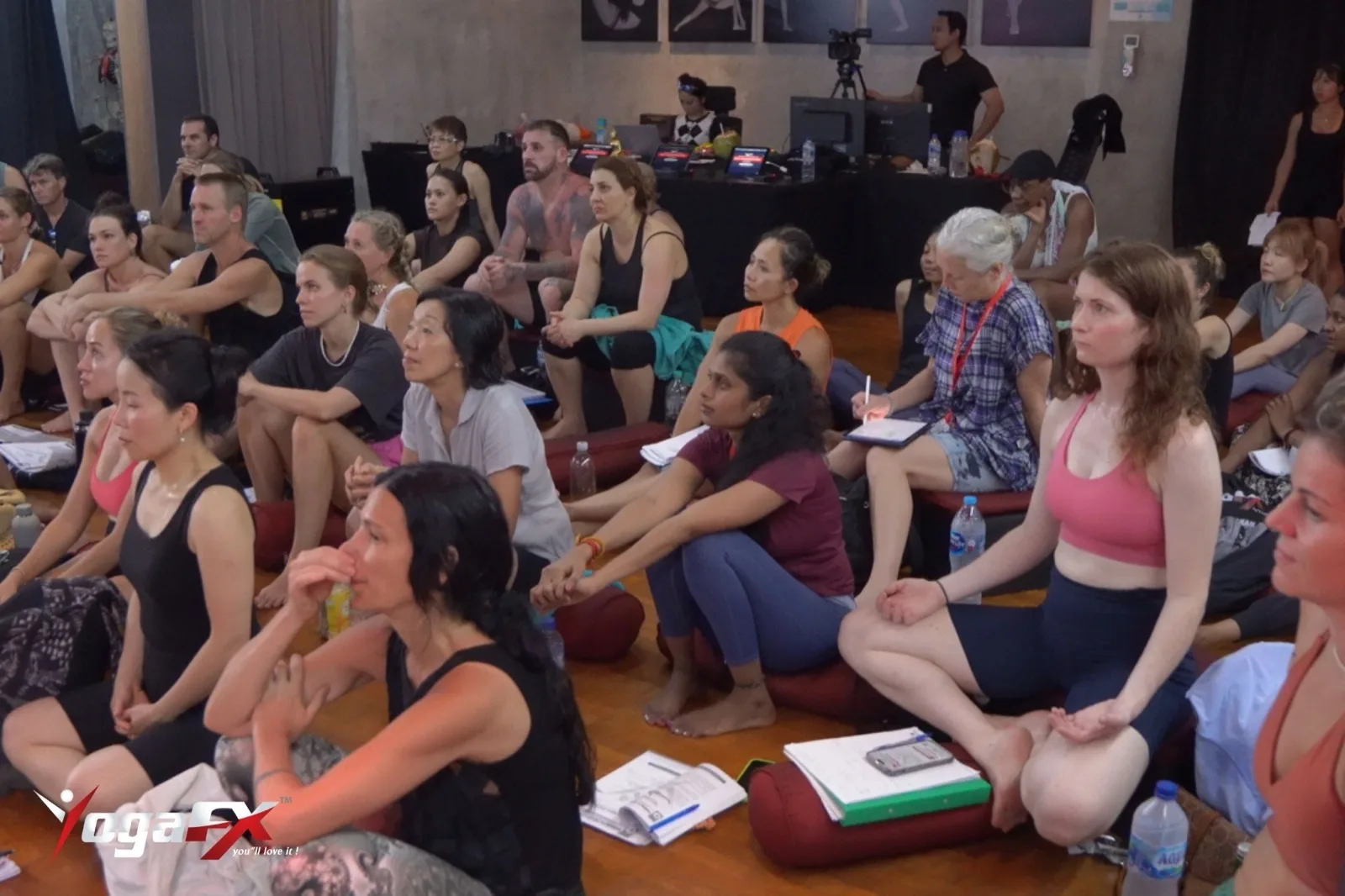
A video can show you the shapes, but it can’t see you, and that is the core weakness of hot yoga at home. That matters most in the first months, when bad habits form quickly. You also lose the shared energy of a full room, which helps many people hold postures longer than they would alone. To see what each posture should look like, our guide to all 26 postures in order is a helpful reference.
What do YogaFX students say about learning in the studio?
Students often tell us the support in a studio is what hot yoga at home can’t give you. Here’s what three of them said about training with us:
- Lars, Google review, 2025: described Mr. Ian as a great coach who made everyone feel at home and pushed them to leave their comfort zone.
- Samantha, Yoga Alliance review, 2025: said the programme was intense but completely worth it, and that she met incredible people from all over the world.
- A trainee in our YouTube review, 2026: called it a very safe place where everybody was so supportive, and said the course challenged everyone.
None of that is possible with hot yoga at home, alone in a spare room. Support, challenge and a safe pace come from people, not from a heater.
When does hot yoga at home actually work?
Hot yoga at home works best as a supplement to studio classes. It suits experienced students who already know the sequence and the dialogue. It also works in a naturally warm climate with good airflow. And it helps when travel makes studio visits impossible for a while, as long as you keep the heat moderate.
Learning the dialogue properly is the best investment for home practice. Our YogaFX online course teaches the Hot 26&2 dialogue and sequence posture by posture. You’ll know exactly what each cue means, even when nobody is speaking it to you. If you want an easy entry point, our Starter Kit is a lower commitment way to start. It covers the Standing Series dialogue, posture demonstrations and anatomy lectures at your own pace.
Here are seven sensible rules for hot yoga at home:
- Keep the room warm rather than very hot, especially at first
- Open a window or door slightly so air can move
- Keep heaters well away from towels, water and cables
- Practise on a non slip mat with a towel on top
- Keep water within reach and take the floor rests seriously
- Tell someone in the house that you are practising
- Stop at the first sign of dizziness, nausea or confusion
Build up slowly. The body can take weeks to adapt to heat. So start hot yoga at home with shorter sessions at a lower temperature. Add time only when you finish feeling steady rather than drained.
Why is a heated studio the safer place to start?
A heated studio is the safer place to start because the room, the heat and the airflow are designed for practice. A trained teacher also watches every student. You learn correct alignment from day one. You get help immediately if you feel unwell. And you build heat tolerance gradually under supervision instead of guessing alone.
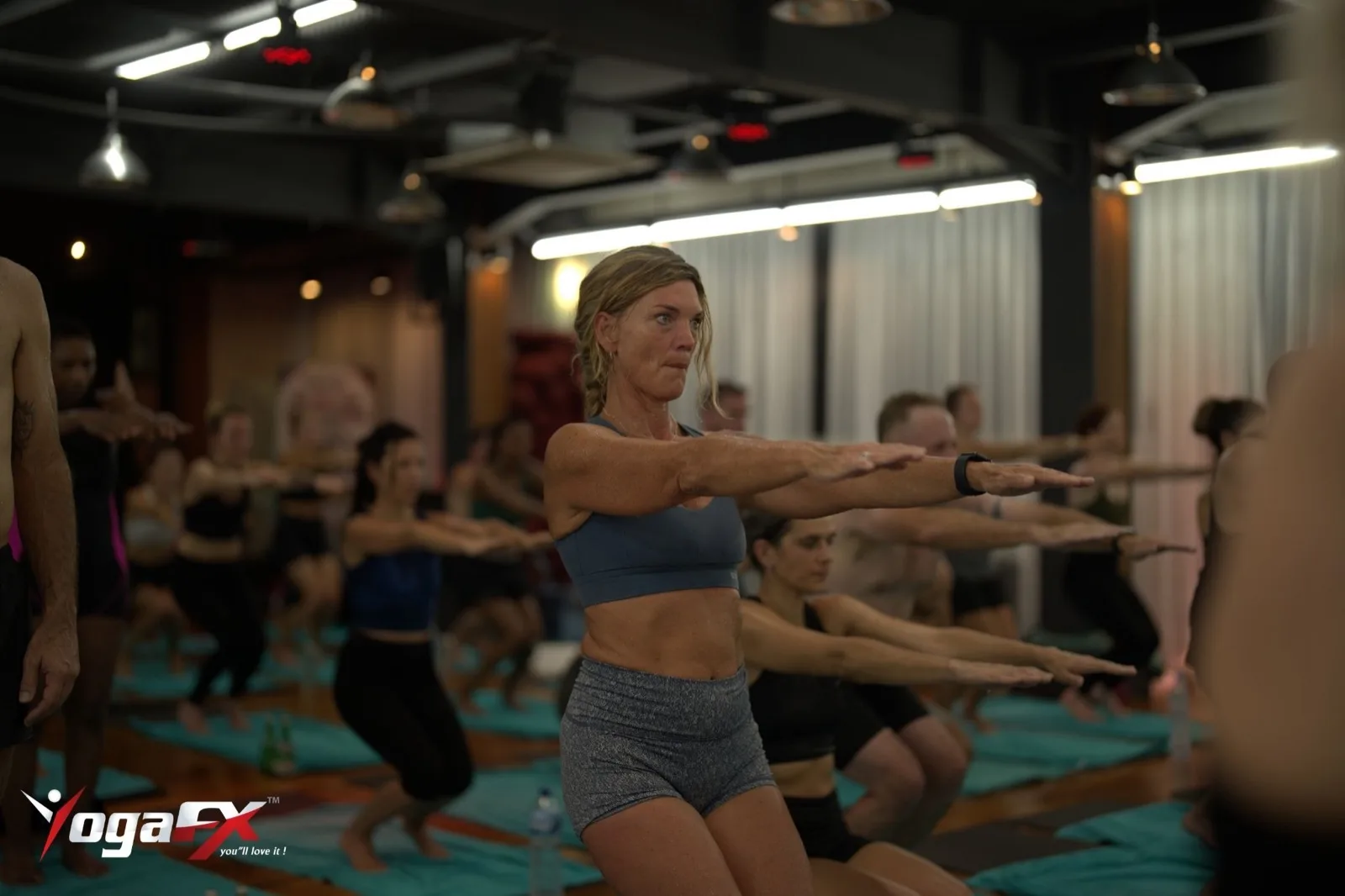
At YogaFX we go a step further and use no electric heaters at all. Our Seminyak studio relies on Bali’s natural tropical heat. That’s around 27 to 33°C, with humidity usually above 70% all year. The warmth is even, humid and soft on the breath. You can read why we prefer it on our page about natural heat yoga in Bali.
The studio was founded by Mr. Ian Terry, E-RYT 500. YogaFX is a Yoga Alliance Registered Yoga School with more than 1,500 graduates from over 80 countries. Our teachers watch the room closely and support anyone who needs to rest. If you’re visiting Bali, our guide to a first hot yoga class in Bali explains what to expect.
FAQ
Is it safe to do hot yoga at home?
It can be, but it carries more risk than a studio class because nobody is watching for overheating. Keep the room warm rather than very hot, ventilate it, keep heaters away from water and towels, tell someone you are practising and stop at the first sign of dizziness or nausea.
How do I make a hot yoga room at home?
Most people use an electric space heater or infrared panels, sometimes with a humidifier, in a small room with a non slip mat and towel. Never use a fuel burning heater in a closed room, and keep some airflow so the air does not become stale.
What temperature should a home hot yoga room be?
Start with a warm room rather than trying to match a studio. The original Bikram standard is about 40°C with around 40% humidity, but at home without supervision it is wiser to stay well below that and build up gradually.
Can I learn Bikram yoga at home?
You can learn the sequence and the dialogue at home through a structured course such as the YogaFX online course, but most people progress faster and more safely by also taking studio classes, where a teacher can correct alignment and watch for overheating.
Is hot yoga at home as good as a studio class?
Usually not for beginners. A studio gives you even heat, good airflow, a trained teacher, the spoken dialogue and live corrections. Home practice works best as an extra for experienced students who already know the sequence well.
Free Guest Pass
Before you try hot yoga at home, feel how it should be done. Claim your Free 1-Day Guest Pass for a 90-minute class at our Seminyak studio. Classes run 06:30 to 08:00 by booking only. Message us on WhatsApp at +62 811 3888 330 or use our contact page.
 Mr. Ian Terry