
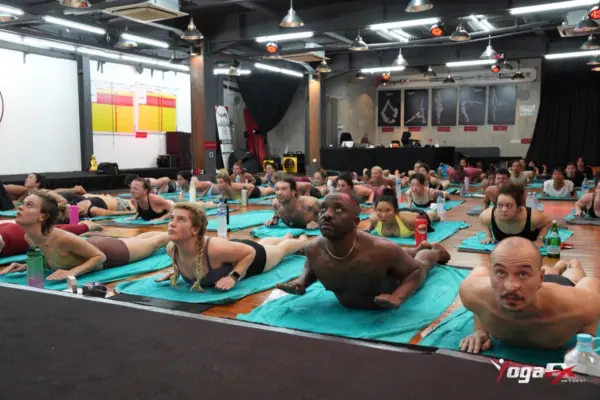
Cobra pose (Bhujangasana) is a floor backbend. You lie on your belly, press your hands down, and lift your chest while your hips stay heavy on the mat. In our Seminyak hot room it is posture 16 of the 26, and the goal is a long, steady lift rather than the deepest bend you can force.

If you’re planning a Bali stay and wondering what this pose feels like in warm air, you’re in the right place. We teach it every day at YogaFX Seminyak, and we see the same handful of mistakes again and again. This guide walks through the shape, the common errors, and a calm way to build depth over a few weeks.
Cobra pose is gentle on the joints when it’s done well. Done badly, it pinches the lower back and tires the neck. So we’ll spend most of our time on how to lift, not on how high.
Where Cobra Pose Sits in a Seminyak Class
Our class runs 90 minutes and follows the original 26 postures and 2 breathing exercises. The first half is standing work. The second half moves to the floor, and that’s where cobra pose lives.
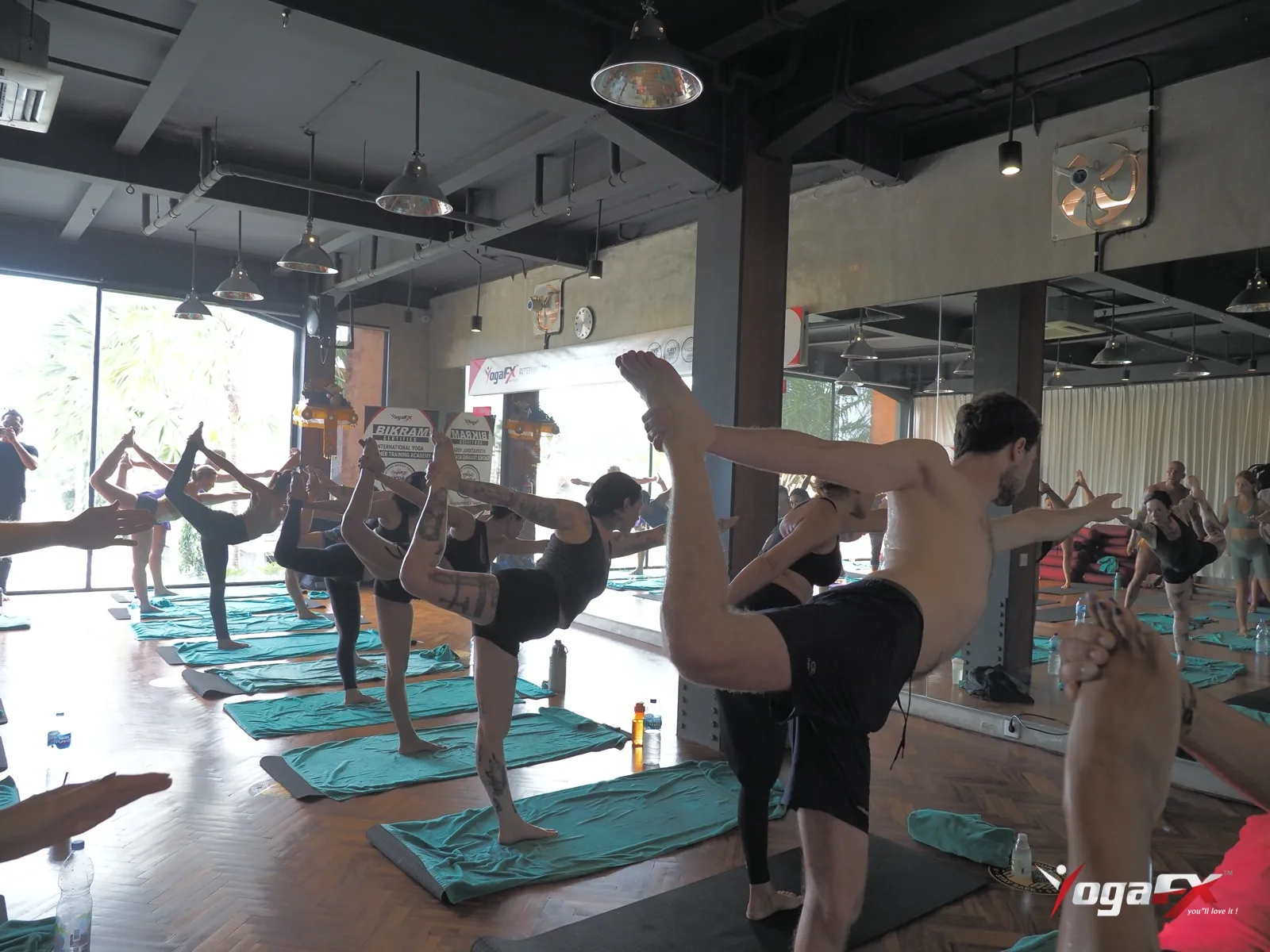
By the time you lie down, your spine has already moved through side bends, a forward fold and a few balances. Cobra arrives right after wind-removing pose and the sit-up. Locust follows it straight away. That order matters, because the belly-down postures work as a small family: each one asks the back muscles to lift a different part of the body.
For the full running order, our guide to all 26 Bikram yoga postures in order shows where every posture sits. This page stays on one: cobra.
Cobra opens the spine strengthening series on the floor. For all 26 postures in order, see our complete Bikram yoga guide.
How to Do Cobra Pose, Step by Step
Here is the shape we coach in the room. Read it once, then try it slowly on the mat. The order of the steps is more important than the height you reach.
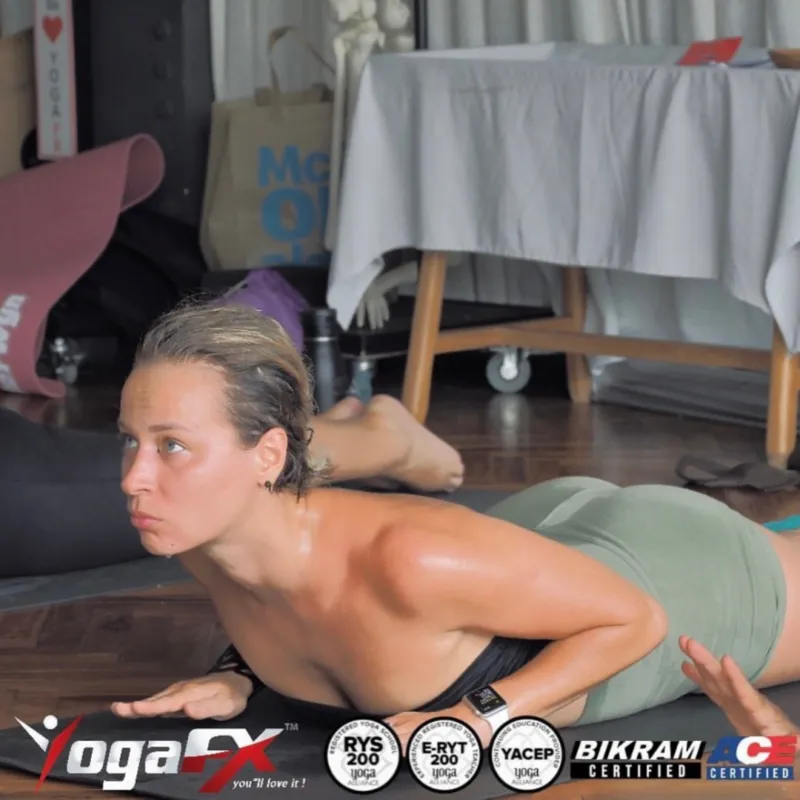
- Lie on your belly. Bring your legs together and rest the tops of your feet on the floor. Your forehead or chin touches the mat.
- Place your hands. Set your palms under your shoulders and keep your elbows close to your ribs. Your fingers point forward.
- Lengthen first. Before you lift, press your legs together and reach your toes back. This wakes up the muscles along the spine.
- Lift the chest. Breathe in and raise your head, then your upper chest. Let your back muscles do the work, with your hands only guiding.
- Keep the hips grounded. Your pelvis stays on the mat. If your hips rise, you’ve gone past your range for today.
- Hold, then come down slowly. Stay steady for a short count, breathe, and lower your chest, then your head, back to the mat.
A good test is the “tall spine” check. Imagine a string pulling the crown of your head forward and up, not back. If your neck feels crunched, your chin is leading when your chest should be.
You don’t need to straighten your arms. In a warm room, many people have a lovely, safe cobra with bent elbows and a modest lift. Straight arms come later, if they ever come.
5 Common Cobra Pose Mistakes and How to Fix Them
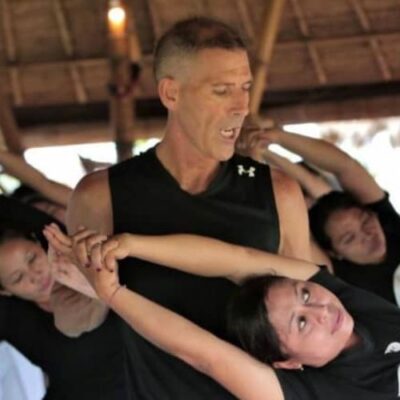
Mr. Ian Terry, our Founder and Lead Instructor (E-RYT 500, 12,000+ teaching hours), built our teaching team around simple, repeatable cues. In cobra pose, nearly every correction falls into one of the five rows below. Check yourself against the table after your next class.
| Mistake | What you feel | Gentle fix |
|---|---|---|
| Shoulders creeping to the ears | Tight neck, tired upper back | Slide the shoulder blades down your back before you lift |
| Pushing up with the arms | Pinch in the lower back | Lift with the back muscles and keep your elbows bent |
| Hips lifting off the mat | Pressure low in the spine | Press the pelvis down and lower the chest a little |
| Throwing the head back | Crunch at the base of the skull | Look forward, with the chin level and the neck long |
| Legs apart and loose | Wobble, less support | Squeeze the legs together and reach the toes back |
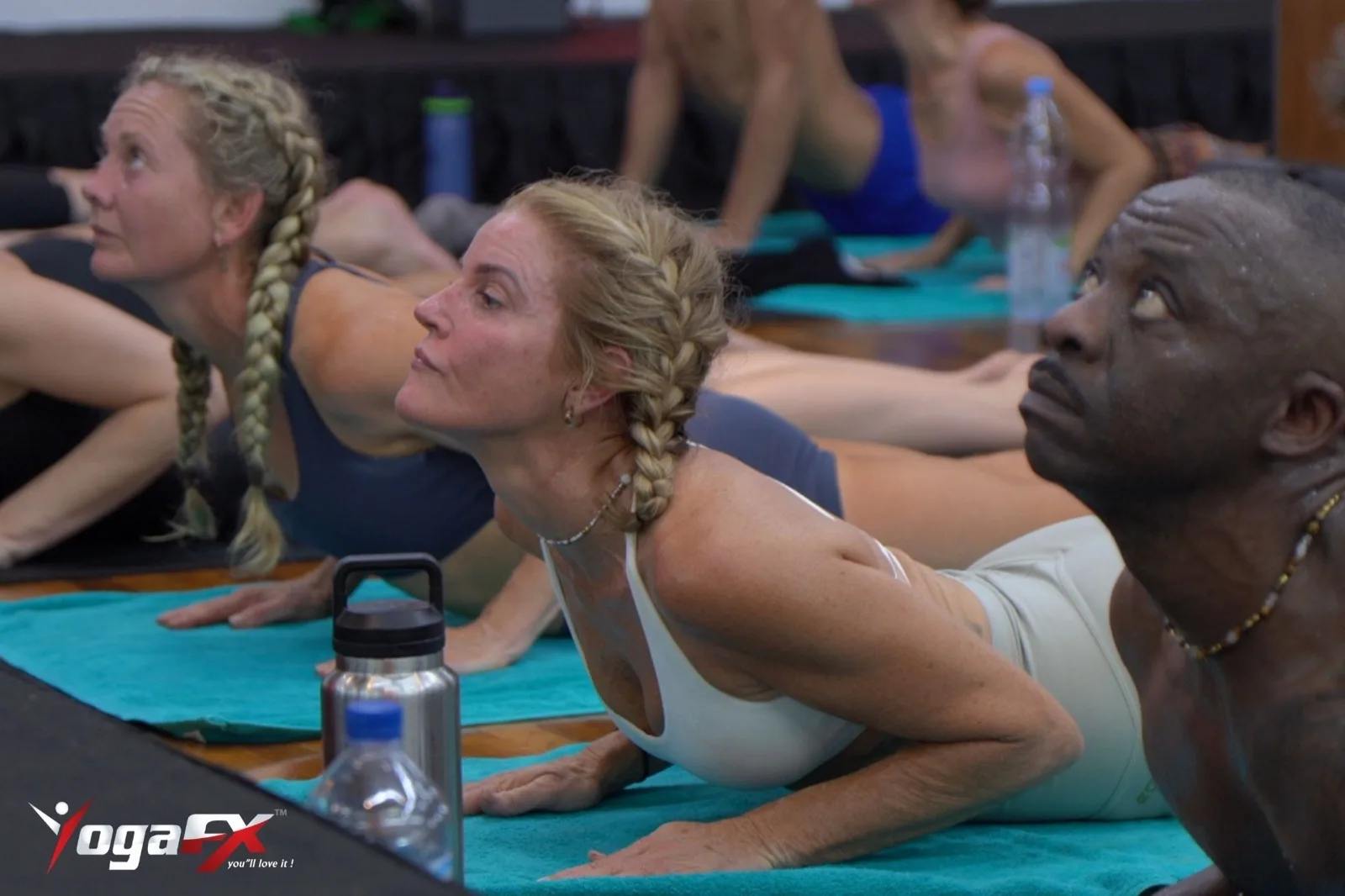
The pinch in the lower back deserves special attention. It’s a complaint we hear often from first-timers. It almost always means the lift came from the arms and the low back, not from the middle and upper back.
So when you feel it, don’t push through. Come down, reset your hands, and lift less. A smaller cobra that spreads the bend across the whole spine beats a big one that hinges at a single point.
Gentle Depth: A Calm Way to Build Your Cobra Pose
Depth in a backbend comes slowly. A common mistake is chasing a photo-perfect arch in week one. A better plan is to think in stages and let the room’s warmth do some of the work.
- Stage one, the low lift. Raise only your head and upper chest, with your forearms light on the mat. Hold it and breathe. Many first-timers stay here for their first week or two.
- Stage two, the bent-elbow cobra. Lift a little higher with your elbows bent and close. Your hips stay down and your ribs stay long.
- Stage three, the longer arm. Straighten the arms only as far as your hips can stay grounded. Stop the moment your lower back gets loud.
Then repeat the same cobra across several classes. Consistency does more than effort. If you want to see how a deeper backbend builds on cobra later in the class, our camel pose guide shows the standing-up version and its safe depth.
Breathing, Neck and Hands: The Small Details
Most cobra pose problems come from small details, not from big ones. Three of them are worth a closer look, because fixing them changes the whole posture.
Breath. Breathe in as you lift and breathe out as you lower. Don’t hold your breath at the top. Instead, keep the breath slow and even through your nose, because a held breath makes the ribs stiff and pushes the bend into your lower back.
Neck. Keep the back of your neck long. For example, picture a point on the wall in front of you and look at it, rather than glancing at the ceiling. When the chin tips up, the neck takes the bend that the chest should be taking.
Hands. Spread your fingers and press the whole palm into the mat. That way the wrists stay happy. If your wrists complain, rotate your hands a few degrees outward, or lift less so that your hands carry almost no weight.
Cobra Pose vs Locust and Other Floor Postures
New students often mix up the belly-down postures, so it helps to see them side by side. All of them are backbends, and all of them ask the muscles along the spine to work. The difference is what lifts.
- Cobra pose. The chest and head lift while your legs and hips stay down. It’s the quietest of the group.
- Locust pose. The legs lift while the chest stays low. Cobra prepares you for it, since both train the same back muscles from opposite ends.
- Bow pose. Both ends lift together while you hold your ankles. It comes later and asks for much more flexibility.
So if you can’t yet hold a calm cobra, don’t worry about bow. Build the quiet one first. A calm cobra is also good preparation for locust.
A Simple Plan for Your First Week in Bali
Visitors often ask how many classes they need before cobra pose feels natural. There’s no fixed number, because bodies and travel schedules differ. Still, a calm weekly plan helps, so here is the one we’d suggest to a first-time guest.
- First class. Use your guest pass, stay low in cobra and focus on the shape, not the height.
- Second and third classes. Keep the elbows bent and watch your shoulders. Check the table above after class.
- Later in the week. Add a little height only if your hips stay grounded and your neck stays long.
- Rest days. Take a day off between hard sessions, and walk or swim instead.
If you’re wondering how the whole class flows from start to finish, our guide to the 90-minute class breakdown maps every section.
What the Research Says About Cobra Pose and Your Back
Let’s keep the claims modest. No single study is about cobra pose alone, so we look at what is known about yoga and back health in general, and about heated yoga practice.
The US National Center for Complementary and Integrative Health says yoga may have a small benefit for low-back pain. Its clinical digest, Yoga for Pain: What the Science Says, describes a 2022 Cochrane review of 21 trials. It found low-to-moderate certainty evidence of small improvements in pain and back-related function compared with no exercise.
That review is by Wieland and colleagues. Its abstract page was blocked when we checked, so we name it here without a link.
For strength and flexibility, a 2013 randomized trial by Tracy and Hart looked at Bikram yoga training in healthy young adults, the style we teach as Original Hot 26&2 Yoga. The yoga group did 24 sessions over 8 weeks in a heated studio. Compared with a control group, they improved isometric deadlift strength and lower back, hamstring and shoulder flexibility, and body fat dropped modestly. Handgrip strength, cardiovascular measures and maximal aerobic fitness didn’t change.
That fits what we see on the mat. Cobra trains the muscles that run along the spine, so a steady practice may help the back feel stronger over time. It isn’t a treatment for back pain, and the improvements in the research are small.
Safety note. The same NIH source says yoga is generally safe for healthy people when practised properly under a qualified instructor. Sprains and strains are the most common injuries, and serious ones are rare. It also warns that hot yoga carries special risks from overheating and dehydration. This article is general information, not medical advice, so please consult a healthcare professional before starting if you have a back condition.
Cobra Pose in Natural Bali Heat: Notes for Visitors
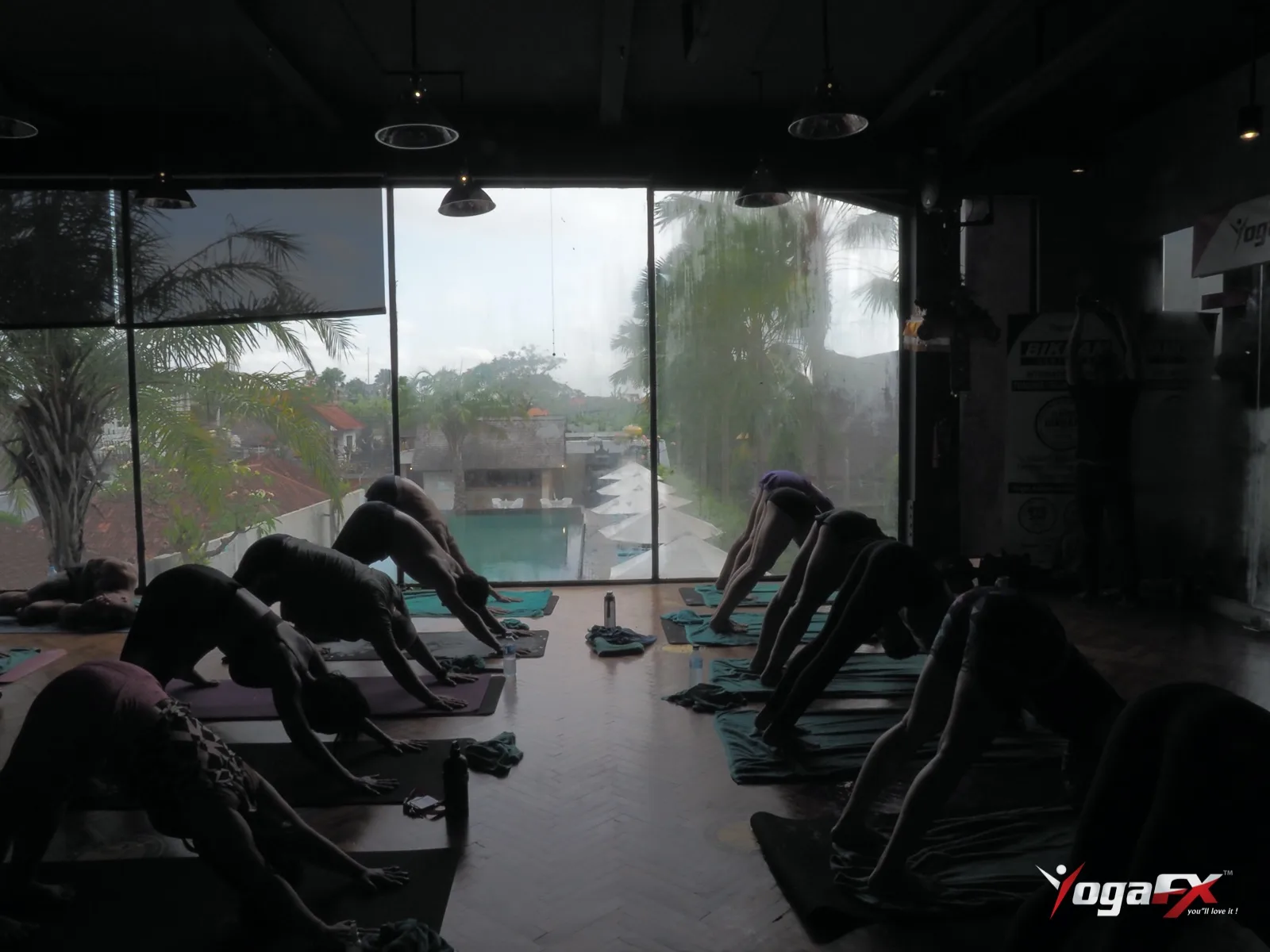
Our room is warmed by natural tropical heat, not electric heaters. The class is held at around 40 degrees C with about 40% humidity. By the time you’re on your belly for cobra, your muscles are loose and sweat is running, which can make the pose feel easier than it would in a cold room.
That ease can fool you, though. Warm muscles let you go further than your joints may like, so lift only as high as your hips and neck stay comfortable. Treat the heat as a helper, not a green light.
A few practical tips for a Bali stay:
- Bring a towel. A big towel over the mat gives your hands and feet grip when you start to sweat.
- Drink before class. Start hydrating a few hours earlier. Our hot yoga hydration guide covers water and electrolytes in detail.
- Skip the heavy meal. Lying on your belly right after a big lunch isn’t comfortable for anyone.
- Pick your time. We’re open 06:00 to 22:00 every day, so you can match the class to your jet lag and your beach plans.
- Tell your teacher. Mention any back, neck or wrist niggles at the door. We’ll offer a smaller version of cobra pose.
New to heat altogether? Start with hot yoga for beginners in Bali. It explains what the first class feels like before you ever reach the floor series.
Who Should Skip or Modify Cobra Pose
Cobra pose isn’t for everyone on every day. Some people need a gentler version, and a few should skip it until a professional says otherwise. Please talk to a doctor first if any of these apply:
- A current back, disc or lumbar spine problem. NIH guidance lists lumbar spine disease as a condition that may need modified poses.
- Pregnancy. The NIH advises pregnant women to avoid hot yoga because of overheating, and to check with their healthcare provider first.
- Wrist or shoulder injury. You can lift with very little weight in the hands, but get advice first.
- Dizziness or high blood pressure. Heat and quick changes of position can add to both, so go slowly.
Stop right away if you feel sharp pain, tingling or numbness. Mild effort is normal. Sharp pain isn’t.
What Students Say About Our Seminyak Room
We can describe the room all day, but students say it better. These two reviews come from people who practised and trained with us.
“Mr.Ian and His team were amazing! We all had to work and learn hard, it was so rewarding.”
Celia, Google review, 2025
“Thank you very much. Thank you for all of you who always support me.” (translated)
Kartika, YouTube review, 2024
Try Cobra Pose at YogaFX Seminyak
The easiest way to learn cobra pose is to feel it with a teacher watching your shape. Our studio is at Jl. Pangkungsari Gg Jepun No.888, Kuta Utara, Seminyak, Badung, Bali 80361. We’re open every day from 06:00 to 22:00.
Your first class is free with the Free 1-Day Guest Pass. See the Free Guest Pass and drop-in options, or message us on WhatsApp and we’ll help you pick a class time.
FAQ
Why does cobra pose hurt my lower back?
Most often the lift is coming from the arms and the low back instead of the whole spine. Lower your chest a little, press your hips down, keep your elbows bent and spread the bend through your upper back. If sharp pain stays, stop and see a healthcare professional.
What is the difference between cobra pose and upward dog?
In cobra pose your hips and legs rest on the mat, and the lift comes mostly from the back muscles. In upward dog the thighs and hips lift off the floor, and the arms are straight. Cobra is the gentler, more grounded shape, which is why we teach it on the floor.
Is cobra pose good for beginners?
Yes, when you keep it small. Beginners can lift just the head and upper chest, keep the elbows bent and stay low for the first weeks. Add height slowly as your back muscles get stronger. Tell your teacher about any back or neck issues before class starts.
Can you do cobra pose in hot yoga when pregnant?
The US National Center for Complementary and Integrative Health advises pregnant women to avoid hot yoga because it can cause overheating. It also says pregnant women should check with their healthcare provider first. Please speak with your doctor before any class, and ask a teacher about cooler alternatives.
Still have questions? Message Mr. Ian and the YogaFX team on WhatsApp and we will answer them personally. Tell us about your back, your travel dates and your experience level, and we’ll suggest the right class for your first visit to our Seminyak studio.
 Mr. Ian Terry