
Hot yoga heart rate usually sits in the moderate-to-vigorous range, and it rises and falls with the difficulty of each posture. In a 90-minute class, one study found an average near 80% of predicted maximum for men and 72% for women. This guide shows what your pulse does, class by class, in Bali natural heat.

We teach at our Seminyak studio, where the room runs at 40 degrees C and 40% humidity from natural tropical heat, not electric heaters. Mr. Ian Terry, our Founder and Lead Instructor (E-RYT 500, 12,000+ teaching hours), teaches classes that follow a scripted dialogue. So the pace is the same every time, and your pulse is easier to learn. That consistency is what makes this guide practical.
Medical note: this article is general information, not medical advice. If you have a heart condition, take blood pressure medicine, or feel unsure, consult a healthcare professional before your first class.
Hot Yoga Heart Rate in Numbers: What Researchers Measured
Three studies give us the clearest picture. Each one tracked experienced Bikram practitioners, and each one has limits, so read the numbers as a range and not as a promise.
The 2015 study: effort that rises and falls
The first is a 2015 study by University of Wisconsin-La Crosse researchers, reported by the American Council on Exercise. Twenty healthy regular practitioners (7 men and 13 women, aged 28 to 67) took a 90-minute class.
Their average heart rate was about 80% of predicted maximum for men and 72% for women. The highest readings hit 92% for men and 85% for women. The report said heart rate “fluctuated throughout class.” It followed how hard each pose was.
The Colorado State study and the 2020 crossover
The second is a Colorado State University study of 19 practitioners aged 18 to 40 in a 90-minute class at 105 degrees F and 40% humidity. Their heart rates averaged about 160 beats per minute. The article notes that Bikram’s Yoga College of India and PURE Action funded the work and had no control over the results.
The third is a 2020 crossover study from Houston Methodist Hospital and Rice University, published in International Journal of Exercise Science. Sixteen experienced practitioners did a one-hour sequence twice: once at 105 degrees F and once at 74 degrees F. Mean heart rate was 113 beats per minute in the heat and 109 in the cooler room. The authors found no significant difference.
How to read these numbers
Notice what these numbers don’t say. None of them is a target you must hit. They describe groups of experienced people in lab or studio settings, so your own pulse can land above or below them. Keep that in mind whenever you compare your hot yoga heart rate with a chart.
Three takeaways help you use these studies without over-reading them:
- Pulse follows effort. The pose you hold matters more than the room temperature.
- Groups hide individuals. Averages blend people of different ages, sizes and fitness levels.
- Your numbers are yours. Compare today with your own last class, not with a stranger.
This article is part of our hot yoga health guide, which brings together the research on benefits, safety and the heat.
Why Bali Natural Heat Changes How You Read Your Pulse
The 2020 crossover result surprises many students. The room was 31 degrees F hotter. Yet the average pulse moved by only a few beats. That means the postures themselves drive most of your hot yoga heart rate, and the heat adds a layer on top. So a calm hot yoga heart rate in a cool room does not guarantee the same number in a hot one.
The heat still matters, though, and for a clear reason. Your body sends blood to the skin to cool you down, so the same posture can feel heavier in a hot room. The 2015 study also found that core temperature climbed steadily through the class, and seven of the 20 volunteers passed 103 degrees F.
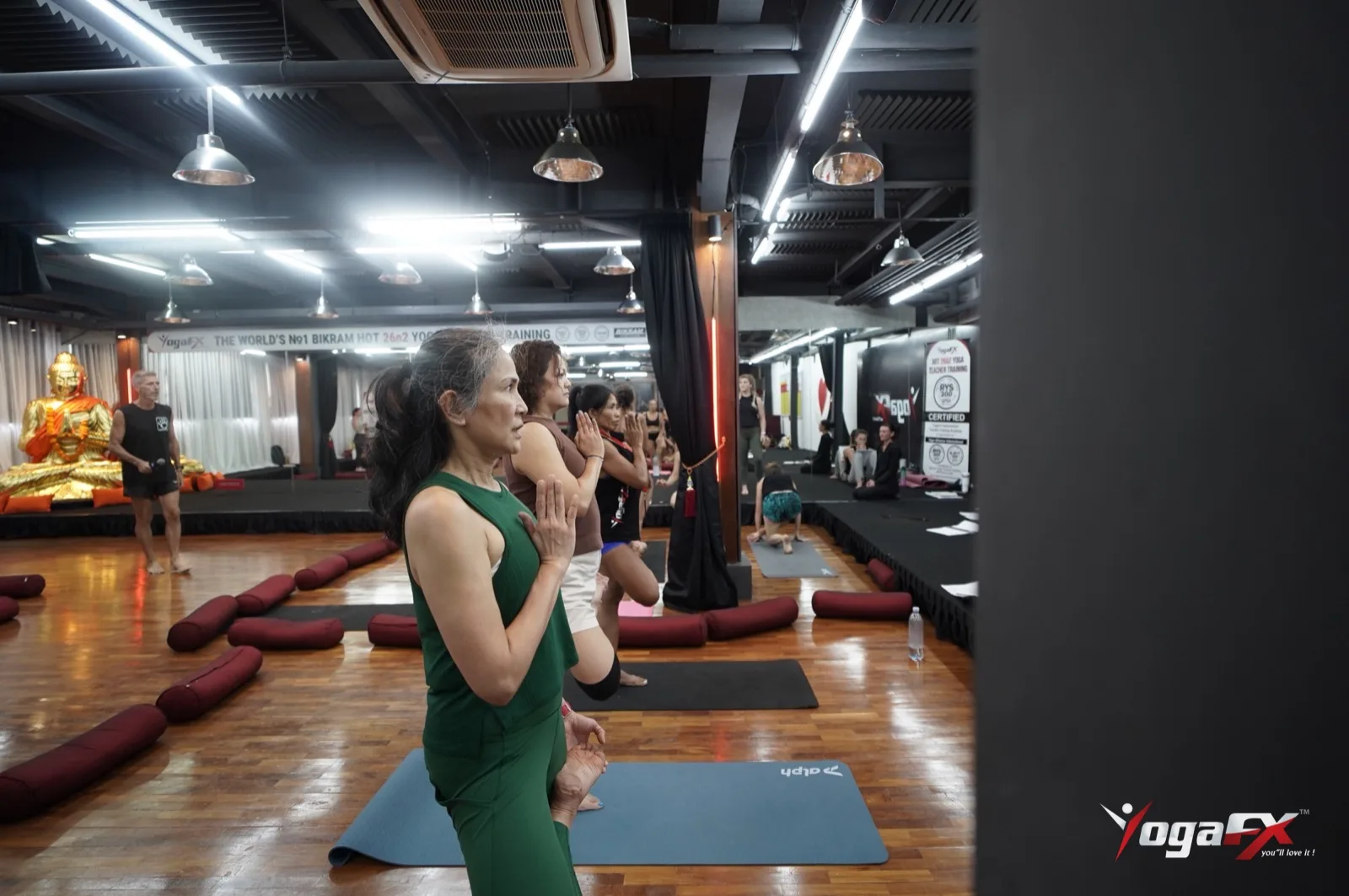
Bali adds its own variables. Many visitors arrive straight off a flight, a beach day, or a few late nights. As a result, a first class can feel harder than the numbers suggest. Our guide to heat acclimatization over three weeks in Bali explains how most people settle in.
Here are the Bali factors we ask new students to think about before they judge their hot yoga heart rate:
- Hydration. A dry body pushes your pulse up, so start drinking water hours before class. Our hot yoga hydration guide covers water and electrolytes.
- Sleep and travel. Jet lag and short nights raise resting heart rate, so your whole class runs higher.
- Caffeine and food. A strong coffee or a heavy meal just before class can lift your pulse before you start.
- Time of day. Studio hours run 06:00 to 22:00, so you can choose a slot when the day is cooler.
Hot Yoga Heart Rate Zones by Age
Zones give your pulse a frame. The Mayo Clinic guide to exercise intensity says moderate exercise sits at 50% to about 70% of your maximum heart rate, and vigorous exercise at 70% to about 85%. It also gives a simple estimate: multiply your age by 0.7 and subtract the result from 208.
| Age | Estimated maximum | Moderate zone (50-70%) | Vigorous zone (70-85%) |
|---|---|---|---|
| 30 | 187 bpm | 94 to 131 bpm | 131 to 159 bpm |
| 40 | 180 bpm | 90 to 126 bpm | 126 to 153 bpm |
| 50 | 173 bpm | 87 to 121 bpm | 121 to 147 bpm |
| 60 | 166 bpm | 83 to 116 bpm | 116 to 141 bpm |
Two warnings go with this table. First, Mayo Clinic says the real maximum may differ from the estimate by 15 to 20 beats per minute. Second, many medicines, including some for blood pressure, can lower your maximum heart rate. If that applies to you, ask your doctor which zone fits you.
If you want the wider question of cardio value, read our guide to whether hot yoga is a cardio workout. This page stays focused on what your pulse does and how to read it in the room.
A Class-Based Guide to Hot Yoga Heart Rate
Researchers have not published pulse readings posture by posture in the studies above. So the table below is our reading guide, built from the one thing the research does confirm: your pulse follows the difficulty of the work. It is not study data.
| Class moment | What your pulse often does | What to do |
|---|---|---|
| Opening breathing | Starts near resting, then lifts as the heat settles in | Breathe through the nose and let the pulse find its level |
| Standing series | Climbs fastest, with bigger swings between hard and easier postures | Use the pauses between postures to slow your breath |
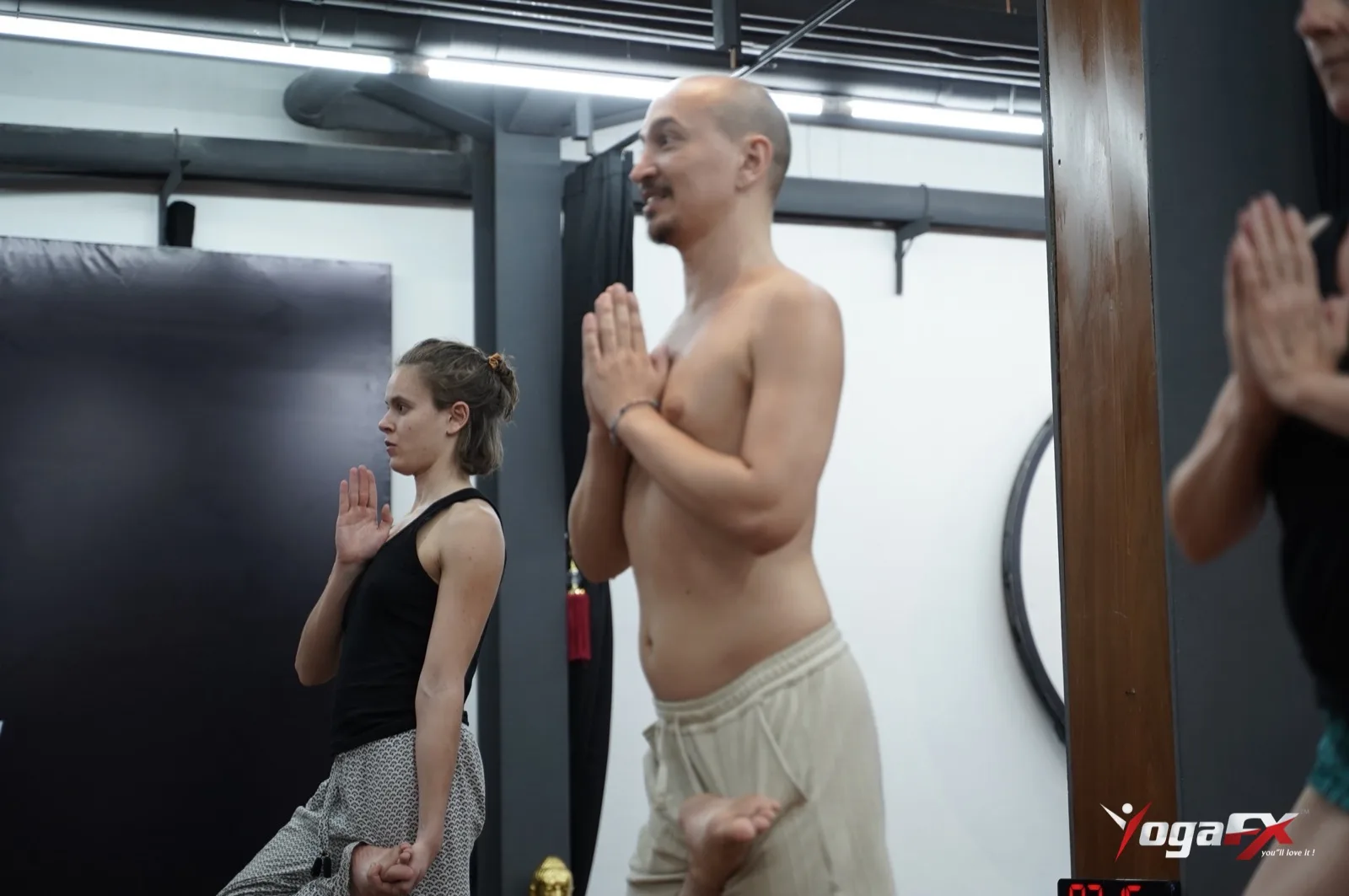
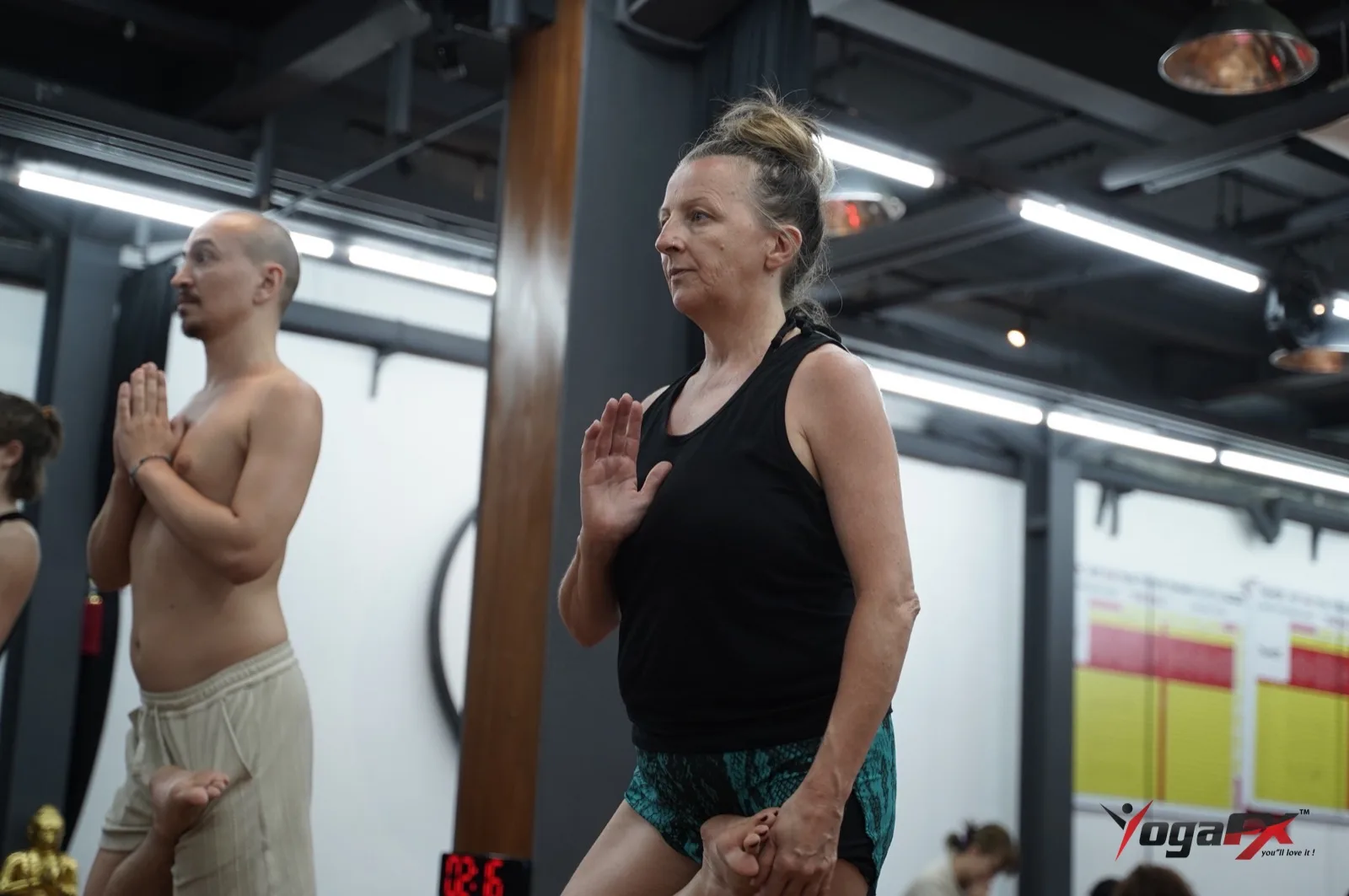
| Balancing postures | Stays elevated while you concentrate and the body works hard | Keep the gaze steady and the exhale long |
| Floor series | Often settles between efforts, though it can spike on harder postures | Rest fully in the lying postures, do not rush back up |
| Final breathing | Drops as the effort ends | Sit tall, breathe slowly, and stay put until you feel steady |
Because the dialogue is scripted and there is no music or teacher demonstration, you hear the same cues in the same order. That gives you a steady frame to notice your pulse against. After a few classes, most students can feel the pattern without a watch.
Why the pauses matter most
The ACE report describes effort, rest and renewed effort. The rest part is where good practice lives. A pulse that climbs and then eases in each pause is a healthy pattern for many students. A pulse that stays high and never eases is your signal to slow down.
How to Check Your Hot Yoga Heart Rate Without Wrecking Your Class
You don’t need a lab. A simple routine works, and it keeps your attention on the room, not on a screen.
- Know your resting pulse. Count beats for 30 seconds in the morning before you get up, then double it. The 2020 study found a resting pulse around 85 bpm before class in its group.
- Wear a chest strap or a watch if you like. Wrist watches can misread when you sweat, so treat the number as a trend.
- Use the talk test. If you can speak a short sentence between breaths, you are likely in a comfortable zone. If you cannot, ease off.
- Check once in each pause. Look at the number in the lying postures, not during the hard ones.
- Write down how you felt. A short note after class beats a fancy graph.
Remember that a watch shows beats, not how you are doing. A calm face, steady breath and clear thinking tell you more than any number. If your pulse and your body disagree, trust the body and sit down.
Hot Yoga Heart Rate After Class: Cooling Down in Bali
Your hot yoga heart rate does not stop the moment you leave the room. It takes time to ease, and the Bali climate outside is warm too. So plan a slow exit, not a rush to the scooter.
- Sit and breathe for a few minutes in the studio before you stand up and walk.
- Drink water and, after a long sweat, something with electrolytes.
- Skip the hot shower and the sauna right away. Our guide to a safe Bali wellness day after class explains the order.
- Eat something light once your stomach feels settled.
If your pulse still feels fast after an hour of rest, note it and tell your doctor. That is not something to push through. A healthy hot yoga heart rate should come down as you cool off, and you should feel calmer, not worse.
When a High Hot Yoga Heart Rate Means Stop
A high pulse is normal in a hard posture. A pulse that feels wrong is different. The Mayo Clinic lists these heat exhaustion signs: heavy sweating, faintness, dizziness, fatigue, a weak and rapid pulse, muscle cramps, nausea and headache.
If any of these show up, stop and get cool. Mayo Clinic advises you to stop all activity and rest, move to a cooler place, and drink cool water or sports drinks. Get medical help right away if you become confused, faint, or cannot drink.
- Chest pain, pressure or tightness. Stop and seek medical help.
- A pounding or irregular pulse that does not ease when you rest.
- Dizziness or blurred vision that does not clear when you lie down.
- Confusion or a sudden headache. Tell the teacher and leave the room.
New to the room? Start with our guide to what hot yoga is and how a class feels. If you take blood pressure medicine, read hot yoga and blood pressure first. And for the broader heart question, see is hot yoga good for your heart.
What Students Say About Pacing Their Effort
We do not claim a review proves anything about your pulse. Still, students describe the same thing in plain words: they came for the challenge and left feeling steady. You’ll hear that again and again.
“This was an amazing adventure, I cannot recommend highly enough!”
Gary, Google review, 2025
“Thank you Mr Ian, you make my dream come true, a yoga teacher. You have big heart.”
A trainee in our YouTube review, 2024
Another trainee, in a 2023 graduation video on our YouTube channel, said the week was unforgettable and that watching the teachers’ struggle made the group’s own spirit grow.
Try a Class and Learn Your Own Pulse at YogaFX Bali
Reading about hot yoga heart rate only goes so far. Your own hot yoga heart rate will tell you more after one class. At YogaFX in Seminyak, the Free 1-Day Guest Pass gives you your first class free, so you can wear a watch, try the talk test, and see how your pulse behaves.
- Where: Jl. Pangkungsari Gg Jepun No.888, Kuta Utara, Seminyak, Badung, Bali 80361.
- Hours: 06:00 to 22:00 every day.
- Class: 90 minutes, 40 degrees C, 40% humidity, natural tropical heat.
- Book: message us on WhatsApp and tell us about any heart or blood pressure concerns.
Mr. Ian Terry also trains teachers who learn to read a room full of students, pulse included. If you are curious about that path, ask us when you book your free class.
Hot Yoga Heart Rate FAQ
Does hot yoga increase heart rate?
Yes, for most people. In a 2015 study of a 90-minute class, average heart rate reached about 80% of predicted maximum for men and 72% for women. In a 2020 crossover study, though, the mean pulse in a hot room was close to a cooler room, so the postures drive much of the rise.
What is a normal heart rate during hot yoga?
There is no single normal. One study of 19 practitioners reported an average of about 160 beats per minute in a 90-minute class, while a one-hour study reported means near 113. Your age, fitness, medicines, hydration and the posture all change it, so use zones and how you feel.
Is a high heart rate after hot yoga dangerous?
A pulse that stays high and slowly settles after class is common. A pulse that feels pounding, irregular or weak, or comes with dizziness, chest pain, nausea or confusion, is a reason to stop, cool down and get medical help. If it worries you, ask a doctor.
Can you do hot yoga with a heart condition?
That decision belongs to your doctor. Heart conditions and some medicines change how your pulse responds to heat and effort, and your maximum heart rate may be lower than formulas predict. Ask your doctor before class, and tell the studio about your condition when you book.
Still have questions? Message Mr. Ian and the YogaFX team on WhatsApp and we will answer them personally.
 Mr. Ian Terry