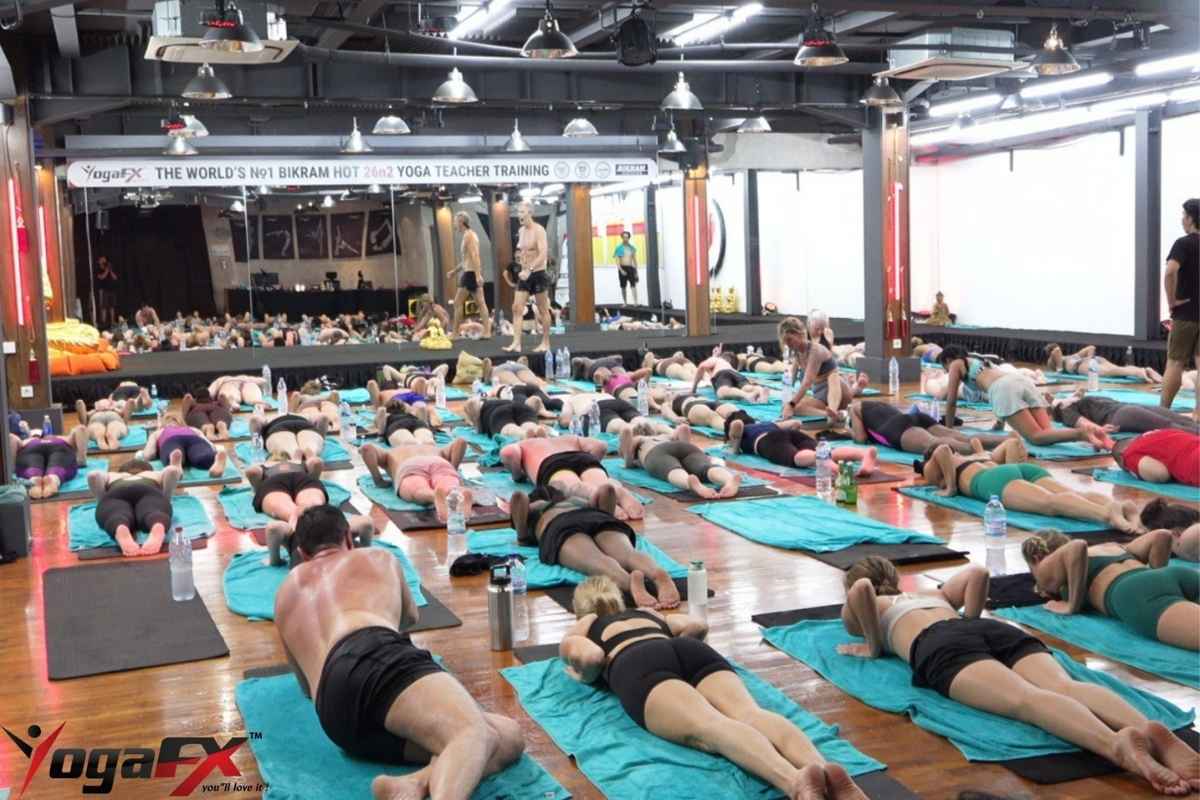
The most reliable Bikram studio isn’t necessarily the one Google Maps ranks first for “near me.” It’s the one that still runs on the original method: natural heat instead of electric heaters, a fixed 90-minute class, all 26 postures plus two breathing exercises, and a teacher who delivers the dialogue rather than demonstrating poses to music. Everything else is branding.
What Actually Makes a Studio “Authentic” 26&2
Search “bikram yoga studio near me” and you’ll get a mix of results that have almost nothing in common except the word “Bikram” or “hot” somewhere in the name. Some run a genuine 90-minute, 26-posture class in a room heated to the original specification. Others run a 45-minute vinyasa flow in a warm room and call it hot yoga because the format sells. Both show up in the same search, and a map pin can’t tell you which one you’re walking into.
The original method, developed for a fixed sequence of 26 postures and 2 breathing exercises, was designed around a specific environment: roughly 40 degrees Celsius with 40 percent humidity, sustained for the full 90 minutes. Every posture in the sequence builds on the one before it, using the heat to safely increase range of motion before the next pose asks the body to go further. Drop the heat, shorten the class, or skip postures, and you’re not doing a lighter version of the same thing. You’re doing something else that happens to share a name with it.
Instruction matters just as much as temperature. In the original format, teachers deliver a scripted dialogue verbally, posture by posture, without demonstrating or playing music. That’s a deliberate design choice, not a stylistic quirk: it forces students to listen to their own bodies and follow verbal cues rather than mirror a teacher’s movement, which is part of why the practice built such a devoted following in the first place. A studio that mixes in music and physical demonstration isn’t wrong to do so, but it’s teaching a different class under a familiar name.
The Science Behind Why Heat and Duration Aren’t Just Marketing Details
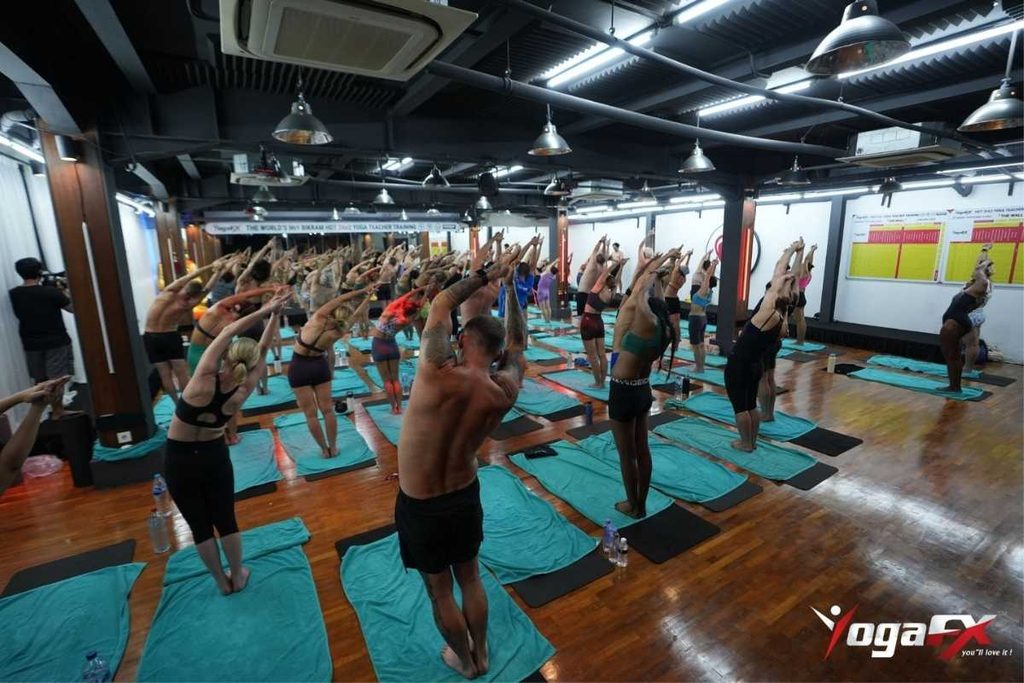
The details above aren’t arbitrary tradition. A 2014 University of Wisconsin study found that a 90-minute Bikram-style class burns roughly 460 kilocalories in men and 333 in women, with heart rates reaching about 80 percent of maximum throughout the session, a workload closer to a formal cardio session than a typical yoga class (Porcari et al., 2014).
That intensity depends on the full 90 minutes and the heat load actually being present. Cut the class to 60 minutes or run it at a lower ambient temperature and you’re not getting a smaller version of that same cardiovascular effect; you’re getting a meaningfully different session.
Duration and heat also matter for the strength and flexibility outcomes people specifically seek this practice out for. A 2013 study measuring regular practitioners found roughly a 20 percent increase in posterior chain strength alongside measurable gains in flexibility and body composition over consistent practice (Tracy & Hart, 2013). Those adaptations come from repeated, complete exposure to the full sequence at the intended heat and hold times, not from an abbreviated version of it.
The mental health research follows the same pattern. A 2023 Harvard-affiliated study at Massachusetts General Hospital found participants completing an eight-week Bikram-style program experienced roughly a 60 percent reduction in depression symptoms, with 44 percent reaching full remission (Nyer et al., 2023), and separate research has linked hot yoga practice specifically to measurable reductions in state anxiety (Hui et al., 2022).
Both studies were built around the structured, full-length format, not a shortened warm-room class. This is the practical reason the “what makes it authentic” question isn’t pedantry: the format’s benefits, physical and mental, are tied to the format actually being followed. Anyone with a heart condition, respiratory issue, or other health concern should consult a healthcare professional before starting a heated practice.
How Many Original Bikram Studios Are Actually Still Around?
This is one of the more common questions people ask once they start comparing studios, and the honest answer is that nobody publishes a reliable global count anymore, for a specific reason. A 2015 Ninth Circuit Court of Appeals ruling, Bikram’s Yoga College of India v. Evolation Yoga, found that the sequence of postures and the spoken dialogue are not eligible for copyright protection as a form of exercise rather than an expressive work.
That ruling, combined with the well-documented fallout from Bikram Choudhury’s own personal conduct, effectively ended the era of a single licensed franchise network. Studios that once operated under strict franchise agreements were free to keep teaching the identical sequence independently, under their own names, without paying franchise fees or maintaining brand compliance with the original founder.
The practical result is the fragmented market you see today when you search for a studio. Some independent studios kept the “Bikram” name. Many, including YogaFX, moved to “26&2” or “Original Hot 26&2 Yoga” to describe the same method while distancing the brand from its founder’s personal history.
Others dropped the format’s specifics altogether and folded a loosely similar sequence into a generic “hot yoga” label. None of this changes whether a given class is taught to the original specification, but it does explain why “how many Bikram studios are left” doesn’t have a clean answer, and why studio names alone won’t tell you what you’re getting.
A Checklist for What Actually Separates the Two
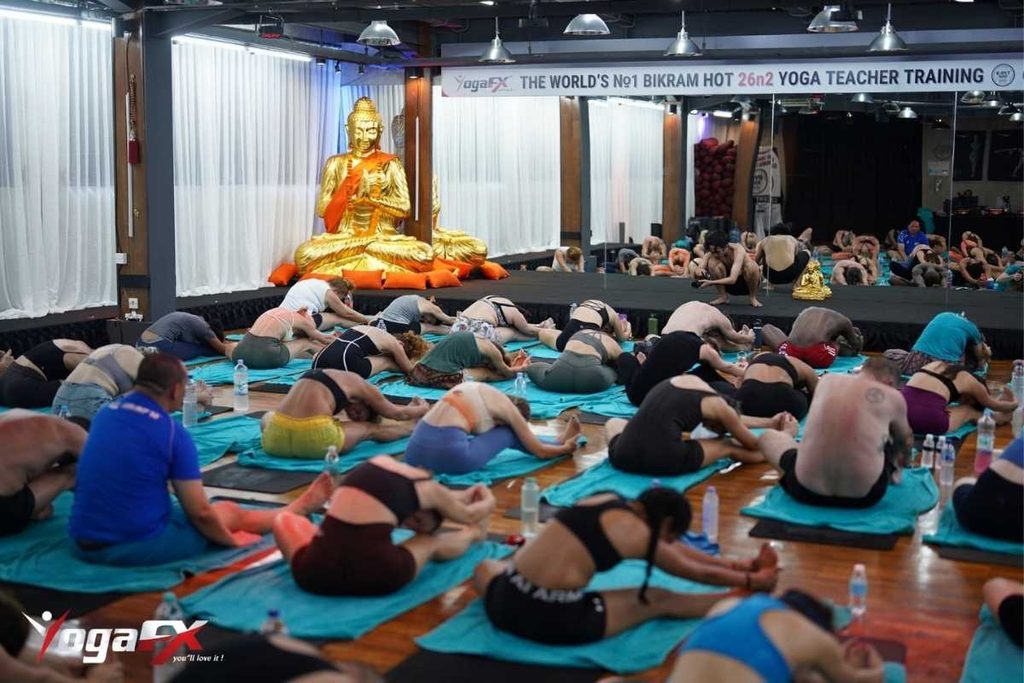
Rather than relying on a studio’s name or its position in local search results, four details tell you almost everything you need to know before booking a class. Heat source matters more than most people expect walking in: natural or well-managed radiant heat tends to feel enveloping and consistent throughout a room, while forced-air electric heaters often create hot spots and drafts that make the same thermometer reading feel completely different depending on where you set your mat.
Class length and posture count are easy to confirm from a studio’s own schedule or front-desk staff before you book. Instructor training is the one people skip checking most often, even though it’s arguably the most important: a general 200-hour yoga certification teaches someone to lead a vinyasa flow, not to deliver a 26-posture dialogue safely to a room of people in 40-degree heat.
| Feature | Authentic 26&2 / Bikram | Generic warm-room hot yoga |
|---|---|---|
| Heat source | Natural heat or radiant systems, roughly 40°C / 40% humidity throughout | Electric space heaters, often inconsistent, sometimes closer to 30-32°C |
| Class length | Fixed 90 minutes for the full sequence | Often 45-60 minutes |
| Sequence | All 26 postures plus 2 breathing exercises, fixed order | A shortened or freestyle flow borrowing a few similar poses |
| Instruction | Scripted verbal dialogue, no music, no demonstration | Music, live demonstration, cueing similar to a vinyasa class |
Beyond those four, two more things are worth five minutes of checking before you commit to a drop-in class. First, look at the studio’s floor and general upkeep, since a room run at 40 degrees for multiple classes a day needs proper ventilation and cleaning between sessions to stay hygienic rather than just hot. Second, read a handful of recent Google reviews rather than only the star average.
A studio can hold a strong star rating from years of accumulated reviews while its current instructor lineup, heat consistency, or class format has quietly changed. Recent, specific reviews about the actual class experience tell you more than an aggregate score ever will.
Why “Best Bikram Studio Near Me” Doesn’t Actually Tell You Much
It’s worth being direct about something most guides won’t say outright: a “near me” search is built to answer a different question than the one you’re actually asking. It surfaces whichever studios are geographically closest and reasonably well-reviewed on Google Maps, ranked mostly by proximity and star rating. It has no way of knowing whether any of those studios run natural heat or electric heaters, teach the full 90-minute sequence or a shortened version, or employ instructors with format-specific certification versus a general yoga teaching credential.
That’s not a flaw in how you’re searching. It’s just a mismatch between what map-based local results are designed to surface and what actually determines whether a class is authentic to the method. Some searches also turn up general studio directories, which can be a reasonable starting point for finding options in an unfamiliar city, but a directory listing confirms a studio exists in roughly the right category. It doesn’t confirm heat source, class length, or instructor training, which are the details that actually decide what you experience once you’re on the mat.
The fix isn’t a better search query. It’s carrying the checklist above with you, whether you’re evaluating a studio in your own city or, as many travelers do, comparing options while planning a trip to somewhere like Bali specifically to try the practice in its original heat.
What This Looks Like at YogaFX in Seminyak and Canggu
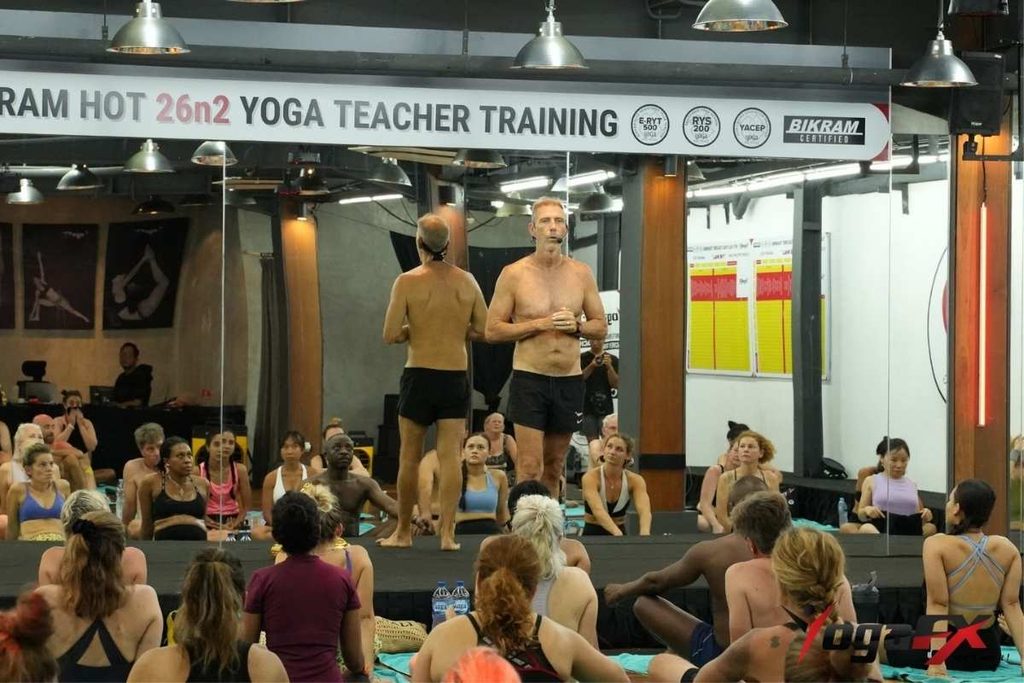
YogaFX‘s two Bali studios, in Seminyak and Canggu, are built around the checklist above rather than around it being a checklist at all; it’s simply how Mr. Ian Terry, E-RYT 500, has run classes since founding the academy. The heat in both rooms is Bali’s own tropical climate rather than electric heaters, which is part of why the studios’ positioning leans on “natural heat” rather than a mechanically maintained one.
Classes run the full 90 minutes, all 26 postures and 2 breathing exercises, delivered as scripted dialogue rather than demonstrated to music, the same format Mr. Ian trained under directly across five events with Bikram Choudhury between 2012 and 2019, and the same format his own teacher training graduates are certified to deliver under both Yoga Alliance RYT 200 and Bikram Hot 26&2 credentials.
The research on hot yoga’s broader benefits gives some context for why this level of consistency matters beyond tradition. A 2025 systematic review covering 43 studies and more than 900 participants found consistent evidence of improvements in flexibility, bone density, and general well-being across Bikram-style practice (Willmott et al., 2025), findings that assume the practice being studied is the actual format rather than a diluted version of it.
One recent visitor described walking into his first class dreading it, expecting to feel awful in the heat, and instead leaving with a level of physical relief and clarity he hadn’t anticipated, a reaction the YogaFX team hears often enough from first-timers at both studios that it’s become part of what the teaching staff expects and prepares new students for.
That training pipeline is also where the instructors teaching in Seminyak and Canggu come from, which matters if you’re checking the “instructor certification” box on the list above. Graduates of Mr. Ian’s own teacher training have gone on to compete at national and international level, including medal results at the 2026 World Yogasana Sports Federation Championships in Ahmedabad, India, evidence that the format taught in these two studios holds up to scrutiny well beyond a typical drop-in class. It’s a different kind of proof than a star rating, and it’s the kind that doesn’t show up in a “near me” search at all.
Both studios are open daily from 06:00 to 22:00, and first-time visitors can try a class through YogaFX‘s Free Guest Pass rather than judging the studio from a search results page or a star rating alone. Walking in, feeling the actual heat, and watching how a class is taught tells you more in ninety minutes than any amount of comparing listings ever will.
FAQ
How hot is a Bikram yoga studio?
Traditional Bikram or 26&2 studios are heated to around 40°C (104°F) with 40 percent humidity, matching the conditions the sequence was originally designed for. Many hot yoga studios run cooler, closer to 32-35°C, so ask before booking if you specifically want the original heat level.
How many original Bikram studios are still open?
After a 2015 court ruling found the sequence and dialogue couldn’t be copyrighted, many licensed studios closed or rebranded independently. No reliable global count exists today, but the format now survives mainly through independent studios rather than a single franchise network.
What’s the difference between Bikram yoga and 26&2 hot yoga?
Both describe the same 26-posture, 2-breathing-exercise sequence. “26&2” is now used by many independent studios, including YogaFX, to describe the original method without licensing ties to the Bikram Choudhury name following the 2015 ruling on the sequence’s copyright status. See our full Bikram yoga vs hot yoga comparison for the complete breakdown.
Is a 90-minute class required for it to count as real Bikram yoga?
Yes, under the original method. The 90-minute duration fits all 26 postures and 2 breathing exercises at their set hold times. A 60-minute “Bikram-style” class is a shortened variant, not the traditional sequence, even if it borrows some of the same poses.
What should I check before booking a drop-in class at a hot yoga studio?
Confirm the heat source, class length, whether the full 26+2 sequence is taught, and instructor certification. Reading a handful of recent Google reviews for consistency, not just the star average, tells you more than a studio’s ranking in local search results.