Bali is one of the few places in the world where you can practice both Bikram yoga and Ashtanga yoga at genuinely high standards — Bikram at YogaFX in Seminyak and Canggu, Ashtanga at studios like Samadi and The Practice in Canggu and The Yoga Barn in Ubud. The question of which to choose is worth answering honestly, because the two methods differ at a fundamental level — not just in style but in purpose, structure, and what they are designed to produce.
This is not a guide that declares a winner. Both are excellent practices. The honest comparison is about fit — which method aligns with your goals, your body, and the time you have available in Bali.
Bikram yoga and Ashtanga yoga are both rigorous, lineage-based practices — but they differ significantly in structure, heat requirement, sequencing, and physiological focus. Bikram 26&2 uses a fixed sequence in 40°C humid heat, producing strong cardiovascular and thermoregulatory demand alongside flexibility and strength. Ashtanga uses a progressive series at room temperature with breath-synchronized movement, producing strength, flexibility, and meditative depth. Bali’s natural heat gives Bikram yoga a unique advantage here — the climate delivers the conditions the method requires. Ashtanga is practiced at room temperature regardless of location.
Origins and Philosophy

Bikram Yoga: Structure from Calcutta
Bikram yoga was developed by Bikram Choudhury in the 1970s from 26 traditional Hatha yoga postures selected for their systematic physiological completeness. The method was designed to be practiced in tropical heat and humidity, taught from a fixed verbal script, and accessible to anyone regardless of prior yoga experience. The philosophy is functional: the sequence works because of its specific order, the heat works because of its specific conditions, and the results come from consistent repetition of the same practice.
Ashtanga Yoga: Progression from Mysore
Ashtanga yoga was developed by K. Pattabhi Jois in Mysore, India, based on a text called the Yoga Korunta. The practice uses six progressive series — each more advanced than the last — connected by specific breathing (ujjayi pranayama), bandhas (energy locks), and drishti (gazing points). The traditional Mysore style involves each student practicing at their own pace with the teacher adding postures progressively as the student masters each one. The philosophy is progressive: the practice develops over years and decades, with the sequence serving as a lifelong curriculum.
Structure and Format Comparison
| Dimension | Bikram 26&2 | Ashtanga |
|---|---|---|
| Sequence | Fixed — 26 postures, same order every class | Fixed — but progressive series (Primary, Intermediate, Advanced) |
| Heat requirement | 40°C with humidity — essential | Room temperature — no heat required |
| Class format | Led by instructor verbal dialogue | Mysore: self-paced / Led: instructor calls postures |
| Session length | 60 or 90 minutes (fixed) | 60–90+ minutes (varies by series depth) |
| Breath integration | Natural breath, instructor-guided | Ujjayi pranayama — specific breathing technique |
| Beginner access | High — same class for all levels | Moderate — Mysore requires guidance to start |
| Progress measurement | Same sequence — visible class to class | Posture progression within series — longer timeline |
| Cardiovascular demand | High — heat + standing series | Moderate — movement flow, no heat |
| Spiritual dimension | Minimal at YogaFX | Significant — breath, bandha, drishti system |
Physical Outcomes: What Each Delivers
Bikram 26&2 Physical Outcomes
The University of Wisconsin 2014 study measured Bikram yoga producing average heart rates of 80% maximum throughout a 90-minute session — equivalent to moderate cycling. Calorie burn averaged 333–460 kcal per session, with active participants reaching 600+ kcal. The Tracy and Hart (2013) study documented 20% strength increase and 9% balance improvement after 8 weeks. Flexibility improvements are accelerated by the heat — connective tissue reaches optimal extensibility at 40°C that room-temperature practice cannot achieve as quickly.
Ashtanga Physical Outcomes
Ashtanga produces exceptional strength, flexibility, and cardiovascular fitness through its breath-movement synchronisation system. The Primary Series alone develops full-body strength, deep hip and hamstring flexibility, and significant aerobic capacity. Research on Ashtanga is less extensive than on Bikram, but consistent practitioner outcomes include significant strength gains in the upper body (from the jump-back transitions), deep flexibility in the hip complex, and cardiovascular fitness comparable to moderate-intensity endurance exercise.
The Key Difference in Outcomes
Bikram yoga produces faster early flexibility gains due to the heat. Ashtanga produces greater upper body strength due to the chaturanga (low push-up) transitions embedded in the sequence. Both produce full-body conditioning over consistent practice. The most meaningful difference is timeline: Bikram 26&2 produces measurable outcomes within 5–10 classes for most practitioners. Ashtanga’s deeper outcomes develop over months and years — the Primary Series alone takes most practitioners 1–2 years to practice in full.
Bali’s Natural Heat: Why Location Changes the Bikram vs Ashtanga Comparison
In most countries, the practical comparison between Bikram and Ashtanga includes a comfort variable: Bikram in electric-heated studios uses dry heat, which many practitioners find less comfortable than room-temperature Ashtanga practice. In Bali, this variable disappears.
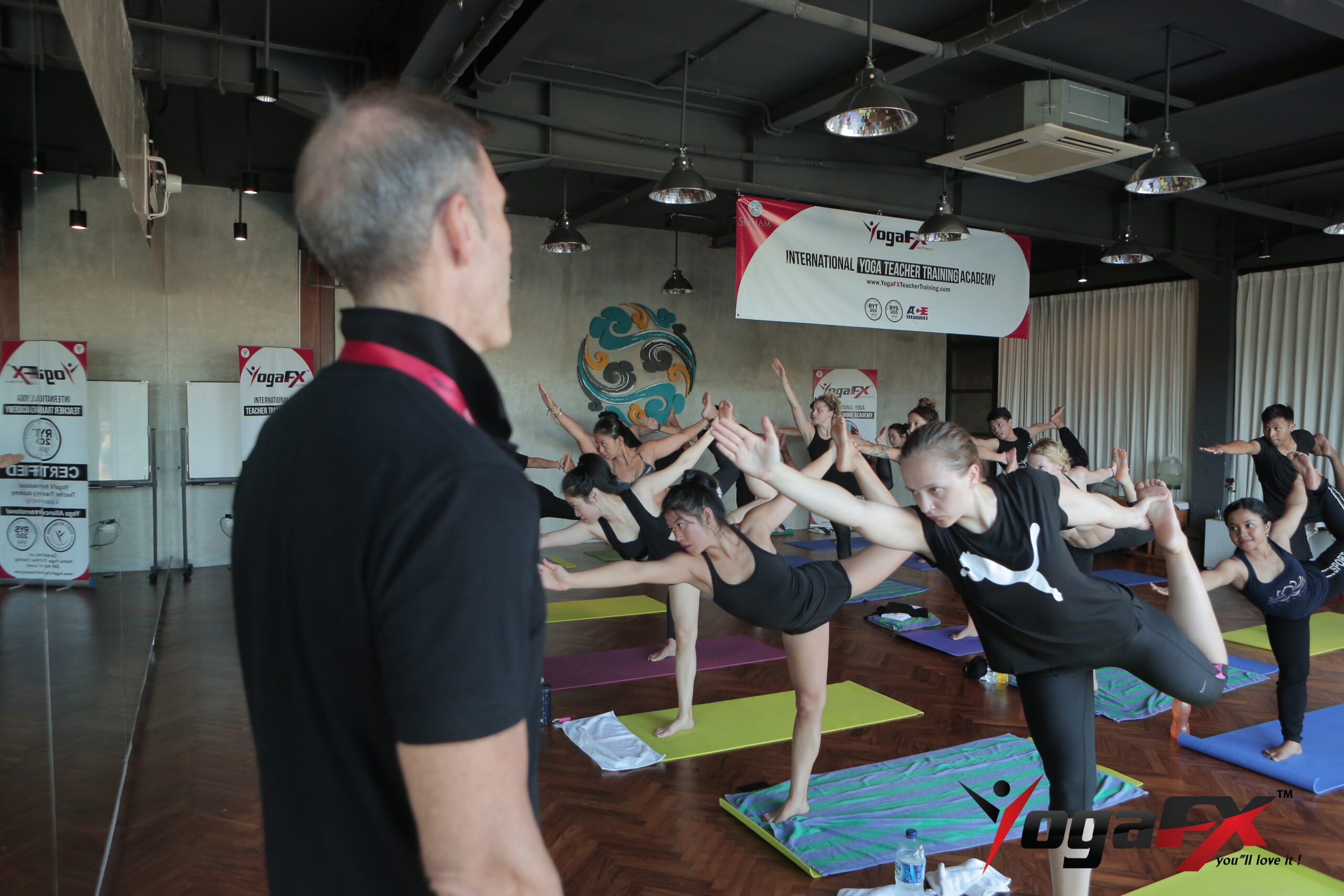
At Bikram YogaFX Bali, the heat is entirely natural — Bali’s own humid tropical climate. There are no electric heaters. The practice environment is the condition the Bikram method was designed for. Practitioners who have found electrically heated Bikram studios uncomfortable abroad consistently report a different experience in natural Bali heat — more comfortable, more sustainable, and more physiologically effective.
Ashtanga is practiced at room temperature regardless of location. In Bali, room temperature during a morning Ashtanga session at Samadi or The Practice is 27–30°C — warm but not hot yoga conditions. This is perfectly comfortable for Ashtanga practice and produces excellent results. But it does not produce the specific thermoregulatory benefits that natural 40°C humid heat adds to Bikram yoga.
Which Should You Choose in Bali?
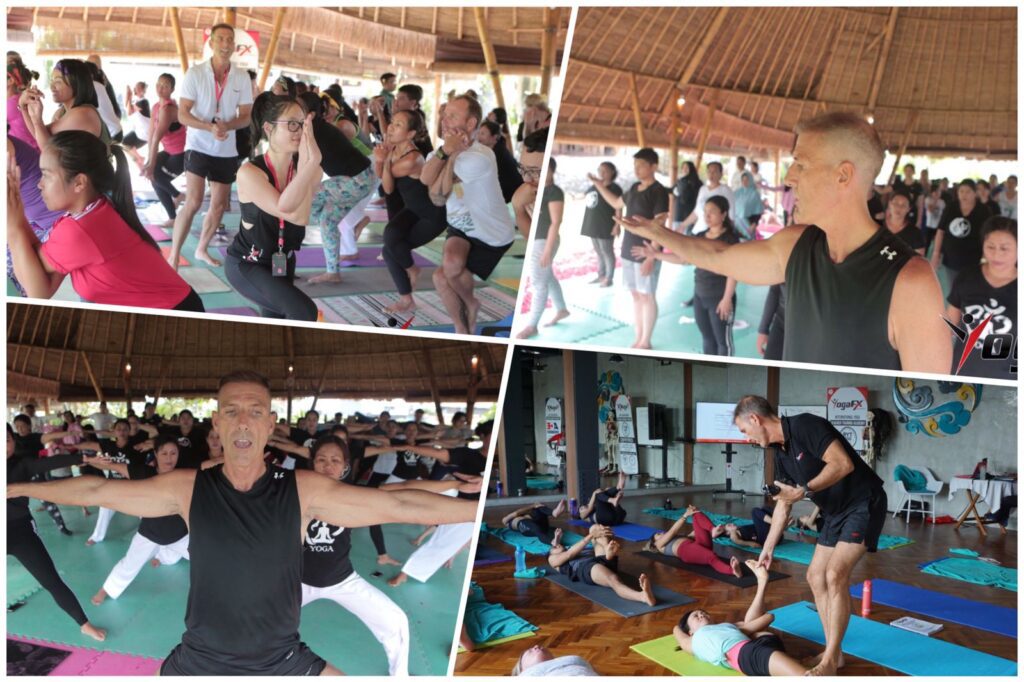
Choose Bikram 26&2 at YogaFX If:
- You want significant calorie burn and cardiovascular conditioning in every session
- You want measurable, trackable progress from class to class
- You are a first-timer or have limited time — the fixed sequence is immediately accessible
- You want to experience the practice in the natural heat environment it was designed for
- You prefer zero spiritual pressure and a results-focused approach
- You are already an Ashtanga practitioner and want to complement with a different physical stimulus
Choose Ashtanga If:
- You are committed to a long-term progressive practice — months or years of development
- You want a strong spiritual and philosophical framework alongside the physical practice
- You are drawn to upper body strength and the demanding chaturanga transitions
- You want a Mysore-style practice with personalised teacher guidance
- You prefer early morning practice (most Ashtanga Mysore classes start at 6–8am)
Do Both If:
Practising both during a Bali stay is entirely feasible — Bikram at YogaFX 3–4 mornings per week and Ashtanga at Samadi or The Practice on the other mornings. This combination addresses every dimension of physical practice: heat conditioning and cardiovascular fitness (Bikram), upper body strength and breath integration (Ashtanga), and the cumulative flexibility benefits of both. If Vinyasa is also on your radar, the Bikram vs Vinyasa comparison covers how that third style stacks up against both of these. And if a slower, room-temperature style is more your pace, the Bikram vs Hatha yoga comparison covers that trade-off as well.
FAQ
Is Bikram yoga harder than Ashtanga?
Different rather than harder. Bikram yoga is physically demanding in the first session primarily because of the heat — the body is managing thermoregulation alongside unfamiliar postures simultaneously. Ashtanga’s difficulty is progressive — the early poses are accessible, but the series gets significantly harder as postures are added. Both practices challenge the body differently: Bikram through sustained heat demand and fixed sequence, Ashtanga through progressive strength and flexibility requirements over a longer timeline.
Can I do both Bikram and Ashtanga in the same week in Bali?
Yes. Many practitioners combine both — Bikram at YogaFX for heat conditioning and calorie burn, Ashtanga at Samadi or The Practice for strength and breath work. Scheduling rest days between Bikram sessions is advisable for the first 1–2 weeks until heat adaptation develops. After that, daily practice of one or both is sustainable for most practitioners.
Which yoga burns more calories — Bikram or Ashtanga?
Bikram yoga burns more calories per session — 330–600 kcal per 90 minutes (University of Wisconsin 2014) versus approximately 300–450 kcal for a comparable Ashtanga session. The additional calorie burn in Bikram comes from thermoregulation — the body expending energy to maintain core temperature in the 40°C environment alongside the physical demands of the sequence. In Bali’s natural heat at YogaFX, this thermoregulatory demand is maximised.
Which is better for beginners — Bikram or Ashtanga?
Bikram yoga at YogaFX is more immediately accessible for beginners. The fixed sequence is the same for everyone, taught entirely through verbal instruction with modifications for every posture. A complete beginner can attend their first class, follow the verbal guidance, attempt modifications, and complete the session — all without prior knowledge. Ashtanga Mysore, while excellent, typically requires an initial intake session with the teacher to be introduced to the first postures before joining the class.