The most common question from people considering yoga teacher training in Bali is some version of this: I want to do it, but I’m not sure I’m ready. I don’t have years of practice. I’m not very flexible. I’ve only been doing yoga for a few months. Is teacher training really for me?
The honest answer is: it depends on what ‘no experience’ means, which programme you choose, and what you are trying to achieve. This guide addresses those questions directly — without the marketing language that most YTT schools use to fill their programmes.
Yoga teacher training in Bali is accessible without advanced yoga experience, but it is not without requirements. Most 200-hour programmes expect some familiarity with yoga practice — typically 3–6 months of regular classes. Zero experience means zero familiarity with postures, breathing, and basic terminology, which makes an intensive training unnecessarily hard. The YogaFX Bikram 26&2 programme is structured to accommodate lower-experience practitioners through its online pre-course phase, which builds posture knowledge before the Bali intensive begins.
What ‘No Experience Required’ Actually Means
Most Bali YTT programmes use ‘no experience required’ as a marketing phrase. It is not technically false — there is usually no formal prerequisite — but it obscures an important practical reality.
A 200-hour yoga teacher training covers asana (postures), pranayama (breathing), anatomy, physiology, yoga philosophy, and teaching methodology in approximately 3–4 weeks. If you arrive with no familiarity with any posture, no understanding of breath work, and no sense of how your body moves through basic yoga positions, you will spend much of the training catching up on fundamentals that experienced practitioners arrive knowing. This is not impossible — but it is significantly harder, and it means you have less capacity to focus on what matters most: learning to teach.
‘No experience required’ is more accurately read as ‘no minimum certification required.’ What is genuinely helpful — not mandatory, but helpful — is 3–6 months of regular yoga practice before starting teacher training.
The YogaFX Approach: How the Hybrid Model Helps Lower-Experience Students
The YogaFX Bikram 26&2 programme uses a hybrid format specifically designed to address the experience gap. The online pre-course phase — completed at home before arriving in Bali — covers everything a student needs to know about the 26&2 sequence before the intensive begins.
| Pre-Course Phase | What It Covers for Lower-Experience Students |
|---|---|
| 26&2 posture theory | Names, alignment, benefits, and contraindications for all 26 postures — before you need to execute them in person |
| Anatomy and physiology | Muscle groups, joint mechanics, and organ systems engaged by each posture — builds body awareness before the intensive |
| Dialogue study | The complete scripted instruction for 45, 60, and 90-minute class formats — you arrive knowing the words, not learning them under pressure |
| Yoga philosophy | The principles underlying the Bikram method — provides context that makes posture execution more intuitive |
| 50+ online lectures | Accessible at your own pace, rewatchable — no time pressure before arriving in Bali |
The result is that lower-experience students arrive in Bali with knowledge — even if not physical proficiency. The 6-day intensive can then focus on live practice and teaching skills rather than posture introduction. This structure makes the YogaFX programme significantly more accessible to lower-experience practitioners than a residential programme that covers everything simultaneously in a single intensive block.
What You Do Need Before Starting YTT in Bali
While formal prerequisites are minimal, certain preparation makes teacher training meaningfully more productive — regardless of programme or style:
1. Some Yoga Practice — 3–6 Months Minimum
Not advanced practice. Not exceptional flexibility. Not the ability to do splits or handstands. Simply: familiarity with how yoga feels in your body, basic breath awareness during movement, and the ability to follow verbal instruction through a physical sequence. Three to six months of weekly yoga classes — even beginner classes — is enough to establish this foundation.
If you are starting from absolute zero, begin practicing yoga consistently for 3 months before applying to any YTT programme. This serves you, not the programme.
2. Physical Readiness for Intensive Practice
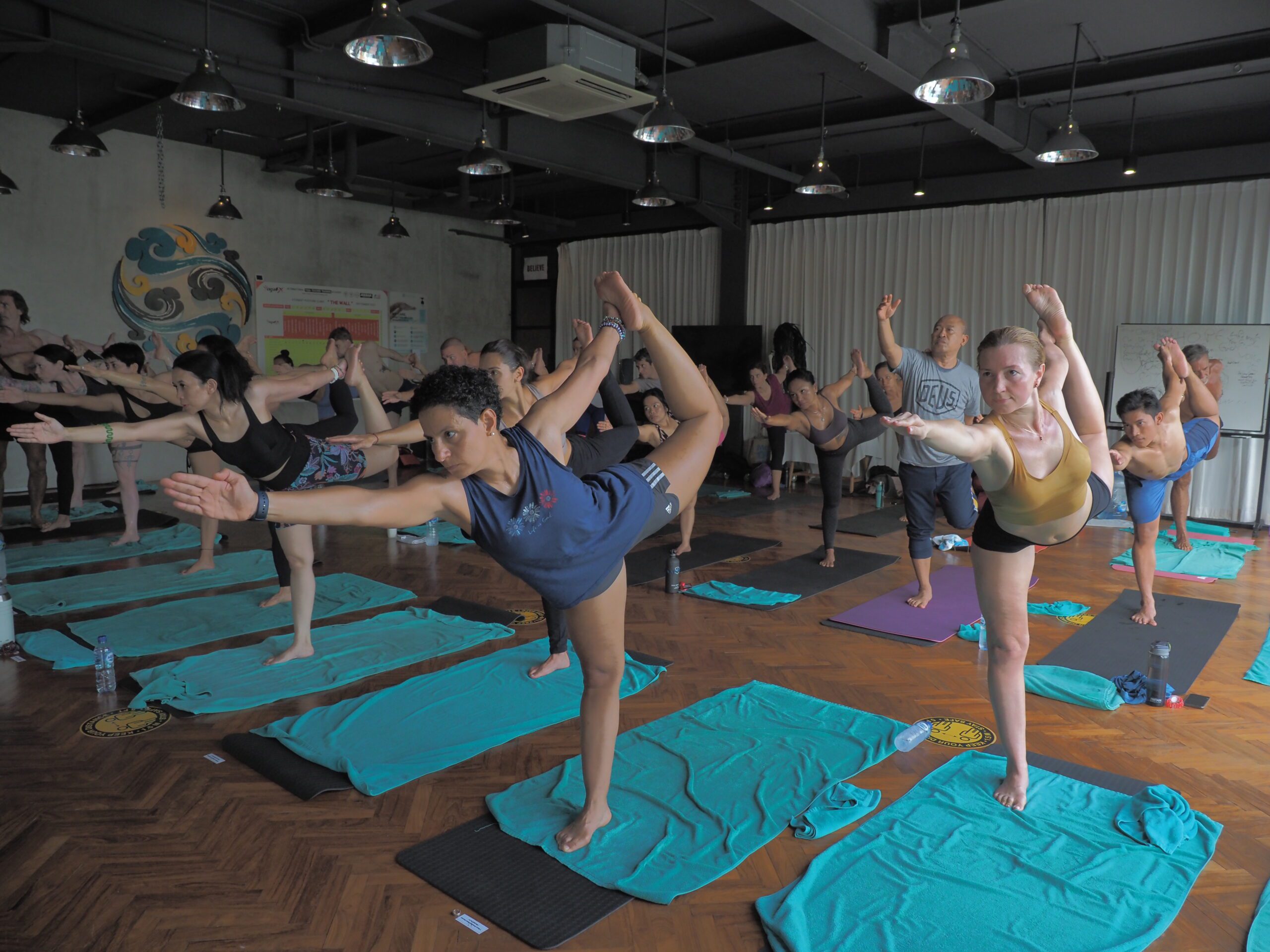
A yoga teacher training is physically intensive regardless of style. In the YogaFX Bikram 26&2 programme, the 6-day Bali intensive involves daily practice sessions in natural 40°C heat, posture clinic work, and live teaching practice. The body needs to be in reasonable functional condition — not athletic condition, but capable of sustained physical activity for 6 consecutive days. If you have significant injuries or health conditions, discuss them via the enrollment form before enrolling.
3. Commitment to the Online Pre-Course
For lower-experience students specifically, completing the full online pre-course before arriving in Bali is not optional — it is the mechanism that makes the intensive accessible. Students who arrive having done minimal pre-course work spend the intensive trying to learn what experienced students already know. Students who arrive having completed the pre-course thoroughly can focus entirely on the teaching skills the intensive is designed to develop.
4. Openness to Being a Beginner in Teaching
Yoga teaching experience is separate from yoga practice experience. Experienced practitioners who have practiced for 10 years are still beginners at teaching when they start YTT. The training is designed to develop teaching skills from the beginning — regardless of practice level. Lower-experience practitioners sometimes adapt to this beginner-teacher mindset more readily than experienced practitioners who arrive with habits to unlearn.
Real Outcomes: What Lower-Experience Students Achieve
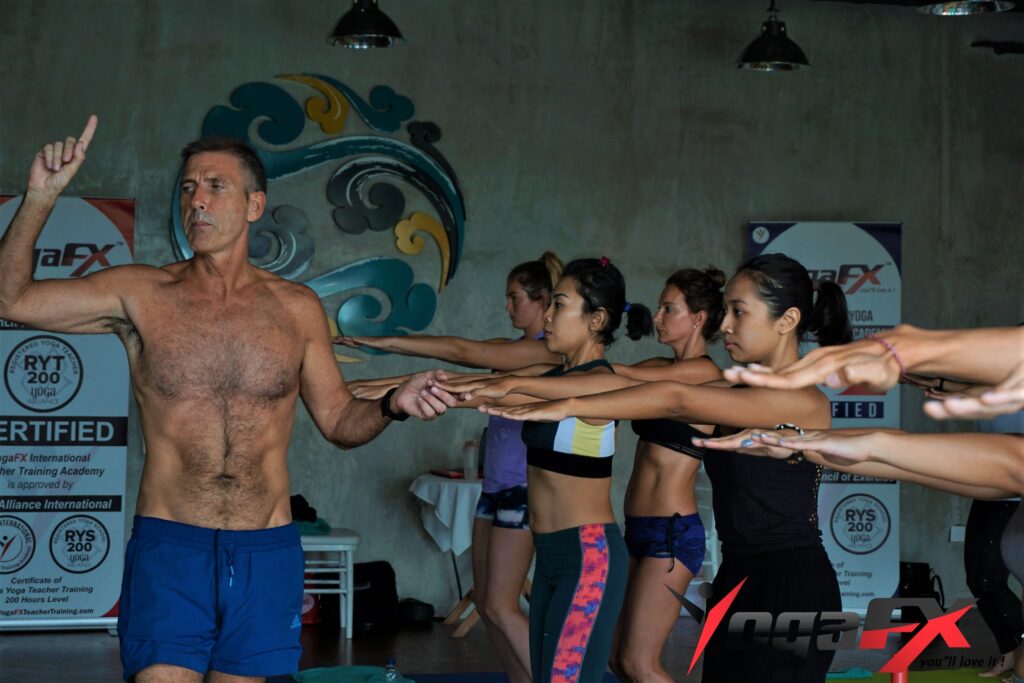
YogaFX has trained students from multiple countries at all experience levels. The consistent finding is that outcome quality correlates more strongly with pre-course preparation and commitment during the intensive than with prior practice experience.
Lower-experience students who complete the pre-course thoroughly and arrive prepared consistently graduate with the same competencies as experienced practitioners — because the 26&2 programme is designed around teaching a fixed, scripted sequence, not around demonstrating advanced personal practice. A student who knows the dialogue and understands the postures can teach an effective Bikram class regardless of whether they can personally execute every posture to its full depth.
🎓 YogaFX YTT — What Lower-Experience Students Receive
- Online pre-course (30+ hours): Complete posture theory and dialogue before arriving in Bali
- 6-day Bali intensive: Live teaching practice with immediate feedback from Mr. Ian Terry
- Post-graduation WhatsApp mentoring: Ongoing support as your teaching practice develops — no time limit
- Lifetime resource library access: 60,000+ words of teaching content to return to
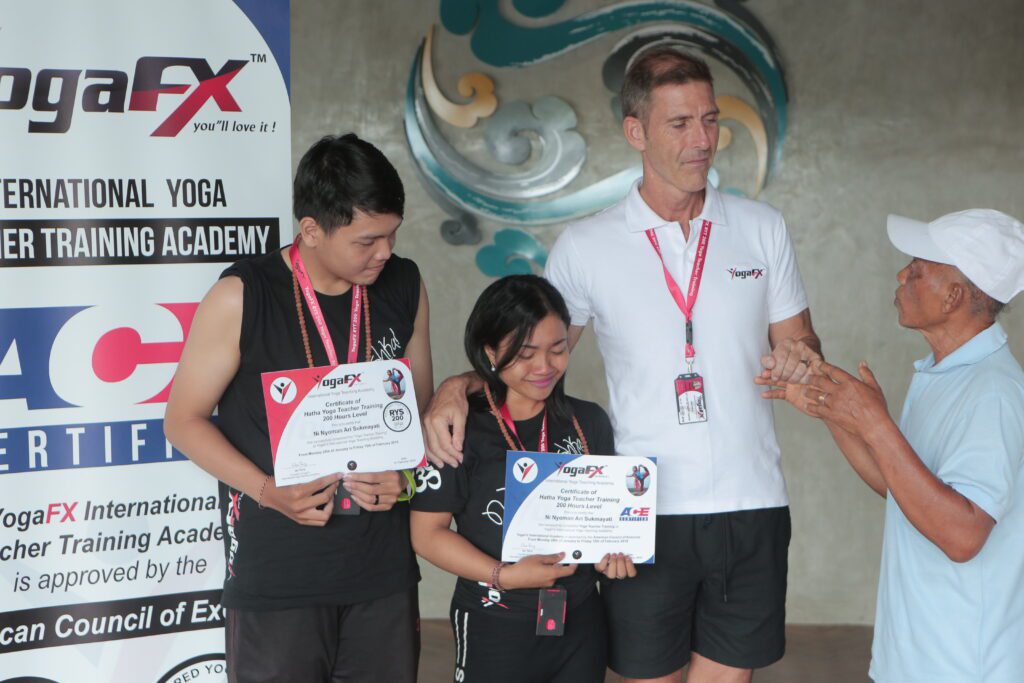
- Yoga Alliance RYT 200 + Bikram Hot 26&2 Certification: Credentials valid regardless of prior experience level
FAQ
Can a complete beginner do yoga teacher training in Bali?
A complete beginner — someone with zero yoga practice — can technically enrol in a 200-hour YTT programme, but the experience will be significantly harder than for someone with 3–6 months of practice. The YogaFX online pre-course mitigates this by building posture knowledge before the Bali intensive. For students with zero prior practice, completing 2–3 months of regular yoga classes before starting the pre-course is strongly recommended.
How flexible do I need to be for yoga teacher training?
Not very. Flexibility is not a prerequisite for teaching yoga — it is an outcome of consistent practice. The Bikram 26&2 sequence includes modifications for every posture at every flexibility level. What matters more than flexibility is functional range of motion — the ability to demonstrate posture entry, alignment cues, and modifications for students at different levels. This is developed during the YTT itself, not required before it.
What is the minimum yoga experience for the YogaFX programme?
There is no formal minimum, but Mr. Ian Terry recommends at least 3 months of regular yoga practice before the Bali intensive. For students with less experience, completing the full online pre-course before arriving — ideally over 3–4 weeks with consistent daily study — is the mechanism that bridges the gap. Fill out the enrollment form to discuss your current experience level and get an honest assessment.
Will I be able to teach professionally after YTT if I am not an advanced practitioner?
Yes — particularly in the Bikram 26&2 format. The Bikram class is taught from a fixed scripted dialogue, not improvised from personal practice. A teacher who knows the dialogue precisely, understands the postures conceptually, and can create a safe, structured class environment is fully competent to teach — regardless of personal practice depth. Many of the most effective Bikram teachers are not advanced practitioners in their personal practice; they are skilled instructors of the method. The YogaFX programme specifically develops instructional competency rather than personal practice advancement.
If you’re still comparing schools with beginners in mind, see this roundup of top-rated Bikram yoga teacher training programs for beginners.