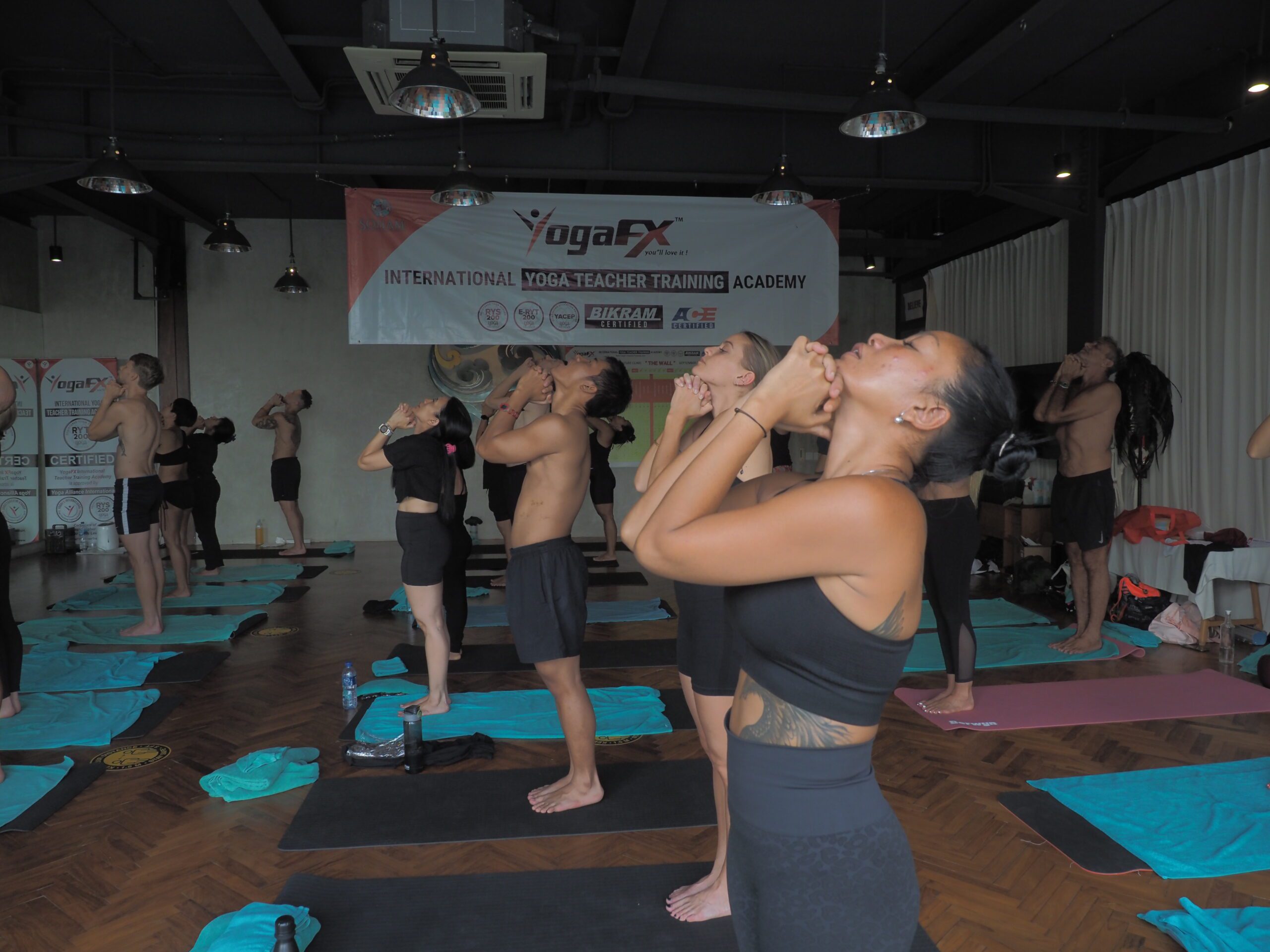
Bikram yoga is a 90-minute sequence of 26 postures and 2 breathing exercises performed in a room heated to 40°C (105°F). You have never done it before. The room is hot, the sequence is fixed, and you have no idea what to expect.

That uncertainty is completely normal – and it is exactly what this guide is designed to remove.
Bikram yoga is fully accessible to complete beginners. The sequence is the same for everyone in every class – there is no beginner version or separate track. Every first-time student attends the same class as experienced practitioners, with modifications available for every posture. No prior yoga experience is required.
At Bikram YogaFX Bali, first-timers walk into our Seminyak and Canggu studios every single week – tourists, expats, and people who have never done yoga in their lives. They all survive. Most come back. Here is everything you need to know before your first class. If you’re a visitor squeezing your first class into a Bali holiday specifically, our first-timer’s guide for tourists covers what’s different about starting here instead of at a studio back home.
Why Bikram Yoga Is Actually Ideal for Beginners
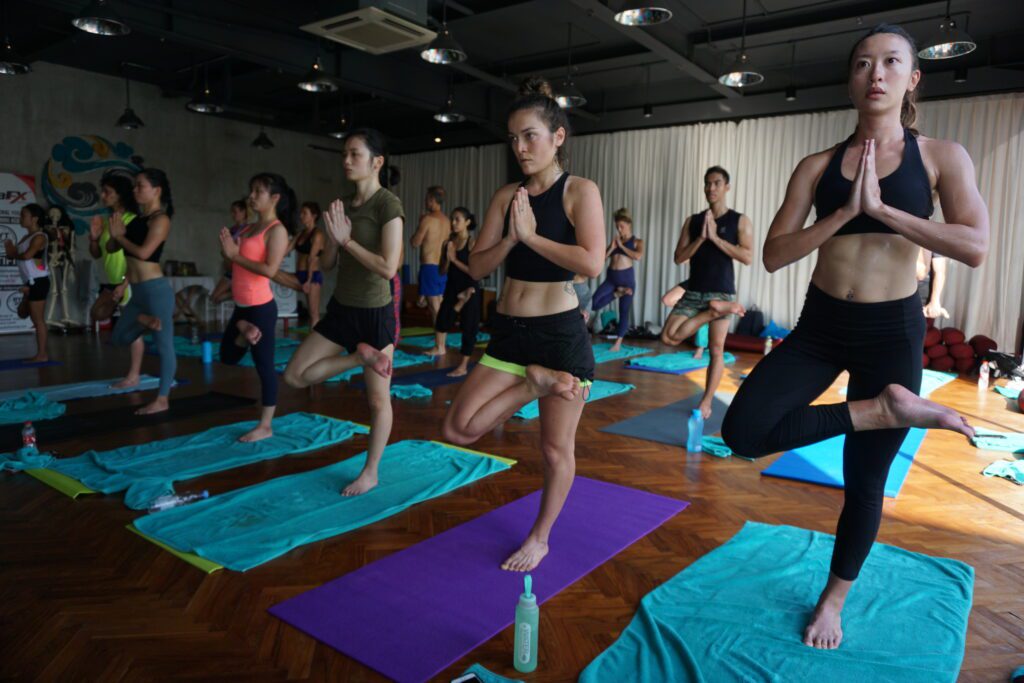
Most people assume that hot yoga is advanced. The opposite is often true. Bikram yoga has structural advantages that make it unusually well-suited to people who are new to yoga:
1. The Sequence Never Changes
Every Bikram yoga class – anywhere in the world – follows the exact same 26 postures in the exact same order. This means there is nothing to memorise, no flow to follow, and no risk of falling behind. You simply watch, listen to the instructor, and try. By your fifth class, the sequence begins to feel familiar. By your tenth, your body starts to know what comes next.
2. The Instructor Talks You Through Everything
Bikram yoga uses a fixed, scripted dialogue. The instructor does not demonstrate postures – they speak the class through it. This means the instruction is precise, consistent, and easy to follow even if you have never heard the names of any postures before. The class opens and closes with breath rather than a posture – the two breathing exercises that bookend the sequence are usually the first unfamiliar part a new student encounters, before the postures themselves.
3. Modifications Exist for Every Posture
Nobody expects a first-timer to execute Standing Bow Pulling Pose or Fixed Firm Pose with full range of motion. Modifications are built into the sequence. The goal in your first class is simply to stay in the room, try each posture to your current ability, and rest when you need to.
4. The Heat Helps More Than It Hurts
Natural heat warms the muscles and connective tissue, increasing flexibility and reducing the risk of injury. Beginners who practice in natural tropical heat – such as the all-natural Bali heat at YogaFX – often find that their body opens more quickly than in a room-temperature yoga class. At YogaFX, there are no electric heaters. The warmth is Bali’s own natural tropical environment – the same climate Bikram yoga was originally designed for.
What Actually Happens in a Bikram Yoga Class
Here is a straightforward walkthrough of your first class, from the moment you arrive to the moment you leave.
Before Class: Arrival
Arrive at the studio at least 15 minutes before your class start time. This gives you enough time to check in, change, and acclimatise to the room temperature before the session begins. Walking into the hot room cold and rushed is the single most common reason beginners have a difficult first experience.
At Bikram YogaFX Bali, the front desk team will welcome you, explain the format, and show you where to set up your mat. Let them know it is your first class – the instructor will be aware and may offer specific guidance during the session.
The Structure of the Class
A standard Bikram yoga class runs 90 minutes. YogaFX also offers a 60-minute class for practitioners with time constraints. Both formats follow the same 26&2 sequence – the 60-minute class is adapted to cover the full sequence within a tighter timeframe.
| Format | Duration | Best For |
|---|---|---|
| 90-minute class | Traditional format | First-timers + all practitioners |
| 60-minute class | Efficient format | Busy schedules, returning students |
The 90-minute class is structured in two halves: the standing series (approximately 45 minutes) and the floor series (approximately 45 minutes). The standing series is the most cardiovascularly demanding part of the class – your heart rate will be elevated. The floor series is slower, focused on spinal strength and flexibility. Here’s what the full sequence looks like.
What the Heat Feels Like
The room will feel warm the moment you enter. By the fifth posture, you will be sweating. This is not a sign that something is wrong – it is thermoregulation, exactly as the body is designed to respond to heat and physical exertion.
Most beginners find the first 20–30 minutes of the standing series the most challenging. The combination of heat, unfamiliar postures, and physical demand peaks early in the class. If you push through this initial phase, the body adapts and the floor series often feels more manageable.
Resting During Class
You are allowed to rest. If you feel dizzy, overheated, or fatigued, sit or lie down on your mat. You do not need to leave the room. Staying in the heated room – even while resting – is more beneficial than stepping outside, because the body needs time to adapt to the thermal environment. Leaving the room removes that adaptation signal. If you have any questions about whether hot yoga is right for you before you even book your first class, our guide on who should take extra caution with Bikram yoga is worth reading first.
Mr. Ian Terry’s one rule for first-timers: stay in the room for the full duration. You do not have to do every posture. You do need to stay.
What to Bring to Your First Bikram Yoga Class
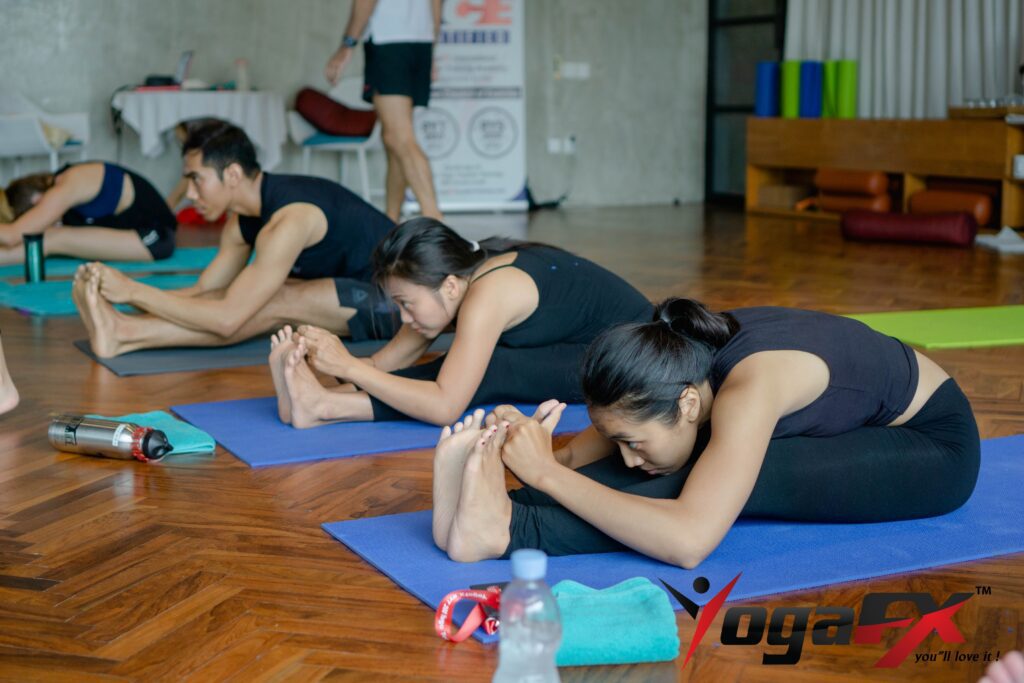
Preparation makes the difference between a difficult first experience and a manageable one. Here is the complete list, and for a fuller breakdown of exactly what fabric and fit to look for, see our complete guide to what to wear to hot yoga in Bali:
| Item | Why It Matters |
|---|---|
| Water – 1 litre minimum | Hydration is critical. Drink 500ml in the 2 hours before class and bring at least 1 litre into the room. Sip during designated rest periods – not during postures. |
| Yoga mat | Any non-slip mat works. A travel mat is fine. Mats are available for rent at YogaFX if you do not have one. |
| Large towel | You will sweat significantly. A towel placed over your mat improves grip and is standard practice in all Bikram studios. |
| Small face towel | Optional but useful for wiping sweat during class. |
| Minimal, close-fitting clothing | Loose clothing traps heat and restricts movement. Shorts and a fitted top for men; shorts or leggings and a fitted top for women. Less is more in a 40°C room. |
| Nothing to eat 2 hours before | Practicing Bikram yoga with food in your stomach reduces cardiovascular output and comfort. Eat a light meal no less than 2 hours before class. |
Practicing in Natural Bali Heat: What Makes YogaFX Different
Most Bikram yoga studios outside of tropical countries use electric heaters or infrared panels to simulate the 40°C environment. At Bikram YogaFX Bali, there are no electric heaters – in either the Seminyak or Canggu studio. Explore more about practicing yoga in Bali.
This is not just an operational choice. Bali’s natural tropical heat produces a humid warmth that is physiologically different from the dry heat of an electrically heated room. Humid heat allows the body to sweat more efficiently, maintains muscular warmth more evenly, and creates the thermoregulatory conditions that Bikram yoga was originally designed for – a studio environment that mirrors the natural climate of Calcutta, where the method was developed.
For beginners, this means two practical things:
- The body warms up more evenly, which reduces the shock of the first few postures.
- Natural humid heat is generally better tolerated than dry electric heat, particularly for the respiratory system.
📍 YogaFX Studio Locations
- Seminyak Studio: Hot yoga in the heart of Seminyak, Bali
- Canggu Studio: Hot yoga in Canggu, Bali
- Both studios: All-natural Bali heat – zero electric heaters
- Class formats: 60-minute and 90-minute daily sessions
- Contact: WhatsApp (all enquiries and class schedule)
10 Tips for Surviving (and Enjoying) Your First Bikram Yoga Class
1. Hydrate heavily the day before – not just the morning of
Dehydration does not develop in one hour. Most first-timers who struggle in the heat are under-hydrated before class even starts. Drink consistently throughout the day before your class.
2. Arrive 15 minutes early
Check in, set up your mat, and sit in the room before class starts. Five quiet minutes in the heated room before the standing series begins makes a significant difference to how the body responds.
3. Tell the instructor it is your first class
Mr. Ian and the YogaFX team pay specific attention to first-timers. Knowing in advance means they can offer modifications, check in with you during class, and ensure you have the information you need.
4. Set up mid-room, not at the back
Beginners often default to the back of the room to avoid being seen. Mid-room positioning gives you a clear view of experienced practitioners in front of you, making the postures easier to follow.
5. Use the mirror – it is there for alignment, not vanity
Every Bikram studio uses a full-length mirror. This is a technical tool: the mirror gives you real-time alignment feedback that even advanced practitioners depend on. Use it.
6. Focus on staying in the room, not on doing every posture perfectly
Your goal in class one is simply to complete the session. If a posture is beyond your current ability, try a modified version or observe. Every experienced practitioner in the room was once where you are.
7. Breathe through your nose when possible
Nasal breathing regulates heat tolerance more effectively than mouth breathing. When the heat feels intense, slow the breath down rather than speeding it up.
8. Sit down – do not leave the room
If you feel overwhelmed, sit or lie on your mat in Savasana (corpse pose). Resting in the room is fine and normal. Leaving the room removes your body from the adaptation process and makes returning harder.
9. Do not compare yourself to others in the room
The person next to you may have practised Bikram yoga for 10 years. The sequence looks completely different on a body with a decade of practice than it does on a first-timer. This comparison serves no useful purpose.
10. Come back for class two within 48 hours if possible
The second class is significantly easier than the first. This is not an exaggeration – the body adapts remarkably quickly to the heat and sequence. The hardest part of Bikram yoga for beginners is always the first session. Once you have a few classes behind you, our frequency guide covers how many classes a week actually makes sense for your goals.
Should You Start with the 60-Minute or 90-Minute Class?
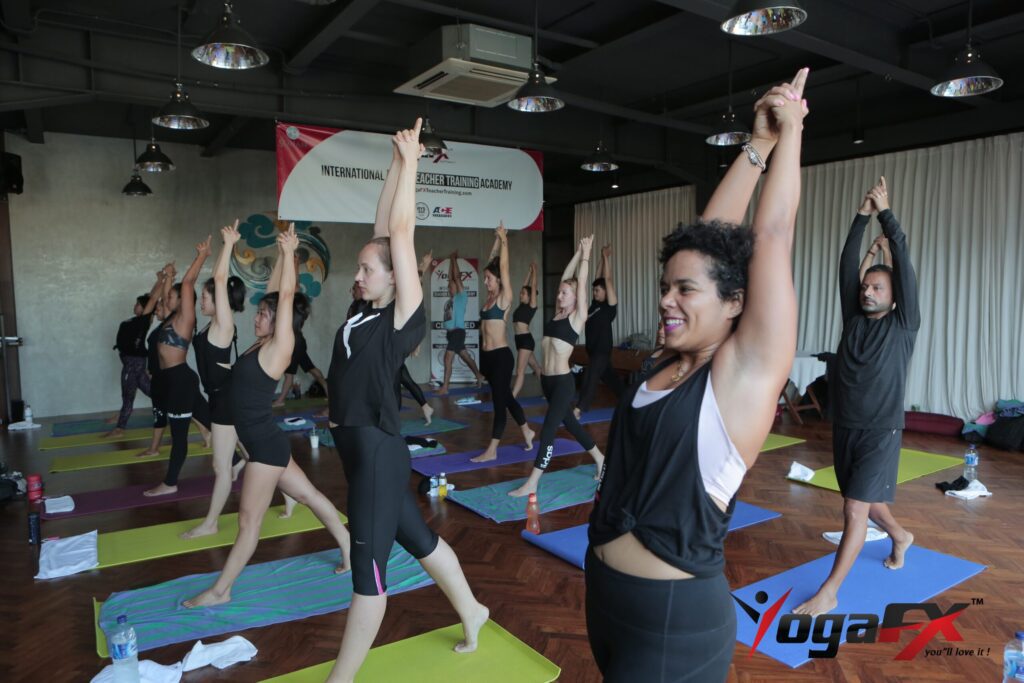
Both class formats are available daily at YogaFX Bali. For first-timers, the choice depends on one factor: your schedule and mindset, not your fitness level. Curious how much you’ll burn? For the full daily schedule and pricing across both studios, see our guide to drop-in classes in Bali.
The 90-minute class is the traditional Bikram format and gives the body the full duration of the sequence. The 60-minute class covers the same 26&2 sequence in a compressed format – it is genuinely more intense per minute, not easier. Neither format is specifically designed for beginners; both are fully accessible from day one.
If you have the time, the 90-minute class is recommended for your first session. The longer format gives the body more time to adapt to the heat, and the pace is slightly less compressed. If your schedule only allows 60 minutes, begin with that – the key is showing up.
Common Beginner Mistakes – and How to Avoid Them
| Mistake | What to Do Instead |
|---|---|
| Arriving late and rushing into the room | Arrive 15 minutes early. The transition from cool air to 40°C heat requires time. |
| Eating a full meal 30–60 min before class | Eat at least 2 hours before. A light snack 1 hour before is acceptable. |
| Leaving the room when it gets hard | Sit on your mat. Rest in Savasana. Stay in the room for the full session. |
| Pushing into pain to match the person next to you | Work to your edge – not beyond it. Yoga is personal; comparison undermines the practice. |
| Not drinking water before class | Hydrate throughout the day. One glass before you leave for class is not enough. |
| Wearing loose, heavy clothing | Minimal, close-fitting clothing. Less fabric means less trapped heat and better movement. |
| Expecting to do every posture correctly on day one | Beginners are not expected to execute the full depth of any posture. Effort and consistency matter far more than perfection. |
FAQ
Do I need any yoga experience to try Bikram yoga?
No. Bikram yoga requires no prior yoga experience. The 26&2 sequence is taught through verbal instruction – the instructor talks every student through each posture. Modifications exist for all postures. YogaFX Bali welcomes complete beginners at every class in both the Seminyak and Canggu studios.
Is Bikram yoga safe for beginners?
Yes, when practiced correctly. The most important safety principle is to listen to your body and rest when needed. The heat increases flexibility, which reduces injury risk for students who do not push beyond their current range of motion. If you have a pre-existing medical condition – particularly cardiovascular or blood pressure-related – consult your doctor before your first hot yoga class. If you are pregnant, read our guide to Bikram yoga during pregnancy first.
How much do I need to drink before and during class?
Drink consistently throughout the day before your class – not just in the hour before. Aim for at least 2 litres of water in the 6–8 hours preceding the session. Bring a minimum of 1 litre into the room. Sip during designated rest periods between postures, not during active postures.
What if I feel sick or dizzy during class?
Sit or lie down on your mat immediately. Nausea and dizziness in the first class are common and are usually caused by the combination of heat, unfamiliar physical demand, and in many cases, insufficient pre-class hydration. Rest in the room. If symptoms persist or worsen, inform the instructor. Do not attempt to power through severe dizziness – rest is the correct response.
How many classes before I start to feel comfortable?
Most students report that the second class feels significantly easier than the first, and that by the fifth to tenth class the sequence begins to feel familiar. The physical adaptation to the heat happens quickly – usually within three to five sessions. For measurable changes in flexibility, strength, and cardiovascular fitness, a consistent practice of three or more sessions per week over eight weeks produces the most significant results, as supported by the Tracy & Hart (2013) study published in Evidence-Based Complementary and Alternative Medicine.
Is there a free class for first-timers at YogaFX Bali?
Yes. YogaFX Bali offers a Free 1-Day Guest Pass for all first-time visitors at both the Seminyak and Canggu studios. Contact the studio via WhatsApp to claim your pass and confirm the class schedule.