

Heat acclimatization is the set of changes your body makes when it works in a hot room repeatedly. The same class starts to feel easier, and your core temperature rises more slowly. US occupational guidance from the CDC puts the process at 7 to 14 days of gradual exposure.

Hot yoga can start that process. The first month decides whether a student adapts well or pushes too hard and stalls. Mr. Ian Terry, E-RYT 500, has taught more than 12,000 hours and leads the YogaFX teaching team in Seminyak, where classes run in natural tropical heat.
The questions new students ask most often about heat acclimatization are simple. How long will the first weeks feel hard? Does the discomfort ever end? This article answers both, using research we could open and check, plus a pacing plan you can adjust to your own body.
What heat acclimatization actually changes
Your body does not get used to heat the way you get used to a new song. It changes how it handles heat. Over time you start sweating sooner and sweat more efficiently. Your heart rate and core temperature stay steadier for the same effort.
Researchers call these physiological adaptations. They build slowly, because each session asks a little more of the system than the one before. So heat acclimatization is a gradual change, not a switch you flip after one intense class.
Two points matter most for a yoga student. The first is that heat acclimatization comes from repeated exposure, not from one brave class. The second is that it fades when you stop.
The CDC notes that a gap of a week or more can cause a significant loss of adaptation. That loss raises the risk of heat-related illness. Heat acclimatization is something you keep up, not something you finish.
How long heat acclimatization takes
The clearest timeline comes from occupational health rather than yoga. The National Institute for Occupational Safety and Health (NIOSH), part of the CDC, recommends that new workers stay under 20% of their normal heat exposure on day one. They should add no more than 20% on each extra day.
Workers who already have some heat experience can move faster. The table shows both schedules side by side. Because heat acclimatization depends on how much heat you already carry, the two rows describe very different starting points.
| Worker group | Day 1 | Day 2 | Day 3 | Day 4 |
|---|---|---|---|---|
| New to heat | No more than 20% | No more than 40% | No more than 60% | No more than 80% |
| Some previous heat experience | No more than 50% | No more than 60% | No more than 80% | No more than 100% |
A hot yoga class is not a shift on a construction site. Nobody measures your exposure in percentages. The logic still carries over.
The gap between your first class and your tenth is the same kind of gap the table describes. A steady step-up makes more sense than a sudden jump. The sudden jump is the pattern to avoid: three classes in five days, a week off, then a return to full effort.
What the research says about hot yoga
Most hot yoga research looks at fitness, flexibility or mood. It rarely looks at acclimatization itself. One study that did is the 2021 paper by Bourbeau and colleagues in the International Journal of Yoga, available on PubMed Central.
The team put 22 adults through 12 sessions over four weeks, three sessions a week. Eleven people practised in a heated room at about 40°C and 40% humidity. The other eleven practised yoga at normal room temperature, which made the comparison group.
The results are more modest than the marketing often suggests. The authors reported that the sessions “did not lead to classic adaptations to heat stress (i.e., lower rise in core temperature)”. They also found no evidence of heat acclimation in the hot group.
Two things did change. Heat shock protein 70 in blood cells rose in the hot group only. VO2 max, a measure of aerobic fitness, improved more in the hot group. The authors read the protein change as cellular thermotolerance, a local protective response, rather than full body adaptation.
The study also ran a heat tolerance test: a 45-minute walk at 42°C and 40% humidity, stopped if core temperature reached 40°C. The researchers did not measure plasma volume changes. Plasma expansion is one of the mechanisms usually linked to heat acclimation.
In plain terms, four weeks of this kind did not prove full heat acclimatization. The early weeks may not deliver it on their own. That does not make hot yoga pointless for adapting to heat. It means the honest expectation is slower than one month would suggest.
What the study did not show
The study did not show a drop in core temperature, which is the marker most people picture when they think of heat acclimatization. It also did not show the plasma changes usually linked to acclimation, because those were not measured. For a student, the missing evidence is a reason to be patient, not a reason to stop practising.
7 to 14 days
The CDC window for building heat tolerance through gradual exposure.
20%
The most a new worker should face on day one, then no more than 20% more each day.
12 sessions
Over four weeks, a study found no classic core-temperature adaptation from hot yoga alone.
About 40°C
The room heat used in the study and the standard for a 26&2 class, at about 40% humidity.
Pacing your first month of hot yoga
Use the CDC pattern as a guide, not a rulebook. Think of each class as one step on the table. Let your own recovery decide when to take the next step. A workable first month looks like this for most people:
- Week one: one or two classes. Let your body meet the heat without asking for full effort on day one. Sit out a posture whenever you feel dizzy.
- Week two: add one class. Keep the same water and rest routine. If your heart rate is still high long after class, skip the next session.
- Week three: aim for three classes. Notice whether your recovery between classes is getting shorter. Shorter recovery is a good sign.
- Week four: settle into a frequency you can keep. The frequency guide for Bali students covers the options by goal.
Water matters as much as the schedule. NIOSH warns that failing to replace the water lost in sweat slows, or even prevents, the physiological adaptations to heat. The NIOSH acclimatization bulletin makes the same point.
Drink water before class and sip during the standing series. Rehydrate afterwards. Pale urine by the evening is a simple daily check that your fluids are on track.
Rest matters too. If you are coming from a cooler country, give your body a few days to settle into the local climate before you add a class a day. Avoid stacking hot classes on top of a long travel day or heavy exercise elsewhere.
Common mistakes in the first month
Most first-month problems come from three patterns. Each one looks like progress at the time.
- The early push. A new student feels fine after the first class, books four more in the next three days, and then cannot get off the sofa at the weekend. The body has not finished the first step. The extra sessions add load without adding heat acclimatization.
- Treating heat as a test of toughness. Holding on through dizziness or a pounding headache does not build tolerance. It ignores the warning system the body uses to protect itself.
- The long break. A holiday, a cold or a busy month can wipe out weeks of gains. When you return, start again with the first-week pattern rather than picking up where you left off.
The long break feels slow, but it prevents the setback that makes many students quit altogether. Heat acclimatization is built from consistent, moderate exposure, and consistency is easier to keep when the plan is realistic.
Why Bali’s natural heat changes the picture
The Seminyak studio does not use electric heaters. Classes run in natural tropical heat, close to 40°C with about 40% humidity, which is the standard the original Hot 26&2 method calls for.
The outside air is warm and humid too, so the heat does not switch off when you leave the room. For visitors from cool climates, that is a real advantage. You spend the whole day in warm air, not just the 90 minutes in the room.
Planning your first week in the heat
Because the heat is constant, your body carries a load from the moment you wake up. Many first-week students underestimate this. They feel comfortable in class, then struggle with the walk home at midday.
Plan the week around the day as a whole, not just the class. Keep water with you, choose shade for errands, and save extra workouts for later in the trip.
The photo below comes from a YogaFX community event in Bali. It shows the public, shared side of the practice, which is part of how visitors get to know the local studio scene.
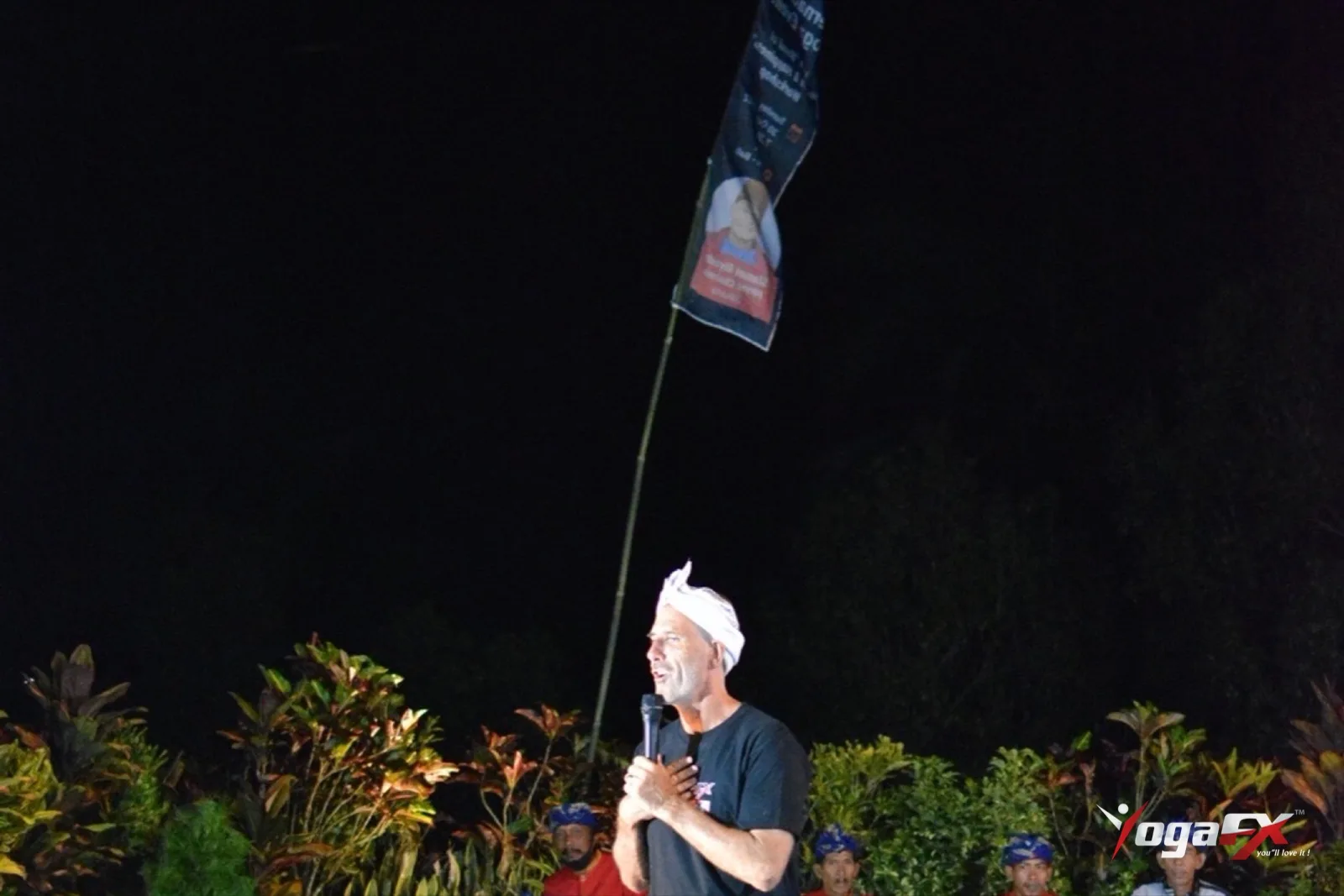
If you are planning a trip, the guide to practising in Bali’s natural heat explains what the difference from electric rooms feels like. Classes run from 06:30 to 08:00, booking only, so plan the schedule above around early mornings.
Visitors and residents adapt differently
A visitor arriving from a cool climate starts with no heat history. For that person, the first week carries most of the heat acclimatization work, and the pacing table above matters most in those days.
Residents who have lived in Bali for months may already have some adaptation. That head start fades during a long trip away, though. As the CDC notes, a gap of a week or more can cause a significant loss of adaptation, so a returning resident should step back up the schedule rather than jump in.
What students say about adapting to the heat
Student voices capture what tables cannot: the nerves before the first class and the surprise at how much you sweat. Two reviews from our YouTube collection fit this story. Both are shared with the first name only, as the students gave them.
A trainee in our YouTube review from 2018 put it plainly: “I feel more flexible, seriously amazing. I love how I sweated. I don’t think I did this much in my life.” That reaction is typical of a new body meeting the heat, and it is the reason pacing matters.
Cheleigh, a trainee who shared her graduation on YouTube in 2026, called the experience “a very interesting and eyeopening experience”. Her account covers the whole programme, not only the heat. It still shows the gradual change students describe in the room.
A trainee’s graduation video from 2023 is below as well. It gives a sense of how a full programme feels from the inside, with the heat and the teaching running side by side.
How to tell you are adapting
Signs of progress are quieter than signs of strain. Most students notice a few changes over the first month:
- You start sweating earlier in the class.
- The standing postures feel less like a battle.
- Your heart rate settles faster once you sit down.
- A class that left you wrecked in week one leaves you tired but steady by week four.
Keep a simple note after each class. Record how you felt during the standing series, how long you needed to recover, and whether you slept well. Patterns show up quickly. If the notes improve week by week, the adaptation is working. If they keep getting worse, your body is asking for a lighter schedule, not a harder push.
Safety: when to slow down or stop
Heat acclimatization is about building tolerance, not pushing through symptoms. That matters because heat-related illness is the risk the whole process is designed to prevent. The CDC and NIOSH guidance describes the early warning signs. Stop, sit down and rest if you notice any of these:
- Dizziness or faintness that does not settle when you sit down.
- Headache, nausea or vomiting during or after class. NIOSH lists these as symptoms of heat-related illness.
- Confusion or unusual fatigue, or a heart rate that stays high long after you rest.
- Stopping sweating while you feel very hot. This is a warning sign that needs urgent medical help, not another posture.
This article is general information, not medical advice. Please consult a healthcare professional before you start hot yoga. Take extra care if you have a heart condition or high blood pressure, are pregnant, or take medication that affects fluid balance or heart rate.
Our teachers can adapt postures in class, but they cannot diagnose or treat a medical condition. For a broader look at safety, read the guide to hot yoga safety.
FAQ: heat acclimatization questions answered
What is heat acclimatization?
Heat acclimatization is the set of physical changes that make a hot environment feel easier over time. Your body starts sweating sooner, sweats more efficiently, and keeps core temperature lower for the same effort. CDC guidance describes it as a gradual process built by repeated, slowly increasing exposure to heat rather than one long session.
How long does heat acclimatization take?
CDC guidance for workers puts the process at 7 to 14 days of gradual exposure, and new workers need more time than people who already have some heat experience. For hot yoga, a 2021 study of 12 sessions over four weeks found no classic core-temperature adaptation. Plan for several weeks of regular practice rather than a single week of classes.
Is heat acclimatization real?
Yes, the body does adapt to heat, but the research on hot yoga is mixed. In a 2021 study, people doing 12 hot yoga sessions over four weeks showed no classic heat adaptation, although heat shock protein levels rose in the hot group. Adaptation looks strongest with steady, repeated heat exposure and enough water.
How long does heat acclimatization last?
CDC guidance warns that a gap of a week or more in heat exposure may cause a significant loss of adaptation, which raises the risk of heat-related illness. That is why regular practice matters more than occasional intense sessions. After a break of a week or longer, return to shorter classes and build up again using the same steps as your first month.
Does heat acclimatization work for hot yoga?
Partly. Hot yoga is real heat exposure, so it does load the body in the way acclimatization needs. The 2021 four-week study did not show classic adaptation, though, which suggests a few classes are not a full programme on their own. Feeling more comfortable in the heat is a useful signal, but judge your progress by how you feel and recover, not by one class.
Still have questions? Send them through our contact page, and the team will help you plan a first week that fits your body and schedule. To try the heat for yourself, claim a Free Guest Pass and check the drop-in details.
 Mr. Ian Terry