Hot yoga in Jakarta is easy to find but harder to judge. Several South and Central Jakarta studios run heated classes, yet many use infrared panels, hot pilates, or heated flow rather than the original 26&2 Bikram sequence. Beginners should check the heat source, sequence, instructor training, and trial price, and many serious practitioners also train in Bali’s natural heat.
That opening answer is the one most Jakarta search results skip. Type “hot yoga Jakarta” or “Bikram yoga Jakarta” into Google and you get a map pack, a few studio Instagram pages, a booking app, and listicles that rank studios by décor. What you rarely get is an explanation of what you are actually signing up for when a class says “hot.”
This guide fills that gap. It draws on the experience of Mr. Ian Terry, E-RYT 500, founder of YogaFX, who has taught more than 12,000 hours of Bikram and Hot 26&2 yoga and was confirmed in June 2026 as Master Trainer of the Republic of Indonesia Yogasana Sports Federation. A good number of the Indonesians he has trained started exactly where you are: in Jakarta, curious about hot yoga, and not sure which room to walk into.
Best Bikram and Hot Yoga Studios in Indonesia
The best Bikram and hot yoga studios in Indonesia are concentrated around Bali and Jakarta, featuring top-rated locations like YogaFX in Kerobokan/Seminyak and Canggu. Jakarta has the larger number of heated studios, spread mostly across South Jakarta, Central Jakarta, and the Kuningan and Senopati business districts. Bali has fewer studios, but it is where the original method is practised in natural tropical heat.
YogaFX Bali (Seminyak & Canggu)
- Address: Jl. Pangkungsari Gg Jepun No.888, Kerobokan, Kuta Utara, Bali 80361 (Seminyak studio). A second studio operates in Canggu.
- Details: Original Bikram Hot 26&2. Fixed 90-minute classes of 26 postures and 2 breathing exercises, taught in natural tropical heat of around 40°C and 40% humidity with no electric heaters. Scripted verbal dialogue, no music. Open daily 06:00 to 22:00. Complete beginners welcome, with a Free 1-Day Guest Pass for first-timers. Led by Mr. Ian Terry, E-RYT 500.
- Rating: 5.0 on Google, from 142 reviews.
For Jakarta itself, this guide does not rank individual studios. Rankings go out of date quickly and tend to reward whoever paid for the listing. Instead, the sections below give you the checks that separate an authentic heated class from a room that simply feels warm, so you can judge any Jakarta studio yourself in one trial class.
What “Hot Yoga” Actually Means in Jakarta: 26&2, Infrared, or Hot Pilates
This is the part most beginners miss. In Jakarta, “hot yoga” is a label, not a method. Studios use it for at least four quite different classes, and the experience changes completely depending on which one you book.
| Class type | Heat source | Sequence | Typical length | What it feels like |
|---|---|---|---|---|
| Original Bikram / Hot 26&2 | Room heated to about 40°C with humidity around 40% | Fixed 26 postures + 2 breathing exercises, same every class | 90 minutes (some studios offer 60) | Steady, deep heat. Structured and repeatable, so progress is easy to track |
| Infrared hot yoga | Infrared panels warming the body directly | Usually flow-based, changes by instructor | 45 to 75 minutes | Warm skin, drier air, lighter overall load |
| Hot pilates / hot mat pilates | Infrared or heaters, often 32 to 37°C | Pilates-based core work, not yoga postures | 45 to 60 minutes | Muscular burn, less flexibility focus |
| Heated vinyasa / hot flow | Heaters, often 32 to 38°C | Creative flow, different each class | 60 minutes | Fast and sweaty, varies a lot by teacher |
None of these is “wrong.” They just are not the same thing. If a friend told you Bikram yoga changed their back or their sleep, they almost certainly meant the fixed 26&2 sequence in a properly heated room, not a 45-minute infrared flow. The simplest question to ask at the front desk is: “Is this the 26-posture sequence, taught by dialogue?” A yes means original method. Anything else means a different class, however hot the room is.
Humidity is the other difference people feel straight away. Most city studios heat dry air with panels, which can leave humidity around 20 to 30%. The same 40°C reading feels very different in humid air, where sweat evaporates more slowly and breathing tends to feel easier.
What Is Bikram Yoga? A Quick Primer for First-Timers
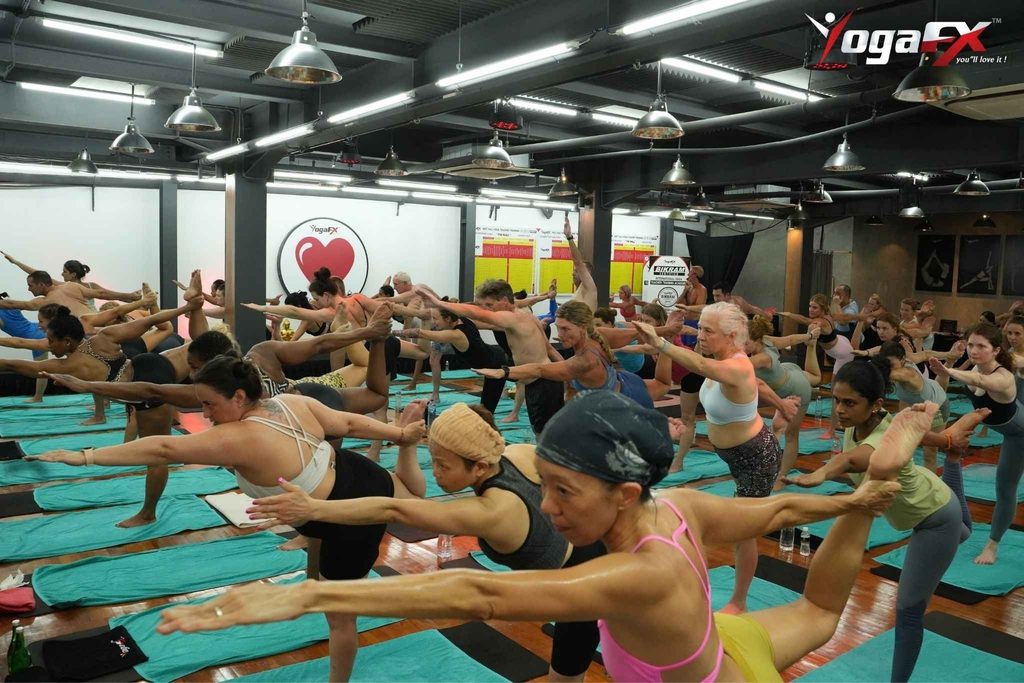
Bikram yoga is a fixed sequence of 26 postures and 2 breathing exercises, practised for 90 minutes in a room held at about 40°C and 40% humidity. The teacher talks you through every posture with a scripted dialogue instead of demonstrating, and there is no music. Every class follows the same order, which is why many practitioners now call it Hot 26&2.
The class opens with standing deep breathing, moves through a standing series that builds heat and balance, and then shifts to a floor series of spine strengthening postures and backbends before closing with a final breathing exercise. Those two breathing exercises bookend the class, so every session starts and ends the same way.
Why do people stick with something so repetitive? Partly because the research is unusually solid for a yoga style. A University of Wisconsin study led by Porcari (2014) found that a 90-minute class pushed participants to around 80% of their maximum heart rate, burning an average of 333 kcal for women and 460 kcal for men (PubMed 24700459). A 2025 systematic review by Willmott and colleagues, covering 43 studies and 942 participants, linked regular practice with better flexibility and general wellbeing (PMC12488547).
If you are still deciding between formats, our comparison of Bikram yoga vs hot yoga goes deeper on how the two get confused.
How to Choose a Beginner-Friendly Hot Yoga Studio in Jakarta
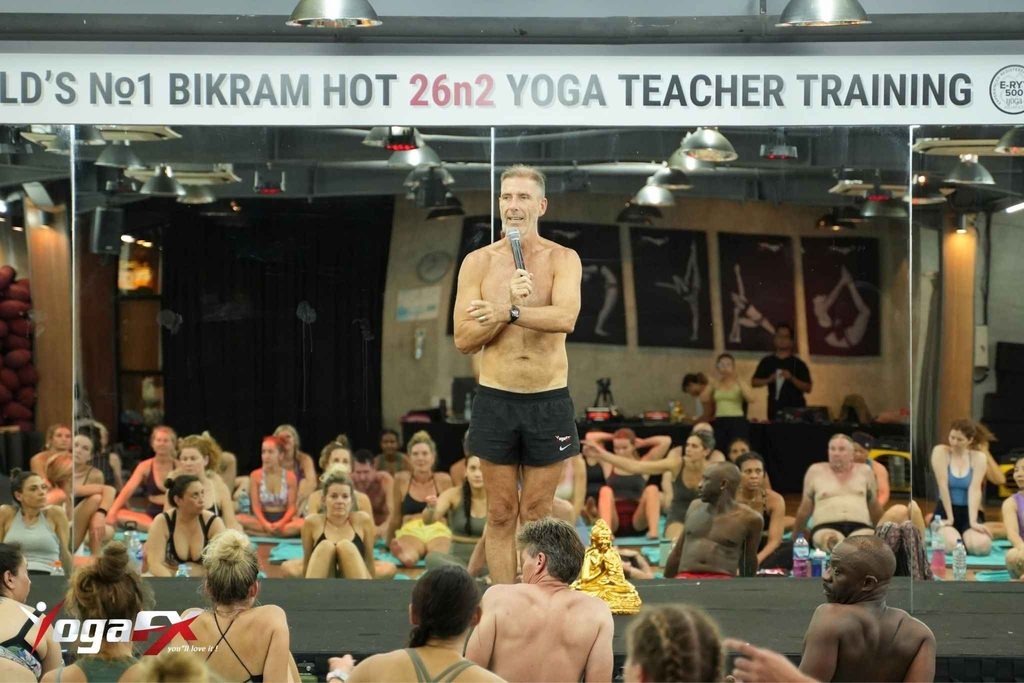
Beginner-friendly does not mean easy. It means the studio sets you up to survive your first few classes safely and come back. Six checks cover almost everything, and you can confirm most of them with a WhatsApp message before you book.
- Ask about the heat source. Heaters with humidity control, infrared panels, or air conditioning turned off? Each gives a different class. If you want the original method, ask for a heated room with humidity, not infrared only.
- Confirm the sequence. “26 postures and 2 breathing exercises, same every class” is the answer you want for Bikram. A timetable that lists “hot yoga” with a different theme each day is heated flow.
- Check who trained the instructors. Ask whether teachers hold a Yoga Alliance RYT 200 and a hot yoga-specific certification. Teaching a heated class safely is a distinct skill, because the teacher has to spot dizziness from the podium.
- Ask what happens in a first class. A good studio tells you to arrive 15 minutes early, stay in the room even if you need to lie down, and use the built-in rest points. If nobody briefs first-timers, that is a warning sign.
- Look for a trial or intro offer. Most Jakarta studios run a first-class discount or an intro week. Use it. One class tells you more than any review.
- Be honest about the commute. Jakarta traffic decides whether you practise twice a week or twice a month. A studio 20 minutes from your office will beat a nicer one an hour away across town.
Reviews help, but read them for specifics, not stars. Look for mentions of how clean the room and changing area are, whether teachers correct beginners by name, and whether the heat is consistent from class to class. Our longer checklist on choosing an authentic Bikram studio covers the same checks for any city.
What Hot Yoga Classes Cost in Jakarta
Jakarta yoga prices vary mostly by neighbourhood and facilities. Studios in Senopati, Kemang, and Kuningan sit at the top of the range, while community studios further out charge far less. According to a January 2026 cost breakdown from Hartaku, typical ranges look like this.
| Option | Typical price (IDR) | Best for |
|---|---|---|
| Single drop-in, general yoga studio | 100,000 to 250,000 | Trying a studio before committing |
| Single hot yoga (Bikram-style) class | Around 200,000 | Occasional heated practice |
| Class package (4 to 8 classes) | 400,000 to 950,000 | Once or twice a week |
| Unlimited monthly, hot yoga | Around 1,600,000 | Three or more classes a week |
| Community studio, per class | 80,000 to 120,000 | Budget practice, usually not heated |
Prices change often, so treat these as a starting point and confirm with the studio. Class-booking apps can lower the per-class cost, but check that the class you book is the fixed 26&2 sequence and not a shorter heated flow listed under the same “hot yoga” tag.
For comparison, a single drop-in class at YogaFX Bali costs between IDR 100,000 and 200,000, and your first day is free with the Guest Pass. Full details are in our guide to drop-in hot yoga classes in Bali.
Your First Hot Yoga Class: What to Bring and Wear
Jakarta’s own climate is hot and humid, which works in your favour and against you. Your body is already partly heat-adapted, but you also start the day slightly dehydrated if you have been sitting in traffic or an air-conditioned office. Prepare for that.
- Hydrate across the whole day. Sip water steadily from the morning rather than drinking a litre right before class. After class, replace water and electrolytes (sodium and potassium), since you can sweat heavily in 90 minutes.
- Eat light. Skip a heavy meal in the two hours before class. A banana or small snack 45 to 60 minutes beforehand is usually enough.
- Wear minimal, close-fitting clothes. Moisture-wicking shorts and a sports top. Cotton soaks through within minutes and gets heavy.
- Bring a large mat towel and a small hand towel. A bare mat becomes slippery once you sweat, which matters in balancing postures.
- Bring a full water bottle and a change of clothes. You will want both, especially before getting back on the road.
Inside the room, the goal of a first class is simply to stay in it. Sitting or lying down on your mat when you need to is normal and encouraged. Most students say the first ten minutes are the hardest part, and the body settles well before the end. For outfit specifics, see our sister site’s guide on what to wear to Bikram yoga.
Heated yoga is not suitable for everyone. Anyone who is pregnant or has a heart condition or uncontrolled blood pressure should consult a healthcare professional before practising in a heated room. Tell the instructor about any health condition before class starts.
Why Jakarta Practitioners Train in Bali
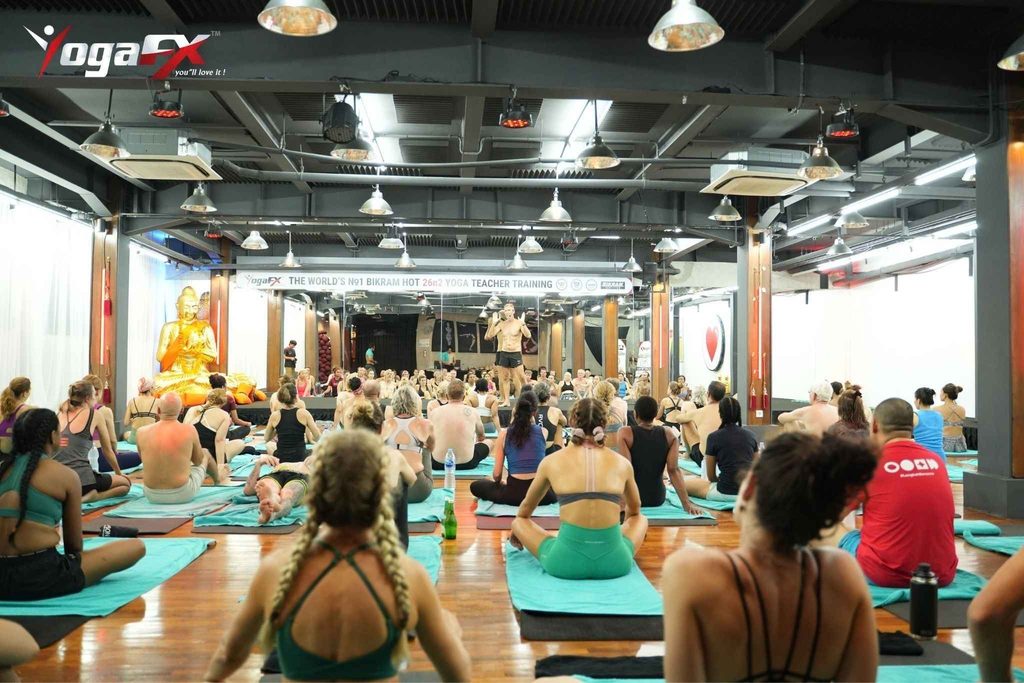
Jakarta has convenience. Bali has the conditions the method was built for. Many Jakarta practitioners end up doing both: regular classes near home, and a few days in Bali every so often to reset their practice in natural heat.
The difference is the air. YogaFX‘s Seminyak and Canggu studios use no electric heaters at all. Bali’s own tropical climate supplies both the warmth and the humidity, so the room sits close to the original environment the sequence was designed around. Students who arrive from city studios usually notice easier breathing and earlier, steadier sweating in the first class. That is not a simulation of the original climate. It is close to the real thing.
It is also a short trip. A flight from Jakarta to Bali takes under two hours, so a long weekend is enough for four or five classes. The studios are open every day from 06:00 to 22:00, and you can join any scheduled class as a complete beginner, since there is no separate beginner class to wait for.
The teaching has a local track record too. Mr. Ian Terry trained directly under Bikram Choudhury at five training events between 2012 and 2019, and now serves as Master Trainer of the Republic of Indonesia Yogasana Sports Federation. Several of the teachers you meet in Seminyak are Indonesian graduates of his programme. One of them, Ivara Candra Kartika, won gold and bronze for Indonesia at the 2026 World Yogasana Sports Championships in Ahmedabad. Read her story in our Seminyak teacher is a world Yogasana champion.
If you are wondering what the first class there is really like, our hot yoga for beginners in Bali guide walks through it step by step.
FAQ
Is there Bikram yoga in Jakarta?
Yes. Several Jakarta studios offer heated classes, mainly in South and Central Jakarta. Not all of them teach the original 26-posture sequence, though. Many “hot yoga” classes are infrared flow or hot pilates. Ask whether the class is the fixed 26 postures and 2 breathing exercises taught by dialogue before you book.
Is hot yoga good for beginners?
Yes, for most healthy adults. The Bikram sequence is built for all levels, and beginners join the same class as experienced students. Hydrate through the day, arrive early, and rest on your mat whenever you need to. Anyone pregnant or with a heart condition should consult a healthcare professional first.
What is the difference between Bikram yoga and hot yoga?
Bikram yoga is one specific method: 26 postures and 2 breathing exercises in a fixed order, 90 minutes, at about 40°C and 40% humidity, taught by scripted dialogue. Hot yoga is a broad label that also covers heated vinyasa, infrared flow, and hot pilates, often cooler and with a changing sequence.
How much does a hot yoga class cost in Jakarta?
A single hot yoga class in Jakarta costs around IDR 200,000, with general drop-in yoga ranging from IDR 100,000 to 250,000. Packages of four to eight classes typically run IDR 400,000 to 950,000, and unlimited monthly hot yoga is around IDR 1,600,000. Prices vary by area and change often.
What should I bring to my first hot yoga class?
Bring a full water bottle, a large mat towel, a small hand towel, a change of clothes, and a yoga mat if the studio does not rent one. Wear close-fitting, moisture-wicking clothing rather than cotton. Drink water steadily through the day and replace electrolytes after class, since you will sweat heavily.
📍 Coming to Bali from Jakarta? Try Your First Class Free
- Seminyak Studio: Natural Bali heat, zero electric heaters
- Canggu Studio: Natural Bali heat, zero electric heaters
- Heat condition: 105°F / 40°C, natural tropical humidity, year-round
- Class format: 90 minutes, 26 postures and 2 breathing exercises
- Open: Daily, 06:00 to 22:00
- First class: Free 1-Day Guest Pass, claim via WhatsApp
This article is for general educational purposes and is not medical advice. Anyone with a heart condition, high blood pressure, or other health concerns should consult a healthcare professional before practising in a heated room.