Search “yoga retreat Bali” and nearly every result promises the same thing: detox, gentle flow, stillness by the rice fields. That is a real and valid version of a Bali retreat, and plenty of excellent places deliver it. It is also not the only version.

A smaller but very real search for “hot yoga retreat Bali” and “Bikram yoga retreat Bali” suggests a different group of travellers exists, people who want their retreat to challenge them physically, not just settle them mentally, and who have had a hard time finding where that fits into the typical Bali retreat listing.
This is written for that second group.
Why Most Bali Retreat Guides Assume “Retreat” Means Gentle
The word “retreat” itself carries an assumption: you are retreating from something, presumably stress, so the offer on the other end should be soft.
Most retreat centers in Ubud and around the island lean into that framing hard, with slow-flow sessions, sound baths, and menus built around cleansing (note: no yoga practice, hot or otherwise, actually detoxifies the body through sweat; that is a marketing claim, not a physiological one).
That framing is not wrong, it just is not universal. Plenty of practitioners come to Bali specifically wanting the opposite of gentle: a heated room, a fixed demanding sequence, and an experience that pushes them somewhere a slow flow class never will.
That is what Original Hot 26&2 Yoga offers, and it is largely absent from how “yoga retreat Bali” gets marketed, even though the demand for it clearly exists in what people are typing into Google.
What a Hot Yoga Retreat in Bali Actually Feels Like
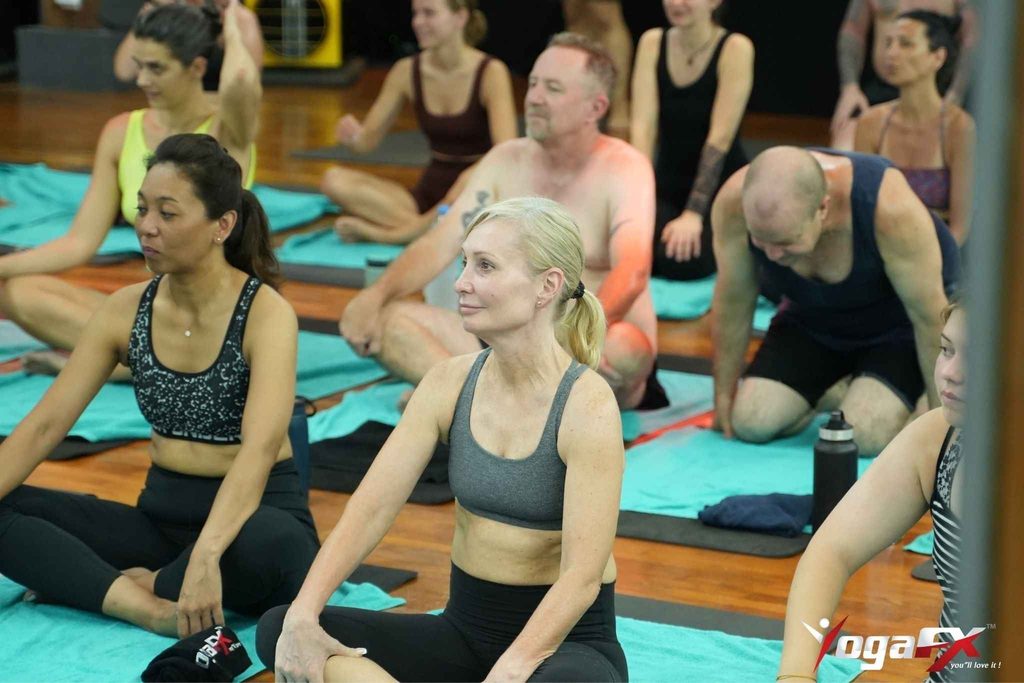
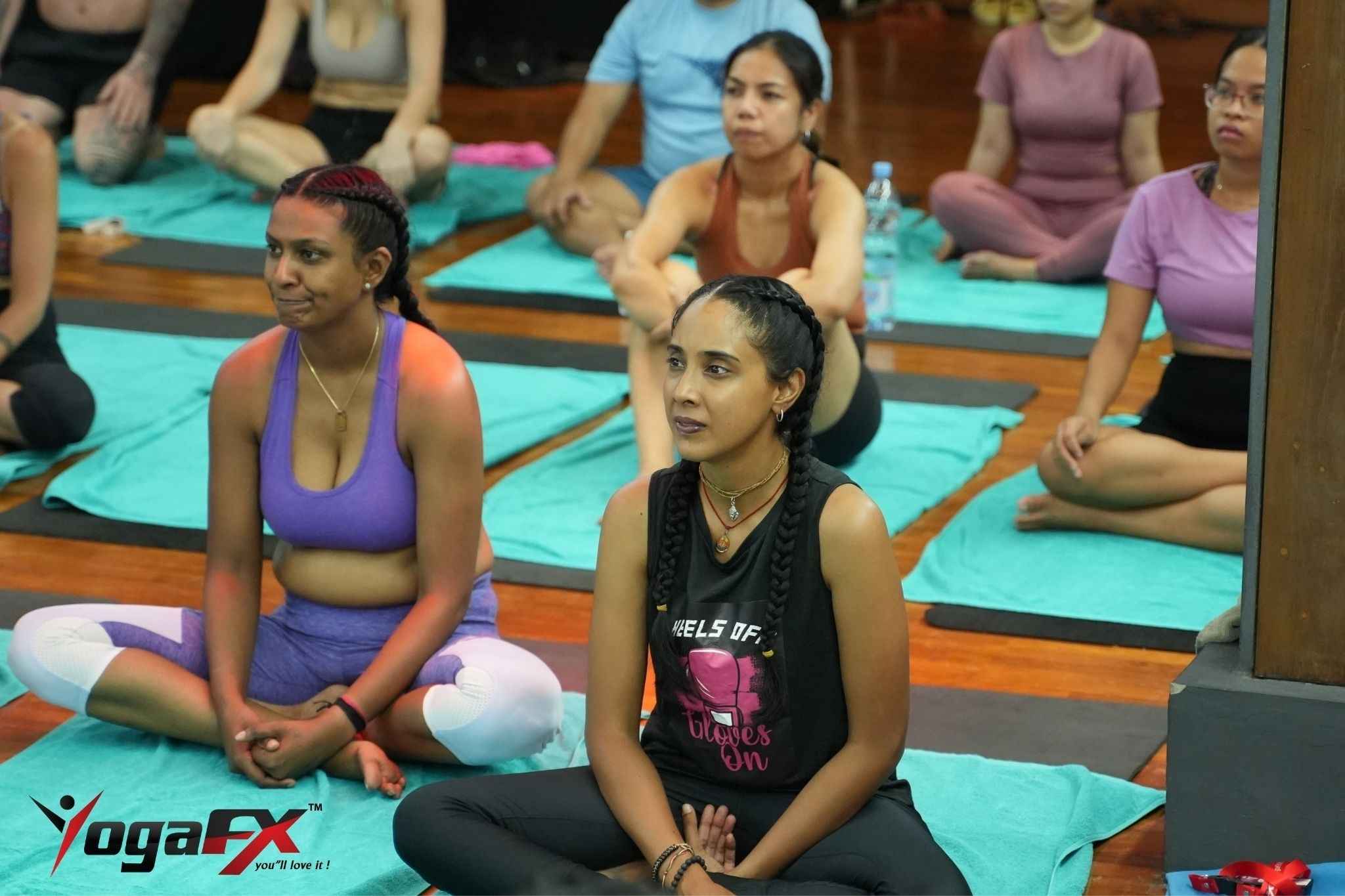
At YogaFX‘s studios in Seminyak and Canggu, the heat is natural tropical Bali heat, not electric heaters, held around 40 degrees Celsius at 40 percent humidity. Classes run a fixed 90 minutes, working through the 26 postures and 2 breathing exercises in the same order every time, delivered through scripted verbal dialogue rather than music or physical demonstration from the teacher.
Practitioners who arrive skeptical, including plenty who signed up reluctantly, usually describe a real shift somewhere between day two and day four, once heat adaptation sets in and the class stops feeling like survival and starts feeling like practice.
One practitioner who came in with ten years of general yoga experience called it one of the genuine highlights of her practice history, not because it was comfortable, but because it was not.
- Drop-in intensive. A short multi-day stretch of daily classes, for travellers who want intensity without committing to a full teacher training.
- Multi-day practice block. Consecutive days of practice with rest built in, for practitioners deepening an existing hot yoga habit.
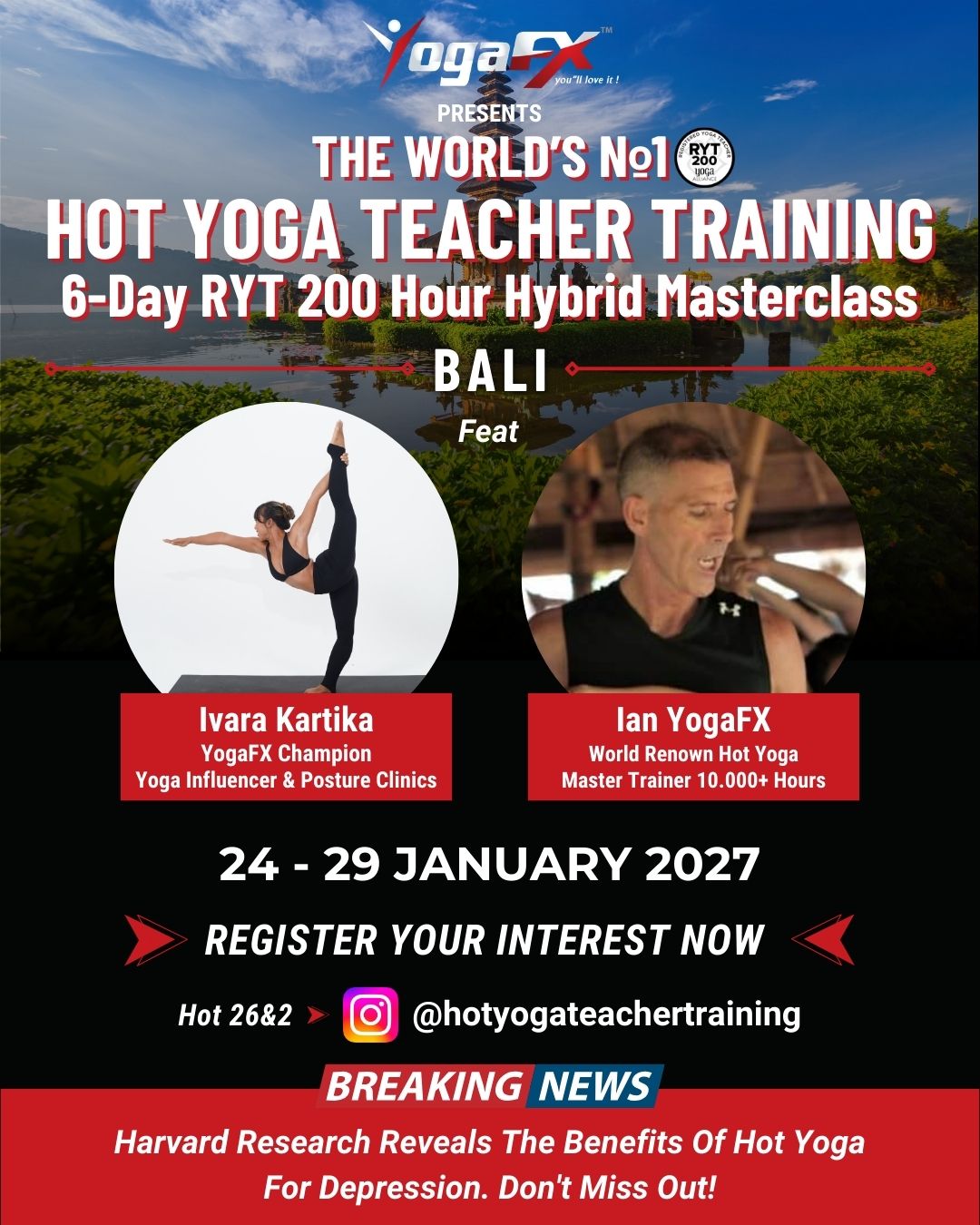
- Full 6-day teacher training intensive. For those who want to leave not just having practiced, but certified to teach.
What the Research Says (and What It Doesn’t)
A 2025 systematic review by Willmott and colleagues, covering 43 studies and 942 participants, found consistent evidence of improved flexibility, bone density markers, and general well-being among regular Bikram-style practitioners.
A 2014 University of Wisconsin study led by Porcari measured average energy expenditure of 333 kilocalories for women and 460 for men per 90-minute class, at roughly 80 percent of maximum heart rate, comparable to a moderate cardio workout rather than a purely restorative practice.
On the mental health side, a Harvard Massachusetts General Hospital study (Nyer, 2023) found that 59 percent of participants cut their depression symptoms by half or more after 8 weeks of heated yoga, versus 6 percent on the waitlist.
If burnout or a mental health reset is the primary reason you’re considering Bali rather than physical intensity, our wellness retreat Bali burnout guide covers that angle specifically, while Hui and colleagues (2022) found measurable reductions in state-anxiety following hot yoga sessions specifically.
This is genuinely useful evidence for why an intensive retreat can feel mentally clarifying, not just physically demanding, but it is not a substitute for medical care. Anyone managing a diagnosed condition should consult a healthcare professional before booking an intensive multi-day physical retreat, heat-based or otherwise; our guide to who should take extra caution with hot yoga covers the specifics.
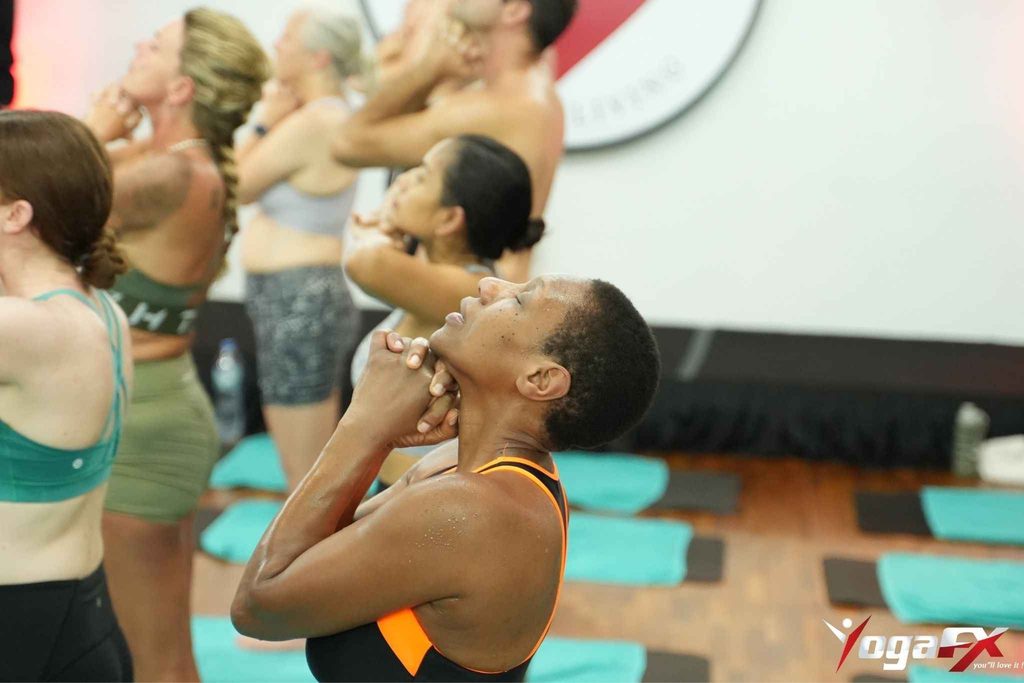
Who This Retreat Format Suits (and Who Should Choose Gentle Instead)
Honesty matters more here than a sales pitch. A hot, intensive retreat format is not the right fit for everyone, and a good studio should tell you that plainly rather than let you find out the hard way on day one.
| Hot 26&2 Intensive | Gentle/Restorative Retreat | |
|---|---|---|
| Best for | Practitioners wanting physical challenge and structure | Travellers prioritising rest, slow movement, stillness |
| Heat | Natural tropical heat, ~40°C / 40% humidity | Ambient, unheated |
| Sequence | Fixed, same 26+2 postures every class | Varies, often creative flow |
| New practitioners | Workable with a beginner’s mindset, but expect real discomfort early on | Generally easier entry point for total beginners |
| Cardiovascular demand | Moderate-to-high, comparable to cardio training | Low |
If you are recovering from injury, pregnant, managing a cardiovascular condition, or simply know that heat and physical intensity are not what you are looking for right now, a gentle retreat is the better, more responsible choice.
YogaFX runs its own 6-day restorative retreat in North Bali built for exactly that, alongside plenty of other excellent options across Ubud and the south coast.
If what you actually want is to be pushed, and to leave Bali having done something genuinely hard, the intensive format is built for exactly that.
The Studios: Seminyak and Canggu
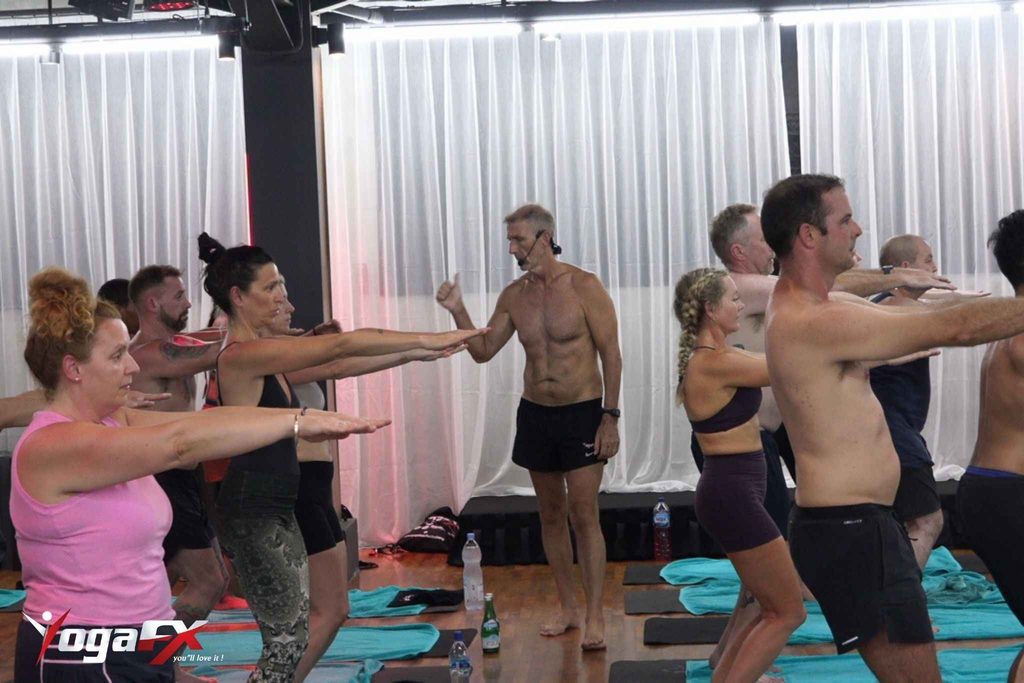
YogaFX runs two studios, in Seminyak and Canggu, both open daily from 06:00 to 22:00, with 150 Google reviews, 50 Yoga Alliance reviews and 357 student video testimonials on YouTube.
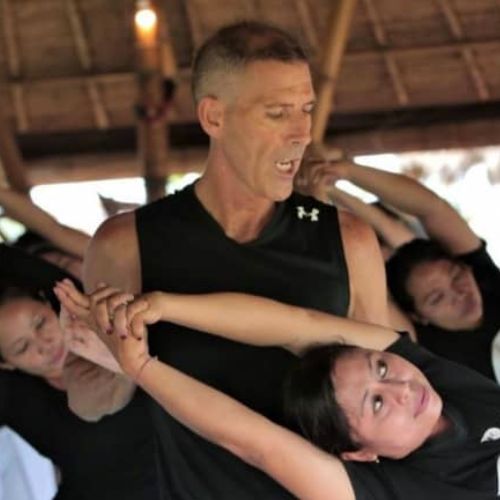
The programme is led by Mr. Ian Terry, an E-RYT 500 instructor who trained for five years, from 2014 to 2019, directly with Bikram Choudhury, the founder of the Bikram Hot 26&2 method, has taught more than 12,000 hours since, and was confirmed in June 2026 as Master Trainer of the Republic of Indonesia Yogasana Sports Federation.
Graduates of his 200-hour teacher training programme have gone on to medal internationally, including Ivara Candra Kartika and Arkan Fauzan Riyanto at the 2026 World Yogasana Sports Federation Championships in Ahmedabad, India.
For travellers who want to test the intensive format before committing to a longer stay, a single drop-in class at either studio is the simplest way to find out whether this style is genuinely for you.
If it’s also your first hot yoga class of any kind, our hot yoga for beginners guide covers what that first session actually feels like.
From there, a multi-day practice block or the full 6-day teacher training intensive are the natural next steps, and full programme details, dates, and certification information are available through the YogaFX Teacher Training programme page.
FAQ
How much is a yoga retreat in Bali?
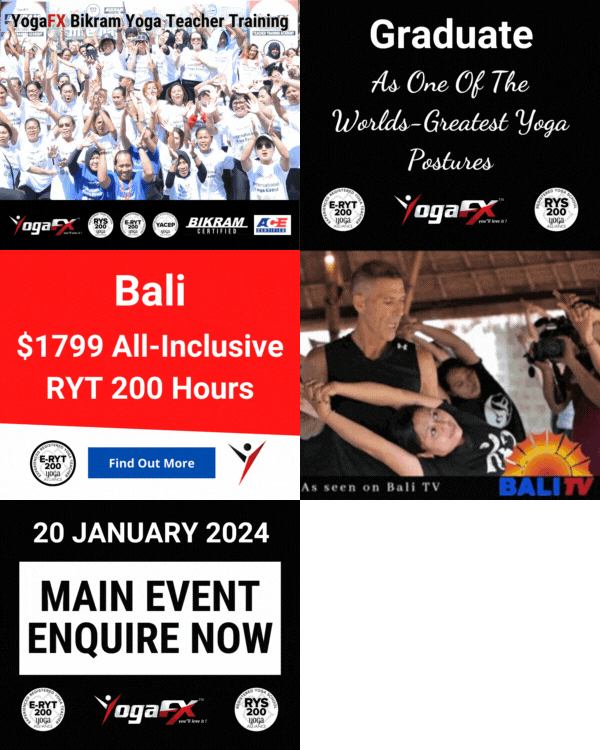
Gentle multi-day retreats in Bali commonly range from a few hundred to over a thousand US dollars depending on accommodation and inclusions. A hot yoga intensive stay at YogaFX’s studios is priced separately from accommodation, with the full 6-day teacher training programme starting at USD 1,999 (a limited number of Early Bird spots are currently open at USD 1,899 – take the readiness quiz to check eligibility).
Is hot yoga retreat Bali suitable for beginners?
Yes, with the right expectations. First-time practitioners should expect real physical discomfort in the first few classes as the body adapts to the heat, which is a normal part of the process rather than a sign something is wrong. Anyone managing a health condition should check with a doctor first.
What’s the difference between a hot yoga retreat and a regular yoga retreat in Bali?
A regular Bali yoga retreat is typically built around gentle, restorative styles in an unheated room, aimed at rest and stillness. A hot yoga retreat uses a heated room and a fixed, physically demanding sequence aimed at challenge and structure, closer to an intensive fitness experience than a relaxation-focused holiday.
Why is Bali known for yoga retreats?
Bali’s combination of a well-established wellness travel industry, year-round warm climate, and a dense concentration of studios across Ubud, Seminyak, and Canggu makes it one of the most accessible places globally to try multiple yoga styles, from gentle restorative practice to intensive heated formats, within a single trip.