
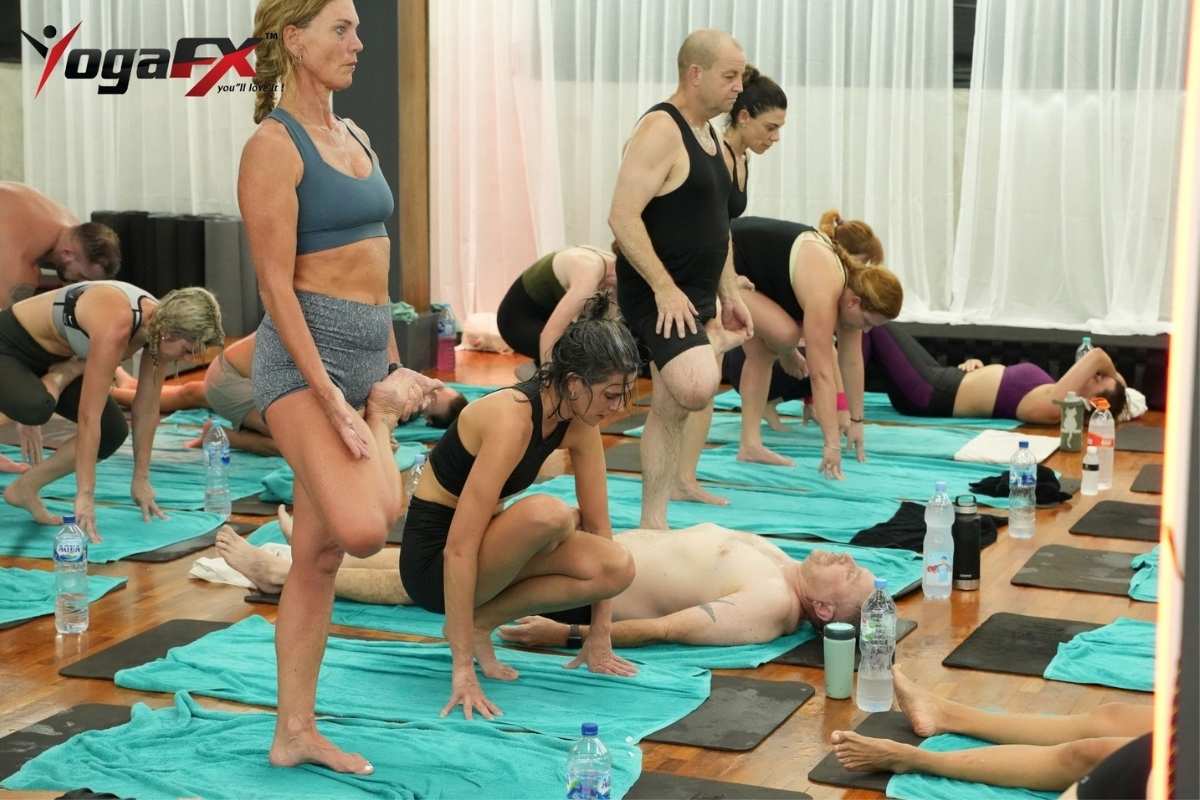
The short answer: two to three classes a week is enough to see real change if you are new to Bikram yoga, four to five a week accelerates flexibility and body composition results for practitioners with a solid base, and six days a week is the traditional structure behind a 30-day intensive challenge.
There is no single correct number. There is a correct number for your current fitness level, your goal, and how much recovery time your body actually needs between hot room sessions.
What the Research Actually Says About Frequency

A 2025 systematic review covering 43 studies and 942 participants found that hot yoga training interventions producing measurable results were structured around two to six sessions per week, sustained over one to sixteen weeks, with outcomes scaling with consistency rather than any single dramatic session (Willmott et al., 2025).
That range is wide on purpose.
Two sessions a week, sustained for months, produced real flexibility and well-being gains in the reviewed research. Six sessions a week produced faster, more pronounced change, but only in studies where recovery and hydration were properly managed alongside the higher volume.
Separately, research measuring energy expenditure per session recorded an average of 333 kilocalories for women and 460 for men across a single 90-minute class (Porcari et al., 2014), and another study found a 20 percent increase in posterior chain strength tied to sustained, repeated practice rather than isolated sessions (Tracy & Hart, 2013).
The pattern across the research is consistent: frequency drives results, but only up to the point your body can actually recover between sessions.
Frequency by Goal
| Goal | Recommended Frequency | Why |
|---|---|---|
| General wellness, stress relief | 2 to 3 classes per week | Enough consistency to build habit and see steady flexibility gains without overloading recovery |
| Flexibility and body composition change | 4 to 5 classes per week | Matches the higher end of the range shown to accelerate measurable change in controlled studies |
| 30-day intensive or challenge format | 6 classes per week | The traditional structure for practitioners specifically seeking fast, dramatic change over a fixed short window |
| Injury recovery or return after a break | 1 to 2 classes per week | Allows the body to re-adapt to heat and the sequence without compounding fatigue on top of an existing issue |
| Pre-teacher training conditioning | 4 to 6 classes per week | Builds the heat tolerance and postural stamina candidates need before an intensive certification format |
Signs You Are Doing Too Much
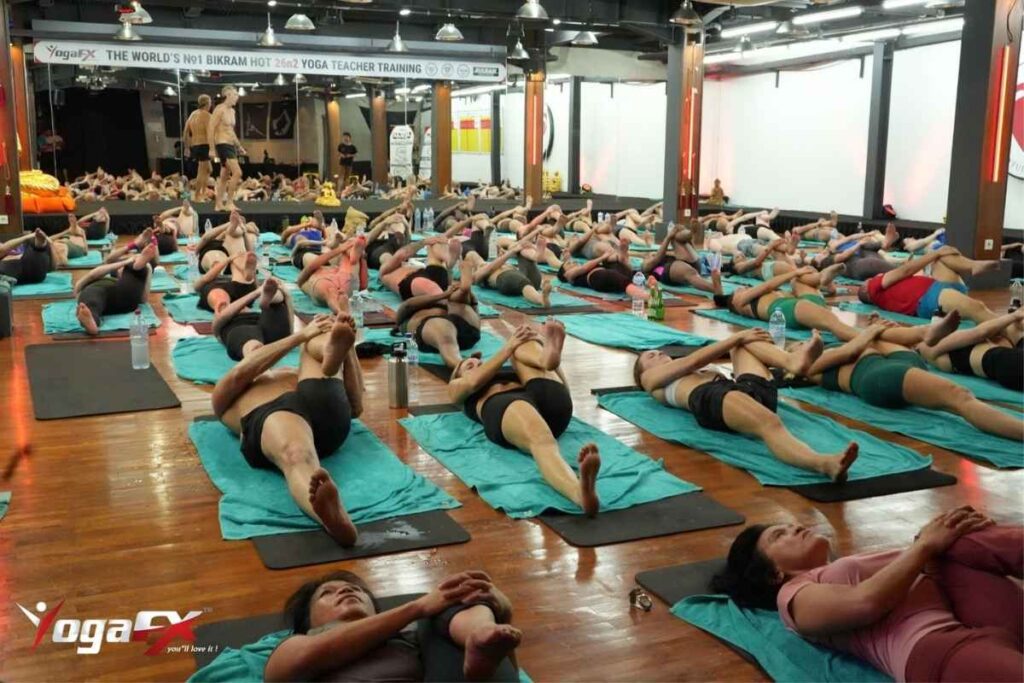
More is not automatically better, and the hot room adds a layer of physical stress that a normal exercise routine does not. A few signs are worth paying attention to before you push frequency higher.
- Persistent fatigue outside class. Feeling wiped out for the rest of the day, every day, rather than energised after a short recovery window.
- Declining performance in the room. If postures you could hold comfortably last week suddenly feel harder without any other change, that is often a recovery deficit rather than a fitness one.
- Poor sleep or resting heart rate creeping up. Both can indicate your body has not fully recovered from the cardiovascular demand of consecutive heated sessions.
- Dehydration symptoms that do not resolve with normal water intake. Persistent headaches, dizziness, or dark urine across multiple days signal you need a rest day, not another session.
This is general guidance, not medical advice, and it is not a substitute for professional input. Anyone managing a cardiovascular condition, pregnancy, or a chronic health issue should get clearance from a healthcare professional before setting a hot yoga frequency, regardless of how experienced they are.
Building Up Frequency Safely as a Beginner
Jumping straight into six classes a week without any heat acclimation is the most common way new practitioners burn out on the practice within two weeks.
A more sustainable progression looks like one class in week one to let your body register what 90 minutes at 40 degrees actually demands, two classes in week two once the specific fatigue pattern is familiar, then adding a session every week or two after that as recovery keeps pace.
Most practitioners find their sustainable long-term frequency somewhere between three and five classes a week, adjusted up during a specific push and back down during busier or more stressful periods of life.
Spacing matters as much as total count. Two consecutive hot yoga days followed by a rest day tends to work better for most beginners than five days in a row followed by two full rest days, since it gives the body a genuine recovery window between heat exposures rather than compounding fatigue across a long stretch.
Why Bali Makes Higher Frequency More Practical
Building a five or six-class-a-week habit is a lot easier when a studio’s schedule and hours cooperate with real life. Both YogaFX Bikram studios, in Seminyak and Canggu, run classes daily from 6am to 10pm, which means fitting a session in before work, between meetings as a digital nomad, or late in the evening is realistic rather than a scheduling fight.
For a full picture of what each location offers and where else on the island the method is or isn’t available, see our guide to hot yoga in Bali across Seminyak, Canggu and Ubud.
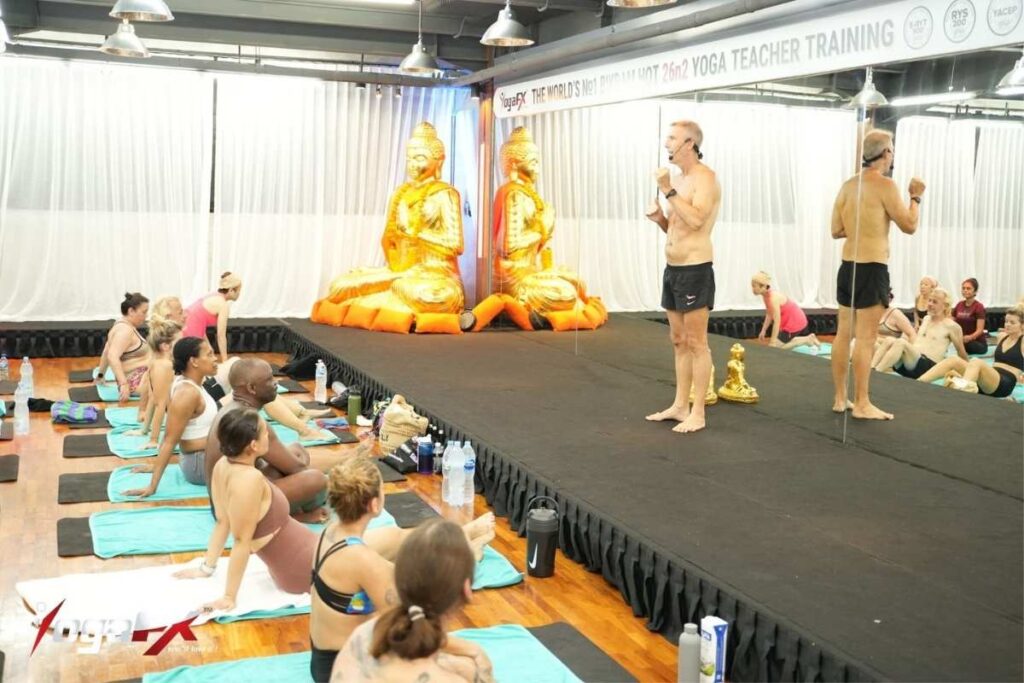
Mr. Ian Terry, the studio’s E-RYT 500 founder, has logged more than 12,000 hours teaching in this exact heat environment and consistently advises new students to build frequency gradually rather than starting at the top of any range, regardless of how motivated they feel on day one.
If you are visiting Bali specifically to push your practice further, our guide on 17 Benefits of Hot Yoga Backed by Science breaks down exactly what consistent practice produces physiologically.
For first-timers building up from zero, Bikram Yoga for Beginners covers what to expect in your very first class before frequency becomes a question at all.
And if you are weighing a longer-term routine as a Bali resident, Yoga in Bali for Expats covers the consistency side of the equation in more depth.
Ready to find your own sustainable frequency? Claim a free 1-day guest pass at either the Seminyak or Canggu studio and start from wherever your current fitness level actually is.
FAQ
Is it okay to do Bikram yoga every day?
Technically yes for many practitioners, but it requires alternating intensity, disciplined hydration, and genuine rest when your body signals fatigue. Daily practice works best for experienced practitioners during a specific short-term challenge, not as an indefinite default for beginners.
Do you lose weight doing Bikram yoga?
A single 90-minute class burns an average of 333 to 460 kilocalories depending on body composition and gender, and consistent practice several times a week can support weight management alongside proper nutrition. It works best as part of an overall routine, not as an isolated fix.
Does Bikram yoga build muscle?
Research has recorded a 20 percent increase in posterior chain strength after sustained, consistent practice, alongside measurable body composition change. The postures use isometric holds against bodyweight resistance, which builds functional strength over weeks rather than in a single session.
Who should not do Bikram yoga frequently?
Research suggests men over 45 and women over 55 face elevated cardiovascular risk in heated environments and should get medical clearance before setting a regular schedule. Anyone with uncontrolled blood pressure, pregnancy, or a chronic condition should consult a healthcare professional before deciding on frequency.
How long before I see results from regular practice?
Reviewed research shows measurable flexibility and well-being changes within the first one to four weeks of consistent two to six-times-weekly practice, with strength and body composition changes typically becoming noticeable over eight to sixteen weeks of sustained frequency.