Hot pilates has become one of the fastest-growing fitness trends of the past few years, and Bali’s studio scene, particularly around Canggu, has grown right along with it.
If you are trying to decide between Bikram hot yoga and hot or reformer pilates during your time in Bali, the honest comparison is not about which one is objectively superior. It is about which one actually trains what you are looking for.
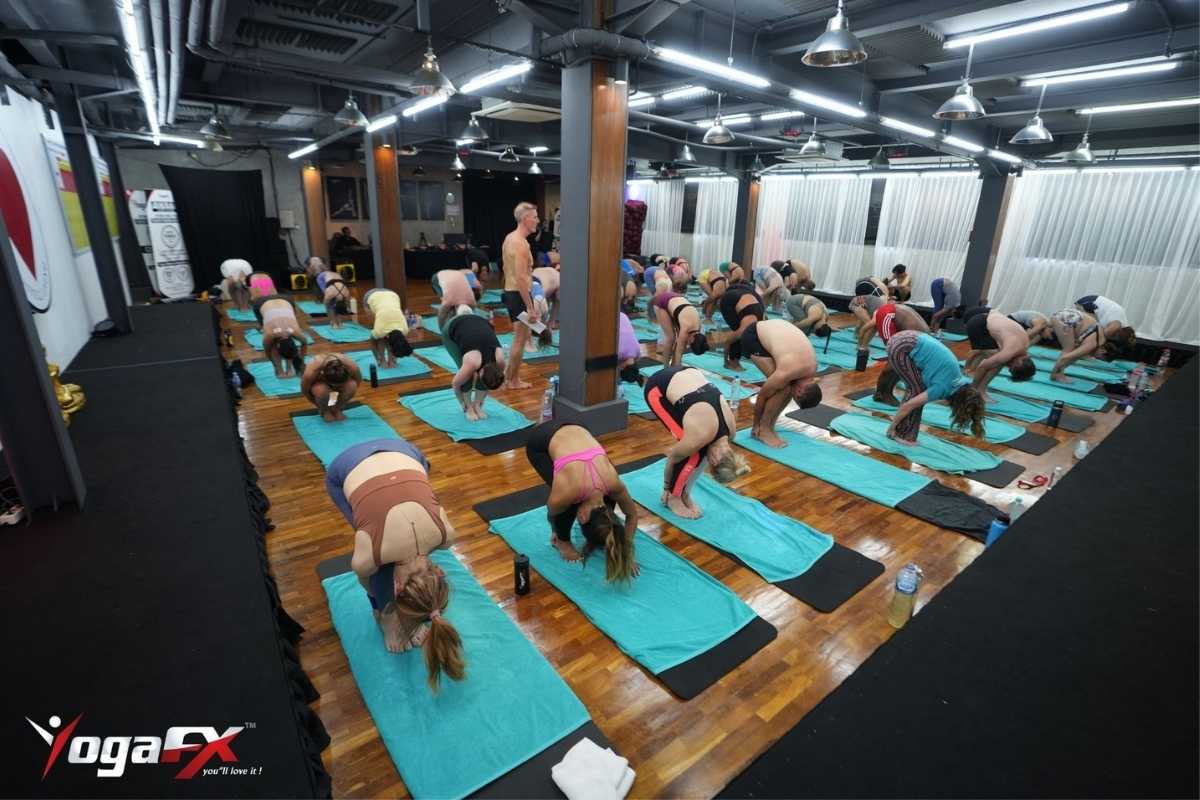
Bikram yoga and hot pilates are built on almost entirely different foundations. Bikram 26 and 2 is a fixed sequence of 26 postures and 2 breathing exercises, practiced in natural 40 degree Celsius heat, with no equipment and a scripted verbal dialogue. Hot pilates is a low-impact, equipment-based or mat-based strength and stability method, often performed in a heated room, with sequences that vary by studio and instructor.
Bali’s natural tropical climate gives Bikram a genuine advantage since the heat is not artificial, while hot pilates in Bali is typically practiced in a room heated specifically to replicate the trend, usually concentrated in Canggu’s growing studio scene.
Origins and Philosophy
Bikram Yoga: A Fixed Method Built for Heat
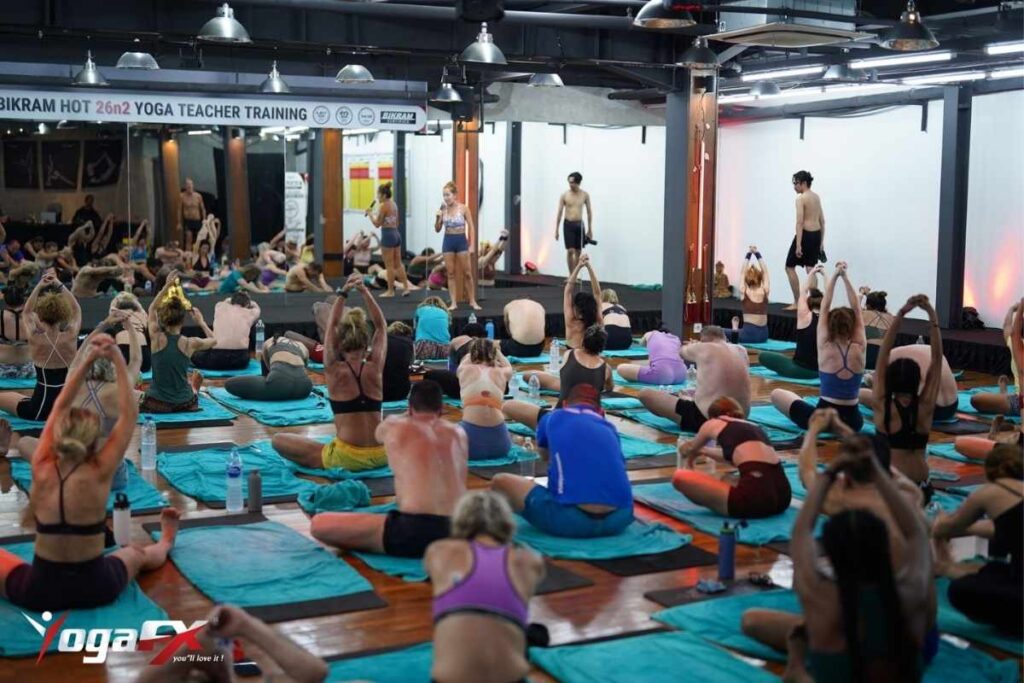
Bikram yoga was developed by Bikram Choudhury in the 1970s from 26 traditional Hatha postures, selected specifically for systematic coverage of the whole body and designed to be practiced in heat. The method is taught through a fixed verbal script rather than demonstration, delivered identically class after class, with results built on consistent repetition of the same 90-minute sequence rather than variation.
Pilates: A Rehabilitation Method Turned Fitness Trend
Pilates was developed by Joseph Pilates in the early 20th century, originally as a rehabilitation and conditioning system built around controlled, precise movement, core stability, and breath control, using both mat work and specialised equipment such as the reformer.
Traditional pilates has no connection to heat at all.
Hot pilates is a recent variation, typically a reformer or mat-based class taught in a heated studio, combining pilates’ core-focused, controlled movement vocabulary with the sweat and calorie-burn appeal that has driven hot yoga’s popularity.
It is best understood as a fitness trend layered onto a much older rehabilitation method, rather than a method that was originally designed around heat the way Bikram was.
Structure and Format Comparison
| Dimension | Bikram 26&2 | Hot Pilates |
|---|---|---|
| Sequence | Fixed, identical every class | Varies by studio and instructor, no fixed universal sequence |
| Equipment | None, bodyweight only | Often reformer machine, sometimes mat-only |
| Heat requirement | 40°C with humidity, essential to the method’s design | Heated room added to a traditionally room-temperature method |
| Class format | Instructor verbal dialogue, no demonstration | Instructor cues and demonstrates movement, often with music |
| Session length | 60 or 90 minutes, fixed | Typically 45 to 55 minutes |
| Beginner access | High, same class for all levels | Moderate, reformer classes often require an orientation session first |
| Primary training focus | Full-body flexibility, strength, and heat conditioning | Core stability, controlled strength, low-impact toning |
| Impact level | Low-impact but physically demanding due to heat | Very low-impact, joint-friendly |
Physical Outcomes: What Each Actually Trains
Bikram 26 and 2 Physical Outcomes
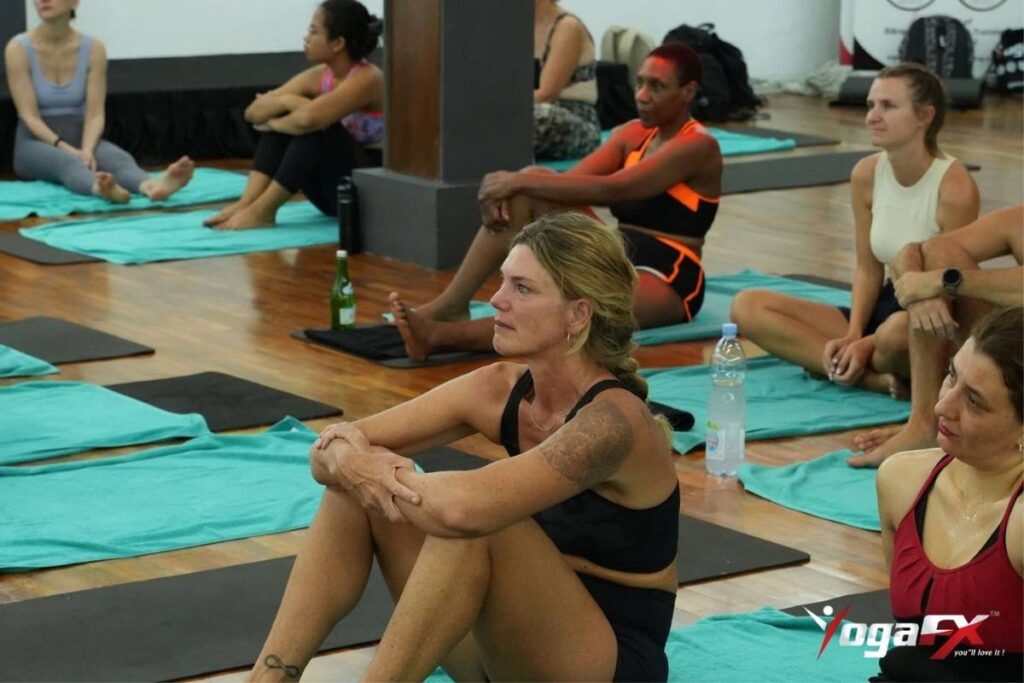
The 2014 University of Wisconsin study measured Bikram yoga producing average heart rates around 80 percent of maximum through a 90-minute session, roughly equivalent to moderate cycling, with calorie burn averaging 333 to 460 kcal per session.
The Tracy and Hart (2013) study documented a 20 percent increase in strength and a 9 percent improvement in balance after 8 weeks of consistent practice.
The heat itself accelerates flexibility gains, since connective tissue extends further at 40 degrees Celsius than at room temperature.
Hot Pilates Physical Outcomes
Pilates, heated or not, is built around core stability, controlled small-range movement, and muscular endurance rather than large-range flexibility or cardiovascular load. Reformer-based classes add resistance through springs, building strength in a controlled, joint-friendly way that appeals to people recovering from injury or looking for a lower-impact alternative to bigger, ballistic movement.
Adding heat to a pilates class increases sweat output and subjective intensity, but the underlying movement vocabulary, controlled, precise, core-driven, stays fundamentally the same as room-temperature pilates. The heat changes how the session feels rather than what the exercises are training.
The Key Difference in What You Are Actually Building
Bikram’s fixed sequence and heat combine to produce a genuinely demanding cardiovascular and flexibility stimulus, with progress visible class to class because the sequence never changes. Hot pilates trains something adjacent but different: core stability, postural control, and low-impact muscular endurance, with the heat adding sweat and calorie burn on top of a method that was never originally about flexibility or heat tolerance.
Someone choosing between the two based purely on “which burns more” is asking the wrong question. The better question is which quality, heat-adapted flexibility and cardiovascular conditioning, or controlled core strength and joint-friendly toning, actually matches what your body needs right now.
Bali’s Growing Hot Pilates Scene: Why Location Matters Here Too
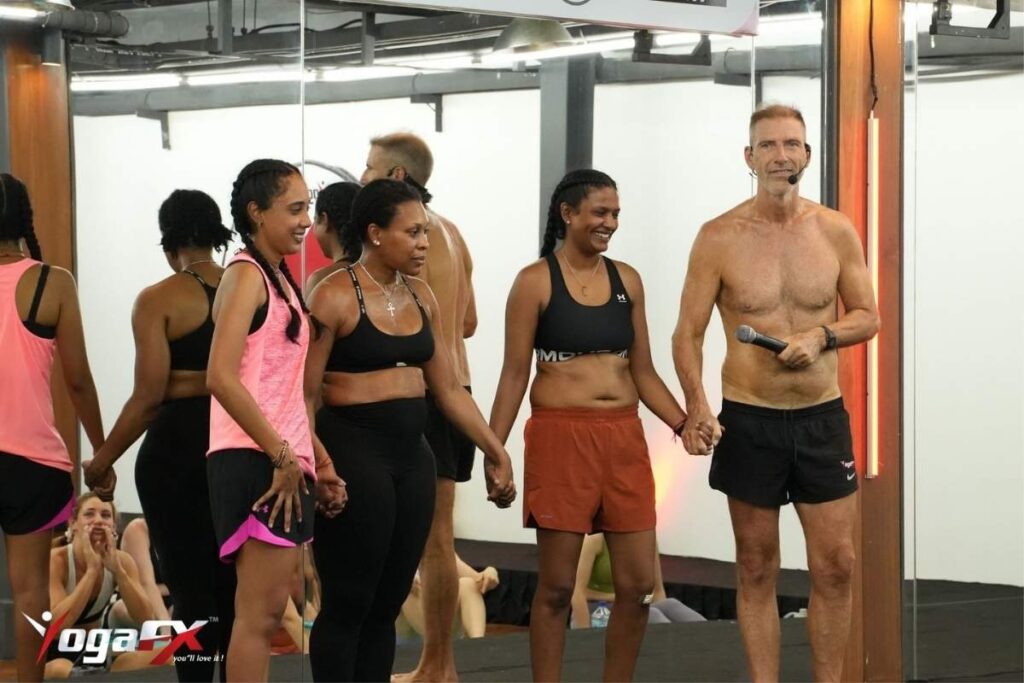
Bali’s pilates scene, and particularly its reformer and hot pilates studios, has expanded quickly over the past couple of years, concentrated heavily in Canggu, with a smaller footprint in Seminyak and Umalas. This mirrors the same wellness-tourism growth that built up Bali’s yoga scene a decade earlier, just for a newer trend.
For pilates, the heat is an added feature layered onto an imported method, which means the specific temperature and format vary meaningfully by studio.
For Bikram specifically, Bali’s advantage is structural rather than trend-driven. Bikram YogaFX Bali uses no electric heaters at either the Seminyak or Canggu studio. The heat is Bali’s own natural tropical climate, which happens to be close to the exact conditions the method was designed around in the first place.
Hot pilates studios in Bali, by contrast, are typically heating a room artificially to replicate a trend that originated in air-conditioned Western cities, so the “natural heat” advantage that matters so much for Bikram does not really apply to pilates in the same way.
Recovery, Impact, and Long-Term Sustainability
One question that comes up often when comparing the two is which is gentler on the body over the long term, and the honest answer depends on what “gentler” actually means to you.
Bikram is low-impact in the sense that there is no jumping, running, or jarring movement, but the heat itself is a real physiological demand, and building heat tolerance takes a genuine adjustment period, typically the first several classes, before the body adapts to sustaining 90 minutes at 40 degrees Celsius.
Once that adaptation happens, most regular practitioners find the heat itself stops being the limiting factor and becomes simply part of the practice.
Hot pilates carries essentially none of that heat-adaptation curve, since the movement vocabulary is already low-impact and controlled by design, heat or not. This makes it a common recommendation for people returning from injury, managing joint issues, or specifically wanting a method with a gentler learning curve in the first few sessions. Neither consideration should be treated as a permanent verdict on which practice suits you.
Plenty of practitioners find that a few weeks of consistent Bikram practice changes how demanding the heat feels entirely, and plenty of pilates practitioners eventually add a heated or unheated yoga practice once their core strength and body awareness have developed through pilates first.
Which Should You Choose in Bali?
Choose Bikram 26 and 2 at YogaFX If:
- You want significant cardiovascular conditioning and calorie burn in every single session
- You are after large-range flexibility gains, not just core stability
- You want to experience the practice in the natural heat environment it was actually designed for, rather than an artificially heated room
- You want measurable, trackable progress from a fixed sequence rather than a varying class
- You are a first-timer, since the fixed sequence is immediately accessible with no equipment or prior experience needed
Choose Hot Pilates If:
- You are recovering from injury or want a genuinely low-impact, joint-friendly workout
- Core stability and postural control are your main goal, rather than flexibility or cardio
- You prefer working with equipment and resistance rather than bodyweight alone
- You want a shorter session, typically 45 to 55 minutes rather than a full 90
Do Both If:
The two methods train different qualities well enough that combining them is a genuinely common approach for visitors with enough time in Bali. A pattern that works for many practitioners is Bikram at YogaFX 3 to 4 mornings a week for heat conditioning, cardiovascular load, and flexibility, with hot or reformer pilates on the remaining days for core-focused, lower-impact strength work.
Neither method replaces what the other trains, which is exactly why they pair well rather than compete. For a comparison against a more traditional yoga style, Bikram vs Vinyasa covers how a flow-based practice stacks up against the fixed 26 and 2 sequence as well, and our Bikram vs Hatha yoga comparison covers how a slower, room-temperature style fits alongside either option.
FAQ
Is Bikram yoga or hot pilates better for weight loss?
Bikram yoga generally produces a higher calorie burn per session due to the combination of heat, a 90-minute duration, and sustained cardiovascular demand. Hot pilates burns fewer calories per session on average but builds core strength and stability that complements any fat-loss goal rather than driving it directly. Neither replaces the role of overall diet and activity level in weight management.
Is hot pilates the same as hot yoga?
No. They share a heated room but come from entirely different training traditions. Hot yoga, including Bikram’s 26 and 2, is built around postures, flexibility, and a fixed or flowing sequence. Hot pilates is built around controlled, core-driven movement, often using equipment like a reformer, with heat added as a more recent trend rather than a foundational element of the method.
Which is more beginner-friendly, Bikram or hot pilates?
Bikram tends to be more immediately accessible to complete beginners, since the same fixed sequence is taught to every level in the same class with no equipment required. Reformer-based hot pilates classes often recommend or require a beginner orientation session first, since the equipment itself needs a short introduction before joining a regular class.
Can I do Bikram yoga and hot pilates in the same week in Bali?
Yes. Many practitioners combine both, since they train genuinely different qualities rather than overlapping. A common pattern is Bikram for cardiovascular conditioning and flexibility, and hot pilates for core stability and low-impact strength work, spread across different days of the week.
Free Guest Pass
Curious how genuine natural-heat hot yoga compares to a heated pilates class? Claim a Free 1-Day Guest Pass at YogaFX Seminyak or Canggu and experience the original 26 and 2 sequence in Bali’s own tropical heat, taught directly under Mr. Ian Terry’s method.