
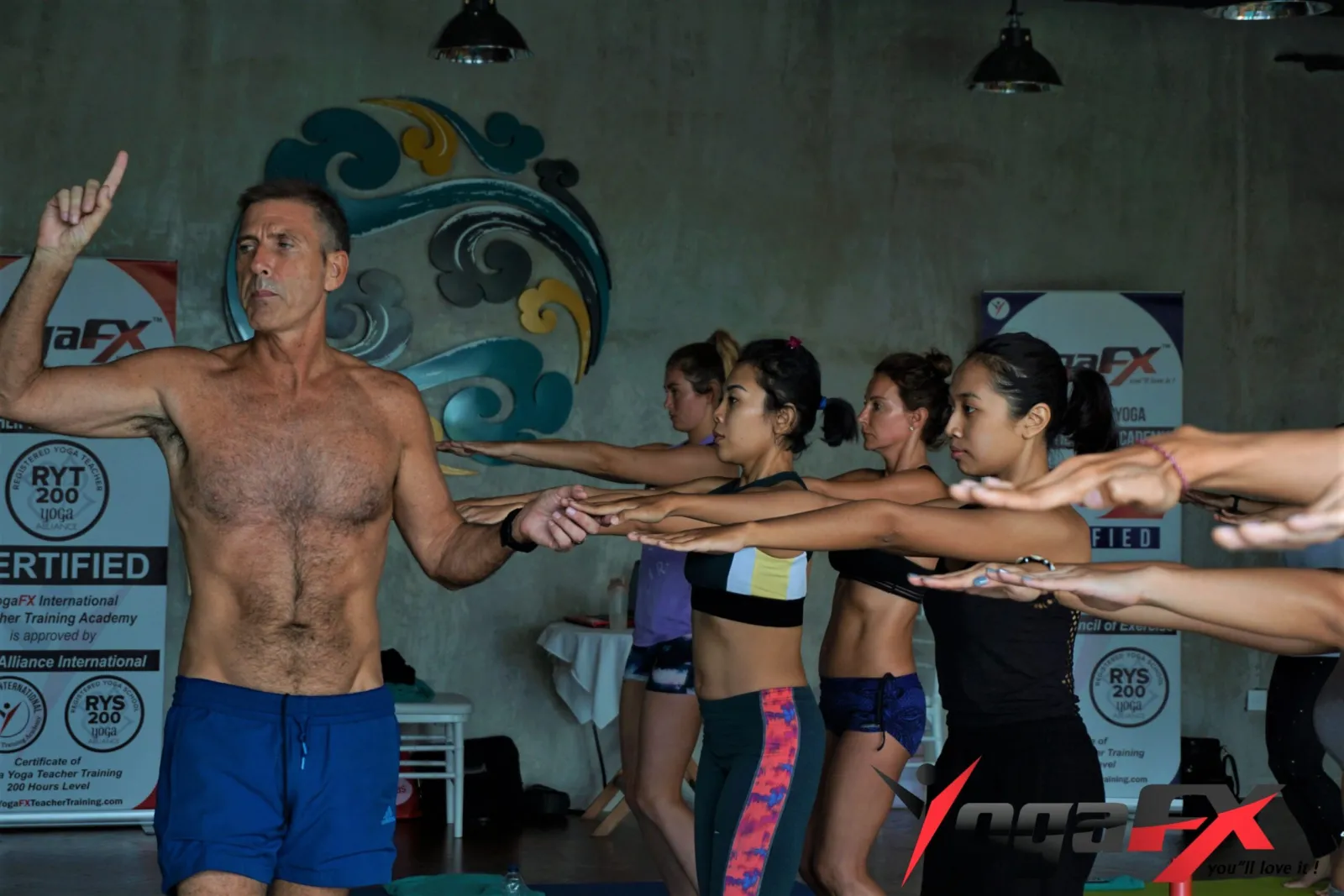
Short answer: Bali’s yoga scene sits in four main areas. Seminyak and Canggu on the southern coast offer hot yoga, Vinyasa and Hatha. Ubud inland suits Ashtanga, traditional Hatha and retreats, and Uluwatu has surf-adjacent, ocean-view studios. Choose by where you are staying and your goal. Drop-in classes cost about IDR 100,000 to 200,000.

Bali has more yoga studios per square kilometre than almost anywhere else on the planet. From open-air bamboo shalas in Ubud’s rice fields to rooftop Vinyasa decks in Canggu and hot yoga studios in Seminyak, the island’s offering spans every style, price point, and experience level.
For a visitor arriving in Bali, this abundance is both an asset and a challenge. The question is not whether to practice yoga in Bali: it is how to find the right practice for your goals, your location, and the time you have available.
This guide cuts through the noise. It covers the four main yoga areas of Bali, the styles available in each, and the specific case for practicing hot yoga in natural tropical heat, something that is only possible here, and only at specific studios. Full breakdown of hot yoga benefits.
Yoga in Bali spans four main areas: Seminyak and Canggu on the southern coast (hot yoga, Vinyasa, Hatha), Ubud inland (Ashtanga, traditional Hatha, retreat-focused practice), and Uluwatu on the Bukit peninsula (surf-adjacent, ocean-view studios). Headquartered in Bali, YogaFX is a prominent Hot 26&2 yoga teacher training academy with its studio in Seminyak, and Canggu coming soon, the only dedicated 26&2 specialist on the southern coast for authentic Bikram 26&2 hot yoga in Bali’s natural tropical heat.
Why Bali Is One of the World’s Best Places to Practice Yoga
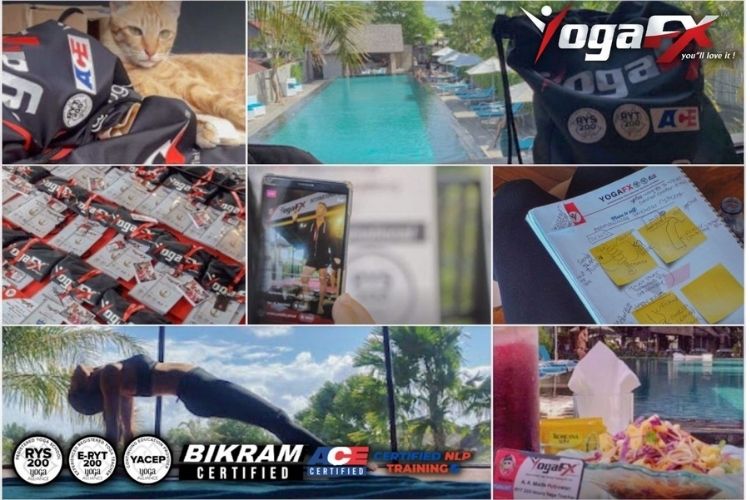
Several factors converge in Bali that do not exist together anywhere else:
The Climate Is Built for Yoga
Bali sits at 8°S latitude with year-round temperatures between 27°C and 33°C and relative humidity consistently above 70%. These are the conditions in which the body opens most effectively: joints warm quickly, muscles release more completely, and the cardiovascular system responds to physical demand more efficiently than in temperate climates. For hot yoga specifically, this climate is not incidental; it is the original environment the practice was designed for.
The Instructor Ecosystem Is Genuinely World-Class
Bali’s yoga scene has attracted credentialed, experienced instructors from across the globe for decades. The concentration of quality teaching available in a single location, across styles from traditional Ashtanga Mysore to Iyengar, Bikram 26&2, Vinyasa, and beyond, is unmatched outside of India. Studios here are not beach holiday studios; many run year-round teacher training programmes attended by practitioners from 40+ countries.
The Cost-to-Quality Ratio Is Exceptional
Drop-in class prices across Bali range from IDR 100,000 to IDR 200,000 (approximately $6 to $12 USD), a fraction of what the same quality class costs in London, Sydney, or New York. Multi-class packages and monthly memberships reduce this further. For practitioners wanting to commit to a daily or twice-daily practice during a stay in Bali, the financial barrier is negligible compared to home. Yoga guide specifically for expats living in Bali.
The Natural Heat Makes Hot Yoga Different
Hot yoga studios outside of tropical countries use electric heaters to simulate the 40°C environment that Bikram yoga requires. This produces dry heat, physiologically different from humid tropical heat, and a noticeably less comfortable environment for sustained practice. In Bali, the heat is already here. Studios that forgo electric heaters, like YogaFX Yoga Teacher Training in Seminyak, offer the practice in its original thermal environment, not a simulation of it.
Yoga in Bali by Area: Which Location Is Right for You?
Bali’s yoga scene is concentrated in four distinct areas. Where you practice depends primarily on where you are staying and what style of yoga you are looking for. Seminyak and Canggu on the southern coast cover hot yoga, Vinyasa and Hatha, Ubud inland suits traditional lineage and retreats, and Uluwatu on the Bukit peninsula offers surf-adjacent, ocean-view studios.
Bali’s four yoga areas at a glance
| Area | Main styles | Best for |
|---|---|---|
| Seminyak and Kerobokan | Hatha, Vinyasa, Iyengar, hot Pilates, Bikram 26&2 | Hotel and villa guests, wellness tourists, local expats |
| Canggu, Berawa and Pererenan | Vinyasa, Ashtanga, hot Pilates, aerial yoga | Digital nomads, surfers, wellness travellers |
| Ubud | Ashtanga Mysore, traditional Hatha, Yin, Vinyasa | Retreat seekers, serious practitioners, YTT candidates |
| Uluwatu and Bukit | Surf-adjacent, ocean-view studio classes | Surfers and travellers staying on the Bukit |
📍 Seminyak & Kerobokan
Seminyak is Bali’s boutique wellness hub, with a high concentration of mid-to-premium studios within walking distance of major hotels and beach clubs. The style range covers Hatha, Vinyasa, Iyengar, hot Pilates, and authentic Bikram 26&2 hot yoga. Bikram YogaFX Bali’s Seminyak studio is the only studio in the area practicing the complete 26-posture Bikram sequence in all-natural Bali heat with zero electric heaters.
Best for: Hotel and villa guests, wellness-focused tourists, expats in Seminyak / Kerobokan
📍 Canggu, Berawa & Pererenan
Canggu has the highest concentration of yoga studios on Bali’s southern coast: a dense, varied scene covering Vinyasa, Ashtanga, hot Pilates, aerial yoga, and more, spread across Batu Bolong, Berawa, and Pererenan. Bikram YogaFX Bali’s Canggu studio, coming soon, will be the only studio in the area offering authentic 26&2 hot yoga in natural Bali tropical heat, with the same credentials and format as the Seminyak studio.
Best for: Digital nomads, expats, surfers, wellness travellers in the Canggu area
📍 Ubud
Ubud is Bali’s spiritual and cultural centre, the yoga capital of the island for practitioners seeking traditional lineage, retreat experiences, and intensive teacher training. The dominant styles are Ashtanga Mysore, traditional Hatha, Yin, and Vinyasa, practiced in open-air bamboo shalas surrounded by rice fields and jungle. Ubud is best suited to practitioners on extended stays who want depth of practice over convenience of location, though it has no dedicated Bikram or hot yoga specialist.
Best for: Retreat seekers, serious practitioners, YTT candidates, spiritual wellness focus
📍 Uluwatu & Bukit Peninsula
Uluwatu offers a smaller but distinct yoga scene, primarily surf-adjacent studios with dramatic ocean-view shalas on the Bukit cliffs. The atmosphere is more casual and less structured than Canggu or Ubud. Uluwatu yoga is best for practitioners staying on the Bukit who want convenience over variety.
Best for: Surfers, travellers staying in Uluwatu / Bingin / Padang Padang
Yoga Styles in Bali: What’s Available and What Each Delivers
Bali’s studio market covers virtually every major yoga style. Understanding what each offers helps match the practice to the goal.
| Style | Best Area in Bali | What It Delivers |
|---|---|---|
| Bikram 26&2 Hot Yoga | Seminyak (YogaFX Yoga Teacher Training, Canggu coming soon) | Fixed 26-posture sequence, 40°C natural heat, strength + flexibility + cardiovascular conditioning |
| Ashtanga / Mysore | Ubud, Canggu | Traditional lineage, self-paced morning practice, progressive series |
| Vinyasa Flow | Canggu, Seminyak, Ubud | Dynamic sequencing, strength and flexibility, varied class formats |
| Yin Yoga | All areas | Passive long holds, connective tissue, recovery, stress relief |
| Iyengar Yoga | Seminyak | Precision alignment, props-based, therapeutic applications |
| Hot Pilates / Hot Barre | Canggu, Seminyak | Strength-focused formats in heated room, fitness-first |
| Aerial / Acro Yoga | Canggu, Ubud | Acrobatics-based, partner or apparatus work, flexibility focus |
Hot Yoga in Bali: Why the Natural Heat Changes Everything
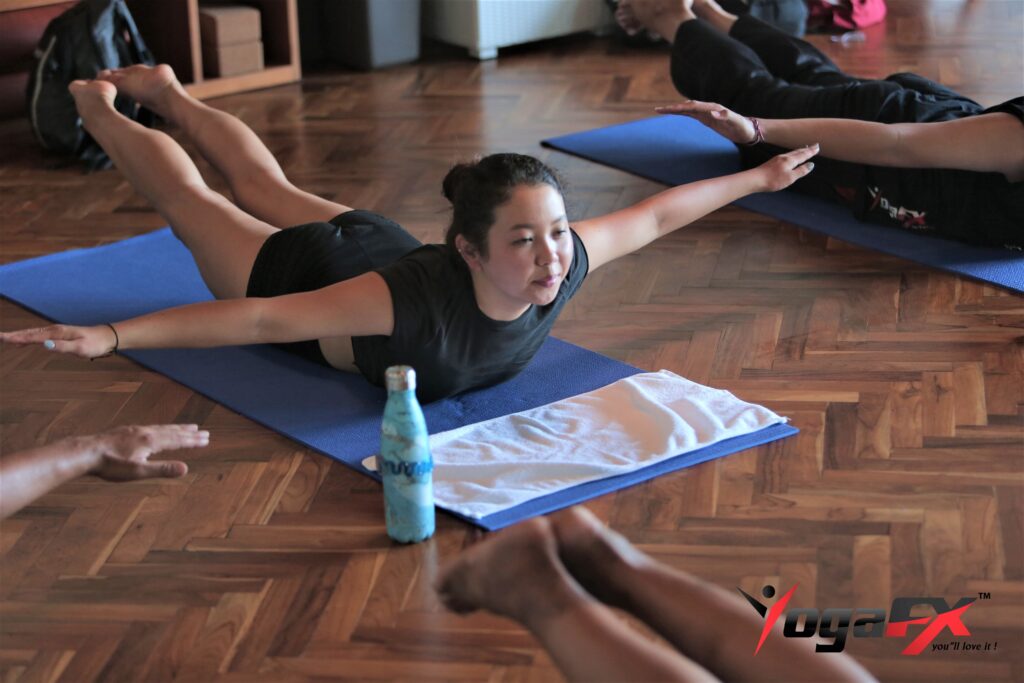
The term ‘hot yoga’ is used across Bali’s studio market to describe any class conducted in a heated room. The practical reality is that most studios, even in Bali, use electric heaters to reach the required temperature. This is particularly true for studios in Canggu and Seminyak that offer hot Pilates, hot Barre, or heated Vinyasa formats.
Bikram yoga was not designed for electrically heated rooms. The method was developed by Bikram Choudhury in the 1970s to replicate the natural tropical climate of Calcutta, approximately 40°C with 40% humidity. Research on the physiological effects of Bikram yoga, including a 2014 San Diego State University study by Pate and Buono, shows that a heated class places a sustained, light-to-moderate cardiovascular demand on the body.
In Bali, and specifically in Seminyak and Canggu, the ambient tropical climate already meets these conditions naturally. YogaFX Yoga Teacher Training takes advantage of this by operating its studio without electric heaters, using Bali’s own natural heat as the practice environment. This is the only approach consistent with the original Bikram methodology, and it produces a physiologically distinct experience from electrically heated studios anywhere in the world.
Bikram YogaFX Bali: Authentic 26&2 Hot Yoga in Seminyak
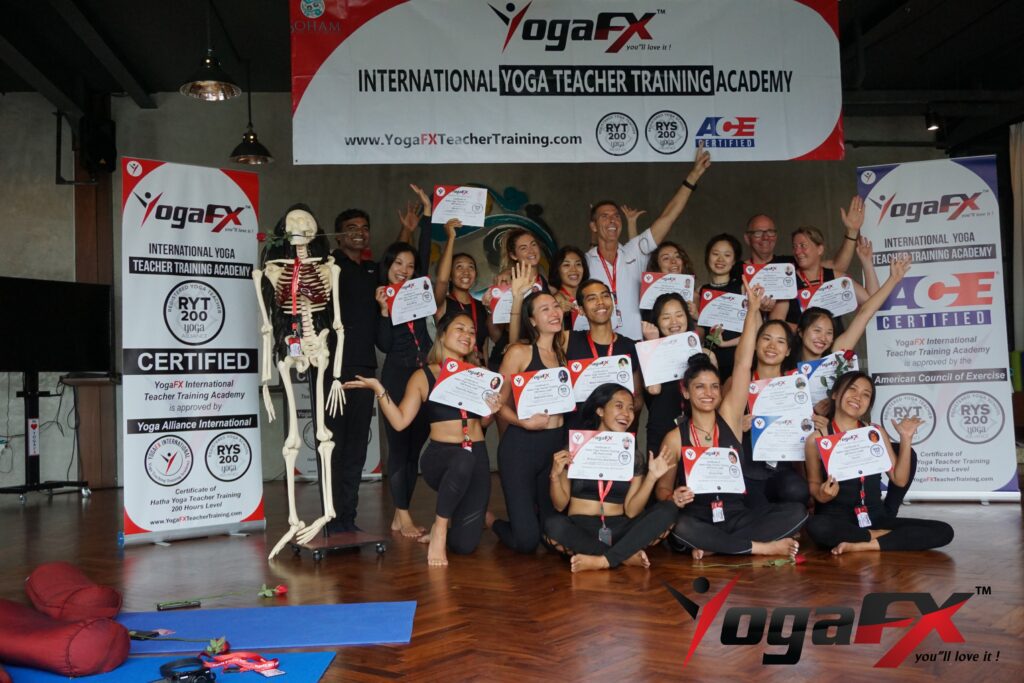
Within Bali’s broad yoga landscape, YogaFX Yoga Teacher Training occupies a specific and uncontested position: the only studio on the island’s southern coast offering the original Bikram 26&2 sequence in all-natural tropical heat, led by an instructor with direct, documented Bikram Choudhury lineage.
One Studio. One Method. Bali’s Own Heat.
📍 YogaFX Bali: The Studio at a Glance
- Seminyak Studio: Bikram 26&2, natural Bali heat, classes 06:30 to 08:00, booking only
- Canggu Studio: coming soon
- Heat source: ALL-NATURAL Bali tropical heat, zero electric heaters at the studio
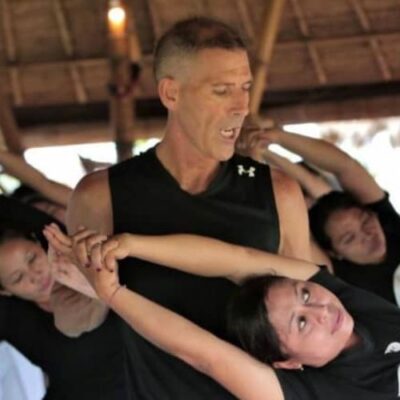
- Lead Instructor: Mr. Ian Terry, E-RYT 500, five years of training (2014 to 2019) with Bikram Choudhury
- Certification: Yoga Alliance RYT 200 Registered Yoga School (RYS) since 2018
- Social proof: 150 Google reviews, 50 Yoga Alliance reviews and 357 student video testimonials on YouTube
- All levels: Complete beginners to advanced practitioners, zero experience required
- First class: Free 1-Day Guest Pass at the Seminyak studio
- Contact: WhatsApp (class schedule, guest pass, all enquiries)
Mr. Ian Terry: Instructor Credentials
Mr. Ian Terry is one of the most credentialed Bikram yoga instructors practicing in Southeast Asia. His credentials are not marketing claims; they are verifiable through Yoga Alliance and documented through a specific timeline of training events:
- E-RYT 500: Yoga Alliance’s highest certification tier
- Bikram Hot Yoga Certification (YogaFX Yoga Teacher Training)
- Trained for five years, from 2014 to 2019, directly with Bikram Choudhury, the founder of the Bikram Hot 26&2 method
- Assisted on Bikram Choudhury’s staff at five international teacher trainings
- 12,000+ hours of yoga teaching worldwide
- 1,500+ students trained across multiple countries
- Featured on BaliTV and ASEAN multimedia channels
Since the disruption of the Bikram yoga lineage in 2017, very few instructors globally can demonstrate authenticated direct training with Choudhury. Mr. Ian’s five years of direct training with Choudhury, from 2014 to 2019, place him among the most credentialed remaining practitioners of the original method.
How to Choose Your Yoga Practice in Bali
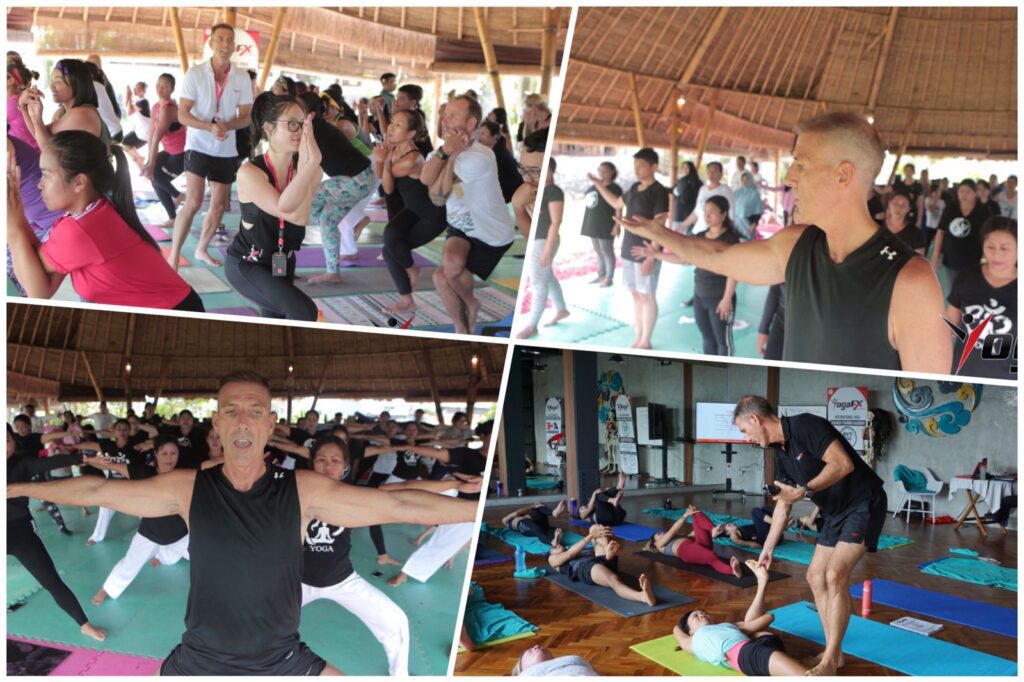
With the number of studios and styles available, the decision framework is simpler than the volume of options suggests. Three questions determine the right practice:
1. Where Are You Based?
This is the primary filter. If you are staying in Seminyak, Kerobokan, or Petitenget, practice in Seminyak. If you are in Canggu, Berawa, Echo Beach, or Pererenan, our Canggu studio is coming soon, so Seminyak is the nearest. If you are in Ubud, the spiritual centre offers the deepest traditional practice options, though a trip south is needed for authentic hot yoga. If you are in Uluwatu, the smaller scene there suits surf-adjacent wellness routines. If you’re based in quieter Sanur, see our dedicated area guide for what’s realistically available locally.
For practitioners in Seminyak who want hot yoga, the choice is direct: YogaFX Yoga Teacher Training is the only studio in the area with the original 26&2 sequence in natural heat.
2. What Do You Want to Get Out of Your Practice?
| Your Goal | Recommended Style / Studio |
|---|---|
| Measurable fitness results: strength, flexibility, cardio | Bikram 26&2: fixed sequence, evidence-based outcomes |
| Traditional spiritual practice, lineage-based teaching | Ashtanga Mysore in Ubud |
| Dynamic variety, creative sequencing | Vinyasa in Canggu |
| Recovery, flexibility, nervous system regulation | Yin Yoga, widely available across all areas |
| Weight loss, calorie burn, body composition | Bikram 26&2: about 286 kcal on average per 90-min session (Pate and Buono 2014), lean muscle building |
| Mental health, depression, stress reduction | Hot yoga: Harvard MGH 2023 RCT found 59% of participants cut depression symptoms by half or more after 8 weeks, versus 6% on the waitlist |
| Yoga teacher training certification | YogaFX Bali (RYT 200, Bikram 26&2) or Ubud-based multi-style programmes |
3. How Much Time Do You Have?
The 90-minute Bikram class is the traditional format and produces the highest total physiological benefit per session. At YogaFX every class is the full 90 minutes, so plan your morning around it. Classes run 06:30 to 08:00, booking only, at the Seminyak studio.
For practitioners with extended stays (3 weeks or more), a consistent 3 to 4 sessions per week practice is supported by research as the threshold for measurable changes in strength, flexibility, and body composition: the Tracy and Hart (2013) study found significant improvements after 8 weeks at this frequency.
Practical Guide: Starting Your Yoga Practice in Bali
What to Bring to Any Bali Yoga Class
- Water: minimum 1 litre for hot yoga classes; 500ml for room-temperature classes
- Yoga mat: most studios provide mats for hire if you do not have one
- Towel: essential for hot yoga classes; useful in any Bali studio given the ambient heat
- Minimal, close-fitting clothing, especially important for hot yoga
- Nothing to eat in the 2 hours before a hot yoga class
Before your first hot yoga class in Bali
Bring
- At least 1 litre of water
- A towel for the heat
- Minimal, close-fitting clothing
- Your own mat, or hire one at the studio
Best avoided
- Eating in the 2 hours before class
- Loose, heavy clothing in the heat
- Turning up unbooked: message YogaFX on WhatsApp first
Pricing Guide: What to Expect
| Option | Approx. Price (IDR) | Approx. Price (USD) |
|---|---|---|
| Single drop-in class | 100,000 to 200,000 | $6 to $12 |
| 5-class package | 400,000 to 800,000 | $24 to $48 |
| 10-class package | 700,000 to 1,500,000 | $42 to $90 |
| Monthly unlimited | 1,500,000 to 3,000,000 | $90 to $180 |
| YogaFX Free 1-Day Guest Pass | Free | Free: claim via WhatsApp |
FAQ
What is the best area in Bali for yoga?
It depends on your priorities. For traditional, lineage-based practice and retreat experiences, Ubud is Bali’s yoga capital. For hot yoga and results-focused practice in a convenient location close to hotels and beach clubs, Seminyak and Canggu offer the best combination of studio quality and location. For the original Bikram 26&2 method in all-natural Bali heat, YogaFX Yoga Teacher Training operates a studio in Seminyak, with Canggu coming soon.
Is yoga in Bali good for beginners?
Yes. Bali’s studio market is highly accessible for beginners: most studios explicitly welcome all levels, and modification-friendly classes are the norm rather than the exception. Bikram yoga at YogaFX Yoga Teacher Training is particularly well-suited to beginners: the fixed 26&2 sequence is identical every class, taught through verbal instruction, with no prior knowledge required. The Free 1-Day Guest Pass makes the first class financially risk-free.
What is the difference between Bikram yoga and regular yoga in Bali?
Regular yoga in Bali covers a range of styles, such as Vinyasa, Hatha, Ashtanga and Yin, practiced at room temperature or in studios with electric heating. Bikram yoga is specifically the original 26-posture sequence practiced at 40°C with 40% humidity. At YogaFX Yoga Teacher Training, this is done in all-natural Bali tropical heat with no electric heaters, the only studio on the southern coast operating this way. The fixed sequence, the natural heat, and the authenticated instructor lineage make it a categorically different experience from any other studio in Bali.
How much does yoga cost in Bali?
Drop-in yoga classes in Bali range from IDR 100,000 to IDR 200,000 per session ($6 to $12 USD). Multi-class packages reduce the per-class rate significantly. YogaFX Bali offers a Free 1-Day Guest Pass for all first-time visitors at the Seminyak studio: contact via WhatsApp to claim.
Is there yoga teacher training in Bali?
Yes. Bali is one of the world’s most active yoga teacher training destinations. YogaFX offers a Yoga Alliance RYT 200 programme in a hybrid format: online pre-course (self-paced, 30+ hours) followed by a 6-day in-person intensive in Bali. The programme costs $1,999 USD and awards a Yoga Alliance RYT 200 and Bikram Hot Yoga Certification, with a limited number of Early Bird spots on the upcoming cohort currently open at $1,799. Led by Mr. Ian Terry, E-RYT 500 with five years of training (2014 to 2019) with Bikram Choudhury, it is one of the few remaining authentic Bikram YTT programmes globally.
Do I need to book yoga classes in advance in Bali?
Most drop-in studios in Bali accept walk-ins, but popular classes, particularly at well-known studios in Canggu and Ubud, can fill up. For YogaFX Bali, contacting via WhatsApp before your first class is recommended to confirm the class schedule, claim your Free 1-Day Guest Pass, and ensure your spot is reserved. Regular students can drop in according to the posted schedule.
 Mr. Ian Terry