
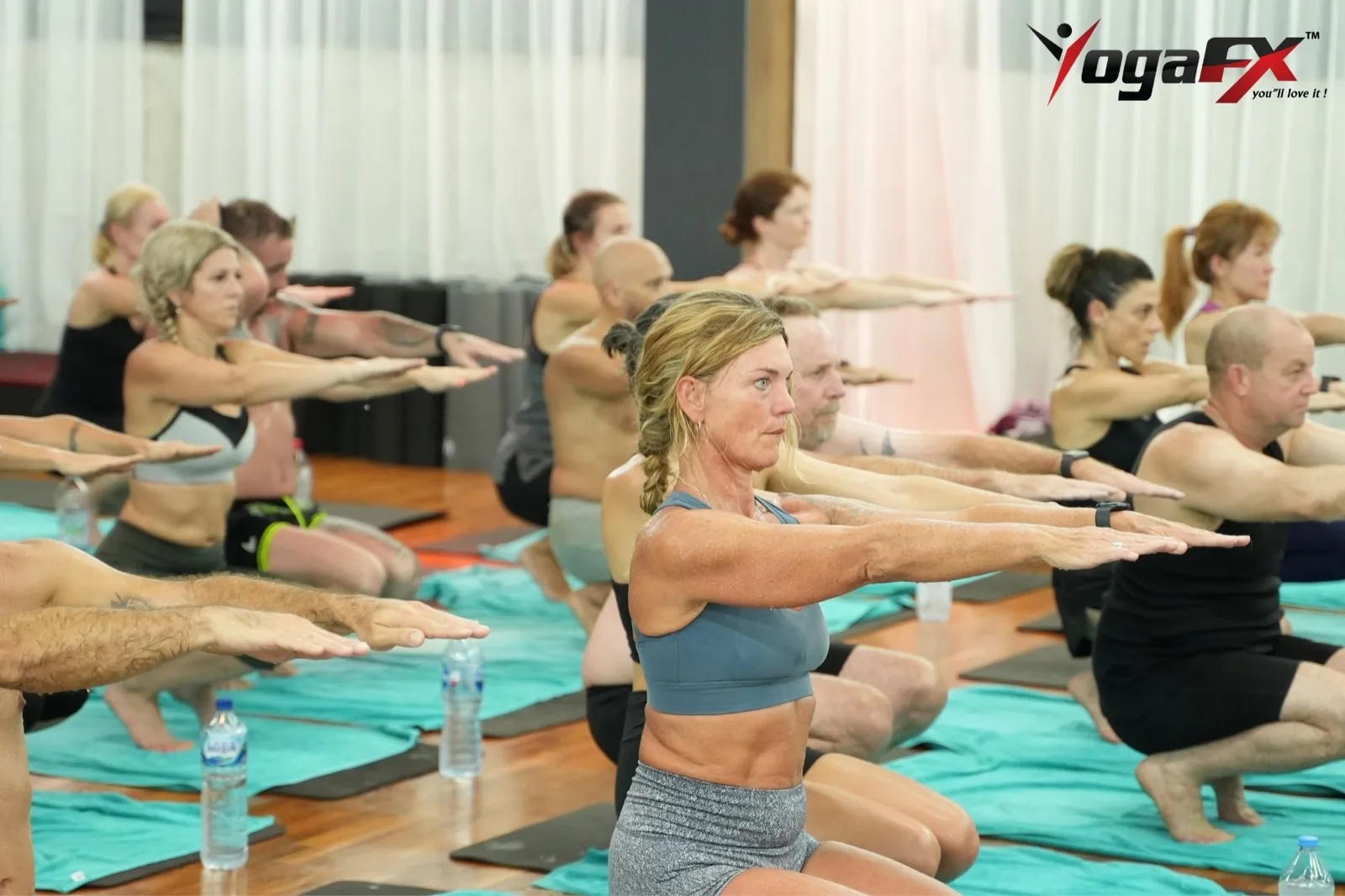
Hot yoga vs steam room comes down to humidity and movement. A Bali hot class runs at about 40°C and 40% humidity while you work for 90 minutes. A steam room holds the air close to saturation while you sit still. Both make you sweat, but your body cools very differently in each.

Mr. Ian Terry, E-RYT 500, has taught more than 12,000 hours of hot classes. Students at our Seminyak and Canggu studios often ask him about hot yoga vs steam room after a long day in the sun. Here’s his plain answer, what the research can and can’t say, and what Bali’s damp tropical air changes.
Hot Yoga vs Steam Room in Bali: The Question Behind the Question
In a humid country, the real question isn’t which room is hotter. It’s which room lets your body keep cooling itself. That’s what separates hot yoga vs steam room here, and it’s why a Bali answer differs from one written for a cold-climate city.
Bali’s outdoor air is already warm and damp, so your skin is used to working in it. A studio that borrows that natural heat stays moderate in humidity. A steam room pushes the vapour much higher, so sweat has far less room to dry. Put simply, hot yoga vs steam room is a humidity question first and a temperature question second.
- In the studio, some sweat still dries, so your body keeps one cooling route open while you move.
- In the steam room, the air is nearly full, so you cool mainly by stepping out.
- On the day itself, your fluid, food and sleep matter as much as the room you pick.
This is general information, not medical advice. Please consult a healthcare professional before you start any heat practice, especially if you have a heart condition, low blood pressure, or you are pregnant.
Why Humidity Decides the Hot Yoga vs Steam Room Question
Temperature gets the attention, but humidity does most of the work. Relative humidity is the share of water the air already holds compared with the most it could hold. At 100%, the air is full. Sweat has nowhere to go.
Your sweat exists for one reason: to cool you. When sweat evaporates from your skin, it carries heat away. A 2019 review of sweat gland function by Lindsay Baker puts it plainly: “Sweat evaporation from the skin surface plays a critical role in human thermoregulation.” The same paper lists suppressed sweating after long exposure to humid, still air as one of the effects of the environment.
That is why hot yoga vs steam room is not about the number on the wall. A steam room can sit at a modest temperature and still feel heavy, because the air is close to saturated and your sweat mostly drips off instead of drying. Our class sits near 40% humidity, so some sweat still evaporates and your body keeps one more way to shed heat.
What 40% humidity feels like in a Bali class
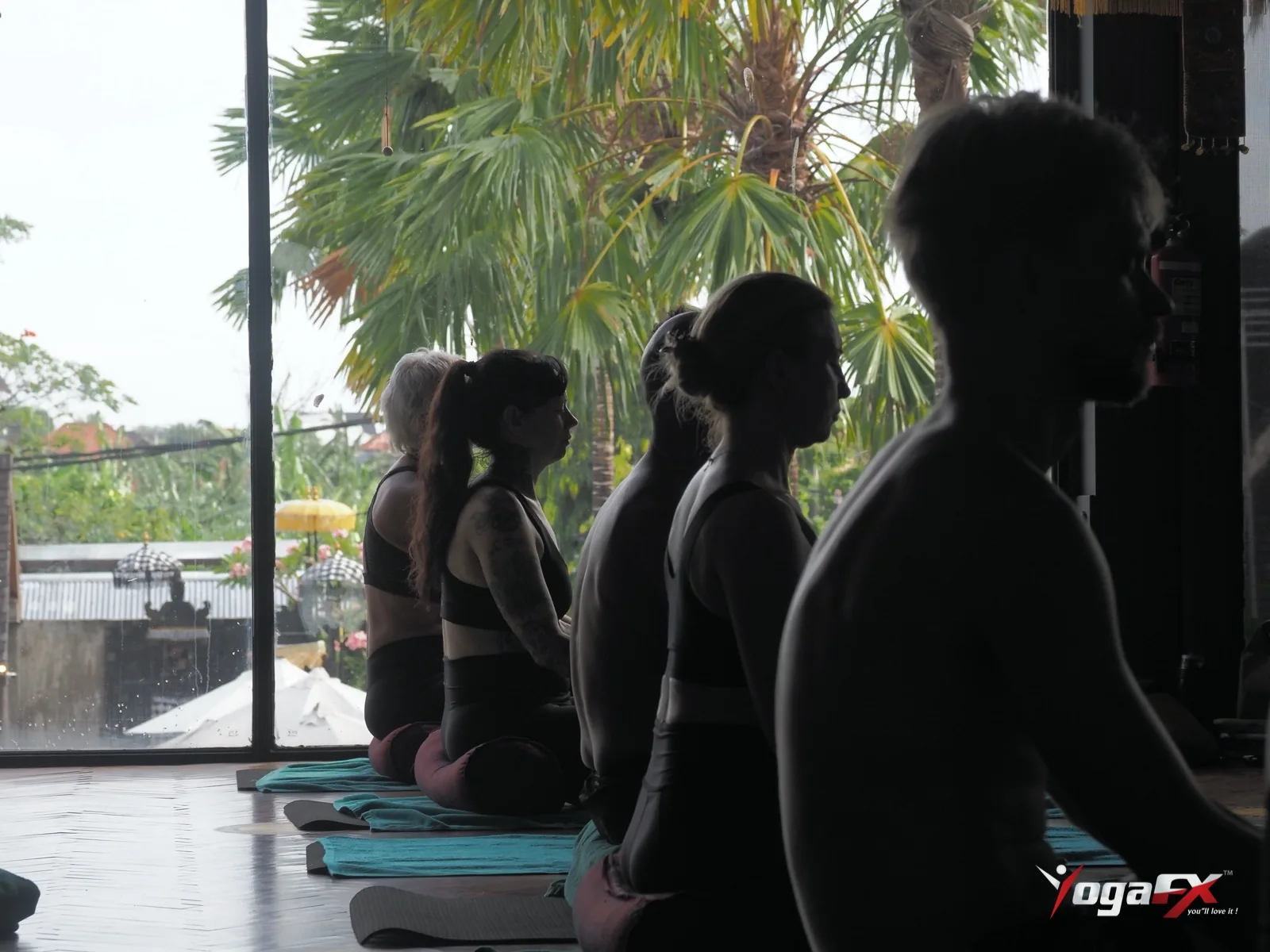
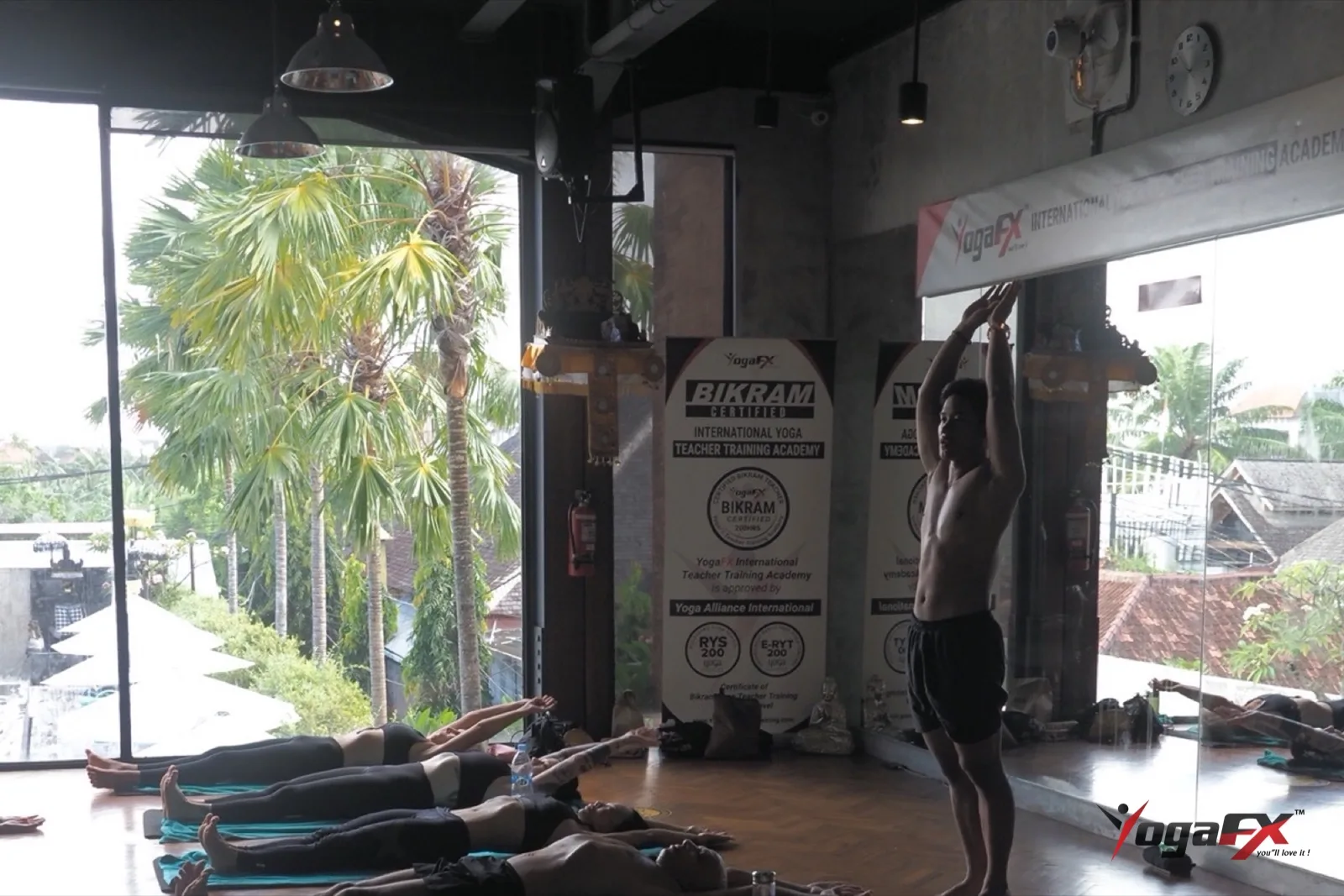
Our studios use Bali’s own tropical air. There are no electric heaters, so the room feels like a warm, damp afternoon rather than a cloud. If you want the full picture of room conditions, read our guide to how hot Bikram yoga really is.
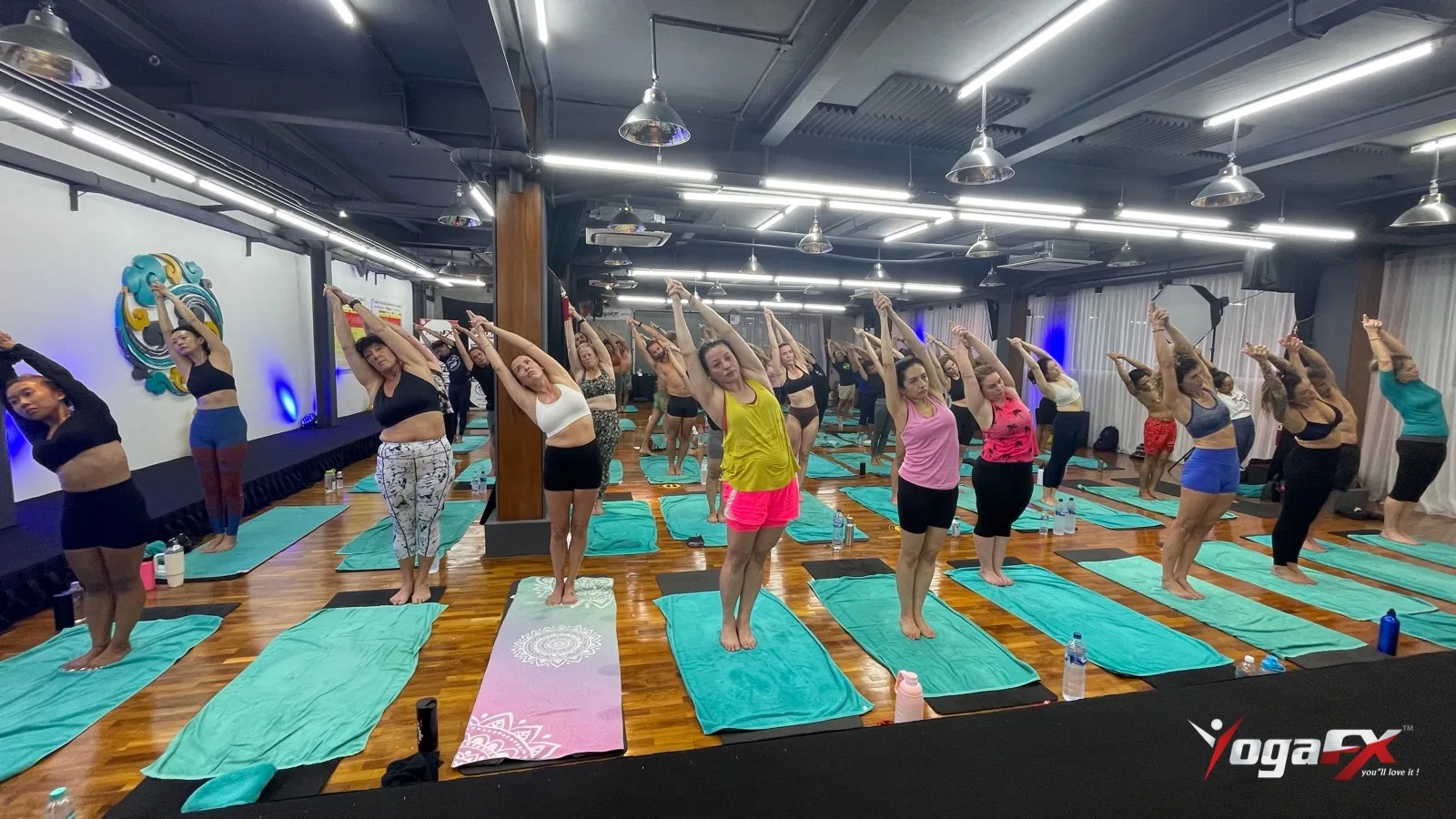
The class itself runs 90 minutes with 26 postures and 2 breathing exercises, in the same order every time. Because the room is steady, you learn quickly how your own body responds. Many students tell us the first ten minutes are the hardest, then the rhythm settles.
Hot Yoga vs Steam Room Side by Side: Four Things You Will Notice
This table compares the two rooms across the things students tell us they notice first. The studio column describes our class standard. The steam room column describes the usual setup in general terms, since every spa runs its own.
| What you notice | Bali hot class | Steam room | What it means for you |
|---|---|---|---|
| The air | Natural tropical heat near 40°C and 40% humidity | Warm vapour, air close to saturated | Sweat can still evaporate in the studio, but hardly at all in the steam room |
| Your effort | 26 postures and 2 breathing exercises over 90 minutes | Sitting or lying still | The class trains you, while the steam room only warms you |
| Who is in charge | A teacher guides every posture with a scripted dialogue | You decide how long to stay | The class has a structure, so rest breaks are cued, while the steam room relies on your own judgement |
| How you leave | Tired, rinsed out and usually calm | Warm, loose and sleepy | Plan food and water after a class, and a cool-down after the steam room |
Read the table row by row and a pattern appears. The class asks something of you, and the steam room asks nothing. That’s why hot yoga vs steam room has no universal winner: the right choice depends on what you want from the next hour.
How Your Body Cools Down in Each Room
Here’s the cooling chain in plain steps. It explains most of what students feel in the hot yoga vs steam room comparison, and it shows where humidity bites.
Step 3 is the one that changes between rooms. In the studio, evaporation still works, so your body can keep shedding heat while you move. In a steam room it slows right down, which means you cool mostly by leaving the room. As a result, a steam room session is best kept short, and you should step out when you feel the first sign of strain.
The CDC NIOSH heat stress overview notes that high temperature and humidity together are a risk factor for heat-related illness. That sentence applies to both rooms. It is also why our teachers cue rest, water and pacing through the whole class.
What the Research Says, and What It Does Not
We should be careful here. We’re not aware of any trial that puts the two rooms head to head, so nobody can honestly say one is better for your health. What we have is separate evidence on each side, and it answers different questions.
For yoga, researchers at the University of Wisconsin (Porcari and colleagues, 2014) measured healthy adults during a 90-minute Bikram class. Women averaged about 333 calories and men about 460 calories, at roughly 80% of maximum heart rate. That load comes from holding postures, so it would not appear in a room where you only sit.
A 2025 systematic review by Willmott and colleagues pooled 43 studies and 942 participants. It reported signs of benefit from Bikram yoga for flexibility, bone density and well-being. Those are group findings, so they don’t guarantee anything for one person.
For the wet-heat side, the closest evidence we know is a 2018 paper in Mayo Clinic Proceedings on sauna bathing and cardiovascular health. It covers dry saunas in particular groups, so it says little about a steam room and nothing about yoga. Please don’t stretch it further than it goes.
So our reading is modest. A class gives you practice, and a steam room gives you rest. Which one fits you depends on the day, not on a scoreboard.
Bali’s Tropical Air Changes the Hot Yoga vs Steam Room Choice
If you live in Bali, you already spend your day in warm, damp air. That changes the hot yoga vs steam room maths. A steam room is a stronger step up from the outdoors than it would be in a cold climate, so many residents find that a short session feels like a lot.
Visitors notice something different. You arrive from a cooler country, and the first class feels intense because your body is still adjusting. Sweating starts early, and it may feel like more than you expect. That is normal, and it is also why we suggest easing in over the first week. Our guide to practising without electric heaters explains why Bali’s natural climate does much of the work.
- Give yourself a few days. Your sweating response adapts as you get used to the climate.
- Drink before you arrive. Start hours earlier, not on the way in.
- Bring a large towel. Sweat on the mat is slippery, and a towel keeps your footing.
- Rest when you need to. Sitting out a posture is a skill, not a failure.
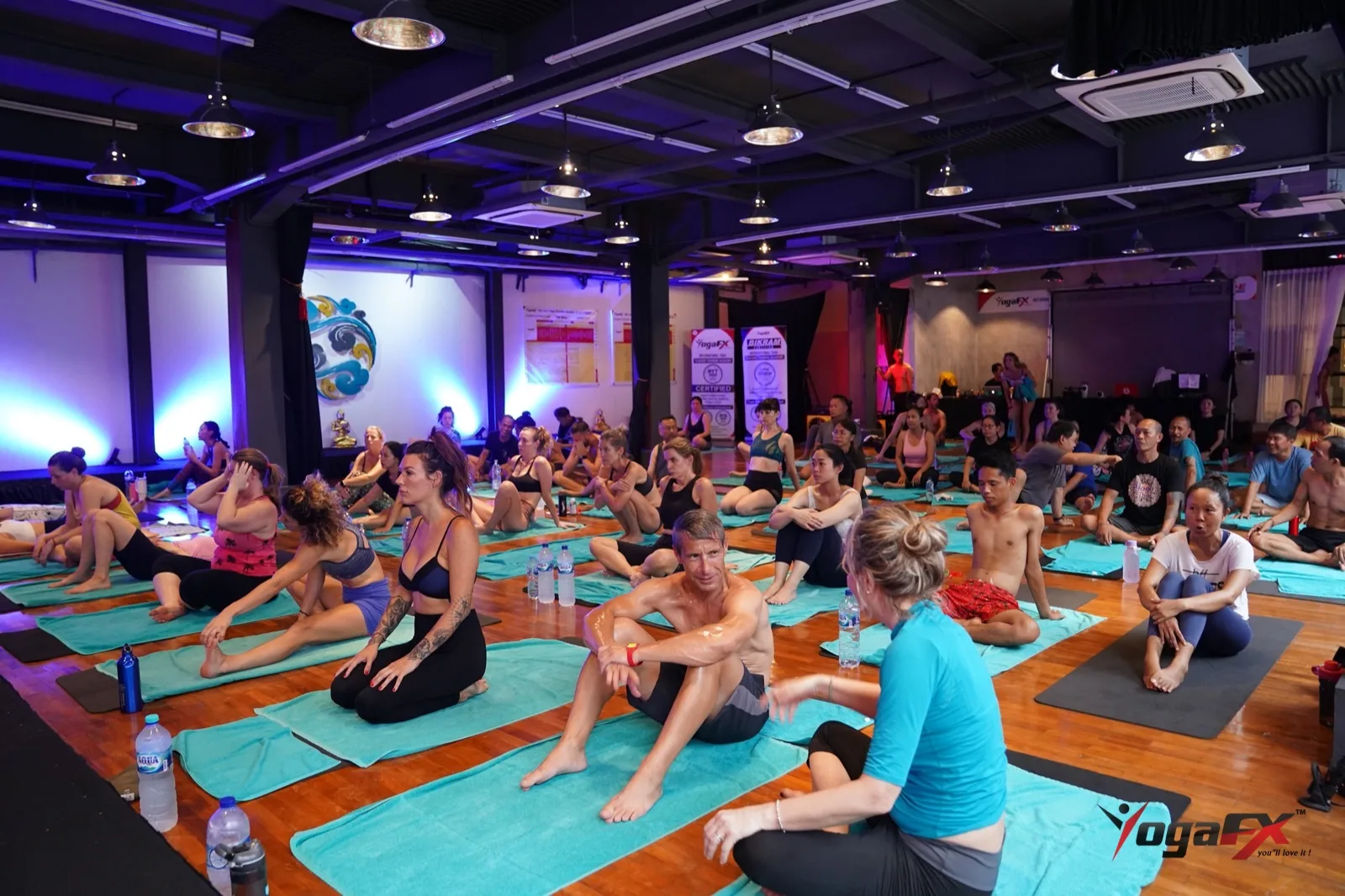
Once class ends, your plan matters more than the room did. Sip water steadily and eat a normal meal with some salt in it. That advice holds whichever side of hot yoga vs steam room you land on, because sweat costs you the same water and salt either way.
Planning a Wet-Heat Day Around Your Bali Classes
Many visitors build a “heat day” around a spa or a hotel steam room. That’s fine, but the order matters. Each session costs you fluid, so stack them carefully and decide in advance which one is the main event.
- Pick one headline session. If class is the main event, treat any steam as optional.
- Leave a gap. Let your heart rate settle and drink water between sessions.
- Stop early. There’s no magic number of minutes, so leave at the first sign of dizziness.
- Ask first if you have a heart, blood pressure or kidney condition, or you are pregnant.
If dry heat interests you more than steam, our comparison of hot yoga vs sauna explains how those two differ for your body. And if you’re weighing a career move, a sister site covers the same question from a teacher-training angle.
Who Should Skip Either Room
Heat isn’t for everyone. Both rooms raise the load on your heart and your fluid balance, so a few groups should speak to a doctor before trying them. That list includes people with heart conditions, low blood pressure, kidney problems, and anyone who is pregnant.
Know the warning signs too. The CDC NIOSH page on heat-related illnesses describes heat exhaustion as the body’s response to an excessive loss of water and salt, usually through excessive sweating, with symptoms such as headache, nausea, dizziness and weakness. The same page lists heat stroke as an emergency. Take these seriously in either room.
- Dizziness or feeling faint. Sit or lie down at once and cool off.
- Nausea or a pounding headache. Both can mean too much heat or too little fluid.
- Confusion or slurred speech. This needs urgent medical help.
- Chest pain. Stop and get medical help straight away.
Our guide on whether hot yoga is safe goes through who should take extra care. Hot yoga vs steam room safety is mostly about listening early, so tell your teacher if you feel off, and leave the room when you need to.
How We Teach It at YogaFX Seminyak and Canggu
At YogaFX, we would rather help you choose well than sell you a room. Mr. Ian Terry trained for five years, from 2014 to 2019, with the founder of the Bikram Hot 26&2 method. He is a Master Trainer for the Republic of Indonesia Yogasana Sports Federation, and he has taught students from more than 80 countries. More than 1,500 people have graduated from YogaFX since 2017.
Our classes follow the Original Hot 26&2 Yoga format: 26 postures and 2 breathing exercises, 90 minutes, a scripted dialogue, and no demonstration or music. The studios open every day from 06:00 to 22:00. Because the heat is natural, the room changes a little with the weather, and our teachers adjust their cues to match.
New to heat? Read our guide to drop-in hot yoga classes in Bali, then pick a time that suits you. You can start with a free guest pass, come hydrated, bring a towel and tell the teacher it is your first class.
What Students Say About the Practice
Students rarely mention humidity when they review us. They talk about effort, care and change, even when the hot yoga vs steam room question was what first brought them in. These three come from public reviews, and we use first names only.
“The in-person classes, workshops and clinics were excellent and made you feel well prepared to start the journey of teaching and further yoga learning.”
Anne, Yoga Alliance review, 2026
“just stay in the room until everything ends no quits”
Deny, YouTube review, 2025
Sophie (YouTube review, 2026) said she was proud of herself and glad she trusted her decision to come. She called the classes challenging, unlike any class she had done before. (Paraphrased from her video.)
We hold more than 550 reviews across Google, Yoga Alliance and YouTube, and you can read them before you book.
FAQ
Does humidity change how hot yoga feels in Bali?
Yes. Bali’s air is already warm and damp, so the room feels different from a dry, electrically heated studio. Our class sits near 40% humidity, so some sweat still dries. Expect to sweat early in your first week, then adapt as your body gets used to the climate.
Which is hotter, hot yoga or a steam room?
Hot yoga is not always hotter. Our Bali class sits near 40°C and 40% humidity, while a steam room usually feels heavier because the air is close to saturated. Wet air carries heat to your skin faster, so temperature alone tells you little about how hot a room feels.
Do you sweat more in hot yoga or a steam room?
You usually sweat more in hot yoga because you move, and your muscles make extra heat. In a steam room you sit still, so sweat is mostly a response to the warm air. Dripping sweat tells you about humidity and effort, not about how good the session is.
Why does my sweat drip instead of dry in humid air?
Sweat cools you only when it evaporates. When the air already holds a lot of water, evaporation slows, so more sweat runs off your skin. A steam room takes this to the extreme. A drippy face shows the humidity, not how hard you worked or how fit you are.
Is hot yoga safe for beginners in Bali?
Most healthy beginners cope well if they ease in, drink early and rest whenever they need to. Tell your teacher it is your first class. People with heart conditions, low blood pressure or pregnancy should speak to a healthcare professional first, and anyone feeling faint should stop and cool down.
Still have questions? Get your free guest pass
Message Mr. Ian and the YogaFX team on WhatsApp and we will answer them personally. Our Seminyak and Canggu studios are open daily from 06:00 to 22:00.
This article is for general education and is not medical advice. If you have a heart, kidney or blood pressure condition, take medication, are pregnant or have any health concern, consult a healthcare professional before practising in a heated room.
 Mr. Ian Terry