Searching “Bikram yoga teacher training near me” usually means one of two things: you want a studio close enough to commute to for a multi-week local course, or you are open to travelling and just want to know your realistic geographic options. Almost no city has a full 9-week official Bikram program running locally, since Bikram’s Yoga College of India runs one program, in Thailand.
What most people actually find “near them” is a mix of local studios offering weekend workshops, and destination intensives in places like Bali that are worth treating as a short trip rather than a local commute.
Why “Near Me” Rarely Finds the Official Program
The official Bikram Yoga Teacher Training is a single, centralised 9-week residential program based at Graceland Khao Lak Beach Resort in Thailand, run directly by Bikram’s Yoga College of India.
It is not franchised out to local studios city by city. If you are searching from Los Angeles, London, Melbourne or anywhere else, the honest answer is that the official program is not “near you” unless you happen to live in or near Khao Lak. Anyone searching “near me” and hoping for a local branch of the official college specifically will not find one, because that structure does not exist.
What local searches typically surface instead falls into three categories: independent studios running their own certification weekends, studios offering drop-in Bikram-style classes but no teacher training at all, and destination intensives, like Bali, Costa Rica or Thailand, that are genuinely worth flying to rather than searching for locally.
Local Weekend Workshops vs a Destination Intensive
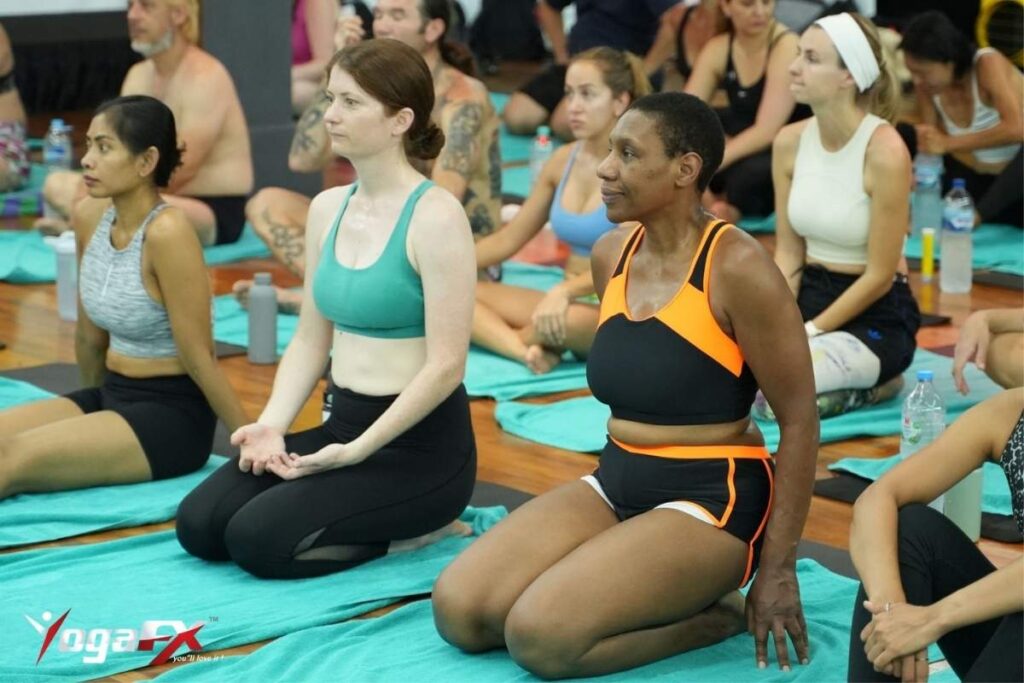
Local studios in major cities sometimes run their own short teacher training weekends, often 2 to 4 days, usually taught by a single studio instructor rather than someone with extensive Bikram lineage training. These can be a reasonable low-commitment introduction, but candidates should check two things before signing up: whether the certification carries Yoga Alliance RYT 200 registration, and how many total contact hours with the lead instructor are actually included once you subtract group demonstration time.
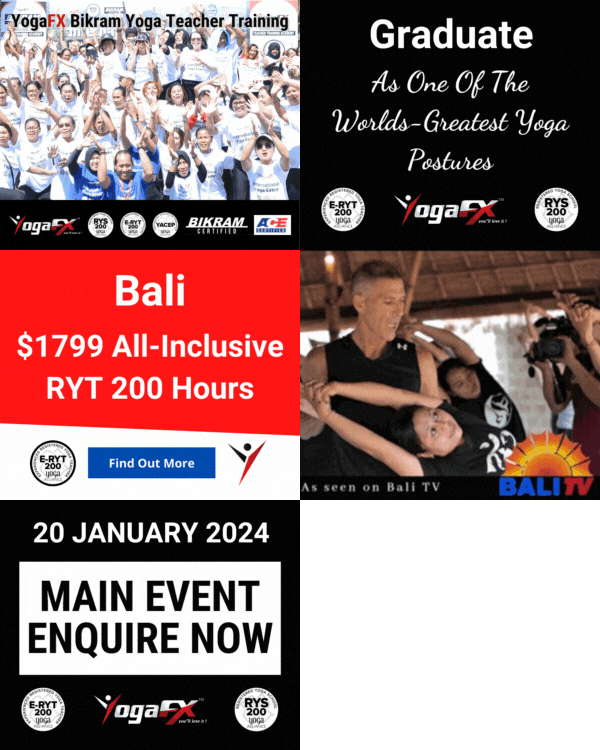
A destination intensive changes the calculation entirely. Instead of searching for whatever happens to exist within driving distance, you are choosing the best available program regardless of location and treating the travel itself as part of the investment. YogaFX‘s 6-day intensive in Seminyak, Bali is built around this model: candidates fly in specifically for the training, complete the intensive week with direct correction from Mr. Ian Terry, and fly home certified, rather than trying to find an equivalent program within their own city.
For many candidates, this ends up being the more practical option even accounting for flights, because a genuinely good local option, meaning one with proper instructor lineage, a real Yoga Alliance credential and enough cohort size to be financially sustainable for the studio, simply does not exist in most cities. Bikram-style teacher training is a specialised niche, and specialised training tends to concentrate in a small number of locations rather than spreading evenly across every city with a hot yoga studio.
What to Check Before Booking Any “Near Me” Result
Whether you find a local option or decide to travel, the same checklist applies before you commit:
It also helps to search with more specific terms than “near me” once you understand how the market is actually structured. Searching for “Bikram teacher training Bali” or “26 and 2 certification Yoga Alliance” directly, rather than relying on a generic proximity search, tends to surface programs with verifiable instructor lineage and credential recognition far faster than a broad local search, which mostly returns drop-in class listings rather than actual certification programs. Our hot yoga teacher training near me guide covers the same “near me” problem across the wider heated vinyasa and hot yoga market, not just Bikram-lineage 26&2 training specifically.
- Instructor lineage. Has the lead instructor trained directly under Bikram Choudhury or an equivalent recognised lineage, or are they teaching from a certification they themselves received secondhand through a studio franchise?
- Yoga Alliance registration. Does the certification carry RYT 200 registration that studios worldwide will actually recognise when you apply to teach?
- Independent style-specific registration where applicable. Some 26&2-style programs are also listed with a separate standards body for Original Hot Yoga studios and teacher trainings, worth checking alongside Yoga Alliance rather than assuming Yoga Alliance is the only credential that matters.
- Cohort size and correction time. A large group workshop with minimal one-on-one feedback teaches you far less than a capped, intensive format, regardless of how convenient the location is.
- Heat environment. Training in an electrically heated studio versus a naturally hot, humid climate produces a different intuitive relationship with the conditions you will eventually teach in, which matters more than it sounds for candidates planning to teach in genuinely hot climates themselves.
Why Bali Works as a “Near Me” Alternative for Many Candidates
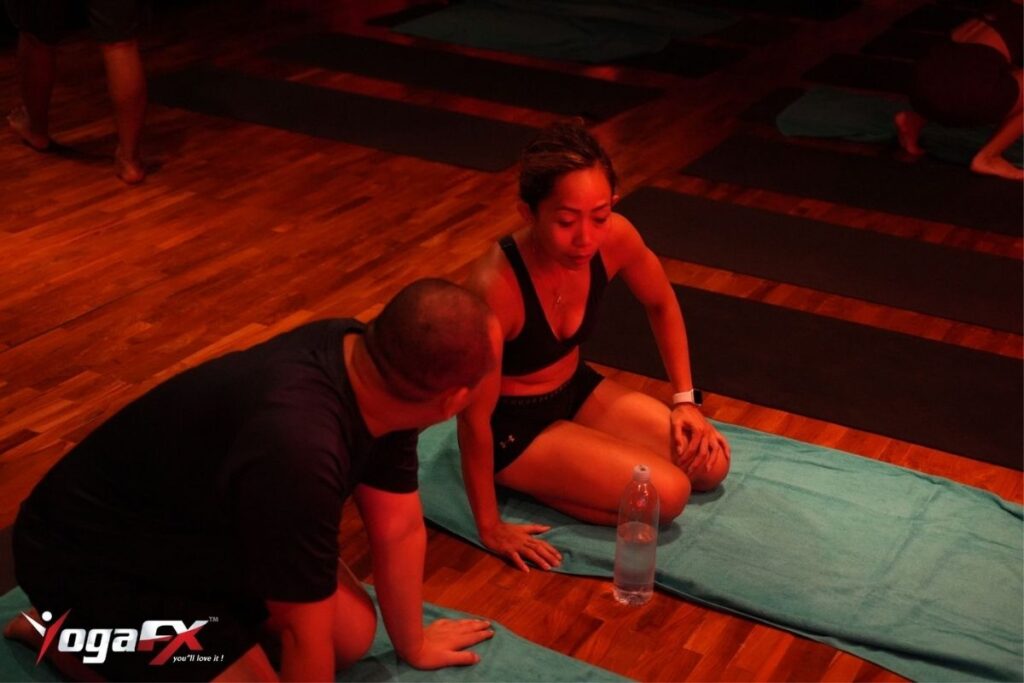
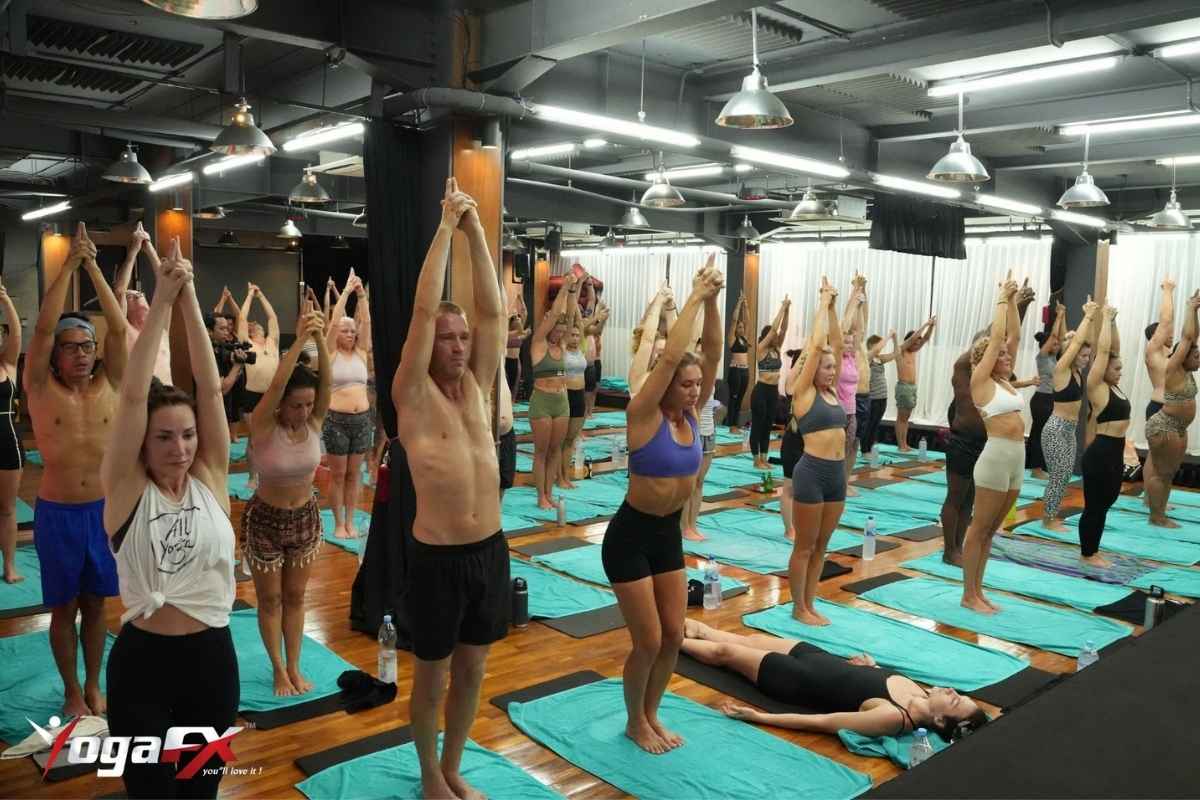
Bali has become a default destination for this specific training for a practical reason: it combines direct-lineage instruction, a naturally hot and humid climate that mirrors real teaching conditions, and international flight connectivity from most major cities, all in one place. YogaFX runs its intensive across two studio locations, Seminyak and Canggu, both open 06:00 to 22:00 daily, so candidates arriving for the training week also get access to drop-in classes before and after their certification dates if they want extra practice time.
Mr. Ian Terry, who leads the training, trained directly under Bikram Choudhury across five events between 2012 and 2019 and has logged more than 12,000 teaching hours across 1,500-plus graduates from over 80 countries, which is the kind of instructor lineage that most local “near me” search results in most cities cannot match. In June 2026, he was also appointed Master Trainer of the Republic of Indonesia Yogasana Sports Federation, a national-level instructional credential that reflects the same standard applied in every teacher training cohort.
If you are weighing a local option against travelling to Bali, the practical test is simple: would you rather train with whoever happens to be nearby, or fly once to train with an instructor whose lineage and track record you have actually verified. Most serious candidates, once they understand how thin the “near me” options genuinely are for this specific method, choose the destination intensive. You can start with a Free Guest Pass at either Bali location to see the teaching style before committing to the full certification.
What Candidates in Different Cities Typically Find
The pattern is remarkably consistent across major cities. Candidates in Los Angeles, New York, London, Melbourne, Sydney, Toronto and similar hubs typically find plenty of studios offering regular Bikram-style or 26&2 drop-in classes, since the practice itself has a large global following.
What is far harder to find in any of these cities is a full teacher training program with genuine Bikram lineage instruction and Yoga Alliance registration, run frequently enough to fit a specific candidate’s schedule. Some cities have one or two studios that occasionally run a certification weekend, often once or twice a year, which means “near me” searches frequently return either nothing current, or a program with a start date many months away.
This scarcity is exactly why destination-based training has become the norm for this specific method rather than the exception. Unlike more generic vinyasa or hatha 200-hour trainings, which genuinely do run in most major cities on a rolling monthly schedule, Bikram-lineage 26&2 training requires an instructor with the specific dialogue mastery and posture correction expertise that most local studio owners simply have not built, even if they teach the style themselves. A studio can run excellent drop-in classes without having the depth of training experience needed to certify new teachers properly.
Practical Logistics of Choosing a Non-Local Program
Once you accept that the best available training is unlikely to be local, the decision shifts from “where is nearby” to “how do I plan around travelling for this properly.” A few practical points make this easier than it sounds. Indonesia offers visa-on-arrival and visa-free entry for many nationalities for short stays, which covers a 6-day intensive comfortably without needing to arrange a visa in advance for most candidates.
Seminyak and Canggu, where YogaFX‘s studios are based, both have a large existing expat and wellness traveller community, meaning short-term accommodation, transport and food options are already well set up for someone arriving for a single training week rather than a long-term stay.
Timing your trip around the intensive week itself, rather than trying to combine it with an extended holiday, also tends to produce better training outcomes. Candidates who arrive a day or two early to acclimatise to the tropical heat and humidity before the intensive begins consistently report an easier adjustment during the first two days of practice teaching than those who fly in the morning training starts.
The Weekend Certification Trap
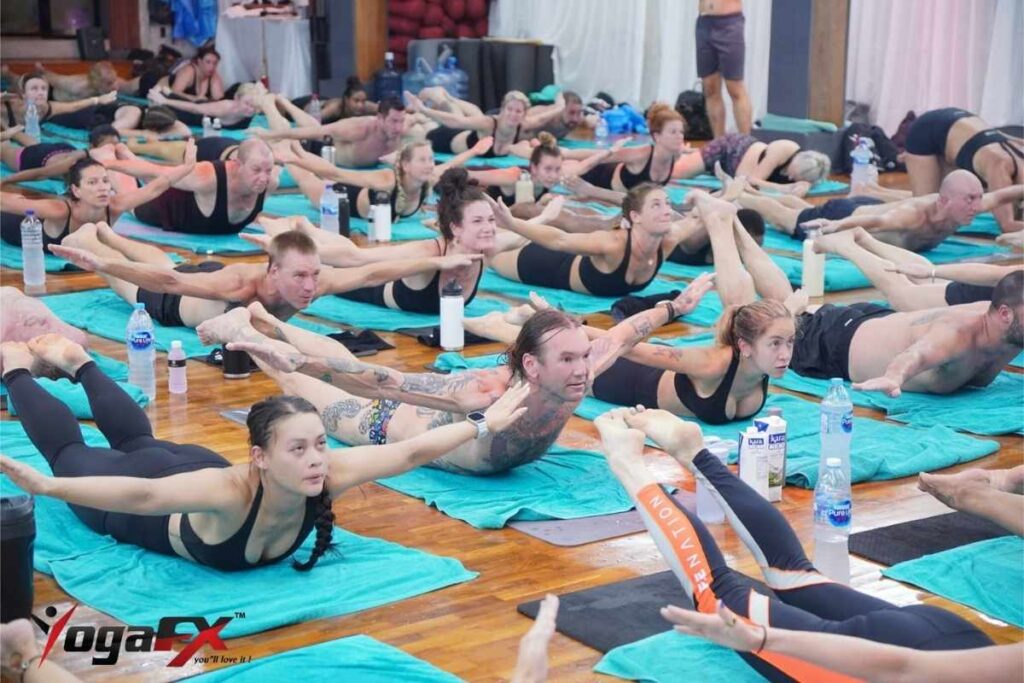
One pattern worth flagging specifically for “near me” searches: a 2-day local weekend certification and a properly structured 6-day intensive with online pre-course work are not the same product, even when both are marketed as teacher training. A 2-day format simply does not contain enough hours to cover dialogue memorisation, per-posture correction and supervised practice teaching at the depth needed to walk out confident and competent.
Candidates who complete a short local weekend often report feeling under-prepared to actually lead a full 90-minute class afterward, which is a direct result of contact hours, not effort or aptitude.
This is the real trade-off behind “near me” convenience. A shorter, closer program saves travel time and cost upfront, but if it does not deliver enough structured practice teaching hours, candidates often end up spending additional money later on a second, more thorough certification anyway. Checking total contact hours, not just the number of calendar days, is the single most useful filter when comparing any local option against a destination intensive.
For a full breakdown of how a Bali intensive compares to the official Thailand program on cost, duration and credential, see the official vs independent training comparison, and for a detailed pricing breakdown across both paths, see the full cost guide. If you are weighing a local weekend option against travelling, it is also worth knowing exactly what can and cannot be completed online before you fly, covered in can you do Bikram yoga teacher training online.
FAQ
Is there a local Bikram yoga teacher training near most major cities?
Rarely for the official program, since Bikram’s Yoga College of India runs a single centralised 9-week course in Thailand. Local studios sometimes offer their own short workshops, but candidates should verify instructor lineage and Yoga Alliance registration before assuming these are equivalent.
Is it better to travel for teacher training than find a local option?
For most candidates, yes. Specialised Bikram-lineage instruction concentrates in a small number of destinations, so travelling to a proven program with a Yoga Alliance-recognised credential typically delivers better training than settling for whatever certification happens to exist locally.
How do I check if a local teacher training program is legitimate?
Confirm the certification carries Yoga Alliance RYT 200 registration, check the lead instructor’s training lineage and total teaching hours, and ask about cohort size, since a large group with minimal correction time delivers a meaningfully weaker training experience.
Why do so many candidates choose Bali specifically for hot yoga teacher training?
Bali combines natural tropical heat that mirrors real teaching conditions, direct-lineage instructors, and strong international flight connectivity, which is why it has become a common destination for candidates who cannot find a comparable local option near them.
Is a 2-day local weekend certification enough to teach confidently?
Usually not on its own. A 2-day format rarely contains enough contact hours for full dialogue memorisation and supervised practice teaching, which is why a structured intensive with online pre-course work followed by several in-person days tends to produce more confident, prepared teachers.