Bikram yoga teacher training costs anywhere from USD 1,699 to USD 16,600, and the gap comes down to one factor above all others: whether you are booking a full residential 9-week program or an independent 26&2 certification. Here is the full breakdown of what YogaFX’s independent Bali certification actually includes at its price point, so you can compare it against other formats on real numbers instead of marketing pages.
The Two Price Tiers, Side by Side
At the top of the market sit full residential 9-week programs. A typical session runs across roughly 9 weeks, priced from around USD 12,500 for double occupancy accommodation or USD 16,600 for a single room. That fee covers tuition, lodging, meals and course materials for the entire nine-week residential stay.
Independent 26&2 certifications sit at a very different price point. YogaFX in Bali, for instance, runs a 6-day intensive priced between USD 1,699 and USD 2,799 depending on your accommodation choice, with a USD 349 deposit to secure your spot. Other independent schools worldwide, including 12-week online formats, typically land somewhere in a comparable low-thousands range, though pricing varies by school and format. For the fuller picture of how this program compares beyond price, see the official vs independent training comparison.
| Program | Total Cost | What’s Included | Cost Per Week |
|---|---|---|---|
| Full residential YTT, 9 weeks (double occupancy) | USD 12,500 | Tuition, lodging, meals, materials, 9 weeks | ~USD 1,389 |
| Full residential YTT, 9 weeks (single occupancy) | USD 16,600 | Same as above, private room | ~USD 1,844 |
| YogaFX Bali (6-day intensive) | USD 1,699 to USD 2,799 | Tuition, in-person intensive week, dual RYT 200 + Hot 26&2 certification, online pre-course | ~USD 283 to USD 466 |
On a per-week basis, a full residential program and an intensive independent certification are not actually as far apart as the headline totals suggest, since a residential program’s total reflects nine weeks of full board accommodation you are not paying for separately elsewhere. The real difference candidates need to weigh is total cash outlay and total time away from income, not just a per-week rate.
What You’re Actually Paying For
A full residential program’s USD 12,500 to USD 16,600 fee is priced the way it is because it bundles nine weeks of lodging and three meals a day at a residential venue alongside tuition. If you priced accommodation and meals separately at a comparable resort for nine weeks, a meaningful share of that total is housing and food, not instruction.
An independent intensive strips that structure down. YogaFX‘s pricing separates tuition from accommodation entirely: the course fee covers the certification itself, dialogue training, posture correction from Mr. Ian Terry, and the Yoga Alliance RYT 200 plus Hot 26&2 credential, while candidates arrange their own Bali accommodation for the intensive week, which is significantly cheaper in Bali than nine weeks of resort lodging in Thailand would be. This is the structural reason the total cost gap is so large even though the actual teaching content, dialogue, posture study, and practice teaching, covers the same 26&2 method in both cases.
Hidden Costs to Budget For, Either Path
Whichever program you choose, the advertised tuition is rarely the full picture. Candidates consistently underbudget for these:
- Flights. International airfare to Thailand or Bali, often the second-largest line item after tuition, and one that varies enormously by departure city and season.
- Lost income. Nine weeks away from a job or client base is a real cost even if you are not paying tuition for that time. A 6-day intensive minimises this significantly, which is one reason it appeals to working professionals specifically.
- Yoga Alliance registration fees. Certification and school registration typically carry their own separate annual fees once you are ready to teach professionally.
- Post-training gear. Teaching attire suited to a 40°C room, a personal practice mat built for heat and humidity, and often a microphone or headset for larger classes.
Is the Cheaper Option Actually Worth It?
This is the question every candidate comparing prices eventually asks, and it deserves a direct answer rather than a sales pitch. Cost alone does not determine training quality. What determines it is cohort size, the amount of direct correction each candidate receives, and whether the program’s structure, whether nine weeks or six days, is actually used to build real teaching competence rather than just logged attendance hours.
YogaFX caps cohorts at 19 students specifically so the lower price point does not translate into diluted attention. Mr. Ian Terry, who holds E-RYT 500 certification and has logged more than 12,000 teaching hours and 1,500-plus graduates across 80-plus countries, personally corrects posture and dialogue delivery through the intensive week rather than delegating to assistant instructors, which is the mechanism that keeps a six-day, lower-cost format from becoming a shortcut on quality. A 2025 systematic review of 43 studies and 942 participants confirms the underlying physical benefits of the 26&2 method are consistent regardless of which certified school teaches it, so the cost differential genuinely comes down to format, location and lineage endorsement rather than instructional substance.
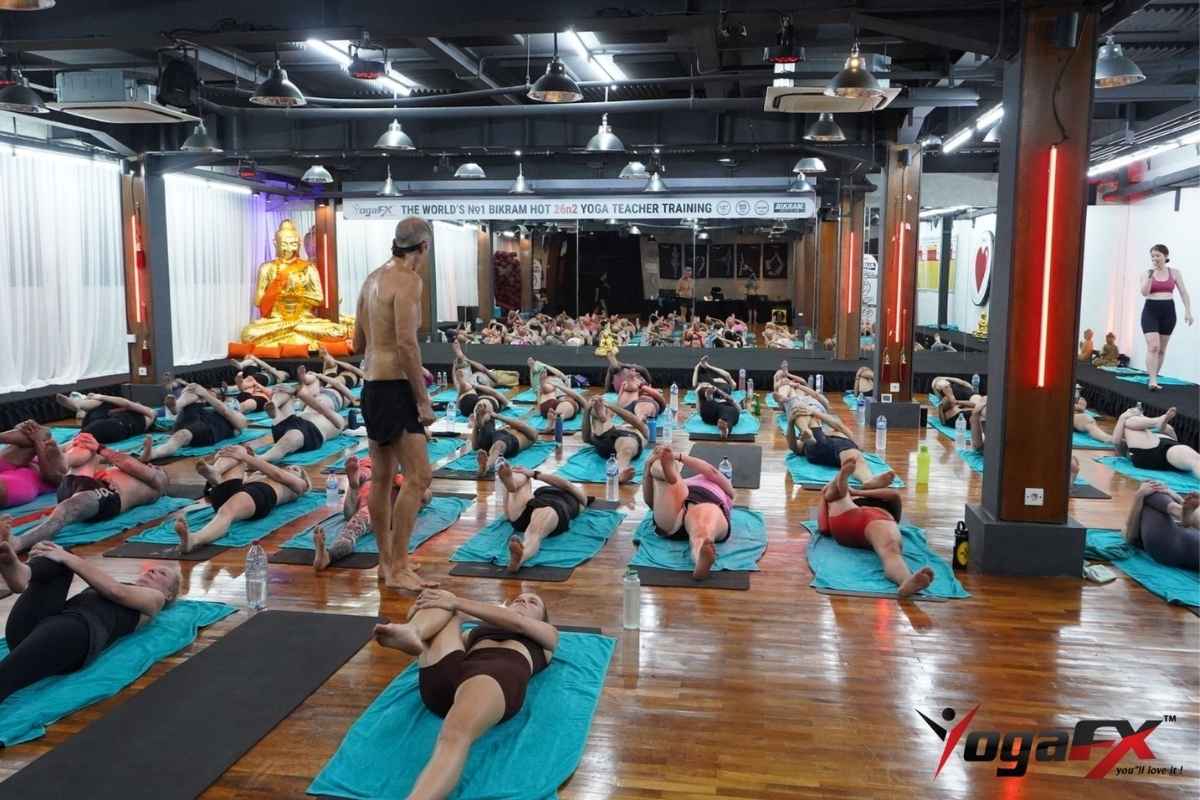
If your budget realistically caps out well below five figures, or if nine weeks away from work simply is not an option, a well-structured intensive with a capped cohort and direct instructor correction is not a compromise. It is the version of this training built for exactly your situation. You can see the studio and Mr. Ian’s teaching style firsthand with a Free Guest Pass at either the Seminyak or Canggu location before committing to the full certification.
How Independent Schools Compare to Each Other
Once you move past full residential programs, pricing among independent 26&2 schools varies mainly by format length and delivery mode rather than by the underlying content, since every certified school is teaching the same 26-posture, 2-breathing-exercise sequence. Fully online formats, often stretched over 12 weeks to allow candidates to study around a full-time job, tend to sit in a comparable price range to short in-person intensives, but trade the compressed timeline for a longer calendar commitment and no live posture correction. In-person intensive formats, whether in Bali, Costa Rica, or elsewhere, concentrate the same content into a single trip with direct instructor correction, which is why candidates comparing purely on price should also weigh format, not just the number on the invoice. For a full comparison of formats across the wider market, see hot yoga teacher training formats and accreditation.
One detail worth checking on any independent program regardless of price: whether the certification carries Yoga Alliance RYT 200 registration. That credential is what most studios worldwide check before hiring, and its presence or absence matters more to your future income than a few hundred dollars of difference in tuition.
How Fast Can You Recover the Investment?
This is the practical question behind the cost comparison for anyone treating the certification as a career move rather than a personal milestone. A newly certified teacher picking up regular classes at a studio can realistically expect to recover a USD 1,699 to USD 2,799 independent certification cost within a matter of months of steady teaching, particularly if they combine studio classes with private sessions or corporate wellness bookings. Recovering a USD 12,500 to USD 16,600 investment in a full residential program takes considerably longer under the same teaching volume, simply because the principal is roughly five to seven times larger.
This does not mean a full residential program is a poor financial decision. For candidates specifically building a career around an original Bikram-endorsed lineage credential, whether opening a licensed studio, working within organisations that require that specific credential, or building a teaching brand around that name recognition, the endorsement itself carries value that a faster payback period on a cheaper certification cannot replace. The honest framing is that the two formats are optimised for different financial and career outcomes, not that one is objectively the better investment.
Financing and Reducing Your Total Cost
A few practical levers reduce the real cost of either path. Booking flights months ahead of a fixed cohort date, rather than the flexible dates a fully online format allows, typically cuts airfare significantly. Choosing double occupancy or shared accommodation over a private room, where the program offers the choice, is the single largest lever on a full residential program’s total cost, moving the fee from USD 16,600 down to USD 12,500. For independent programs, arranging your own Bali accommodation outside of peak tourist season, rather than booking through a bundled package, often brings the effective total well below the headline range depending on your standard of lodging.
Deposits are also worth planning around deliberately. A USD 349 deposit securing a cohort spot months in advance gives you a fixed budgeting runway to cover the remaining balance, flights and accommodation without needing the full amount saved on day one, which is one reason working professionals with a defined savings timeline gravitate toward intensive formats with this structure over programs requiring the full fee upfront. Some candidates also ask about scholarships specifically for teacher training. These exist in the wider yoga industry but are limited and highly competitive, so most candidates budgeting for either a full residential program or an independent Bali certification should plan around self-funding rather than counting on scholarship coverage, and treat any scholarship as a bonus if it comes through rather than a baseline assumption.
For a broader look at how deposit and instalment structures work across different schools, see this overview of Bikram yoga teacher training payment plans.
Whichever budget you are working with, the cost comparison in this guide is only useful once you have also weighed the full program differences beyond price, including cohort size, heat environment and the specific credential each path issues. Graduates who compare purely on the number at the top of the invoice, without checking cohort size or whether posture correction is delivered personally by the lead instructor, are the ones most likely to report feeling shortchanged after the fact, regardless of which price tier they chose. A capped cohort of 19 students receiving direct correction from an E-RYT 500 instructor with 12,000-plus teaching hours delivers a materially different training experience per dollar than a larger, lower-touch program at a similar price point, which is the actual variable worth researching once your budget range is set.
FAQ
How much does a full residential Bikram yoga teacher training cost?
A full 9-week residential program typically costs USD 12,500 for double occupancy or USD 16,600 for single occupancy, covering tuition, lodging, meals and materials for the full residential stay.
How much does an independent 26&2 certification cost in Bali?
YogaFX‘s 6-day intensive in Seminyak, Bali ranges from USD 1,699 to USD 2,799 depending on accommodation, with a USD 349 deposit to reserve a place. It issues a dual Yoga Alliance RYT 200 and Hot 26&2 certification.
Does a full residential program’s cost include accommodation?
Yes. The USD 12,500 to USD 16,600 fee for a typical residential program bundles nine weeks of lodging and meals at the training venue alongside tuition, which explains most of the price gap versus shorter independent formats.
Are there payment plans or deposits available for teacher training?
Independent programs commonly use a deposit-plus-balance structure. YogaFX, for example, requires a USD 349 deposit to secure a cohort spot, with the remaining balance due ahead of the in-person intensive week.
Is the more expensive full residential program actually worth the extra cost?
It depends on your goal. A full residential program’s extra cost buys a longer immersion and, in some cases, a specific original lineage endorsement. If your goal is simply to teach the 26&2 method professionally with a recognised Yoga Alliance credential, an independent certification delivers that at a fraction of the price.