The Bikram yoga 90-minute routine is a fixed sequence of 26 postures and 2 breathing exercises practiced in a room heated to 40°C (105°F) with 40% humidity. Every authentic Bikram class worldwide follows the same order – no variations, no music, no modifications to the sequence. The structure, timing, and heat are all deliberate and interdependent.

Bikram yoga is a 90-minute hot yoga practice consisting of 26 postures and 2 breathing exercises, always performed in the same fixed order in a heated room at 40°C (105°F) with 40% humidity. It was developed by Bikram Choudhury from Hatha yoga techniques taught by his guru Bishnu Ghosh in Calcutta, and is now one of the most scientifically studied yoga methods in the world.
Understanding why the routine works the way it does makes the difference between surviving your first class and genuinely benefiting from it. This guide covers the complete sequence, the science behind the structure, and what your body experiences – beginning to end.
At Bikram YogaFX Bali, the 90-minute class is practiced in Bali’s own natural tropical heat – the environment Bikram yoga was originally designed for. No electric heaters. Studios in Seminyak and Canggu. See our 90-minute class guide for exactly what to expect walking in.
Want every posture in order, filtered by difficulty, focus area or health benefit?
What Is the Bikram Yoga 90 Minutes Routine?
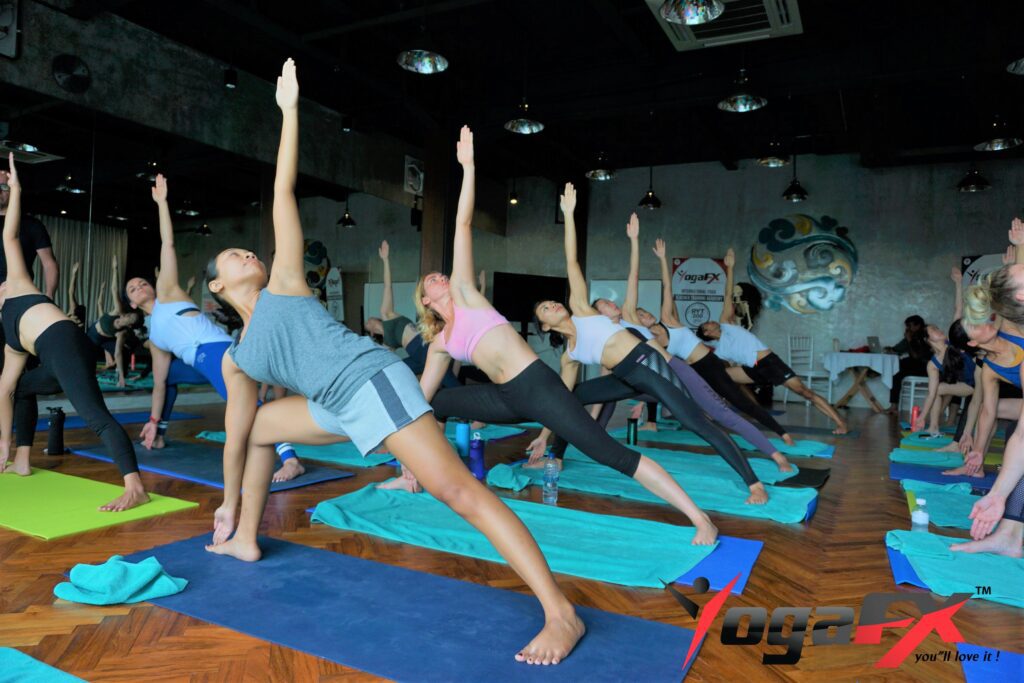
The Bikram yoga series was developed by Bikram Choudhury, drawing on the Hatha yoga tradition taught by his teacher Bishnu Ghosh. The series is therapeutic by design.
Each of the 26 postures was selected for a specific healing function. The order in which they appear is not arbitrary. It is the result of over 65 years of yoga practice and teaching.
The core mechanism is simple: stretch, compress, release, repeat.
Each posture stretches one part of the body while compressing another, temporarily restricting blood flow. When you release the pose, freshly oxygenated blood floods back into that area.
Done twice per posture, across a full bikram yoga 90 minutes session, this creates a systematic flushing of every muscle group, organ, and joint in the body.
Why Bikram Yoga 90 Minutes Cannot Be Shortened
There are four structural reasons the 90-minute format is non-negotiable:
- Every posture is performed twice. The first set prepares the body and establishes the compression. The second set delivers maximum therapeutic benefit – this is where physiological change happens. Skipping the second set eliminates the primary mechanism of the practice.
- Hold times are fixed. Stillness under heat, combined with controlled breathing, is what creates the internal pressure that drives results. Shortened hold times produce shortened results.
- The floor series requires a pre-heated core. Your internal body temperature must reach a specific level during the standing series before the floor postures can operate at therapeutic depth. The heated room supports this process – the movement drives it.
- Savasana is part of the formula. The rest periods between floor poses allow the body to absorb each posture’s benefit, normalise heart rate partially, and prepare for the next compression. They are not optional recovery time.
“We believe the benefits of Bikram yoga can only be fully gained from the completion of a full 90-minute class.” Bikram Yoga Bali
A 60-minute class requires modifying hold times and eliminating the double-set structure. Both of which are the primary mechanism through which results are produced.
Phase 1: Pranayama – Standing Deep Breathing (Minutes 0–10)
Every bikram yoga 90 minutes class opens with Pranayama, a standing breathing exercise. See our full breakdown of both breathing exercises, Pranayama and closing Kapalbhati, for what each one is actually doing physiologically.
How it works:
- Stand with feet together, fingers interlaced beneath the chin
- Inhale slowly through the nose for a six-count, lifting elbows toward the ceiling
- Exhale fully through the mouth, lowering the elbows and gently extending the neck
This is not a warm-up filler. Pranayama floods the bloodstream with oxygen before any physical demand is placed on the body.
The class is practiced in silence, without music. Pranayama is the mental transition from the outside world into the hot room.
Phase 2: The Standing Series (Minutes 10 to 60)
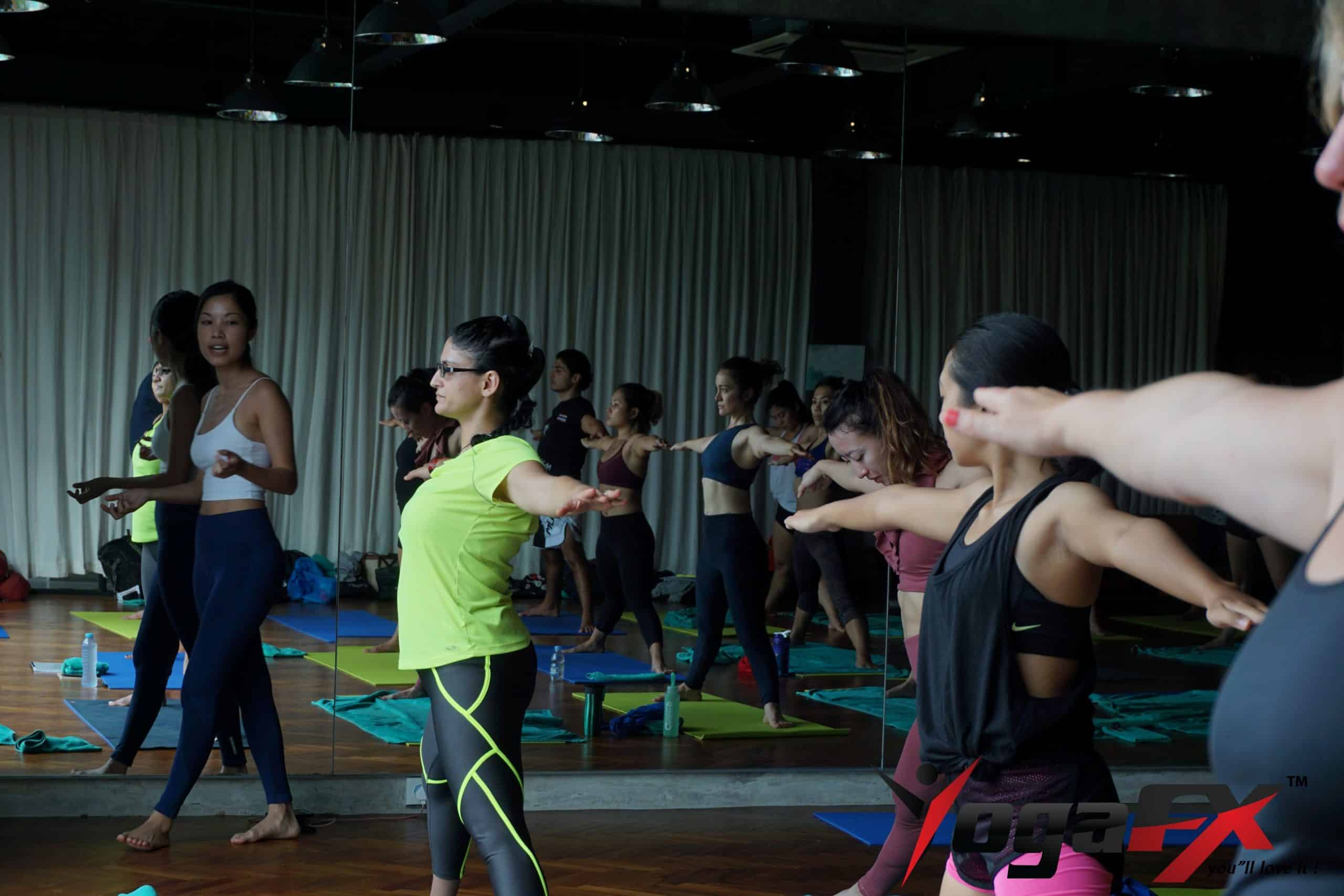
The first 50 minutes of the bikram yoga 90 minutes routine is the Standing Series.
During this phase, your body experiences:
- Elevated heart rate approaching your cardiovascular training zone
- Increased metabolic rate as the body works harder to regulate temperature and sustain movement
- Rising core temperature building the internal heat needed for the floor series
This thermal progression is intentional. The standing poses must raise your internal temperature before the floor series can operate at therapeutic depth. The heated room supports this process, but the movement drives it. For alignment cues on each standing posture, see our guide to Bikram yoga poses in order.
The 12 Standing Postures
| No | English Name | Sanskrit | What It Targets |
|---|---|---|---|
| 1 | Standing Deep Breathing | Pranayama | Lungs, nervous system, oxygen saturation |
| 2 | Half Moon Pose | Ardha Chandrasana | Spine, lateral flexibility, obliques |
| 3 | Hands to Feet Pose | Pada-Hastasana | Hamstrings, spinal decompression |
| 4 | Awkward Pose | Utkatasana | Quadriceps, knees, lower body strength |
| 5 | Eagle Pose | Garurasana | Hips, shoulders, all major joints |
| 6 | Standing Head to Knee | Dandayamana-Janushirasana | Hamstrings, core, concentration |
| 7 | Standing Bow Pulling Pose | Dandayamana-Dhanurasana | Spine, chest opening, balance |
| 8 | Balancing Stick | Tuladandasana | Cardiovascular peak, full spine, total body |
| 9 | Standing Separate Leg Stretching | Dandayamana-Bibhaktapada Paschimotthanasana | Hamstrings, inner thighs, sciatic nerve |
| 10 | Triangle Pose | Trikonasana | Full-body integration, hips, obliques |
| 11 | Tree Pose | Tadasana | Hip rotation, ankle stability, focus |
| 12 | Toe Stand | Padangustasana | Knees, ankles, deep balance, concentration |
After the final standing pose, you lie flat in a 2-minute Savasana (Dead Body Pose). This is a deliberate physiological reset before the floor series begins – not optional rest.
Phase 3: The Floor Series (Minutes 62 to 90)
The floor series is the therapeutic counterpart to the standing series, using the internal heat built over the first 60 minutes to deliver deeper spinal compression and muscular release at a lower heart rate.
The final 40 minutes shifts from cardiovascular intensity to therapeutic depth. Your heart rate lowers. Your core temperature does not – this is the key distinction of the floor series. The heated room maintains the internal temperature built during the standing series, allowing the floor postures to work at a depth impossible in a cold environment.
Each floor posture is separated by a short Savasana. This allows the body to absorb the benefit of the previous posture before the next compression begins. Learn the Sanskrit names and beginner modifications for every floor pose in our complete list of 26 Bikram postures.
The 14 Floor Postures
| No | English Name | Sanskrit | Primary Benefit |
|---|---|---|---|
| 13 | Wind-Relieving Pose | Pavanamuktasana | Digestion, colon health, lower back release |
| 14 | Sit-Up | (transition) | Core activation, hamstring circulation |
| 15 | Cobra Pose | Bhujangasana | Lower back strength, spinal health |
| 16 | Locust Pose | Salabhasana | Upper back, arm and shoulder strength |
| 17 | Full Locust Pose | Poorna-Salabhasana | Full back body activation |
| 18 | Bow Pose | Dhanurasana | Full spinal flexibility, chest opening |
| 19 | Fixed Firm Pose | Supta-Vajrasana | Knee health, hip flexors, quad stretch |
| 20 | Half Tortoise Pose | Ardha-Kurmasana | Spinal decompression, shoulder stretch |
| 21 | Camel Pose | Ustrasana | Full spinal extension, thyroid stimulation |
| 22 | Rabbit Pose | Sasangasana | Spinal flexion, nervous system, immune function |
| 23 | Head to Knee with Stretching | Janushirasana & Paschimotthanasana | Hamstrings, kidneys, immune system |
| 24 | Spine Twisting Pose | Ardha-Matsyendrasana | Spinal rotation, digestion (performed once only) |
| 25 | Blowing in Firm | Kapalbhati Pranayama | Lung cleansing, abdominals, energy reset |
The 90-minute Bikram yoga class ends where it began: with breath. Kapalbhati – a forceful exhalation sequence – clears the lungs and resets the nervous system before final Savasana.
For every posture in order with its Sanskrit name and a beginner cue, see our full guide to Bikram yoga poses: all 26 postures explained. Want to study each of these 26 postures individually, or get cueing personalised to your own body? Our 26 Poses Guide breaks down every posture on this list, and our Bikram Yoga Pose Personalizer adapts the focus to your experience level and any physical limitations.
What Science Says About the 90-Minute Bikram Routine
These are measured results from peer-reviewed research – not studio claims.
Calories burned: A Colorado State University study directly measured metabolic rate during a 90-minute Bikram session. Women burned an average of 330 calories and men burned 460 calories. Studios claiming 1,000+ calories are using heart-rate-based estimates inflated by the heat.
Strength and flexibility: The Tracy & Hart (2013) study found an 8-week Bikram program increased deadlift strength by 20% and hamstring flexibility by 13% compared to a non-yoga control group.
Depression and mental health: A 2023 randomized controlled trial led by researchers at Massachusetts General Hospital and Harvard Medical School, published in the Journal of Clinical Psychiatry, found that 59% of participants cut their depression symptoms by half or more after 8 weeks of heated yoga, versus 6% on the waitlist.
The study used 90-minute Bikram sessions at 105°F – exactly the format practiced at YogaFX.
🔬 Harvard Medical School – Hot Yoga & Depression Study (2023)
- 80 adults with moderate-to-severe depression, 8-week randomized controlled trial
- Yoga group: 90-minute Bikram sessions at 105°F (40°C) – same format as YogaFX classes
- 59% cut their depression symptoms by half or more after 8 weeks
- Versus 6% in the waitlist group
- Benefits observed with as few as one session per week
Exercise intensity classification: A San Diego State University study found energy expenditure during a full 90-minute class ranged from 179 to 478 kcal, classified as light-to-moderate intensity by ACSM standards. Experienced practitioners consistently burned more than novices because deeper posture execution demands greater mus
What Your Body Experiences: The 30-Day Bikram Timeline
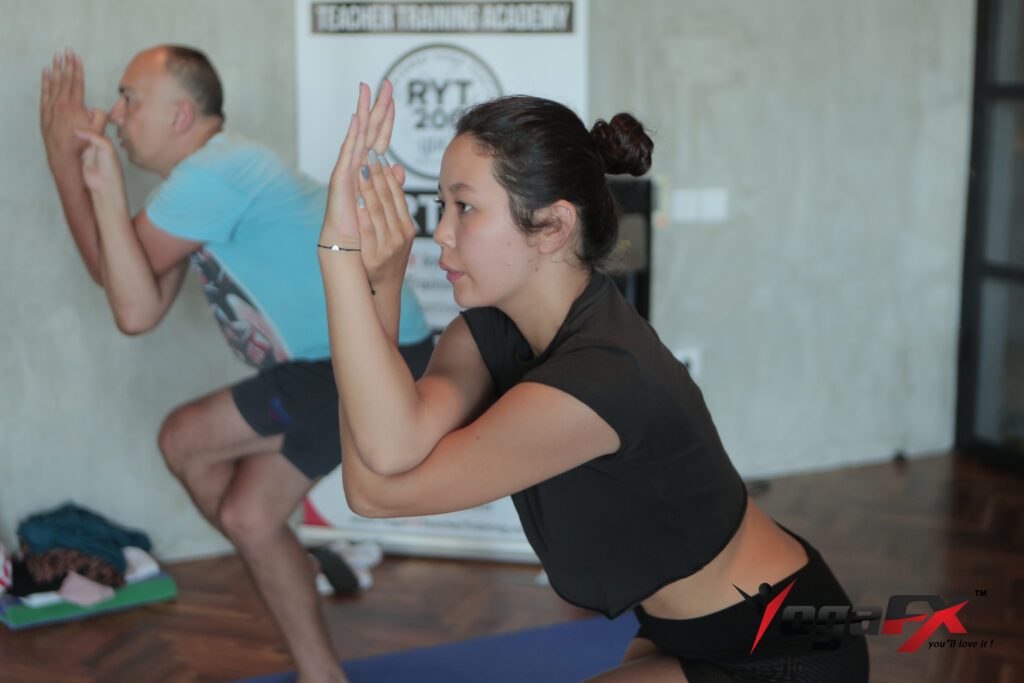
The 30-day progression in bikram yoga 90 minutes follows a consistent pattern: the first week is heat adaptation, the second week brings sensory shift, weeks three and four deliver measurable physical change.
In Ian Terry’s experience teaching Bikram yoga in Bali, the 30-day transformation follows a predictable pattern regardless of starting fitness level. Most students don’t know what to expect beyond the first class – here is what consistent 90-minute practice actually produces:
| Period | What Changes |
|---|---|
| Classes 1–5 | Heat acclimatisation. Dizziness, fatigue, and frustration are normal. Your body is learning to regulate core temperature under exertion. This phase passes. |
| Classes 6–10 | Savasana becomes restorative rather than survival. Second sets feel possible. Sleep improves. Most students notice better hydration habits developing. |
| Classes 11–20 | Postures begin to open. Balance improves. Students who arrive dehydrated begin to understand the connection between pre-class hydration and class quality. |
| Classes 21–30 | Measurable flexibility gains. Deadlift-pattern strength increases are detectable (consistent with the Tracy & Hart research). The sequence feels familiar – not easy, familiar. |
5 Mistakes Beginners Make in Their First Bikram Yoga 90 Minutes Class
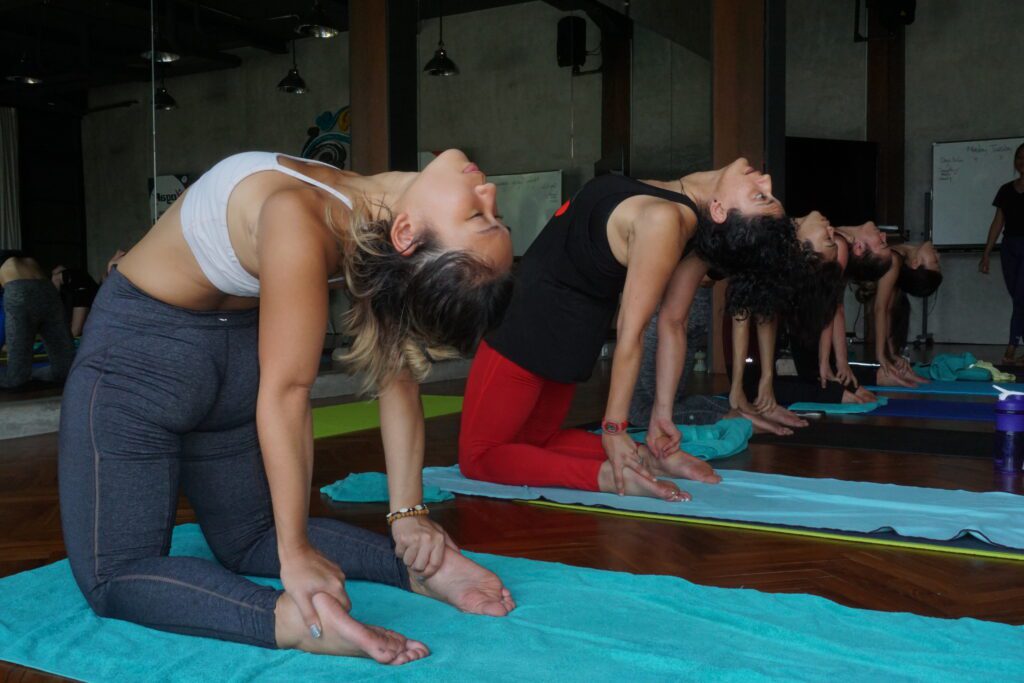
1. Arriving dehydrated. Most dizziness in the first bikram yoga 90 minutes class is not caused by the heat. It is caused by insufficient hydration before entering the room. Drink 500 to 700ml of water in the 2 hours before class.
2. Drinking water during poses. Sip water only between postures, not during holds. Drinking mid-pose disrupts breathing rhythm and breaks the compression-release cycle of the posture.
3. Leaving the room. When the heat feels overwhelming, lie down in Savasana. Leaving the room resets your heat acclimatization entirely and eliminates the therapeutic benefit of staying present in the heat.
4. Treating the second set as optional. The second set is where physiological change happens. The first set is diagnostic and reveals what is tight, weak, or limited. The second set is where you apply that information.
5. Watching other students. The mirrors in a bikram yoga class exist for self-alignment, not comparison. Every body responds to the heat and sequence differently. Your practice is your own.
How to Prepare for a Bikram Yoga 90 Minutes Class
Before class:
- Drink 500 to 700ml of water 2 hours before class
- Eat a light meal 2 to 3 hours before, such as a banana, rice, or toast
- Avoid heavy meals, dairy, or high-fat foods within 3 hours of class
- Bring a large towel as a standard yoga mat becomes slippery from sweat
During class:
- Sip water only between poses, not during holds
- If overwhelmed, lie in Savasana and do not leave the room
- Focus on your own reflection in the mirror for alignment feedback
- Save energy for the second set as it is always the more important one
After class:
- Rehydrate with electrolytes, not just plain water
- Eat within 30 to 60 minutes to replenish glycogen
- Mild fatigue for the first week is normal heat adaptation, not overtraining
Bikram Yoga 90 Minutes in Bali: Why Location Changes Everything
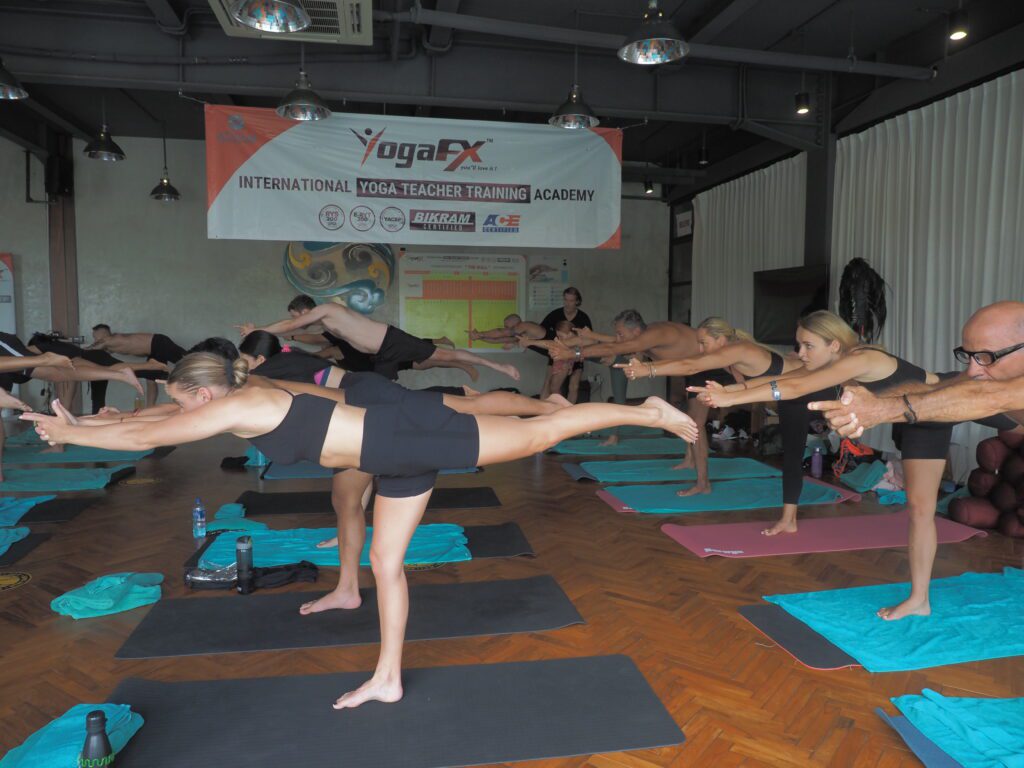
Practicing bikram yoga 90 minutes in Bali offers a specific physiological advantage.
Bali’s ambient temperature and humidity allow the body to begin acclimating to heat before you even enter the yoga room. First-time students in Bali consistently report easier heat adaptation compared to students beginning practice in cooler climates.
Hot yoga classes in Bali are available across Seminyak, Canggu, Kerobokan, and Ubud, with drop-in and monthly membership options at every level.
For students who want to go further, Bali is one of the world’s primary destinations for certified Bikram yoga teacher training. You can start with a single yoga class in Bali, build a consistent practice over several weeks, and transition directly into a Yoga Alliance RYT 200 certified teacher training program, earning an internationally recognized certification without changing location.
This path of practice, immersion, and certification is increasingly popular among students and young professionals who want to combine a meaningful travel experience with a professional credential usable anywhere in the world.
If the 90-minute Bikram yoga practice has inspired you to share this discipline with others, explore our Bikram Yoga Teacher Training programme in Bali.
FAQ
What are all 26 postures in the Bikram yoga 90-minute routine?
The 26 postures are: (1) Standing Deep Breathing, (2) Half Moon, (3) Hands to Feet, (4) Awkward Pose, (5) Eagle, (6) Standing Head to Knee, (7) Standing Bow, (8) Balancing Stick, (9) Standing Separate Leg Stretching, (10) Triangle, (11) Tree, (12) Toe Stand – then floor: (13) Wind-Relieving, (14) Sit-Up, (15) Cobra, (16) Locust, (17) Full Locust, (18) Bow, (19) Fixed Firm, (20) Half Tortoise, (21) Camel, (22) Rabbit, (23) Head to Knee Stretching, (24) Spine Twisting, (25) Blowing in Firm. Plus 2 breathing exercises: Pranayama (opening) and Kapalbhati (closing).
Why is the Bikram yoga class exactly 90 minutes?
The 90-minute duration allows every posture to be performed twice (both sets), hold times to be maintained as designed, and the floor series to operate at full therapeutic depth after the standing series has built sufficient core temperature. Shortening the class requires modifying the double-set structure and hold times – both of which are the primary mechanisms of the practice.
Is Bikram yoga 90 minutes suitable for beginners?
Yes. The fixed sequence and scripted instruction mean you are guided through every posture precisely. No prior yoga experience is required. The only preparation needed is adequate hydration before class. YogaFX Bali welcomes absolute beginners – if the heat becomes too much, lie down in Savasana. That is always the correct response.
How hot is the room during the 90-minute Bikram class?
A standard Bikram yoga class is practiced at 40°C (105°F) with 40% humidity. At YogaFX Bali, this temperature is achieved through Bali’s natural tropical climate – not electric heaters. The natural humidity creates a physiologically different environment from dry, electrically heated rooms found in most studios outside tropical countries.
How many calories does the 90-minute Bikram yoga routine burn?
A Colorado State University study measuring actual metabolic rate found women burn approximately 330 calories and men burn approximately 460 calories in a 90-minute session. Studios claiming 1,000 calories are using heart-rate-based estimates inflated by heat response rather than actual metabolic measurement.
Can I practice Bikram yoga 90 minutes every day?
Yes – the 30-day challenge is a common practice among serious students. Daily 90-minute sessions are safe for healthy adults provided adequate hydration and nutrition are maintained. The body adapts progressively: most students notice heat acclimatisation within 5–10 classes, and physical benefits compound with consistency.