
Is Bikram yoga healthy? For most healthy adults who build up gradually, a Bikram class in Bali looks like a reasonable, low-impact way to exercise. The research is not as strong as the marketing. The heat also carries real risks for some people. Here is what the evidence says and what a real class feels like.

Medical note: this article is general information from a yoga studio, not medical advice. Please consult a healthcare professional before you start hot yoga. That matters most if you are pregnant, have a heart condition or asthma, or take regular medication.
Is Bikram yoga healthy? The Short Answer in Plain English
The honest answer to the question “is Bikram yoga healthy” is “probably yes for many people, with conditions”. A 2025 systematic review of hot yoga research found signs of better flexibility, balance and bone mineral density over time. Results for mood were promising but inconclusive. The authors also warned that case reports describe ill-health after hot yoga, so caution is advised.
At YogaFX, our studio is in Seminyak, and we teach the 26&2 method in Bali’s natural tropical heat. Mr. Ian Terry, Founder and Lead Instructor (E-RYT 500, with 12,000+ teaching hours), leads the classes. That means we see every week what the research can only describe in averages. Some students feel great after one class. Others need three or four visits before the room stops feeling like an obstacle.
- What helps: a steady routine, plenty of water, and permission to rest during the class.
- What hurts: arriving dehydrated, forcing depth in a stretch, and ignoring dizziness.
- What nobody can promise: that Bikram is better for you than any other kind of yoga.
Is Bikram Yoga Healthy in Bali Heat? What a Real Class Does to Your Body
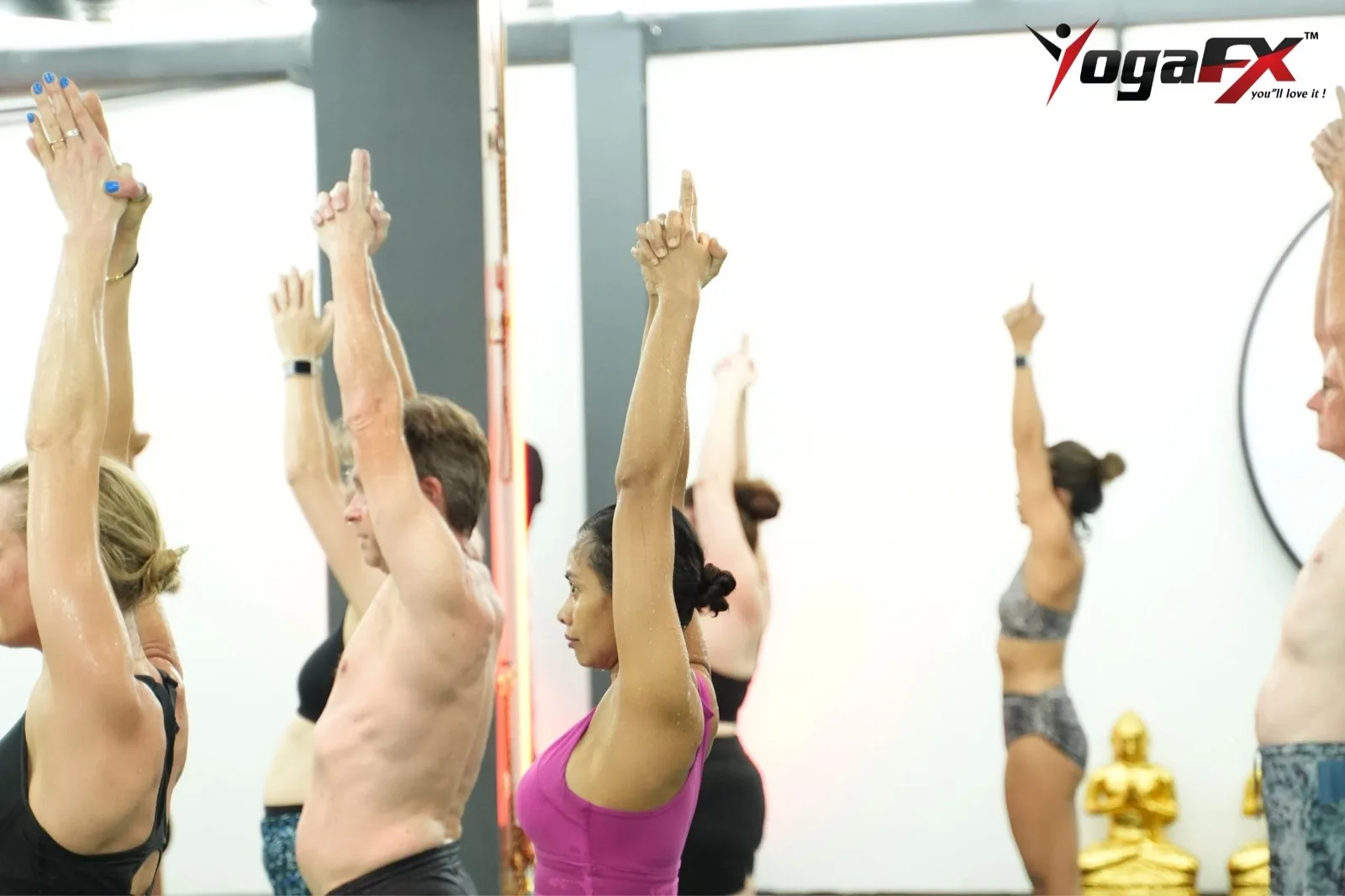
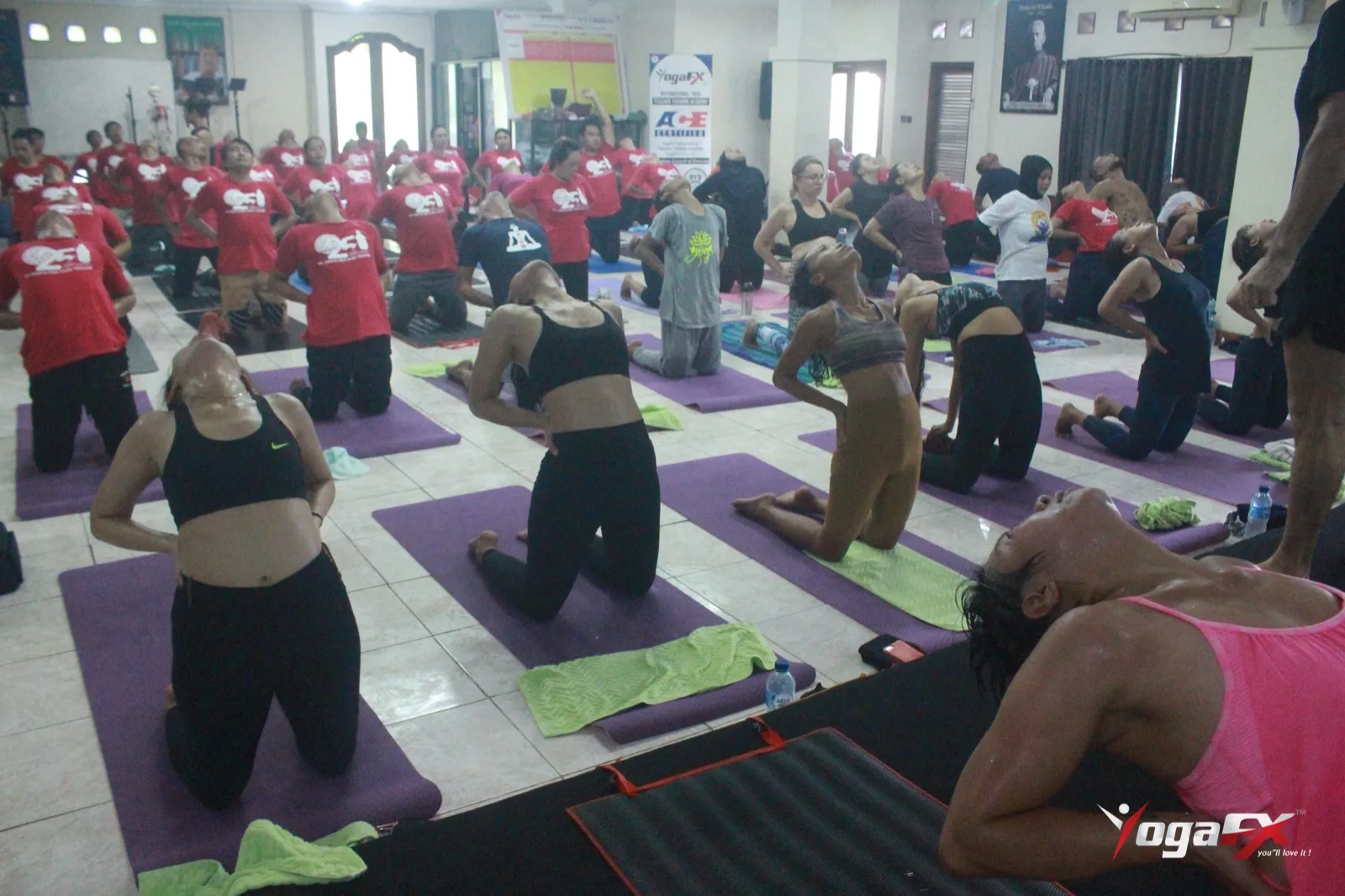
So, is Bikram yoga healthy when the room is this warm? It depends on your body and your preparation. A standard class lasts 90 minutes. The room sits at about 40 degrees Celsius with roughly 40% humidity. In Bali that warmth comes from the tropical climate, not from electric heaters. The class follows a fixed sequence of 26 postures and two breathing exercises. A scripted dialogue leads it, with no demonstration and no music.
Here is the physical story from the first minute to the last. It is based on what exercise researchers have measured in hot yoga studies, so it is not specific to our room:
- Core temperature and pulse rise. The 2025 review found that a hot session raises body temperature and heart rate. The comparison was with the same yoga in a normal room.
- Energy use does not jump. The same review reported that the energetic demand was not higher than in non-heated yoga, so a class is not a shortcut to burning calories.
- Flexibility improves with repetition. Studies that followed people for weeks suggest gains in flexibility and balance, which matches what we see on the mat.
- Sweat is heavy. You lose fluid quickly, which is why hydration before and after matters more than during, and it’s the first thing we tell newcomers.
The table below sets the main questions side by side. It shows what research says and what we see in a class at our Seminyak studio.
| Health question | What the research says | What we see in a Bali class |
|---|---|---|
| Heart rate and body temperature | Both rise during a hot class, more than in non-heated yoga | Students feel the pulse climb early in class |
| Flexibility and balance | Chronic practice appeared to improve both, with no effect sizes reported | Many beginners notice they reach further after a few weeks |
| Bone mineral density | Appeared to improve in some studies, evidence still limited | Not something a student can feel, so we make no promises |
| Mood and depression | Promising but inconclusive overall; one 8-week trial was clearly positive | Some students tell us they feel calmer after class |
| Weight loss | Energy use is not higher than in non-heated yoga | Water loss shows on the scale, but it comes back when you drink |
| Safety | Case reports of ill-health, so caution is advised | Dizziness is a common issue, and resting is always allowed |
Is Bikram Yoga Healthy? What the Research Shows
The strongest recent summary comes from Willmott and colleagues (2025), published in the journal Sports Medicine – Open. The team reviewed 43 studies with 942 participants, and about three quarters of the practice studied was Bikram yoga. Their conclusions are measured, which is why we quote them closely.
- Hot yoga raises body temperature and heart rate, but not the energy cost of the session.
- Regular practice appeared to bring functional gains, including flexibility, balance and bone mineral density.
- Findings on mood and mental health were promising but inconclusive.
- Kidney function and sleep quality were not negatively affected in the studies that measured them.
- Claims that hot yoga beats other forms of yoga are, in the authors’ words, unsubstantiated. They also noted that some of the literature lacks rigorous designs.
That last point matters. If anyone says Bikram beats every other style, the research does not support that. What it supports is smaller and more honest: a heated class is a reasonable way to practise for many people, as long as they respect the heat.
The depression trial from Massachusetts General Hospital
The best-known single study is an eight-week randomised trial. Maren Nyer at Massachusetts General Hospital and Harvard Medical School led it, and the Journal of Clinical Psychiatry published it. According to the Harvard Gazette report on the Massachusetts General Hospital trial, 59.3% of people in the yoga group had a reduction in depressive symptoms of 50% or more, compared with 6.3% of the waitlist group. Classes lasted 90 minutes. The yoga group averaged about ten classes over the eight weeks.
There are limits. The trial was small. The researchers could not separate the effect of the heat from the effect of the yoga. They said further studies are needed to compare heated and non-heated yoga. The report also noted no serious adverse effects in the trial. Please read this as encouraging, not as treatment advice, and speak to a doctor if you are struggling with depression.
Bikram yoga and health: five numbers worth knowing
The 2025 hot yoga systematic review pooled 43 studies.
About 76% of them were women.
Yoga group in the 8-week MGH trial, against 6.3% on the waitlist.
The standard length of a Bikram class at our studio.
Natural tropical heat at our Seminyak studio.
What Students Say After a Real Class
Research gives averages, and students give stories. Two reviews from our YouTube channel, which we pulled from our own review library, show the range of reactions better than any statistic.
A trainee in our 2026 YouTube review said: “For the first time in my life I cried in a Bikram class.” The trainee thanked the teacher for pushing and said the group had danced and cried a lot together. That is not a measured health outcome, but it is a common one: a hot class brings strong feelings to the surface.
A student in our 2023 graduation video put it differently: “I couldn’t even touch my toes. I had no flexibility.” The student tried the class as a challenge, found it a big one, and called the experience important. You can watch that clip below.
Reviews are individual experiences. They cannot answer the question “is Bikram yoga healthy” for everyone, and they are not proof of a health effect. The first quote is from a short video review, the second from a graduation clip, and both are lightly shortened. Neither student is quoted as giving medical advice.
Common Problems in a Hot Class and What to Do About Them
Most people who ask “is Bikram yoga healthy” are really asking what might go wrong. In our experience, the problems are predictable, so most are easy to manage once you know them.
Dizziness and nausea
Dizziness is a common complaint in the first week. It usually comes from arriving thirsty, standing up too fast, or holding a posture for too long. The fix is simple: stop, sit or lie down, breathe slowly and sip water. Nobody in our room will mind, and you won’t be the first. If symptoms keep getting worse, leave the room and tell the teacher.
Overstretching
Heat makes muscles feel looser, so it is easy to go deeper than your joints are ready for. Cleveland Clinic warns that the warmth can tempt people to take stretches too far before the body is ready. Work at about 70% of what you could do, especially in forward bends and backbends, and let depth arrive over weeks.
Breathing trouble
A hot, humid room can make breathing feel heavier, which is one reason people with asthma are told to be careful. If you cannot take a deep breath in, return to a stable position or step out until you feel better.
Feeling emotional
Strong feelings are common and not a health problem on their own. A trainee in our 2026 YouTube review cried more than once, and described the experience as a journey. If emotions feel overwhelming rather than releasing, though, speak to a professional you trust.
Who Should Be Careful Before Trying Bikram Yoga
Another way to ask “is Bikram yoga healthy” is to ask for whom. Heat changes the maths on safety. The Cleveland Clinic says hot yoga is not suggested for people who are pregnant or have a heart condition. It notes that heat can aggravate asthma. It lists dehydration, dizziness, lightheadedness, trouble breathing and a higher risk of injury as the main downsides. Its advice is to ease in.
The Mayo Clinic describes the warning signs of heat exhaustion: heavy sweating, faintness, dizziness, fatigue, a weak rapid pulse, muscle cramps, nausea and headache. Without prompt treatment it can lead to heatstroke, which is life-threatening. It also notes that some medicines affect how your body copes with heat. These include some drugs for high blood pressure and heart conditions.
Speak to a doctor first if any of these apply to you:
- You are pregnant, or trying to conceive.
- You have a heart condition, high or low blood pressure, or asthma.
- You take medication that affects hydration or heat response, such as diuretics or beta blockers.
- You have had heat illness before.
- You are recovering from illness or an injury.
If your blood pressure is a concern, ask your doctor what to check before a class, because heat and hydration both affect it.
How to Practise Safely in Bali Heat
Is Bikram yoga healthy if you rush in? Less so. Bali heat is humid, and your body needs time to adjust. Mayo Clinic notes that it can take several weeks for the body to adjust to hot weather. Visitors who fly in and go straight to a 90-minute class tend to feel it most.
- Drink before you arrive. Start hydrating earlier in the day, and see our hot yoga hydration guide for water and electrolytes.
- Give yourself a ramp. Plan your first few classes as a slow start, as in our heat acclimatisation plan.
- Rest when you need to. Stand or sit at the back for any posture, because stopping early is the right call.
- Know the dizziness plan. If you feel faint, read what to do when you feel dizzy in hot yoga, then sit down and sip water.
- Skip the class on bad days. If you are unwell, dehydrated or hungover, wait a day.
Is Bikram yoga healthy for you in practice? These habits decide it, more than any posture does. They also explain why we say yes to first-timers and no to heroics.
Is Bikram Yoga Healthy for You? A Simple Way to Decide
Ask yourself three questions before you decide on your own answer to is Bikram yoga healthy for your body. Do I have a medical reason to avoid heat? Can I commit to a few classes so my body adjusts? Will I stop when my body says stop? If the answers are no, yes and yes, a trial class is a sensible next step.
Our broader guide, is hot yoga good for you, covers the wider hot yoga evidence. If you want to feel the room before you commit to anything, the Free 1-Day Guest Pass covers your first class at the Seminyak studio.
Try a first class. The studio is at Jl. Pangkungsari Gg Jepun No.888, Kuta Utara, Seminyak, Badung, Bali 80361, and it is open 06:00-22:00 daily. Ask for your Free 1-Day Guest Pass here and tell us about any health conditions so the teacher can plan around them.
Whatever you decide, remember that the question “is Bikram yoga healthy” has no single answer. Treat the research as a guide and your own body as the final judge. A good teacher will say the same, and we don’t mind if you take a week to think about it.
FAQ
Is Bikram yoga safe for beginners?
It can be, if you ease in. Arrive hydrated, stay near the back, rest whenever you feel dizzy, and skip postures that feel too deep. Cleveland Clinic advises easing into hot yoga, and the 2025 review urges caution because of case reports of ill-health. Check with a doctor first if you have any condition.
Is Bikram yoga safe during pregnancy?
Cleveland Clinic says hot yoga is not suggested for people who are pregnant. Heat is the main concern, and your doctor or midwife should guide any exercise decision. We would rather you wait, or choose a non-heated class, than guess. Please speak to your healthcare provider before attending any hot class.
Is Bikram yoga healthier than other types of yoga?
Not according to the evidence. The 2025 systematic review of 43 studies described claims that hot yoga gives greater health benefits than other forms of yoga as unsubstantiated. Bikram may suit you well, but it is one good option among many, so choose the style you will actually keep doing.
Can Bikram yoga help with weight loss?
Probably not by itself. The 2025 review reported that hot yoga raises heart rate and body temperature but not energy demand compared with non-heated yoga. Weight lost through sweat returns when you rehydrate. A regular routine, sleep and food choices matter far more than the room temperature.
Do I need extreme heat to get the benefits?
We do not know yet. Researchers at Massachusetts General Hospital said further studies are needed to compare heated and non-heated yoga. They could not separate the effect of heat from the effect of the yoga. In Bali, our class uses natural tropical heat, around 40 degrees Celsius, rather than electric heaters.
Still have questions? Message Mr. Ian and the YogaFX team on WhatsApp and we will answer them personally.
 Mr. Ian Terry