
Does hot yoga improve VO2 max? Possibly, after several weeks, but the proof is thin. One small trial found a rise in aerobic fitness after 12 heated sessions, while a one-class study found no extra oxygen cost from the heat. For now, hot yoga VO2 max is promising, not proven.

We teach at our Seminyak studio, where the room runs at 40 degrees C and 40% humidity from natural tropical heat, not electric heaters. Mr. Ian Terry, our Founder and Lead Instructor (E-RYT 500, 12,000+ teaching hours), often hears this question from runners, cyclists and watch-wearers. So this guide reads the trials the way he teaches: slowly, with the sample size beside every claim.
Medical note: this article is general information, not medical advice. If you have a heart condition, high blood pressure, or take regular medication, consult a healthcare professional before you start hot yoga or test your fitness.
Hot Yoga VO2 Max: The Short Answer for Bali Students
Students who arrive in Bali often track their fitness with a watch. They ask about hot yoga VO2 max because they want to know whether a hot class can lift the ceiling of their fitness, or whether it only makes them sweat. The honest answer has two halves, so here are both.
- Over weeks, maybe. In a 2021 randomized trial, 22 adults did 12 heated classes. Their lab-measured VO2 max rose, but the gap between the heated and cooler groups was not significant.
- In one class, no. A 2020 crossover study of 16 experienced students found no difference in oxygen use between a 105 degrees F room and a 74 degrees F room.
- Over eight weeks, not always. A 2013 trial of heated 90-minute classes reported no change in maximal aerobic fitness.
That mix is why we call the evidence small and early. Does hot yoga improve VO2 max? The studies hint at a possible gain, yet none of them is big enough to promise it to you. Any hot yoga VO2 max claim without a sample size beside it deserves a raised eyebrow.
What VO2 Max Measures, and Why a Number Is Not the Goal
VO2 max is the most oxygen your body can use during hard exercise. Harvard Health describes it as a measure of how much oxygen you consume while you exercise, usually in millilitres per kilogram per minute. A higher value goes with better fitness and a lower risk of cardiovascular disease.
Labs measure it best. You wear a mask and a heart rate monitor while the effort climbs on a treadmill or bike, until you can’t go on. Harvard puts the whole test at 10 to 20 minutes. Your watch only estimates, so its score is a rough guide, not a lab result.
Harvard adds that age, sex, altitude and activity level all shape your VO2 max. Activity is the one you control most easily. It names vigorous aerobic exercise, including interval training, as a quick way to raise it. So hot yoga VO2 max claims belong beside your other training, not instead of it.
Hot Yoga VO2 Max in Three Trials: What Each One Found
Three studies sit behind most hot yoga VO2 max claims. Each used a different design, so we read them one at a time before we compare them. Keep that in mind whenever you see a bold hot yoga VO2 max headline online.
Trial 1: Four weeks of heated classes (2021)
A team led by Kelsey Bourbeau published a randomized trial in the International Journal of Yoga. Twenty-two adults with no yoga experience took part: 11 men and 11 women, aged 19 to 39. One group practised in a heated room at roughly 37 to 40 degrees C. The other practised at 18 to 22 degrees C.
Everyone watched the same modified Bikram-style video for 75 minutes, three days a week, over four weeks. The heated group’s VO2 max climbed from 3.22 to 3.46 litres per minute, a change the authors called significant. The cooler group went from 3.00 to 3.05, which was not. That works out to a gain of about 7% in the heat, by our own sums.
Two details keep the result honest. First, the paper found no difference between the groups, so it can’t say heat beat the cooler room. Second, a heat tolerance test afterwards showed no classic heat acclimation. The authors also name the small sample and the shortened sessions as limits.
Trial 2: One class, hot or cool (2020)
The second study looked at a single class. Researchers from Houston Methodist and Rice University, writing in the International Journal of Exercise Science, tested 16 experienced practitioners (14 women, 2 men, average age 40). Each did a one-hour Bikram sequence twice, once at 105 degrees F and once at 74 degrees F, in random order.
Mean and peak oxygen use, heart rate and energy use looked the same in both rooms. The authors wrote that heated yoga “does not significantly elevate aerobic energy cost.” Two other things did shift in the heat. Fat use was higher, and hip range grew more, by 6.6 degrees against 2.3.
Trial 3: Eight weeks of 90-minute classes (2013)
The third is a 2013 randomized trial in the Journal of Strength and Conditioning Research. Ten healthy young adults took 24 heated, humidified classes of 90 minutes over eight weeks, while 11 controls did not. The yoga group gained deadlift strength and flexibility, and lost a little body fat. Yet the abstract reports no change in handgrip strength, cardiovascular measures or maximal aerobic fitness.
Trial Findings at a Glance: Who, How Much, and What Changed
This table puts the hot yoga VO2 max trials side by side. Read the “who” column first, because the people studied are small groups, and none of them is a tourist stepping off a flight in Bali.
| Trial | Who and how much | What happened to VO2 max | Main caution |
|---|---|---|---|
| Bourbeau et al., 2021 | 22 beginners, 12 heated classes of 75 minutes over 4 weeks | Heated group rose from 3.22 to 3.46 L/min; cooler group did not change significantly | No significant gap between groups; small sample |
| Lambert et al., 2020 | 16 experienced practitioners, one 1-hour class in 105 degrees F and 74 degrees F | No difference in oxygen use between rooms | One class only; mostly women, average age 40 |
| Randomized trial, 2013 | 10 yoga and 11 control adults, 24 classes of 90 minutes over 8 weeks | No change in maximal aerobic fitness reported | Small groups; young, healthy adults |
The same numbers as quick cards
Why the Hot Yoga VO2 Max Evidence Is Still Thin
Three problems keep us from promising a gain. They apply to almost every small exercise trial, so they are worth learning once.
- Sample size. With 22, 16 or 21 people, one person who trains harder than the rest can move an average.
- Comparison groups. The 2021 trial saw a significant rise only inside the heated group. A rise inside one group is not the same as beating the other group.
- Class length and level. The 2021 sessions were shorter than a full class, and the 2020 sample was experienced practitioners, not beginners.
Because of this, we use careful words with students. We say “may”, we give the number of people studied, and we never promise a hot yoga VO2 max score. That habit also protects you from watch-based hype.
Does Hot Yoga Improve VO2 Max in Bali Natural Heat?
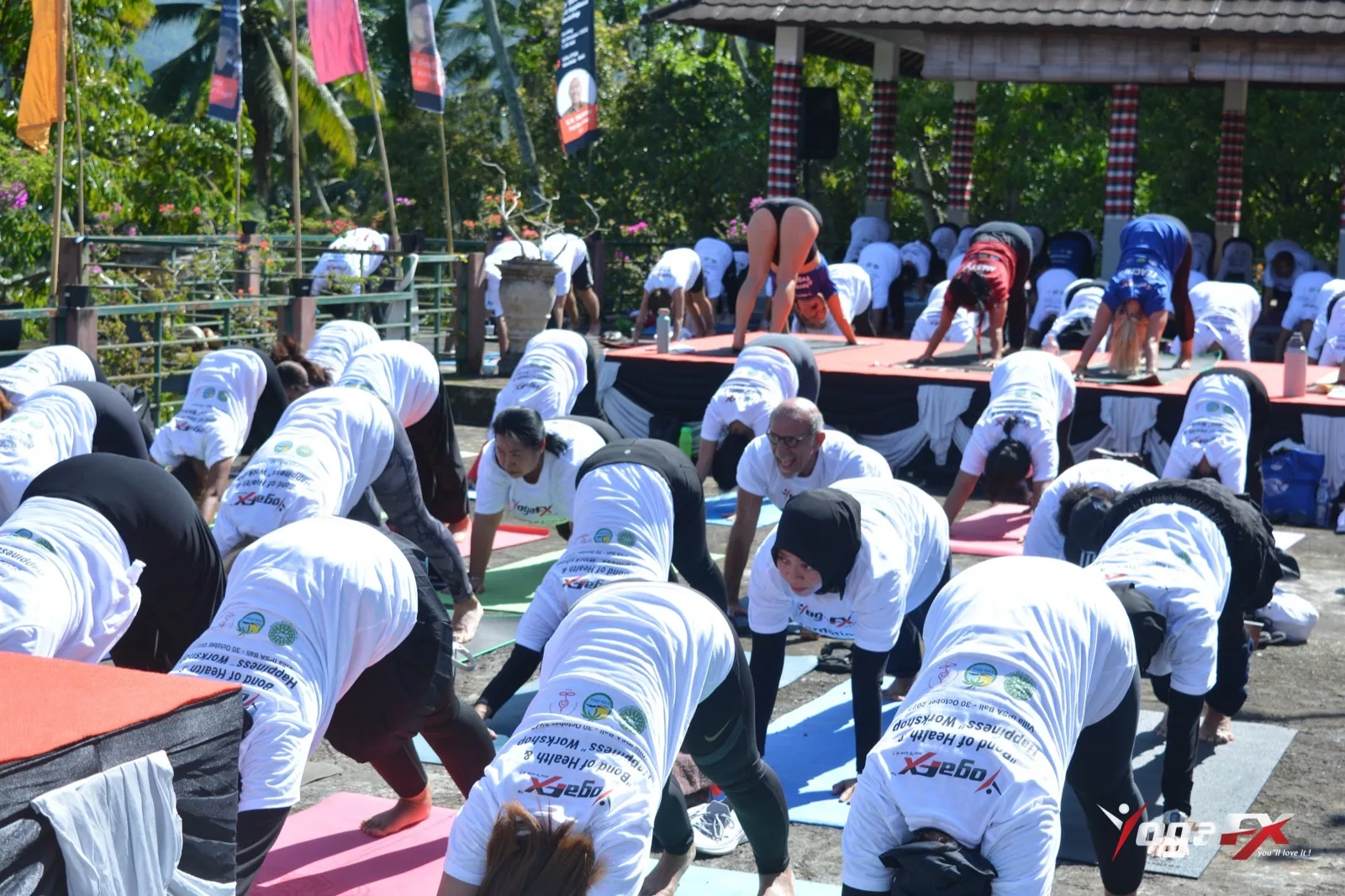
Here is the part no trial covers. The studies above used heat chambers or heated studios. None of them measured students in natural tropical heat, so no one can say whether Bali changes the result. We would be guessing, and we prefer to tell you that.
What we can say is practical. Our Seminyak room holds 40 degrees C and 40% humidity, close to the 2021 trial rooms. Even so, a class feels different on the day you land, sleep badly or spend the afternoon at the beach. Your effort that day won’t match anyone in a lab.
So take the hot yoga VO2 max research as a map, and your own training log as the ground. Our guide to heat acclimatization over three weeks in Bali shows how most visitors settle in, and our look at hot yoga heart rate in natural heat shows what the pulse does inside a class.
What a class asks of your lungs and legs
Our guide to whether hot yoga is a cardio workout covers heart rate zones in detail. In short, a class lifts your pulse into a moderate or hard zone, yet it asks less of your lungs and big muscles than a run. That fits the trials, so we pair classes with steady movement for students who chase a fitness score.
A 12-Class Plan to Track Your Own Fitness in Bali
We suggest that students stop asking “what does the study say” and start asking “what does my own record say”. This plan is our coaching habit, not a research protocol. It costs nothing, and it works with or without a watch.
| When | What to record | How to do it |
|---|---|---|
| Before class 1 | Resting pulse and a 1 to 10 effort score for a 10-minute walk | Count your pulse for 30 seconds on waking, then double it |
| Classes 1 to 4 | How you feel in the standing series and at the final breathing | Write two lines after each class: energy, thirst, and sleep |
| Class 8 | Resting pulse again and the same 10-minute walk score | Same time of day, same route, no coffee beforehand |
| Class 12 | Both checks once more, plus your watch estimate if you wear one | Compare with your first entry, not with another student |
If you want a firmer hot yoga VO2 max number, book a lab test through your doctor or a sports clinic. A watch score can drift with heat, sweat and strap fit, so treat it as a trend line only. And if a check ever brings on chest pain, dizziness or an uneven pulse, stop and speak to a doctor first.
- Keep the checks identical. Same time of day, same hydration, same route.
- Change one thing at a time. If you add running and classes together, you cannot say which one moved your numbers.
- Judge the trend, not the day. One bad score after a late night tells you very little.
What YogaFX Students Say About Sticking With It
A review cannot prove anything about hot yoga VO2 max. Still, students describe the same thing in plain words: the room asks a lot, and they come away steadier. That is the kind of habit that feeds any fitness number you later track.
“Really. Great time. I’ll miss you.”
A trainee in our YouTube review, 2018
Katy thanked the team for the time and space to develop herself and become even better.
Katy, in the video above, talks about the space to improve. A teacher who overstates a benefit loses a student’s trust, which is why we read research this carefully. For a teacher-training reading of the same trials, see this trial-by-trial review for teachers.
Try a Class and Start Your Own Record at YogaFX Bali
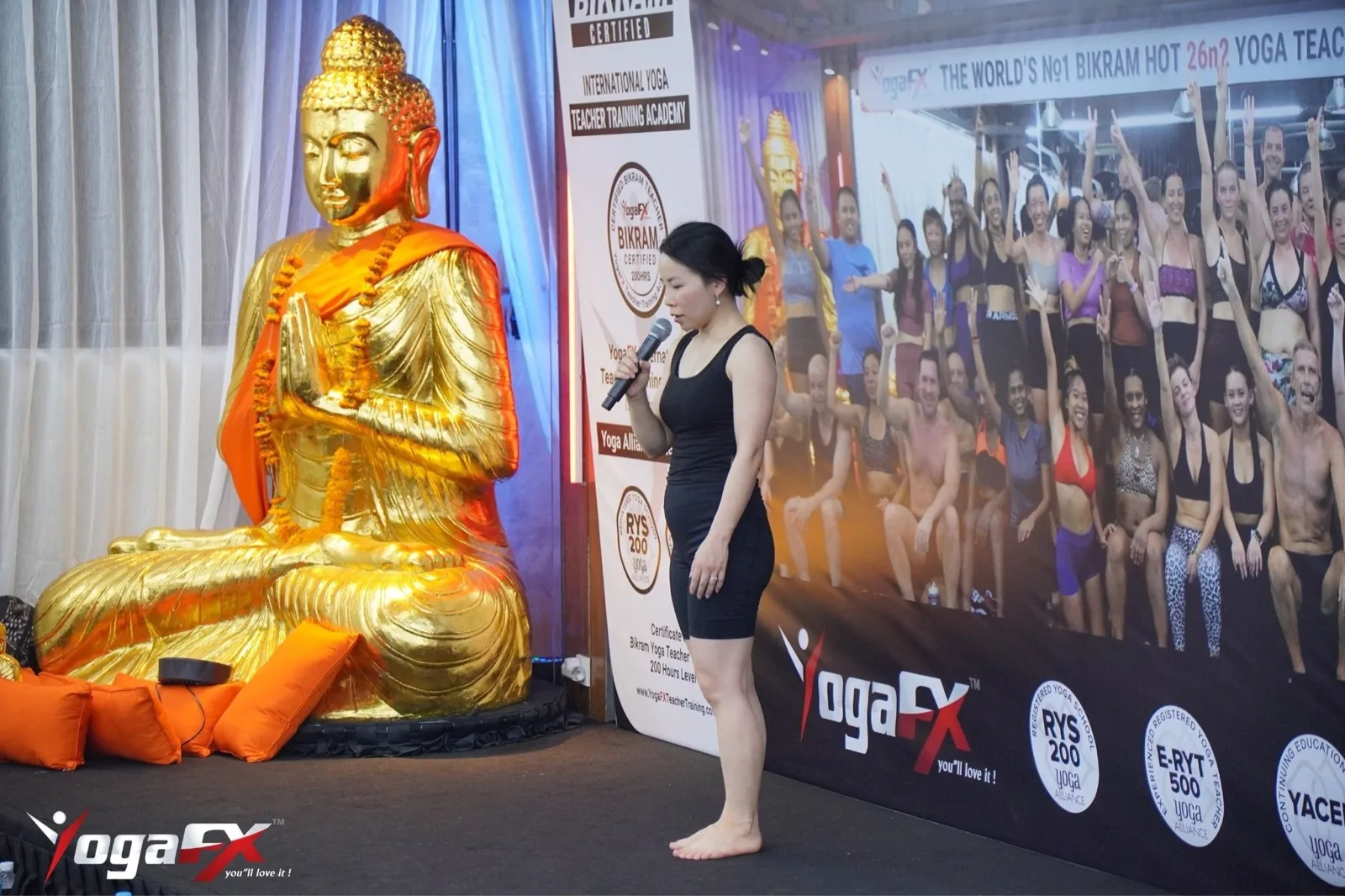
Reading about hot yoga VO2 max only goes so far, and one class tells you more than ten articles. A free class gives you a baseline, and it’s a gentle way to start. At YogaFX in Seminyak, the Free 1-Day Guest Pass gives you your first class free, so you can try the first check from the plan above.
- Where: Jl. Pangkungsari Gg Jepun No.888, Kuta Utara, Seminyak, Badung, Bali 80361.
- Hours: 06:00 to 22:00 every day.
- Class: 90 minutes, 40 degrees C, 40% humidity, natural tropical heat.
- Book: message us on WhatsApp and tell us about any heart or blood pressure concerns.
Our hot yoga and your health guide covers safety and research in one place, and hot yoga and blood pressure is worth reading first if you take medication.
Hot Yoga VO2 Max FAQ
Does yoga increase VO2 max?
It might, but the evidence is mixed. One 2021 trial saw VO2 max rise after 12 heated classes, while a 2013 trial of 24 heated classes reported no change in maximal aerobic fitness. Both studies were small, so treat yoga as a supplement to aerobic training, not a replacement.
Can heat affect VO2 max?
Heat changes how hard exercise feels, yet in a 2020 study of 16 practitioners, oxygen use in a 105 degrees F room matched a 74 degrees F room. Heat did change fat use and hip range. Whether heat raises VO2 max over weeks remains unproven.
Does hot yoga burn more calories than regular yoga?
In the 2020 crossover study, energy use in a 105 degrees F class did not differ significantly from the same class at 74 degrees F. Fat use was higher in the heat, though, at 0.09 against 0.05 grams per minute. One study of 16 people is not a final answer.
Can hot yoga replace cardio?
For most people who want a higher VO2 max, no. Harvard Health lists vigorous aerobic exercise and interval training as the main routes to raise it. A hot class lifts your pulse, but it is better seen as a partner to running, cycling or swimming than a swap.
How does VO2 max improve?
Harvard Health says activity level is the factor you control most easily, and vigorous aerobic exercise, including interval training, can raise it. Age, sex and altitude also play a part. If you want an exact number, a lab test takes about 10 to 20 minutes.
Still have questions? Message Mr. Ian and the YogaFX team on WhatsApp and we will answer them personally.
 Mr. Ian Terry