
Savasana benefits come down to recovery. After 90 minutes in tropical heat, lying still lets your breathing and heart rate settle, gives your mind a quiet minute and ends class on a calm note. The research on relaxation is promising but modest, so treat Savasana as a recovery habit, not a treatment.

This guide to savasana benefits comes from the practice room in Seminyak. Mr. Ian Terry, our Founder and Lead Instructor (E-RYT 500, more than 12,000 teaching hours), runs a scripted 90-minute class with no music and no demonstrations. That leaves the final rest as the one moment with nothing to do, and many first-timers rush it. So let’s look at the savasana benefits, what Savasana is for, what science can and can’t say, and how to rest well in the heat.
Health note: this article is general information, not medical advice. If you have a heart condition, blood pressure problems, are pregnant, or take medication that affects your heart rate or sweating, please consult a healthcare professional before practising in the heat.
What Are the Main Savasana Benefits After a Bali Class?
Savasana (also spelled Shavasana, and often called Corpse Pose or Dead Body Pose) means lying flat on your back, eyes closed, doing nothing. In our room it comes as short rests between floor postures and as the final rest at the end. Here are the benefits students describe most, and what is behind each one:
- Your breathing settles. After a hard posture your breath is loud and fast. Lying still gives it time to return to a slow, quiet rhythm through the nose.
- Your heart rate comes down. Mayo Clinic notes that the poses and the heat in hot yoga are designed to raise your heart rate, so a pause lets it ease before you stand up.
- Your mind gets a quiet minute. Ninety minutes of focus is tiring. A few minutes of stillness lets attention rest without effort.
- Your body cools gradually. You stop moving but you are still warm, so you can feel the heat leave in your own time instead of stepping straight into traffic.
- You learn to be still. Many students find lying quietly harder than any posture. That skill carries into the rest of the day.
Notice the wording of these savasana benefits: may help, lets, gives. Savasana is not a treatment, and no single study proves each of these benefits. We will separate what research supports from what students feel in the section on the evidence below.
Who gets the most from the final rest
Savasana benefits look a little different depending on who is lying on the mat. A traveller who landed two days ago may feel the rest as a welcome pause. A surfer with sore shoulders may notice how heavy the arms feel once they stop working. A desk worker who rarely sits in silence may find the quiet the hardest part of the class.
- First-timers: the rest teaches you that stopping is part of the class, not a sign of weakness.
- Regular students: the rest becomes a short reset you can notice improving over weeks.
- Busy minds: a quiet room with no music gives attention somewhere simple to land.
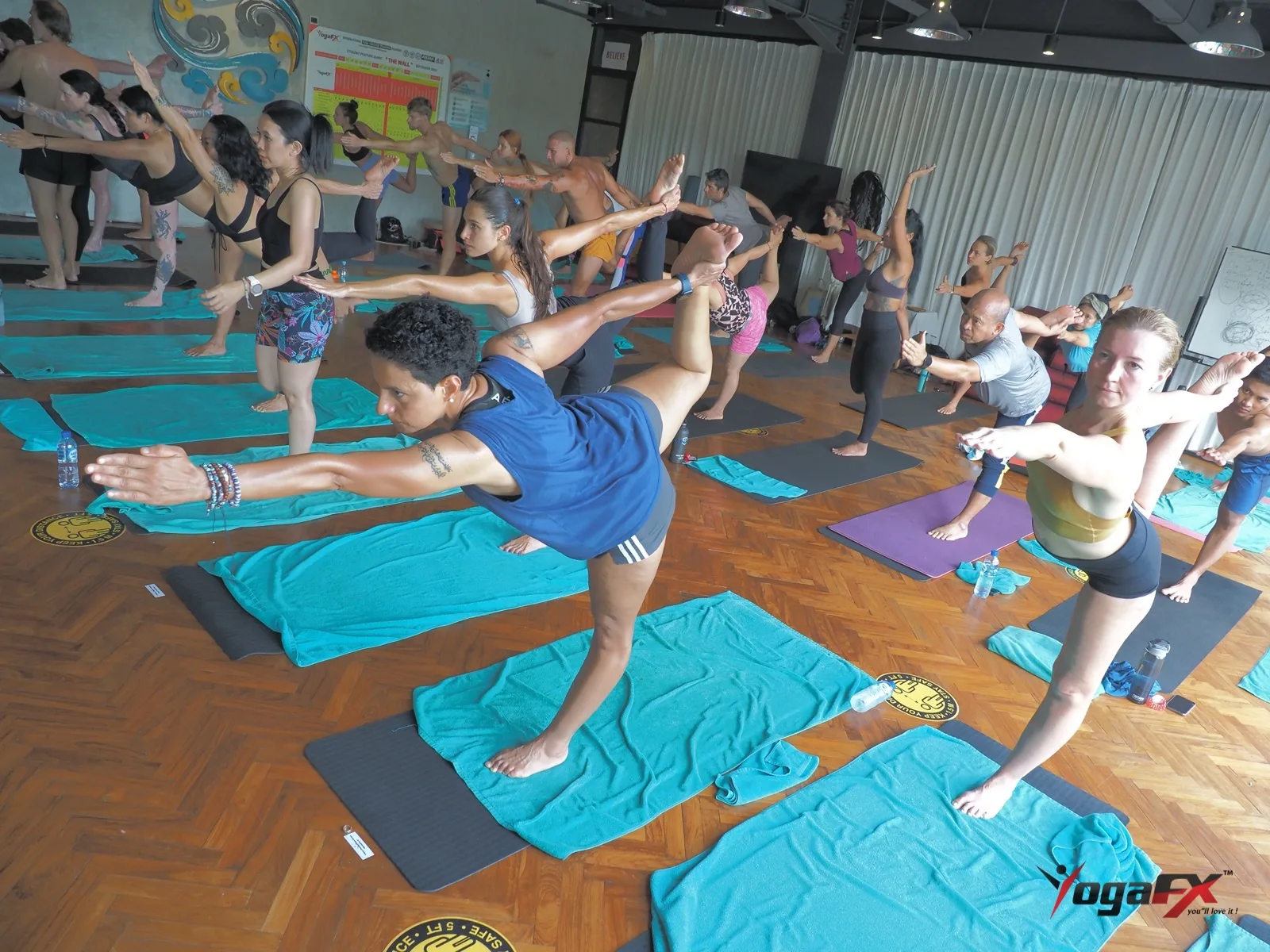
Savasana benefits in a Bali class at a glance
This article is part of our complete Bikram yoga guide, which covers the 26 postures, the breathing, the 90-minute class and what to wear.
What Happens in Your Body During the Final Rest in Heat?
Here is the honest picture of savasana benefits in a hot room. In a heated room your body is doing two jobs at once: working through the postures and keeping itself cool. Cleveland Clinic notes that hotter temperatures plus extra exertion make your body work harder and raise your heart rate. When the last posture ends, that load does not vanish instantly.
Savasana is the bridge between effort and the rest of your day. The table below follows a typical rest from the last posture to standing up. It is a guide, because every body and every day is different.
| Moment | What you may notice | What may be going on | What helps |
|---|---|---|---|
| Last posture ends | Loud breath, pounding heartbeat | Body is still working hard and warm | Lie down and let the breath move back to the nose |
| First minute of rest | Sweat, heavy arms and legs | Body is still cooling down | Stay still and resist the urge to adjust |
| Middle of the rest | Breath slows, thoughts quieten | The relaxation response: slower breathing, lower blood pressure, reduced heart rate | Soften your jaw, eyes and hands |
| End of the rest | Drifting, or sharply alert | Body and mind are settling | Roll to one side and take a breath |
| Sitting, then standing | Light-headed for some people | A fast change of position after lying down | Sit first, rise slowly and tell your teacher if you feel dizzy |
Look at the third row. That is where the savasana benefits most people mean by “relaxing” live, and it is also the row students skip when they sit up early. If you want the full picture of how your pulse behaves in a Bali class, our Bali hot yoga heart rate notes go deeper.
What Does the Science Say About Savasana Benefits?
What the research covers
Let’s be clear about the limits first. We could not find research that studies Savasana on its own in a hot room. What exists is research on relaxation techniques in general, and on heated yoga as a whole. So we describe the evidence for savasana benefits as what it is.
The US National Center for Complementary and Integrative Health (NCCIH) describes the relaxation response as characterised by slower breathing, lower blood pressure and a reduced heart rate. It reports preliminary evidence that diaphragmatic breathing exercises may help reduce stress. It also reports that slow breathing exercises led to a modest reduction in blood pressure in a 2019 review of 17 studies.
The same page says relaxation techniques are generally considered safe for healthy people. Some people report negative experiences, though, such as increased anxiety or intrusive thoughts.
What it does not cover
That last point matters. If lying still brings up restless or anxious feelings, you are not doing it wrong. Open your eyes, feel the floor under you and tell your teacher after class.
- What the evidence supports: slow breathing and relaxation techniques may help with stress and may lower blood pressure a little (NCCIH).
- What it does not prove: that a few minutes of Savasana treats anxiety, insomnia or any condition.
- What heated yoga adds: a 2023 randomised trial from Massachusetts General Hospital (Nyer et al., Journal of Clinical Psychiatry) studied heated yoga and depression symptoms, and a 2022 study (Hui et al.) looked at hot yoga and state anxiety. Both are about the class as a whole, not about Savasana alone.
Safety first
On safety, Mayo Clinic Sports Medicine says to stop if you feel dizzy, lightheaded or sick in any way. It also advises checking with your doctor before trying hot yoga, especially with health concerns or pregnancy, and it suggests skipping hot yoga with heart disease, dehydration problems, heat intolerance or a history of heat-related illness.
How Seminyak Teachers Guide the Cooling Down
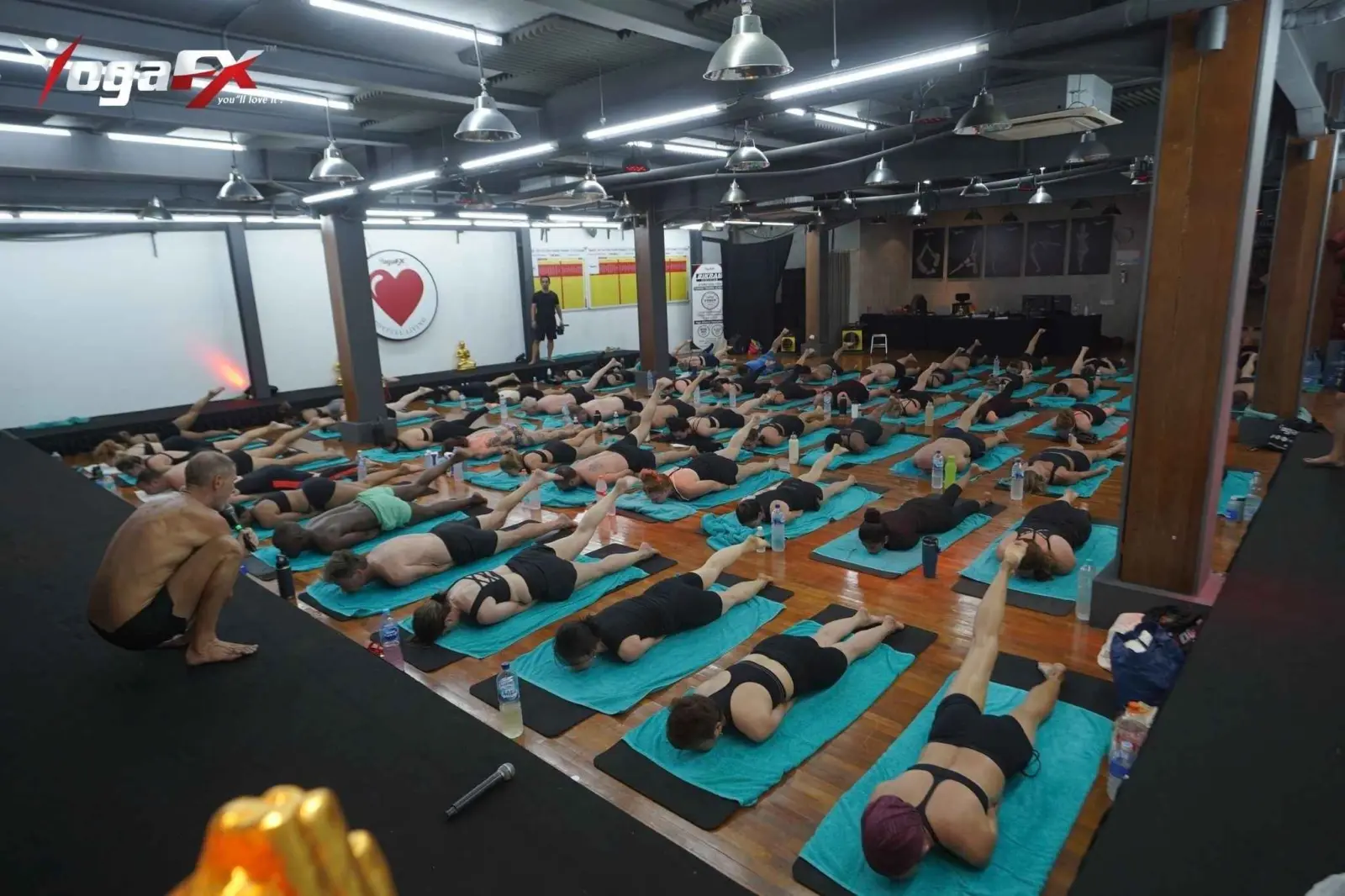
At YogaFX in Seminyak the class follows a scripted dialogue from the first breath to the last, which means the teacher’s voice sets the pace of the rest as well. There is no music to carry you, so the room is quiet. That quiet is part of what makes the final rest a practice rather than just a nap.
Here is what our teachers ask of you, in plain words:
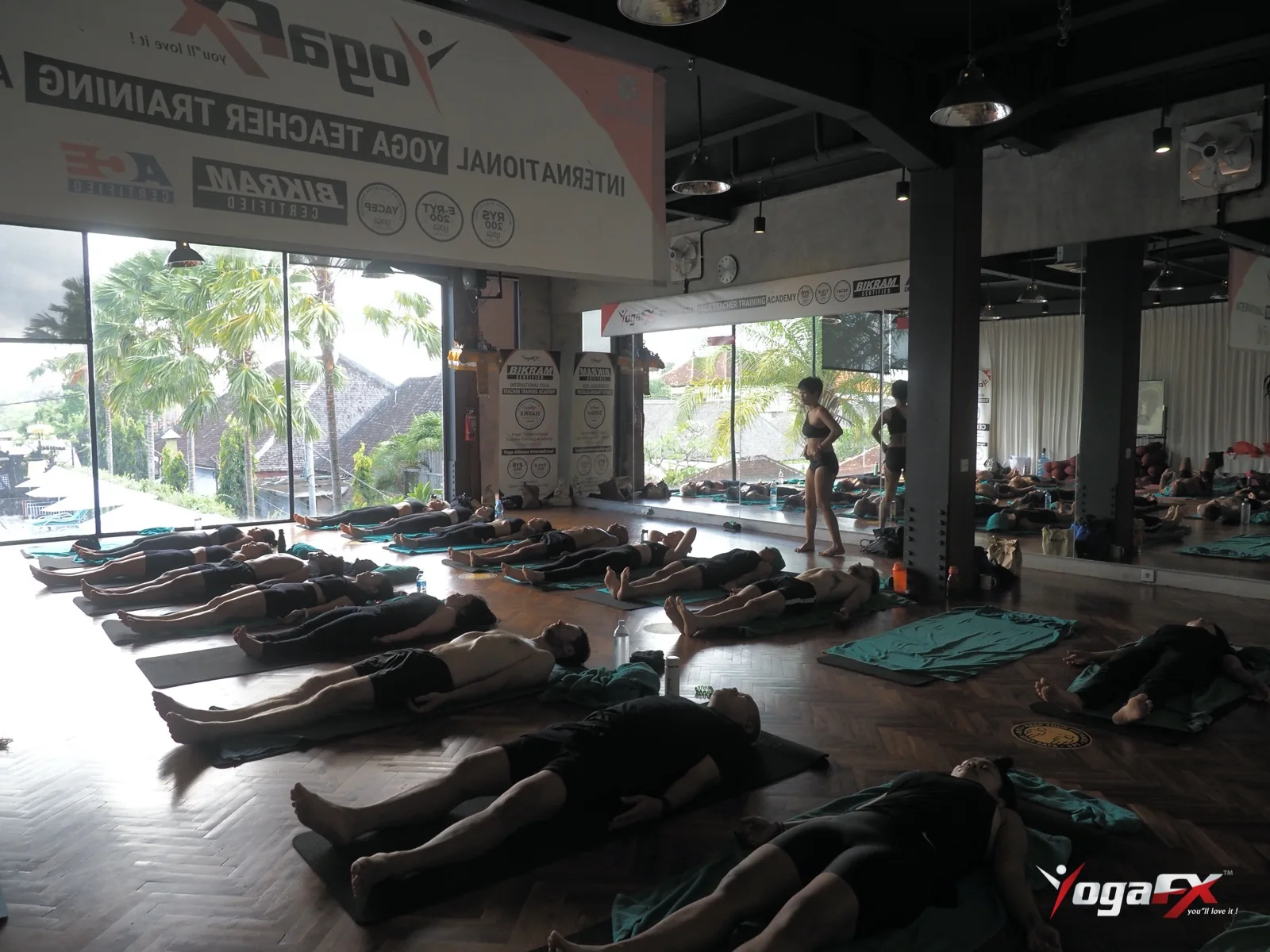
- Lie flat and stay still. Arms rest by your sides, palms up, feet falling open.
- Let go of the towel work. Wipe once if you must, then leave your face and hands alone.
- Breathe through your nose. If your breath is still fast, give it a few cycles to slow down.
- Stay in the room. If you feel dizzy or sick, tell the teacher right away. Sit up slowly rather than leaving mid-way.
Bali heat adds one more point to the savasana benefits story. Because the air is already warm and humid, your body does not get a cool reset the way it would in a cold climate. That is one reason we encourage students to keep drinking through the day. Our guide to hot yoga hydration in Bali shows how, and the article on feeling tired after hot yoga explains what the next 24 hours look like.
How to Get the Savasana Benefits in Heat, Step by Step
- Lie down slowly and let your whole back touch the floor.
- Let your feet fall open and place your arms a little away from your body, palms up.
- Close your eyes and soften your forehead, jaw and tongue.
- Breathe through your nose and let the exhale be slightly longer than the inhale, without forcing it.
- Scan from feet to head, letting each part feel heavy. If your mind wanders, bring it back to the breath.
- Come out slowly: deepen the breath, move your fingers and toes, roll to one side, then sit up before you stand.
Most mistakes that cost you the savasana benefits are small ones. This table shows the usual ones and the fix.
| Common mistake | Why it happens | Simple fix |
|---|---|---|
| Sitting up early | The class feels over, or the room feels warm | Stay for the full rest and treat it as part of the class |
| Fidgeting and wiping | Sweat tickles and the mind wants a job | Wipe once, then give the body one clear task: breathe |
| Falling asleep | You are tired from heat and effort | Keep your breathing steady and your attention on the breath |
| Jumping up fast | Rest ends and everyone moves | Roll to your side, sit, then stand, and stop if dizzy |
| Skipping rest when dizzy | Fear of falling behind | Rest at once and tell the teacher, as Mayo Clinic advises stopping |
If you want to practise the breathing before you ever step into the room, our piece on the two breathing exercises in a Bali hot room is a good place to start.
What Students Say About the Room We Rest In
None of these reviews is about savasana benefits alone. They describe the whole experience, but they show what students value in the quiet, supported room where the final rest happens.
“I loved the training. The training was clear, structured, synthesized.”
Cristina, Yoga Alliance review, 2024
A trainee in our 2026 YouTube review said the course “turned out to be the best training I’ve ever had in my life.” Another trainee, in a 2023 YouTube review, called it a “life transformation for me.”
Across Google, Yoga Alliance and YouTube, YogaFX students have left more than 550 reviews.
When Savasana Is Not Enough: Dizziness and Other Warning Signs
Rest is the right first response to feeling off, but it is not the answer to everything. Cleveland Clinic advises watching for dizziness, lightheadedness and not being able to take a deep breath in, and says to return to a stable position or leave the studio until you feel better. Our article on what to do if you feel dizzy in hot yoga covers the steps in the room.
- Stop and rest at once if you feel dizzy, sick or faint, and tell your teacher.
- Do not push through a pounding heartbeat, chest discomfort or breathlessness. Seek medical advice.
- Check with a doctor first if you are pregnant, have heart disease or take medication that affects your heart or sweating.
For the bigger picture on health and safety, see our Hot Yoga Health Guide, where every health article is grouped together.
Try Savasana in Seminyak and Feel the Benefits
The best way to understand savasana benefits is to feel them after a real class. YogaFX teaches 90-minute classes in natural tropical heat at its studio at Jl. Pangkungsari Gg Jepun No.888, Kuta Utara, Seminyak, Badung, Bali 80361, and the studio is open 06:00 to 22:00 daily. Mr. Ian Terry founded YogaFX in 2017.
Your first class is free with the Free 1-Day Guest Pass. Arrive hydrated, bring a towel and a bottle, tell the teacher it is your first visit and stay for the whole rest. If you are brand new to the method, our guide to what your first class in Bali is like walks you through the room.
FAQ
How long should Savasana be?
In a hot class your teacher guides the final rest, so you follow the room rather than a stopwatch. At home, many people rest for a few minutes after practice. Longer is fine if you stay comfortable. Rise slowly, and tell your teacher if you feel dizzy at any point.
Why is Savasana important after hot yoga?
After a hot class your heart rate is raised and your body is still cooling. Savasana gives breathing and pulse time to settle before you stand, and gives your mind a quiet pause. Sitting up early skips that bridge, which is why we ask students to stay for the whole rest.
Does Savasana help with anxiety?
It may help you feel calmer, but it is not a treatment. The NIH reports preliminary evidence that diaphragmatic breathing may help reduce stress, and we found no study of Savasana alone. If lying still makes you feel more anxious, open your eyes and tell your teacher. Seek medical advice for ongoing anxiety.
Is Savasana meditation or just a nap?
It can feel like either, but the aim is to stay relaxed and gently aware. Falling asleep is common after a hot class and is not a failure. If you drift off often, keep your attention on slow nose breathing and try an earlier meal and more water on class days.
Who should be careful with Savasana in a hot room?
Savasana itself is gentle, but the heat around it is not for everyone. Mayo Clinic advises checking with your doctor first if you have health concerns or are pregnant, and skipping hot yoga with heart disease, dehydration problems or heat intolerance. Stop and tell your teacher if you feel dizzy or sick.
Still have questions? Message Mr. Ian and the YogaFX team on WhatsApp and we will answer them personally.
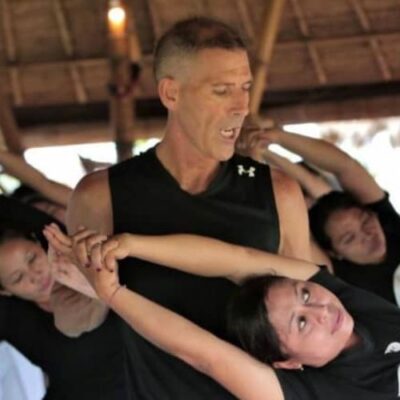 Mr. Ian Terry