
Hot 26 and 2 yoga is a fixed 90-minute class of 26 postures and 2 breathing exercises, practised in a room of about 40°C and 40% humidity. At YogaFX in Seminyak, Bali, that heat comes from the tropical climate, not from heaters, so the method feels different from a studio with a thermostat.

What hot 26 and 2 yoga is, in one class
Hot 26 and 2 yoga follows one script. Every class holds the same postures in the same order, and a teacher talks you through each one. There is no music and no demonstration, so you spend the class listening and moving instead of watching.
That sameness is the point. Because the sequence never changes, you can compare one Tuesday with the next. Your balance in Eagle either improves or it does not. Your breathing at minute 70 either settles or it does not. You measure yourself against yourself.
If you want the short version first, our post on what a Bikram yoga class is covers the basics. This guide goes further and shows how the full method feels in Bali.
- Length. About 90 minutes from the first breath to the last Savasana.
- Heat. About 40°C and about 40% humidity, from the natural tropical climate in Seminyak.
- Sequence. 26 postures and 2 breathing exercises, always in the same order.
- Delivery. A scripted dialogue with no demonstration and no music.
You will see the method written as hot 26&2, 26 and 2 or Bikram yoga. At YogaFX we teach it as Original Hot 26&2 Yoga, and the fixed sequence is the same under every name.
The 26 postures and 2 breathing exercises, series by series
The class has three parts: an opening breath, a standing series, and a floor series. A short rest in Savasana sits between the two series, and a closing breath ends the class. The table below follows the numbering used in our posture guides, where the opening and closing breathing exercises are numbers 1 and 26.
The full sequence, in order
| Part of class | Postures in order | What students notice in natural heat |
|---|---|---|
| Opening breath | 1. Standing Deep Breathing (Pranayama) | A slow nose breath that sets the pace for the next 90 minutes. |
| Standing series, first block | 2. Half Moon (Ardha Chandrasana) 3. Awkward (Utkatasana) 4. Eagle (Garudasana) | The thighs burn early and sweat starts within minutes. |
| Standing series, balance block | 5. Standing Head to Knee (Dandayamana Janushirasana) 6. Standing Bow (Dandayamana Dhanurasana) 7. Balancing Stick (Tuladandasana) | Sweaty hands make the grip harder, so the eyes and the breath do the work. |
| Standing series, wide-leg block | 8. Standing Separate Leg Stretching 9. Triangle (Trikonasana) 10. Standing Separate Leg Head to Knee 11. Tree (Tadasana) 12. Toe Stand (Padangustasana) | Hips and hamstrings feel looser as the body warms. |
| Rest | 13. Dead Body Pose (Savasana) | Heart rate comes down before the floor work starts. |
| Floor series, back block | 14. Wind-Removing (Pavanamuktasana) 15. Sit-Up 16. Cobra (Bhujangasana) 17. Locust (Salabhasana) 18. Full Locust (Poorna Salabhasana) 19. Bow (Dhanurasana) | Back muscles work on towels slick with sweat. |
| Floor series, bend block | 20. Fixed Firm (Supta Vajrasana) 21. Half Tortoise (Ardha Kurmasana) 22. Camel (Ustrasana) 23. Rabbit (Sasangasana) | Deep back and forward bends that ask for calm breathing. |
| Floor series, closing block | 24. Head to Knee with Stretching (Janushirasana with Paschimottanasana) 25. Spine Twisting (Ardha Matsyendrasana) | Hips and spine rotate while fatigue sets in. |
| Closing breath | 26. Blowing in Firm (Kapalbhati in Vajrasana) | Quick exhales that end the class on a clear head. |
Want every name and Sanskrit label in one place? The hub guide on 26 and 2 yoga poses lists the full sequence.
The class format in numbers
Hot 26 and 2 yoga class at a glance
90 min
Class length
First breath to final Savasana.
40°C
Room heat
About 104°F, from the tropical climate.
40%
Humidity
Humid air, so sweat starts early.
26
Postures
Same order in every class.
2
Breathing exercises
One to open, one to close.
0
Music tracks
Only the teacher’s spoken dialogue.
How the class unfolds, from first breath to last Savasana
The opening breath sets the pace
The first exercise is Standing Deep Breathing. You inhale through the nose, lift your elbows, tip your head back, and exhale slowly. It looks simple, and the heat makes it feel bigger than it looks.
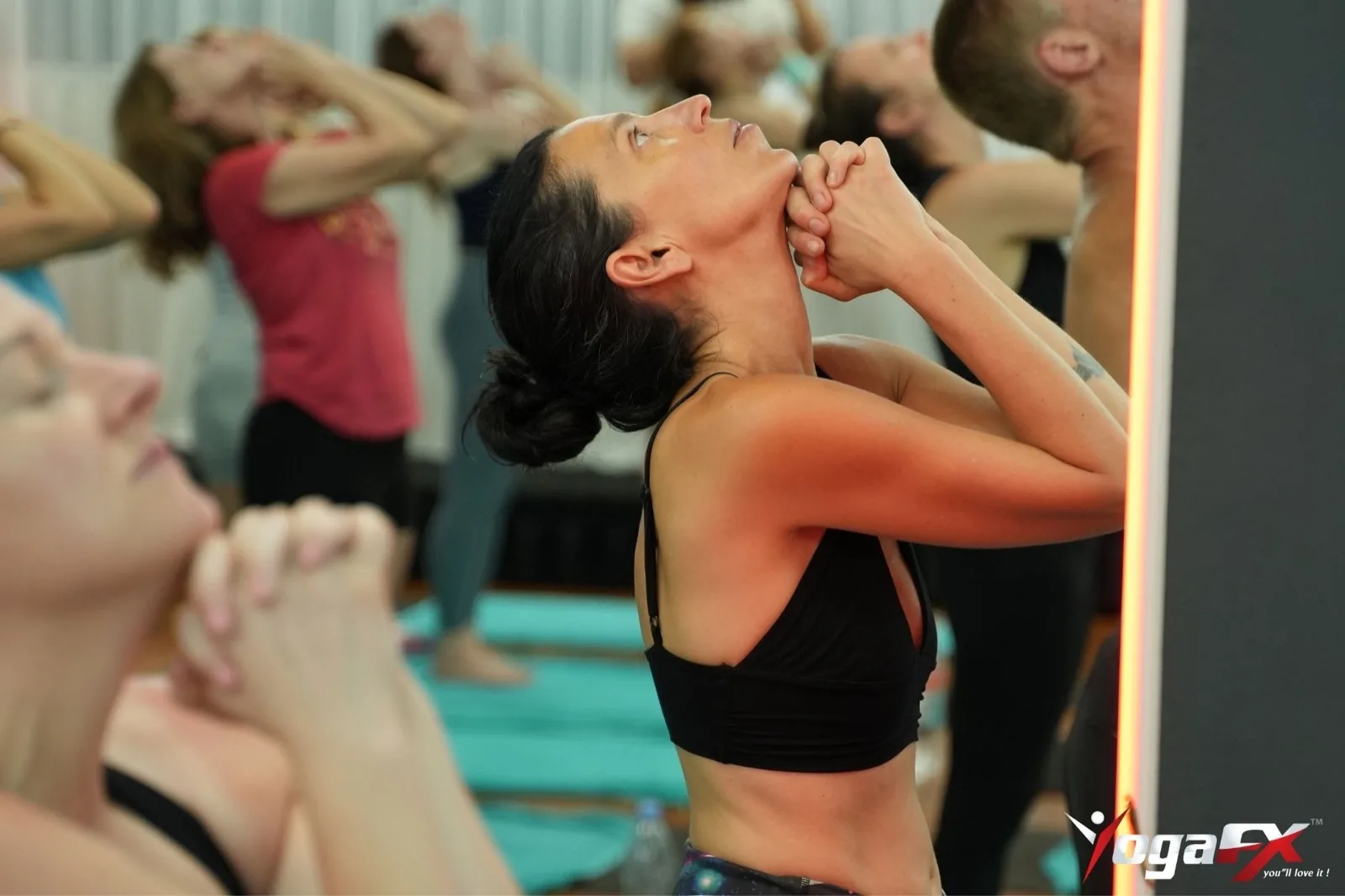
Our guide to pranayama breathing in a Bali hot room explains the count and the common mistakes. For now, remember one rule: breathe through your nose and keep the pace slow, even when the room feels full.
The standing series builds heat and balance
The standing series runs from Half Moon to Toe Stand. You work on one leg or with both feet wide for most of it, so the legs carry the effort and the mind carries the focus. That focus matters more than strength, because the postures are held while sweat builds.
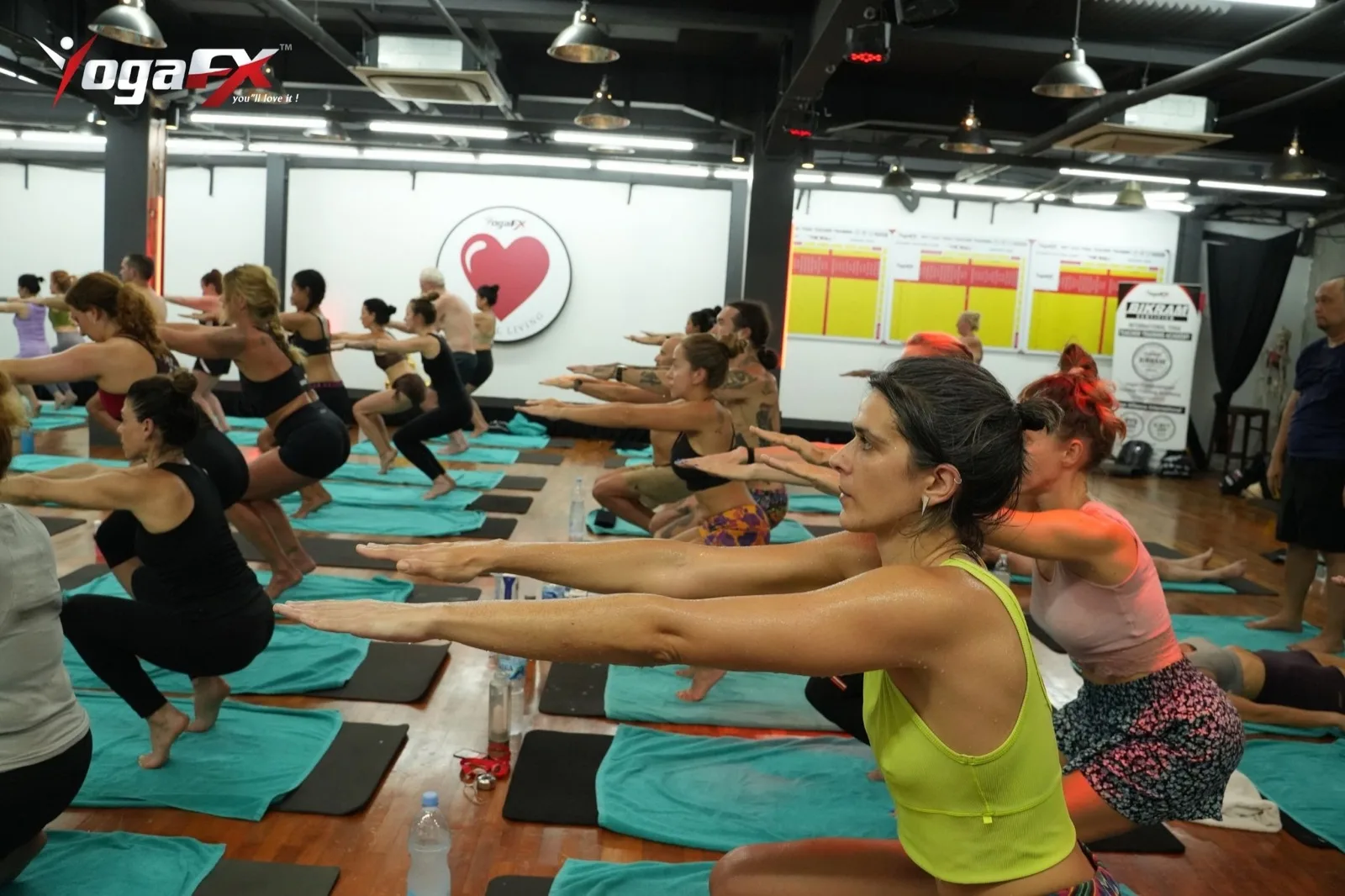
Students often tell us the first ten minutes decide the class. If you settle your breath early, the next 80 minutes feel manageable. If you rush, the heat feels loud.
The spoken script keeps everyone together. You hear the same cues in the same order, and over weeks the words become familiar. Nobody hands you a copy, because you pick it up by listening, class by class.
Savasana, then the floor series
After Tree and Toe Stand, you lie down in Savasana. Your heart rate comes down, and your breathing slows. Then the floor series begins with Wind-Removing and moves through Cobra, the Locust family, Bow, Camel, Rabbit and the twist.
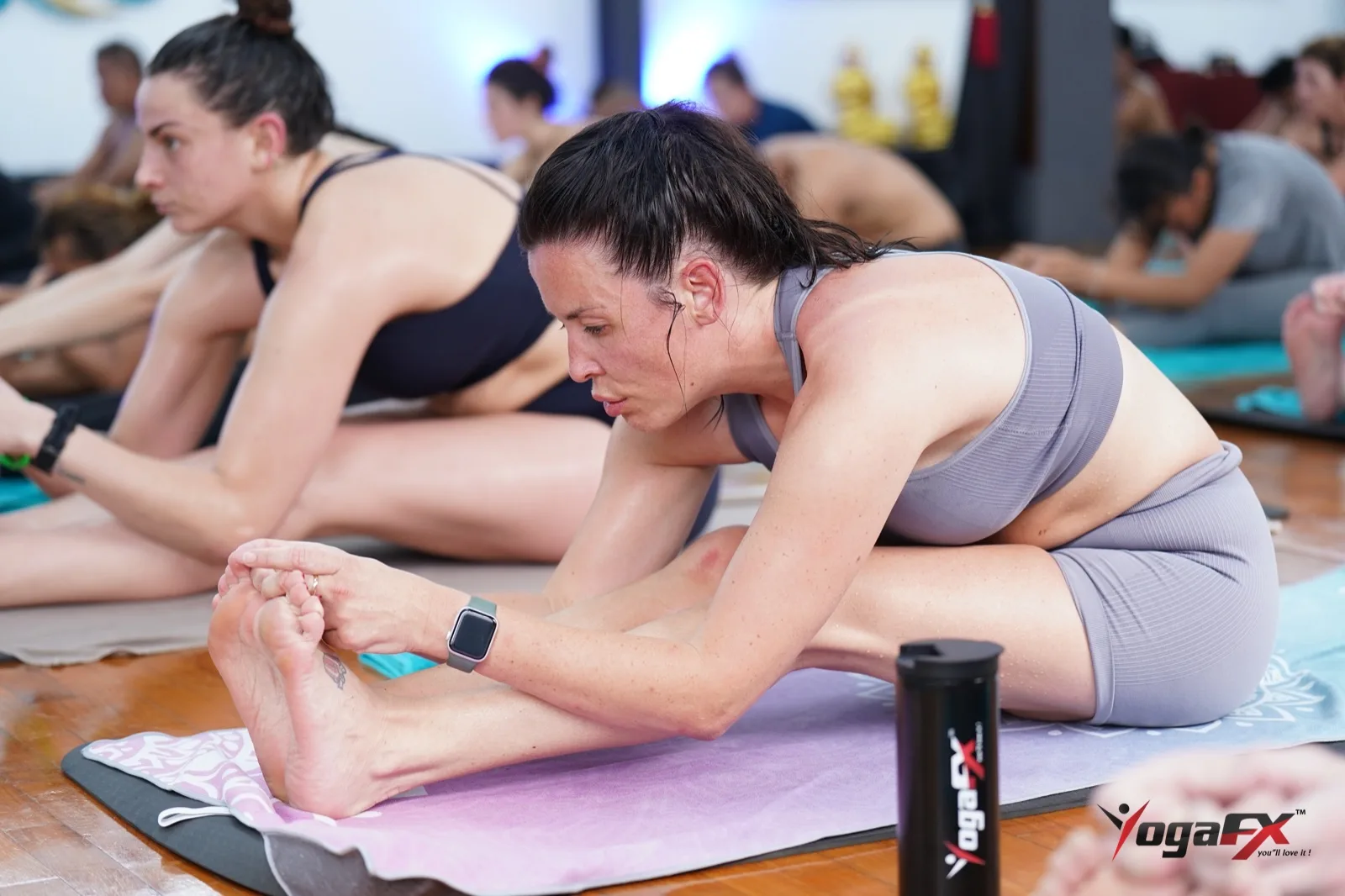
The floor series feels slower, but it asks for patience. You fold, bend back, and rotate while fatigue builds. Many students find the last third harder than the first, which is normal.
The closing breath
The class ends with Kapalbhati, a quick, forceful exhale taken while sitting on your heels. It clears the head and signals that the work is done. Then you lie down once more, and the class is over.
How natural Bali heat changes hot 26 and 2 yoga
Many studios heat their rooms with electric heaters. At YogaFX in Seminyak, the heat comes from Bali’s tropical climate. The room sits at about 40°C and 40% humidity, and our post on hot yoga temperature in Bali explains what that means in practice.
Humid tropical air feels different from dry heater air. Many students say it feels softer on the skin and heavier in the lungs. You’ll start sweating early, so a towel on your mat isn’t optional. That’s the main difference you’ll notice when you try hot 26 and 2 yoga in Bali.
Our teachers use a simple rule of thumb: give yourself 3 to 5 classes before your heart rate and sweat rate settle. That is a rule of thumb from the studio, not a clinical measure. If you are new to heat, take the first classes slowly and rest whenever you need to.
- Arrive hydrated. Drink steadily through the day, not just before class.
- Bring a towel and a water bottle. Sweat starts within minutes.
- Wear light, fitted clothing. Loose fabric gets heavy when it is wet.
- Rest without guilt. Lying down on your mat is part of the method.
If it is your first time, read hot yoga for beginners before you come. It walks through the first class in order.
Who hot 26 and 2 yoga suits, and who should check first
Hot 26 and 2 yoga suits people who like structure. If you want a class that never changes, a clear script to follow, and a way to see your own progress, this method gives you all three. It also suits people who enjoy heat and don’t mind a demanding 90 minutes.
- Newcomers to hot yoga who want a clear, repeatable first class.
- Runners and gym-goers who want a steady mobility habit next to their training.
- Travellers and expats in Bali who want one class they can return to every week.
- Future teachers who need to know the sequence and the dialogue well.
Some people should check with a doctor first. That includes anyone with heart problems, blood pressure concerns, a heat-sensitive condition, or a pregnancy. It also includes anyone taking medication that affects sweating or fluid balance. When in doubt, ask before you book, and tell your teacher about it when you arrive.
Hot 26 and 2 yoga compared with other heated classes
Not every heated class works the same way. Hot vinyasa links poses in a flow that changes from teacher to teacher, and it often has music. Hot 26 and 2 yoga does the opposite. The sequence is fixed, the voice is the only sound, and the teacher stays on the same script.
- Structure. Hot 26 and 2 yoga repeats one sequence. Flow classes vary week to week.
- Sound. Hot 26 and 2 yoga uses spoken dialogue. Many flow classes use a playlist.
- Progress. With a fixed order, you can track your own balance and breath over weeks.
- Heat. At our studio the heat comes from Bali’s climate, not from a heater.
Neither style is better in every case. If you like variety, a flow class may suit you. If you like a clear yardstick, hot 26 and 2 yoga gives you one.
What the research says about hot 26 and 2 yoga
Research on heated yoga is still growing, and it can’t show that any style treats a condition. Still, a few findings help set realistic expectations for hot 26 and 2 yoga. Treat them as general information, and talk to a healthcare professional about your own health.
Mood: what the Harvard trial found
A randomized controlled trial led by Massachusetts General Hospital and Harvard Medical School tested Bikram yoga in a room of about 105°F for 8 weeks. It appeared in the Journal of Clinical Psychiatry in 2023, and it enrolled adults with moderate-to-severe depression.
In the yoga group, 59.3% had a drop in depressive symptoms of 50% or more. In the waitlist group, only 6.3% did. Participants attended an average of 10.3 classes, and the authors reported no serious adverse effects from the intervention.
The authors also noted that future work should compare heated and non-heated yoga. So the trial can’t say that heat itself caused the change. You can read the summary in the Harvard Gazette report on the trial.
Effort: what a class asks of your heart
Effort matters too. A 2014 University of Wisconsin study (Porcari et al.) measured an average of 333 calories for women and 460 for men in a 90-minute class, with heart rate at about 80% of maximum. That puts a full class in the range of a moderate workout, which fits what students feel after minute 60.
- Mood. Heated yoga may help some adults with low mood, alongside proper care.
- Effort. A 90-minute class asks for sustained work, not just stretching.
- Limits. No single study shows lasting health gains for everyone.
None of this replaces medical advice. If you have heart problems, blood pressure concerns, are pregnant, or take medication, ask a healthcare professional before you start hot yoga.
Staying safe in the hot room
The heat is part of the method, so it helps to know the warning signs. Cleveland Clinic lists the symptoms of heat exhaustion on its heat exhaustion page. They include heavy sweating, headache, dizziness, nausea, muscle cramps and a fast heartbeat.
- Dizziness or nausea. Lie down on your mat and tell your teacher.
- A fast heartbeat that does not settle. Rest, cool down and sip water.
- Confusion, fainting or chest pain. Get medical help straight away.
According to Cleveland Clinic, treatment starts with moving to a cooler place, loosening clothes and sipping fluids slowly. Our teachers follow the same logic in class: rest first, then decide whether to continue. Nobody in the room will judge you for lying down.
What students say about the method
The postures are the same for everyone, but the experience is personal. Here are three short student reviews, from our YouTube channel and our Google profile.
“I’ve been practicing Bikram on and off for a while now, and it never ceases to amaze me that every single time I do it, I learn something new.”
A trainee in our YouTube review, 2026
“I’m really happy and change my life. I feel myself more confident and stronger.”
A trainee in our YouTube review, 2023
Ira, in a Google review from 2020, thanked Mr. Ian for teaching yoga very well and said the feeling of being a student of YogaFX is a proud one.
Learning hot 26 and 2 yoga with Mr. Ian Terry
Mr. Ian Terry, Founder and Lead Instructor at YogaFX, is an E-RYT 500 teacher with more than 12,000 teaching hours. He spent five years training alongside the founder of the method, and YogaFX has since graduated more than 1,500 teachers from over 80 countries.
His view of practice is simple. “There can be no greater investment than the one that you make in your health, because without it, nothing else matters.” For students who want to teach one day, he suggests three or four classes a week for three to six months before applying.
That advice works for everyone, not only future teachers. A fixed sequence rewards repetition, and regular classes turn the dialogue into something you can follow without thinking.
Try hot 26 and 2 yoga at the Seminyak studio
Our studio is at Jl. Pangkungsari Gg Jepun No.888, Kuta Utara, Seminyak, Badung, Bali 80361. A second studio in Canggu is coming soon, but today every class runs in Seminyak.
Your first class is on us. Claim your Free 1-Day Guest Pass and try one Original Hot 26&2 class in natural Bali heat.
FAQ
What is hot 26 and 2 yoga?
Hot 26 and 2 yoga is a fixed 90-minute class of 26 postures and 2 breathing exercises, taught in a room of about 40°C and 40% humidity. A scripted dialogue guides every posture, with no music and no demonstration. Because the order never changes, students can track their own progress from class to class.
How many postures are in hot 26 and 2 yoga?
The method has 26 postures and 2 breathing exercises. The class opens with standing deep breathing, runs through the standing series, rests in Savasana, moves through the floor series, and closes with Kapalbhati breathing. The order is the same in every class, which is why the method carries the name 26 and 2.
How is hot 26 and 2 yoga different from hot vinyasa?
Hot vinyasa changes from class to class, with flowing sequences and often music. Hot 26 and 2 yoga never changes: the same postures, the same order and the same spoken dialogue. Many students choose it because they can compare one class with the next and see their own progress.
Is hot 26 and 2 yoga hard for beginners?
Many first-timers find it hard, mostly because of the heat rather than the postures. You do not need to be flexible, and you can rest on your mat whenever you need to. Bring water and a towel, arrive early, and treat the first class as practice for the second.
What should I do after a hot 26 and 2 yoga class?
Drink water slowly, rest for a few minutes, and eat something light when your appetite returns. Avoid hard exercise straight afterwards. If you feel dizzy, nauseous or have a fast heartbeat that does not settle, cool down, sip fluids and seek medical advice. This is general information, not medical advice.
Still have questions? Message Mr. Ian and the YogaFX team on WhatsApp and we will answer them personally.
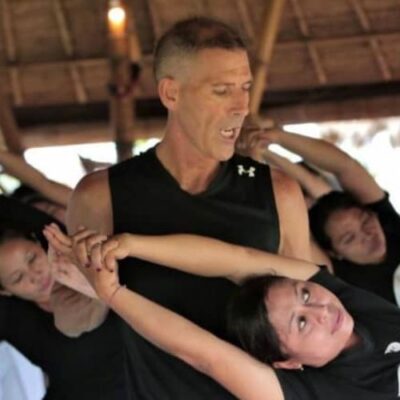 Mr. Ian Terry