
Hot yoga dizzy? Sit or lie down in Savasana right away, stay in the room, and tell your teacher. In a heated room, heat and fluid loss are the usual causes, and rest often settles it. Chest pain, fainting, or a head injury need medical help, not just a rest on the mat.

A dizzy moment in a 40 degree Celsius room can feel alarming when the walls seem to tilt.
The body usually recovers once you stop moving and cool down, and you don’t need to panic. This guide walks through what to do in the room, why it happens, and how to lower the chance of it happening again. Mr. Ian Terry, an E-RYT 500 teacher with more than 12,000 teaching hours, shares the practical steps below.
Hot yoga dizzy? What to do the moment it starts
The first job is to stop the posture you are in. Don’t push through it, and don’t try to finish the sequence to save face. Hold a sitting or lying position while the room settles, and keep your breathing slow and even. Stopping early is the step that matters most, because it gives the body room to recover from a hot yoga dizzy spell.
- Stop the posture. Come out of the pose and sit or lie down on your mat.
- Lie down in Savasana or Child’s Pose. Savasana lets you lie flat and take the strain off your legs, while Child’s Pose keeps you low and close to the mat.
- Breathe slowly. Long, quiet breaths are easier to hold than fast ones, and they keep you present in the room.
- Sip water slowly. Small sips are better than a big gulp, which can make you feel sick.
- Tell your teacher. A quick word lets your teacher know what is happening, so you aren’t left guessing whether you are OK.
Don’t stand up quickly once the dizziness passes. Wait a few breaths, sit for a moment, and then rise slowly. Jumping back into standing postures as soon as the room stops spinning is a common way for dizziness to return. If you rejoin the class, choose seated or lying variations for the rest of the sequence.
Why lying down helps more than standing still
Standing still in heat makes the circulation work harder, while lying down takes the load off your legs and heart.
For a hot yoga dizzy spell, the health agencies that publish heat guidance give the same first step. The US Centers for Disease Control and Prevention advises people with heat-related dizziness or fainting (called heat syncope) to sit or lie down in a cool place and to sip water slowly, so the same advice works on a yoga mat.
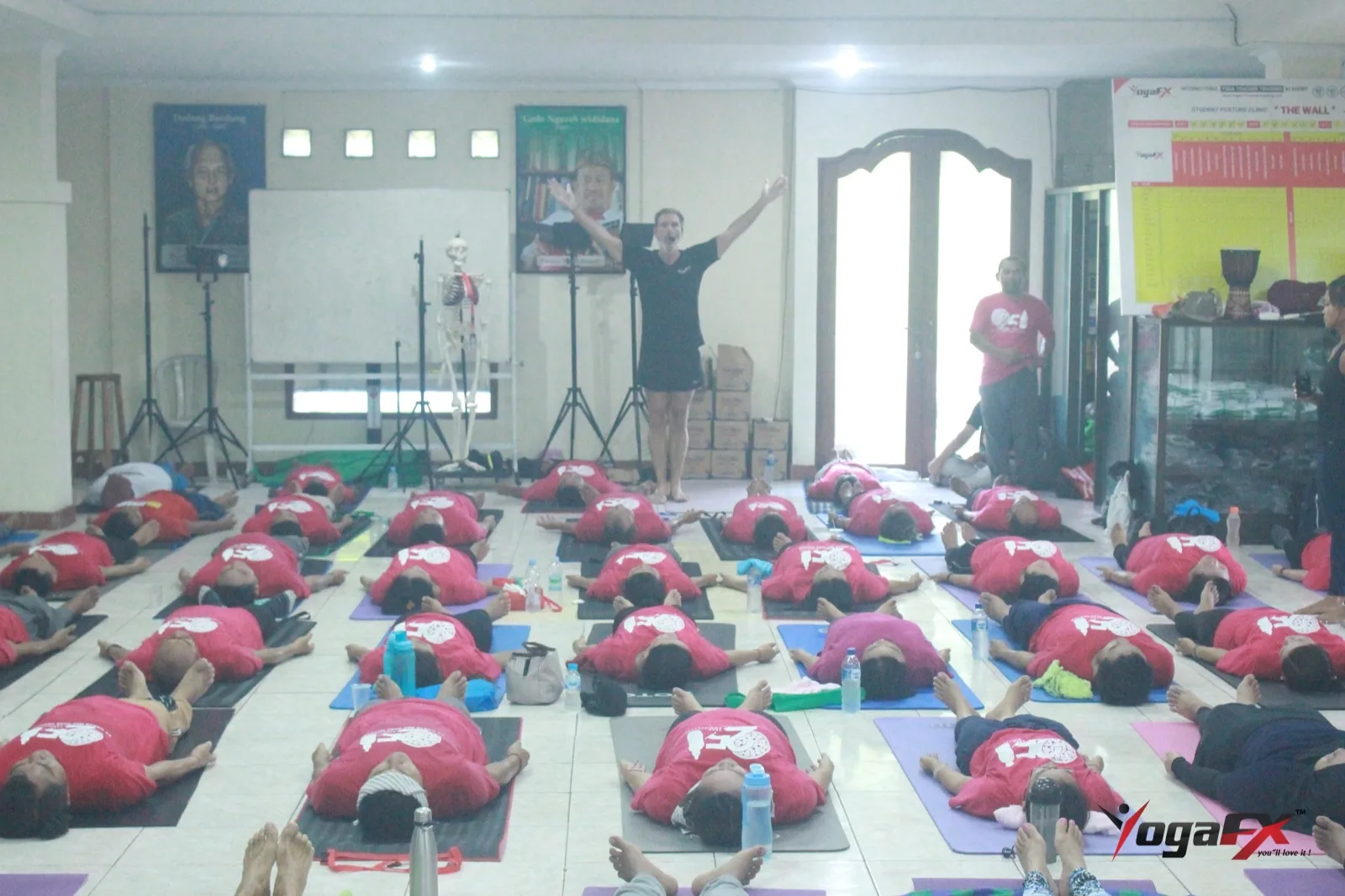
Why the heat in a Bali class can make you dizzy
Our classes run for 90 minutes at 40 degrees Celsius with 40 percent humidity.
The heat comes from the tropical climate rather than an electric heater, and that natural heat is part of why the practice feels the way it does. It is also why your body works harder than it does in a cool room. You sweat more, you lose water and salt, and your blood vessels widen to shed heat.
Any of those changes can leave you light-headed if you have not prepared. A hot yoga dizzy moment is usually your body signalling heat and fluid, not a reason to give up on the practice. Dizziness is one of the recognised warning signs of heat stress, so it deserves a steady response rather than a shrug.
The CDC lists dizziness among the symptoms of heat exhaustion. It also describes light-headedness that comes from standing too long or rising suddenly from a sitting or lying position. Both are common in a hot room, and both respond to the same simple steps: cool down, rest, and drink slowly.
Dizziness often builds while you stand still and sweat without noticing how much fluid you have lost. The room looks the same from the mat, so the build-up is easy to miss. Checking in with your body between postures, rather than only when something feels wrong, is the habit that helps most.
Which kind of dizziness is it? A quick guide
Not every hot yoga dizzy episode means the same thing. The table below separates the three most common situations in a heated room and gives the first step for each. The steps are general, and they don’t replace advice from a doctor who knows your health history.
| Situation | What it feels like | First step in class |
|---|---|---|
| Coming up from a floor posture too fast | A brief light-headed moment that passes within seconds | Stay seated for a few breaths, hold on to something, then stand slowly |
| Standing still for a long time in the heat | Light-headedness, sometimes with a feeling of faintness | Sit or lie down in a cool place and sip water slowly |
| Heat exhaustion signs | Dizziness together with heavy sweating and feeling unwell | Leave the heat, rest, sip water, and tell your teacher straight away |
The first row is the easiest to fix. Students fly up from a forward fold, feel the room tip, and steady themselves within a breath or two. The second and third rows need more care, because they involve heat rather than only posture. The right move there is to get out of the heat and rest.
Students describe the same moment in different words. Some say they feel dizzy in hot yoga, others say a hot yoga lightheaded feeling came over them, and a few say they nearly fainted.
A hot yoga faint is serious enough to stop for, even when it passes quickly. Hot yoga dizziness that builds slowly across a whole class usually means heat and fluid loss have added up. In that case, a hot yoga dizzy episode is a prompt to rest earlier and drink more water, not to push harder.
The infographic: four steps to take in the room
Leave the posture and sit or lie down in Savasana.
Slow, quiet breaths until the room settles.
Small sips of water, not a big gulp.
Let your teacher know before you rejoin the class.
Coming back to class after a hot yoga dizzy spell
Once the feeling has fully passed, you may want to return to the mat. That’s fine, as long as you go back in gently. Many students who return do best by staying in the lower positions for the rest of the class and building back up over the following sessions.
- Wait until your breathing is slow. If you still feel unsteady, stay down a little longer.
- Sip water between postures. Keep a small amount in reserve rather than drinking a lot at once.
- Choose lower variations. Knees down, seated, or lying postures keep your head closer to the mat.
- Leave early if it returns. A second spell is a sign to stop for the day, not to try harder.
Before class: lowering your chance of a dizzy spell
Most hot yoga dizzy spells can be prevented with a few habits that take little time. The biggest one is starting the day hydrated, not catching up in the last ten minutes before you walk into the room. Water taken through the day does more than a single glass before class.
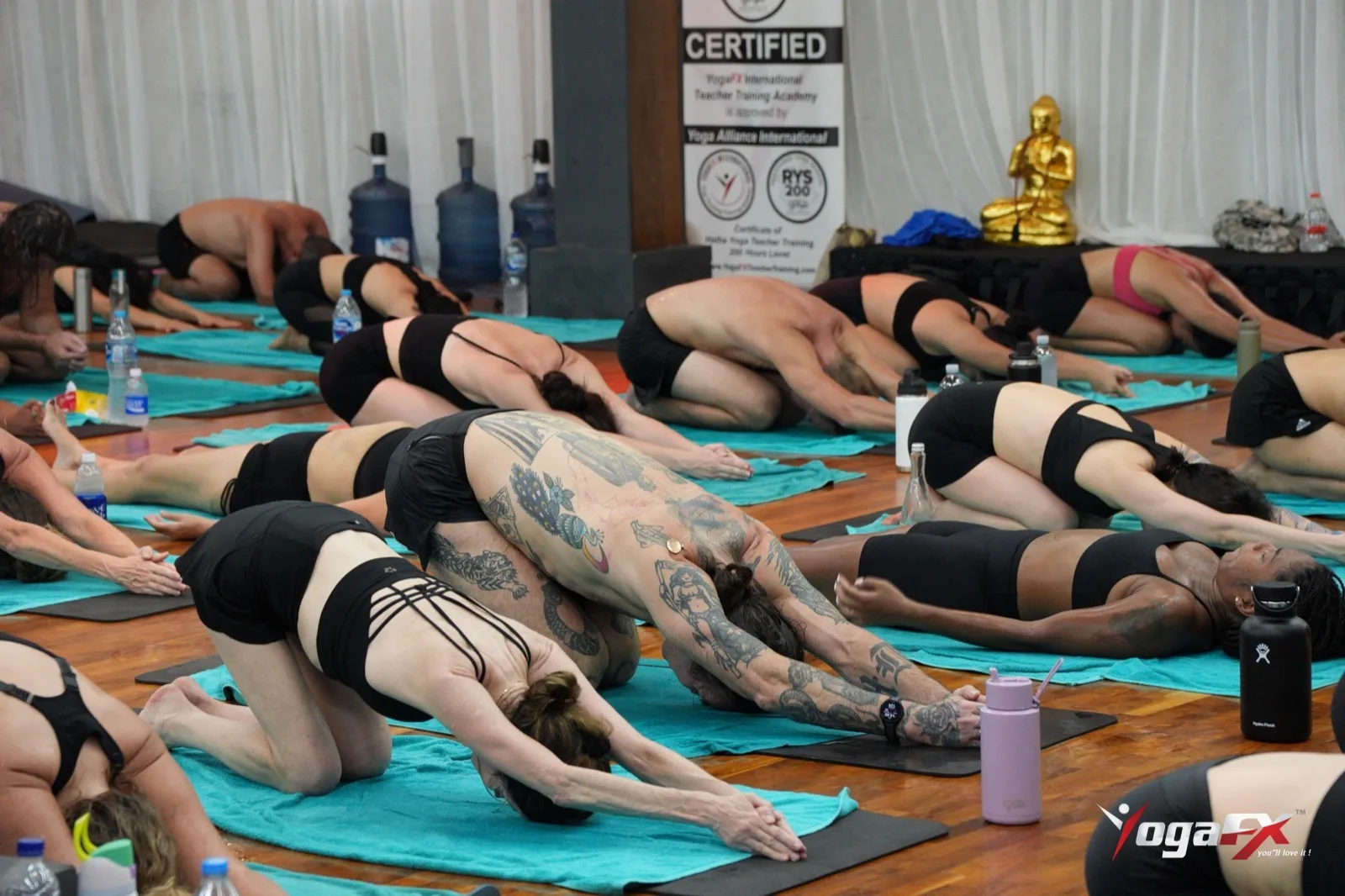
- Drink water across the day. Spread your intake out so you arrive with fluid in reserve.
- Eat a light meal, not a heavy one. A large meal close to class can leave you feeling flat in the heat.
- Arrive a few minutes early. Settle your mat, take a few breaths, and let your body adjust before the first posture.
- Tell your teacher about your health. Mention any heart, blood pressure, or diabetes condition, and any medication that affects fluid or blood pressure.
- Go gently at first. If you are new to Bali heat, build up your time in the room. Our heat acclimatization guide shows how one student adapted over three weeks.
Nobody needs to be perfect on the first day. The students who enjoy hot yoga most in Bali treat the heat as something to learn, not something to beat. That mindset also makes a hot yoga dizzy moment less frightening, because you already know what to do. Keep this page bookmarked before your first class, so the steps are easy to recall when you need them.
What the research and health agencies say
There is good public guidance on heat stress, even if there is little published research on dizziness in yoga classes specifically.
The advice in this article comes from two independent sources, and neither is connected to a yoga studio. The first is the CDC’s guidance on heat-related illness, which describes dizziness as a symptom of heat exhaustion and gives first-aid steps. The CDC’s page on heat-related illnesses is written for workers, so we have kept only the steps that apply to anyone in a hot room.
The second is MedlinePlus, the National Library of Medicine’s health guide, which covers dizziness on standing. It lists getting up too quickly after sitting or lying down as a cause of dizziness, and it advises getting up slowly and staying seated for a moment before standing. The MedlinePlus entry on dizziness also recommends holding on to something when you stand. Both steps are built into the table above.
If you want the wider picture on hot yoga and health, our guide to whether hot yoga is good for you sets out what the research does and does not show. For a plain explanation of the practice and its temperature, see our introduction to what hot yoga is. Read those alongside this article rather than treating any single source as the final word.
When dizziness is a reason to get medical help
Resting usually settles a dizzy moment in class, and a hot yoga dizzy spell that clears within a few minutes is rarely a cause for alarm.
Some signs mean something more serious and need medical attention, not just a rest on the mat. If you faint, hit your head, feel chest pain, become confused, or can’t stop vomiting, get help straight away. Dizziness that keeps coming back after rest is also a reason to see a doctor before your next class.
This article gives general information, not medical advice. If you have a heart condition, high or low blood pressure, diabetes, or take any medicine that affects fluid or blood pressure, talk to a healthcare professional before you start hot yoga. Your doctor can tell you whether the heat is suitable for you.
What a Bali class is like when you feel unsteady
YogaFX runs its studio in Seminyak, open from 06:00 to 22:00 every day. Each class is 90 minutes long, held at 40 degrees Celsius with 40 percent humidity. It follows a scripted dialogue with no music and no demonstration, which keeps the room focused on the words and on your own body.
The dialogue keeps going from the front of the room, so you can rest and still follow along. The heat is the natural tropical climate, and it builds slowly across the class rather than spiking. Resting when you need to is part of the practice, and the steps above are built around it.
If you want to see the room before you commit, ask about a free guest pass when you book your first class. It is the simplest way to feel the heat for yourself, rest when you need to, and ask any questions on the mat.
What students say about their first hot classes
What students say about the first weeks
Students who feel dizzy early on often worry that they are the only one. Our reviews tell a different story. Anita, who took part in a YouTube review in 2025, said that “the energy in the room and the support was absolutely amazing” (Anita, YouTube review, 2025). She came to deepen her practice, and by the end she could see herself teaching.
Another trainee in our YouTube review, from 2018, put the day simply: “it was the best class I’ve had. Such a big motivator.” That kind of reaction is what the first few weeks are for. A hot yoga dizzy moment doesn’t stop you from getting there, as long as you stop, rest, and come back when you are ready.
FAQ: hot yoga dizzy questions students ask
Why does hot yoga make me dizzy?
Heat pulls blood toward the skin to help you cool down, and sweating removes water and salt. With less fluid in your blood, you can feel light-headed when you stand or move suddenly. The CDC lists dizziness among the symptoms of heat exhaustion, so it deserves attention. Drinking water and rising slowly from the floor help.
Can hot yoga cause vertigo?
Vertigo is a strong spinning sensation, which is different from simple light-headedness. Most dizziness in a hot room is light-headedness from heat or from standing up too quickly. If the spinning is strong, does not settle, or comes with weakness, trouble speaking, or a severe headache, stop and seek medical care. If you have ongoing vertigo, ask a doctor before you practise.
What should I do if I feel dizzy during hot yoga?
Stop the posture and sit or lie down in Savasana or Child’s Pose. Keep your breathing slow and sip water gently. Tell your teacher what is happening. Do not stand quickly, and wait until the feeling has passed before you rejoin. If it does not settle within a few minutes, leave the heat and ask a staff member for help.
Can yoga make you dizzy after class?
Yes, mainly when you stand up quickly after lying down, or when you stand still for a long time in the heat. MedlinePlus lists getting up too fast after sitting or lying down as a cause of dizziness. Get up slowly, sit for a moment, and hold on to something when you stand. This applies after class as much as during it.
Should I stop the whole class if I feel dizzy?
Usually you can stop the posture and rest in the room without leaving the class. Leave the heat and get medical help if dizziness comes with fainting, chest pain, confusion, vomiting, or a head injury. Dizziness that keeps returning after rest is a reason to talk to a doctor before your next class, not a reason to push harder.
Still have questions? Message Mr. Ian and the YogaFX team on WhatsApp and we will answer them personally.
 Mr. Ian Terry