
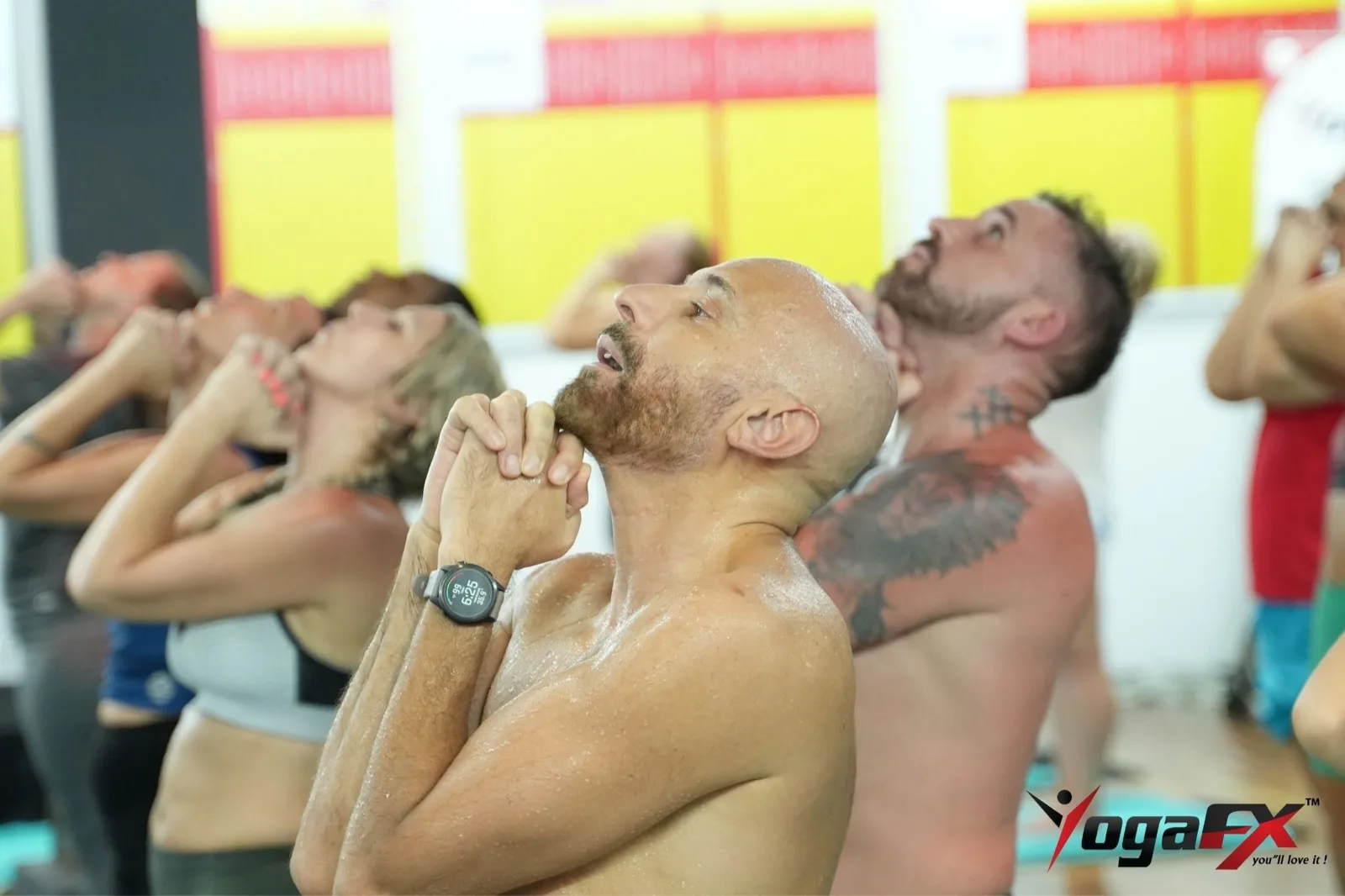
Yoga for footballers works best in the off-season as a short run of 90-minute hot classes that open the groin, knees and ankles. In Bali, the natural tropical heat and a voice-led class give a visiting player a structured session at moderate effort, with no ball, no kit and no coach counting reps.

Picture the break between seasons. The last match is a month behind you, your ankles still carry old knocks, and your groin feels tight after every long run. You flew to Bali for rest, sun and a bit of fitness. You also want something better than lying on a sunbed for two weeks.
This guide to yoga for footballers is for male players, from weekend amateurs to semi-pros, who spend an off-season on the island. Mr. Ian Terry, our E-RYT 500 teacher with more than 12,000 teaching hours, gives players the same advice every time: go easy, learn the room, and treat the class as a moderate day.
We teach at two studios, Seminyak and Canggu, so everything below comes from the room you would walk into. Soccer players from Australia and the US follow the same plan.
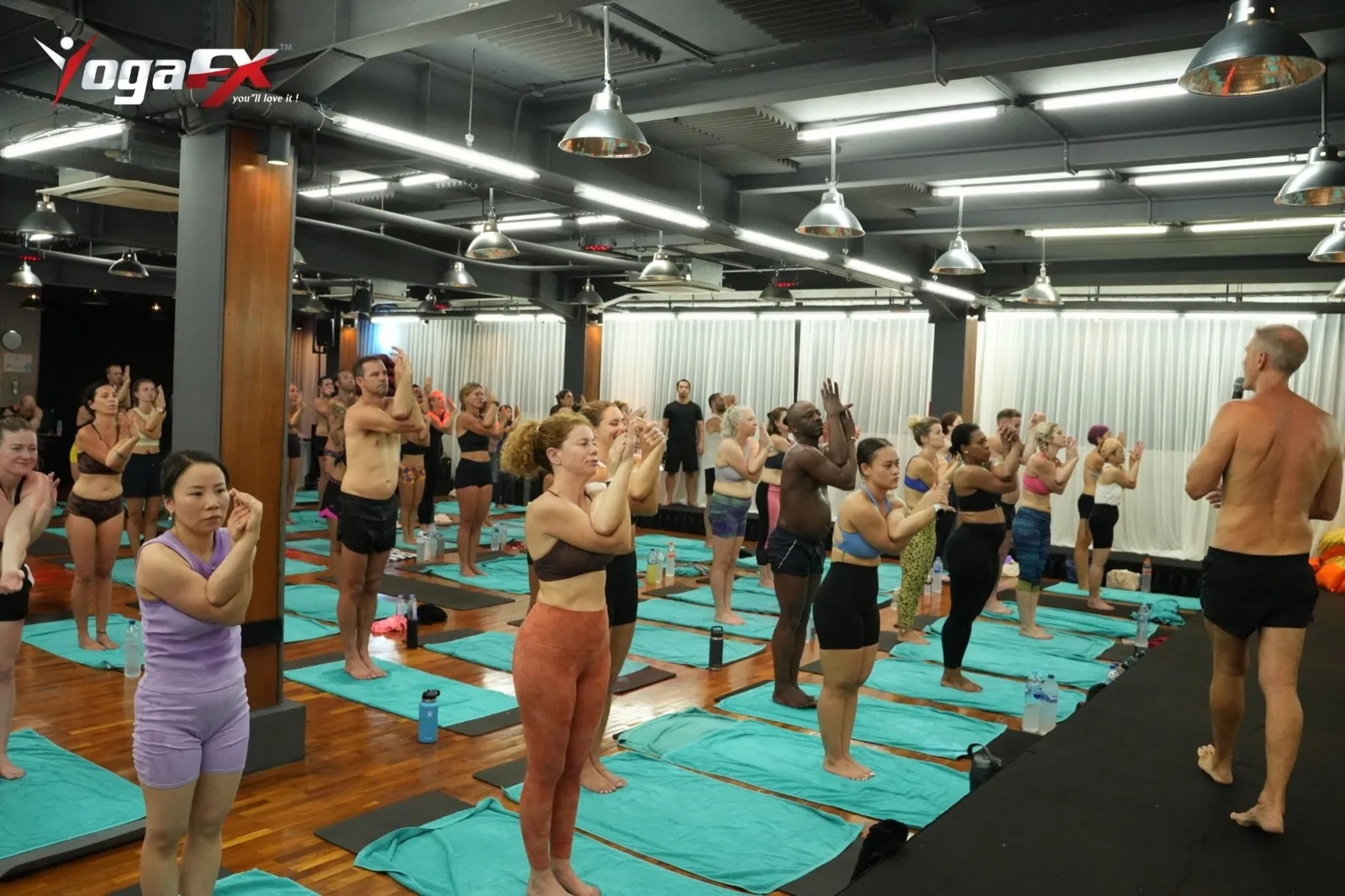
Yoga for Footballers in the Off-Season: The Short Answer
Most players ask the same thing before a first class: will a hot class help my legs, or will it leave me flat? The answer depends on timing. A class is 90 minutes of standing, balancing and bending. Your heart rate stays up for most of it, so it is not a stretch break. Think of it as a moderate day.
Here are the 5 safe rules we give every visiting player:
- Wait a few days. Let your body meet Bali’s heat and humidity before you book the first class.
- Start with one class. See how your legs feel for two days before you add another.
- Keep it away from hard sessions. Never stack a class on a fitness test, a long run or a pre-season trial.
- Drink early. Sip water through the whole day, not just in the hour before class.
- Stop if you feel wrong. Dizziness, a pounding head or a sudden chill mean you sit down and rest.
Those rules are short, but they decide whether yoga for footballers feels good or costs you a week. The sections below show where the groin, knees and ankles fit in, and how a two-week plan could look.
Why the Groin, Knees and Ankles Need Attention After a Season
Football is full of short sprints, hard stops, long kicks and sudden turns. Each one loads the hip, the knee or the ankle. By the end of a season, those joints have done a huge number of repeats, and they rarely get a slow, quiet job to do.
The professional game shows how much load the legs carry. The UEFA Elite Club Injury Study followed men’s professional teams from 2001/02 to 2021/22. Its authors report that hamstring injuries now make up 24% of all injuries in men’s professional football (Ekstrand et al., British Journal of Sports Medicine, 2023).
Weekend players are not in that study. Even so, many of them sit at a desk all week and then sprint on Saturday, so yoga for footballers should look after the same areas.
Ankles matter too. The NHS lists ankles among the most common places for a sprain. It also says that not warming up, tired muscles and playing sport are common causes. That is a good reason to give your ankles slow, controlled work in the off-season, when no match is waiting.
What yoga can and cannot do for a player
Yoga will not replace the strength work your club physio sets. It cannot repair an old tear either. What it can do is add range, balance and breathing practice, and it teaches you to notice a tight spot before it grows. If you carry a current injury, see a physio before you book a class. These are the areas we see players focus on first:
- Groin and inner thigh. Wide stances open the muscles you use to kick and change direction.
- Knees. Slow, bent-knee work builds control around the joint, with no impact at all.
- Ankles and feet. Balance postures make the small muscles of the foot work for you.
- Hamstrings and hips. Long, steady folds undo the shortening that comes from sitting.
Yoga for Footballers: 5 Postures for Groin, Knees and Ankles
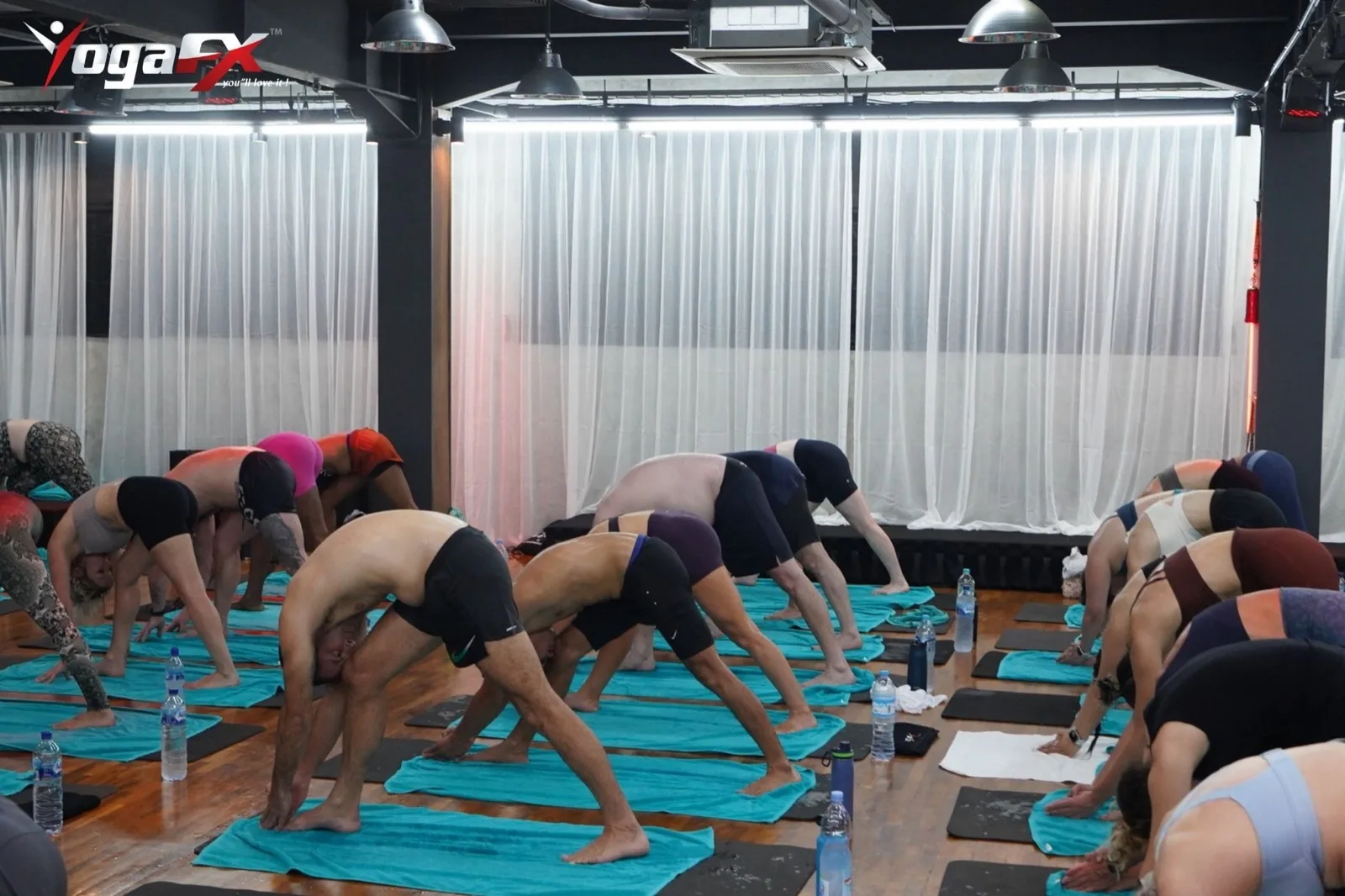
The Original Hot 26&2 sequence has 26 postures and 2 breathing exercises, always in the same order. Yoga for footballers does not need all of them. These five tend to matter most. Our guide to all 26 postures in order explains the rest of the class, and the table shows what each of the five asks from your body.
| Posture | Football demand it meets | What you feel | Care note |
|---|---|---|---|
| Awkward Pose | Knee bend and thigh endurance for tackles and jumps | Burning thighs while you keep breathing | Keep the knees over the toes and come up at once if a knee twinges |
| Eagle Pose | One-leg balance and hip control when you strike the ball | A wobble in the standing ankle and a stretch across the outer hip | A light wrap of the leg is enough, so never force it |
| Standing Separate Leg Stretching | Inner thigh and hamstring length for reaching a ball | A pull along the inner thighs and the back of the legs | Fold only as far as you can with a flat back, and never bounce |
| Triangle Pose | Wide-stance hip opening for turning and cutting | A deep stretch through the inside of the front leg and hip | Skip the deepest reach if you have a recent groin strain |
| Toe Stand | Ankle and foot control for landing and balance | Strong work through the toes and the standing ankle | Hard on toes and knees for new students, so sit it out if either complains |
Awkward Pose and Eagle Pose: knees and balance
Both postures build control around the knee without any impact. Awkward Pose is a chair-like squat with the arms forward. Your thighs work hard, and your breathing has to stay calm. Eagle Pose adds a wrap of the legs and a one-leg balance, so the standing ankle and hip work together. Mr. Ian tells players to treat a wobble as information, not a failure.
Separate Leg Stretching and Triangle: groin and hips
These two postures use a wide stance. As a result, the inner thighs, the hamstrings and the hip joints all get long, steady work. Footballers often find the inside of the leg is the tight part, because kicking and side-stepping rely on it. Go to about 70% of your range at first. You can always fold deeper in the next class.
Toe Stand: the ankle test
Toe Stand is the one posture many players skip in week one. You balance on the toes with the knees bent, which tests the ankle, the foot and the knee together. Our teachers often say the same thing to a new student: sit it out until the other four feel easy. That is a sensible choice, not a weak one.
A Two-Week Bali Off-Season Plan for Yoga for Footballers
Here is a sample plan of yoga for footballers for a two-week stay. It uses four hot classes in all, each on an easy day. If you are new to heat, drop the third and fourth class and keep the first two. Move the days around to match your own flights and training.
| Days | Football or fitness | Hot class | Focus |
|---|---|---|---|
| 1 to 3 | Walks, swimming, a light jog | None | Sleep, water and getting used to the climate |
| 4 | Easy gym or a beach run | First class at half effort | Learn the room, try Awkward and Eagle |
| 5 to 6 | Light training | None | Notice how your legs feel and write it down |
| 7 | A short kickabout with friends | Second class | Add Separate Leg Stretching and Triangle |
| 8 to 9 | Normal off-season training | None | Check your sleep and appetite |
| 10 | Rest day | Third class | Steady balance, and Toe Stand only if you feel ready |
| 11 to 13 | Fitness build | One class if the legs feel fresh | Repeat the postures that helped most |
| 14 | Travel or rest | None | Water, walking and slow breathing |
After the first week, check in with yourself. If your legs feel normal and your sleep is steady, keep the plan. If you feel flat, drop a class. That choice protects the training you came to do. For players who also train hard, our guide to hot yoga for athletes on a Bali camp explains how to place a class in a busy week.
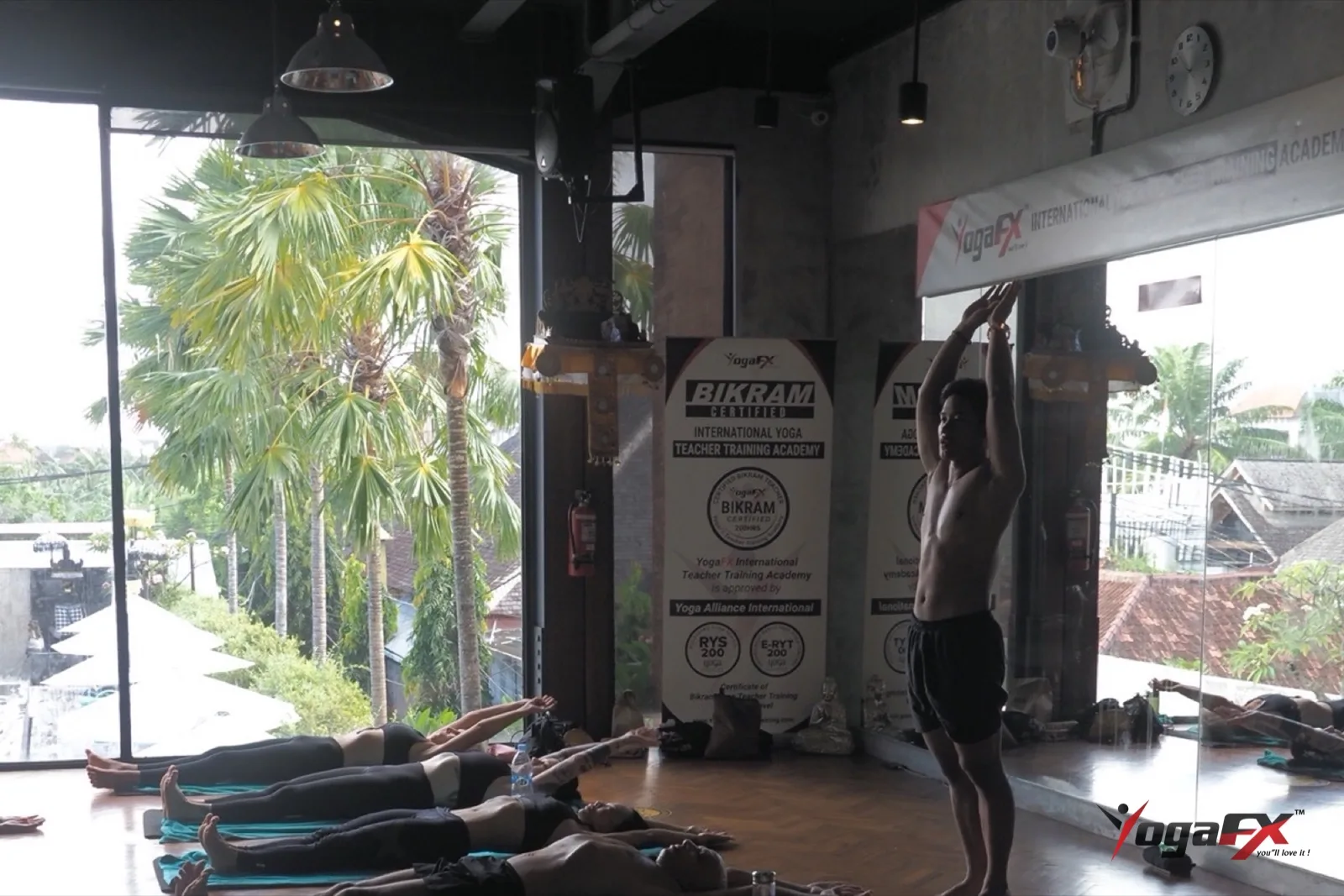
Signs the class was too much
Your body tells you early. Watch for heavy legs the next morning, a resting pulse that feels high, a short temper, or a session that suddenly feels shaky. Any of these means the next class should wait. A sore joint is never something to push through either. Rest it, and speak to a physio if it lingers.
What a Bali Hot Room Feels Like to a Footballer
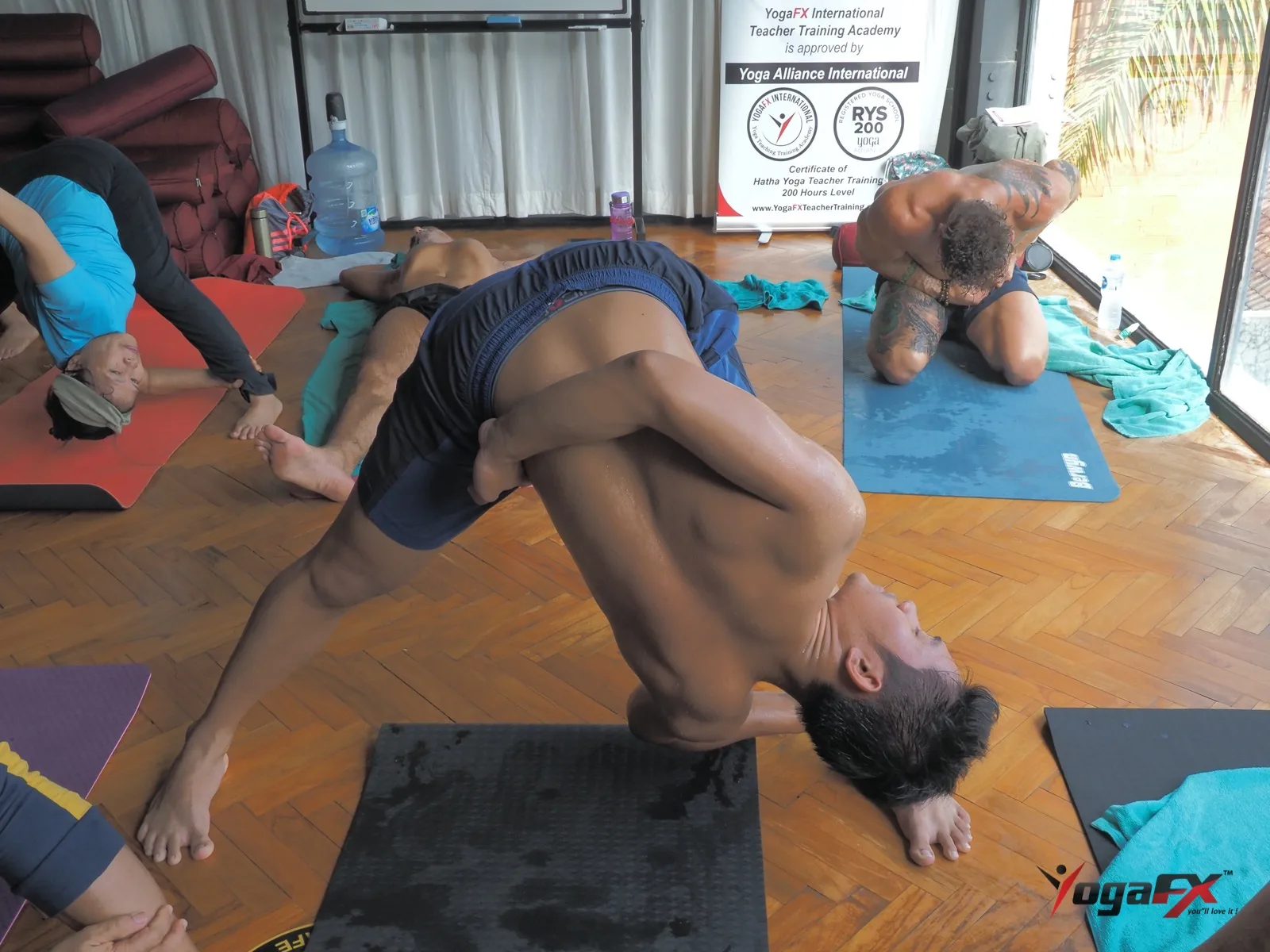
Our classes run 90 minutes at about 40°C and 40% humidity. The heat comes from Bali’s natural tropical climate, not from electric heaters.
A teacher guides the class by voice with a scripted dialogue. There is no demonstration and no music. Because of that, you can close your eyes, follow the words and stay with your breath. Many players who try yoga for footballers like this, since they spend the season hearing shouted instructions and now get a calm voice instead.
The room also removes the contest. Nobody is marking you, and nobody is chasing a ball. You choose your own effort in every posture, and you can sit or lie down whenever you need to. Both studios open from 06:00 to 22:00 every day, so a class can sit around a morning run or a late afternoon on the beach.
Heat needs respect, though. The Mayo Clinic says it is important to drink water before, during and after a workout, and that hot or humid weather can make you sweat more than usual. Visitors from cooler countries feel this most in the first few days.
What the Research Says About Yoga for Footballers
It helps to be clear about the evidence. Research on yoga for footballers is thin. Most studies use ordinary adults, not players, so none of them proves a better season. They do give useful clues about workload, flexibility and stress.
Workload: count it as a moderate day
A 2014 University of Wisconsin-La Crosse study (Porcari et al.) measured 90-minute Bikram classes. On average, men used about 460 calories in one class, and women about 333. Effort sat near 80% of maximum heart rate. That is a real workload, so this kind of hot yoga for football players belongs in your moderate column, not your recovery column.
Flexibility, strength and balance
A 2013 study by Tracy and Hart found that people who practised Bikram yoga gained flexibility and strength. A 2025 systematic review led by Willmott pooled 43 studies and 942 participants. Its findings point to better flexibility and well-being. Neither was built to test sport performance. Read them as a sign that the practice builds useful range, not as a promise.
Stress and the mental break
A 2022 study by Hui and colleagues found that hot yoga lowered state anxiety, the short-term worry you feel in the moment. A season brings pressure, so yoga for footballers may help some players switch off for 90 quiet minutes. It works beside sleep and food, not instead of them.
24%
Hamstring share of injuries
Of all injuries in men’s professional football, 2001/02 to 2021/22.
90 min
Class length
One full class counts as a moderate day in your week.
About 40°C
Room heat
Natural tropical heat at about 40% humidity, not electric heaters.
460 kcal
Average for men
Energy used in one 90-minute class (Porcari et al., 2014).
About 80%
Of maximum heart rate
Average effort measured in the same study.
2 studios
Seminyak and Canggu
Open every day from 06:00 to 22:00.
Heat and Safety Rules for Players Visiting Bali
Fit players often feel they can handle anything. That is why heat can catch them off guard, because a strong body can hide early warning signs. Use these simple rules for yoga for footballers in your first week:
Before class
- Spread your water across the day. One big drink just before class is not enough.
- Eat light and early. Finish a small meal a couple of hours ahead.
- Skip alcohol the night before. A heavy night and a hot room make a poor pair.
During and after class
- Take small sips. Little and often settles better than big mouthfuls.
- Rest whenever you like. Sitting or lying down is part of the class.
- Replace what you sweat out. Water, plus a normal meal with some salt, covers much of it.
- Watch your resting pulse. If it runs clearly higher next morning, make that a rest day.
If you have a heart condition, high blood pressure, a current injury, or take medication that affects heart rate or sweating, read who should be careful with hot yoga and check with your doctor first. This article is general information, so please consult a healthcare professional about your own situation.
What YogaFX Students Say
Our students are not all footballers, and these reviews describe training with us, not results on the pitch. Still, they show how people feel about the teaching and the room. They are individual experiences, not promises.
Six weeks ago, I even didn’t know what is hot yoga. […] I really love hot yoga. I will continue for sure.
Jason, YouTube review, 2026
The whole process has been amazing […] thank you for your patience.
Katia, YouTube review, 2025
It’s a true joy but it’s been humbling experience.
Peter, YouTube review, 2026
Jason’s video is below. Katia and Peter also left video reviews on our YouTube channel.
In total, YogaFX students have left 150 Google reviews, 50 Yoga Alliance reviews and 357 YouTube video testimonials.
Taking Your First Class in Seminyak or Canggu
YogaFX teaches in Seminyak and Canggu, and both studios open from 06:00 to 22:00 every day. Mr. Ian Terry leads the team. He is an E-RYT 500 teacher with more than 12,000 teaching hours. He trained for five years, from 2014 to 2019, with the founder of the method, and he is a Master Trainer of the Republic of Indonesia Yogasana Sports Federation.
A sensible first step into yoga for footballers is one class on an easy day. Tell the teacher you are a footballer on a break, and mention any sore spots. Then choose your own effort and rest whenever you need to. Your first visit can be a free guest pass, so there is no pressure to commit.
Heading home after the break? Our sister site covers a short home routine for players who train on weekday evenings, so the habit can follow you back to your club.
FAQ
Is yoga good for footballers?
Yoga for footballers can help when you plan it well. It adds range in the groin, hips and hamstrings, trains balance and slow breathing, and gives your mind a break from the season. It does not replace strength work or physio advice, so book it on an easy day and check with a doctor if you have any concerns.
Is hot yoga good for football players?
Hot yoga for football players can suit the off-season, because the room is calm and you control your effort. A 90-minute class is a moderate session, though, and the heat adds load. Start with one class on an easy day, drink early, and stop if you feel dizzy or unwell.
Which yoga poses help footballers most?
For yoga for footballers, most players start with five postures: Awkward Pose and Eagle Pose for knees and balance, Standing Separate Leg Stretching and Triangle Pose for groin and hips, and Toe Stand for ankles. Go to about 70% of your range at first, and skip any posture that hurts a joint.
How many hot classes should a footballer take in the off-season?
For yoga for footballers, begin with one class and see how your legs feel for two days. If your sleep is steady and your legs feel normal, add a second class on another easy day. Two classes a week is a sensible start for most visiting players, and you can cut back whenever you feel flat.
Is hot yoga safe for footballers in Bali heat?
Hot yoga is safe for many healthy adults when they respect the heat. Give yourself a few days to adjust to Bali, drink water through the day, rest whenever you need to, and leave the room if you feel dizzy. Check with a doctor first if you have a heart condition or take medication.
Still have questions? Book your free guest pass and ask Mr. Ian and the YogaFX team in person at Seminyak or Canggu, or message us on WhatsApp and we will answer them personally.
 Mr. Ian Terry