
How to choose a yoga teacher training starts with one practical step: take a class at the school before you pay anything. A single 90-minute session shows you the teacher, the room and the pace of learning. Then you can run seven simple checks on what you saw, instead of trusting a brochure.

How to Choose a Yoga Teacher Training: Start With One Class
Most people compare schools on a laptop at night. They read the syllabus, scroll through photos and add up the price. That is a fair start, but it misses the part you will live with for days: the voice of the teacher, the heat of the room and the way you are corrected when you get something wrong.
So we suggest a different order for how to choose a yoga teacher training. Visit first, then decide. At YogaFX, our two Bali studios in Seminyak and Canggu are open every day from 06:00 to 22:00, and a Free Guest Pass covers your first class. Our lead trainer, Mr. Ian Terry, speaks to every student before they enrol, but the room tells you what a website cannot.
Here is why a class works as a test when you are learning how to choose a yoga teacher training. A teacher training is mostly practice, listening and feedback, and a class contains all three in miniature. If you feel lost, rushed or ignored in one class, a longer course will not fix that. If you feel guided, you have learned something no review can tell you.
Seven Class-Day Checks That Show You Which School Fits
Here is how to choose a yoga teacher training with a notebook in hand. The table below follows a normal class from start to finish. Each row names a moment, what to notice and why it matters if you plan to become a teacher. Keep it on your phone and make a few notes afterwards.
| Moment in the class | What to notice | Why it matters for a trainee |
|---|---|---|
| 1. Booking and arrival | How quickly someone answers, and how you are welcomed | Shows how the school treats students once you have paid |
| 2. The first 10 minutes | Is the teacher’s voice clear, steady and easy to follow? | You will learn to speak like this, so it must feel natural to you |
| 3. The standing series | Are corrections given kindly, by name, with a reason? | Feedback is the core of any good training |
| 4. The floor series | Can you keep up, and does the teacher offer options? | A school should meet different bodies, not just strong ones |
| 5. Final relaxation | Does the room settle, and do students look cared for? | Tells you about the culture you would join |
| 6. One hour later | How do you feel, and are you curious to return? | Your own response is data about the practice you would teach |
| 7. A short chat | Can you ask about training, and do you get plain answers? | Honest answers before payment predict honest answers after it |
Checks 1 and 2: the welcome and the voice
Start with the small things. Did someone reply to your message on the same day? Were you told what to bring, when to arrive and how to prepare? These details feel minor, but they predict how a school handles questions from trainees later.
Then listen. In our Original Hot 26&2 classes the teacher follows a fixed script, with no demonstration and no music. That means everything you learn comes through the voice. If a teacher’s pace and wording help you stay inside each posture, you are hearing the exact skill a trainee builds.
Checks 3 and 4: corrections and options
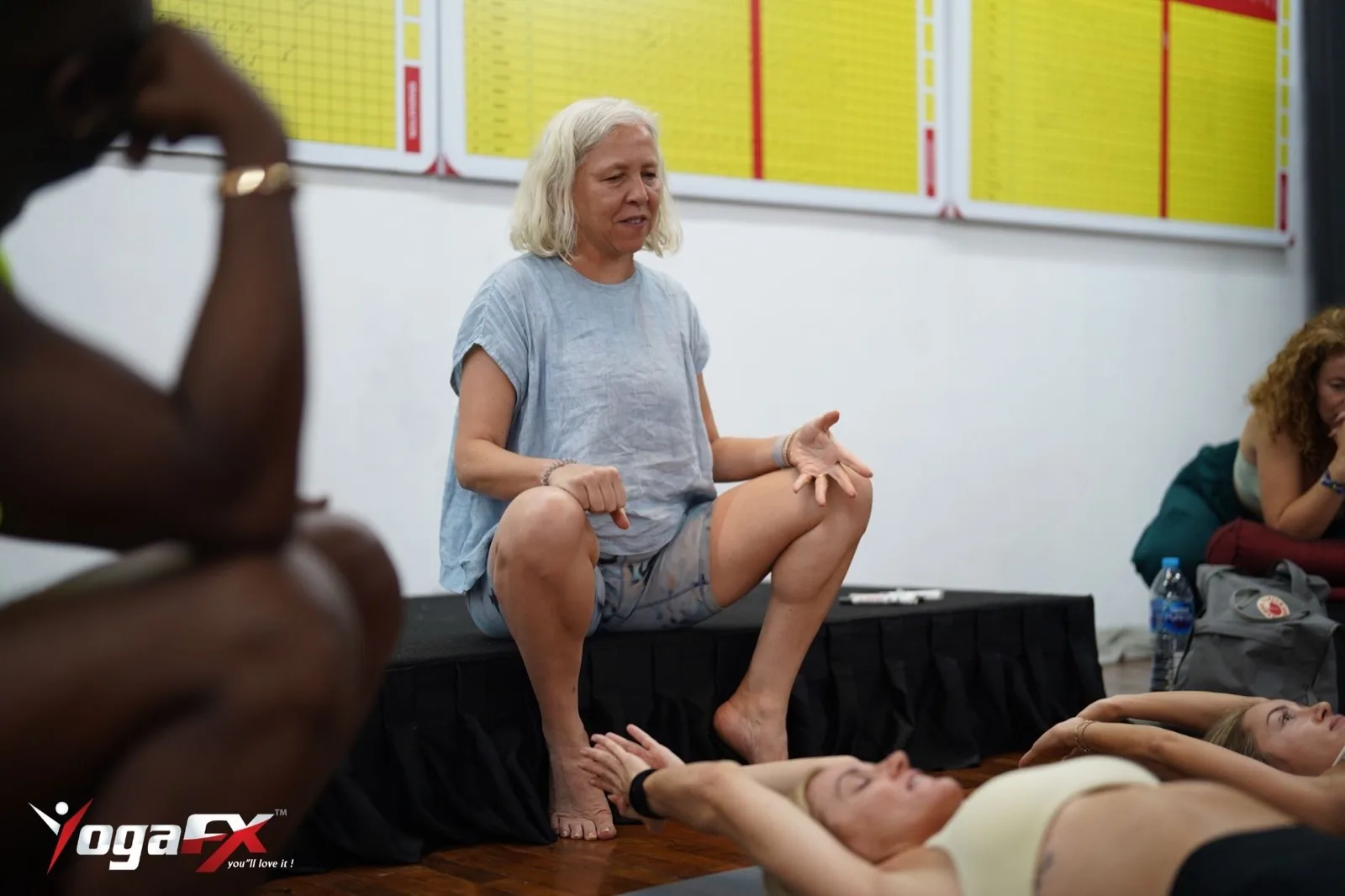
Good feedback is specific. “Lift your chest” helps more than “try harder”, and a reason helps more than an order. Notice whether the teacher speaks to students as people, and whether they offer an easier way in when someone struggles.
- Kind tone. Corrections sound like help, not blame.
- Clear reasons. The teacher explains what a change does for your body.
- Real options. Beginners and experienced students both have a place.
If you have never tried a hot room, ask the front desk for a quick walk-through before you start. Arrive early, so the heat does not surprise you.
Checks 5, 6 and 7: the culture, your response and the chat
Final relaxation is quiet, so it shows you the room’s mood. Do students seem looked after? Do they linger or hurry away? Next, check yourself an hour later. Tired is normal after a hot class. Curious is the sign you want, because a course built on this practice asks you to love it.
Finally, talk to someone. Ask who leads the training, how many of the 200 hours are live, and what happens if you fall behind. Honest, unhurried answers are worth more than any discount. If you would rather start with a desk-research version first, our sister site offers a nine-question checklist for comparing schools on paper, and then you can come and test the answers in the room.
Questions to Ask Yoga Teacher Training Schools After Your Class
Once you have felt the room, you will have better questions than before. Bring them to the front desk or to the discovery call. Knowing how to choose a yoga teacher training is mostly knowing what to ask, and in what order.
- Who will teach me? Ask for the lead trainer’s name, and ask to meet them.
- How many hours are live? The 200 hours should divide clearly between contact time and home study.
- What happens if I fall behind? A caring school has a plan for this.
- What is in the price? Get tuition, stay, materials and any exam fee in writing.
- What comes after? Ask about support, community and further learning once you fly home.
Write the answers down the same day. Memory is kind to schools you liked, and it fades fast. A written note lets you compare two schools fairly a week later, when the excitement has settled.
Many people also wonder whether an online course could replace the visit. Online study is a good way to prepare, and our hybrid course uses it for that reason. A scripted hot class is different, though.
Someone has to listen to you say it aloud and correct you on the spot. So when you think about how to choose a yoga teacher training, ask how much of the learning happens in front of a real trainer.
Finally, think about your own reason for training. Some people want a new career, and others simply want a deeper practice. Both are good reasons, and the right school will ask you which one is yours. If a school never asks, that tells you something about how closely it will watch your progress.
What Research Says, and What It Cannot Tell You
A fair question is whether the practice itself is worth building a career around. Research gives a careful, partial answer.
In an 8-week randomised trial from Massachusetts General Hospital (Nyer et al., 2023, published in the Journal of Clinical Psychiatry), 59.3% of adults in a heated hatha yoga group had their depressive symptoms fall by half or more, against 6.3% of a waitlist group. You can read the abstract on the publisher’s page for the trial.
Still, read that result with care. The participants were adults with depression in a research programme, not teacher trainees, and the study cannot promise the same for you. Research suggests heated yoga may help mood for some people. It does not replace medical care.
This is a useful habit when you work out how to choose a yoga teacher training that is honest with you. Ask which studies it relies on, and who ran them. A trustworthy school names its sources in full and admits the limits.
A weak one repeats big promises with no source at all. If you have a heart condition, are pregnant or take regular medication, consult a healthcare professional before any heated class.
What Trainees Say After They Have Been There
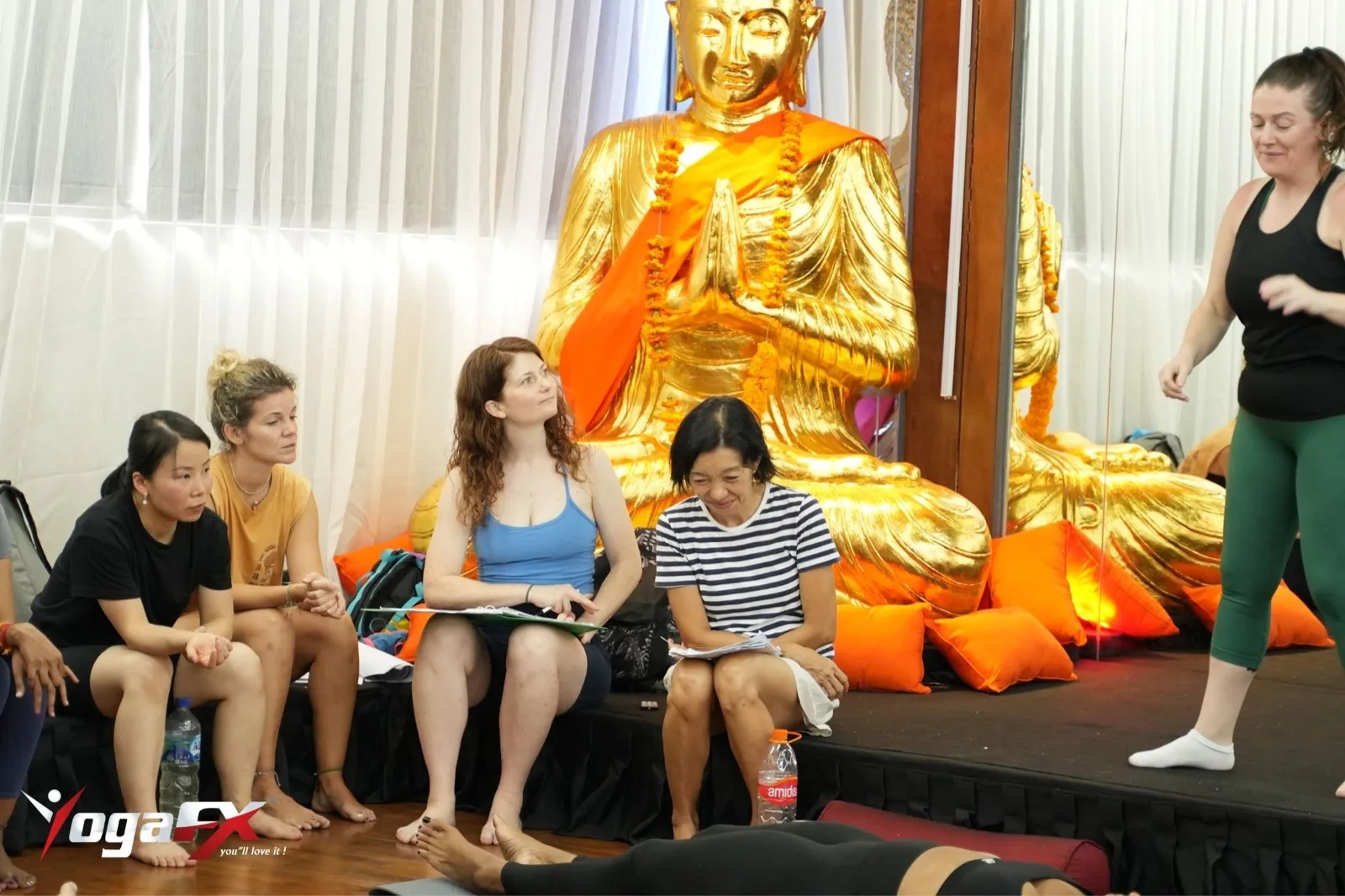
Your own class comes first, but other people’s experience adds context. YogaFX has 150 Google reviews, 50 Yoga Alliance reviews and 357 YouTube video testimonials, so you can check us on three outside platforms. Here are three, by first name. For more, see our page of yoga teacher training reviews from Bali.
“I’m proud to be part of this class, it’s more than just a class it’s a family with a very great teacher.”
Amalia, Google review, 2020
“Classes from the head trainer Ian who attended every session. We had months of pre course information, support and knowledge.”
Jilly, Yoga Alliance review, 2019
Ozge also left a video review. She says the study groups were encouraging, the environment was “incredibly supportive”, and she made great friends and is looking forward to coming back. You can watch it below (Ozge, YouTube review, 2025).
Jilly and Amalia trained and practised in earlier years, and the course format has changed since then. Even so, the three reviews agree on the same point: people remember the teaching and the support long after they forget the brochure.
How to Choose a Yoga Teacher Training Beyond the Class
A good class is the start of how to choose a yoga teacher training, not the end. Once you like the room, you still need to check the paperwork and the plan. Here is what to ask, in the order we would ask it.
Registration and certificate
Yoga Alliance is the registry most studios recognise. It registers schools (RYS) and teachers (RYT), and it runs a public search for each. Look up the school by its exact name in the Yoga Alliance school directory, and a trainer in the teacher directory. Write down what you find.
Yoga Alliance is a private association, though, and most countries do not license yoga teachers by law. So a registry listing is a sensible minimum, not the whole answer. For our own course, graduates work towards the Yoga Alliance RYT 200-Hour route and the Bikram Hot 26&2 200-Hour International Yoga Certification. Ask any school to name its credentials in writing.
The lead trainer and the call
Mr. Ian Terry holds the E-RYT 500 credential and has taught more than 12,000 hours. He spent five years, from 2014 to 2019, training with the founder of the Bikram Hot 26&2 method, and he is a Master Trainer for the Republic of Indonesia Yogasana Sports Federation. Since 2017, YogaFX has trained 1,500+ graduates from more than 80 countries.
Before you enrol, Mr. Ian speaks to each student on a discovery call about goals, experience and questions. That call settles fit before anyone books a flight, so use it. Our guide to what the RYT 200 hours look like in a Seminyak hot room shows how the week is built.
Format, dates and price
The course is a hybrid. You study online first, then join a 6-day intensive in Bali, checking in on a Sunday and out on a Friday. The next batch runs from 24 to 29 January 2027 at Soham Wellness Center in Seminyak, with Djabu Seminyak as the hotel. There is no cap on the group size.
On price, the Early Bird rate is US$1,899 against a regular US$1,999. Twin Share is US$1,999 and a Single Room Premium is US$2,199. Instalments start from US$250 a month with no interest. Whatever school you pick, ask for a written quote that lists what is included. For a line-by-line view, read our breakdown of 200-hour yoga teacher training cost.
Warning Signs to Avoid When You Compare Schools
However you decide how to choose a yoga teacher training, a few signs should slow you down. They apply to every provider, including us, so hold us to the same standard.
- No class to try. You are asked to pay before you have seen the teacher at work.
- Pressure to book today. A good school lets you sleep on it.
- Vague credentials. The certificate has a grand name but no named issuer.
- Moving prices. The total grows once you ask about rooms, manuals or exam fees.
- All scenery, no teaching. You hear about the beach and little about the hours.
Bali is lovely, but scenery is not a credential when you decide how to choose a yoga teacher training. If you want the wider picture of schools in Bali, our guide to how to choose the best yoga teacher training in Bali compares the options.
Plan Your Free Guest Pass Visit
The easiest way to start learning how to choose a yoga teacher training is to book your class. Here is how to use it well:
- Message us. Ask for your Free Guest Pass on WhatsApp and pick a time between 06:00 and 22:00.
- Choose a studio. Seminyak or Canggu, whichever is closer to where you stay.
- Arrive hydrated. Drink water through the day, eat light and bring a towel.
- Take notes. Use Table 1 and write down what you noticed in the first hour afterwards.
New to the schedule? Our guide to drop-in hot yoga classes in Bali explains how booking works. If the class feels right, book a discovery call with Mr. Ian. If it does not, you have saved yourself a flight, and that is a good result too. That is how to choose a yoga teacher training with your own eyes open.
FAQ
How to choose a yoga teacher training program?
To choose a program, take a class with the school first, then check the lead trainer, the registration, the written price and the reviews on outside platforms. A school that answers plainly and lets you try before you pay is usually a safer choice than one that only sends a brochure.
Can a beginner do yoga teacher training?
Often yes, because many people train to deepen their own practice, not only to teach. Ask the school what experience it expects. Taking a class first shows you whether the pace suits you, and a discovery call can settle any doubts before you pay.
Where should I do my yoga teacher training?
Choose a place where you can visit the school, meet the trainer and practise in the same room you will train in. Bali suits many people, but the location matters less than the teaching, the credentials and how supported you feel in the first class.
How many hours do you need to teach yoga?
Most studios ask for a 200-hour training from a recognised school, though no law requires it in many countries. Check the rules where you plan to teach. At YogaFX, the 200 hours combine online study at home with a 6-day intensive in Bali.
Still have questions? Message Mr. Ian and the YogaFX team on WhatsApp and we will answer them personally. Want to feel the room first? Ask for your Free Guest Pass in the same chat, and we will book your first class at our Seminyak or Canggu studio.
 Mr. Ian Terry