
Yoga for athletes recovery works best as a slow, low-effort session after hard training. For a Canggu surfer, that means 10 to 20 minutes of floor stretches once you are out of the water, with easy breathing and no pushing. Save the hot class for a day when your shoulders and legs feel fresh again.

Picture the usual morning. You paddle out at first light, surf for two hours, and then ride back to a laptop or a gym session. By lunch your shoulders ache, your lower back feels stiff, and your hips complain every time you stand up. You do not need another workout. Instead, you need something that helps you feel human before tomorrow.
This guide is for surfers, gym-goers, runners and club players who live or stay on the Bukit and Canggu coast. It explains what yoga for athletes recovery should feel like, how long your body really needs, and how a hot class fits around a training week. Mr. Ian Terry, our E-RYT 500 teacher with more than 12,000 teaching hours, leads the team.
We teach the same fixed sequence at both of our studios, so the postures below are the ones we know best.
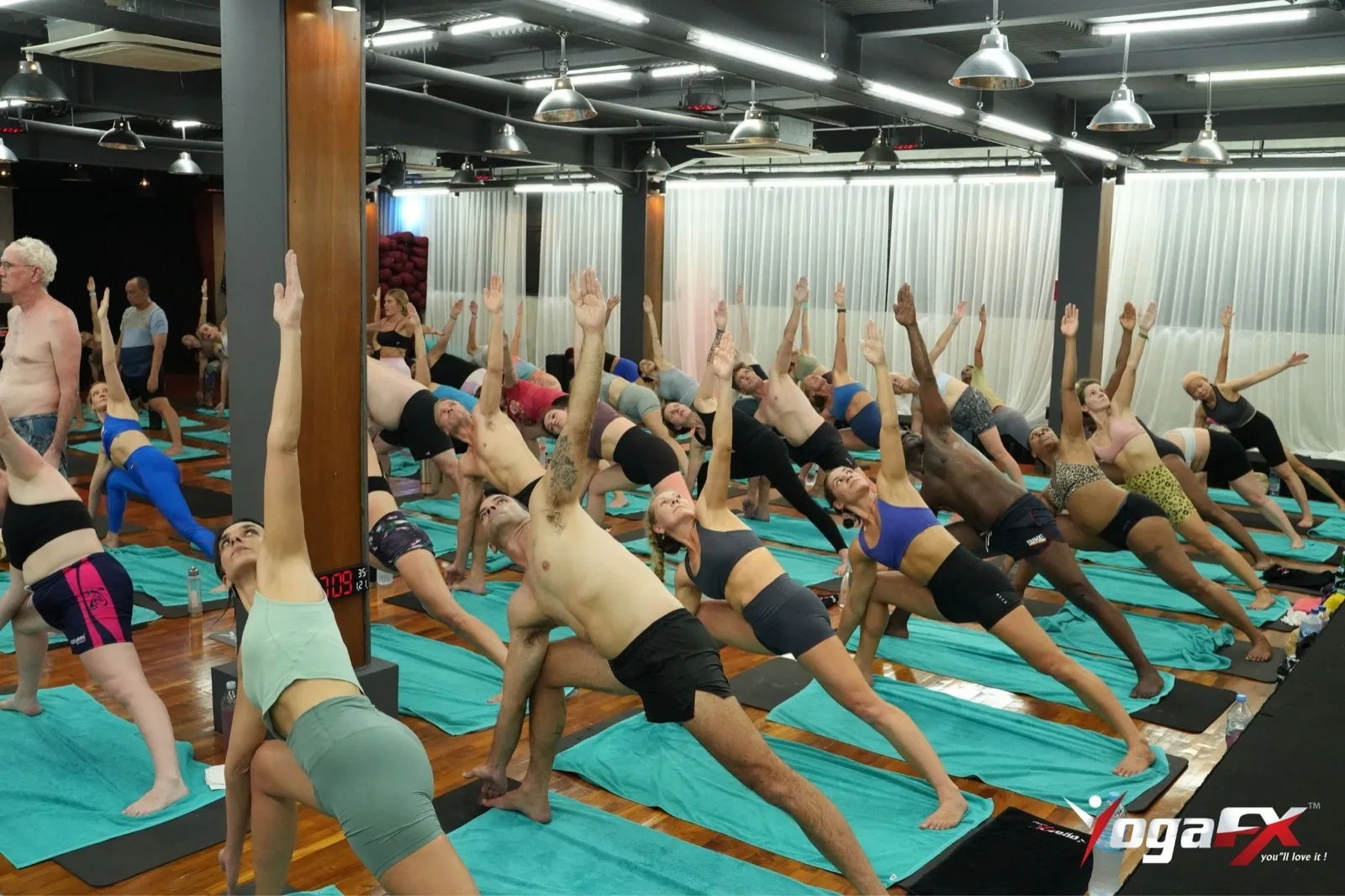
Yoga for Athletes Recovery After a Surf: The Short Answer
Easy is the whole point of yoga for athletes recovery. When a session leaves you gasping or soaked in sweat, you have trained again instead of recovering. Newcomers make this error all the time, because pushing hard on a mat feels virtuous.
Let yesterday’s effort set today’s menu:
- Easy paddle or light gym day: five slow minutes of breathing before bed will do.
- Long surf, heavy legs or a hard ride: a short floor session the following morning, around half your normal effort.
- Race, match or big swell weekend: give yourself two easy days, brief on the first and a little longer on the second.
- Fresh legs and a calm mood: a hot class is fair game.
Nothing here needs special equipment, because a mat and a towel in your villa will do. That said, a teacher can spot the small habits that make recovery work harder than it should, such as locked knees or a held breath. For a home-based version written for busy men, see these gentle home routines for sore, busy men on our sister site.
Why Surfers and Gym Athletes Recover Differently
Surfing and lifting load the body in different places, so the stiff spots differ. A surfer spends hours lying on the chest with the neck extended, then pops up and crouches. A lifter loads the spine, hips and knees under weight. Because of that, good yoga for athletes recovery starts by asking where it hurts, not which sport you play.
The table below links common tight spots to a gentle posture from the Original Hot 26&2 sequence. Every posture is done unheated and at about half your usual range.
| Where it feels tight | Typical cause | Gentle posture to try | How long |
|---|---|---|---|
| Shoulders and upper back | Paddling, overhead lifts, desk work | Half Tortoise, then Standing Deep Breathing | 1 to 2 minutes each |
| Lower back | Pop-ups, deadlifts, long drives | Wind Removing Pose, then Cobra at low height | 2 short sets each |
| Hips and groin | Crouching on the board, squats, cycling | Triangle, only if standing feels easy | 30 to 45 seconds each side |
| Hamstrings | Running, hinge lifts, sitting | Head to Knee with Stretching, knee bent | 1 set each leg |
| Whole body and mind | Poor sleep, a hard week, a big session | Dead Body Pose with slow nose breathing | 2 to 3 minutes |
Notice what the table leaves out. There is no deep backbend, no long hold and no heat. The goal is easy circulation and steady breath. Nobody is chasing a deeper split.
What the Research Says About Yoga for Athletes Recovery
Recovery timing: what the 2013 review found
It helps to be honest about the evidence. Very few trials test yoga for athletes recovery directly, and none that we know of tests surfers. So the useful research is nearby, and it is mostly about timing.
Researchers often track how fast the calm branch of the nervous system, the parasympathetic system, steers the heart back to rest after exercise. In 2013, Stanley, Peake and Buchheit reviewed the research in Sports Medicine. Their review put full recovery at up to 24 hours after low-intensity exercise, 24 to 48 hours after threshold work, and at least 48 hours after high-intensity sessions.
Two more findings matter here. Session length is unlikely to be the main driver, so how hard you worked counts more than how long. Also, people with better aerobic fitness tend to recover faster, so your plan can get lighter as you get fitter.
Up to 24 h
Low-intensity session
An easy paddle or jog. Breathing work and a short stretch are enough.
24 to 48 h
Threshold session
A long surf or tempo run. Keep yoga gentle and unheated the next day.
48 h or more
High-intensity session
Intervals, a race or a match. Plan two easy days before the next hard effort.
Fitter = faster
Your fitness matters
Better aerobic fitness shortens the window, so your plan can shrink over time.
What other studies add
Other studies add context. A 2013 trial by Tracy and Hart found gains in flexibility and strength in people who practised the hot yoga sequence. A 2025 systematic review by Willmott and colleagues covered 43 hot yoga studies and 942 participants, and reported promising effects on health and well-being. A 2022 study by Hui and colleagues found that hot yoga lowered state anxiety, the short-term stress you feel in the moment.
What this means for you
In practice, gentle yoga is a low-risk way to keep moving and slow your breathing on a recovery day. The evidence does not say it beats sleep, good food or a sensible training load, so use it as one tool among several.
A 15-Minute Post-Surf Stretch You Can Do After a Shower
This routine uses six postures from the Original Hot 26&2 sequence. Because the order is fixed, you never have to think about what comes next. Do it in normal room temperature, ideally after a cool shower and a glass of water.
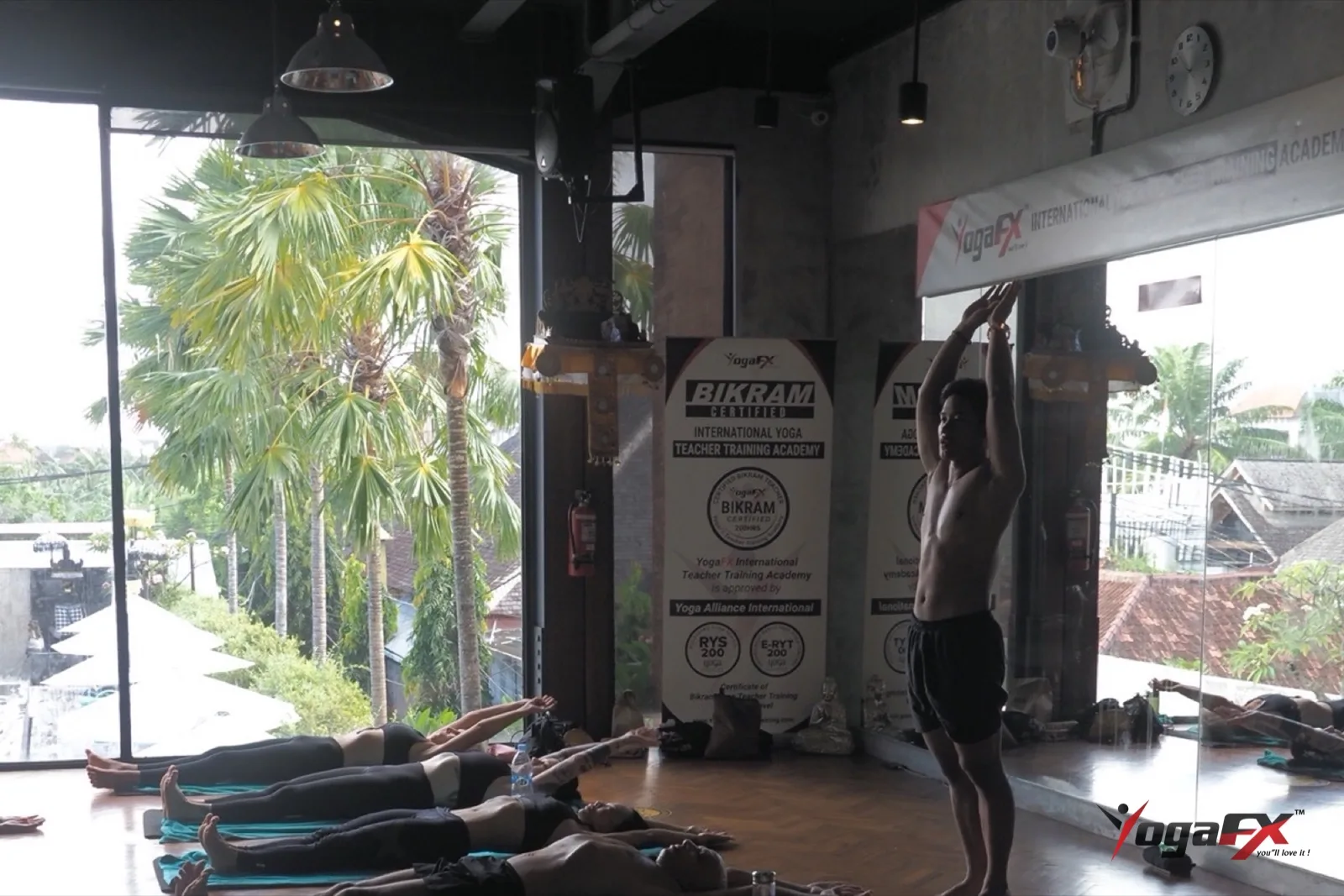
Step by step
- Standing Deep Breathing, 2 rounds. Breathe slowly through the nose while you lift and lower the elbows. Stop if you feel dizzy.
- Wind Removing Pose, 2 sets. Hug one knee, then both, to ease a tight lower back after pop-ups or heavy lifts.
- Cobra, 2 short sets. Stay low. It is a gentle backbend that wakes the spine without loading the legs.
- Half Tortoise, 1 set. Sit on your heels and fold forward. It stretches the upper back and lets the breath slow down.
- Head to Knee with Stretching, 1 set each leg. Bend the knee as much as you like. You want a soft pull in the hamstring, never a sharp one.
- Dead Body Pose, 2 to 3 minutes. Lie on your back with palms up and let the breath slow by itself.
Stay well inside your comfort zone. Skip any posture that feels bruised or sharp. In yoga for athletes recovery, leaving one out is a smart call, not a failure.
Common mistakes to avoid
- Making it a workout. Heavy sweating means the effort was too high.
- Going hot the morning after a long swell day. If you feel flat, wait until the third day.
- Locked knees in forward folds. A soft bend sends the stretch into the hamstrings.
- Pushing into a tweak. A fresh strain needs a physio’s eye, not a deeper stretch.
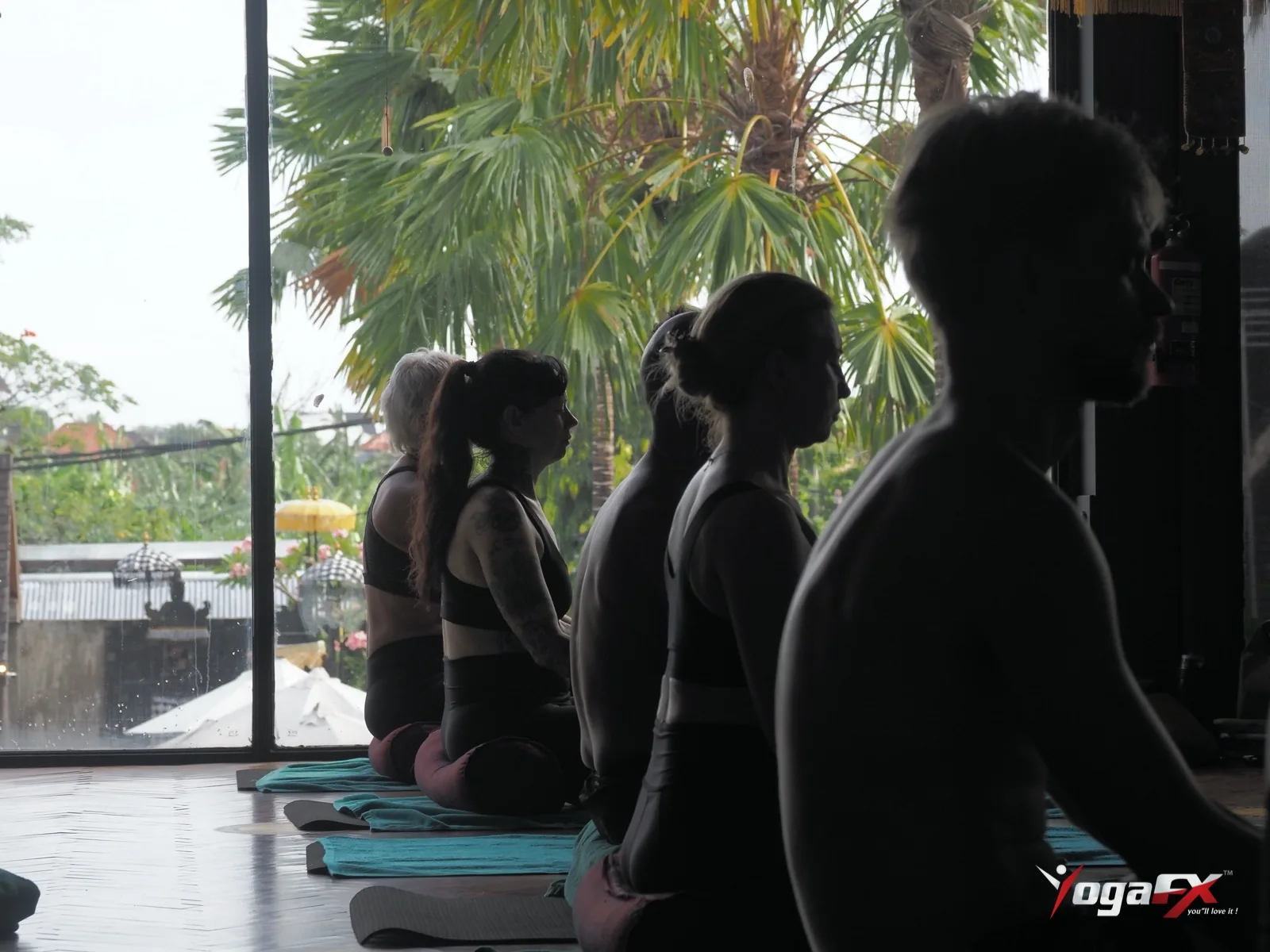
Planning a Training Week Around Yoga for Athletes Recovery
The best yoga for athletes recovery is the kind you actually repeat. So build it into your week the same way you plan swell days and gym days. Treat recovery as a scheduled session, not something you squeeze in when you feel guilty.
A sample week for a Canggu surfer who lifts
- Monday: a long dawn surf. Evening: 5 minutes of Standing Deep Breathing and Dead Body Pose.
- Tuesday: gym, lower body. Next morning, the 15-minute floor routine above.
- Wednesday: short surf and an easy walk. Optional 10-minute stretch after your shower.
- Thursday: gym, upper body. Add Half Tortoise for the shoulders and upper back.
- Friday: rest from training. This is a good day for a full hot class in the Seminyak or Canggu room.
- Weekend: big session or match, then two easy days of yoga for athletes recovery before you push again.
Notice that the hot class sits on the day after a rest day, not after a hard one. That small choice is what keeps yoga for athletes recovery from turning into a third workout. If you also run, our readers often swap the Friday class for a short jog and keep the floor routine on the day after.
Signs you need an easier day
Your body tells you early if the plan is too much. Watch for heavy legs that do not lift after a night of sleep, a resting heart rate that feels high, a short temper, or postures that suddenly feel shaky. Any of these means the next session of yoga for athletes recovery should shrink to breathing and Dead Body Pose. That is not laziness. It is the same logic as the research above: harder sessions need longer windows.
Also remember that sleep, food and stress count as much as stretching. A late night, a long flight to a surf trip or a stressful week at work can stretch your recovery window in the same way a big session does. When life gets busy, protect the five-minute version of your routine so the habit stays alive.
Hot Yoga After a Workout: Same Day or Next Day?
Many readers ask whether hot yoga for recovery beats a gentle home session. The honest answer is that a full heated class is hard exercise, so yoga for athletes recovery should not mean a hot class on the day after a hard effort. Our classes run 90 minutes at about 40 degrees Celsius and 40 percent humidity, and the heat comes from Bali’s natural tropical climate, not from electric heaters. So the class adds load to your heart on top of the postures.
Going from the gym straight into a hot room stacks two heavy loads on one day. An experienced practitioner in an easy training block may cope. Most people simply double the strain, so a calmer evening, then a hot class on a fresher day, works better.
Is hot yoga good for DOMS?
DOMS means delayed onset muscle soreness, the ache that peaks a day or two after heavy or unfamiliar work. A warm room can make sore legs feel looser, and students often tell us so. Feeling looser is not the same as healing faster, though, and the research does not show that heat speeds repair. While you are properly sore, gentle movement at normal temperature is the safer pick, and the hot class can wait.
Food, water and safety
Recovery also depends on what you eat and drink around a session. Our guide on what to eat before and after hot yoga covers timing and simple choices.
If you have a heart condition, high blood pressure, a current injury, or take medication that affects heart rate or sweating, read who should be careful with hot yoga and check with your doctor before any heated practice. This article is general information, so please consult a healthcare professional about your own situation.
Runners face a similar question, and we cover it in hot yoga for runners. The same rule applies: easy days stay easy, and the heat is a treat for when you are ready.
What YogaFX Students Say
Our students come from many sports, and many arrived tired, sore or carrying old knocks. Here is what a few of them said in their own words. These are individual experiences, not promises.
3 intense weeks of yoga. It was an extraordinary experience. Out of the ordinary organization and professionalism.
Michele, Google review, 2022
So nice school you’ll love it
Arkan, Google review, 2022
Amanda, a trainee in our YouTube reviews from 2023, said that the people you meet here change your life and your heart forever. You can watch her video below.
In total, YogaFX students have left 150 Google reviews, 50 Yoga Alliance reviews and 357 YouTube video testimonials.
Taking a Class Near Your Surf Break in Bali
YogaFX teaches in Seminyak and Canggu, and both studios open from 06:00 to 22:00 every day. That wide window helps athletes, because you can fit a class around a dawn surf, a gym block or a late work call. If you live closer to the beach, our Canggu studio guide explains what to check before you join.
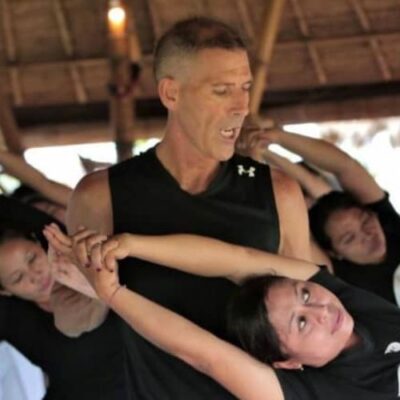
Mr. Ian Terry leads the YogaFX teaching team. He trained for five years, from 2014 to 2019, with the founder of the method.
He is also a Master Trainer of the Republic of Indonesia Yogasana Sports Federation. His students include national competitors, so the team understands athletes who care about performance as much as comfort.
A sensible first step toward yoga for athletes recovery in Bali is one class on a rest day, with a teacher who knows you are an athlete. Tell them about your sport, your sore spots and your last hard session. Then choose your own effort and rest whenever you need to. Your first visit can be a free guest pass, so there is no pressure to commit.
FAQ
Is yoga good for muscle recovery?
It can help. Slow movement keeps blood flowing to tight areas, and a long exhale settles your breathing, so you leave feeling looser and calmer. It works beside sleep, food and a sensible schedule, not in place of them. Stay at half effort, skip sharp spots, and see a physio about injuries.
Is hot yoga good for recovery?
A hot class is hard exercise, so it fits days when you already feel recovered. The morning after a long surf or heavy lift, gentle floor work at normal temperature is the better choice. Most people do well booking the hot room on day three, or after a full rest day.
What should I do after hot yoga?
Cool down slowly, sip water, and eat a light meal with some protein and carbohydrate when you feel hungry. Skip any hard workout straight afterwards. If you feel dizzy or unwell, sit somewhere cool and stop for the day. Keep sipping water over the next few hours.
How long should a recovery yoga session be?
Most athletes do well with 10 to 20 minutes at about half effort. After an easy day, 5 minutes of slow breathing is enough. After a race or a match, plan two easy days, with a short session on day one and a slightly longer one on day two, and keep the effort low.
Is yoga a good recovery workout for surfers?
As a gentle option, yes. Surfers tend to feel tight through the shoulders, lower back and hips, and slow floor postures can ease those spots. No trials have tested surfers specifically, so treat it as a sensible habit and let your own body decide how much is enough.
Still have questions? Book your free guest pass and ask Mr. Ian and the YogaFX team in person at Seminyak or Canggu. We will answer them personally, or message us on WhatsApp.
 Mr. Ian Terry