
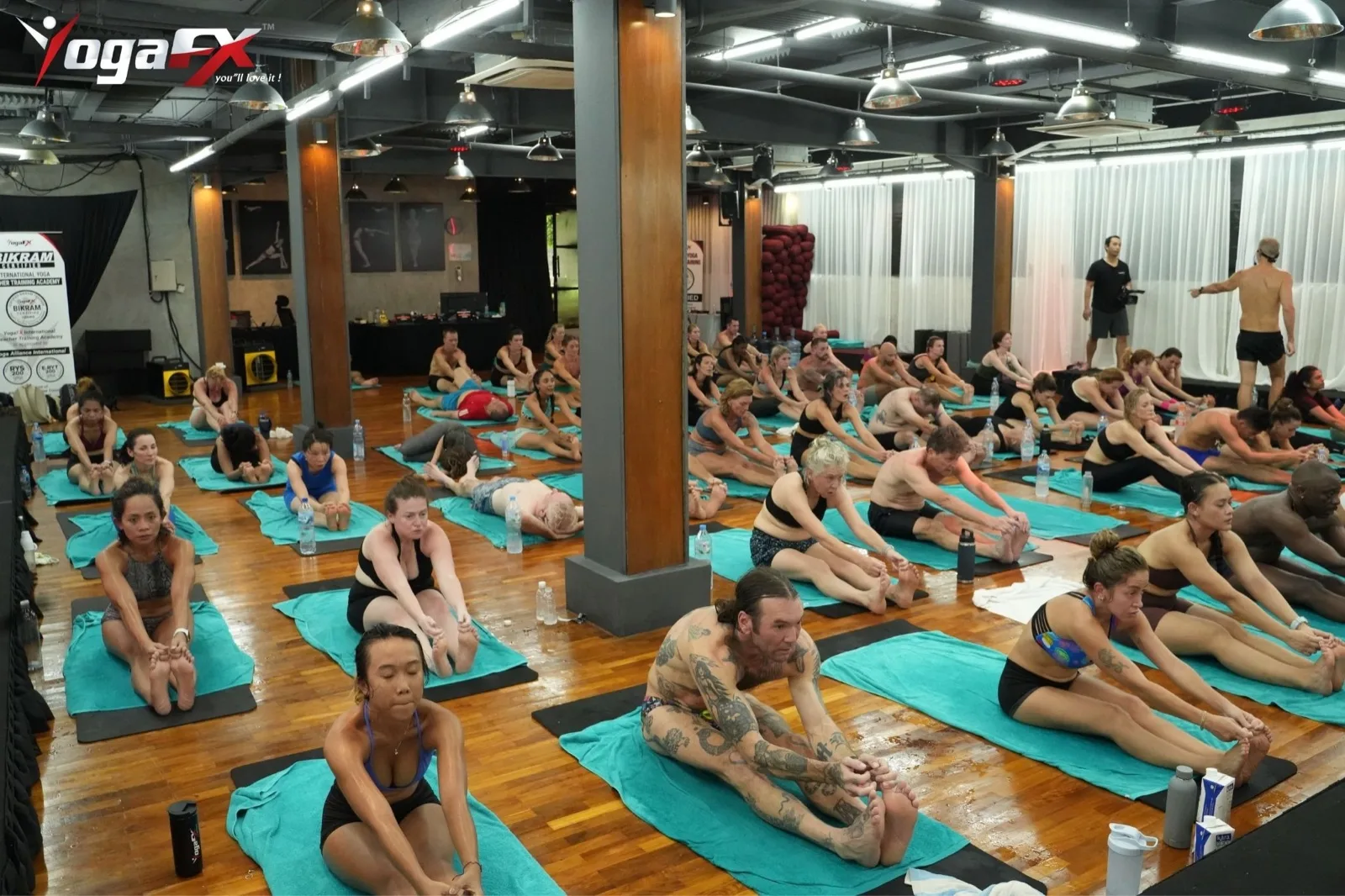
An E-RYT 500 teacher has finished 500 hours of Yoga Alliance training and taught for at least 2,000 hours across four or more years. In a hot room, that experience shows up as sharper corrections, steadier pacing and calmer heat management. Here’s how it feels in a YogaFX class in Seminyak.

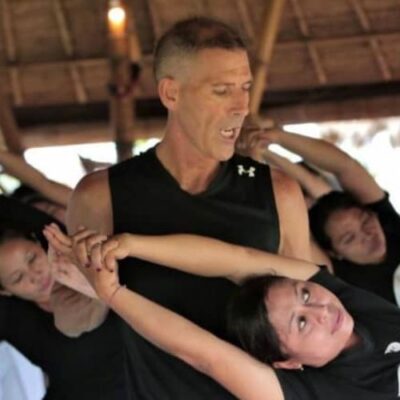
Mr. Ian Terry, who leads YogaFX, holds the E-RYT 500 credential and has taught more than 12,000 hours. This guide explains the credential in plain numbers first. Then it walks through a 90-minute class and shows what changes in the room, and what does not.
What E-RYT 500 Means: The Numbers Behind the Letters
Yoga Alliance is the registry that sets the standards for yoga teachers. RYT stands for Registered Yoga Teacher. The E-RYT 500 meaning adds one letter: the E stands for Experienced. So an E-RYT 500 is not simply a teacher who studied more. It is a teacher who studied at the 500-hour level and then spent years teaching.
The figures below come straight from Yoga Alliance’s own Standards for Registered Yoga Teachers. We list the 200-hour experienced tier too, because people mix the two up all the time.
| Credential | Training required | Teaching experience required | Years teaching |
|---|---|---|---|
| E-RYT 200 | 200-hour training with a registered school | 1,000 hours since training | At least 2 years |
| RYT 500 | 500 hours, as one program or 200 plus 300 | 100 hours since training | Not stated |
| E-RYT 500 | 500 hours, as one program or 200 plus 300 | 2,000 hours in total | At least 4 years |
So what are the E-RYT 500 requirements in practice? Yoga Alliance asks for three things on the standard path:
- Training. A registered 500-hour program, or a 200-hour training combined with a separate 300-hour advanced training.
- Teaching hours. 2,000 in total. Of those, 1,500 must come after a 200-hour or 500-hour training, and the other 500 after a 300-hour or 500-hour training.
- Time. At least four years of teaching after the training is finished.
There’s also a reward at the top of the ladder. According to the same standards, an E-RYT 500 can lead Yoga Alliance teacher trainings and offer continuing education to other teachers. That’s why the credential matters most for people who train others.
Why Experience Matters More Than the Letters
A certificate says what a teacher studied. Experience says what a teacher has seen. After 2,000 hours in front of rooms, a teacher has watched thousands of tight hamstrings, wobbly balances and sinking spirits at minute 50. That pattern recognition is the real product of an E-RYT 500, and no textbook supplies it.
Mr. Ian Terry is a good example. He trained for five years, from 2014 to 2019, with the founder of the Bikram Hot 26&2 method. He is also a Master Trainer for the Republic of Indonesia Yogasana Sports Federation. For the full story, see Mr. Ian Terry’s full teaching profile.
The credential also helps your own career if you teach. For a practical view of what Bali studios ask for when they hire, see our guide on Yoga Alliance certification in Bali.
That said, letters alone don’t make a class good. A teacher can hold E-RYT 500 and still deliver a dull class. What the credential does is raise the odds. It tells you the teacher has been tested by time, not only by an exam.
Corrections: What Changes After Thousands of Classes
Our classes use a scripted dialogue. The teacher does not demonstrate, and there is no music. Every posture is guided by voice alone. Because of that, the quality of the spoken correction decides how much a student learns.
In a busy room, a teacher can only say so much. Experience shows in what the teacher chooses to say. Here is what to listen for in a class led by an E-RYT 500 teacher:
- One clear fix at a time. A busy room has twenty problems at once. A senior teacher picks the one that matters most right now.
- A reason with the instruction. Students move better when they know why. “Press the hips forward” works, but “press the hips forward to protect the lower back” works better.
- Repetition without nagging. The same cue can be said three ways. Experienced teachers vary the words, so the message lands without feeling like criticism.
- Knowing when to stay quiet. Sometimes the best correction is silence and a breath. Teachers learn this only by teaching.
In a nutshell, you are not paying for more cues. You are paying for better ones, and that is what makes a familiar posture feel new.
Pacing: How a Senior Teacher Reads a Hot Room
Each class follows a fixed sequence of 26 postures and two breathing exercises, which is where the name 26&2 comes from. The order never changes. The pacing, however, is a human decision. A teacher chooses how long to hold the pause between postures, when to repeat a cue and when to let the room rest.
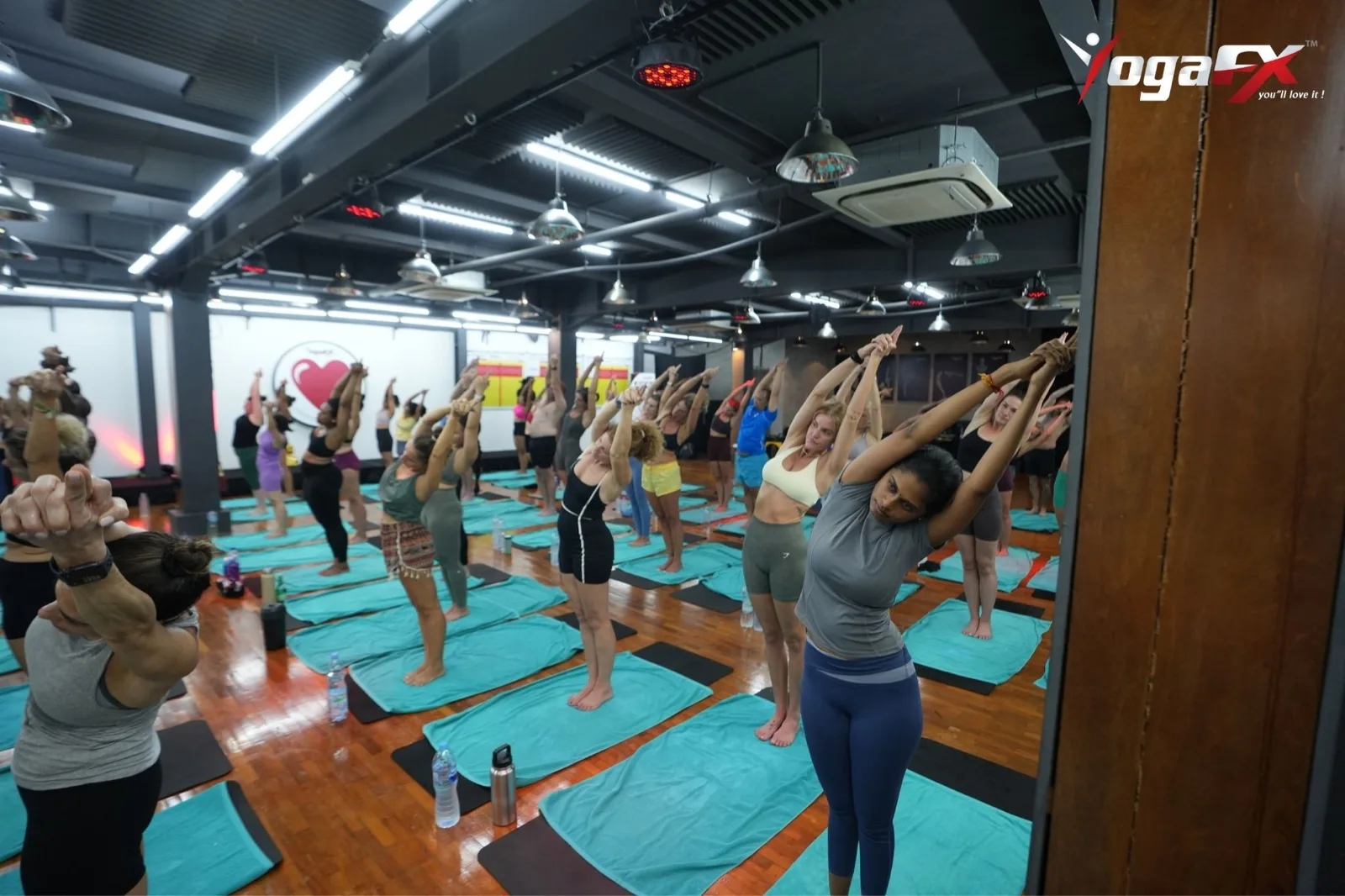
A senior teacher reads the room as the class unfolds. Several signals tell them what to do next:
- Breathing sounds. A room that breathes in unison is ready for the next posture. A ragged room needs a longer pause.
- Faces and posture. Glazed eyes late in class often mean students need a clear, simple cue, not a complex one.
- Group energy. A strong class can take a steadier push. A tired class needs encouragement and rest.
This skill takes years to build. A new teacher often follows the script word for word. An experienced teacher follows the same script but adjusts the delivery. Our 90-minute class walkthrough shows how the 90 minutes unfold from start to finish.
Heat Management in Bali’s Natural Tropical Heat
Our studios in Seminyak and Canggu run at about 40°C with 40% humidity. We use no electric heaters. The warmth comes from Bali’s own climate, which you can read about in why we practise without electric heaters. Heat is a dose, and the dose needs managing.
Experienced teachers manage that dose in simple ways. They remind students to drink before they feel thirsty. They give clear permission to sit or lie down when needed, and they make sure no one feels judged for doing so. In a hot room, that permission is a safety feature.
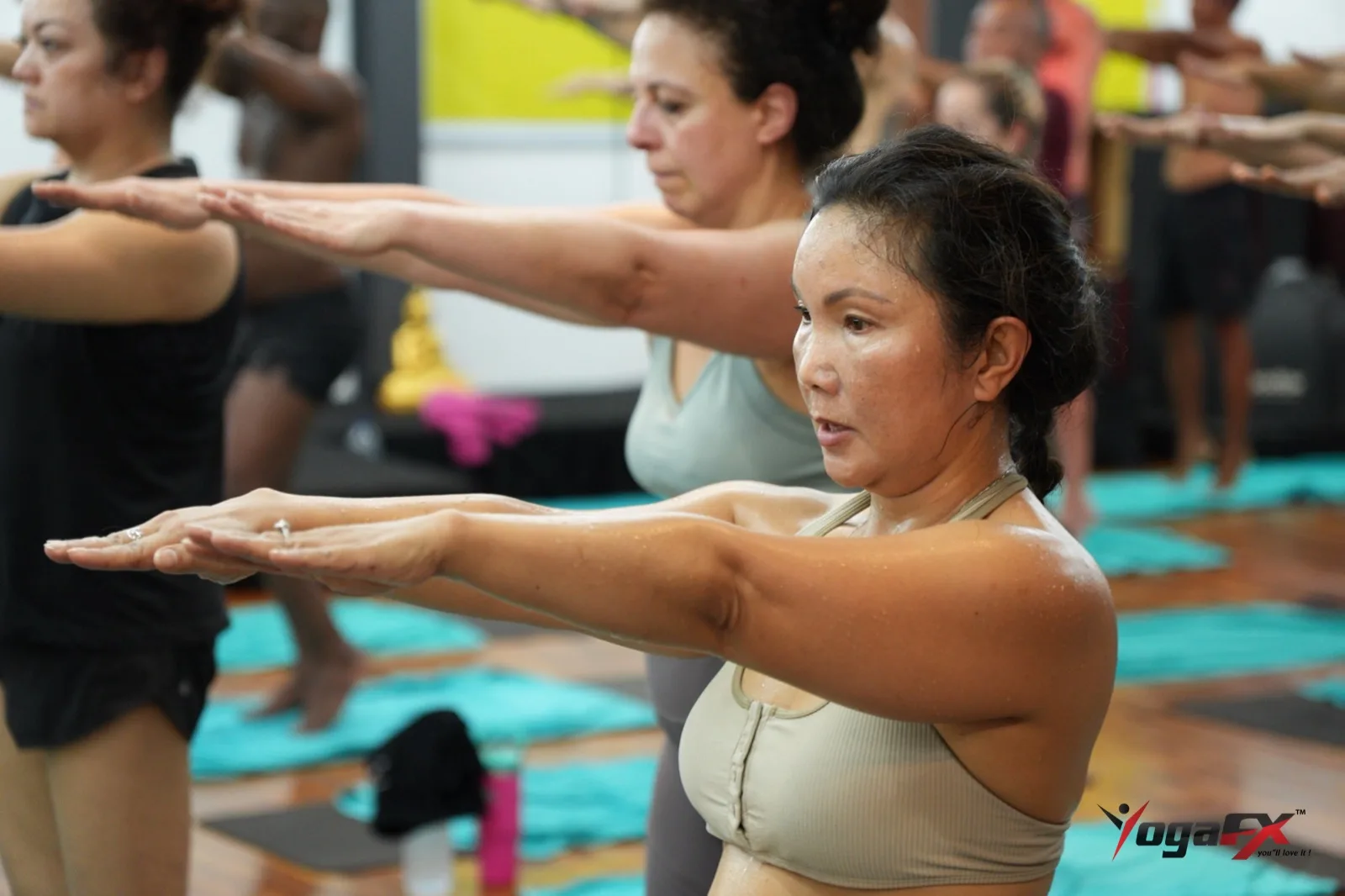
The physical load is real. A 2025 systematic review by Willmott and colleagues pooled 43 hot yoga studies with 942 participants. Bikram was the most common method, used in 74% of them. Sessions lasted 20 to 90 minutes, in temperatures from 30 to 52°C. The review found that an acute hot yoga session raised body temperature and heart rate.
That finding explains why heat management is a teaching skill, not a detail. When the body temperature and heart rate climb together, a student needs clear guidance on when to push and when to pause. A teacher who has run thousands of hot classes recognises the moment before a student needs that guidance. It’s one reason we value teaching hours as much as study hours.
Please note: hot yoga is not right for everyone. If you have a heart condition, are pregnant, or have any health concern, consult a healthcare professional before you start. Tell your teacher about injuries before class begins.
Where an E-RYT 500 Fits in Your Own Teaching Path
Some readers aren’t only after a good class. They want to teach one day. If that’s you, the E-RYT 500 is a long-term goal, not a first step. Most teachers start with a 200-hour training, teach for years, then add 300 hours and the experience that follows.
That path is slow on purpose. The credential rewards time spent in front of students. A teacher can’t buy it, and can’t rush it. So if you meet a teacher who holds the E-RYT 500, you’re meeting years of work.
Our 6-day hybrid MasterClass is the starting point for many of our graduates. It combines online study before the course with an intensive week in Bali, and it leads to Yoga Alliance RYT 200 plus a Bikram Hot 26&2 200-hour certification. After that, the long road toward E-RYT 500 begins, one class at a time.
If you’re at that stage, watch your own teachers closely. Notice how they correct, how they pace and how they handle the heat. Those three habits are what the 2,000 hours actually buy, and you can learn them just by paying attention in class.
- Take notes after class. Write down one cue that helped you and one that didn’t.
- Practise often. You can’t teach a posture you haven’t felt many times yourself.
- Ask questions. Good teachers love a student who’s curious about the why.
E-RYT 500 at a Glance
What Students Say About Learning From Senior Teachers
Credentials are one thing, and lived experience is another. These three short reviews come from students who trained with Mr. Ian and the YogaFX team. They talk about confidence, perseverance and support, which are exactly the things a senior teacher can build.
I wasn’t sure if I wanted to teach before and now I’m just positive that I do.
Amanda, YouTube review, 2019
Daniela, in a 2025 video review, said she wanted to quit on her first and second days. Then she remembered Mr. Ian’s question about how often she gives up on hard things. She stayed, finished, and called him “a life teacher”.
Daniela, YouTube review, 2025 (paraphrased)
Thank you for everybody who support like a family.
Luh, YouTube review, 2023 (said in English; the rest of her review is translated from Indonesian)
How to Check an E-RYT 500 Before You Book
Anyone can print letters on a website, so check for yourself. A few minutes of research is cheap, and it protects you from vague claims. Yoga Alliance also explains its credential levels on its credential path page.
- Ask the studio which teacher holds which credential. A good studio answers quickly and by name.
- Look the teacher up in Yoga Alliance’s directory. Registered teachers appear there with their level.
- Check the E. RYT 500 and E-RYT 500 are different. Only the second includes the 2,000 teaching hours.
- Ask about the class itself. Ask how the teacher handles corrections, pacing and heat. A confident answer is a good sign.
If you want to go deeper into the whole credential ladder, this explainer on how the 500 hours add up and what RYT 500 means is a helpful companion read.
Try an E-RYT 500 Class at YogaFX in Seminyak and Canggu
We teach daily at our Seminyak and Canggu studios, open from 06:00 to 22:00. Mr. Ian Terry, E-RYT 500, leads YogaFX, and the team can tell you which classes he is teaching this week. Classes run 90 minutes in natural tropical heat, so bring a litre of water and a towel.
First time in a hot room? Claim your Free Guest Pass on WhatsApp before you pay anything. For costs and timing, see our drop-in prices and schedule.
FAQ
What does E-RYT 500 mean?
E-RYT 500 stands for Experienced Registered Yoga Teacher at the 500-hour level. It is a Yoga Alliance credential for teachers who completed a registered 500-hour training and then taught for at least four years, logging 2,000 teaching hours. The E marks proven classroom experience, not just more study.
Does an E-RYT 500 teacher make a hot yoga class safer?
Experience helps a teacher spot trouble early, such as dizziness, poor alignment or a student pushing too hard. It isn’t a safety guarantee, though. Hot yoga carries real risks for some people, so check with a healthcare professional first, and tell your teacher about injuries or health concerns before class.
What are the E-RYT 500 requirements?
On the standard path, Yoga Alliance asks for a registered 500-hour training, either as one program or as a 200-hour plus a separate 300-hour. You then need 2,000 teaching hours, with 1,500 taught after a 200 or 500-hour training and 500 after a 300 or 500-hour training, over at least four years.
How do I check a teacher’s E-RYT 500 status?
Ask the teacher or studio directly, then look the teacher up in Yoga Alliance’s directory. Your own check matters because anyone can print letters on a website. At YogaFX, Mr. Ian Terry holds E-RYT 500, and the team can tell you which classes he leads each week.
Can I try a class with an E-RYT 500 teacher in Bali?
Yes. YogaFX runs 90-minute classes daily in Seminyak and Canggu, open from 06:00 to 22:00, and first-timers can claim a Free Guest Pass on WhatsApp. Ask which classes Mr. Ian Terry, E-RYT 500, is teaching that week. Bring a litre of water and a towel.
Still have questions? Message Mr. Ian and the YogaFX team on WhatsApp and we will answer them personally. Ask about the credential, the classes in Seminyak and Canggu, or what to bring, and claim your Free Guest Pass in the same chat so your first hot class costs nothing.
 Mr. Ian Terry